Gerês National Park day trip from Porto — the honest guide
Porto: From Porto Geres Park Tour Adventure with Lunch
How do you get to Gerês National Park from Porto?
A car is the most practical option — the drive takes around 90 minutes. Public transport is possible but slow (bus to Braga, then a limited local bus into the park periphery). Organised day tours from Porto are the best alternative to driving and include guide-led hikes and swimming stops.
What makes Gerês different from everywhere else near Porto
Peneda-Gerês is Portugal’s only full national park — designated in 1971 under the strictest classification that prohibits permanent human settlement expansion and hunting within its boundaries. It covers around 70,000 hectares across four mountain massifs on the border with Galicia, Spain, and encompasses ecosystems ranging from Atlantic oak forest to granite plateau moorland to river gorges of considerable depth.
The practical experience of visiting Gerês from Porto is unlike any other day trip in the region. There are no cobblestone streets, no azulejos, no port wine tastings. There are wolves, wild ponies, waterfalls, ancient Celtic castro ruins, and stone-paved Roman roads crossing the mountains. For visitors who are saturated with urban culture after days in Porto, Gerês provides a complete reset.
This matters more than it might sound: after several days moving between churches, cellars and cobblestone squares, many visitors report Gerês as the single most memorable day of a longer Portugal trip specifically because it’s so different in texture from everything preceding it.
The constraint is transport. Unlike every other major day trip from Porto, Gerês is not viable by train. A car or organised tour is the realistic option, which raises the cost and the planning requirement compared to the easy train trips to Braga and Aveiro.
| Where | Peneda-Gerês National Park, around 90 min northeast of Porto |
| Cost | around €40–65/day car hire, or €50–75/person on a tour |
| Time needed | full day; two days to reach remoter sections |
| Getting there | car (recommended) or organised tour; train not viable |
| Best time | June–September for swimming, spring for waterfalls |
For how Gerês compares to Porto’s other big day trips, see the best day trips from Porto guide; the Gerês destination page has the wider area picture if you’re considering more than a day.
Getting to Gerês from Porto
By car (recommended)
The drive from Porto to the main village of Caldas do Gerês takes around 90 minutes via the A3 motorway to Braga and then the N103 and local roads into the park. The route is well-signposted from Braga; the roads inside the park are narrow and winding but manageable in a standard vehicle. No special clearance or 4WD is needed for the main access roads, though some forest tracks require higher clearance.
Parking in and around Caldas do Gerês is limited in peak summer (July–August) — arrive before 10 am to secure a space. Parking fees apply at the main natural sites (typically 3–5 € per day).
Rental car prices in Porto start at around 40–65 € per day. For a group of three or four, this is economically competitive with organised tour pricing.
Designated driver note: Gerês is a full day of hiking and swimming, and lunch typically includes local wine. Designate a non-drinking driver before you leave Porto.
By organised tour (best alternative to driving)
Several operators run day trips from Porto to Gerês including transport, guided hikes and a swimming stop. This is the practical choice for travellers without a car or without confidence on narrow mountain roads.
Book the Gerês National Park day trip from Porto with lunchTour formats vary: some include a guided hike to a waterfall, a stop at a river swimming pool, and lunch at a local restaurant. Others are more nature-focused with longer trail options. Check the specific itinerary before booking — the swimming stop is the most valued element in summer, so confirm it is included.
Book the Gerês hiking and swimming day tourPrivate tours by 4WD are available for those who want access to less-trafficked areas of the park — rougher tracks, more remote viewpoints and a better chance of seeing the garranos in their natural habitat.
Book the small group Gerês picnic nature day tripBy public transport (not recommended but possible)
Bus from Porto to Braga (around 1 hour, using the AV Minho bus company from Garagem Atlântico terminal). From Braga, the Transdev company operates bus services to Caldas do Gerês — the journey takes around 1 hour 30 minutes and services run a few times a day (the schedule is limited, particularly on weekends). Total journey from Porto: around 2.5–3 hours each way. This leaves limited time in the park and requires careful timing around the return bus. Not recommended for a day trip.
The main areas of the park
Caldas do Gerês village
The primary tourist hub of the park, Caldas do Gerês is a spa village on the Rio Geres. Thermal baths have been a feature here since Roman times (there is an inscription to the Roman road nearby), and the 19th-century spa buildings give the village a faded elegance. Today it functions as the service point for visitors: hotels, restaurants, car parks, and the national park information centre. The village itself is not a major attraction, but the surrounding walks begin here.
The main pedestrianised village street has several cafés and restaurants. Lunch here tends toward hearty regional cooking: rojões (fried pork with potatoes), cabidela (chicken or rabbit in blood sauce), and local bean stews. Prices are reasonable given the mountain setting: lunch mains 10–16 €.
Tahiti pool (Praia Fluvial de Adrão)
The most visited natural swimming area in the park, the Praia Fluvial de Adrão (locally called Praia do Tahiti) is a series of river pools formed in the granite bed of the Rio Homem, around 4 km from Caldas do Gerês. The water is strikingly clear and cold — typically 16–20°C even in August. There is a designated bathing area with seasonal lifeguard supervision.
The approach is a short walk from the parking area. In July and August, the pool fills by midday. Arriving by 9:30–10 am gives you the best experience of the space before the crowds build.
Fecha de Barjas waterfall
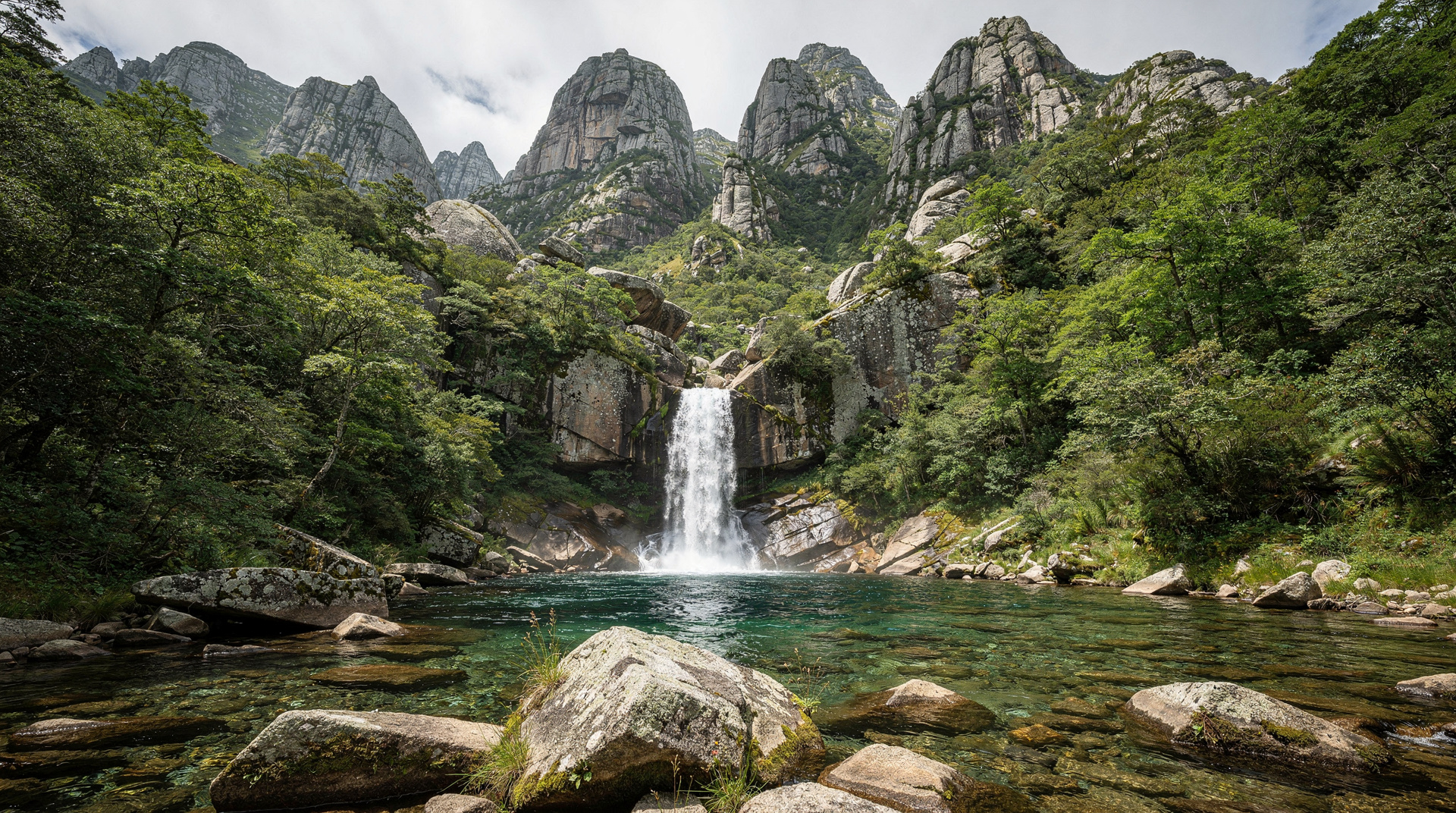
One of the most photographed natural features in the park, the Fecha de Barjas waterfall is a series of cascades in a granite gorge approximately 8 km from Caldas do Gerês. The main falls are accessible via a 3–4 km trail from the Albergaria car park. The walk passes through Atlantic oak and chestnut forest, with the gorge walls narrowing as you approach the falls.
The waterfall pool at the base of the main cascade is cold (around 14°C) but swimmable in summer. The trail is well-marked but can be muddy in wet conditions. Allow 2.5–3 hours for the round trip including time at the falls.
The Roman road (Geira)
One of the most distinctive features of the Gerês park is the Via XVIII, a Roman road known locally as the Geira — the ancient military road connecting Braga (Bracara Augusta) with Astorga in Spain. Sections of the original road are preserved within the park, identifiable by the large flat granite paving slabs and the milestone inscriptions (milliari) that marked distance along the route. The most accessible preserved section is near the village of Portela do Homem on the Spanish border.
The Geira walk from Portela do Homem follows the Roman road through a forested mountain pass and continues into Galicia — a full cross-border hiking option for those with time. Even a short walk along the preserved section gives a tangible connection to the Roman occupation of the Iberian Peninsula.
Garranos (wild ponies)
The garrano is a small, sturdy pony breed indigenous to the Gerês and Barroso mountains, descended from the horses of Celtic and Roman-era inhabitants. Semi-wild herds roam the upper moorland of the park, particularly around the Pitões das Júnias plateau and the Serra do Gerês high ground. They approach hikers with curious composure and are comfortable enough with human presence to be photographed at close range.
The best chance of encountering garranos is on the higher moorland trails above the treeline — the Pedra Bela viewpoint trail above Caldas do Gerês often produces sightings. In summer mornings before the day warms up, the ponies tend to be at lower elevations.
Recommended hikes for a day visit
Trail PR1: Miradouro da Pedra Bela — 5 km, 2 hours. A moderate trail from Caldas do Gerês climbing to the Pedra Bela granite viewpoint with panoramic views of the reservoir and surrounding mountains. Good chance of seeing garranos. Starts from the village.
Trail PR3: Cascata do Arado — 8 km, 3 hours. A longer trail reaching the dramatic Arado waterfall on the southern edge of the Serra do Gerês. Suitable for moderately experienced hikers with good footwear.
Short walk to Praia do Tahiti — 2 km return, 45 minutes. Suitable for all fitness levels. For those primarily interested in the swimming experience.
Rio Homem gorge walk — 6 km, 2–3 hours. Follows the river upstream through deep granite gorge with natural pools. Some scrambling involved.
| Trail | Distance | Time | Best for |
|---|---|---|---|
| Pedra Bela viewpoint | 5 km | 2hrs | Views, garranos, moderate effort |
| Cascata do Arado | 8 km | 3hrs | Waterfall, experienced hikers |
| Praia do Tahiti walk | 2 km | 45min | Families, swimming-focused |
| Rio Homem gorge | 6 km | 2–3hrs | Natural pools, some scrambling |
Gerês vs Porto’s other big day trips
Gerês is the outlier among Porto’s day-trip options precisely because it’s the only one without a viable train connection — the Arouca 516 and Paiva Walkways require a similar car-or-tour approach for a comparable adrenaline-and-nature day, while Braga and Aveiro are both easy train trips. If you’re choosing between them, Gerês suits visitors who want genuine wilderness and swimming; Arouca suits those chasing the suspension bridge and walkway thrill specifically. Both work poorly as spontaneous same-morning decisions — book transport or a tour a day or two ahead in summer.
Practical timing
Arrive by: 9–10 am to secure parking and access the swimming areas before peak crowds.
Best season for swimming: June to September. Water temperatures are comfortable from mid-June onward. August weekends are the most crowded.
Avoid: Extreme summer heat (the park interior regularly reaches 35°C+ in July–August). Schedule hikes for the morning and swimming for mid-afternoon when the sun has warmed the water slightly.
Winter visits: The park in winter (November to March) is almost entirely tourist-free. The waterfalls are at maximum flow, the Celtic ruins are unobscured by summer vegetation, and the mountain atmosphere is stark and impressive. Hiking trails can be icy at elevation — proper winter footwear required.
Food and where to eat in the park
Beyond the cafés on the main Caldas do Gerês street, a handful of small restaurants in the surrounding villages serve genuinely good regional food at prices well below what a similar meal costs in central Porto. Rojões (fried marinated pork with potatoes and pickled vegetables) is the dish most associated with the region — heavier than most Porto restaurant fare, and appropriate after a morning of hiking. Trout from the park’s rivers appears on several menus, usually grilled simply with garlic and olive oil. If you’re on an organised tour, lunch is typically included and pre-arranged at one of these local restaurants; if driving independently, book ahead in peak summer weekends, since the village’s dining capacity is limited relative to visitor numbers.
Where to stay if you extend to two days
Caldas do Gerês has several hotels and pensions ranging from basic rooms (30–50 € per night) to the historic Grande Hotel do Gerês (75–120 €), a Belle Époque thermal hotel with pool access. Camping is available at the Vidoeiro campsite near Caldas do Gerês (around 10–15 € per person per night, with good facilities).
A two-day visit allows you to reach the more remote sections: the Peneda massif in the north (separate from the main Gerês area), the monastery at Pitões das Júnias, and the best garranos habitat on the upper plateau.
Fitting Gerês into a longer Portugal trip
If you’re building a longer northern Portugal route rather than a single Porto-based day trip, the northern Portugal 7-day itinerary works Gerês in alongside Braga, Guimarães and the Douro Valley as a natural counterpoint to the wine-and-city stops. For a Porto-based trip with a full extra day free for Gerês specifically, the 4-day Porto itinerary has room to build around it without feeling rushed.
Frequently asked questions about Gerês
Can children visit Gerês safely?
Yes — the main swimming areas are designated and supervised in summer. Children enjoy the garranos, the swimming pools and the waterfall trails. Shorter trails (the Praia do Tahiti walk) are suitable for children from around 5–6 years old. The longer gorge hikes require children who are confident walkers.
Are there wolves in Gerês?
The Iberian wolf population in Gerês is very small and extremely elusive. Wolf sightings by day hikers are extremely rare. Evidence of wolves (tracks, kills) is occasionally found in the most remote sections of the park. The park management monitors and protects the wolf population; the animals themselves are essentially invisible to casual visitors.
Is there phone signal in Gerês?
Signal is variable. Caldas do Gerês village has reasonable coverage. The gorge trails and more remote areas often have no signal. Download offline maps before entering the park.
What happens if I visit Gerês and the weather is bad?
The park is essentially an outdoor-only destination. Rain makes the trails muddy and the swimming pools cold and less pleasant. A rainy Gerês day is best spent in the village or with a revised plan for a more urban destination. Check the 5-day forecast before committing and have a backup plan (Braga, an hour south, works well in rain).
Can I see Gerês and Braga in one day?
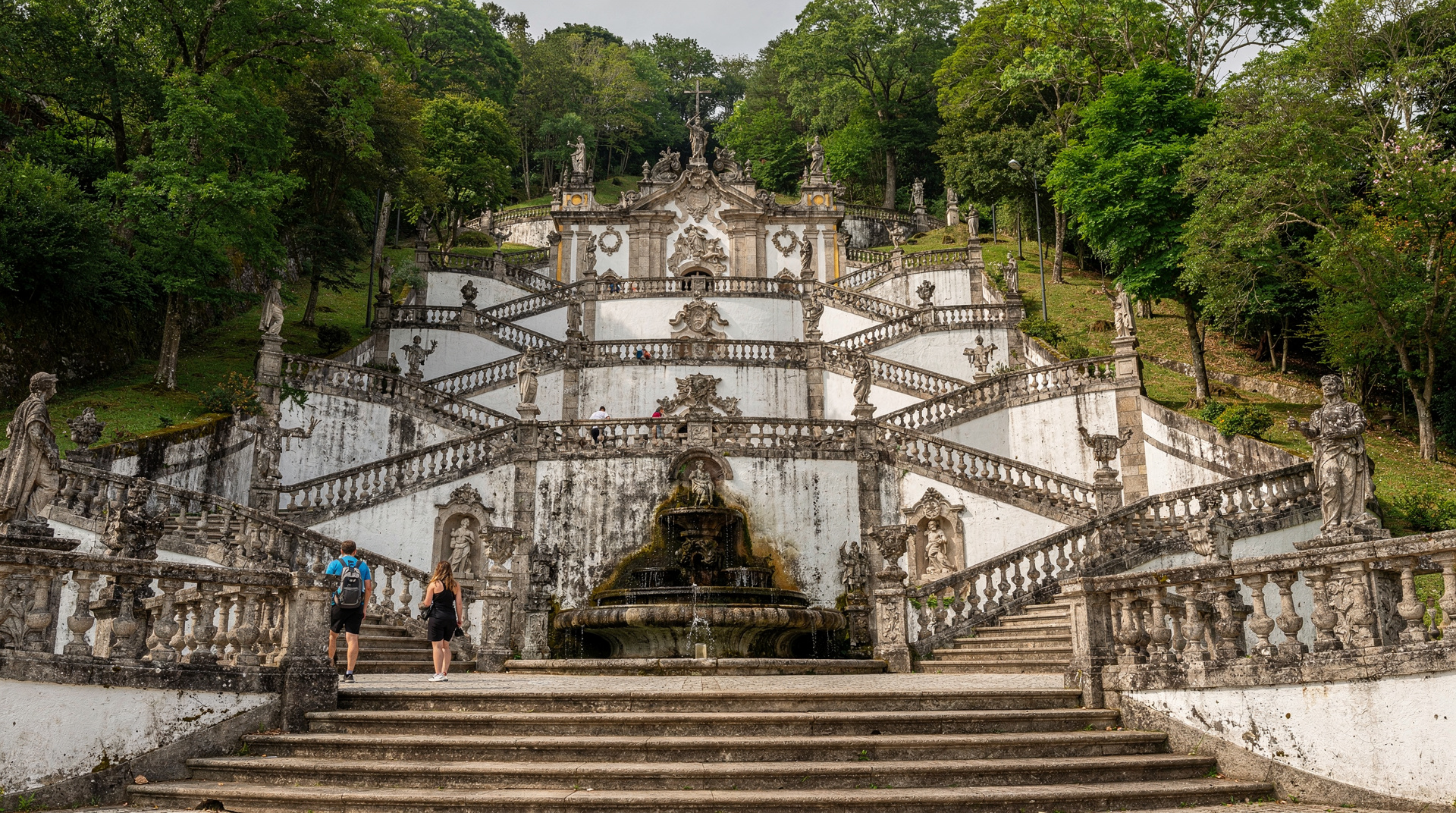
Braga is on the route between Porto and Gerês, which makes the combination technically possible. In practice, a thorough visit to Braga’s Sé and Bom Jesus takes 3–4 hours, leaving limited time in the park. The combination works if you treat Braga as a quick stop (the Sé exterior and a coffee, skipping Bom Jesus) rather than a full visit. The Braga day trip guide gives context for what is achievable in a shorter stop.
Frequently asked questions — Gerês National Park day trip from Porto — the honest guide
Is Gerês worth visiting from Porto in one day?
Yes — the drive is 90 minutes, and the park delivers a genuinely wild natural experience that nothing within Porto city can replicate. A day trip gives you enough time for a waterfall hike, a swimming stop, and lunch. Staying overnight gives you more options, but the day trip is very much worthwhile.Do I need a car to visit Gerês?
Practically, yes. The park interior has no Uber or Bolt. Public transport involves a bus to Braga (1 hour from Porto) then an infrequent local bus service that deposits you at the edge of the park rather than the key natural sites. An organised tour is the best alternative for those without a car.When is the best time to visit Gerês?
June to September for swimming holes and clear hiking conditions. The waterfalls are strongest in spring (March to May) after winter rainfall. August is the most crowded month — the Tahiti pool and popular waterfalls can feel busy. October and November are beautiful for colour and quieter trails, but swimming is cold. December to February is peaceful but some facilities close.Are the swimming holes in Gerês safe?
The main swimming areas (Praia Fluvial de Adrão, Praia Fluvial do Caniçada) are designated bathing areas with lifeguards in summer. The natural pools in the river gorges are generally safe for confident swimmers but have no lifeguard supervision — currents can be strong after heavy rain. Always check local conditions on the day.What wildlife can I see in Gerês?
The park is home to wolves (Iberian wolf, rarely seen), wild boar, roe deer, golden eagles, and the distinctive garranos — small semi-wild ponies that roam the upper moorland and often approach hikers on the main trails. The garranos are the most reliably seen wildlife and are genuinely impressive in the mountain landscape.What should I bring to Gerês?
Comfortable hiking shoes with ankle support (trails can be rocky and wet). Swimwear and a towel (June to September). Sunscreen and a hat in summer. A waterproof layer — mountain weather changes quickly. Water and snacks for longer hikes — services are limited beyond the main village. Cash for parking and smaller cafés.
Top experiences
Bookable activities with verified prices and instant confirmation on GetYourGuide.