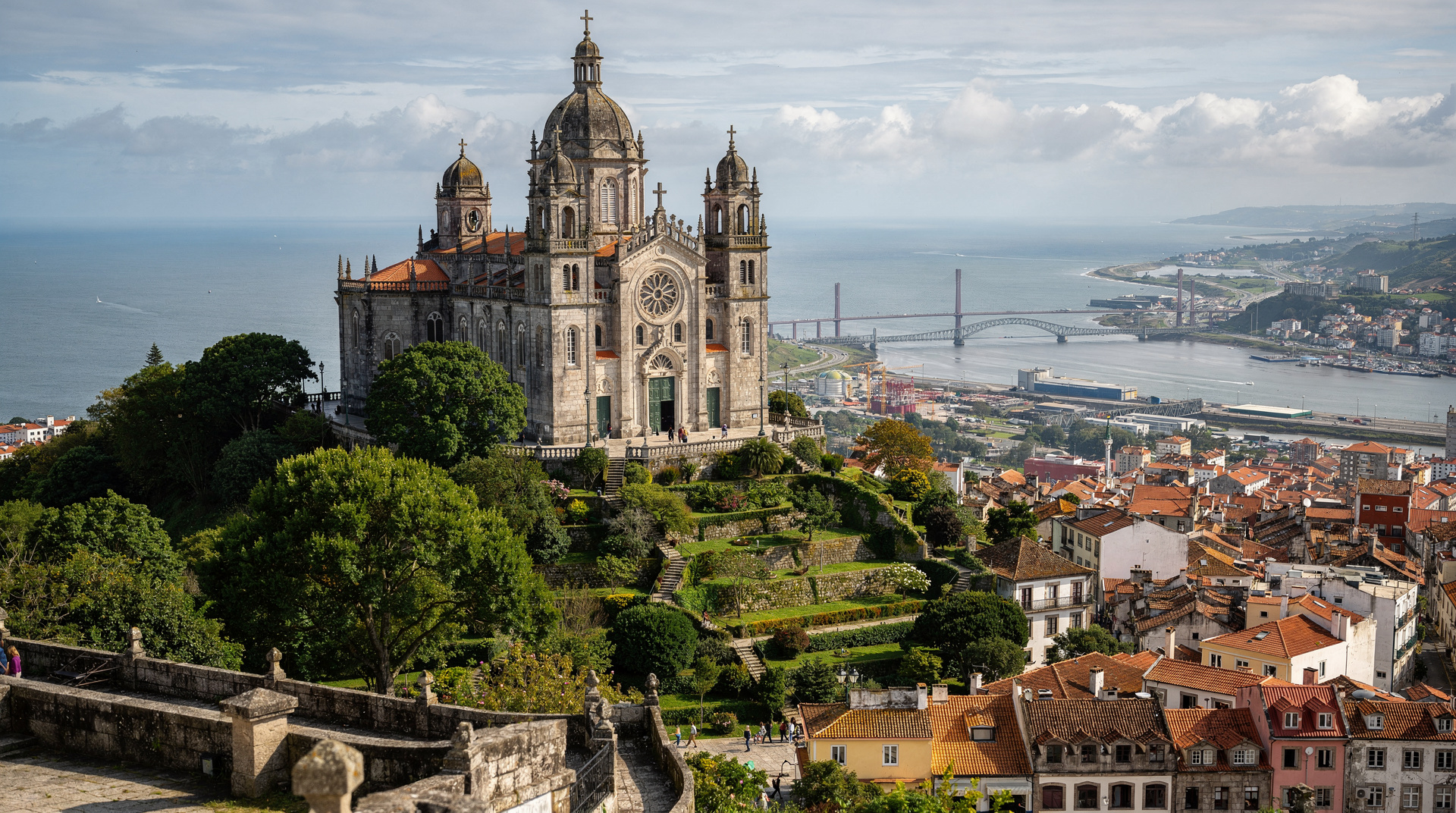
Braga — Portugal's religious capital with an honest edge
Honest guide to Braga: the cathedral, Bom Jesus staircase, São João festival, where to eat and stay, and how to do the day trip from Porto properly.
Porto: From Porto Braga and Guimaraes Full Day Trip
Quick facts
- From Porto
- ~50 min by train, ~1 h by car
- Best for
- Cathedral, Bom Jesus, São João festival, city life
- São João festival
- 23–24 June
- Train fare
- ~3–5 € from Porto Campanhã
- Currency
- Euro (€)
Portugal’s oldest city, doing its own thing
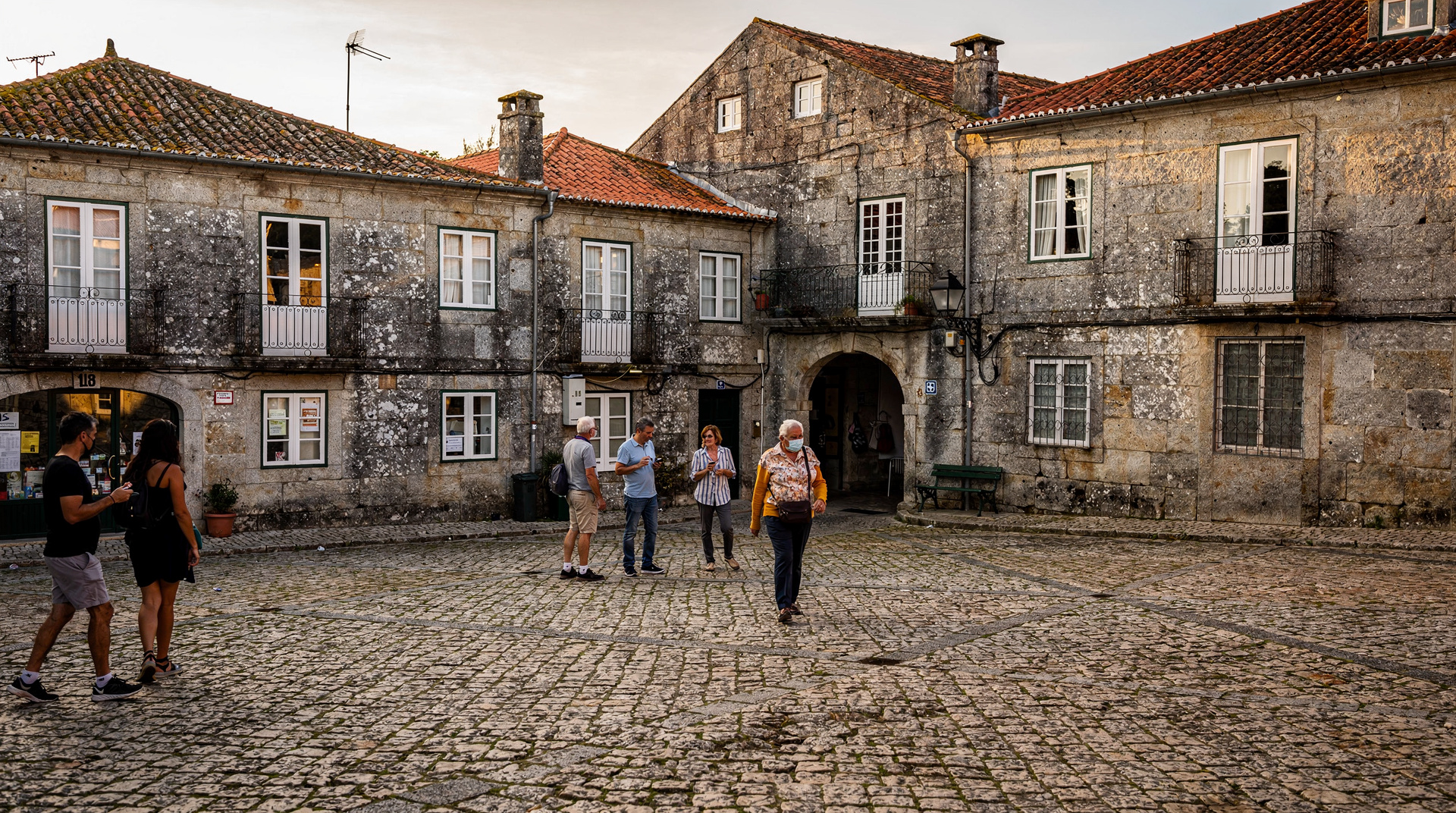
Braga is a city that often gets described in relation to what it is not: not as pretty as Guimarães, not as scenic as Viana do Castelo, not as culturally dominant as Porto. That framing misses the point. Braga is Portugal’s most important religious city, with a cathedral that has been in continuous use since the 11th century, a university that has shaped Portuguese intellectual life for decades, and a street culture energised by a young population that gives the city centre genuine vitality on evenings and weekends.
The day trip from Porto is one of the best-value excursions in northern Portugal: 50 minutes on the train, a compact historic centre that can be covered in three to four hours on foot, and the remarkable Bom Jesus do Monte sanctuary 5 km to the east. Combine it with Guimarães on the same day and you have a full and satisfying excursion; take Braga on its own and you can go at a slower pace with time for a proper lunch.
What to be honest about: Braga’s historic centre is more lived-in than museum-polished, which is its strength. The cathedral’s surroundings involve active road traffic. Some of the sights (the chapel of São Frutuoso, the Palácio dos Biscainhos) require specific effort to reach. But the cathedral itself, the Bom Jesus staircase and the city’s food scene are worth the journey on their own terms.
| Where | Minho region, ~50 km north of Porto |
| Time needed | Full day for cathedral plus Bom Jesus; half-day if focused on the centre alone |
| Cost | Cathedral nave free, Treasury Museum ~5 €; Bom Jesus staircase free, funicular ~2 € each way |
| Getting there | ~50 min by train from Porto Campanhã, ~50 min–1h15 by car (A3) |
| Best time | Late May–June (São João lead-up) or September |
What to do in Braga
Braga Cathedral (Sé de Braga)
The Sé de Braga is Portugal’s oldest cathedral in continuous use, founded by Count Henry of Burgundy and his wife Teresa around 1070 on the site of an earlier mosque. The current building is a layered accumulation: the original Romanesque nave survives at its core; the Gothic choir (the Coro Gótico) contains the tombs of Count Henry and Teresa; the baroque façade and towers were completed in the 18th century. Entry to the cathedral nave is free. The Treasury Museum (Tesouro da Sé) costs around 5 € and holds an important collection of vestments, reliquaries and a remarkable 14th-century crucifix. The Cathedral Museum and choir require a separate ticket; allow 90 minutes to an hour for a thorough visit.
The cathedral is best visited in the morning before tour groups arrive. The Rua do Souto leading from the cathedral toward the Arco da Porta Nova is one of the most attractive pedestrian streets in northern Portugal.
Bom Jesus do Monte
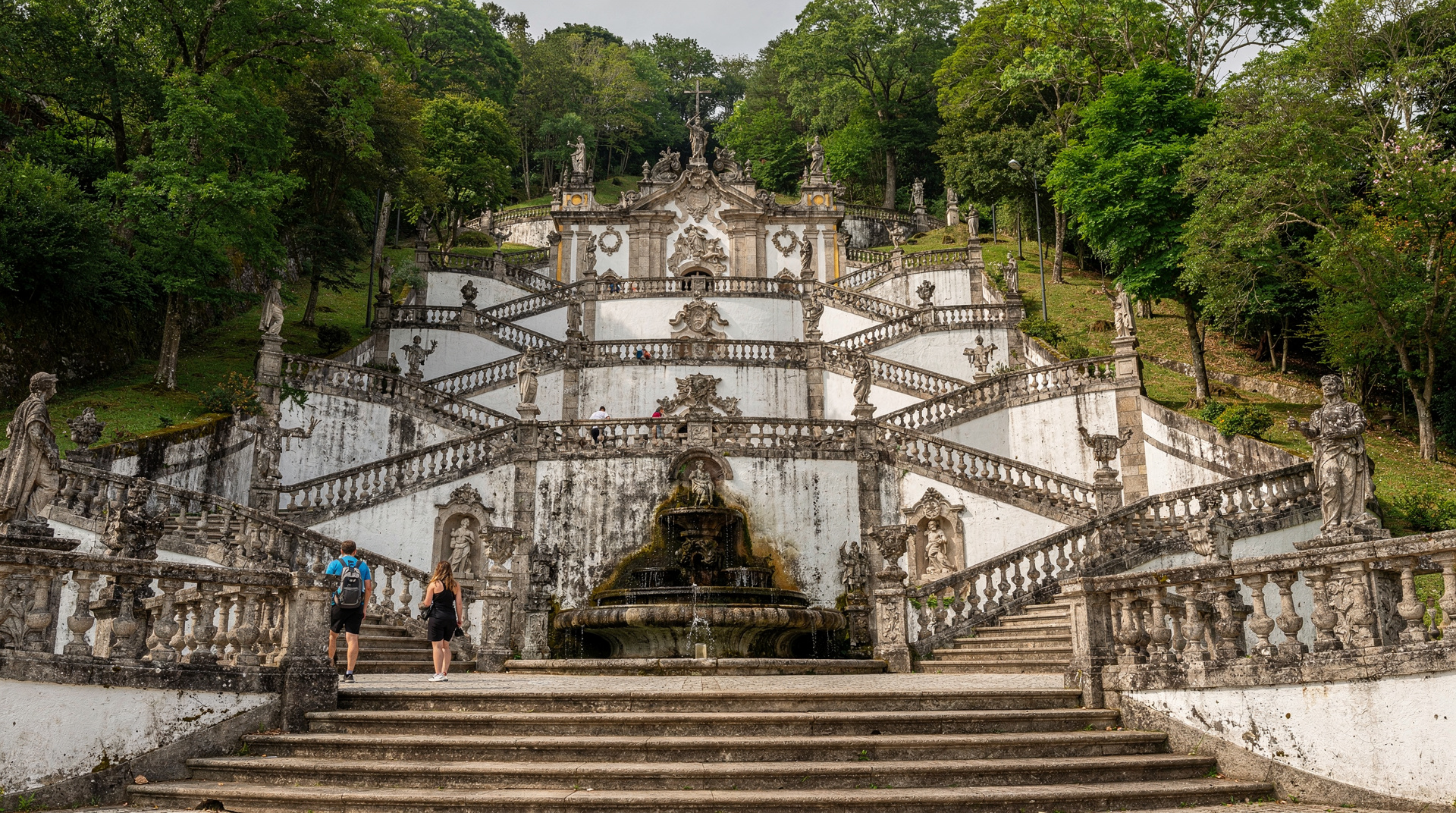
The Santuário do Bom Jesus do Monte, 5 km east of Braga, is the city’s most iconic landmark and one of the finest examples of baroque pilgrimage architecture anywhere in the Iberian Peninsula. The sacred staircase — 576 steps ascending through six terraces, each representing the stations of the Passion — is decorated with fountains symbolising the five senses and the three virtues, with azulejo-panelled chapels at each landing. The effect is theatrical and accumulative; the full climb takes 20–30 minutes.
At the summit, the neoclassical church (18th–19th century) is less remarkable than the staircase itself; the real reward is the view back down over the forested hillside and the green Minho countryside. There is also a hydraulic funicular (operating since 1882, one of the world’s oldest still in service) for visitors who prefer not to climb; the fare is around 2 € each way.
Getting to Bom Jesus from Braga city centre: bus 2 from the city centre runs to the base of the staircase roughly every 30 minutes (fare ~1.50 €), or a taxi costs around 8–12 €. A car can be driven to the summit car park if you want to skip the stairs entirely, though this does rather miss the point.
The historic centre
Beyond the cathedral, Braga’s walkable centre contains several buildings worth an hour of exploration. The Palácio dos Biscainhos (17th-century noble house, now a decorative arts museum; ~3 €) gives a good sense of how Minho’s landed gentry lived. The Torre de Menagem (medieval tower, free exterior) and the surrounding Arcada commercial arcade are the social heart of the city. The Jardim de Santa Bárbara, a formal garden adjacent to the archbishop’s palace, is one of northern Portugal’s most composed public spaces — free and often quiet.
Braga’s status as a university city (home to the University of Minho, one of Portugal’s largest) shapes the atmosphere in ways that are easy to miss on a rushed day trip. Student numbers give the historic centre a genuine evening buzz that some more purely tourist-facing Portuguese cities lack, and the annual academic calendar — particularly exam periods and the end-of-year celebrations in May — visibly changes the mood of the streets around the Arcada and the university buildings.
São João festival in Braga
Like Porto, Braga celebrates the Festa de São João on the night of 23–24 June with bonfires, street food, live music and general outdoor revelry. Braga’s version of the festival is more locally rooted and less tourist-attended than Porto’s, which can be an advantage if you prefer the experience to feel less performative. The festivities centre around the cathedral square and the Avenida da Liberdade. If you are in Porto for São João (which draws the largest crowds), Braga’s celebration makes a good alternative — the train takes 50 minutes.
Braga as a base for the wider Minho
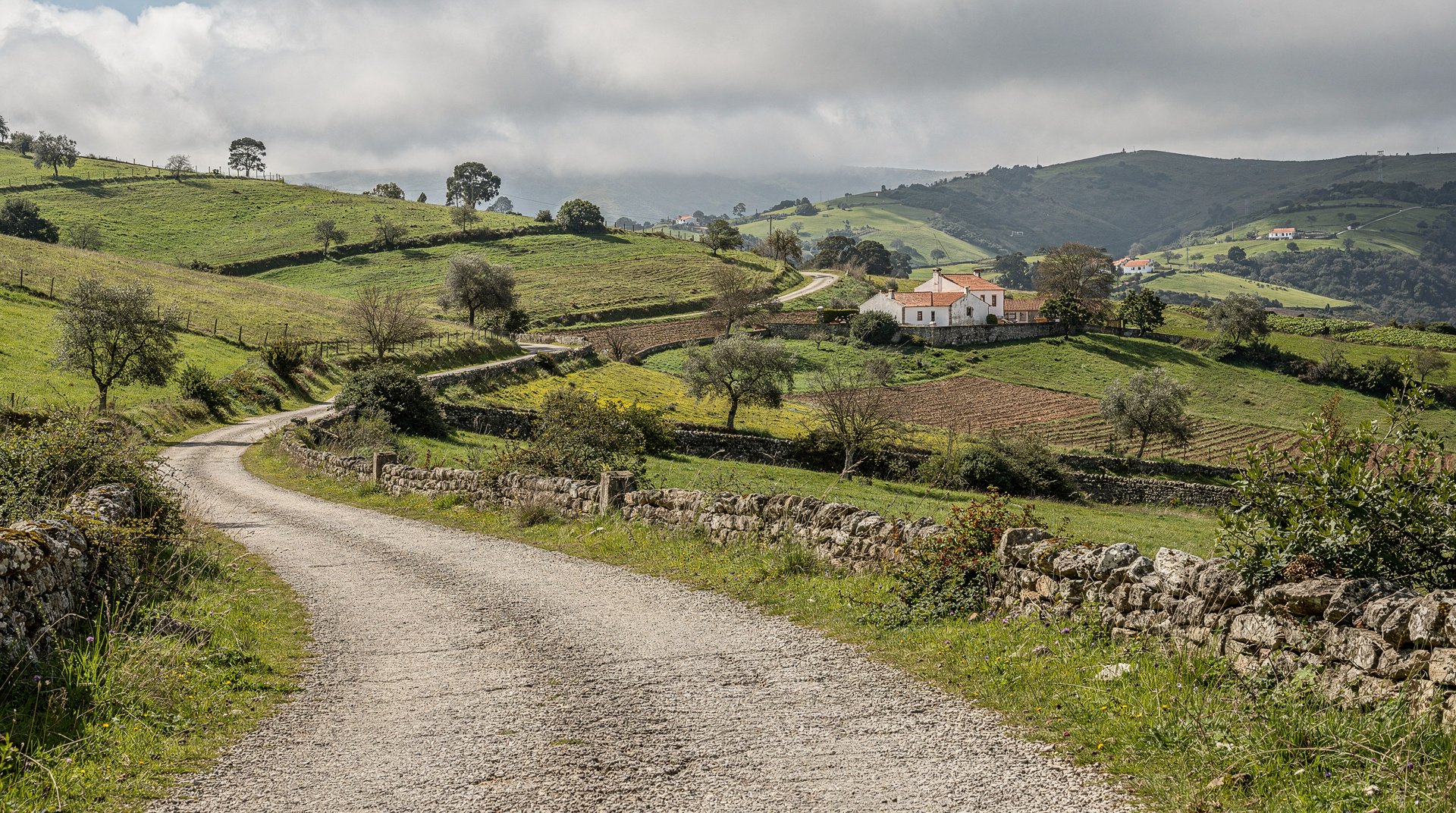
Braga’s train and bus connections make it a workable base for exploring the wider Minho region beyond a single day trip from Porto. From Braga, Guimarães is a 25-minute train ride, Viana do Castelo is under an hour by train along the coast, and the Peneda-Gerês National Park is accessible by car in around 45 minutes. Visitors building a longer northern Portugal itinerary sometimes base two or three nights in Braga rather than Porto specifically to shorten the drives into the Minho countryside — a reasonable strategy for anyone prioritising Gerês and the Minho villages over the Douro Valley.
For a single day from Porto, the standard Braga and Guimarães day tour remains the more efficient option, since it removes the need to manage separate train connections between the two cities.
How to get to Braga from Porto
By train: CP Alfa Pendular and intercity services run from Porto Campanhã to Braga multiple times per hour throughout the day. Journey time is 50 minutes to 1 hour; fares run 3–5 € in standard class. Urban services from Trinidade (city centre metro) also reach Braga but take longer. The train station in Braga is a 10-minute walk from the cathedral.
By car: The A3 motorway from Porto to Braga takes approximately 50 minutes in light traffic; 1 hour to 1 hour 30 minutes at peak times. Parking in the city centre is available at Parque de Estacionamento da Avenida (underground, near the cathedral). Driving from Porto to Braga gives you more flexibility for combining with Guimarães and Bom Jesus in a single day.
By organised day trip: A full-day organised tour to Braga and Guimarães from Porto covers both cities in one day with guided entry to the main sites, handling all transport logistics. This is the most efficient format if you have only one day and want to cover both. Our Braga and Guimarães day trip guide breaks down whether the combined or solo approach serves different traveller types better.
Where to stay in Braga
Braga is easy as a day trip from Porto; staying overnight makes sense if you want a slower pace or are continuing to Guimarães, Viana do Castelo or Gerês.
Hotel Braga Centre (4-star, near the cathedral) offers reliable mid-range accommodation with a good location; rates 60–100 € per night. Meliá Braga is the largest hotel in the city, with a rooftop pool and conference facilities; rates 80–130 €. For a more characterful option, Casa das Arcas is a converted 18th-century house near the Jardim de Santa Bárbara with boutique rooms at 80–120 €.
Where to eat in Braga
A Cozinha (near the cathedral) is the most acclaimed restaurant in Braga — a modern take on Minho cooking, with local pork, lamb from the mountains and Vinho Verde from the surrounding area. Budget 30–45 € per person; reservations strongly recommended.
Taberna do Zé Barqueiro (in the historic centre) is a simpler option for regional lunch: rojões (fried pork, a Minho staple), caldo verde and the local Vinho Verde by the half-litre. Around 12–16 € per person.
Café A Brasileira (Largo do Barão São Martinho) is a historic café in the city centre, functioning since 1907 — a good stop for coffee and a pastel de nata in the morning before the cathedral.
Braga’s food market (Mercado Municipal de Braga) near the stadium operates on weekday and Saturday mornings and sells regional produce including Vinho Verde, local honey and Minho cured meats.
Best time to visit Braga
Late May to June is the best overall window for Braga: mild temperatures, the lead-up to São João (23–24 June), and the city’s university population at its most active. São João itself makes an excellent reason to visit Braga rather than the more crowded Porto.
September is quiet and comfortable — fewer visitors than summer, warm days, and the Bom Jesus sanctuary at its least crowded.
July and August work fine; Braga is navigable in the heat if you start sightseeing before noon. The cathedral and Palácio dos Biscainhos are cool interiors. Bom Jesus is best in the early morning or late afternoon.
November to March: Braga in winter has its own character — the cathedral is atmospheric, the city’s café culture is at full function, and accommodation prices drop. Bom Jesus is worth visiting in winter mist if you are comfortable with the ambiguity of baroque architecture in grey light.
Practical tips
- The climb at Bom Jesus is on granite steps; comfortable walking shoes are essential. The funicular is a legitimate alternative and has historical significance of its own.
- Allow a full day to do Braga properly: cathedral in the morning, lunch, Bom Jesus in the afternoon. A half-day rushing through both sites will leave most visitors wanting more.
- Braga and Guimarães are routinely combined on day trips from Porto; our combined Braga-Guimarães guide assesses the logistics honestly.
- The Rua do Souto pedestrian street and the Arcada arcade have a concentration of cafés and shops suitable for an afternoon wander.
- São João accommodation books up in Braga (as in Porto) six to eight weeks in advance for the 23–24 June weekend.
Frequently asked questions about Braga
Is Braga or Guimarães better for a day trip from Porto?
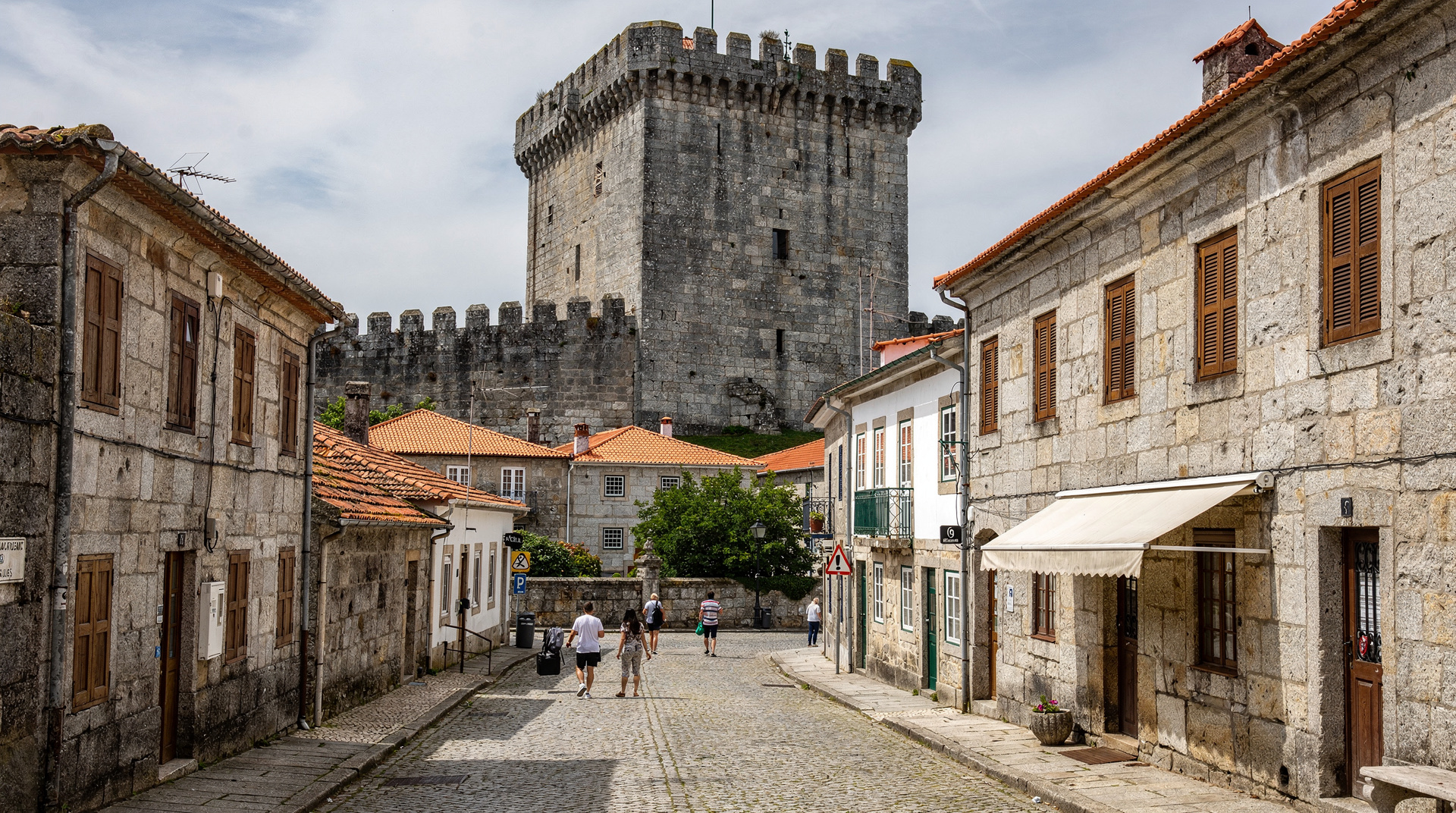
They offer different things and are best treated as complementary. Braga has a more active city-centre culture, a richer church interior at the cathedral, and the Bom Jesus sanctuary as a unique architectural experience. Guimarães has a more picturesque medieval centre, a castle and a palace that tell the story of Portugal’s founding. If you have one day, the combined Braga-Guimarães tour is the standard approach; if you have two separate days, each city earns a solo visit at a slower pace.
How much time do you need at Bom Jesus?
Allow 1.5 to 2 hours: the full ascent (25–30 minutes at a comfortable pace), time to explore the terraces and chapels, and a brief visit to the church at the summit. The descent takes about the same time. If you want to add lunch at one of the hotels near the sanctuary (there are two historic hotels at the summit level), budget an additional 1.5 hours.
Is the Braga cathedral free to enter?
The main nave is free. Access to the cathedral treasury, the choir with the Gothic tombs and the cloister requires a ticket (around 5 € for the Treasury Museum; combined tickets available for multiple areas). The guided tour of the choir and treasury takes about 45 minutes and is worth the cost for visitors with an interest in medieval Portuguese religious art.
What is the best food to eat in Braga?
The Minho region’s signature dishes: rojões (crispy fried pork with potatoes and cumin), bacalhau à Braga (salt cod with onions and egg), caldo verde soup, and the region’s Vinho Verde as the natural accompaniment. Braga’s pastry tradition centres on folar (a sweet or savoury bread served at Easter) and various egg-and-sugar conventual sweets. For an honest assessment of the best places to eat them, a local guide or our Braga day trip guide points you toward the non-tourist-facing options.
Can I visit Braga, Guimarães and Gerês on the same trip?
Not comfortably in a single day, but yes across two or three days with Braga as a base. Guimarães is a short train ride away, and Gerês National Park is close enough by car for a half-day hike or lake visit. Trying to combine all three in one day results in a rushed, unsatisfying version of each; spreading them across a short Minho stay does the region justice.
Top experiences
Bookable activities with verified prices and instant confirmation on GetYourGuide.