Peneda-Gerês — Portugal's only national park, done properly
Honest guide to Peneda-Gerês: best hikes, swimming spots, waterfalls, Roman roads, where to stay in Gerês, and how to do the day trip from Porto.
Porto: From Porto Geres Park Tour Adventure with Lunch
Quick facts
- From Porto
- ~1 h 30 min by car, no direct train
- Park area
- 70,290 hectares
- Best for
- Hiking, waterfall swimming, Roman roads, wild horses
- Park designation
- National Park (Portugal's only one)
- Currency
- Euro (€)
Portugal’s only national park, and its most demanding day trip
Peneda-Gerês is Portugal’s only national park — the rest of the country’s protected areas have a lower designatory status — and it occupies 70,290 hectares of granite mountains, river gorges and ancient oak forest along the Spanish border in the northern Minho. For visitors based in Porto, it represents the most compelling outdoor day trip within reach: wild swimming in clear mountain rivers, waterfalls, remnants of a Roman road, and occasional sightings of the park’s semi-wild Garrano horses.
The honest version: this is not an easy day trip. The park entrance at Caldas do Gerês (the main thermal spa village) is 90 minutes from Porto by car — and there is no adequate public transport option, no Uber, no Bolt. Without a car, you are dependent on an organised tour, which is not a downgrade in this case: the best day trips into Gerês include kayaking, guided hiking and lunch in ways that improve on self-directed exploration without a vehicle.
Within the park, distances are longer than they appear on a map, trails vary significantly in difficulty, and the most popular swimming holes can get crowded on summer weekends with local day-trippers. None of this makes Gerês less worth visiting — it makes planning essential.
| Where | Northern Minho, Spanish border; Caldas do Gerês ~1h30 from Porto |
| Cost | Free entry; some swimming areas charge a small fee in summer |
| Time needed | Full day; 1–2 nights for a fuller exploration |
| Getting there | Car (essential for flexibility) or organised tour from Porto |
| Best time | May–October; June–early July for the best swimming |
What to do in Peneda-Gerês
Swimming in the rivers and reservoirs
The park’s rivers — particularly the Homem, the Cávado and their tributaries — are the primary attraction for summer visitors. Water levels and clarity vary significantly by season: June and early July typically offer the best combination of full flow and clear water. August is peak season with higher visitor numbers; September is quieter with lower but still swimmable water levels.
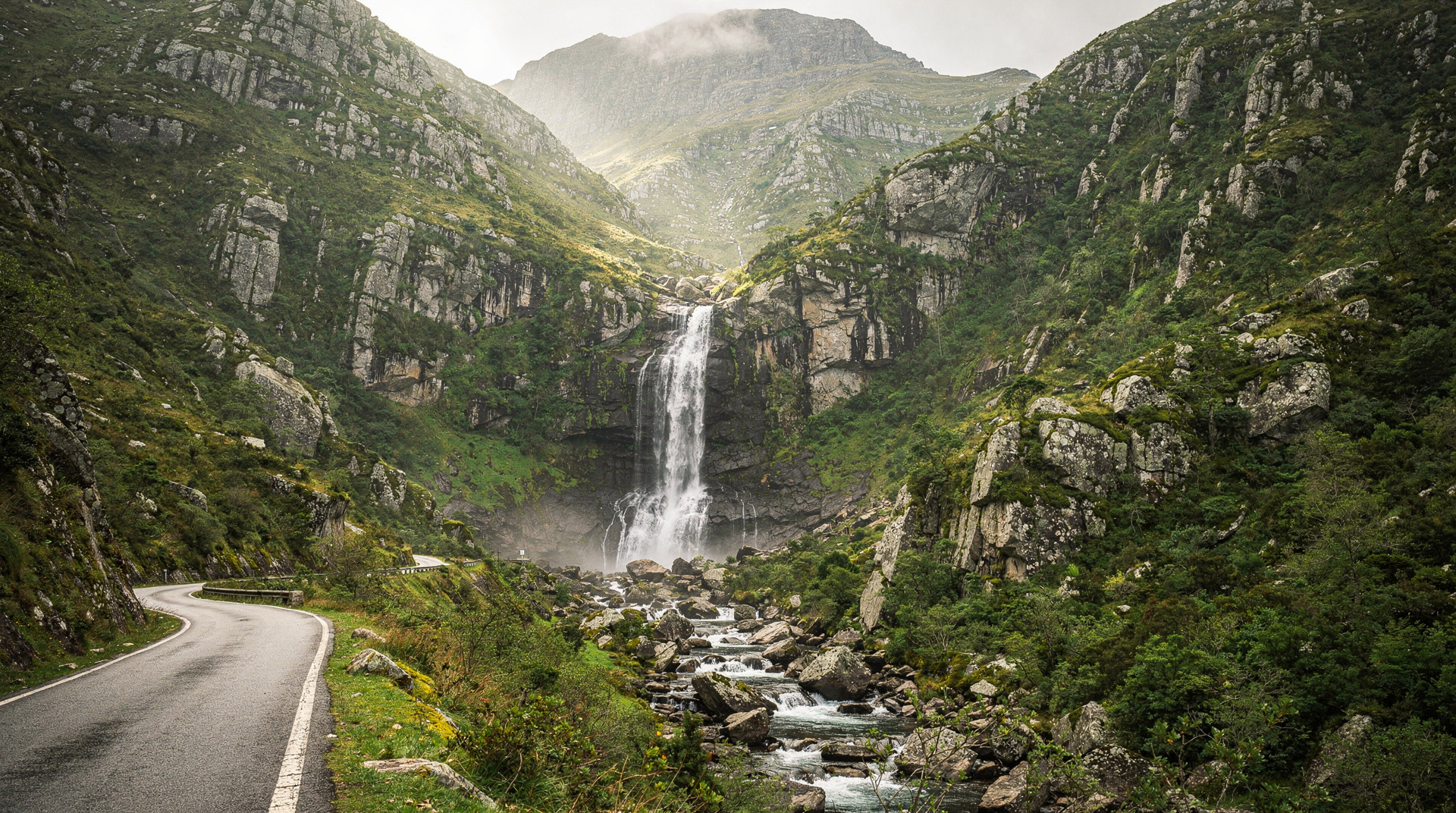
The most accessible swimming spots near the Gerês spa village include the Cascata do Arado (a waterfall accessible via a 3-km trail from Ermida), the pools along the Rio Homem near the dam (Barragem da Caniçada), and the Praia Fluvial de Vilarinho das Furnas (a designated river beach in the park). On summer weekends, the popular spots near the main road fill by mid-morning; the less-accessible falls reached by a 45-minute to 1-hour trail have significantly fewer people.
Hiking in the park
The park has a network of marked trails of varying difficulty. Key routes include:
PR3 Trilho das Pedras Boroas (12 km, moderate, 4 hours): starts from Ermida, passes through old growth oak forest and reaches a panoramic viewpoint. One of the best introductions to the park’s landscape.
PR11 Trilho de Vilarinho das Furnas (7 km, easy to moderate, 2.5 hours): passes the submerged ruins of the flooded village of Vilarinho das Furnas, visible when reservoir levels drop. A haunting historical layer to the park’s ecology.
Roman Road (Via XIX): a section of the Roman military road built by Emperor Augustus connects Braga (Bracara Augusta) to Astorga in Spain; a well-preserved stretch passes through the park near the village of Campo do Gerês and is one of the few Roman roads in Portugal where the original paving is visible underfoot.
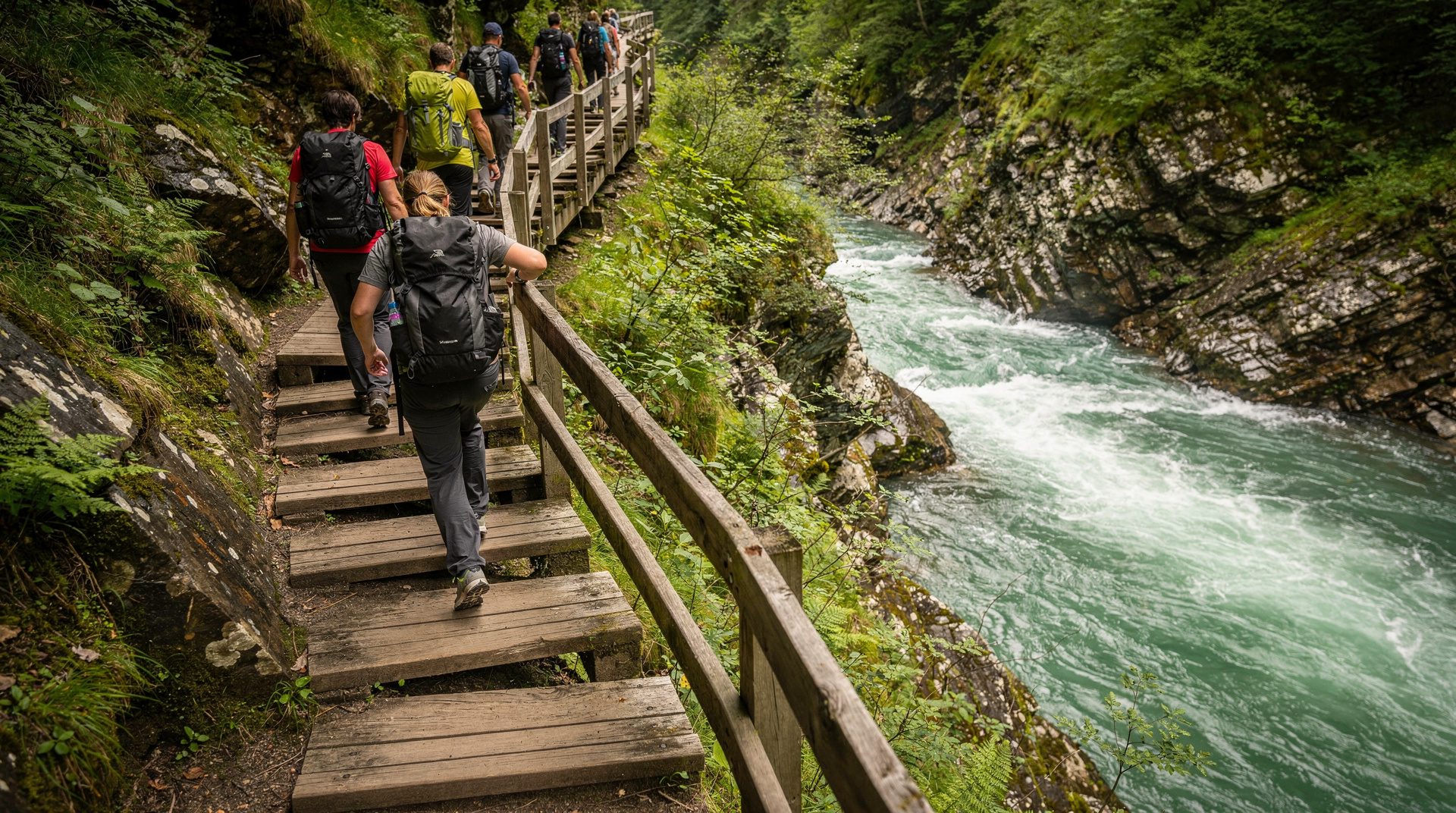
A guided hiking and swimming tour in Gerês from Porto takes care of transport and guides you to trails that are not obvious from a general map — worth considering if this is your only day in the park and you want to make it count.
Kayaking and water activities
The reservoirs and rivers within the park offer kayaking and paddleboarding from various access points. A Gerês day tour from Porto with kayaking and lunch includes transport, equipment and a guided paddle on one of the park’s quieter water bodies — a more structured introduction than renting equipment and finding the launch points independently. This format works well for visitors who want a guaranteed activity rather than a variable self-directed experience, and it removes the logistical headache of finding parking and safe launch points independently — a genuine issue on busy summer weekends when roadside space near the reservoirs fills quickly.
The Gerês spa village (Caldas do Gerês)
The spa village of Caldas do Gerês has been a thermal resort since the Romans used its mineral springs, and it functions as such today: a Victorian-era spa building surrounded by hotels, cafés and the slightly faded character of a town built around medicinal waters. It is the de facto entrance to the park and the most practical base for visitors spending a night. The spa itself is open from May to October; a basic hydrotherapy session costs around 15–25 €. As a town, it is not particularly interesting beyond its role as a gateway, but the valley setting is good and the walk up through the village to the first trails begins immediately above the main street. Cafés and small grocery shops in the village are the last reliable place to stock up on water and snacks before heading into the park proper — mobile coverage and services thin out quickly once you leave the main road.
Wild horses and wildlife
The park is home to the Garrano — a semi-wild horse breed that has roamed the area since prehistoric times. Small herds are visible on the open moorland above the tree line, particularly in the area around the Mourela plateau in the Peneda sector (the northern, wilder half of the park that sees fewer visitors). Red deer, wild boar, wolves (rare, mainly in the Peneda sector), otters and golden eagles are all present within the park boundaries. Wildlife sightings are more likely in early morning or evening and require leaving the main tourist corridors.
Choosing a swimming spot or trail for your fitness level
| Spot / trail | Difficulty | Best suited for |
|---|---|---|
| Praia Fluvial de Vilarinho das Furnas | Easy access | Families, casual swimmers |
| Cascata do Arado | Moderate (3-km trail) | Fit walkers wanting a waterfall payoff |
| PR11 Vilarinho das Furnas (7 km) | Easy to moderate | First-time hikers, history interest |
| PR3 Trilho das Pedras Boroas (12 km) | Moderate, 4 hours | Regular hikers with a full day |
| Roman Road (Via XIX) near Campo do Gerês | Easy, flat sections | History interest, less crowded |
For hikers looking for a comparably rugged but shorter outdoor day nearer Porto, the Paiva walkways hiking guide covers Arouca’s suspended walkways — a different kind of trail but a useful comparison if Gerês’s distance is a concern.
How to get to Gerês from Porto
By car: The A3 motorway north from Porto to Braga, then the N103 east toward Ponte da Barca and the park, takes approximately 1 hour 30 minutes to the Caldas do Gerês entrance. The road from Braga is well-marked. Inside the park, many of the best trailheads require a further 20–40 minutes of driving on mountain roads.
By organised tour: Without a car, an organised tour is the only practical option. A full-day Gerês tour from Porto including lunch departs Porto in the morning and returns in the early evening, covering hiking, swimming and a regional lunch — the standard and reliable format for this destination. Prices run 50–75 € per person.
By public transport: There is a regional bus service from Braga to Caldas do Gerês (operated by Transdev Minho), taking approximately 1 hour from Braga and running a few times per day. This requires first getting to Braga by train from Porto (50 minutes), then waiting for the connecting bus. The schedule is infrequent enough that you can lose several hours in connections; an organised tour is genuinely more efficient for a single day. If Braga is already part of your itinerary, see the Braga day trip guide for how to sequence a Braga morning with a Gerês afternoon, though this compresses time in the park considerably.
Where to stay in Gerês
Hotel Carvalho Araújo (Caldas do Gerês) is the most established hotel in the village, a traditional spa hotel with rooms overlooking the valley; rates 70–100 € per night. Boa Nova (also in Caldas do Gerês) is a smaller guest house with a café and garden; rates 50–80 €.
For visitors who want to be deeper in the park, several agri-tourism properties in the villages of Gerês and Covide offer accommodation with direct trail access: Casa do Barreiro (Gerês village) and Quinta da Parreira (near Vilarinho) are examples of the type — stone-built, simple, well-positioned. Rates typically 60–90 € per night.
Where to eat in Gerês
Restaurante Solar do Gerês (Caldas do Gerês) is reliable for Minho mountain cooking: posta barrosã (a cut of Barrosã beef from the surrounding upland cattle), cabrito (roasted kid) and chanfana (wine-braised goat). Budget 18–25 € per person.
Taberna do Parque (near the park information centre) is more casual and cheaper — grilled meats, soup and the daily special — at 10–16 € per person.
Several cafés in Caldas do Gerês serve regional trout (truta), either grilled or in an escabeche (cold pickle) preparation. The trout is genuinely local; worth trying if you see it on a menu.
Best time to visit Gerês
June to September is when the rivers and reservoirs are swimmable and the trails are dry. June and early July have the best water levels for swimming; August has the most visitors and the warmest temperatures.
May is excellent for hiking: the park is at its greenest, waterfalls are at full flow from spring rain, and temperatures are mild. The swimming is cold but some visitors find it refreshing.
September and October are the ideal months for wildlife watching and photography: fewer visitors, the deciduous oaks beginning to colour, and the cooler temperatures making longer hikes comfortable.
November to April: The park is open year-round and has a different beauty in winter — empty trails, full rivers and the chance of fog in the mountain valleys. Cold and wet; not suitable for swimming. Caldas do Gerês reduces to skeleton service in winter; some hotels close from November to March.
Practical tips
- Carry water and sun protection for summer visits; the mountain trails at altitude offer less shade than they look on maps.
- Entrance to the park is free, but some specific areas (designated swimming beaches) charge a small access fee in summer.
- Parking at the most popular trailheads fills by 9 am on summer weekends; arrive early or accept a longer walk from roadside parking.
- The park has no mobile coverage in significant sections; download offline maps (Maps.me or AllTrails) before you enter.
- Insect repellent is useful for river swimming areas in June and July; horse flies (tabões) can be aggressive near standing water.
- Gerês is significantly cooler than Porto on summer evenings; bring a layer even in July.
- Gerês fits well as a full-day addition on a 4-day-plus Porto trip; on a tighter schedule, weigh it against closer options using the best day trips from Porto guide.
- If you are self-driving, review the getting around Porto guide before picking up a rental — city-centre driving is very different from the mountain roads inside the park.
Frequently asked questions about Gerês
Is Peneda-Gerês worth the effort from Porto?
For visitors who enjoy outdoor activity, unambiguously yes. The park is genuinely wild by Portuguese standards, the water is clean and clear, and the granite mountain scenery is unlike anything within the Porto city-trip sphere. The effort is primarily logistical (no public transport worth depending on, 3-hour round trip by car), not physical — you can have a rewarding day with very moderate hiking and a long swim.
What is the difference between the Gerês and Peneda sectors?
The park is officially called Parque Nacional Peneda-Gerês and covers two main massifs: Gerês (the southern, more visited half, anchored by the spa village of Caldas do Gerês) and Peneda (the northern half, near the Spanish border, with significantly fewer visitors and wilder terrain). Most day trips from Porto visit the Gerês sector. The Peneda sector — with the sanctuary of Nossa Senhora da Peneda and more extensive wildlife — requires a full day of driving or a two-day stay in a village in the north.
Can I hike without a guide in Gerês?
Yes. The marked trails are generally well-signed and maintained, and maps are available at the park information centre in Caldas do Gerês. The AllTrails app has GPS tracks for most of the main routes. A guide adds value primarily for wildlife spotting, understanding the park’s ecology and reaching off-trail areas; it is not required for safety on the standard waymarked routes.
When is the best time for waterfall swimming?
Late June to mid-July is the optimum: the rivers are still running at reasonable volume from spring snowmelt and rain, the water has warmed enough for comfortable swimming (typically 16–18°C), and the summer crowds have not yet peaked. By August the water is warmer but lower. October and November have full waterfalls but cold water (12–14°C) that most visitors find too cold for more than a brief dip.
Top experiences
Bookable activities with verified prices and instant confirmation on GetYourGuide.