World of Discoveries Porto — the honest guide
Porto: Porto Highlights and Hidden Gems Walking Tour
Is World of Discoveries Porto worth visiting?
Yes, for families with children aged 5–14. The indoor boat ride through recreated Age of Discovery environments is genuinely impressive, and the production quality is higher than most regional museums. Adults visiting without children will find it engaging but not essential. Allow 2–2.5 hours and book online to save on entry.
What World of Discoveries actually is
World of Discoveries — in Portuguese, Mundo dos Descobrimentos — is an interactive museum on the Porto waterfront dedicated to Portugal’s Age of Discoveries. It occupies a large building on Rua de Miragaia, roughly 400 metres west of the Ribeira square, and its centrepiece is an indoor river ride through recreated historical environments representing the regions that Portuguese explorers encountered and connected between the 1430s and 1550s.
The museum opened in 2012 and has been consistently one of the better-reviewed family attractions in Porto. The subject matter is intrinsically compelling for the context: Porto is the city from which many of the great voyages departed, the Douro river that runs past the museum’s front door flows to the Atlantic that those ships crossed, and the port wine trade that built Vila Nova de Gaia’s famous lodges across the water is a direct legacy of the global trade networks that the explorers opened.
| Where | Rua de Miragaia 106, 5–7 min walk from Ribeira |
| Cost | around 14 € adults, 9 € children 4–12, family tickets ~40–44 € |
| Time needed | 2–2.5 hours |
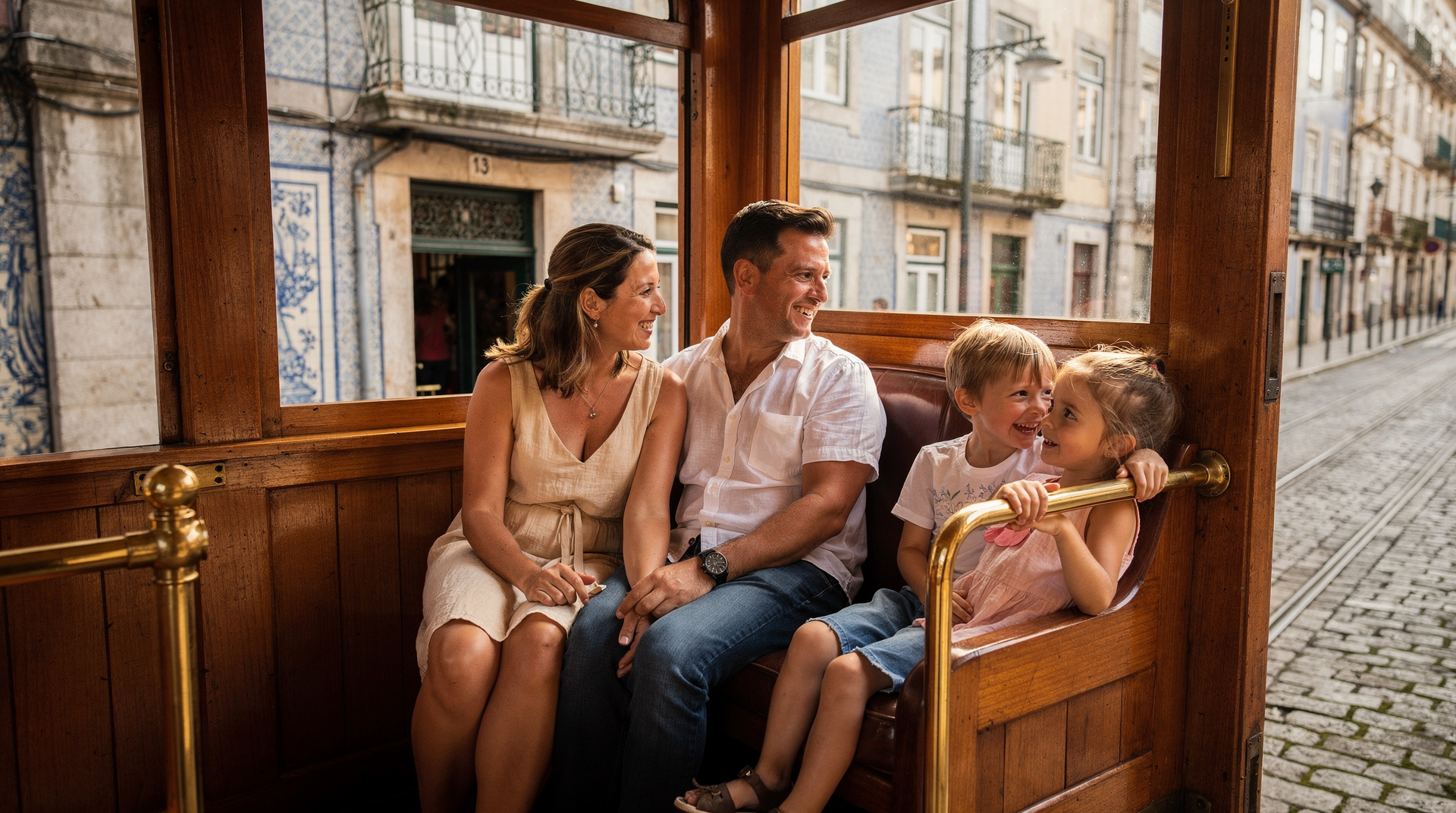
| Getting there | walk from Ribeira, or tram 1E from Infante |
| Best age | 5–14 years old |
What you see inside
The boat ride (Viagem dos Descobrimentos): The indoor river ride is the reason to visit. Small boats carry groups of 6–8 passengers through a sequence of elaborately constructed historical environments presented as the regions encountered on the Portuguese voyages. The scenes include:
- The coast of West Africa (the early Portuguese exploration of the 15th century, gold trade and the beginnings of the Atlantic slave trade — the museum presents this with some historical honesty about the darker aspects)
- The Indian Ocean spice trade route (Goa, Calicut, the Malabar coast)
- The Japan encounter (the arrival of Portuguese traders in 1543, the Nanban period of early Japanese-European exchange)
- The Amazon basin and the Brazil coast (the 1500 discovery and early settlement)
- Other scenes representing the wider reach of the Carreira da Índia trade route
The production quality of the environments — the scale, the sound design, the lighting and the animatronic and diorama elements — is significantly higher than you might expect from a regional Portuguese museum. It is not Universal Studios, but it is substantially better than most comparable educational attraction formats. Children typically want to ride it twice; the second ride reveals details missed on the first.
The map room and cartography section: A display of historical maps, navigational instruments and charts from the 15th and 16th centuries — the intellectual framework that made the discoveries possible. The original instruments (astrolabes, cross-staffs, early compasses) are arresting in their simplicity relative to what they achieved. The section is better for adults and older children who have some context for what they are looking at.
The weapons and armour collection: A display of 15th and 16th century arms and armour from the discovery period — swords, crossbows, early firearms, shields and ceremonial weaponry. This section holds the attention of most children over about 7, with clear labelling about use and origin.
The global goods section: Displays of the commodities that the discoveries made available to Europe — spices, porcelain, silks, precious stones — with context on the economic transformation they produced. More engaging than it sounds: the display explains why black pepper was worth its weight in silver in 15th century Europe, which gives concrete economic meaning to what the voyages were actually for.
The model ships: Scale reproductions of the caravels, naos and galleons that made the voyages — the type of vessel used for different route conditions, the evolution of hull design over the period, and the comparison of ship size to the distances involved. Children who respond to physical scale (the reconstruction of a caravel amidships gives a sense of how small the ships actually were) find this section particularly engaging.
The interactive zone: A section with digital interactive stations — navigation games, historical quizzes, geography activities. Variable in quality but engaging for children aged 8–12.
Honest assessment
The good: The boat ride is genuinely impressive and justifies the entry price on its own. The overall production standard is higher than most visitors expect. The subject matter is intrinsically connected to Porto’s history in a way that gives the museum relevance beyond generic child-entertainment.
The honest limitations: The museum is somewhat dated in parts — certain sections use technology from 2012 that feels less immersive than more recent interactive museum installations elsewhere. The historical presentation of the slave trade and colonial period varies in nuance across different sections. Some of the signage is primarily in Portuguese, with English translations that are not always of equivalent depth.
For families: Excellent choice. Children aged 5–14 will be genuinely engaged for the full visit.
For adults without children: Worth visiting if Portuguese maritime history is a genuine interest. Not the top priority for a first Porto trip if you are choosing between this and the port cellars, Livraria Lello or the Douro viewpoints — but worth including on a second day or a rainy afternoon.
Book a Porto family highlights tour that pairs well with a World of Discoveries visit — useful if you want a guided overview of the city’s family-friendly sights before or after the museum.
Practical information
Address: Rua de Miragaia 106, 4050-387 Porto
Opening hours: Daily, approximately 10 am to 6 pm (last admission 5 pm). Hours may vary seasonally — check the official website before visiting.
Entry prices (2026 approximate):
- Adults: 14 €
- Children 4–12: 9 €
- Children under 4: free
- Family ticket (2 adults + 2 children): approximately 40–44 €
- Students and seniors: reduced rate (usually 10–11 €)
Online booking: Available on the official World of Discoveries website. Online purchase offers a discount over door prices and avoids queuing at the ticket desk — recommended, especially in summer.
Accessibility: The museum is largely wheelchair accessible. The boat ride requires stepping into the boat at dock level; assistance is available. Contact the museum directly regarding specific mobility requirements.
Facilities: A café/snack bar operates inside the museum. A gift shop sells maritime history books, model ships, replica navigational instruments and Porto-related souvenirs.
Toilets and baby facilities: Baby-changing facilities are available near the main toilets, and the museum layout allows for a pushchair for most of the route, though the boat ride itself requires lifting a young child in and out at the dock. Staff are generally accommodating about pushchair storage during the ride.
Timing your visit: Weekday mornings, particularly outside Portuguese and international school holiday periods, are noticeably quieter than weekend afternoons. If avoiding queues matters more than anything else, arriving at opening on a Tuesday or Wednesday morning is the most reliable strategy — weekends in July and August can mean a genuine wait for the boat ride even with a pre-booked ticket.
Getting there
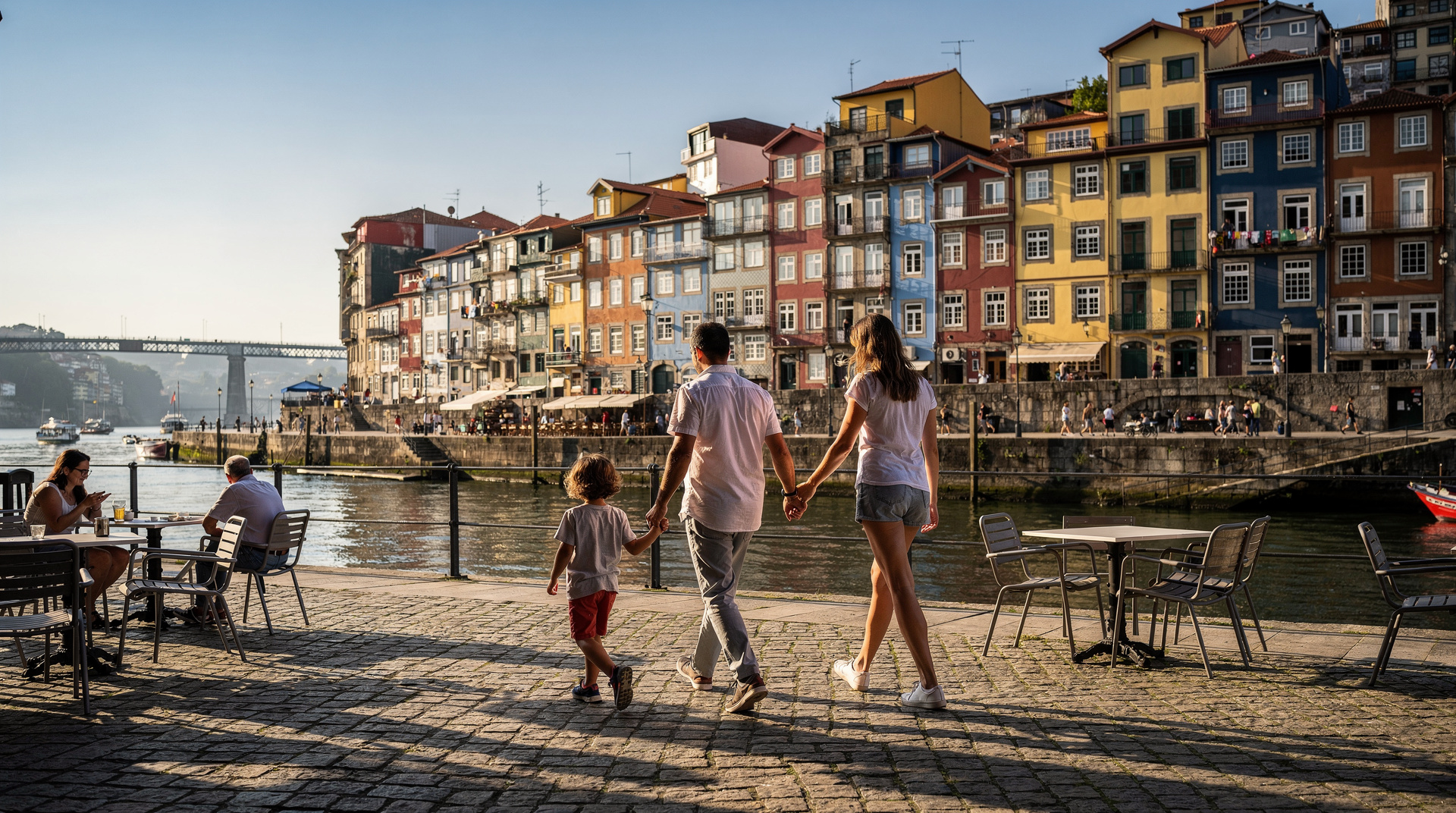
From the Ribeira: 5–7 minutes on foot along the waterfront promenade (Rua da Alfândega and Rua de Miragaia, heading west).
From the city centre (Aliados area): Around 20 minutes on foot downhill, or 10 minutes on the tram 1E from Infante (the stop closest to World of Discoveries is Museu do Carro Eléctrico).
From São Bento station: 15–18 minutes on foot, walking down through the Ribeira and along the waterfront.
Parking: Limited street parking on Rua de Miragaia. The Palácio das Artes car park on Largo da Maternidade is the nearest significant option (approximately 15 minutes’ walk). Uber and Bolt drop-off directly at the door.
Combining World of Discoveries with other visits
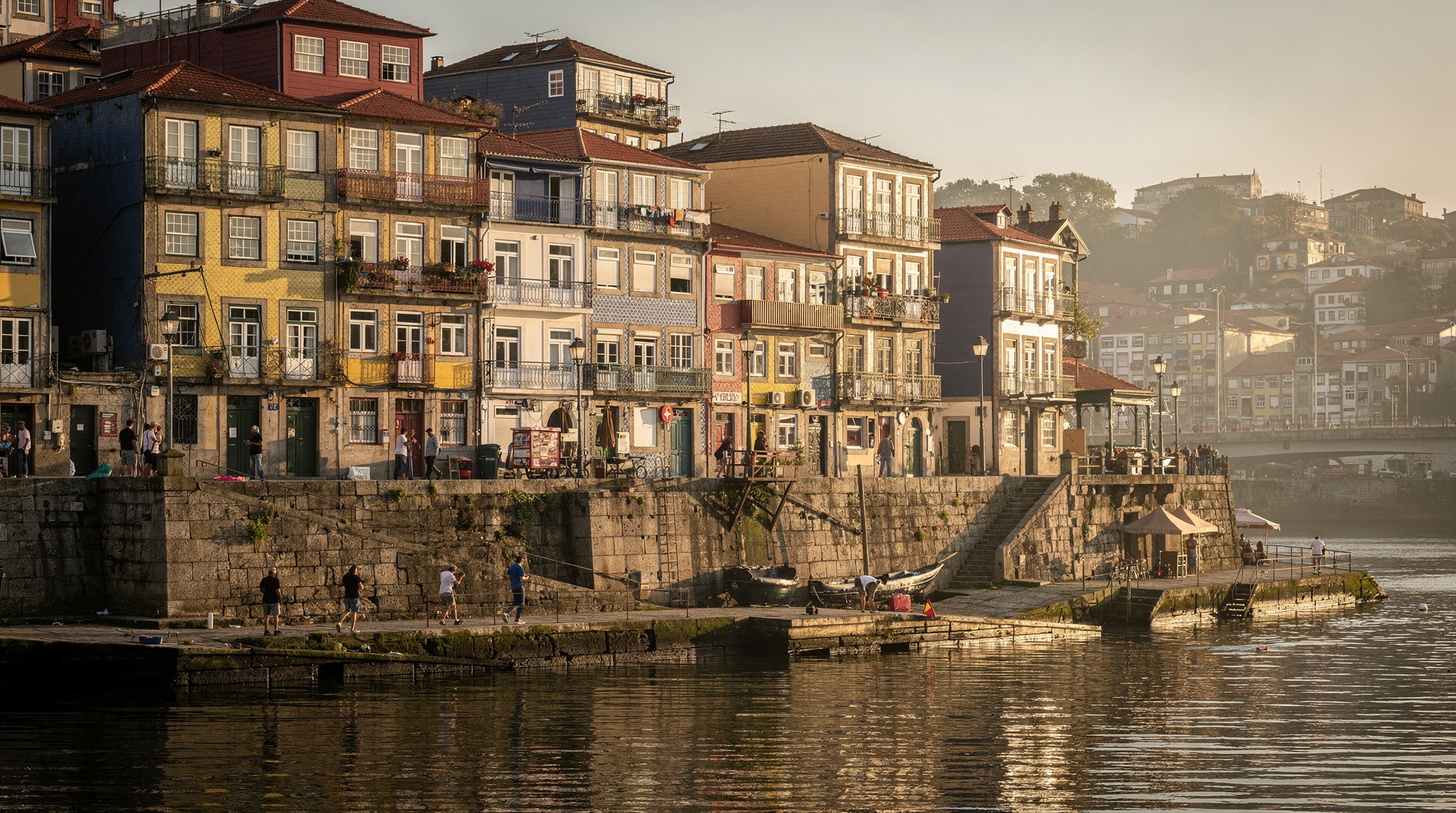
World of Discoveries is well-positioned for a morning that also includes the Ribeira waterfront. The logical sequence: arrive at World of Discoveries at opening (10 am), complete the museum by 12:30 pm, walk the five minutes to the Ribeira for lunch (note: restaurants on the Ribeira waterfront are overpriced by 20–30 % — walk one street back for better value and normal prices), then take the tram 1E from Infante toward Foz do Douro in the afternoon.
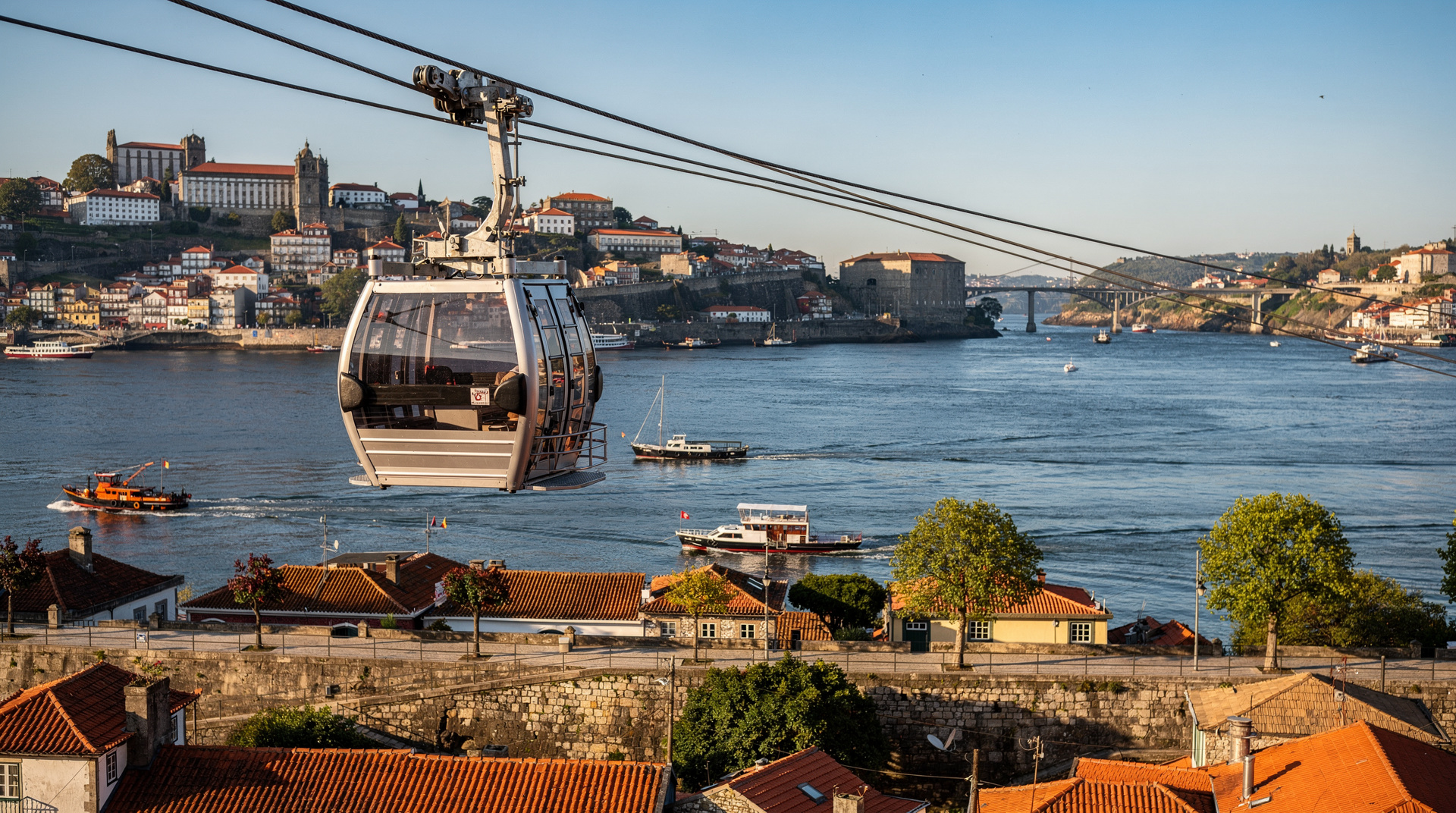
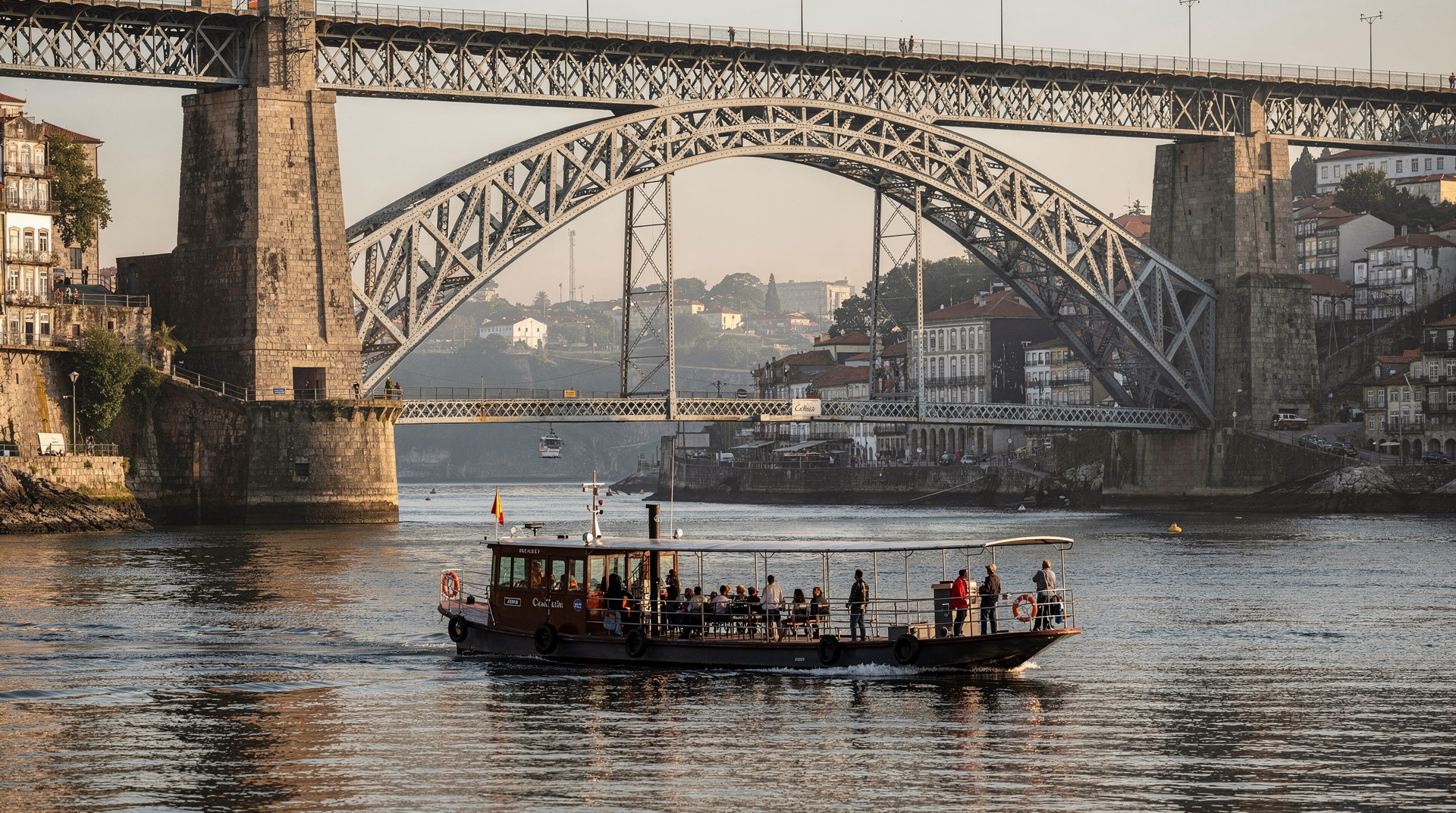
Alternatively: a morning at World of Discoveries combined with the afternoon at the Gaia cable car and waterfront (20 minutes by Uber/Bolt from World of Discoveries across the Ponte Dom Luís I) covers two strong family experiences in one day. The Gaia cable car guide has the logistics.
For a three-day family itinerary that incorporates World of Discoveries with the other key family experiences, the Porto with kids 3-day guide builds the sequence in detail.
Other family options if World of Discoveries doesn’t fit your day
If the museum’s timing doesn’t suit your schedule, or you have already done an indoor activity and want to spend the rest of the day outdoors, the six bridges cruise is a comfortable alternative that works well with children — an hour on the water rather than a walk-through museum, and generally easier for very young children who may struggle to stay engaged for a full 2–2.5 hour indoor visit. The family things to do in Porto guide and the broader Porto with kids guide both cover the full range of options if you are building a multi-day family itinerary rather than a single activity.
Visitors deciding between a rainy-day plan and a sunny-day plan should note that World of Discoveries is entirely indoor and air-conditioned — a sensible choice to hold in reserve for a wet or very hot afternoon rather than using it on the one clear day of a short trip.
The Age of Discoveries in Porto context
The museum’s subject matter is particularly resonant in Porto because Porto was one of the primary departure points for the great voyages. The Escola de Sagres — the navigation school supposedly established by Prince Henry the Navigator in the early 15th century — was based in the Algarve, but Porto provided ships, sailors, funding and supply for many of the Atlantic voyages.
The Douro river was a crucial logistics route — ships were provisioned with dried fish (bacalhau) from the northern Atlantic, with Douro wine that kept better than most, and with provisions stored in the river warehouses whose descendants you can see today in the Gaia wine lodge district across the water.
Understanding this gives World of Discoveries a context that transforms it from a family entertainment venue into a genuinely interesting historical site. If you visit Cálem or Taylor’s port lodge after World of Discoveries, you see the end of a trade chain that the museum describes the beginning of.
For families building a longer stay, pairing the museum with a walk through the Ribeira waterfront where the ships once departed adds a tangible, physical dimension that a display case cannot — standing at the quay and picturing 15th-century caravels leaving from roughly the same stretch of river is a genuinely effective way to make the history land for children old enough to make the connection.
Frequently asked questions about World of Discoveries
Can I take photographs inside the museum?
Photography is generally permitted in the museum exhibits. The boat ride may have specific restrictions — check with staff at the boarding point. Flash photography is restricted in some sections to protect display materials.
Is there a café or restaurant inside?
A café operates inside the museum serving light meals, sandwiches, coffee and drinks. It is a practical option for a mid-visit break but not a lunch destination in its own right — the food is café-standard rather than restaurant-quality. Budget 5–10 € per person for a snack.
Does the museum offer guided tours?
Guided tours for school groups and private bookings are available in Portuguese and English. Individual visitors typically self-guide with the provided audio guides and signage. Booking a private guided tour adds approximately 50–80 € to the entry cost and is most worthwhile for groups with a specific educational focus.
Is the museum suitable for school trips?
Yes — World of Discoveries is specifically designed with curriculum links to Portuguese and European history, geography and maritime culture. The museum offers educational packages for school groups. Contact the education department directly for group booking and curriculum materials.
How does World of Discoveries compare to the Serralves Museum?
They serve completely different purposes. World of Discoveries is a family-oriented interactive history museum. Serralves is a serious contemporary art institution with a beautiful park. Both are worth visiting; neither replaces the other. For a family with children aged 5–12, World of Discoveries is the priority; for adults interested in contemporary art, Serralves is the stronger choice.
Frequently asked questions — World of Discoveries Porto — the honest guide
How much does World of Discoveries cost?
Entry costs approximately 14 € for adults and 9 € for children aged 4–12. Children under 4 enter free. Family tickets (2 adults + 2 children) are available at a discount — around 40–44 €. Book online for a 10–15 % reduction off door prices. The museum is open daily from around 10 am to 6 pm (last entry 5 pm).What age is World of Discoveries best for?
Children between 5 and 14 get the most from World of Discoveries. The interactive elements, the boat ride and the dioramas are engaging for primary-school-age children. Teenagers who enjoy history and adventure may also appreciate it. Toddlers under 4 can attend free but may not engage deeply with the content.What is the indoor boat ride in World of Discoveries?
The indoor river boat ride is the centrepiece of the museum — a slow-moving journey through elaborately recreated environments representing the regions explored during Portugal's Age of Discoveries: the Amazon river basin, the Indian Ocean spice route, a Japanese imperial court, the coast of West Africa and other historical scenes. The ride takes approximately 20–25 minutes.Where is World of Discoveries in Porto?
World of Discoveries is at Rua de Miragaia 106, in the historic centre near the Ribeira waterfront. It is approximately 5 minutes' walk from the Ribeira square and 10 minutes from the Sé Catedral. By public transport, take tram line 1E from Infante or walk along the riverfront from the Ribeira.How long does World of Discoveries take?
Allow 2–2.5 hours for a full visit, including the boat ride (20–25 minutes), the interactive diorama sections, the weapons and period artefact displays, and any time spent at the gift shop or café. Families with younger children who move faster through exhibits may complete it in 1.5 hours.Is World of Discoveries suitable for adults without children?
The museum is primarily designed for families and school groups, but the subject matter — Portugal's 15th and 16th century maritime expansion — is historically significant and the production quality is higher than most comparable museums. Adults with an interest in the Age of Discoveries will find it worthwhile. Those looking for serious academic history rather than experiential presentation will be better served by the Museu Nacional Soares dos Reis or the Museu do Carro Eléctrico.
Top experiences
Bookable activities with verified prices and instant confirmation on GetYourGuide.