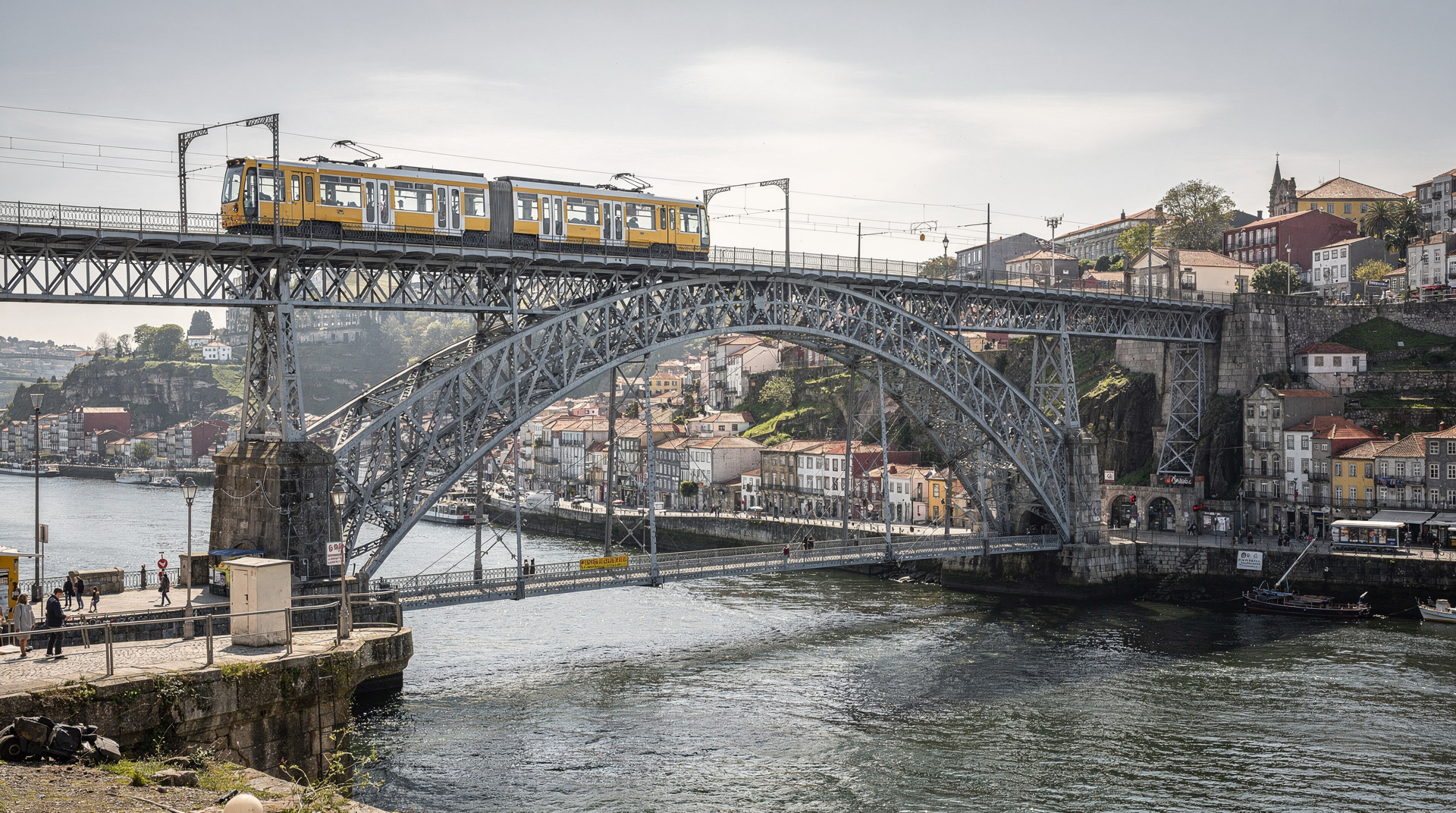
Ribeira — Porto's historic waterfront
Honest guide to Ribeira, Porto's waterfront district: best things to do, where to eat without overpaying, how to get there and what tourist traps to
Porto: Douro River Six Bridges Cruise
Quick facts
- Best for
- Riverside walks, azulejos, bridge views, cruise departure point
- Time needed
- 2–4 hours
- Getting there
- Walk from city centre (~15 min) or metro to São Bento, then descend
- Nearest metro
- São Bento (line A/B/C/E) — 10 min walk downhill
The honest picture of Ribeira
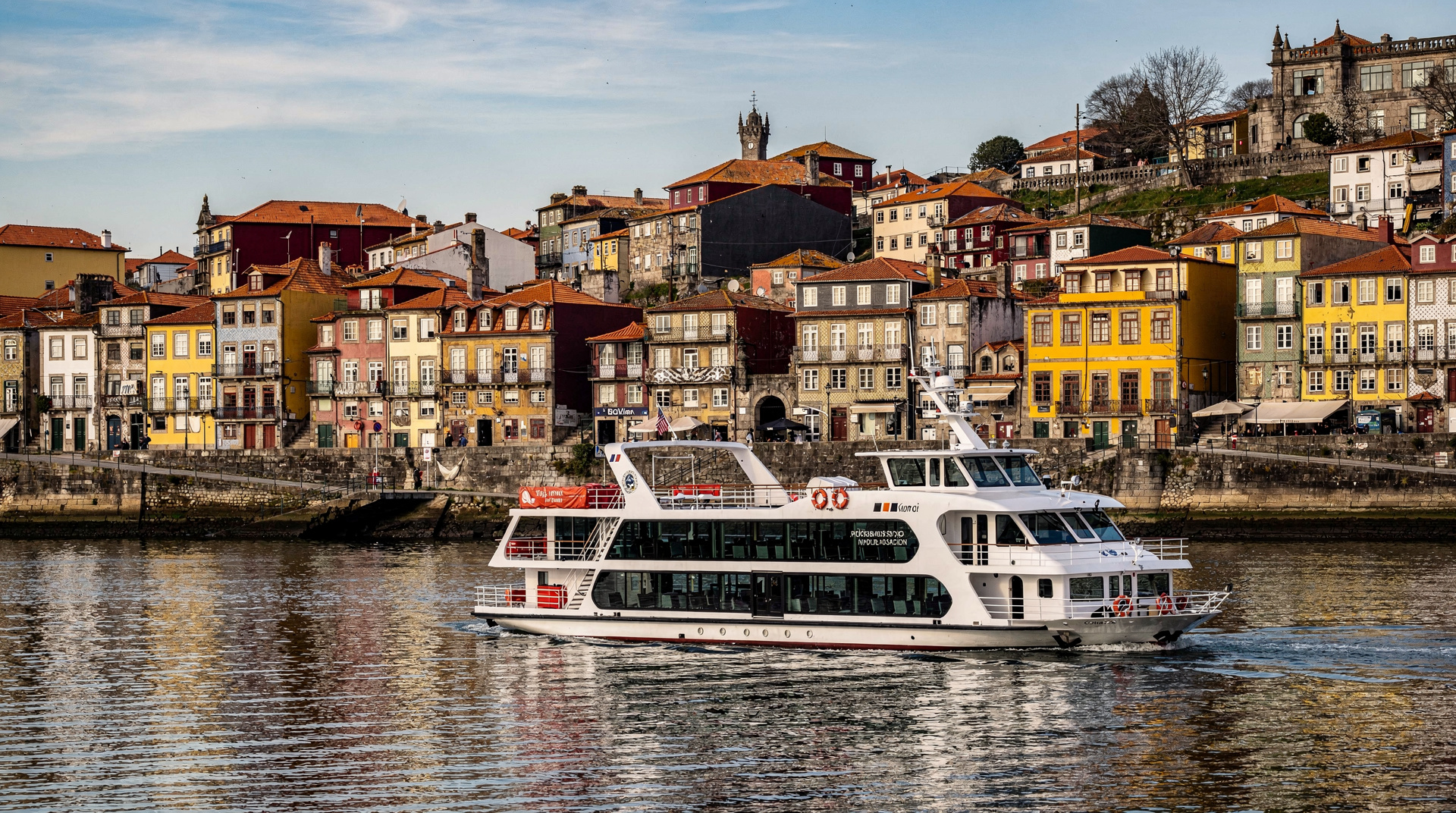
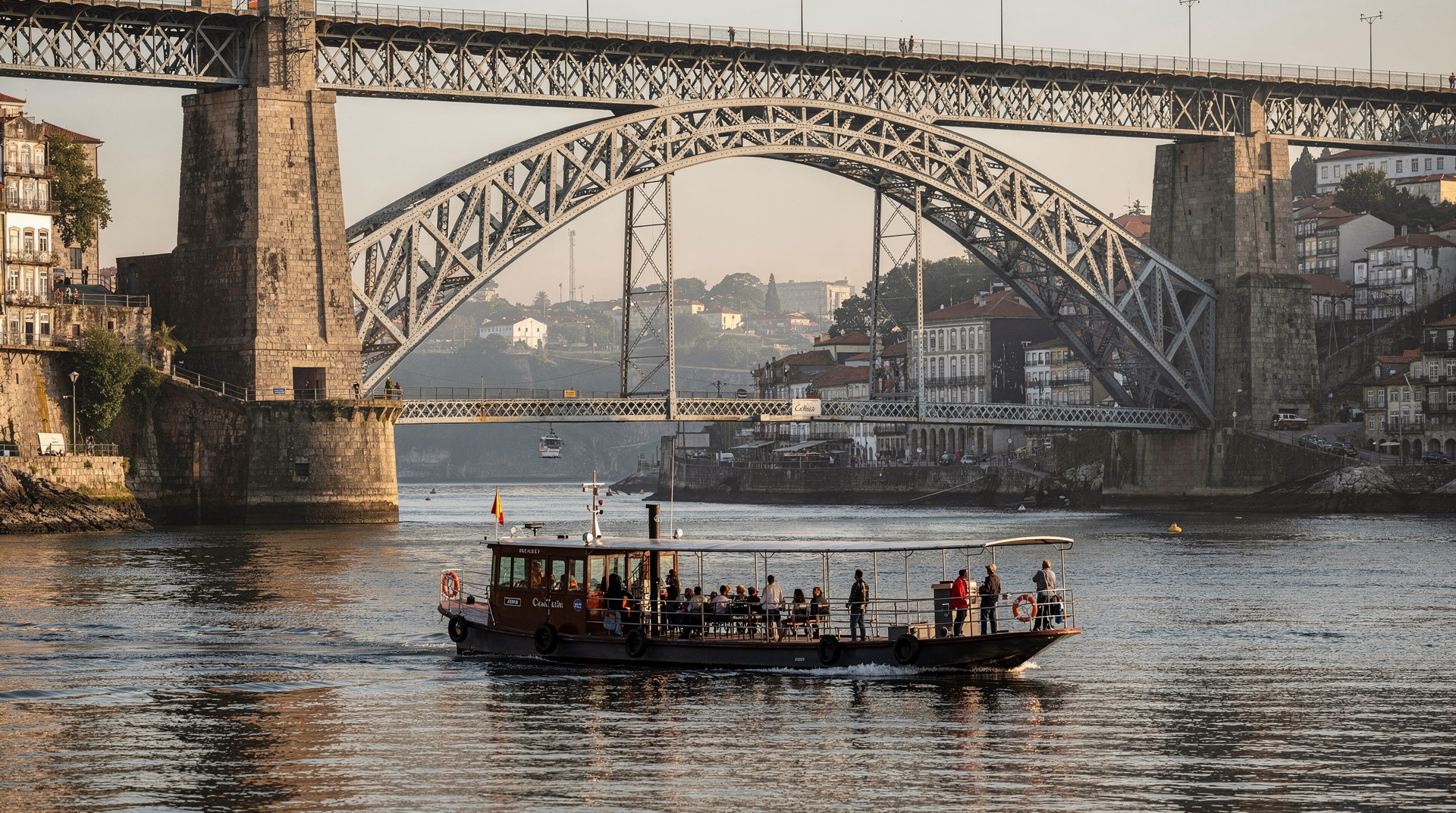
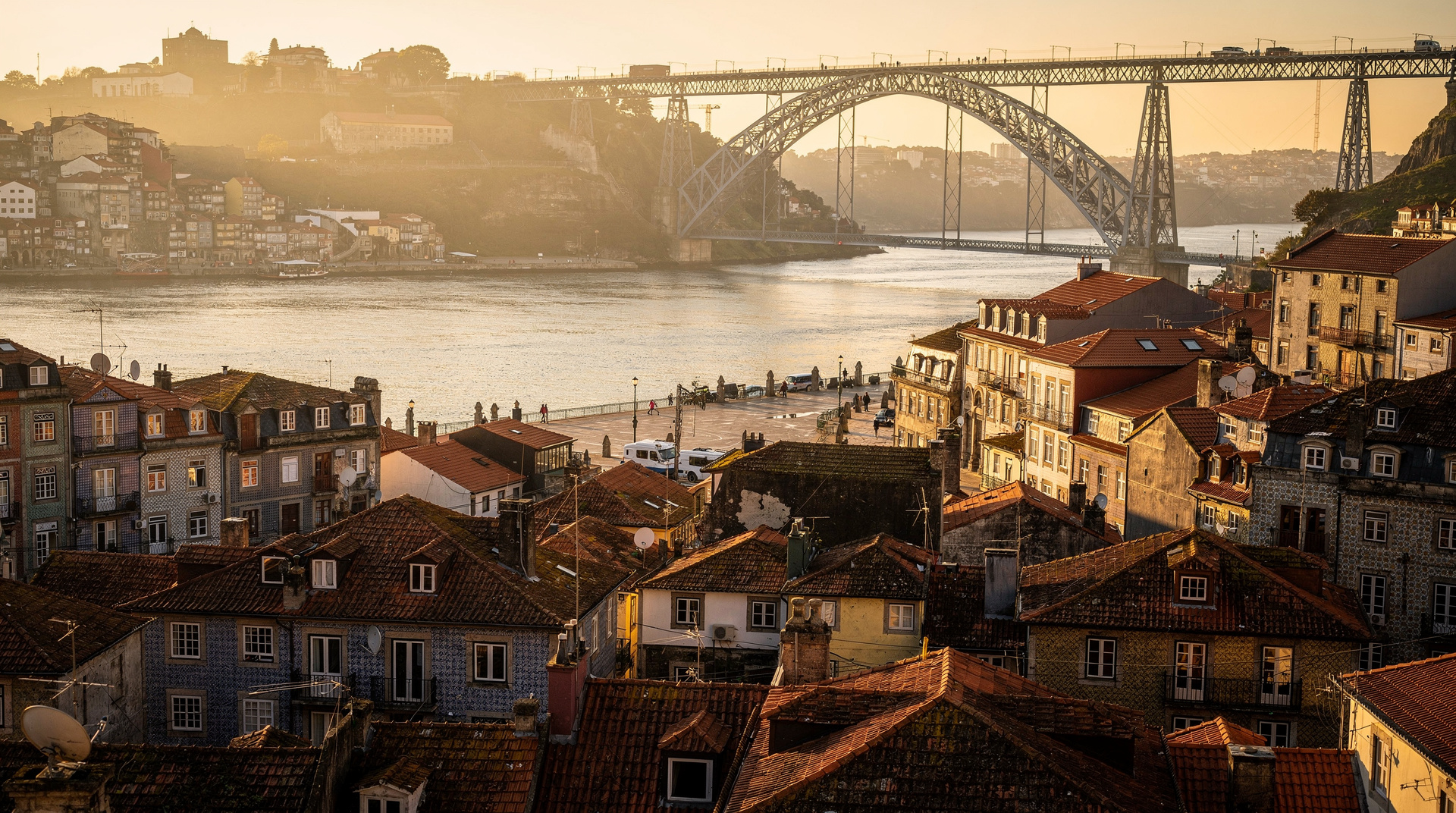
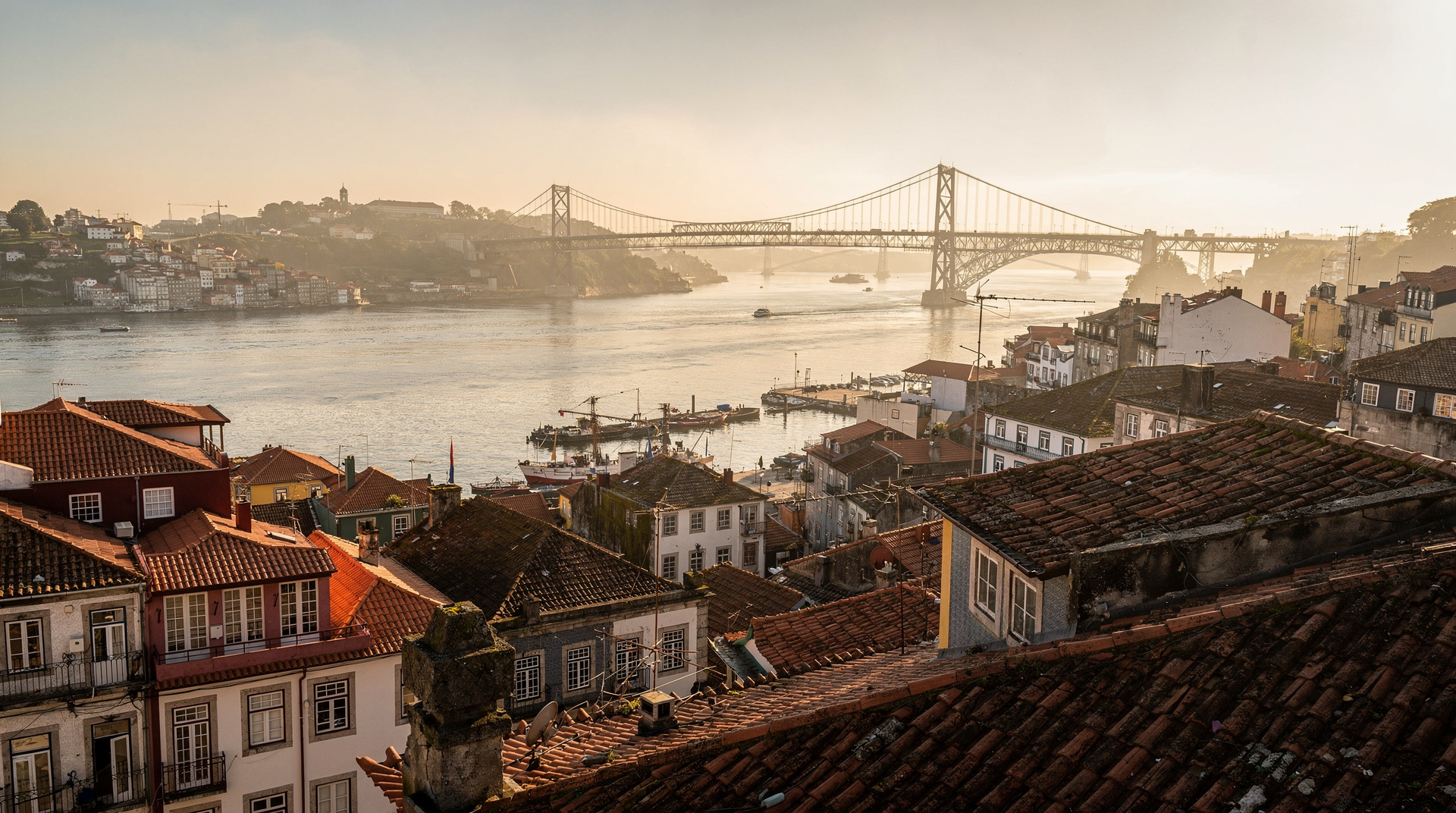
Ribeira is the image of Porto most people have in mind before they arrive: the narrow medieval streets running down to the river, the stacked coloured buildings with laundry on the balconies, the rabelo boats reflected in the Douro, the granite arch of Ponte Dom Luís I rising overhead. The area around Praça da Ribeira and the waterfront quay is genuinely one of the most atmospheric urban riverfronts in Europe. It is also Porto’s most tourist-saturated neighbourhood, and the gap between the experience you expect and the one you get depends entirely on how you approach it.
This guide is structured around that gap. Ribeira’s appeal is real — so are its overpriced restaurants, pushy touts and crowds that peak between 10 am and 6 pm in July and August. Understanding both sides gives you the visit rather than the frustration.
| Where | Porto’s waterfront, below São Bento (10 min walk downhill) |
| Time needed | 2–3 hours |
| Cost | Free to walk; São Francisco Church €7.50; cruise around €15–18 |
| Getting there | Metro to São Bento, then downhill, or the Batalha funicular (€4) |
| Best time | Before 9 am or after 5 pm, outside July–August |
What to see and do in Ribeira
Praça da Ribeira and the waterfront
The square at the centre of Ribeira (Praça da Ribeira) is a natural starting point. The 18th-century stone cube at the centre is a fountain; the arcaded buildings surrounding the square date from various periods of reconstruction after fires and floods. The square itself is less interesting than what surrounds it: the medieval streets climbing immediately behind are quieter and more textured.
The Cais da Ribeira — the waterfront promenade running east and west along the Douro — is where the cruise boats depart. A Six Bridges Douro river cruise departs from the Ribeira quay roughly every 30 minutes in high season and hourly in winter. The 50-minute cruise gives you the most useful perspective on both city banks and is Porto’s most popular single activity. See the Six Bridges cruise guide for a comparison of operators and what to book.
Ponte Dom Luís I
The double-deck iron bridge connecting Porto to Vila Nova de Gaia was designed by Théophile Seyrig (a collaborator of Eiffel) and completed in 1886. Walk the upper deck for the panoramic view — it is about 45 metres above the river — or the lower deck for the more direct waterfront crossing. Both are pedestrian-accessible; the upper deck is also served by metro line D. The full story of the bridge is in our Luis I Bridge guide.
São Francisco Church
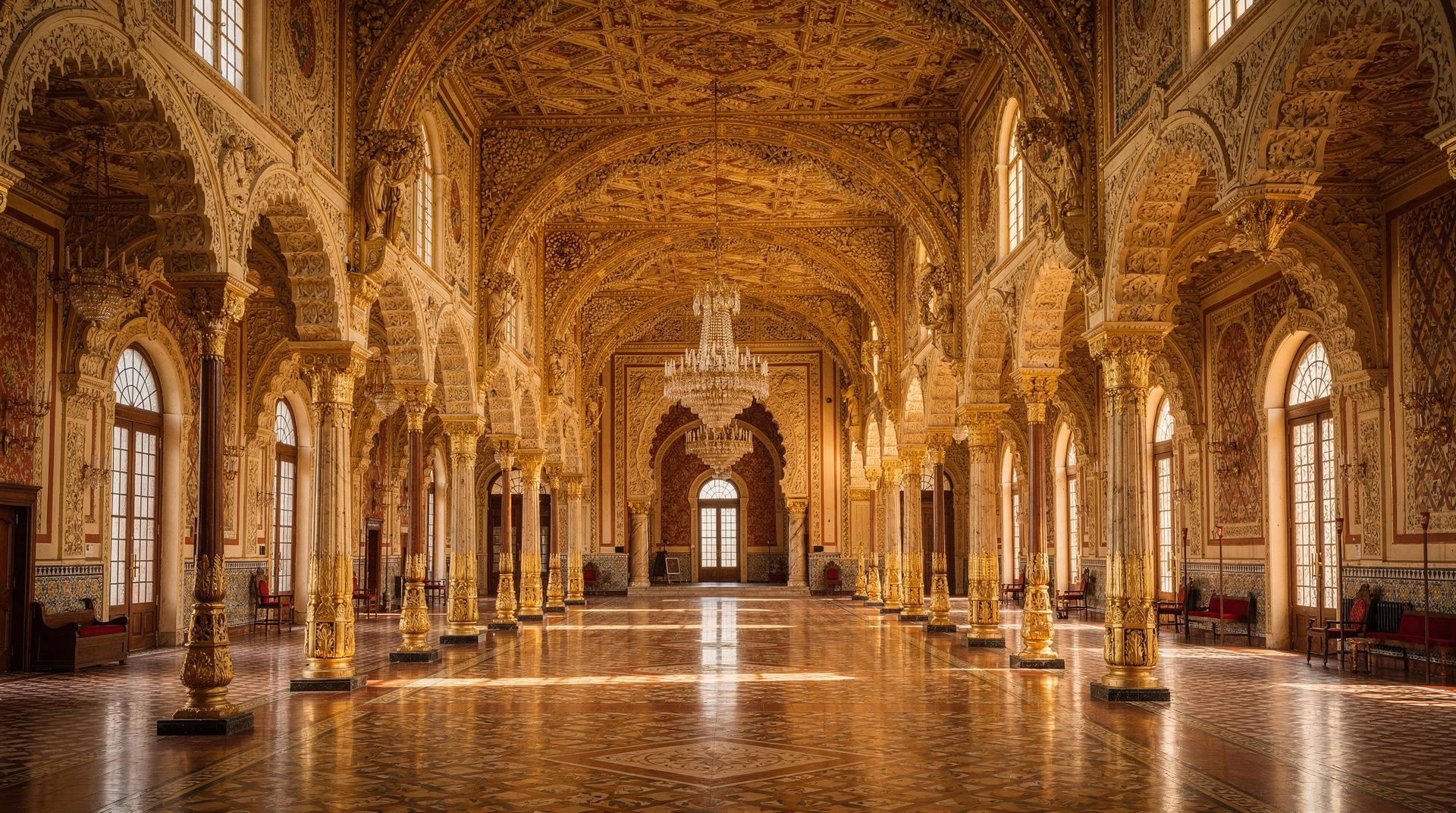
Adjacent to the Palácio da Bolsa on the western edge of Ribeira, the Igreja de São Francisco appears from the outside to be a fairly standard Gothic church. Inside, an extraordinary baroque interior covers virtually every surface in gilded wood carvings. The effect is overwhelming in the literal sense — some sources estimate 400 kg of gold leaf used in the 18th-century decoration. Entry is €7.50. There is also a catacombs level beneath the church floor (included in the entry price) which is sober counterpoint to the gilded excess above.
The medieval streets above the waterfront
The lanes immediately behind the Ribeira waterfront — Rua Alfândega, Rua da Reboleira, and the tangle of streets climbing toward Batalha — are the most rewarding part of the neighbourhood. Away from the main quay, you find the actual fabric of medieval Porto: crumbling Gothic doorways, azulejo-tiled façades that haven’t been photographed ten thousand times, small bakeries selling pão de ló, an occasional tasca that hasn’t changed its menu since the 1980s. The climb from the waterfront toward the city centre is steep; it takes about 10 minutes to reach Batalha and another five to reach Clérigos.
Fado in Ribeira
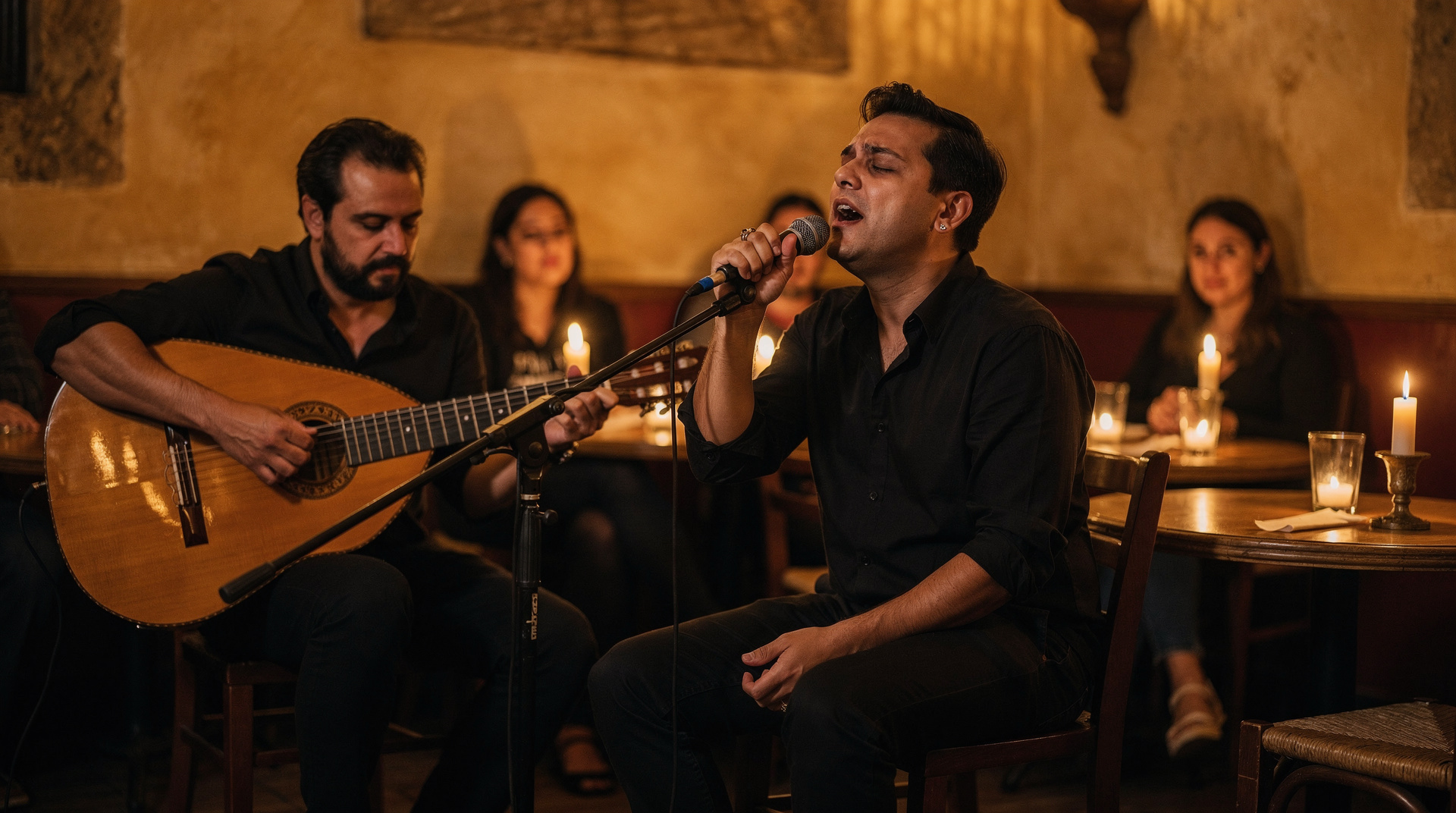
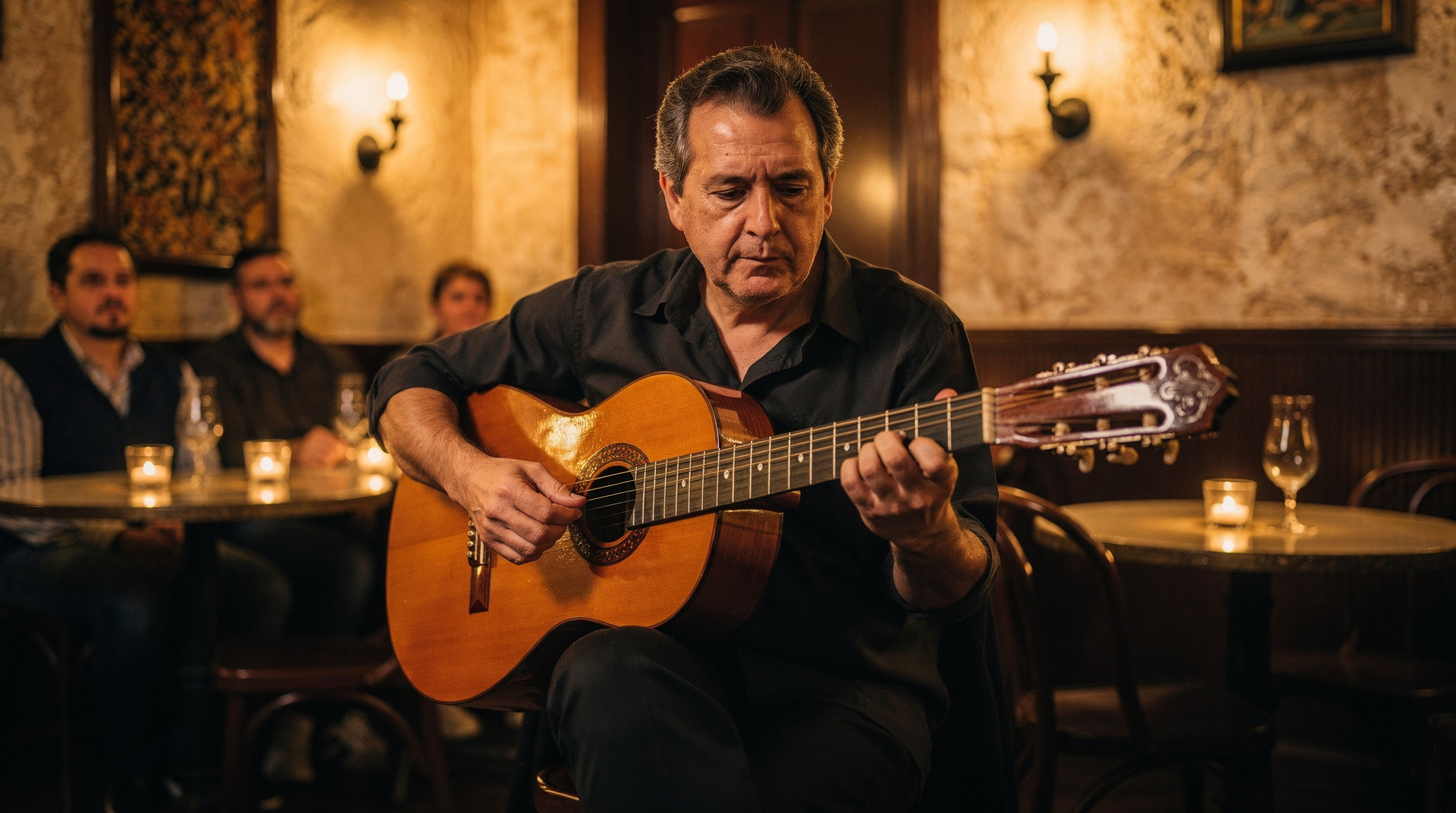
Several fado venues operate in and around Ribeira, typically offering a dinner-and-show format. The quality varies. The Porto walking tour and fado show combines a guided historic centre walk with a fado performance in a cellar venue — a practical way to cover both within an evening if you haven’t yet done a dedicated walking tour. Our Porto fado guide compares the main venues and gives realistic expectations about the difference between authentic fado houses and tourist-oriented shows.
Where to eat in Ribeira (honestly)
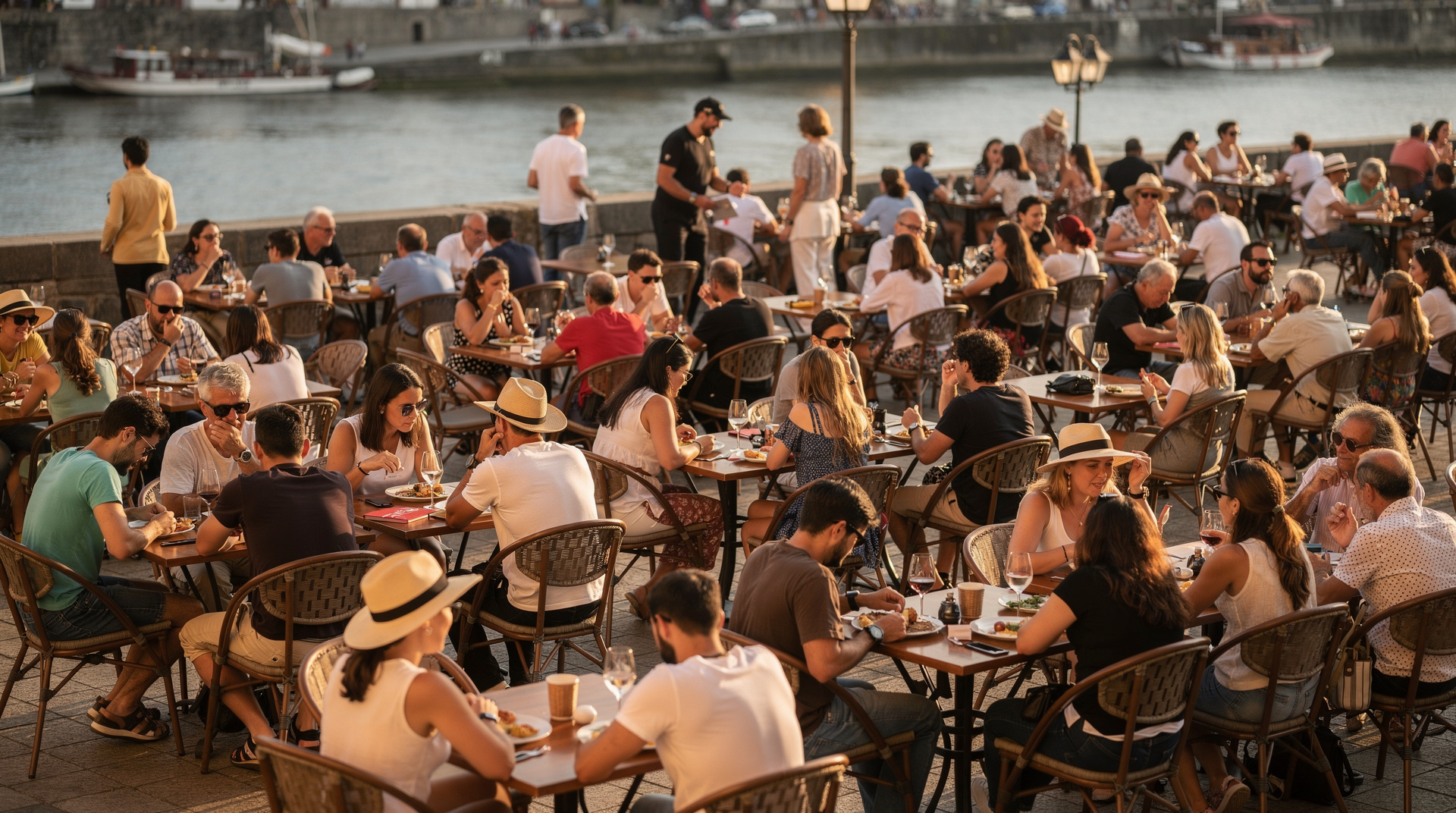
The restaurants directly on the Cais da Ribeira esplanade are the most photographed and the most expensive for what they deliver. Most operate on a tourist-facing model: laminated menus with photographs, food that is competent rather than distinctive, and the couvert (bread, olives, perhaps cheese) placed silently on your table and charged at €2–3 per item whether you wanted it or not. This is not specific to Ribeira — it is standard practice in tourist-dense Porto — but Ribeira is where it is most prevalent.
The practical solution is simple: go one or two streets back from the waterfront. Prices drop immediately. Rua de Fonte Taurina and the streets behind Praça da Ribeira have several tascas where lunch runs €10–14 per person with a glass of vinho verde. The view of the river disappears; the food quality goes up.
For a francesinha in the neighbourhood, Cervejaria Gazela at Cais da Ribeira is one of the more cited addresses — more local than the tourist-facing restaurants, a reliably good version of Porto’s signature sandwich. Our francesinha guide covers the broader debate about where to eat it.
For dinner with a proper view, the compromise is to arrive early (before 7 pm), avoid the menus with photographs, and start by refusing the couvert if you don’t want it. Dinner for two on the waterfront typically costs €45–60 at a mid-range restaurant; the same food costs €30–40 one street back.
Ribeira or Gaia: where to actually eat
Both riverbanks sell the same view of each other, and both have a tourist-priced waterfront strip. The honest comparison:
| Ribeira (Porto side) | Gaia (opposite side) | |
|---|---|---|
| View | Looking across at Gaia’s port lodges | Looking across at Ribeira’s coloured houses |
| Typical dinner for two | €45–60 on the esplanade | €50–70 on the esplanade |
| One street back | €30–40, tascas | Similar drop, fewer options |
| What’s nearby | Medieval streets, São Francisco Church | Port lodges, cable car, WOW complex |
Neither side is objectively better value directly on the water — the discount comes from walking away from whichever riverfront you’re on. If you’re choosing where to base an evening, Ribeira gives you the older streets to wander afterward; Gaia gives you a lodge tasting and a quieter, more panoramic terrace. The Vila Nova de Gaia guide covers that side’s lodges and prices in full.
Shopping and street life
Away from the souvenir stalls near the main square, the streets climbing from Ribeira toward Batalha have a handful of small, independent shops worth a detour: ceramics studios, a few remaining traditional cobblers, and ateliers selling azulejo-pattern tiles cut from reclaimed building fronts rather than mass-produced replicas. None of this is essential sightseeing, but it rewards the extra ten minutes if you’ve already done the waterfront and the church. For a broader sense of what’s authentic versus staged for tourists across the city, our Porto tourist traps guide is worth reading before you shop anywhere near a cruise departure point.
Getting to Ribeira
From the city centre: Ribeira is downhill from virtually everywhere in central Porto. From São Bento station, the descent takes about 10 minutes on foot through Rua Mouzinho da Silveira. From Clérigos Tower, allow 15 minutes. From Batalha, the funicular (Funicular dos Guindais) descends to the riverside near Ribeira for €4 each way.
By metro: The nearest station is São Bento (lines A, B, C, E), about 10–12 minutes walk from the waterfront. The funicular at Batalha (metro via any stop in the centre) provides a faster descent option.
From Gaia: The lower deck of Ponte Dom Luís I connects the Gaia esplanade to the Ribeira waterfront. The walk is 10–15 minutes including the bridge crossing.
Practical tips for Ribeira
- The couvert is not free. Send it back before touching it if you don’t want to pay. This is culturally normal and legally your right.
- The best light for photography is in the morning (golden hour from the waterfront facing east) or late afternoon when the facade colours are warm.
- The neighbourhood is loudest between noon and 3 pm and again 6–9 pm in summer. If you want the streets to yourself, visit before 8:30 am.
- The streets are uneven cobblestone. Flat-soled shoes are strongly recommended.
- Do not pay €35 for a “free walking tour” guide who has approached you on the street — these are typically informal, tip-based and variable in quality. See our fake free walking tours guide if you want to understand the model before committing.
Seasonality and what to expect at different times of year
Ribeira changes character significantly across the calendar. In May and June, the neighbourhood has its best balance: warm evenings, full restaurant terraces, and tourist numbers that are high but not overwhelming. The light on the Douro at dusk is particularly good in late May before the summer haze builds.
São João (23–24 June) transforms Ribeira and the entire waterfront into the centrepiece of Porto’s biggest festival. The quay fills from sunset on the 23rd; sardines are grilled on street braziers, people descend from every neighbourhood in Porto, and the crowd watching the midnight fireworks from the riverside can number in the hundreds of thousands. It is one of the most genuinely celebratory events in Portugal. If you are visiting Porto in late June, plan around it: book accommodation months in advance, expect everything to be busier and louder than normal, and embrace it.
July and August bring the highest visitor volumes. The Ribeira waterfront between noon and 4 pm can feel genuinely uncomfortable in a crowd. Cruise boats depart every 20–30 minutes; the esplanade restaurants are at capacity most evenings. This is manageable with early starts and a willingness to leave the main promenade. The neighbourhood’s side streets are always quieter than the main quay; a ten-minute walk uphill puts you in a different world.
September sees crowds thin considerably. The weather remains warm and dry, the cruise schedule remains full, and the prices begin to ease. This is arguably the best month for Ribeira specifically: the light in September has a particular quality in Porto, the evenings are long and the city feels relaxed.
November through February is Ribeira at its emptiest. The waterfront cafés reduce their outdoor seating; the cruise schedule drops to hourly departures. On dry winter days, the neighbourhood is beautiful and quiet — the colours of the buildings, the reflections in the river, the mist that sometimes sits on the Douro in the morning. Rain (most likely in November and January) makes the cobblestones genuinely slippery; wear shoes with grip.
The vindima (Douro harvest) in September–October doesn’t directly affect Ribeira, but the rabelo boats moored on the waterfront serve as a connection to the valley. These traditional flat-bottomed boats were used to transport port wine barrels downriver from the Douro until the mid-20th century. They are now moorings and tourist craft, but they remain the most visually direct link between the city waterfront and the wine country upstream.
Frequently asked questions about Ribeira
Is Ribeira worth visiting in Porto?
Yes, but go in with realistic expectations. Ribeira is beautiful and historically significant; the waterfront views and the medieval streets are not overrated. What is overrated is the dining on the main esplanade and the idea that you need to spend much time on the tourist strip itself. Allocate two to three hours, walk the streets above the waterfront, cross the bridge once on foot, and you have seen Ribeira properly.
When is the best time to visit Ribeira?
Early morning (before 9 am) or after 5 pm on weekdays, outside of July and August, gives you the neighbourhood without the crowd. São João festival weekend (23–24 June) turns Ribeira into a massive outdoor celebration — extraordinary if you’re expecting it and prepared, overwhelming if you arrive not knowing.
How long should I spend in Ribeira?
Two to three hours covers the waterfront, a walk through the medieval streets, São Francisco Church and a coffee or meal. If you include a river cruise (50–60 minutes), add that time. Ribeira is a neighbourhood to walk through as part of a broader Porto day, not a standalone all-day destination.
What is the couvert and can I refuse it?
The couvert is a set of small starters — bread, butter, olives, sometimes cheese or cured meat — placed on your table without being ordered. In tourist-facing Ribeira restaurants, each item costs €1.50–3. You are fully within your rights to refuse it before touching anything; send it back politely when it arrives. Touching any item means you’ve accepted the charge. See our Ribeira restaurant traps guide for more detail on how to navigate eating here.
Ribeira pairs naturally with the port lodges of Gaia — the bridge is your connection between the two. The Vila Nova de Gaia guide covers the other bank in detail. For a full day plan incorporating both, see the Porto 3-day itinerary. For the wider city context, our main Porto guide covers the neighbourhoods beyond the waterfront.
Top experiences
Bookable activities with verified prices and instant confirmation on GetYourGuide.