Sailing from Porto — catamarans, sailboats, and sunset charters on the Douro and Atlantic
Porto: Porto Douro River Sailing Tour
Can I go sailing from Porto and what does it cost?
Yes. Sailboat and catamaran options operate from Foz do Douro and the Douro river mouth. Shared sunset sailing trips cost 35–55 € per person. Private yacht or catamaran charters run 150–300 € per person or 500–1200 € for the whole boat. The experience is weather-dependent and different in character from a motor cruise.
Porto as a sailing base — understanding the geography
Foz do Douro is the operational heart of Porto’s sailing scene. The river mouth — where the Douro meets the Atlantic after its 930 km journey from Spain — offers access to both the calmer river waters east of Foz and the open Atlantic to the west. Depending on wind and conditions, a sailing trip from Porto can be a gentle river glide or a proper Atlantic passage.
The Atlantic coast here is not sheltered. Porto’s coast faces the full fetch of the North Atlantic, and the sailing conditions can range from flat and windless in summer to genuinely demanding in winter gales. This is what makes it interesting for serious sailors and what requires operator expertise for tourist charters.
For visitors, the practical sailing options fall into three categories: shared sunset or afternoon trips on the Douro; private charters for groups; and Atlantic sailing excursions for those who want the sea rather than the river.
| Where | Foz do Douro / Douro river mouth, plus coastal Atlantic |
| Shared trip cost | around 35–55 € per person, 2–3 hours |
| Private charter cost | around 500–1,200 € for the boat, half day |
| Season | April–October main season; best winds September–October |
| Booking | Weather-dependent — most operators confirm 24–48h ahead |
Shared sailing trips — the accessible entry point
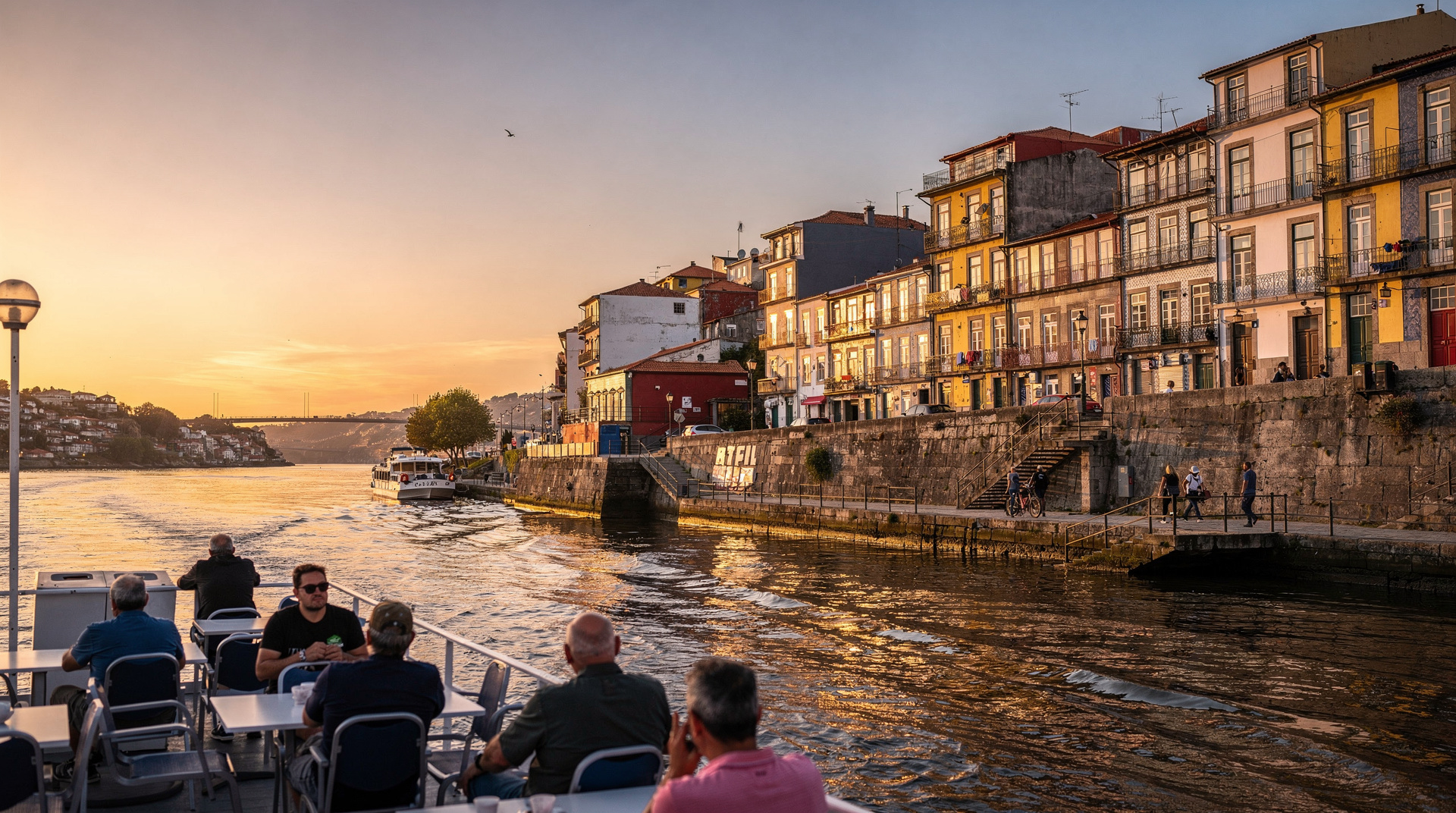
Shared sailboat trips (6–12 passengers) typically depart from the Foz area and offer a 2 to 3-hour sailing experience in the early evening, timed for sunset or late afternoon light. They include a drink — usually port wine, vinho verde, or a non-alcoholic option — and provide the atmosphere of sailing without the cost of a private charter.
The honest distinction from a motorboat sunset cruise: a sailboat carries fewer people, moves more quietly, and can anchor or drift in positions that a motor vessel would not stop for. The experience is less scheduled and more responsive to conditions. When the wind is up and the skipper raises sail off the river mouth, the difference from a motorboat is immediately apparent.
When the wind is not up, the boat runs under motor and the difference from a motorboat is significantly less obvious. This is worth knowing before booking — a “sailboat tour” can be a motorboat tour in practice, particularly on calm summer afternoons.
Book the Porto sailboat sunset trip on GetYourGuide — the shared format with a welcome drink, covering the Douro mouth and coastal area.
Book the Douro sailing and port wine experience — includes a port wine tasting element alongside the sailing, connecting the two signature Porto experiences.
Private sailing charters — the premium option
For couples, small groups, or anyone who wants an exclusive experience, private sailboat charters offer the Douro and Atlantic with just your party on board. The skipper typically handles navigation while you enjoy the deck — though most operators welcome participation in line handling and basic sailing tasks if you are interested.
Private charters allow route flexibility that shared tours cannot offer. You can request a particular sunset position, anchor in a quiet spot, or extend the trip if conditions are exceptional. The captain’s knowledge of local conditions and specific spots visible only from the water — coves, rock formations, the underside of the Arrábida bridge at dusk — makes the private format significantly richer in content.
Book a private sailing charter on the Douro — suited for couples and groups of up to 8 passengers. Prices run approximately 500–900 € for a half day, making the per-person cost reasonable when shared between 6–8 people.
Book the private sunset sail on the Douro — the evening format specifically timed for golden hour, including a bottle of wine on board. This is the premium romantic option and the most consistently reviewed for couples visiting Porto.
Sailboat vs motorboat — honest comparison
The sunset cruise guide covers motor vessel options in detail. Here is the honest comparison for someone deciding between the two:
Choose a sailboat if: You value atmosphere, intimacy, and the possibility of actual sailing. You are travelling as a couple or small group. You have the budget for private or are willing to wait for a shared departure. You are interested in the sea itself, not just the view of the city.
Choose a motorboat if: You want a fixed timetable and guaranteed departure. You are travelling with a group including children. You want the Six Bridges route or a specific Douro cruise route at a set time. You prioritise the city views over the sailing experience.
The motor cruise with sunset timing is more reliable for photography — you know exactly when it departs and you can plan accordingly. The sailboat offers a better experience if conditions cooperate, but less predictability.
Atlantic sailing excursions — for serious sailors
Beyond the Douro mouth, Porto’s Atlantic coastline opens up for longer passages. Operators with offshore-capable vessels offer multi-hour Atlantic excursions sailing north toward Viana do Castelo or south toward Espinho and the Barra de Aveiro. These are not tourist products in the standard sense — they require reasonable sea legs and comfort with genuine ocean conditions.
Summer (June–August) typically offers lighter Atlantic winds and calmer seas, which can paradoxically make sailing less satisfying (more motoring, less sailing). September and October tend to have more reliable sailing winds while still having manageable weather — this is considered the best sailing season on Portugal’s Atlantic coast.
| Month | Wind / sailing quality | Crowds | Notes |
|---|---|---|---|
| April–May | Variable, spring winds | Low | Prices reasonable, weather less predictable |
| June–August | Lighter winds, more motoring | High, book ahead | Warmest evenings, most tourist demand |
| September–October | Best sailing winds | Moderate, dropping | Sweet spot — reliable wind, still warm |
| November–March | Storm risk, some calm days | Very low | Reduced schedules, most atmospheric off-season sails |
The Douro mouth has a bar that closes to small craft in a swell, so a sailing departure depends on the sea outside rather than on the river: a charming sailboat cruise from Vila Nova de Gaia starts from the Gaia bank, which is the sheltered side when the north-westerly is up.
Combining sailing with port wine
One of the more elegant Porto experiences combines the sailing tradition with the wine tradition. The port wine connection to sailing is genuine — the rabelo boats that transported wine down from the Douro Valley quintas were the working predecessors of today’s leisure sailing on the same river. Several operators deliberately reference this history by including a port wine tasting as part of the sailing experience.
The combination works well as an evening format: a 7–9 pm sailing trip (sunset in autumn) with a well-chosen port wine poured at anchor or underway, watching the Gaia lodges and the Ribeira waterfront from the water. See the port wine tasting guide for beginners for context on what you might be served.
Practical booking considerations
Weather dependency: All sailing trips carry weather-related cancellation risk. Reputable operators will contact you 24–48 hours ahead if conditions are forecast to make the trip unsafe or very uncomfortable. Ask about the cancellation policy before booking — most offer full refunds for operator-initiated cancellations.
Motion sickness: River and river-mouth trips are low-risk. Atlantic trips are not. Take precautions if you have any susceptibility.
What to wear: Even in summer, the sea breeze can be cold at Foz. Bring a windproof layer. Deck shoes or flat-soled closed-toe shoes are much safer than flip-flops on a moving boat.
Photography: Sailboats offer excellent camera platforms when anchored or under gentle sail. When under motor at speed, vibration reduces image sharpness. The best photographs come when the boat is stationary or moving slowly — ask the skipper to pause in specific positions if you have a particular shot in mind.
For the full comparison of sailing against motorboat options, including the Six Bridges cruise and Douro sunset motor vessels, see the Douro cruise comparison guide.
The history of Porto as a port city — context for the sailing experience
Porto’s relationship with the sea is fundamental to its identity in a way that is easy to miss when you are walking the historic centre looking at azulejos and eating francesinha. The city was one of Portugal’s principal shipbuilding and seafaring centres for centuries — the fleet that sailed to discover Brazil and the sea routes to India was largely built and crewed from the north of Portugal, and Porto’s merchants financed a significant portion of the Age of Discovery expeditions.
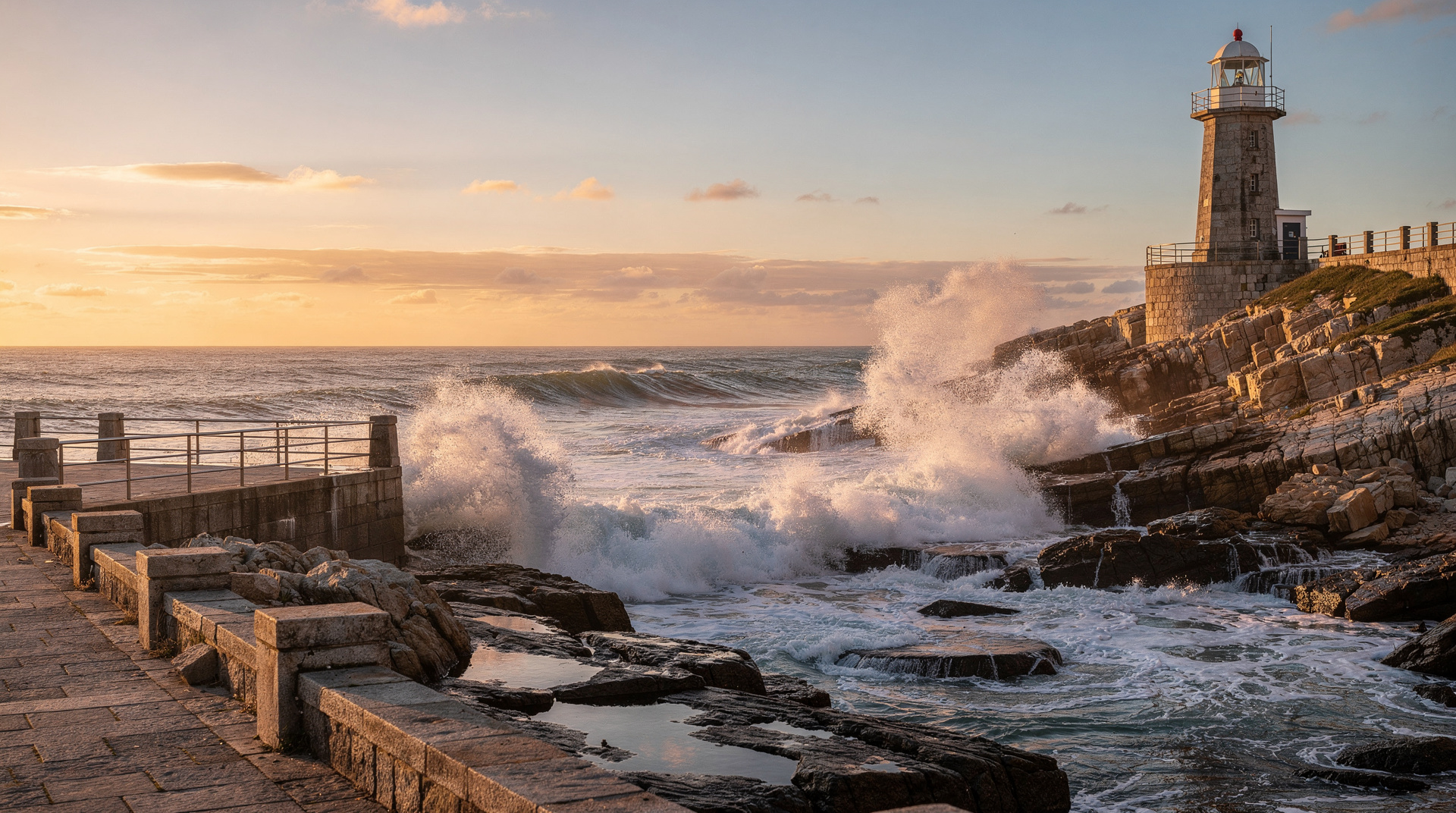
The Douro mouth was a working maritime port until the container ship era made it obsolete. The sandbar at the river mouth (the famous Barra do Douro) made navigation treacherous — it claimed hundreds of ships over the centuries and was the source of the engineering effort that produced the Molhe Norte and Molhe Sul (the north and south breakwaters at Foz) in the late 19th and early 20th centuries. These structures changed the river entrance from one of the most feared bars on the Portuguese coast to a manageable shipping channel.
When you sail out through the Barra do Douro on a modern leisure vessel, you are crossing the same threshold that terrified pilots for three hundred years. The granite walls of the Molhe Norte run out 1.5 km into the sea — worth walking to the end before or after a sailing trip for a perspective on the engineering involved.
Where to find more maritime Porto
Beyond the sailing trips themselves, several sites in Porto and Foz do Douro connect with the city’s maritime heritage:
Museu Marítimo de Ílhavo: Not in Porto proper, but 60 km south near Aveiro, this is one of the finest maritime museums in Portugal — covering the cod-fishing tradition (bacalhau was the foundation of the Portuguese ocean economy), traditional fishing craft, and the Atlantic voyaging history. Worth combining with the Aveiro and Costa Nova day trip.
Museu do Carro Eléctrico (Ribeira): Primarily about trams but includes exhibits on Porto’s river transport infrastructure and the Alfândega (customs house) which was the entry point for imported goods arriving by sea and river.
Passeio Alegre and Molhe Norte (Foz): The breakwater walk at Foz is the most direct physical connection to Porto’s maritime geography — standing at the end of the Molhe Norte with the Atlantic on one side and the Douro river mouth on the other gives you the clearest sense of how the city’s geography shaped its history.
Booking timing and seasonal planning
April through June: Good availability, reasonable prices before peak season. Weather is variable — spring storms can affect Atlantic sailing. River mouth conditions are generally fine.
July through August: Peak season, highest prices, most operators running full schedules. Atlantic winds are often lighter, so genuinely wind-powered sailing is less frequent. Shared tours book out a week or more ahead.
September through October: The sweet spot for serious sailing. Atlantic trade winds are more reliable, weather is still excellent, and operators are motivated to fill remaining season capacity. Private charters are sometimes available at better rates than August.
November through March: Reduced schedules, stormy periods, but also some of the most atmospheric sailing conditions if you catch a clear day. The Douro river mouth in winter light, with the Atlantic to the west and the city rising behind, is as beautiful as it is in summer — just colder and less crowded.
For a full-day active itinerary that includes sailing alongside cycling and beach time, see the Porto 4-day itinerary which sequences outdoor activities across the coastal area.
Frequently asked questions — Sailing from Porto — catamarans, sailboats, and sunset charters on the Douro and Atlantic
What is the difference between a sailing trip and a motor cruise on the Douro?
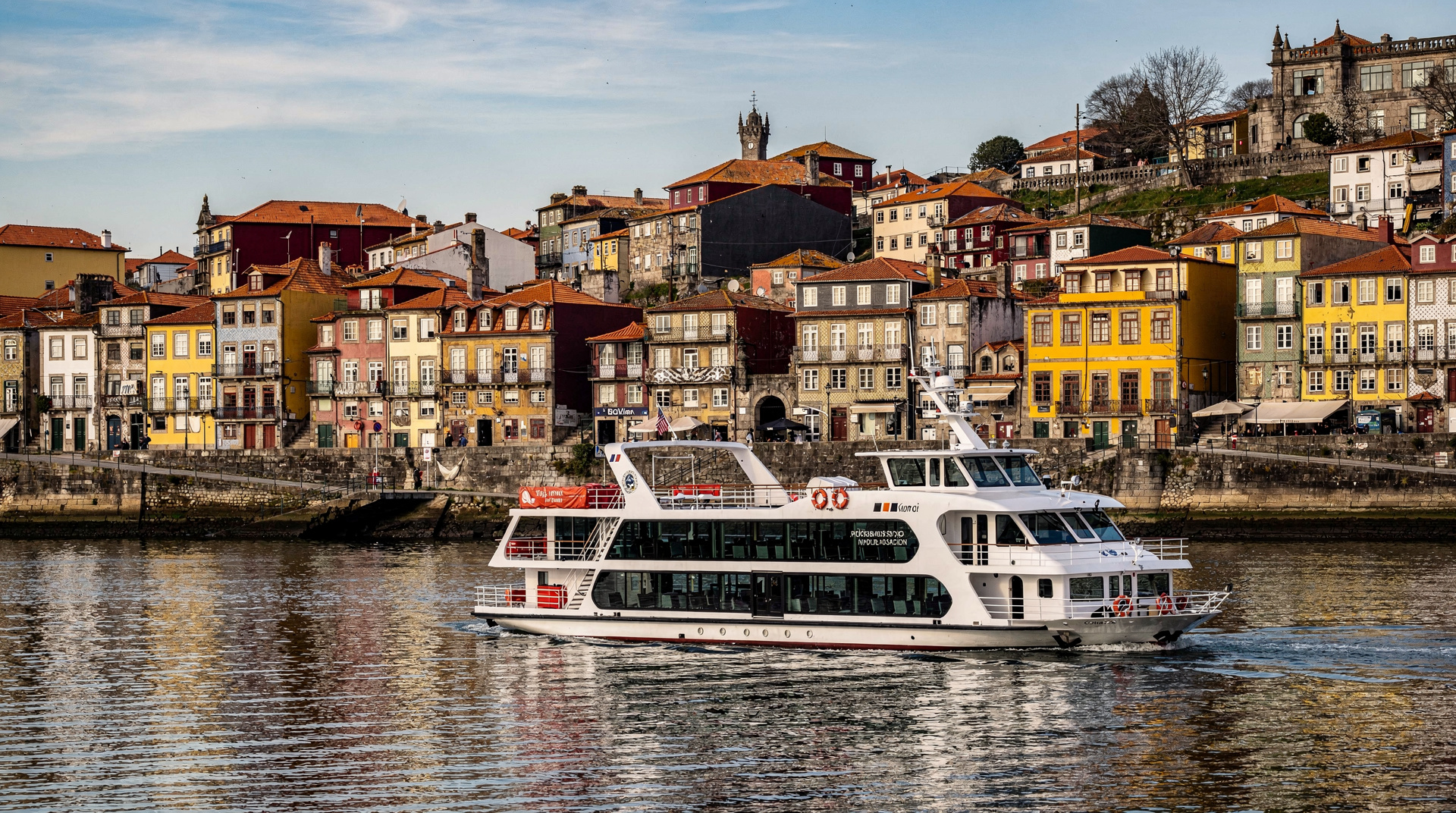
A motor cruise (the standard Six Bridges tour or full-day Régua option) runs on a fixed timetable regardless of wind. A sailboat trip uses wind when available and motor assist when needed — the route and pace have more flexibility. Sailboats carry fewer passengers (typically 6–12 vs 40–80 on motor launches), which creates a quieter, more intimate atmosphere. The experience is slower and more sensory — the sound of water, the movement of the boat. The trade-off is less predictability: strong winds or calm days both affect the experience.Can you actually sail on the Douro, or is it only motor-assisted?
The Douro within Porto's urban stretch is a narrower river where sailing is limited — wind is inconsistent between the banks and bridges, and commercial traffic means motor navigation is often safer. Most sailboat tours use motor within the river and transition to sail in the Foz area near the river mouth, or venture into the Atlantic when conditions allow. If genuine sailing (not just riding a sailboat under motor power) is the priority, ask the operator specifically about wind conditions and their typical approach.How far does a sailing trip from Porto go?
Most shared sailboat tours stay within the Douro river mouth area and the immediate coastal waters north and south of Foz. Some venture 2–3 nautical miles offshore in good conditions. Private charters can be arranged for longer coastal passages — south toward Espinho and Ovar, or north toward Viana do Castelo — for multi-hour or overnight trips.Are sailing trips available year-round in Porto?
Most operators offer a spring-to-autumn season (April through October). Winter sailing on the Portuguese Atlantic coast is possible — the sea is often calmer in winter than the reputation suggests — but many operators suspend or reduce their schedules from November through March. Strong Atlantic storms (particularly December through February) can cause multi-day suspensions.How much does a private sailing charter cost in Porto?
Private yacht or catamaran charters for a group of 6–10 people run approximately 600–1200 € for a half day (3–4 hours). Divided among the group, this can represent reasonable per-person value compared to individual shared tours. Some operators price by the person for private charters — 150–300 € per person depending on boat size, duration, and included services.Is the sailing experience suitable for people who get motion sick?
River sailing on the Douro is very gentle — the motion is minor and comparable to the standard motor cruises. Venturing into the Atlantic is a different matter: even mild swell can create a pronounced rolling motion on a smaller sailboat. If you are susceptible to motion sickness, stick to the Douro mouth area and take precautions (medication, ginger, horizon focus) before an Atlantic sailing trip.Can I learn to sail in Porto?
Several yacht clubs and sailing schools in Porto offer courses, primarily aimed at Portuguese residents rather than short-stay tourists. For visitors wanting a genuine taster session rather than a day cruise, ask specifically about a participation sailing trip where you can help handle lines and learn basic technique — some operators offer this as an alternative to passive watching.
Top experiences
Bookable activities with verified prices and instant confirmation on GetYourGuide.