Best beaches near Porto — Foz, Matosinhos, Espinho, Miramar and Costa Nova compared
Porto: Porto Private e Bike Tour Douro River Parks Beaches
Which beach near Porto is best for swimming?
Matosinhos is the most accessible: 15 minutes by metro, excellent EU water quality, lifeguards from June to September, nearby seafood restaurants. Espinho suits those wanting a quieter, more local feel 20 minutes south by train. Foz do Douro is scenic but has stronger currents near the river mouth — better for walking than swimming.
Porto’s coastal context
Porto sits at the mouth of the Douro River, with the Atlantic coast running north and south from the city. Unlike Mediterranean resort destinations, Porto’s beaches are Atlantic: cold, powerful, and strikingly beautiful in a way that is fundamentally different from warm shallow southern European seas.
The beaches near Porto are used seriously by locals — for surfing, for cold-water swimming, for long walks on winter afternoons — rather than primarily as resort infrastructure. This shapes the experience: you are likely to find local families, surfers, and fishermen alongside tourists, even in peak season.
This guide covers the five most relevant beaches for visitors staying in Porto, from the most accessible to the furthest afield.
| Closest option | Matosinhos, 8 km north, ~15 min by metro |
| Water temperature | 14–15°C winter, 18–20°C summer |
| Lifeguards | June through September at monitored beaches |
| Best for families | Matosinhos (calm south end) or Espinho |
| Best for surfing | Matosinhos north end or Espinho |
Matosinhos — the practical first choice
Distance from Porto centre: 8 km north Transport: Metro Line A (light blue) to Matosinhos Sul (15 min, ~1.60 €) Water quality: Excellent (EU certification) Lifeguards: June through September Best for: Families, swimmers, surfers, seafood lunch
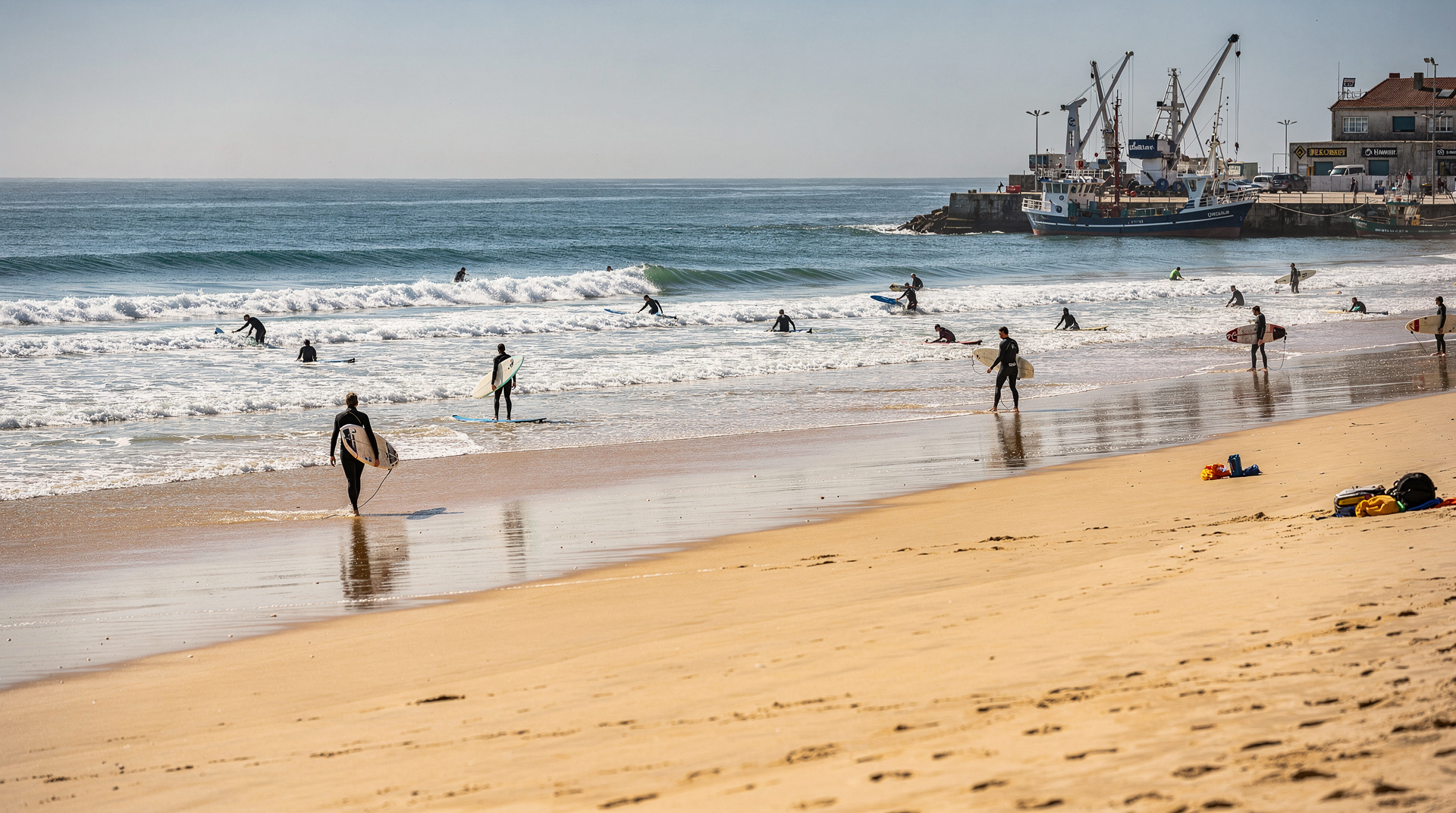
Matosinhos is the beach Porto visitors should default to unless they have a specific reason to go elsewhere. It is large (roughly 4 km of sand), clean, monitored, and served by direct metro from the city centre. The beach faces southwest, which means afternoon sun reaches the full width of the sand — good for sunbathing from midday onward.
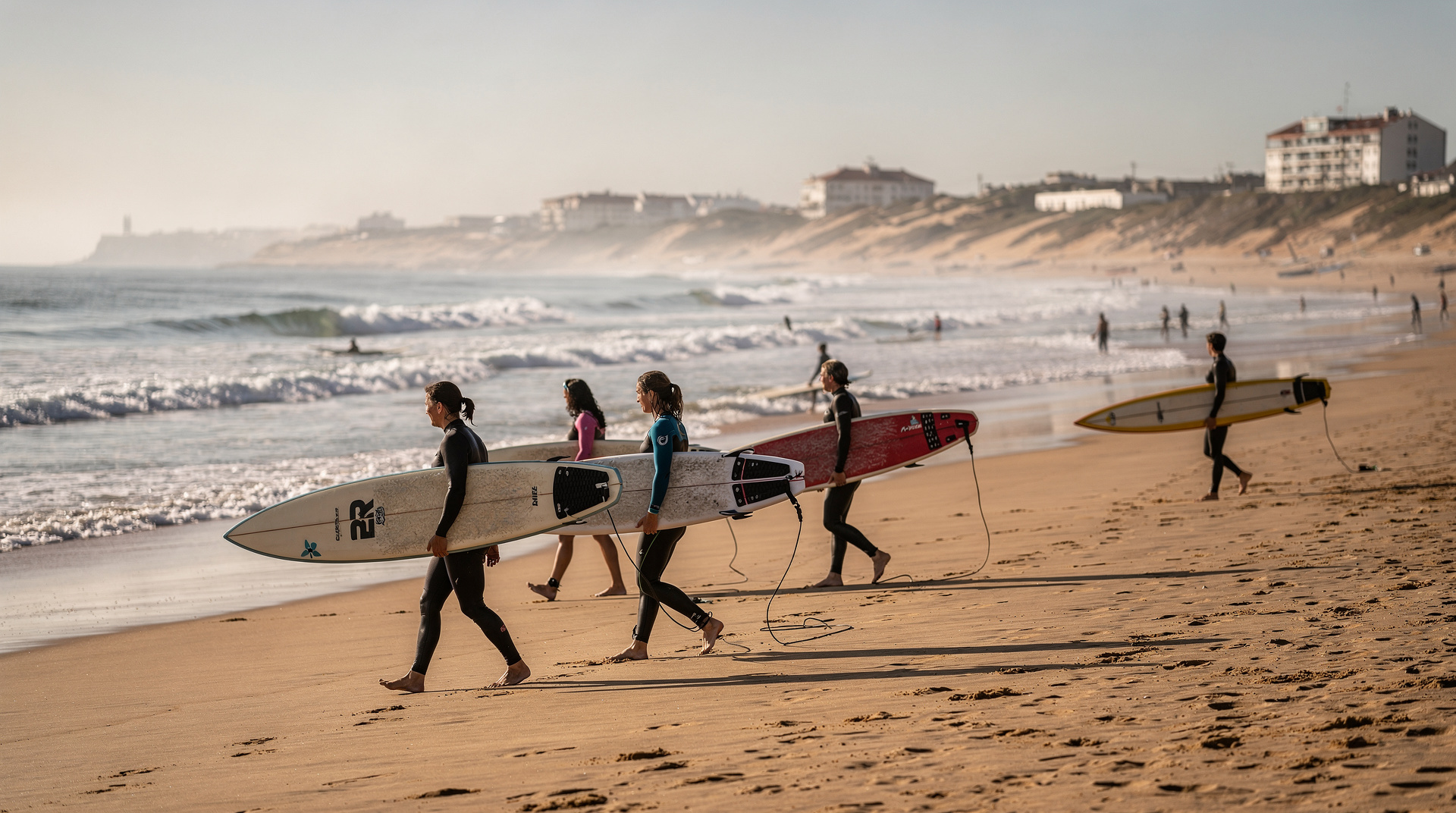
The water is cold by international standards (18–20°C in summer) but clean and swimmable from late June through early October. The gentle south end of the beach suits families and beginner swimmers; the north end has more energetic surf (0.5–1.5 m waves in shoulder season) suited to beginner surfers. Several surf schools operate near the promenade — see the surfing in Matosinhos guide for detail.
The practical excellence of Matosinhos is not just the beach. The Rua Heróis de França, running behind the promenade, is one of Portugal’s best concentrations of seafood restaurants. Grilled fish (peixe grelhado), seafood rice (arroz de marisco), and fresh barnacles (percebes) at 12–25 € per person make for a compelling midday meal. Several restaurants here have been operating for 30 or 40 years and are genuine institutions rather than tourist operations.
Honest caveat: On summer weekends (late June through August), Matosinhos is genuinely busy. The beach is large enough to absorb the crowds, but if you want tranquility, go on a weekday morning or choose Espinho instead.
Foz do Douro — the scenic alternative
Distance from Porto centre: 5 km west Transport: Tram Line 1E (scenic but slow), taxi/Uber (15–20 min), cycling Water quality: Good, with caveats near the river mouth Lifeguards: June through September at Praia dos Ingleses Best for: Walking, photography, evening strolls, experienced swimmers
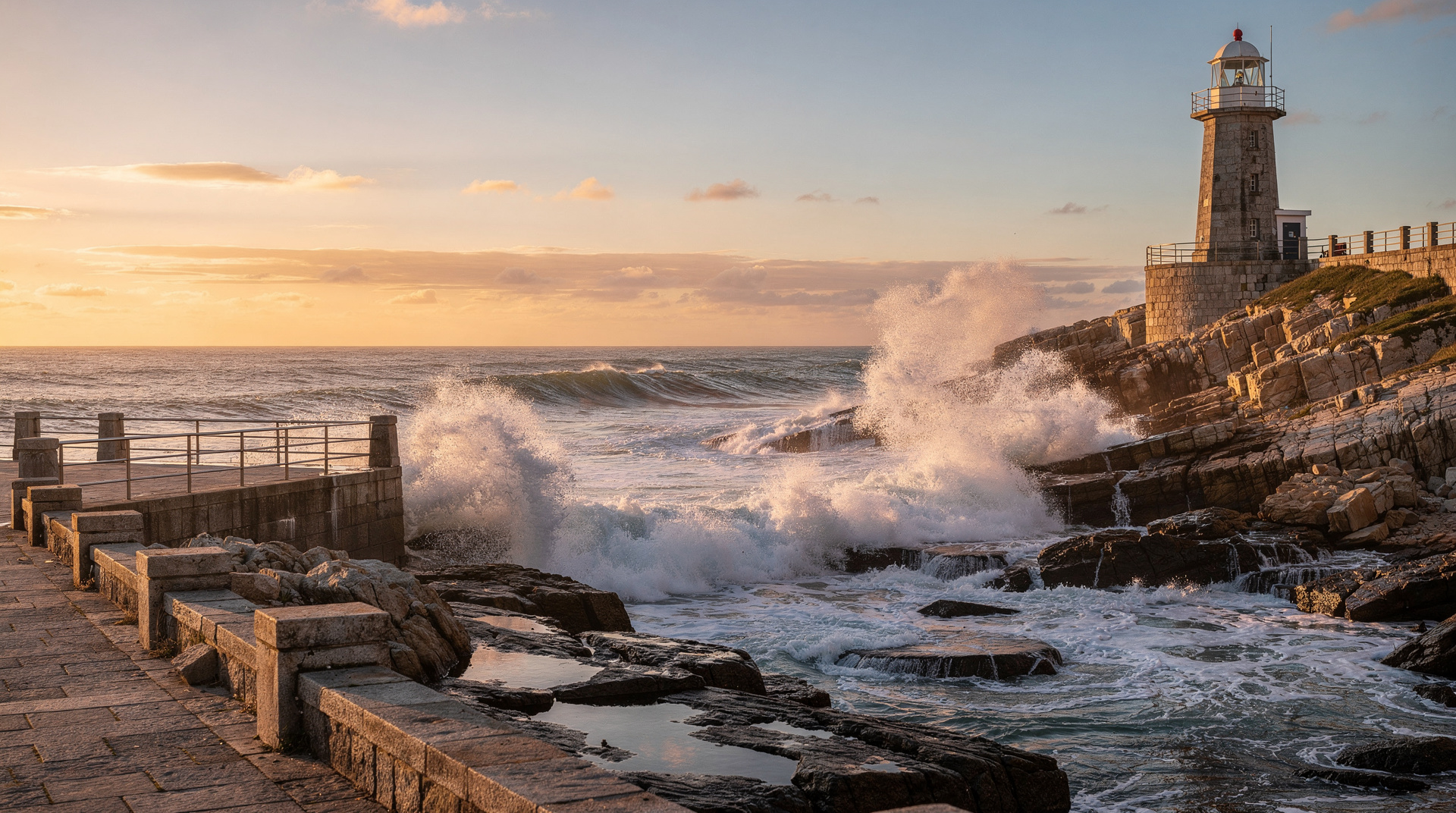
Foz do Douro is where the Douro River meets the Atlantic, and the visual drama of that junction is the beach’s primary appeal. The wide sandy beach faces due west — sunset here, particularly in summer, is one of Porto’s most spectacular free activities. The beach backed by the upscale Foz residential neighbourhood has a different character from Matosinhos: quieter, slightly more elegant, with the Molhe Norte (north pier) walkway extending into the sea.
The swimming caveat is important: the river outflow creates currents near the river mouth that make the water near Praia de Matosinhos/Foz junction potentially hazardous. Always check and follow lifeguard flags. The beach section south of the river mouth (Praia dos Ingleses) is calmer and more suitable for swimming.
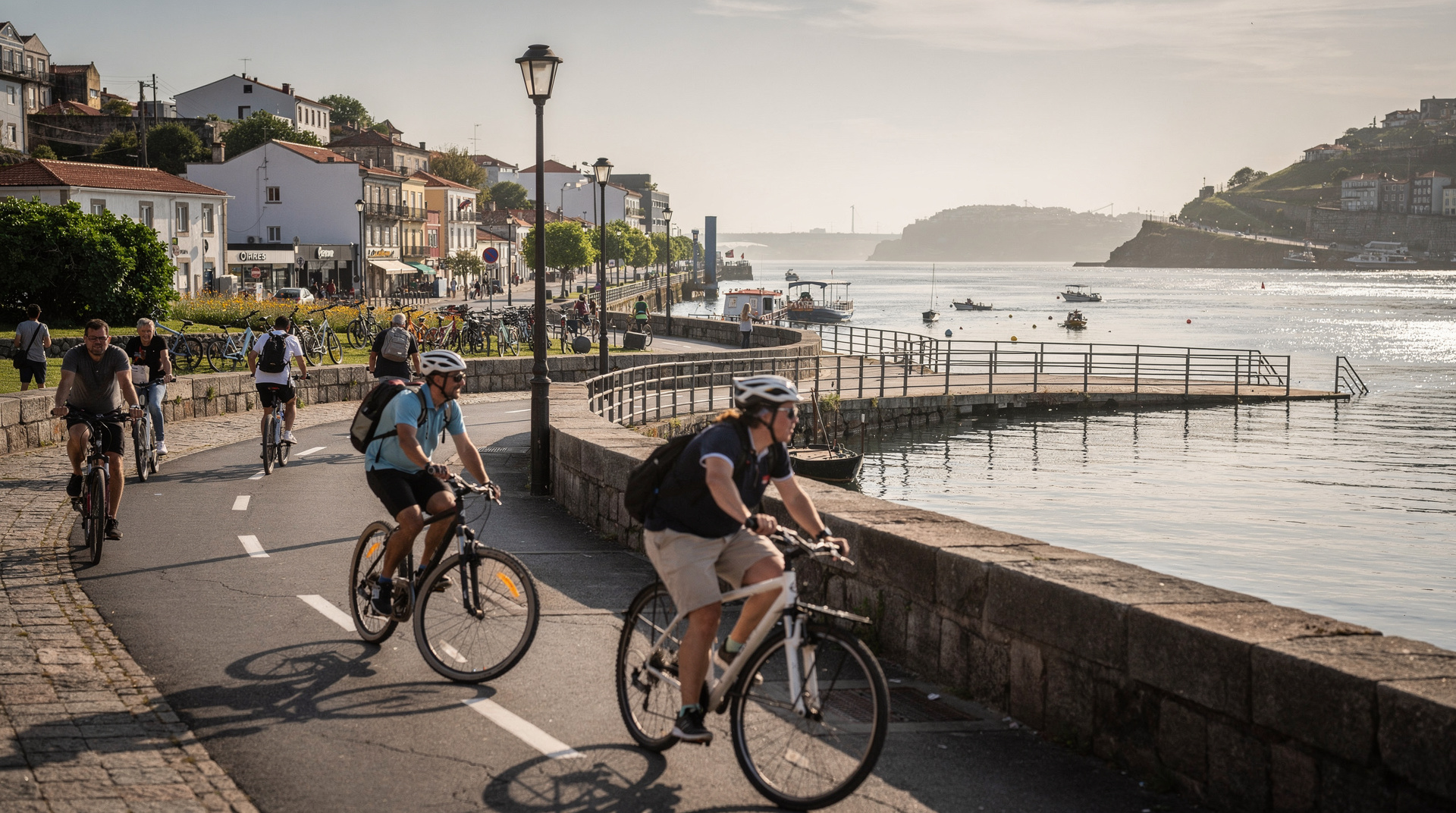
Getting to Foz without a car: the historic tram Line 1E runs from Infante station along the Ribeira waterfront to Passeio Alegre in Foz, taking approximately 25 minutes — slow but atmospheric. Uber or Bolt is faster (15–20 minutes, 6–10 €). Cycling the riverside cycle path from Ribeira to Foz is the best active option (approximately 5 km, flat along the waterfront).
Espinho — the underrated local favourite
Distance from Porto centre: 18 km south Transport: Urban/regional train from Porto São Bento or Campanhã (~20 min, ~2.50 €) Water quality: Excellent (EU certification) Lifeguards: June through September Best for: Quiet swimming, local atmosphere, less crowded weekends
Espinho is a small coastal town with a grid street plan and a beach that has been a local summer resort since the early 20th century. It has a casino (one of Portugal’s oldest), a covered market, and a relaxed atmosphere entirely unlike Porto’s tourist intensity.
The beach at Espinho is long, broad, and significantly less crowded than Matosinhos, even on summer weekends. The wave conditions are often good for intermediate surfers, and the water quality has received consistent “excellent” ratings. The town behind the beach has functioning local restaurants and cafés at genuinely local prices — a marked contrast to the tourist-inflated menus on Porto’s Ribeira.
Getting there by train is easy: services run from Porto São Bento (or Campanhã) to Espinho station approximately every 30–60 minutes depending on the time of day. Journey time is 20–25 minutes. The beach is a five-minute walk from the station.
The honest word: Espinho does not have the visual drama of Foz or the seafood reputation of Matosinhos. But if you want a beach day without crowds, good swimming, and a sense of what a Portuguese coastal town actually feels like, it is the better choice.
Miramar — the chapel beach
Distance from Porto centre: 22 km south Transport: Train from Porto Campanhã (~25 min) or car Water quality: Good Best for: Photography, peaceful visits, the chapel-on-the-beach image
Miramar is known primarily for one image: the small Senhor da Pedra chapel sitting directly on a rock outcropping at the sea’s edge, surrounded by sand and waves. It is one of the most reproduced photographs of northern Portugal. The reality lives up to the image — at low tide, with the chapel isolated on its rocky promontory, it is genuinely striking.
Beyond the chapel, Miramar is a quiet residential beach town with a longer beach to the north and south. It is not a swimming priority (the water conditions are variable and lifeguard coverage less consistent than at Matosinhos or Espinho), but it is an excellent photography and walking destination.
The chapel is a 10-minute walk from Miramar train station. Services run from Porto Campanhã — check timetables, as the frequency is lower than on the main metro lines.
Costa Nova — the striped houses beach
Distance from Porto: 70 km south (near Aveiro) Transport: Best by car; organised day trip from Porto; or train to Aveiro + bus Water quality: Excellent Best for: Photography, day trip combination with Aveiro, uncrowded long beach
Costa Nova is technically outside comfortable Porto day-trip range for beach-only visits — it is 70 km south, which makes a solo trip inefficient without a car. But as part of a combined day trip with Aveiro, it is entirely worth including.
The beach itself is excellent: a long, wide Atlantic strand with consistent swell that attracts surfers and body-boarders. But the reason Costa Nova is on every Portugal photography list is the palheiros — traditional striped fishing cottages that line the promenade behind the beach, painted in bold vertical stripes of red and white, blue and white, yellow and white. They are genuinely striking, not a manufactured attraction.
The organised Aveiro and Costa Nova day trip is the most efficient way to combine the two from Porto without a car. Expect 6–8 hours including travel, Aveiro’s moliceiro canal, and time at Costa Nova beach.
Beaches further north — Leça da Palmeira and Vila do Conde
For visitors with a car or using Porto as a base for north Portugal exploration, the coastline north of Matosinhos has additional options:
Leça da Palmeira (12 km north): A rocky coastline with remarkable tidal pools and the famous Alvaro Siza Vieira swimming pools (Piscinas de Marés), a brutalist concrete sea bathing complex built into the rocks. Not a sandy beach but an extraordinary piece of architecture in a coastal setting. Entry to the pools is 2–4 €.
Vila do Conde (27 km north): A historic town with a decent beach and surf conditions that attract intermediate surfers. The town itself, with its large aqueduct and historic centre, is worth the journey beyond the beach.
Surfing near Porto — where to learn and where experienced surfers go
The Atlantic coast around Porto is a genuine surf destination, not just a beach-with-waves afterthought, and the options differ significantly depending on your level.
For beginners: Matosinhos is the default choice — several surf schools operate directly from the promenade, offering group and private lessons (typically 35–50 € for a two-hour group lesson including board and wetsuit hire). The southern end of the beach has gentler, more consistent waves suited to first-timers, and the metro access means no logistics beyond the lesson itself. The surfing in Matosinhos guide covers the specific schools and conditions in detail.
For intermediate surfers: Espinho has a stronger and more consistent break than Matosinhos, attracting a mix of local surfers and visitors looking to progress beyond beginner conditions. The town’s surf culture is genuinely local — several surf shops and a laid-back atmosphere distinct from Matosinhos’ more tourist-oriented setup.
For experienced surfers: The coastline north of Matosinhos, toward Vila do Conde, and further south past Espinho has more exposed breaks with bigger, more powerful waves — better suited to confident, experienced surfers who know how to read Atlantic conditions and rip currents. These spots are less consistently monitored than the main beaches, so local knowledge or a guide matters more.
Best conditions by season: Autumn and winter (October through March) generally produce the biggest and most consistent swell along this coast, which is when serious surfers are most active — though the water is at its coldest and a good wetsuit is essential. Summer swells are gentler and warmer, which suits beginners and casual surfers better even though the waves are less dramatic.
Equipment: Most schools and shops rent boards and wetsuits by the hour, half-day or full day. A wetsuit is worth renting even for confident swimmers outside the height of summer — the water temperature makes an extended session genuinely uncomfortable without one.
Bodyboarding as an alternative: For visitors who want to feel Atlantic waves without the learning curve of stand-up surfing, bodyboards are cheaply rented at most beach kiosks and require no lesson. Matosinhos’ gentler south end and Espinho both work well for this, and it is a good option for families with older children who want an active beach day without committing to a full surf lesson.
Local surf culture: Both Matosinhos and Espinho have a genuine, longstanding surf community rather than a purely tourist-driven scene — early mornings and late afternoons, particularly outside peak summer, tend to belong to local surfers rather than visitors. Respecting the informal lineup etiquette (not dropping in on someone already riding a wave) applies here as anywhere else with an established local surf culture.
Multi-day surf trips: Visitors who want more than a single lesson can find multi-day surf packages combining accommodation, daily lessons and equipment through several Matosinhos and Espinho-based operators — a genuinely different way to experience the Porto coast for travellers prioritising the water over city sightseeing.
Practical beach packing list for Porto’s coast
Sunscreen: SPF 50 is the minimum for Portugal’s Atlantic coast in summer. UV intensity here is high even when the air feels mild.
A windproof layer: Atlantic beaches are often breezy even when sunny. A light packable shell jacket is useful for the walk back from the beach when you are still damp.
Water shoes: Rocky entry points exist at several beaches, particularly Foz and Leça. Old trainers or water shoes protect your feet.
Reusable water bottle: Beach restaurants and kiosks sell drinks at significant markups. Bring water.
Cash: Many beach kiosks and smaller restaurants prefer cash. Card acceptance is improving but not universal.
For an active beach day combining cycling, paddling, and surfing all in one Porto coast area, see how the cycling Porto to Foz guide can anchor a full outdoor day.
Book the private e-bike tour to Porto’s beaches — covers the coastal route from Porto to Foz and Matosinhos with local guide and equipment.
Book the Gaia and Atlantic coast e-bike tour — extends the coastal cycling south from Gaia toward Espinho and the beaches south of the Douro mouth.
Water safety — what you need to know
The Atlantic coast near Porto is not the Mediterranean. It has genuine ocean conditions: rip currents, beach break surf, and variable conditions that can change within an hour. This section covers what to know before swimming.
Lifeguard flags:
- Green flag: Safe conditions, lifeguards present and watching.
- Yellow flag: Caution — waves, current or other conditions require attentiveness. Swimming is permitted but keep close to the lifeguarded zone.
- Red flag: Swimming prohibited. On Portuguese beaches this is enforced — guards will call you out of the water.
- Chequered flag: Surfboards and other equipment in the water — swimmers should stay in a separate zone.
- No flag: No lifeguard on duty. Swim at your own risk. At unmonitored beaches, conditions can be dangerous regardless of apparent calm.
Rip currents: The most common danger on Porto’s beaches. A rip current is a narrow channel of water flowing offshore, often invisible from the shore. If you are swept in a rip: do not swim against it. Swim parallel to the shore until you are out of the current, then swim diagonally toward the beach. Rips are strongest during periods of large surf and outgoing tide.
Cold water shock: A particular risk for visitors unused to Atlantic water temperature. Entering cold water (14–16°C in spring) without acclimatisation can trigger an involuntary gasp reflex and disorientation. Enter the water gradually, not in one plunge. Splash water on your face and arms before full immersion.
Children and tidal pools: At Foz and Leça, the rocky sections create tidal pools that are safe and fascinating for children at low tide. The rocks themselves can be slippery — water shoes are sensible. Never let children play near the outer edges of breakwaters or pier ends where wave action can be sudden and powerful even in apparently calm conditions.
Eating at the beach — what things cost
Porto’s beach restaurants range from outstanding to mediocre. A realistic price guide:
Matosinhos seafood restaurants (Rua Heróis de França): A full meal of grilled fish, potatoes, salad, bread, dessert, and a carafe of wine runs 18–28 € per person at mid-range places. The best places — Marisqueira Mariscada, Casa do Peixe, Gaveto — can run 35–50 € per person with premium shellfish. For a quick and good option, set lunch menus (prato do dia) at 10–14 € are widely available.
Foz do Douro restaurants: Similar price range to Matosinhos, with some higher-end options near the Passeio Alegre. Café da Galeria and Casa do Peixe (Foz branch) are solid mid-range choices. Avoid the cafés directly facing the sea — location premium applies.
Espinho: Notably cheaper than Matosinhos. Local restaurants on the streets behind the beach serve set menus (soup, main, dessert, wine) at 8–12 € per person. The fish is just as fresh and the setting is authentic rather than tourist-oriented.
Beach kiosks: All monitored beaches have concession kiosks selling drinks, ice cream, sandwiches, and light food. Prices are kiosk-standard (small markup over shop prices but reasonable for convenience). A cold drink runs 2–4 €, a toasted sandwich 4–6 €.
Getting to the beaches — transport summary
| Beach | Transport | Time | Cost |
|---|---|---|---|
| Matosinhos | Metro Line A to Matosinhos Sul | ~15 min | ~1.60 € |
| Foz do Douro | Tram 1E from Infante | ~25 min | ~3.50 € |
| Foz do Douro | Uber/Bolt from centre | ~15 min | 6–10 € |
| Espinho | Train from São Bento | ~22 min | ~2.50 € |
| Miramar | Train from Campanhã | ~25 min | ~2.50 € |
| Costa Nova | Car or day trip | ~70 min | - |
All public transport requires an Andante card (Porto’s reloadable transit card, available at metro stations for 0.60 € card fee). The card works on metro, bus, tram, and some train services within the Porto metropolitan area.
The best half-day beach sequence from Porto
For visitors who want to see the coast without committing a full day, the most efficient sequence is:
Morning departure (9 am): Metro from Trindade to Matosinhos Sul (15 min). Walk to the beach for an hour of beach time or a surf lesson (pre-booked). Lunch at a Rua Heróis de França restaurant at 12:30 pm.
Afternoon (2 pm): Walk south along the promenade to the Foz area (35–40 minutes). See the Molhe Norte and Passeio Alegre. Take the historic tram back to Porto centre (departs Passeio Alegre) or call an Uber.
This sequence covers the two most accessible and rewarding coastal areas (Matosinhos and Foz) in under five hours, leaving the afternoon free for city sightseeing — a port cellar visit in Gaia, the historic centre, or the Livraria Lello.
Frequently asked questions — Best beaches near Porto — Foz, Matosinhos, Espinho, Miramar and Costa Nova compared
Can you swim safely at Porto's beaches?
At the monitored beaches — Matosinhos, Espinho, and Miramar — yes, from June through September when lifeguards are present. The Atlantic off Porto is cold (16–20°C depending on month) and can have significant shore break and rip currents at exposed beaches. Always swim between the red-and-yellow lifeguard flags. Foz do Douro has additional hazards from the river current near the mouth — consult the flags there particularly carefully.How cold is the sea near Porto?
Cold by Mediterranean standards. Water temperature runs from 14–15°C in winter (December–March) to 18–20°C at the height of summer (July–August), rarely breaking 20°C. A wetsuit is comfortable from October through May. In summer, most people swim without one — the water feels cold for the first few minutes and then manageable.Which Porto beach is least crowded?
On weekdays outside school holidays, all beaches are comfortably spacious. On summer weekends (July–August), Matosinhos fills up significantly by early afternoon. Espinho is consistently less crowded than Matosinhos. Costa Nova (near Aveiro, 70 km south) is further away but remarkable for its striped painted houses and is less overwhelmed than closer options.Is there parking at Porto's beaches?
Matosinhos has limited street parking that fills by 10 am on summer weekends. Espinho has more parking options around the train station. If you are driving, arrive before 9 am or expect to park several blocks back. Public transport is the sensible option for all these beaches — metro to Matosinhos, train to Espinho.Can I reach Miramar beach from Porto without a car?
Yes, by train. Take the Comboios de Portugal urban/regional service from Porto Campanhã toward Espinho — Miramar station is approximately 25 minutes from Porto. The beach is a short walk from the station. Check timetables in advance as services are less frequent than the metro.Is Costa Nova worth visiting from Porto as a day trip?
Yes, as a combined trip with Aveiro — it is 70 km south, which makes a standalone beach day inefficient without a car. The striped palheiros (fishing cottages) are genuinely photogenic and the beach is excellent. The Aveiro and Costa Nova day trip guide covers how to do this efficiently by organised tour or public transport.Are there nudist beaches near Porto?
There are informal nudist sections at some more isolated parts of the coast north of Matosinhos (near Leça da Palmeira and beyond). These are not officially designated nudist beaches — nudism in Portugal exists in a relaxed informal tolerance rather than a formal legal framework. The main monitored beaches are conventional.
Top experiences
Bookable activities with verified prices and instant confirmation on GetYourGuide.