Santiago de Compostela day trip from Porto — the honest guide
Porto: Santiago de Compostela Day Tour
Is a Santiago de Compostela day trip from Porto worth it?
Yes, if you want to see one of Europe's great cathedrals and the distinctive atmosphere of a major pilgrimage city. The journey is 230 km (2.5 hours by car or tour bus). An organised tour is the practical choice — parking in Santiago is complex and the guide context adds real value in understanding the site.
Santiago de Compostela — why cross the border for a day trip
Santiago de Compostela is 230 km from Porto, over the Spanish border in Galicia. It is a longer and more demanding day trip than Braga, Aveiro or Guimarães — a total of roughly five hours in the car or bus for the round trip, leaving around six to seven hours in the city. For most visitors that is sufficient, but it makes Santiago a different kind of day trip: less casual, more committed.
The reason to make the journey is the Catedral de Santiago de Compostela. It is one of the great Romanesque buildings of Europe, the endpoint of the Camino de Santiago pilgrimage routes, and the home of one of the most theatrical religious rituals on the continent (the botafumeiro). The Plaza del Obradoiro that fronts the cathedral is one of Europe’s finest urban squares. And the old city of Santiago — the Zona Monumental — is a compact UNESCO World Heritage Site of exceptional architectural quality.
If you care about medieval architecture, pilgrimage culture, or simply want to experience a city that feels genuinely different from Porto, Santiago de Compostela rewards the journey. If you are primarily seeking easy cultural tourism, Braga and Guimarães deliver equivalent historical depth with significantly less travel time — see the best day trips from Porto guide for the full comparison of all the options this far from the city.
| Where | Santiago de Compostela, Galicia, Spain — 230 km north |
| Travel time | ~2.5 hours by car or tour bus each way |
| Cost | Tour from ~40–60 €/person; tolls ~15–20 € if driving |
| Time needed | Full day — 6–7 hours on site after travel |
| Best time | Spring/autumn for fewer crowds; avoid Jubilee Years for calm |
Getting from Porto to Santiago
By car (most flexible)
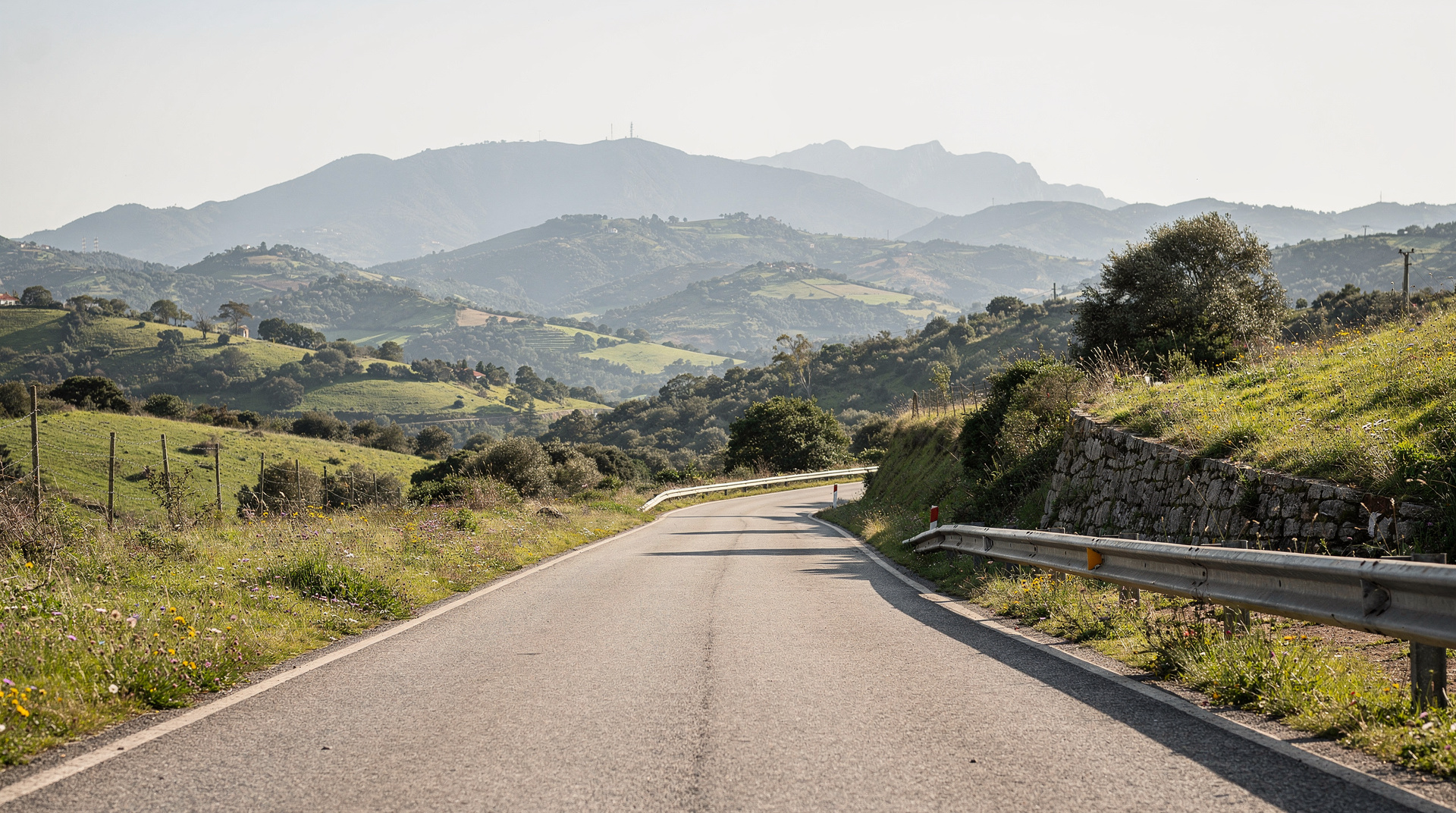
The drive from Porto to Santiago de Compostela takes approximately 2.5 hours on the A3 motorway through Braga, crossing the Portuguese-Spanish border at Valença-Tui, and continuing north on the AG-57 to Santiago. The route is well-signed and the border crossing is a straightforward motorway passage — no stop required for Schengen zone travellers.
Motorway tolls: Expect approximately 15–20 € in tolls for the round trip (Portuguese tolls on the A3 plus Spanish tolls on the AG-57). Some toll sections in Spain are now free, but confirm before travel.
Parking in Santiago: The old city is largely pedestrianised. The main car parks (Galeras, Almáciga, Concheiros) are signposted from the city entrances and cost around 2–3 € per hour. Do not attempt to park in the old city centre — traffic restrictions are enforced.
Important consideration: If you plan to drink wine with lunch (which you will want to do in Galicia), designate a non-drinking driver before leaving Porto.
By organised tour (recommended)
An organised day tour from Porto handles all transport, parking, and provides a local guide who adds significant value in Santiago. The cathedral, the pilgrimage history, and the Galician cultural context are considerably more comprehensible with expert narration. Most tours depart Porto around 7:30–8:00 am and return by 8–9 pm.
Book the Santiago de Compostela full day trip from Porto Book the Porto to Santiago de Compostela guided tourPrivate tours are available for those wanting flexibility on timing and a dedicated guide.
Book a private Porto to Santiago de Compostela day tripBy train (complicated, not recommended for a day trip)
The rail connection from Porto to Santiago requires a train to Vigo (Spanish border city, around 3 hours from Porto Campanhã on CP’s Celta service, approximately 30–40 €) and then a Spanish regional train from Vigo to Santiago (around 30–40 minutes on Renfe). The two-leg connection, combined with the onward travel from Santiago station to the old city (15 minutes’ walk or taxi), makes the total journey time around 4 hours each way. This leaves limited time in Santiago for a day trip and is significantly less convenient than driving or joining a tour.
The Cathedral of Santiago de Compostela
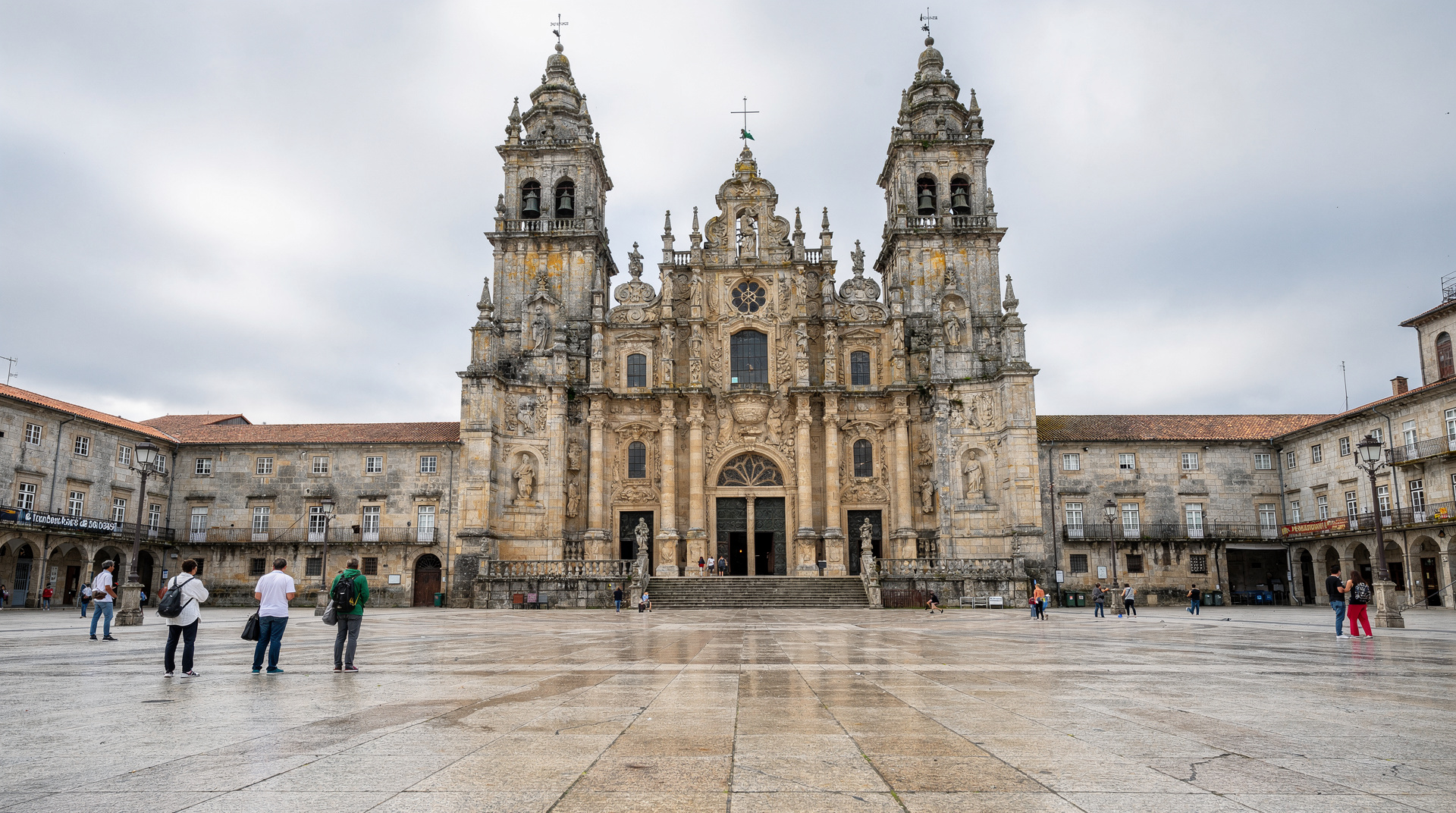
The Catedral de Santiago de Compostela is the destination around which everything else in this city organises. Construction began in 1075 on the site of a 9th-century church, and the building was largely complete in Romanesque form by 1211. Subsequent centuries added the baroque towers and façade (the Obradoiro façade, 1738, is what faces the main square), Gothic interior chapels, and considerable decorative enrichment.
The entrance from the Plaza del Obradoiro is through the Portico da Gloria, a 12th-century sculptural composition considered one of the masterpieces of Romanesque art — a tympanum depicting the Last Judgment, with an extraordinary central column bearing a carved figure of St. James, whose feet have been worn smooth by six centuries of pilgrims placing their hands on the stone. Restoration work means that access to the Portico is controlled; book the specific Portico visit in advance on the cathedral website (approximately 10 €).
Cathedral interior: Entry to the main nave is free. The interior is large — the nave is 97 metres long — and the combination of Romanesque structure and baroque altarpiece creates a characteristically Spanish visual experience of considerable power. The high altar sits directly over the supposed tomb of St. James. Pilgrim mass is celebrated at noon.
The botafumeiro: The giant incense burner suspended in the transept is not operated at every mass. It swings at certain feasts, special occasions, and by arrangement for private groups. The Pilgrims’ Mass at noon is the most reliably scheduled occasion, though the botafumeiro is not guaranteed at every noon mass. Arrive by 11 am and position yourself in the transept for the best view of the swing.
Book the Santiago Cathedral guided visitThe rooftop tour: A rooftop visit to the cathedral (accessed via internal stairways) provides views over the Obradoiro square and the surrounding old city roofscape. Tours are timed and ticketed (around 12 €, book in advance). The views are excellent — the granite towers and the sweep of the old city from the roof level are among the best perspectives on the site.
The Pilgrim Museum and Crypt: Below the high altar, the crypt contains the silver urn with the supposed relics of St. James. Entry included with cathedral access. The Pilgrim’s Museum (adjacent, around 5 €) explains the Camino history and the development of the pilgrimage from the 9th century to the present.
The Plaza del Obradoiro and the old city
The Plaza del Obradoiro is framed on four sides by the cathedral’s baroque façade, the Pazo de Xelmírez (12th-century archbishop’s palace), the Hostal de los Reyes Católicos (a 16th-century royal hospital, now a Parador hotel), and the Colegio de San Jerónimo. The scale of the square and the consistent architectural quality of the surrounding buildings create one of Europe’s finest urban spaces — genuinely impressive at first sight.
The Zona Monumental extends outward through a compact medieval street network. The main arcaded streets — Rua do Franco, Rua da Raíña — are lined with tapas bars, Galician wine shops (seek out Albariño, the local white), and restaurants. The pilgrim traffic gives the streets a distinctive energy: in high season, you will see exhausted walkers arriving with poles and scallop shells, finishing routes that began hundreds of kilometres away.
Mercado de Abastos: The covered municipal market on Rua das Ameas is one of the best in Galicia — fresh seafood, Galician cheeses (tetilla, Arzúa-Ulloa), empanadas, and the vegetables of the local countryside. Worth 30 minutes of browsing even if you are not buying. The stalls around the perimeter sell prepared empanadas and local pulpo (octopus) that make excellent market-based lunch alternatives.
Galician food and drink
Santiago’s food culture is different from Porto’s — this is Spain, specifically Galicia, which has its own distinct culinary tradition. A day trip lunch should include at minimum:
Pulpo á feira (octopus): Boiled octopus served on a wooden board with paprika, olive oil and salt, typically eaten with bread. The most iconic Galician dish. Found at tapas bars throughout the old city, around 12–16 € per portion.
Empanada gallega: A Galician pastry pie filled with tuna, sardines, pork or vegetables. Sold by the slice (around 3–4 €) or whole. Different from Portuguese empada — the Galician version uses a bread-like dough.
Albariño wine: The predominant white wine of the Rías Baixas region south of Santiago — crisp, mineral, slightly effervescent, excellent with seafood. A glass costs around 3–5 € at most tapas bars. This is one of the best value-quality matches in Spanish wine.
Tarta de Santiago: The regional almond cake, dusted with powdered sugar in the shape of the Cross of Saint James. Found at every bakery and many restaurants. Worth buying as a takeaway for the journey back.
Recommended restaurants: Casa Manolo on Praza da Cervantes for reliable Galician cooking (mains 14–22 €). O Dezaseis on Rua San Pedro (slightly away from the tourist circuit, excellent seafood and local wine, mains 12–18 €). The restaurants under the arcades of Rua do Franco are reliable but priced for tourists — worth the premium for the terrace setting, less worth it for the food alone.
Practical notes
ETIAS (from 2026): Visitors from outside the Schengen Area crossing from Portugal into Spain need to comply with ETIAS requirements. EU and Schengen citizens are unaffected. Check the current status before travelling if you hold a non-Schengen passport.
Currency: Spain uses the euro — same as Portugal. No currency exchange required.
Language: Galician (galego) and Spanish (castellano) are both official languages in Galicia. Galician is closely related to Portuguese and mutually intelligible to a degree; most visitors from Porto find Galician signage partially readable. English is widely spoken in the tourist areas of Santiago.
Time zone: Spain uses CET (Central European Time), which is one hour ahead of Portugal’s WET (Western European Time) from late March to late October during the Daylight Saving period. Check whether this affects your return timing — arriving back in Porto may feel earlier or later than expected depending on the season.
Feast days: The feast of St. James (Santiago’s patron saint day) is 25 July. In years when 25 July falls on a Sunday, it is declared a Jubilee Year (Año Santo or Ano Santo Compostelano) — the most significant pilgrimage years, when the Porta Santa (Holy Door) of the cathedral is opened. Jubilee Years produce significantly higher visitor volumes than usual.
Combining Santiago with Viana do Castelo
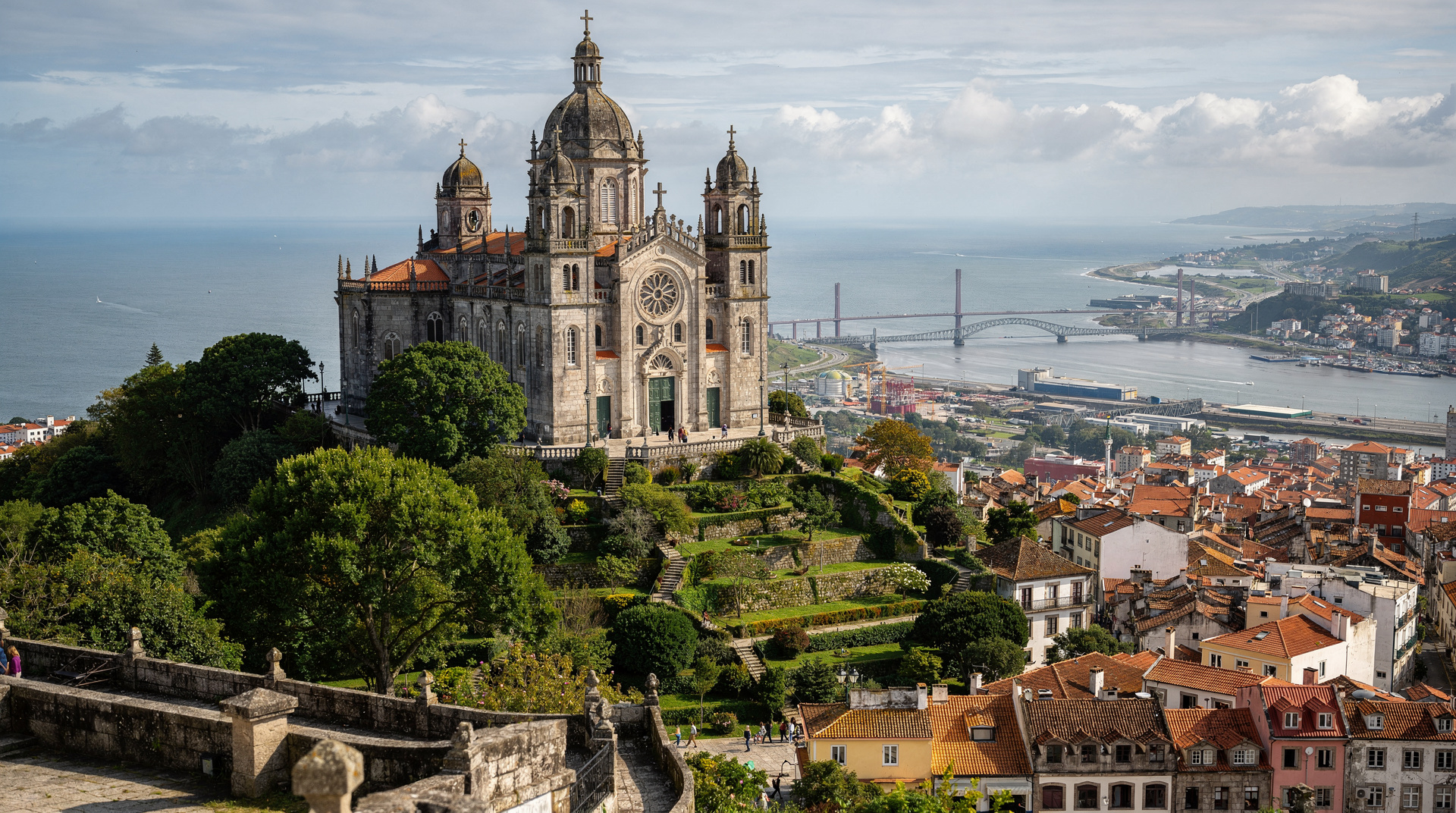
Viana do Castelo is on the Portuguese coast 85 km south of Santiago, directly on the route between Porto and the Spanish border. Adding a Viana stop (the Santa Luzia basilica, the historic centre, lunch) to a Santiago day creates a very full itinerary but is logistically viable with an early start. The Viana do Castelo day trip guide gives timing context for how long Viana warrants.
If Santiago is one stop in a longer northern Portugal and Galicia trip, the northern Portugal 7-day itinerary sequences it alongside Braga, Guimarães and the Douro Valley into a coherent week.
Frequently asked questions about the Santiago de Compostela day trip
Is Santiago de Compostela worth it if you are not religious?
Yes — the architecture, the urban history, and the cultural atmosphere of the pilgrimage city are all compelling regardless of religious interest. The botafumeiro is one of the most impressive pieces of ritual theatre in European religious practice; experiencing it is worthwhile entirely on secular grounds.
What language do people speak in Santiago?
Galician (galego) is the dominant local language, closely related to Portuguese and co-official with Spanish. Most people switch to Spanish for visitors from outside Galicia, and English is spoken widely in the tourist areas. Portuguese speakers will find Galician largely comprehensible.
How long does the botafumeiro swing last?
The botafumeiro is swung for approximately 10–12 minutes during the mass, traversing the full width of the transept. At full swing, it reaches heights of around 20 metres and speeds of approximately 68 km/h. The spectacle is brief but genuinely dramatic. Stay for the full swing rather than leaving early.
Is it possible to walk part of the Camino and then take a bus to Santiago?
Yes — Porto is the official starting point of the Camino Português Coastal and Central routes. Many people walk a few stages from Porto, ending at Viana do Castelo or Valença, and then take transport to Santiago to see the endpoint. This is a common and entirely valid approach for those who want the Camino experience without a multi-week commitment.
What should I buy in Santiago?
The traditional Camino souvenirs (scallop shells, walking staff accessories, pilgrimage credential stamps) are abundant in the old city, as are locally produced products. The most useful and portable: tarta de Santiago from a good bakery (not the vacuum-packed supermarket version), Albariño wine from a specialist shop, and Galician ceramics (the black pottery of Buño is particularly distinctive).
Frequently asked questions — Santiago de Compostela day trip from Porto — the honest guide
How far is Santiago de Compostela from Porto?
Santiago de Compostela is approximately 230 km north of Porto. The drive takes around 2.5 hours via the A3 motorway through Braga and Vigo in Galicia, Spain. An organised tour bus makes the same journey in similar time.Do I need a passport to visit Santiago de Compostela from Porto?
Santiago de Compostela is in Spain (Galicia), across the Portuguese-Spanish border. Portugal and Spain are both Schengen members, so there is no passport check at the border for EU/Schengen citizens. Non-Schengen visitors should carry their passport or travel document. From 2026 onwards, ETIAS requirements may apply for non-Schengen visitors crossing into Spain — verify before travel.Can I visit Santiago de Compostela by train from Porto?
Train travel is possible but complex: take the Portuguese train to Vigo (approximately 3 hours) then a Spanish train to Santiago (around 30–40 minutes). The total one-way journey takes over 3.5 hours and involves ticket purchases on two separate rail systems (CP in Portugal, Renfe in Spain). A car or organised tour is considerably more efficient for a day trip.What is the botafumeiro at Santiago Cathedral?
The botafumeiro is a giant incense burner (around 1.5 metres tall, 80 kg) suspended on a rope and pulley system from the cathedral's transept vaulting. It is swung in wide arcs across the full width of the transept during specific masses — a spectacular piece of religious theatre. It is activated at the Pilgrims' Mass (noon) on certain days, and always on feast days. Arrive by 11 am for the noon mass to get a reasonable position.Is Santiago de Compostela safe to visit?
Yes. Santiago de Compostela is one of the most visited pilgrimage cities in Europe and is entirely safe for tourists. The old city is heavily policed and intensely monitored. Exercise the usual common sense with valuables in crowded areas.What is the Camino de Santiago?
The Camino de Santiago (Way of St. James) is a network of pilgrimage routes leading to the Cathedral of Santiago de Compostela, where the remains of St. James the Apostle are traditionally believed to be interred. The most famous route, the Camino Francés, begins in St-Jean-Pied-de-Port in France; the Camino Português begins in Lisbon or Porto. Around 500,000 pilgrims complete some version of the Camino annually. Porto is the traditional starting point of the Coastal and Central Camino Português routes.
Top experiences
Bookable activities with verified prices and instant confirmation on GetYourGuide.