Viana do Castelo day trip from Porto — the honest guide
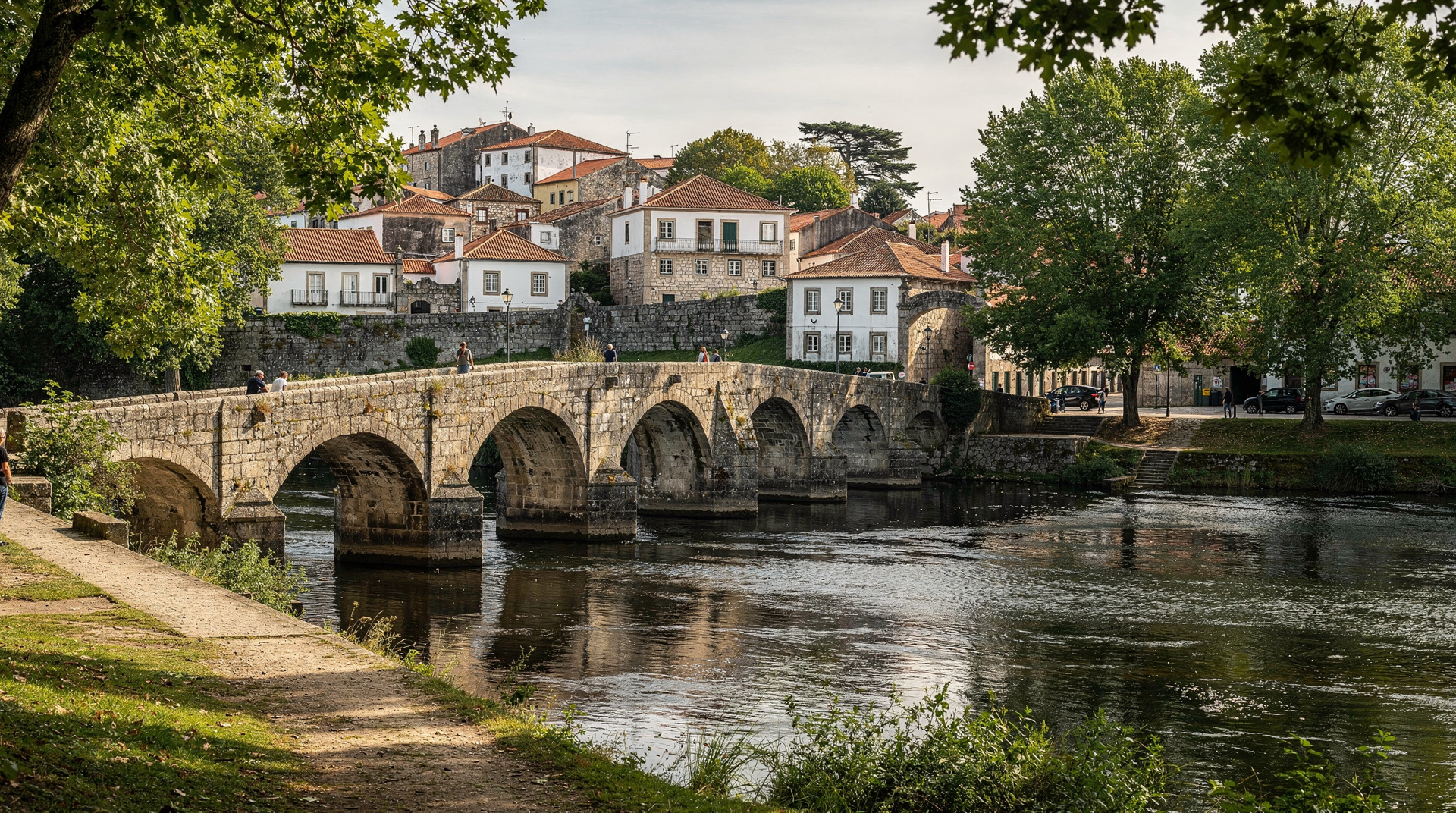
Ponte de Lima: Viana do Castelo Ponte de Lima Full Day from Porto
Is a Viana do Castelo day trip from Porto worth it?
Yes, particularly if you time your visit for August (the Festas d'Agonia festival, one of the best traditional festivals in Portugal). The Santa Luzia basilica viewpoint is excellent. The historic centre and riverside Praça da República are among the most attractive in the Minho. Train from Porto takes around 1 hour 15 minutes.
Viana do Castelo — the Minho coast’s most complete town
Viana do Castelo sits at the mouth of the Lima river, looking out over the Atlantic with the forested hill of Santa Luzia rising directly behind the city. It has a historic centre of remarkable coherence — the Praça da República square is one of the finest in northern Portugal — and a cultural identity defined by traditions of fishing, seafaring, and above all the elaborate costume and embroidery culture of the Minho that reaches its peak at the Festas d’Agonia each August.
Compared to Braga or Guimarães, Viana is a quieter and more intimate day trip. The historic centre is compact, the Santa Luzia viewpoint is excellent, and the whole place retains the feeling of a functioning Portuguese town rather than a tourist destination with a historic veneer. The beach at the south end of the city (Praia do Cabedelo, reached by ferry across the Lima) adds a coastal dimension that Braga and Guimarães cannot offer.
| Where | Mouth of the Lima river, Minho coast, ~70 km north of Porto |
| Cost | around 4.50–5 € train fare; most sights are free or under 3 € |
| Time needed | full day (7–8 hours including travel) |
| Getting there | direct train from Porto Campanhã/São Bento, ~1h15 |
| Best time | third week of August for Festas d’Agonia; April–May for the Minho landscape |
How Viana compares to other Minho day trips
| Day trip | Best for | Travel time from Porto | Signature sight |
|---|---|---|---|
| Viana do Castelo | Coastal town, folk culture, beach | ~1h15 by train | Santa Luzia viewpoint |
| Braga | Dramatic religious architecture | ~1h by train | Bom Jesus do Monte |
| Guimarães | Medieval old town, castle | ~1h by train | Guimarães Castle |
| Ponte de Lima | Riverside medieval market town | ~45 min by car/tour | Medieval bridge and market |
Getting from Porto to Viana do Castelo
Direct trains run from Porto Campanhã and Porto São Bento to Viana do Castelo station. The journey takes around 1 hour 15 minutes and costs approximately 4.50–5 €. Services run every 1–2 hours. The train is comfortable and the route passes through the Minho valley with pleasant views after Barcelos.
Viana do Castelo station is a short walk from the centre — the main historic core and the Praça da República are around 10 minutes on foot from the station entrance.
By car from Porto: the drive takes around 1 hour 10 minutes on the A28 coastal motorway. Parking is available near the river and the railway bridge area. A car is useful if you want to add Ponte de Lima or continue north to Valença and the Spanish border.
Organised tours combine Viana with Ponte de Lima (an exceptionally photogenic medieval river town 22 km east) in a full day from Porto.
Book the Viana do Castelo and Ponte de Lima full day trip Book the Porto to Viana do Castelo and Ponte de Lima guided tourSanta Luzia basilica — the essential stop
The Santuário de Santa Luzia is a neo-Byzantine basilica built between 1904 and 1926 on the Monte de Santa Luzia, 5 km north of the city centre. The design — twin towers flanking a large dome, white granite walls — was inspired partly by the Sacré-Cœur in Paris, and the hilltop silhouette dominates the landscape for kilometres.
The basilica interior is simpler than its exterior suggests — the building is relatively bare compared to the baroque interiors of the Minho region. The real value is the exterior panorama: the terrace in front of the basilica looks south over the Lima estuary, the city, the Atlantic coast and the bridge across the Lima river. On a clear day, the view extends to Espanha in the north and the sand dunes of the Douro estuary in the south.
The dome of the basilica is climbable via an internal stairway (around 1.50 €). The climb involves a metal spiral staircase through the dome structure — narrow and slightly vertiginous but rewarding. The view from the lantern at the top is even more expansive than the terrace level below.
Getting up to Santa Luzia:
The funicular (Funicular de Santa Luzia) runs from a small station near the railway bridge, approximately 15 minutes’ walk from the city centre. The three-minute ride covers the steepest section of the hill and costs around 2 € return. The funicular typically operates from 9 am to 6 pm but check current operating hours before visiting — the schedule changes seasonally.
A taxi from the centre costs around 8–10 € each way (the taxi is the most reliable option if the funicular schedule is inconvenient). Walking up the hill path takes around 40 minutes and is moderately strenuous.
Allow 1.5 hours at Santa Luzia — 30 minutes to ride up, view the exterior and climb the dome, and time to simply sit on the terrace with the view.
The historic centre
Viana do Castelo’s historic centre is built on a grid pattern established in the 16th century, when the city was a prosperous Atlantic trading port exporting wine, linen and dried fish to northern Europe.
Praça da República: The centrepiece of the historic core is one of the finest squares in northern Portugal. The 16th-century Chafariz fountain stands at the centre — granite, carved with armillary spheres (the Portuguese Age of Discovery symbol), still functional. The former town hall (now a cultural centre) on the north side is a Manueline building of exceptional quality, with a loggia of Manueline arches at ground level and carved Gothic detail above. The adjacent Igreja da Misericórdia (Misericórdia Church) has a Renaissance façade that is remarkably early for Portugal — dated 1589.
Rua da Bandeira and the old merchant houses: The streets running from Praça da República toward the river are lined with 16th and 17th-century merchant houses, their façades displaying the prosperity of Viana’s Atlantic trade era. Many retain original architectural details: Manueline windows, carved stone coats of arms, traditional window grilles.
Igreja Matriz: The parish church on Praça da República, begun in the late 14th century, has a Gothic-Romanesque entrance portal with carved figures of the apostles in the archivolt — one of the finest Gothic portals in the Minho. The interior is largely baroque, with significant azulejo tile panels from the 18th century.
Museu de Artes Decorativas: A 17th-century palace housing a collection of Portuguese decorative arts, furniture, ceramics and an important collection of regional gold jewellery — the kind of elaborate filigree pieces worn with the traditional Minho costume. Entry around 3 €.
The bordado and costume tradition
Viana do Castelo is the capital of the Minho’s living folk culture — the embroidery, the gold jewellery, and the costume tradition that culminates at the Festas d’Agonia are genuinely distinctive and not replicated in the same way elsewhere in Portugal.
Bordado de Viana: The embroidery style is characterised by densely worked floral and geometric designs on white linen, predominantly in red thread (sometimes with black, yellow or multicolour additions). The designs evolved through centuries of hand-stitching by women of the Minho region and were historically part of the trousseau prepared for marriage. Authentic bordado from specialist producers is sold in several shops in the historic centre — prices for a handmade piece range from 30 € for a small napkin set to 200 € for a tablecloth. Machine-made imitations are also sold; ask specifically for the hand-embroidered version.
Gold filigree jewellery: The traditional Minho costume includes elaborate filigree gold pieces — heart-shaped pendants, chains, earrings and brooches made from fine twisted gold wire by local goldsmiths. The tradition is certified as intangible cultural heritage. The Museu do Ouro (Gold Museum, in Travassos nearby) has a collection context, but the shops of Viana’s jewellery district show the contemporary craft.
Traditional costume: In the Minho, the folk costume (traje regional) is still worn for festivals, weddings and important occasions — scarlet and green skirts, heavily embroidered aprons and blouses, elaborate gold jewellery and a specific arrangement of the hair with a kerchief. It is not a museum piece but a living tradition, most visibly expressed at the Festas d’Agonia.
The Festas d’Agonia — the best reason to visit in August
The Festas de Nossa Senhora da Agonia occur during the third week of August (typically Thursday to Sunday). The festival centres on the patronal procession, in which hundreds of Viana women dressed in the full traditional Minho costume — the most elaborate and colourful folk costume in Portugal — process through the city behind the statue of the Virgin. The gold jewellery alone on the women in the procession represents an extraordinary concentration of value and artisanship.
Other elements of the festival include the bênção dos barcos (blessing of the fishing boats) ceremony on the Lima river, fireworks over the water, folk music and dance performances, and the general festivity of a city given over to celebration for four days.
If you can time a Porto trip for the third week of August, visiting Viana specifically for the Festas is worth planning your itinerary around. The festival is not commercially oriented in the way that some Portuguese festivals have become — it is a genuinely community-driven celebration of a specific local tradition.
The waterfront and beach
Viana do Castelo’s waterfront runs along the Lima river beneath the railway bridge. The bridge itself — a Dom Luís I-style iron arch bridge built by Eiffel’s company — is the landmark on the river side of the city, smaller than Ponte Dom Luís I in Porto but clearly from the same engineering tradition.
The market (Mercado Municipal) near the waterfront is the most useful for a morning visit — fresh fish, vegetables and the occasional artisan product. Visitors who enjoy the Mercado do Bolhão in Porto’s centre will recognise the same everyday-market energy here, on a smaller and less touristy scale.
The beach at Praia do Cabedelo is across the Lima estuary, reached by a small passenger ferry from the waterfront (around 2 € return, runs in summer). The beach is a long Atlantic strand — good for walking and swimming when the swell is not too strong. The beach bars (barracas) at Cabedelo are informal and cheap. A summer afternoon here is a genuine pleasure after a morning of historic centre touring.
A realistic one-day plan
Morning (arrive ~9:30 am): Walk from the station to Praça da República (10 minutes), explore the historic centre — the Chafariz fountain, the former town hall, Igreja Matriz and Igreja da Misericórdia. Budget 1–1.5 hours.
Late morning: Take the funicular up to Santa Luzia (or a taxi if the schedule doesn’t align). Spend 1.5 hours at the viewpoint, the basilica and the dome climb.
Lunch (1 pm): Back in the centre, a Minho lunch at Tasquinha da Linda or Cabral.
Afternoon: Browse the bordado shops for embroidery, visit the Museu de Artes Decorativas if the gold jewellery tradition interests you, then cross to Praia do Cabedelo by ferry for an hour on the beach if the weather cooperates.
Return: Trains back to Porto run roughly every 1–2 hours; check the timetable before you commit to a late-afternoon beach session so you are not stranded waiting for the next departure.
This plan leaves Ponte de Lima out — trying to add it via public transport makes for a rushed day. Pair it with an organised tour instead, or save it for a separate outing described in the northern Portugal 7-day itinerary, which sequences Viana, Braga, Guimarães and Ponte de Lima across a longer trip.
Where to eat in Viana do Castelo
Tasquinha da Linda: Near the Praça da República, a small, unpretentious restaurant serving Minho regional cooking. Particularly good bacalhau preparations and the local lamprey (when in season, January to April). Lunch mains 10–16 €.
Cabral: A reliable restaurant on Largo 5 de Outubro, consistent quality, good wine list of Vinho Verde and regional reds. Mains 14–22 €.
Mar à Vista: At Praia do Cabedelo, seasonal seafood restaurant directly on the beach — fresh fish, simple preparation, terrace seating. Best visited in summer at lunch. Mains 12–18 €.
For coffee: the cafés around Praça da República are well-positioned for a mid-morning break. Café Jardim on Rua de São Sebastião is a local favourite with good coffee and local pastries.
Practical tips before you go
Luggage: Viana’s train station does not have reliable luggage storage, so this trip works better as a genuine day trip from a Porto base rather than a stop en route with bags. If you are travelling onward with luggage, an organised tour with a driver is more practical than the train.
Weather: The Minho coast is noticeably breezier than central Porto — bring a light jacket even in summer, particularly for the exposed Santa Luzia terrace and the beach ferry crossing.
Cash: Most restaurants and shops in the historic centre take cards, but the bordado specialists and smaller stalls sometimes prefer cash — carry some small notes.
Pace: Viana rewards a slower pace more than a checklist approach. Visitors who try to see every sight in the guide in one day often end up rushing the two things — Santa Luzia and a proper lunch — that make the trip worthwhile. If pressed for time, prioritise those two over the museum and the market.
Combining with Ponte de Lima
Ponte de Lima (22 km east) is one of the oldest municipalities in Portugal — the Lima river crossing here is documented since Roman times, and the medieval bridge and the surrounding old town are exceptionally well-preserved. The Saturday market in Ponte de Lima is one of the oldest regular markets in Portugal, taking place fortnightly.
An organised tour covering both Viana and Ponte de Lima is the efficient approach.
Book the Porto, Viana do Castelo, Ponte de Lima and Valença full dayFrequently asked questions about the Viana day trip
Is Viana do Castelo worth visiting outside August?
Yes — the Santa Luzia viewpoint, the historic centre and the coastal setting are rewarding at any time of year. August adds the Festas d’Agonia, which is the festival peak, but the city is pleasant and interesting throughout the year. Spring (April–May) is particularly good for the Minho landscape.
How does Viana compare to Braga as a day trip?
Braga has the more dramatic individual monument (Bom Jesus do Monte) and a more imposing cathedral. Viana has a more atmospheric historic town centre, the Santa Luzia viewpoint, beach access and the folk culture tradition. Both are excellent. If you can only do one, Braga’s Bom Jesus is the more instantly memorable experience; Viana gives a more complete sense of Minho culture.
What is the best thing to buy in Viana do Castelo?
Handmade bordado (embroidery) from a reputable specialist shop — look for authentic hand-stitched pieces rather than machine-produced imitations. Gold filigree jewellery from a local goldsmith workshop. Local Vinho Verde wine (the Lima valley produces some of the best Vinho Verde in Portugal) — the Vinho Verde guide explains what to look for on the label if you plan to bring a few bottles home.
How crowded is Viana in summer?
Significantly less crowded than Porto, Braga or Guimarães. Even in July and August, Viana has a manageable visitor flow. During the Festas d’Agonia weekend, the city is packed — accommodation books out months in advance and the festival crowds are considerable, but in an animated rather than uncomfortable way.
Is the Santa Luzia funicular child-friendly?
Yes — children enjoy the funicular ride and the panoramic view from the basilica terrace. The dome staircase is narrow and may not be suitable for very young children. The hill walk is too strenuous for young children.
Frequently asked questions — Viana do Castelo day trip from Porto — the honest guide
How do I get from Porto to Viana do Castelo by train?
Direct trains run from Porto Campanhã and Porto São Bento to Viana do Castelo. The journey takes around 1 hour 15 minutes on the urban/regional service. The fare is approximately 4.50–5 €. Check CP (Comboios de Portugal) for the current schedule — trains run every 1–2 hours.How do I get to the Santa Luzia basilica?
The Santuário de Santa Luzia sits on a hill 5 km north of Viana do Castelo centre. An old funicular (Funicular de Santa Luzia) runs from a station near the railway bridge — the ride takes about 3 minutes. The funicular typically operates from morning to late afternoon. Alternatively, take a taxi from the centre (around 8 €) or walk the hill path (approximately 40 minutes, steep). The dome of the basilica can also be climbed for additional views.What is the Festas d'Agonia festival in Viana?
The Festas d'Agonia (officially Festas de Nossa Senhora da Agonia) is a three-day festival in August — typically the third weekend of August — celebrating the city's patron. It is one of the most impressive traditional festivals in Portugal, featuring processions where women dress in the full Minho costume (scarlet skirts, embroidered blouses, gold jewellery), religious ceremonies on the river, fireworks and music. If you can time your Viana visit for this weekend, do so.What is bordado de Viana do Castelo?
Bordado is traditional embroidery — the Viana do Castelo style is among the most celebrated in Portugal. Characterised by red thread on white linen (though multicolour versions exist), the designs feature stylised flowers, geometric borders and figurative motifs derived from centuries of folk tradition. Authentic bordado is sold in specialist shops in the historic centre. It also adorns the traditional Minho costume worn at festivals.Is Viana do Castelo better than Braga as a day trip?
They serve different interests. Braga has more imposing religious architecture (the Sé Catedral) and the unmissable Bom Jesus do Monte staircase. Viana do Castelo offers a more intimate historic town, the Santa Luzia viewpoint, better beach access and the possibility of coinciding with the Festas d'Agonia. Both are excellent; choose based on your priorities.Can I combine Viana do Castelo with Ponte de Lima in one day?
Ponte de Lima is 22 km east of Viana and is connected by bus. Including it in a Viana day trip is possible but rushed. An organised tour covering both is more practical than the DIY connection. See the tour options below.
Top experiences
Bookable activities with verified prices and instant confirmation on GetYourGuide.