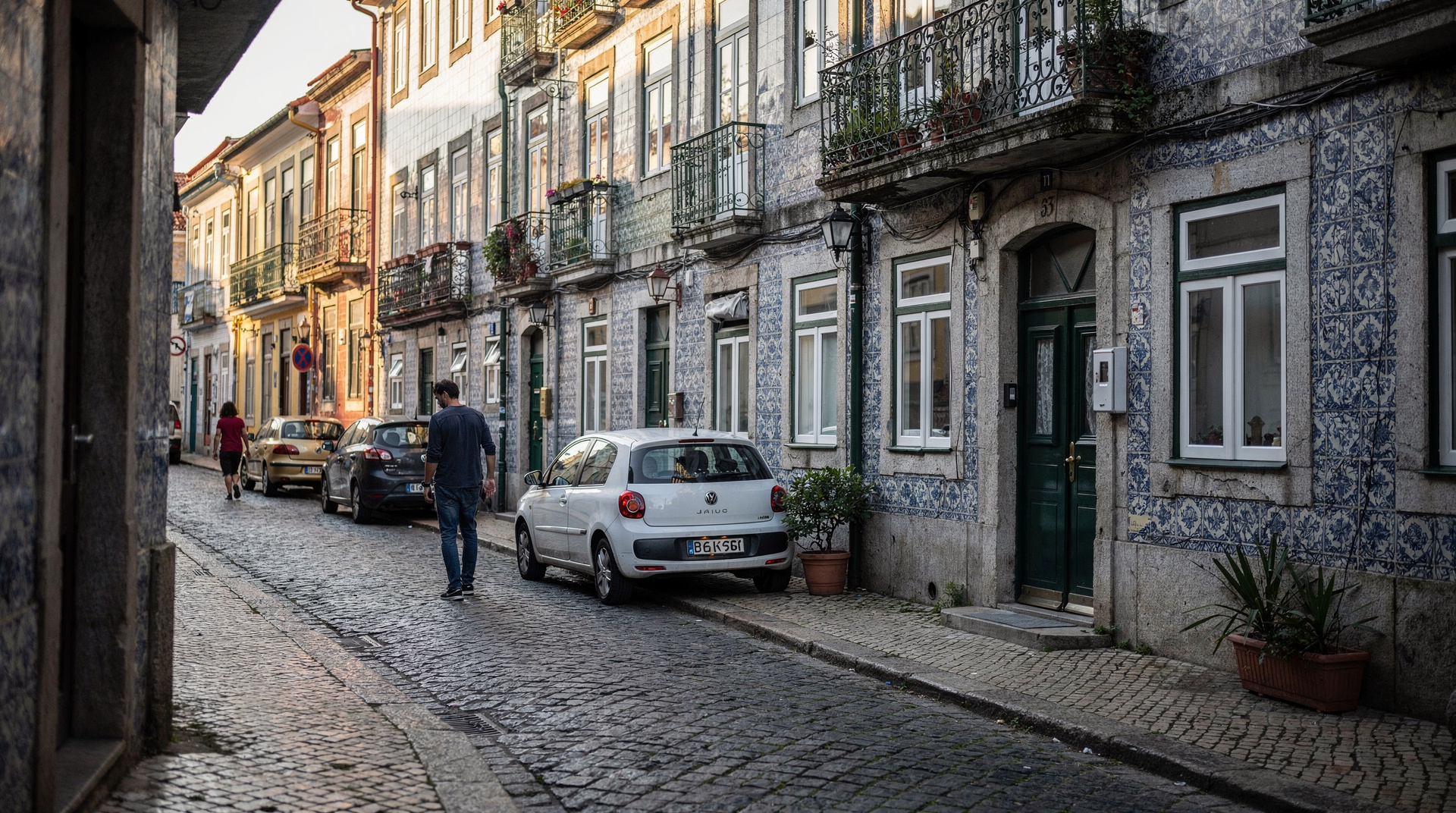
Digital nomad in Porto: coworking, visa D8, and what it really costs
Why Porto works for remote work
We spent two months in Porto in the summer and early autumn of 2024, working full days on client projects while trying to live something like a local existence. The city was already visible on most digital nomad lists. We wanted to understand whether the reputation was deserved or inflated.
The short version: Porto works for remote work, with caveats. The internet infrastructure is generally excellent. The coworking market has matured. The cost of living is higher than it was five years ago but still significantly below London, Amsterdam, or Zurich for comparable quality. The coffee is outstanding and cheap. The bureaucracy — specifically around the visa situation — is the honest challenge.
| Monthly cost (comfortable, not budget) | Around 1,700–1,800 € |
| Best neighbourhood base | Cedofeita-Bombarda |
| Visa for non-EU stays over 90 days | D8 Digital Nomad Visa |
| Fibre internet | Widely available, 35–50 €/month for 1 Gbps |
| Coworking hot desk | 150–250 €/month |
The monthly cost breakdown (two months, September-October 2024)
We tracked every euro. The monthly average:
Accommodation: 850 € (one-bedroom apartment, Cedofeita area, booked through Uniplaces for a monthly rate). This was a genuine apartment with a kitchen, not a short-stay rental with a tourist premium. Finding monthly rates takes more effort than Airbnb but cuts the cost by 30-40%.
Food: 320 € per person (cooking 4-5 evenings per week, lunch at local restaurants 3x per week, coffee at our regular counter daily). Porto’s supermarkets — Pingo Doce and Continente — are well-stocked and reasonably priced.
Coworking: 180 € (a monthly hot desk at a space near Boavista — see details below).
Transport: 45 € (monthly metro pass, Andante card, occasional Uber for late nights or rain).
Leisure, going out, activities: 310 € (two port wine cellar visits, a Douro Valley day trip, restaurants, museums, occasional bar evenings).
Total monthly average: approximately 1,705 € — rounding to the cited 1,800 € when accounting for higher-spend months or unexpected costs (phone bill, a weekend trip to Braga).
This is not a budget-travel existence — it’s a comfortable working life. Budget travellers can do Porto for less. People who need reliable high-spec coworking and central apartments will pay more.
Coworking spaces: what we found
Porto’s coworking market has several good options. We tried three before settling:
AUDAX Porto (near Casa da Música, Boavista): the space we chose for a full month. Clean, genuinely good internet (500 Mbps symmetrical when we tested), proper ergonomic chairs, a reasonable amount of noise during the day, private meeting rooms available to book. Monthly hot desk: 180 €. Day passes: 25 €.
Cowork Cedofeita (in Cedofeita): smaller, more community-focused, better for meeting other nomads. Internet was good but the space gets warm in summer. Monthly: 150 €.
Porto i/o (near the waterfront): the best-known option, more startup-focused, slightly more expensive (200-250 € per month for hot desk). Good if your work involves meeting people in Porto’s startup ecosystem.
All three had adequate meeting room options. All three had reliable espresso. The Portuguese cafe-desk culture means you can also work from a café for an espresso (0.80 €) and most good cafés will tolerate a few hours of laptop use without pressure, particularly outside the rush hours.
Coworking spaces compared
| Space | Monthly hot desk | Best for | Notable |
|---|---|---|---|
| AUDAX Porto | 180 € | Reliable internet, quiet focus | 500 Mbps symmetrical, ergonomic chairs |
| Cowork Cedofeita | 150 € | Meeting other nomads | Community-focused, warm in summer |
| Porto i/o | 200–250 € | Startup networking | Most expensive, best events scene |
Internet at apartments
Portuguese residential internet is generally excellent — fibre is widespread in Porto, and monthly contracts run 35-50 € for 1 Gbps connections. The catch for short-term tenants is that most residential contracts require a 12-24 month commitment. Monthly-rate apartments typically include internet in the price, but verify speed before committing: speeds in older buildings can be constrained by the building’s internal wiring even if the line speed is technically fast.
We tested 150+ Mbps download at our Cedofeita apartment — adequate for video calls, uploads, and large file transfers.
The visa situation: D8 explained honestly
Portugal’s Digital Nomad Visa (officially the D8, for “remote work”) was introduced in 2022 and allows non-EU citizens to live and work remotely in Portugal for up to one year, with renewal options.
The requirements at time of writing:
- Proof of remote employment or self-employment with clients outside Portugal
- Minimum monthly income of 3,040 € (four times the national minimum wage, as adjusted — verify current threshold before applying)
- Health insurance valid in Portugal
- Proof of accommodation
- Clean criminal record
The application is made at a Portuguese consulate in your home country before you arrive. The process is bureaucratically intensive and the consulate wait times have been variable — some applicants report approvals in 6-8 weeks, others in 4-6 months. Apply well in advance.
EU citizens don’t need the D8 — they can work remotely from Portugal indefinitely under freedom of movement. Non-EU citizens from Schengen partner states have separate arrangements.
If the D8 timeline doesn’t work, the 90-day Schengen tourist allowance permits remote work (there’s legal ambiguity, but in practice this is how many nomads operate for short stays). Do not overstay the 90 days — Portuguese border enforcement is not aggressive but the fine and entry ban consequences are real.
The neighbourhoods that work for nomads
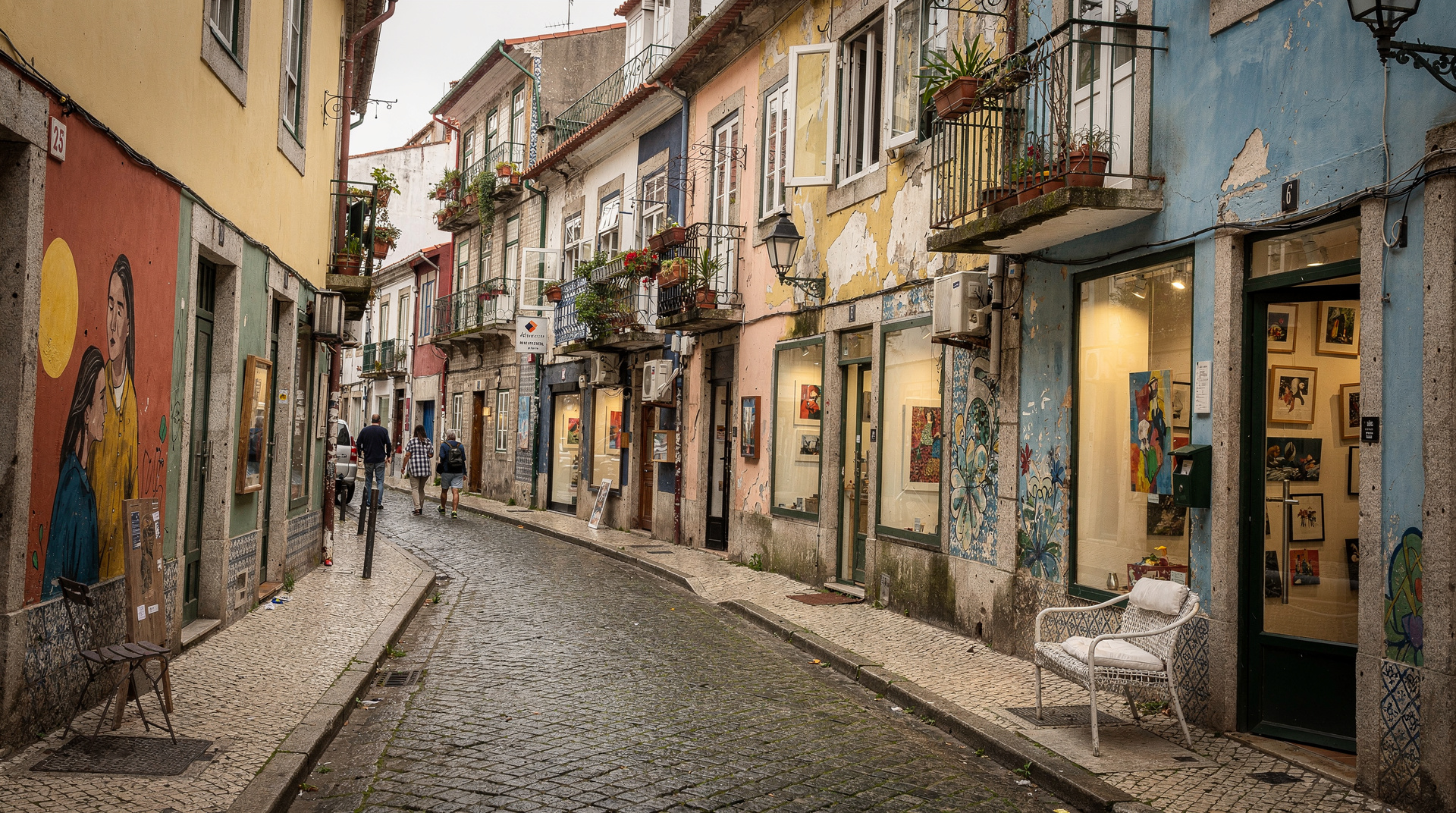
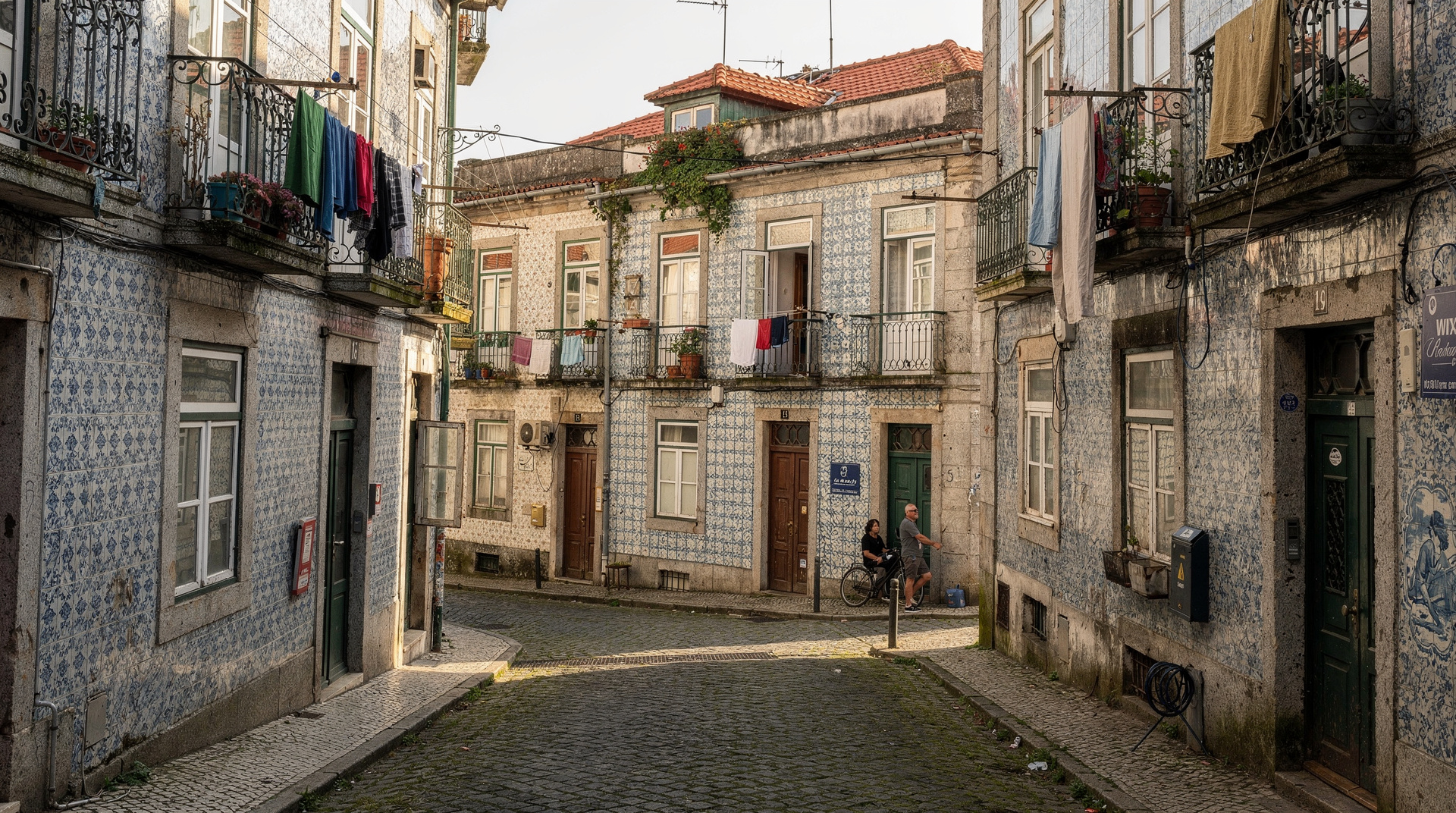
Cedofeita-Bombarda is the area we’d recommend for a monthly stay: independent cafés, restaurant variety, good supermarket access, close to coworking spaces, and far enough from Ribeira that it doesn’t feel like you’re living in a tourist district.
Bonfim is the emerging option — slightly cheaper monthly apartments, a growing café and coworking scene, more local in character. The tradeoff is slightly less central location.
Avoid Ribeira for monthly stays. The tourist premium inflates everything, and the noise on summer evenings makes it unsuitable as a working base. Baixa-Aliados sits between the two — more central than Bonfim, calmer than Ribeira, and within walking distance of most coworking options, though rents run higher than Bonfim.
What we’d do differently on a return trip
If we went back for another two-month stretch, we’d start the apartment search a month earlier — Uniplaces and Idealista listings for the best Cedofeita and Bonfim apartments move fast, and we lost our first-choice place to another applicant during our search week. We’d also budget a proper weekend trip out of the city every three to four weeks; two straight months of working days and Porto evenings, without a change of scene, started to blur together by week six. A weekend in Braga or the Douro Valley breaks that pattern well, and neither requires more than a day’s advance planning.
The honest verdict on Porto for nomads
Porto works. The infrastructure is there, the cost is manageable, the city is interesting enough to sustain two months of living before you need to move on. The main challenge is the accommodation search: finding a legitimate monthly-rate apartment requires patience and some Portuguese-language Idealista or OLX browsing.
The coworking options are good but not as numerous as Lisbon, Berlin, or Barcelona. If you need a large and varied coworking ecosystem with constant new people, Porto is smaller than those options.
If you want a beautiful city with good food, excellent coffee, reliable internet, a manageable cost of living, and a pace that suits deep work: Porto earns the reputation.
Local Porto experience — good for getting oriented before a longer stay Porto city centre walking tour — useful for understanding the layout when you first arriveFrequently asked questions
Do I need the D8 visa to work remotely from Porto? Only if you’re a non-EU citizen staying longer than 90 days. EU citizens can work remotely under freedom of movement with no visa needed, and non-EU visitors can often work informally within a 90-day Schengen tourist stay, though overstaying carries real penalties.
Is Porto cheaper than Lisbon for a nomad base? Generally yes, though the gap has narrowed as Porto’s own cost of living has risen. Expect somewhat lower accommodation and coworking costs in Porto, with a smaller but still workable coworking and nomad-community scene compared to Lisbon.