Porto in 3 days — the classic itinerary
Porto: Porto Historical Center Walking Tour
How to use this three-day Porto itinerary
Three days is the trip most people should book to Porto. It’s enough time to genuinely understand the city rather than just check off its Instagram monuments. Day 1 takes the historic core slowly, with built-in breathing room at São Bento before the crowds arrive and time for a proper evening in the Cedofeita neighbourhood. Day 2 crosses the river to Vila Nova de Gaia for a serious port lodge visit and covers the Serralves Foundation and Foz do Douro. Day 3 is the choice: a day trip to the Douro Valley if that’s your priority, or deeper exploration of Bonfim, Boavista and the parts of Porto that most visitors never reach.
This itinerary assumes you’re staying in the historic centre or Bonfim neighbourhood and travelling without a car within the city. Porto’s metro (six lines, Andante card) is good; for Day 3 the Douro day trip option requires either a guided tour or a train to Pinhão (train has limitations — covered below).
Budget estimate: €180–280 per person over three days (meals, port tastings, admissions, metro, one river cruise, and the Day 3 option if you take a Douro tour).
Best time: May–June and September. Avoid São João weekend (23–24 June) unless you’re there for the festival — hotel prices spike 30–50% and the city centre is effectively closed to normal touring.
| Where | historic centre, Gaia, Serralves, Foz do Douro, plus a Day 3 choice |
| Cost | around €180–280 per person over three days |
| Time needed | three full days |
| Getting there | Andante metro card, mostly walkable |
| Best time | May–June or September, avoiding São João weekend |
If three days still feels tight once you see the Day 3 fork below, our Porto in 4 days itinerary adds a second Douro option without cutting the city short. If it feels like too much, Porto in 2 days trims it to the essentials.
Day 1: The historic centre at a human pace
Morning (9:00–12:30)
9:00 — São Bento at opening time
Walk to Praça Almeida Garrett before 9:15. São Bento station is nearly empty this early; the azulejos panels depicting Portuguese history, harvest scenes and the meeting of Dom João I and Philippa of Lancaster are at their most legible without a crowd between you and the walls. Spend 25 minutes here. It’s free — just walk in.
9:30 — Sé do Porto (cathedral)
Walk five minutes uphill to the Sé. The cathedral itself is architecturally rewarding, particularly the Romanesque nave and the Gothic rose window above the west portal. The real draw is the cloister (€3) — 14th-century Gothic in structure, lined with 18th-century azulejo panels depicting the Song of Solomon. Many visitors skip it; don’t. Allow 40 minutes total.
10:15 — Cathedral terrace and Terreiro da Sé
Step back outside and look at the panoramic view from Terreiro da Sé over the lower city and the Douro. The equestrian statue of Vimara Peres (founder of the county of Portucale) and the pillory column are worth noting. Free.
10:30 — Walking tour or independent exploration
At this point you have two options. A guided walking tour of the historic centre (three hours) will give you context for everything you’ll spend the rest of the trip exploring — the architecture, the azulejos, the relationship between the high and low town, the Jewish quarter history. The Porto historic centre walking tour covers all of this with a knowledgeable local guide. If you prefer independent exploration, continue the route below.
10:30 — Palácio da Bolsa (independent route)
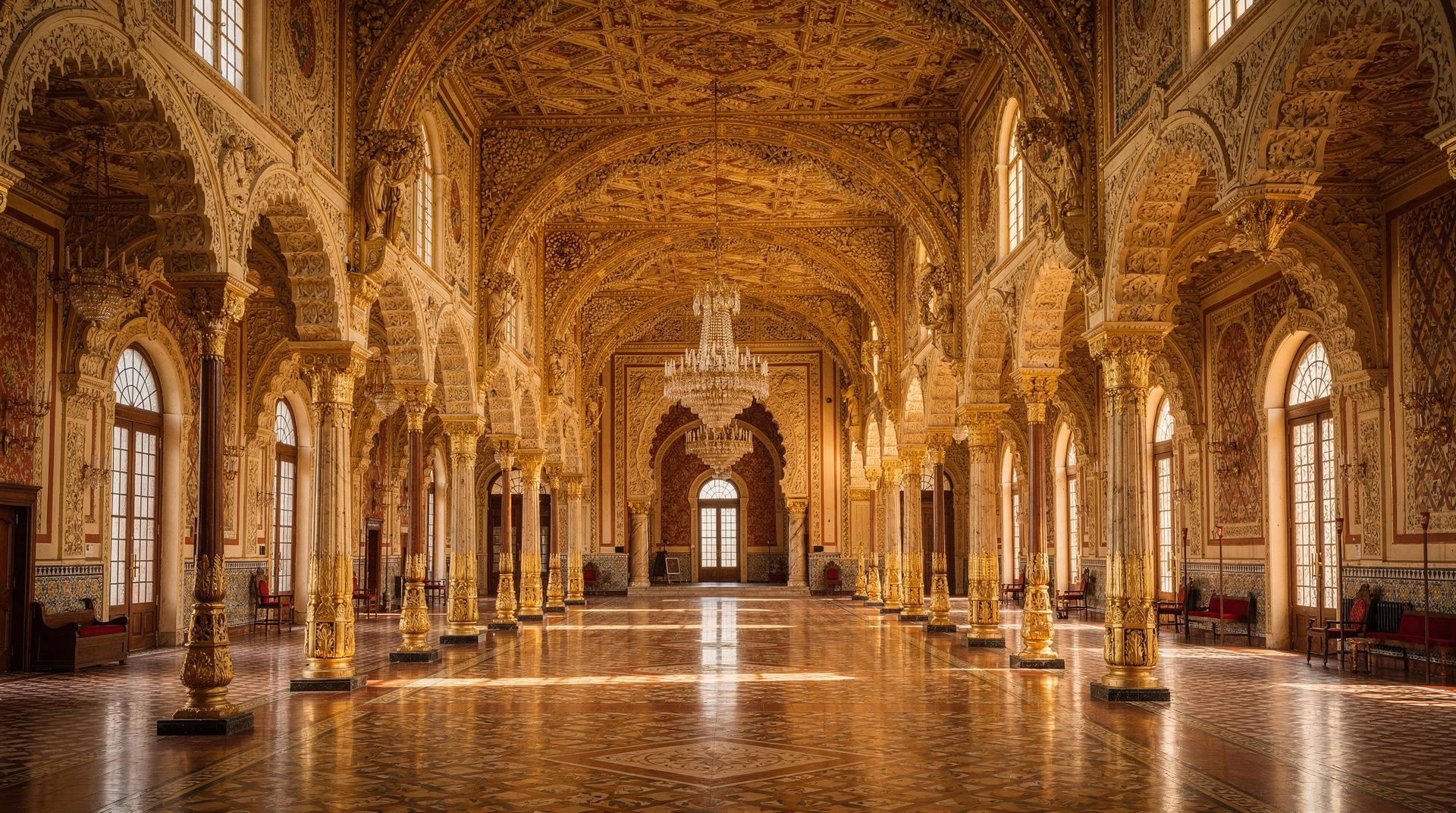
Walk down to Rua de Ferreira Borges and join the Palácio da Bolsa guided tour (€14, runs every 15–30 minutes). The Sala Árabe inside the Stock Exchange Palace is the most opulent 19th-century interior in Porto. Allow 60 minutes including waiting time. See our Palácio da Bolsa guide.
11:45 — Igreja de São Francisco
Directly adjacent to the Palácio da Bolsa is the Igreja de São Francisco, whose Baroque interior is literally covered in gilded wood — 400 kilograms of gold leaf applied to the carved surfaces over the 18th century. Entry €5 (combined with the ossuary museum). The contrast between the Gothic exterior and the wildly gilded interior is one of Porto’s strangest experiences. Allow 30 minutes.
Lunch (12:30–14:00)
12:30 — Lunch in the Ribeira backstreets
The restaurants on the Ribeira quay itself (Cais da Ribeira) add a tourist premium of 20–30% and are rarely the best food. Walk one block back from the waterfront — Rua Mouzinho da Silveira and Rua da Reboleira have genuinely good tascas. Taberna do Largo (Largo de São Domingos 68) serves petiscos at €3–6 per dish; Cantina 32 (Rua das Flores 32) does creative Portuguese food at €15–22 per person. See our guide to Porto’s best restaurants.
Afternoon (14:00–18:30)
14:00 — Ribeira and Ponte Dom Luís I
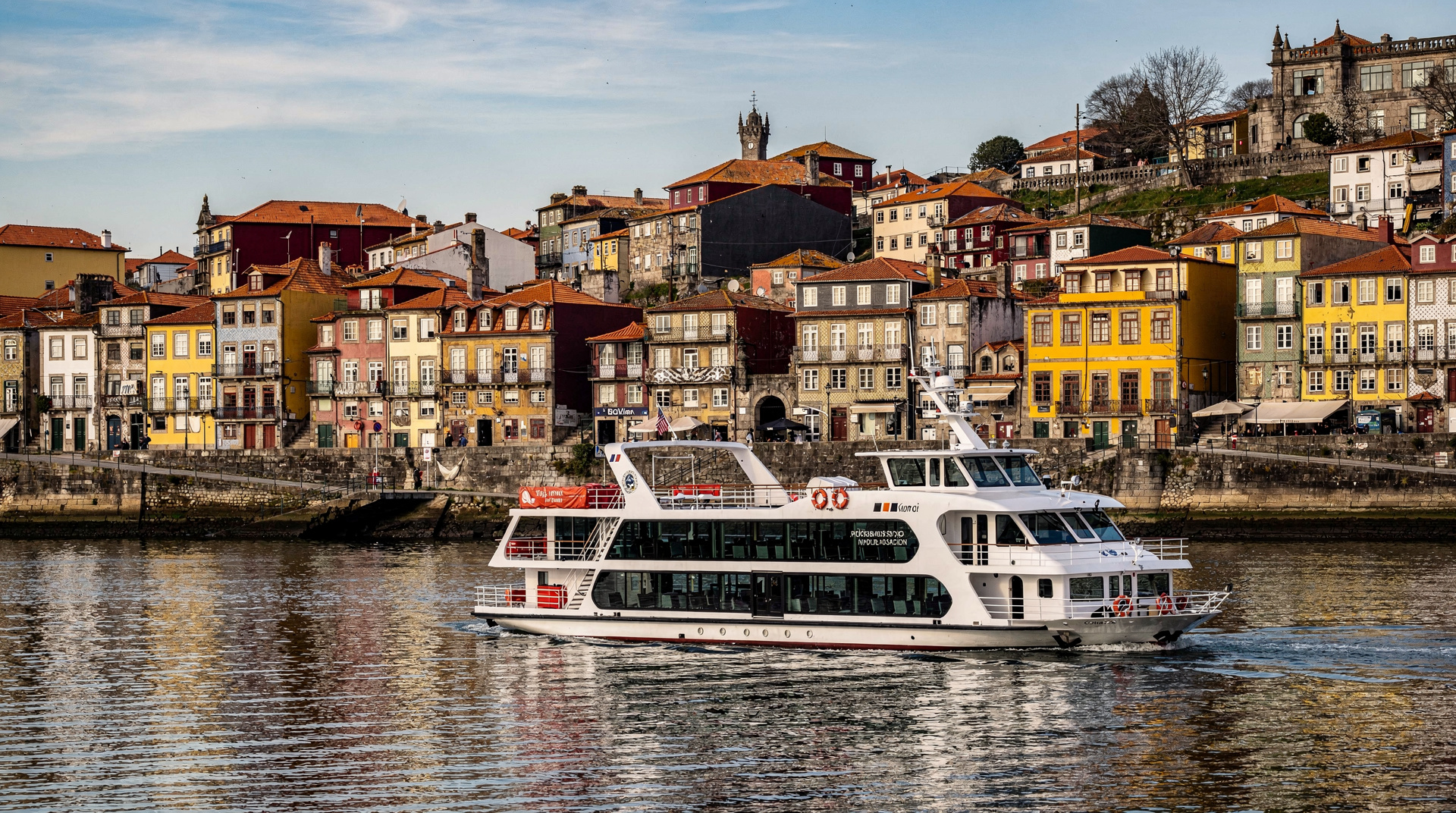
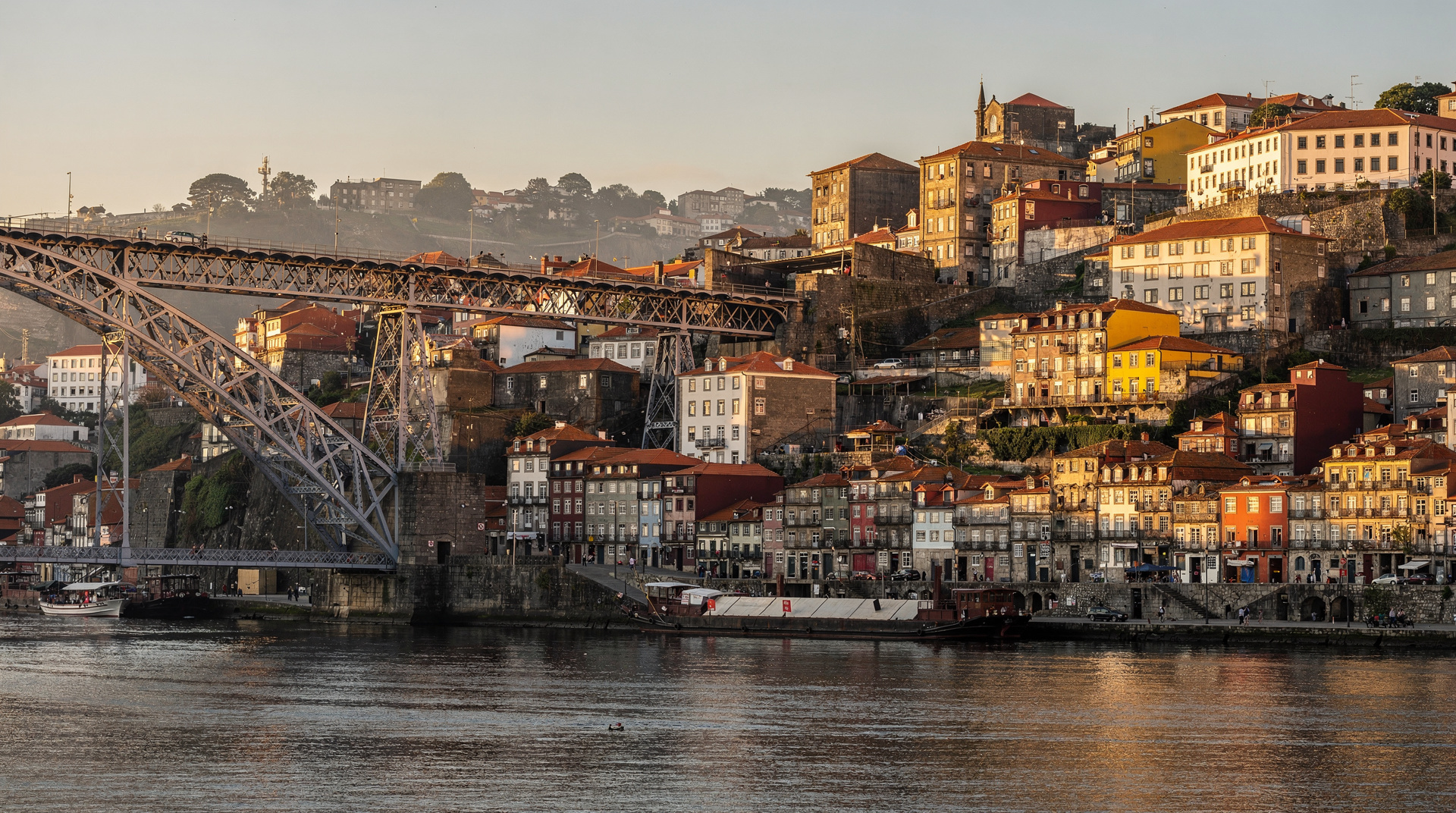
After lunch, walk the Ribeira quay eastward to Ponte Dom Luís I. Cross the bridge on the upper deck for the view — this is 45 metres above the river and the panoramic takes in both cities and downstream bridges simultaneously. Cross to the Gaia bank.
14:30 — Port lodges, Vila Nova de Gaia
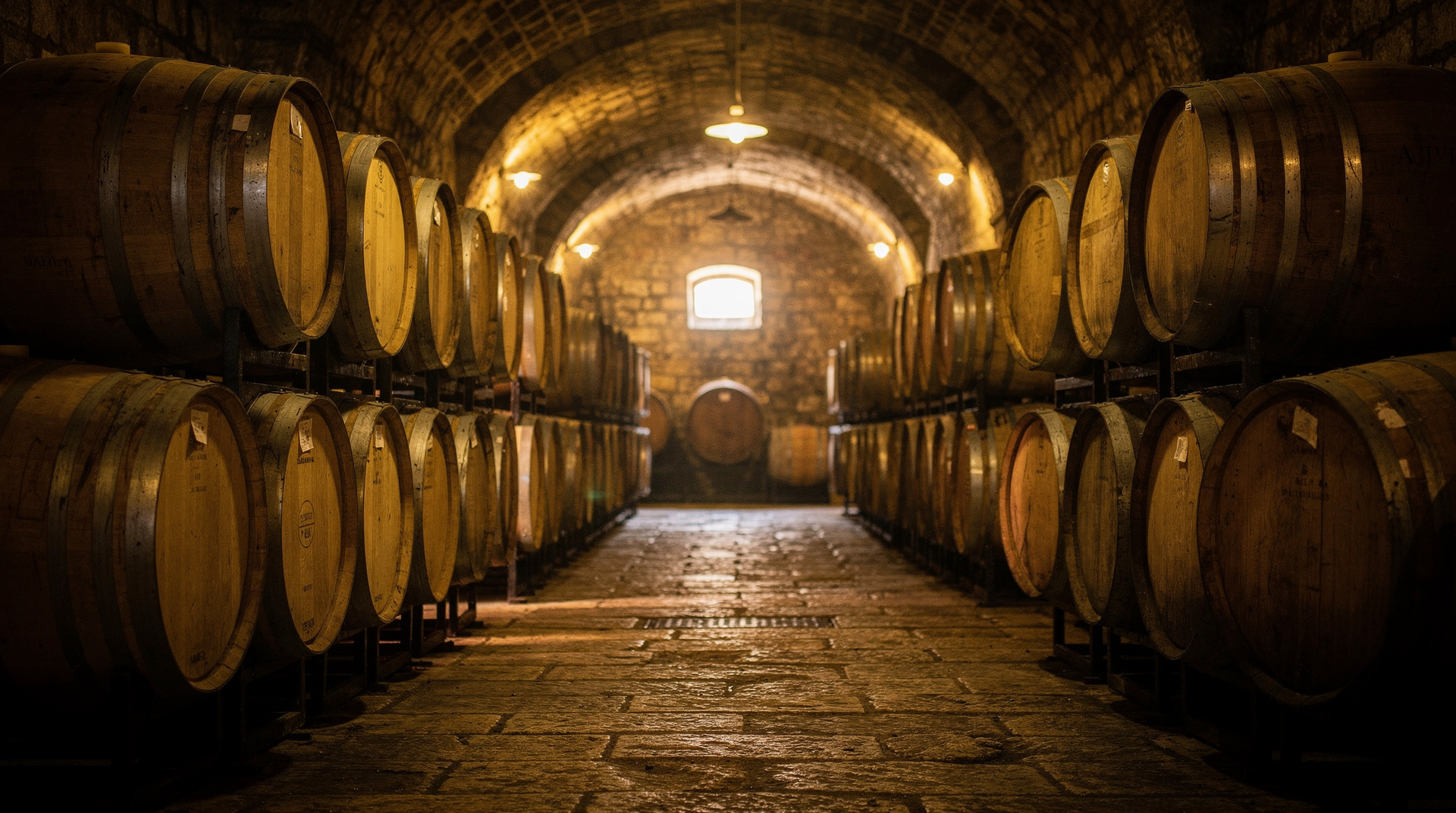
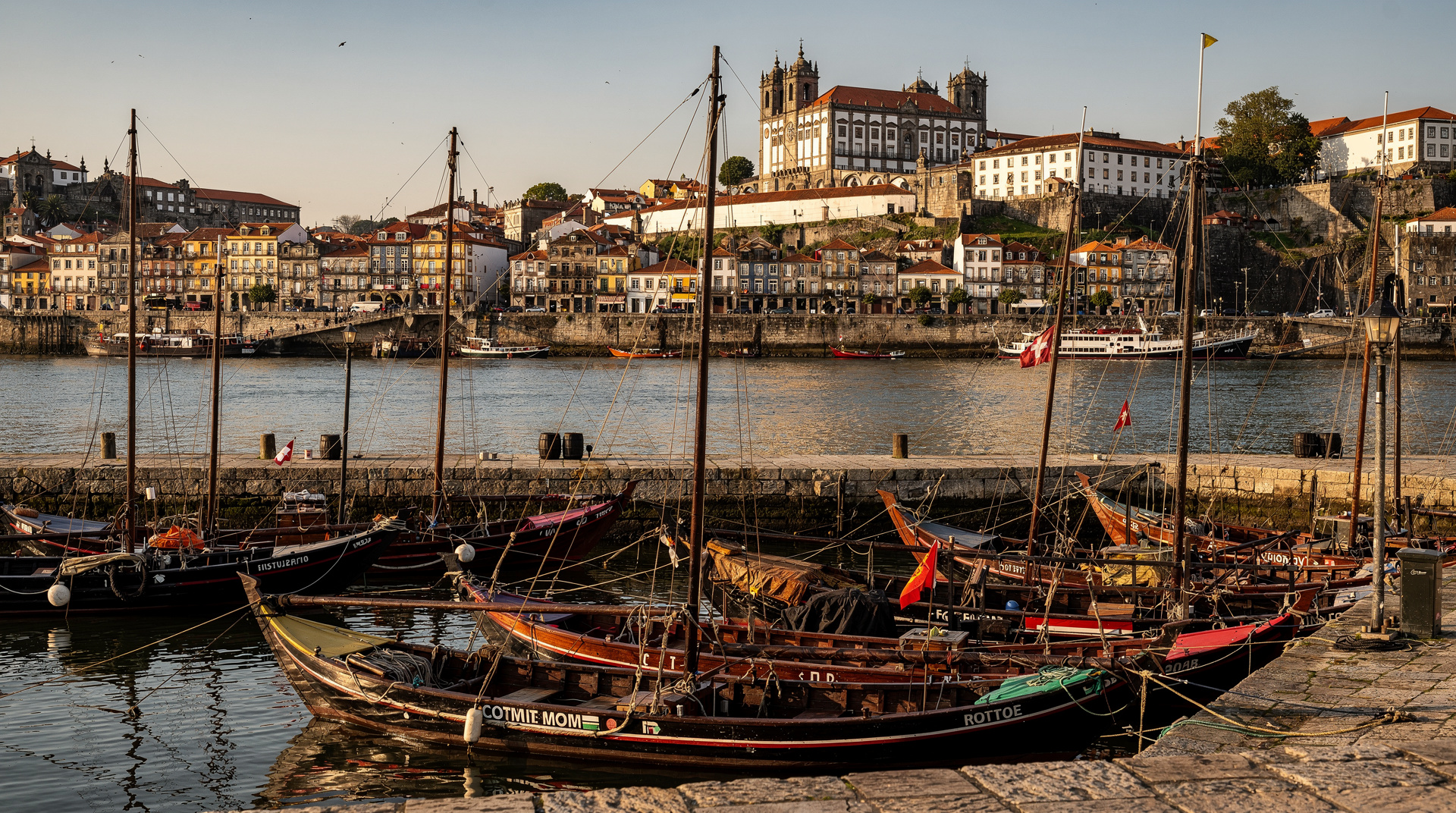
Give yourself two hours in Gaia. Visit one of the major port lodges — Taylor’s, Graham’s, Sandeman or Cálem — for a guided cellar tour and tasting. This is the heart of the Porto experience; the chance to understand why port wine is stored in Gaia (the microclimate) rather than in the Douro quintas where it’s made, to taste the difference between tawny and ruby, and to drink something excellent at the source. Taylor’s cellar tasting (~€20–30) is consistently recommended for its combined quality and setting. See the grahams-vs-taylors-vs-calem comparison guide.
16:30 — Six Bridges cruise (sunset option)
Walk down to the Gaia quay and board the Six Bridges cruise. The late afternoon departure (around 16:30–17:00) catches good light on the Ribeira houses. Book the Six Bridges cruise in advance for summer. 50 minutes, ~€15–18. Return to Porto quay.
Evening (18:30–22:00)
18:30 — Clérigos Tower at sunset
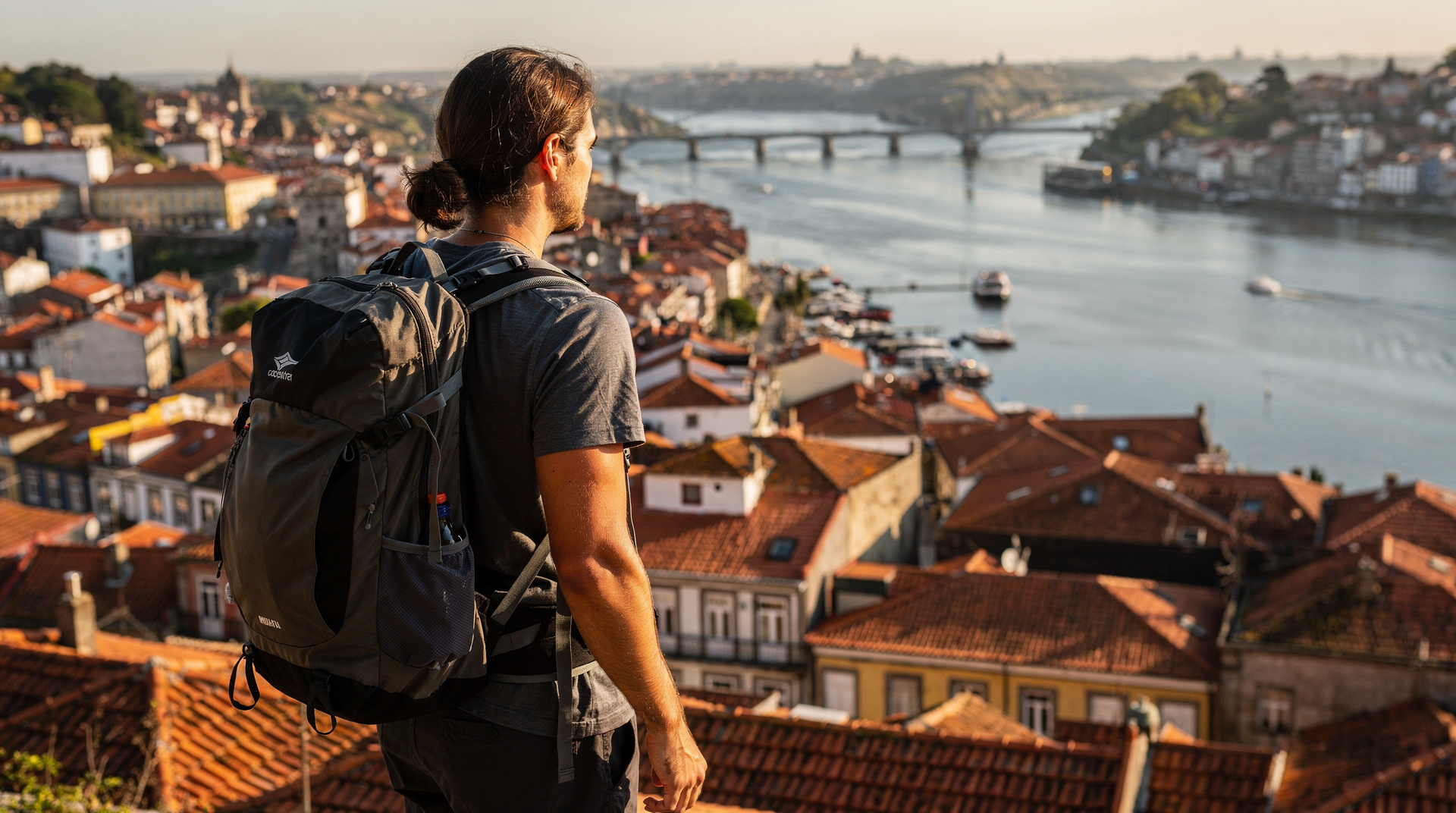
Walk from the Ribeira quay up to the Torre dos Clérigos (~15 minutes uphill). The tower is open into the evening and the sunset from the top — rooftops in orange light, the river visible both ways, Gaia’s hilltop silhouette — is Porto at its most cinematic. Pre-book via the Clérigos Tower ticket if visiting in peak season.
19:30 — Cedofeita for dinner
Walk 12 minutes north-west to the Cedofeita neighbourhood. This is where locals eat and where the best-value independent restaurants cluster. Brasão (Alameda da Passagem) is the serious contender for Porto’s best francesinha (the city’s signature dish — a layered meat sandwich in spiced beer-tomato sauce, topped with egg). Expect a queue or book ahead. See the francesinha guide for the full debate.
21:00 — Rua Galeria de Paris
End the evening with a drink on Rua Galeria de Paris, two minutes from the Cedofeita restaurants. This street and the adjacent Rua de Cândido dos Reis form Porto’s most concentrated bar area — outdoor tables, vinho verde, and enough atmosphere to make it feel like a celebration.
Day 2: Serralves, Foz do Douro and the western city
Morning (9:30–13:00)
9:30 — Livraria Lello
If you haven’t visited yet, morning of Day 2 is a better window than Day 1 afternoon. Buy a timed skip-the-line ticket in advance (Silver ~€8). The Art Nouveau interior — the double staircase, the painted ceiling, the carved galleries — justifies the entry fee. Allow 30 minutes inside. See the Livraria Lello guide for the honest cost-benefit assessment.
10:15 — Rua das Flores and Mercado do Bolhão
Walk east from Livraria Lello along Rua das Flores (one of Porto’s most architecturally coherent streets, recently restored) to Mercado do Bolhão on Rua Formosa. The 19th-century covered market has food stalls, tascas, cheese, charcuterie and fresh produce. A morning snack at one of the counter restaurants costs €4–7. Don’t expect pristine authenticity — the post-renovation market is a mix of tourist and local, but the building itself is worth seeing. See our Mercado do Bolhão guide.
11:15 — Metro to Serralves
From Bolhão metro station (Blue line A), travel one stop to Trindade then change to line B or E for Casa da Música station (~15 minutes, €1.85). Walk 20 minutes west through residential streets to the Serralves Foundation, or take a taxi (€5–8).
11:45 — Serralves Foundation
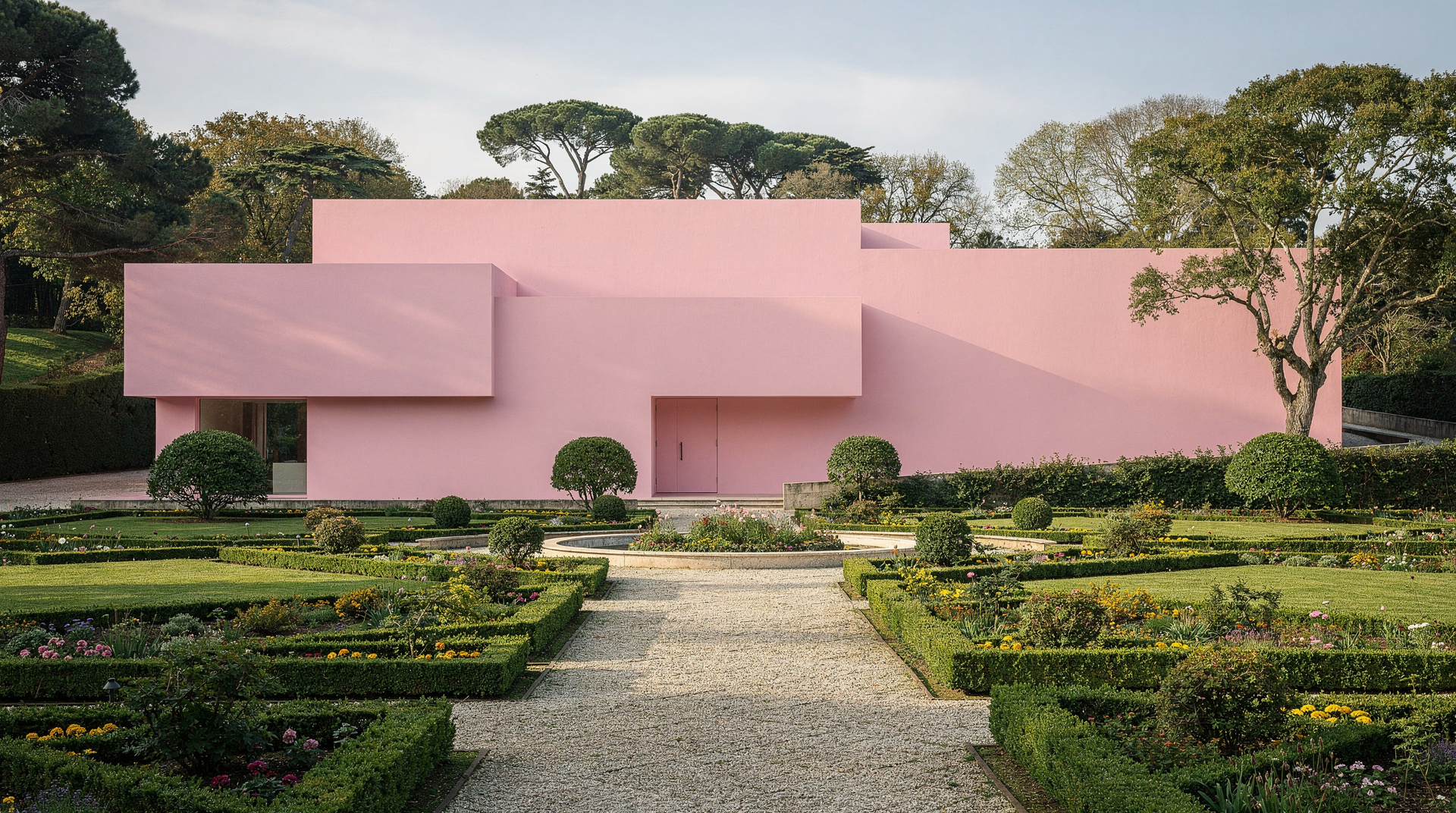
The Serralves museum and grounds (Rua Dom João de Castro 210) need at minimum two hours. The contemporary art collection inside the Álvaro Siza Vieira building is genuinely world-class; the 18-hectare grounds include formal gardens, a farm, woodland, and the 1930s Art Deco Serralves Villa that predates the museum. Combined ticket €20; gardens only €5. Closed Mondays. See our Serralves guide.
Lunch (13:30–15:00)
13:30 — Lunch near Foz do Douro
Take a taxi from Serralves to Foz do Douro (~€6) or walk 25 minutes west. The Foz neighbourhood has moved upmarket in recent years — a concentration of café-restaurants along the Avenida do Brasil serves fresh fish, salads and light plates at €12–20 per person. For a more substantial option, Praia da Luz (Praia dos Ingleses) in Matosinhos-direction has seafood restaurants at €20–35 that are significantly better than the Ribeira waterfront equivalent.
Afternoon (15:00–18:30)
15:00 — Foz do Douro and the Atlantic
Spend an hour on the seafront. The walk south along the promenade toward the Castelo do Queijo (a small 17th-century coastal fort, free exterior) takes about 20 minutes. The meeting of the Douro and the Atlantic at the river mouth is visually dramatic. Read our Foz do Douro destination guide for what to look for.
16:00 — Casa da Música (Boavista)
Take a taxi (€7–10) or metro from Foz back toward the centre. Casa da Música, the concert hall designed by Rem Koolhaas (2005), is on the metro line (Casa da Música station, lines B/D/E). Guided tours of the interior run daily (€12, 45 minutes) — it’s an extraordinary building and the tour is worthwhile if architecture interests you.
17:30 — Return to centre
Metro from Casa da Música to Trindade (line D/E, 4 minutes, €1.85).
Evening (18:30–23:00)
18:30 — Dinner in Bonfim
The Bonfim neighbourhood east of the historic centre has become Porto’s most interesting dining district. Restaurants here serve a more evolved Portuguese cuisine without the tourist premium. Taberna Santo António (Rua do Bonfim 252) does bacalhau and seasonal dishes at €15–25 per person. DOP (Palácio das Artes, Largo de São Domingos 18) is Rui Paula’s flagship Porto restaurant — tasting menus from €65, worth it for a special evening.
21:00 — Fado evening (optional but recommended)
On Day 2 evening, consider a fado show. A genuine fado house in Porto — O Meu Clube or Casa da Mariquinhas — runs shows that start around 21:00–22:00. Dinner-included packages cost €45–60; drinks-only shows are cheaper and shorter. Book ahead. See our Porto fado guide.
Day 3: Choose your adventure
Day 3 depends on your priorities. If you want to understand why Porto and the Douro are inseparable, take the Douro day trip. If you want to explore Porto itself more deeply, use the options below.
Option A: Douro Valley day trip
8:30 — Early departure
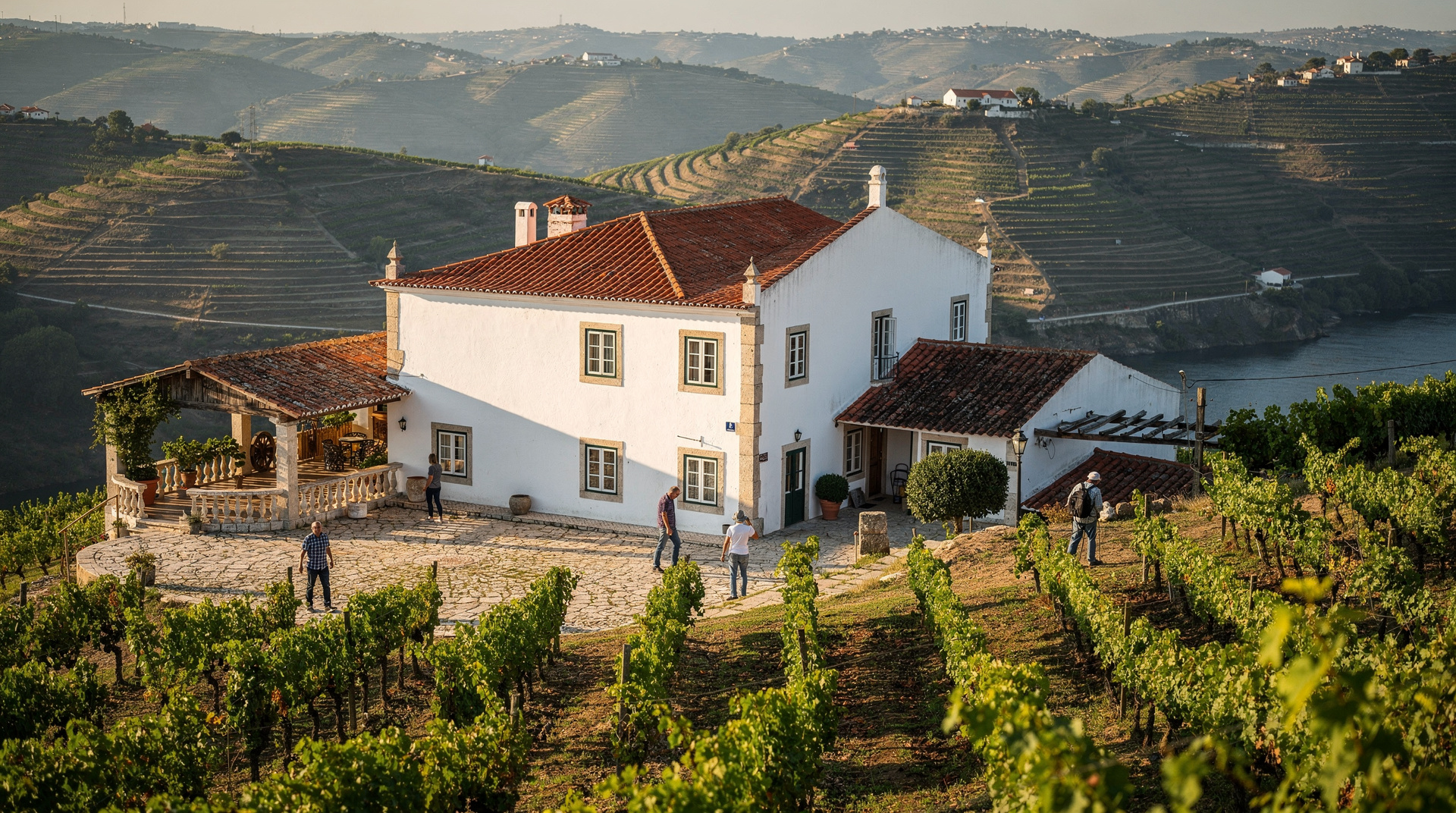
The best Douro day trips from Porto depart at 8:30–9:00 from the city centre. A full-day guided tour includes two estate visits, wine tasting, lunch at a quinta and a river cruise — returning around 18:00–19:00. The Douro 2 estates and cruise day tour is the most booked option, covering two wineries plus a Douro river cruise. Book 48 hours ahead minimum; in September (vindima season) book weeks in advance.
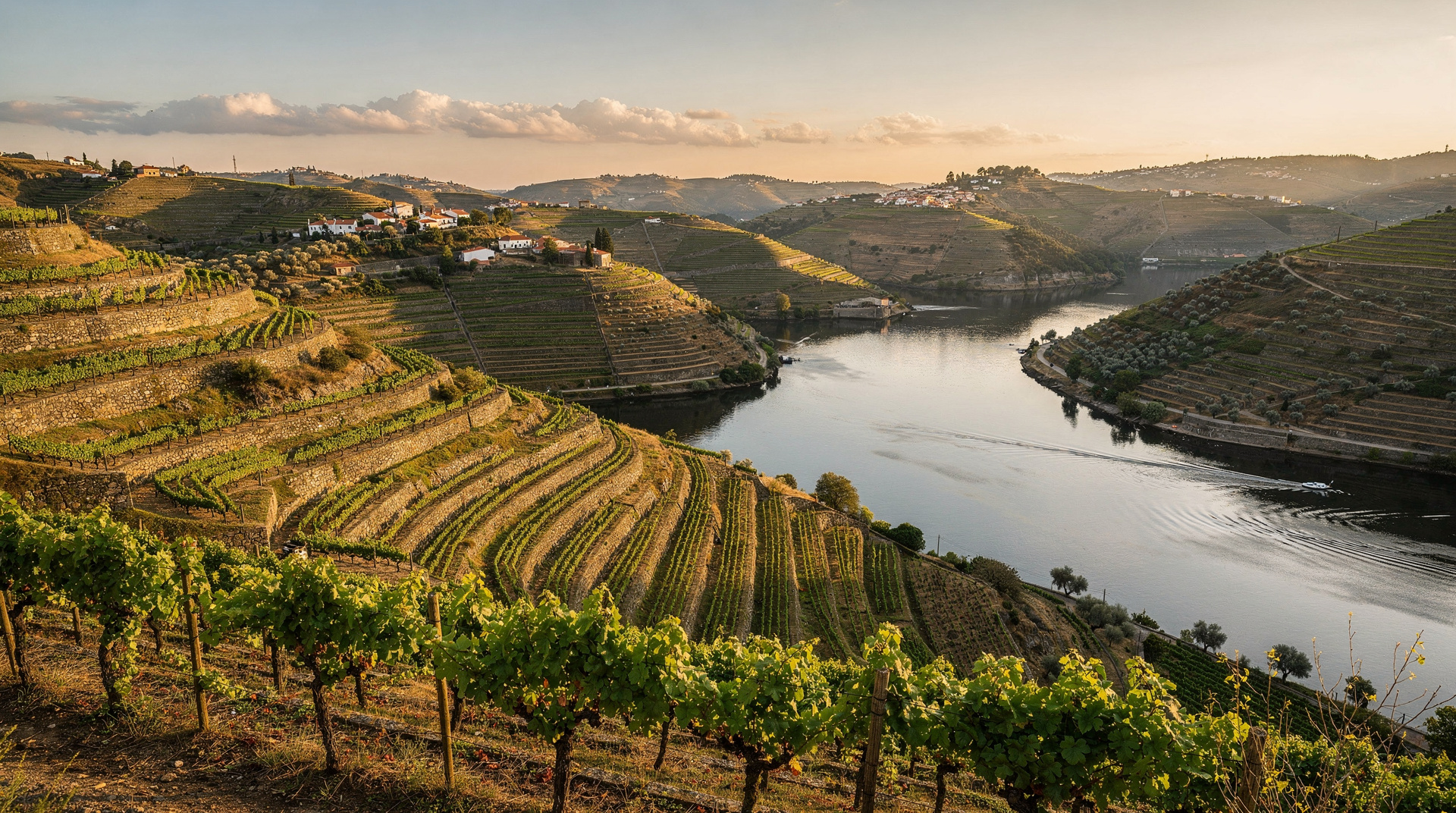
The Douro Valley is a UNESCO World Heritage landscape — terraced vineyards on schist hillsides dropping to the river, quintas with centuries-old cellars, and a sense of scale that’s impossible from Porto itself. See our Douro Valley day trip guide.
Train alternative: The scenic train from Porto Campanhã to Pinhão takes about 2h15 (€10.10 each way, Alfa regional). It’s beautiful — particularly from Régua onward. The limitation: very few quintas are walkable from Pinhão station, so you’d either pre-book a quinta visit or hire a taxi. See Douro by train vs car vs tour.
Option B: Deeper Porto (no day trip)
9:30 — Bonfim neighbourhood walk
Bonfim, east of the centre, is Porto’s most rapidly changing neighbourhood — street art, independent shops, neighbourhood cafés and one of the most accessible views of the city from the Jardim de São Lázaro. Spend a morning here before the tourists arrive (most don’t come this far east).
11:00 — Azulejos walking route
Porto’s azulejo tile heritage extends well beyond São Bento. The Igreja do Carmo on Praça de Gomes Teixeira has a stunning exterior tile panel on its side wall; the Igreja do Carmelitas next door is almost touching it. The Faculdade de Engenharia on Praça Dom Manuel II has a vast modern tile installation. Walk the azulejos route at your own pace — see our azulejos of Porto guide.
13:00 — Lunch at Mercado Bom Sucesso
Mercado Bom Sucesso (Praça Bom Sucesso) is a food hall built in a 1950s market building in the Boavista area. More local than Bolhão, better food than most of the Ribeira options. Stalls cover petiscos, bacalhau, prego sandwiches and pastel de nata. Lunch €8–15.
If Option B falls on a wet or very hot day, the covered market and the nearby Casa da Música make good indoor anchors — you can spend a comfortable two hours between the two without stepping outside for long, then decide whether to push on to Matosinhos or retreat to the historic centre for an early dinner instead.
15:00 — Matosinhos seafood
Take metro line A from Casa da Música or Francos to Matosinhos Sul (~25 minutes, €1.85). Walk along Rua Roberto Ivens for the best seafood restaurants in the Porto area. O Gaveto and Marisqueira Matosinhos are credible choices for a grilled fish or cataplana lunch (€25–40 per person). See our Matosinhos seafood guide.
Day-by-day summary
| Day | Focus | Highlights | Pace |
|---|---|---|---|
| Day 1 | Historic centre | São Bento, Sé, Palácio da Bolsa, port cellar, Six Bridges cruise, Clérigos at sunset | Full, but with morning breathing room |
| Day 2 | Serralves, Foz, Boavista | Livraria Lello, Mercado do Bolhão, Serralves, Foz do Douro, Casa da Música | Moderate — one big morning stop |
| Day 3 | Douro Valley OR deeper Porto | Two estates + cruise, or Bonfim/azulejos/Matosinhos | Depends on choice — Douro is a full day out |
Choosing between Option A and Option B on Day 3
Most first-time visitors default to the Douro day trip, and for good reason — the Douro Valley is genuinely one of Europe’s great wine landscapes and hard to appreciate without seeing it. But it’s worth being honest about the trade-off: a full-day Douro tour means an 8:30 departure and an 18:00–19:00 return, which is tiring after two dense city days, and it uses your entire Day 3. Option B (deeper Porto) is the better choice if you’ve already done a Douro trip on a previous visit, if you’re travelling with young children who won’t tolerate a long bus day, or if you’d simply rather see more of Porto’s neighbourhoods than the countryside. Neither option is objectively better — it depends on what you came for. Our is the Douro tour worth it piece weighs this in more detail if you’re still undecided.
A middle path some travellers miss: a half-day Douro cruise-and-lunch tour, rather than the full-day estates version, returns to Porto by mid-afternoon and leaves time for a short Bonfim walk or a last cellar visit afterward. It’s a reasonable compromise if you want a taste of the Douro without sacrificing the whole day — check operator schedules, as half-day departures are less frequent than full-day ones.
Practical notes about this itinerary
Andante card strategy: A 72-hour Andante Tour card (€15) covers unlimited metro and bus travel across three zones. For three days with four to five metro journeys per day, it’s worth the calculation. Without it, individual zone-2 trips are €1.85 each.
Porto Card: The 72-hour Porto Card (€33) includes unlimited metro and discounted or free entry at Serralves (free), Clérigos, Palácio da Bolsa and 60+ attractions. It pays off if you plan to visit Serralves, Clérigos, and three or four other paid sites. See our Porto Card is it worth it guide.
Book ahead for: Taylor’s or Graham’s port tasting (2 days ahead in summer), the Six Bridges sunset cruise (day before minimum), Livraria Lello skip-the-line ticket, the Douro day trip (2–7 days, longer in September).
Serralves is closed Mondays: If Monday falls in your three days, adjust Day 2 to do Foz and Matosinhos first.
Ribeira restaurants: Read our Ribeira restaurant traps guide before sitting down anywhere on the waterfront. The simple test: laminated photo menu and a tout outside the door = walk away. No exceptions.
Hills: The Porto funicular (Funicular dos Guindais) runs from Batalha (near the Aliados metro area) down to the Ribeira level — €4 each way. In the heat of a July afternoon it’s worth the price to avoid the 10-minute climb.
Frequently asked questions about this itinerary
What’s the difference between three days and two days in Porto?
Three days gives you Serralves, a proper walk in Foz do Douro, time to eat well in the local neighbourhoods (Cedofeita, Bonfim), and the option of a Douro Valley day trip. Two days means rushing or choosing between these. Our how many days in Porto guide breaks this down by visitor type.
Is the Douro day trip essential on a three-day visit?
It depends on whether you care about wine and landscape more than more Porto. The Douro Valley day trip is a completely different experience — rural, landscape-focused, wine-heavy — and genuinely worth it if it appeals. If you’d rather spend a third day exploring Matosinhos, more port lodges or the art scene, that’s equally valid.
Which port lodge should I visit if I only visit one?
Taylor’s for views and a classic experience; Graham’s for premium wine knowledge; Cálem for the fado combination. All three are covered in our Gaia port cellar comparison guide.
How do I avoid queues at Livraria Lello?
Book the skip-the-line Silver ticket (~€8) online and visit after 16:00. Morning queues (before 11:00) in summer can be 90 minutes even with a skip-the-line ticket at certain operators. The honest truth is that the interior is impressive but takes 20 minutes; in July–August it’s a crowd-management exercise. See our Livraria Lello guide.
Should I rent a car for this itinerary?
No. Porto’s historic centre has limited parking, many pedestrianised zones, and aggressive traffic. All three days are fully served by metro and walking. A car becomes useful only if you’re adding a self-drive Douro day on Day 3, and even then a guided tour is easier.
What’s the best neighbourhood to stay in for three days?
The area between Cedofeita and São Bento — within 15 minutes’ walk of Clérigos, Ribeira and the metro. Staying in Ribeira itself is atmospheric but noisy at night and more expensive. Bonfim is excellent value and increasingly has good hotels, at 15 minutes’ walk from the historic centre. See our where to stay in Porto guide.
Can I do the Douro day trip by train instead of a guided tour?
Yes, though it’s more effort. The scenic train from Porto Campanhã to Pinhão (about 2h15, €10.10 each way) is genuinely beautiful, but very few quintas are walkable from the station, so you’ll need to pre-book a quinta visit or arrange a taxi once there. A guided tour is simpler if you want tastings and a cruise without the logistics. See Douro by train vs car vs tour for the honest comparison.
What’s the single best thing to prioritise if I have to cut something?
Don’t cut the port cellar visit or the historic centre walk — they’re what most people remember. If something has to go, it’s usually Casa da Música’s interior tour on Day 2 or the Matosinhos extension on Day 3; both are good but the least essential relative to everything else in this itinerary.
Top experiences
Bookable activities with verified prices and instant confirmation on GetYourGuide.