Coimbra — Portugal's medieval university city
Coimbra: medieval university, baroque Joanina Library, student fado and an old town, 110 km from Porto. Day trip guide with train times and what to
Porto: From Porto Full Day Trip to Coimbra Aveiro with Boat Ride
Quick facts
- Distance from Porto
- 110 km south; 55–70 min by Alfa Pendular train
- Train fare
- €15–22 one way (Alfa Pendular recommended)
- Biblioteca Joanina
- Entry €12.50; timed slots, book in advance
- University of Coimbra
- UNESCO World Heritage Site since 2013
Eight centuries of academic life
Portugal’s oldest university has been operating continuously in Coimbra since 1537 (and in Lisbon before being moved to Coimbra). It has shaped the city so thoroughly that the two are practically inseparable: the students in black capes on the old town steps, the fado coimbrano style that developed in the university taverns, the Baroque library at the top of the hill that was built to impress — and succeeded beyond any reasonable expectation. Coimbra is a university town in the fullest sense, and visiting it has a different register to the port-and-seafood culture of Porto or the beach towns to the south.
As a day trip from Porto, Coimbra rewards an early start and a focused itinerary. The Joanina Library alone justifies the train fare; the old town, the Roman cryptoporticus and a proper lunch in the student district round out a satisfying day. For visitors with two nights or more, Coimbra opens up considerably.
| Where | 110 km south of Porto, on the Mondego river |
| Time needed | Full day; overnight recommended for the fado experience |
| Cost | Train €15–22 one way; Joanina Library €12.50; Machado de Castro museum €6 |
| Getting there | 55–70 min by Alfa Pendular train from Porto Campanhã |
| Best time | May–June and September–October; avoid July–August heat |
What to do in Coimbra
Biblioteca Joanina — the Baroque library
This is the main reason to go to Coimbra. Built between 1717 and 1728 under King João V, the Joanina Library holds approximately 250,000 volumes in three interconnected rooms of baroque decoration so extreme it crosses from ornamentation into something closer to fever dream. The walls are covered in painted panels of faux marble, gilded bookshelves rise to painted ceilings, and the whole effect is of a room that has decided books are a pretext for extravagance.
Entry costs €12.50 and includes access to the Chapel of São Miguel (also excellent) and the Sala dos Capelos (the main ceremonial hall). Visits operate in timed slots with limited numbers — book in advance through the University of Coimbra website, especially from May through September. The library also opens after dark on certain evenings, when the baroque interior takes on a different quality under artificial light.
Note: the library is closed on certain days during academic ceremonies (usually late spring and early autumn). Check the university calendar before booking your train.
Photography inside the library is prohibited — a rule enforced strictly by staff, partly for conservation reasons and partly because flash photography once damaged some of the gilded surfaces. Visitors sometimes find this frustrating given the room’s visual impact, but it does mean the experience is undiluted by phone screens; most people report that looking properly, rather than through a viewfinder, is the better way to take it in regardless.
The University of Coimbra and Alta (upper city)
The university complex occupies the Alta, the hill at the top of old Coimbra. Beyond the library, the complex includes the Via Latina (a courtyard with a ceremonial staircase), the Iron Gate, the university prison (used until the 20th century to confine students who misbehaved), the observatory, and the Sala dos Capelos — a formal examination and ceremony hall.
The UNESCO World Heritage Site designation (2013) covers not just the university buildings but the broader urban ensemble of the Alta district. Allow 2–3 hours for the university complex; guided tours are available in English and provide context that the self-guided visit can miss.
The old town (Baixa and Alta)
Coimbra’s old town occupies two levels connected by steep lanes and stairs: the Baixa (lower city) around the Mondego riverfront, and the Alta (upper city) around the university. The distinction was historically significant — merchants in the Baixa, scholars in the Alta — and the physical separation still gives the city a layered character.
The Monastery of Santa Cruz (Praça 8 de Maio, in the Baixa) contains the tombs of Portugal’s first two kings (Afonso Henriques and Sancho I) and is free to enter the main church. The cloister and royal pantheon require a €2.50 ticket. The architecture is Manueline (the ornate Portuguese Gothic of the 16th century) and among the more important religious buildings in the country.
The Museu Nacional Machado de Castro, housed in a former bishop’s palace and the Roman cryptoporticus beneath it, holds a substantial collection of medieval sculpture. The underground Roman gallery alone is worth the €6 entry.
Coimbra fado
Fado coimbrano is distinct from the Lisbon version that most visitors know. It developed in the university context — historically performed by male students and connected to academic life rather than the working-class Lisbon neighbourhoods where Lisbon fado originated. The style is more formal, the guitar tuning different (the Coimbra guitar has a different resonance to the Lisbon Portuguese guitar), and the performance tradition involves specific rituals (audience silence, no applause during songs).
Live fado can be heard at Á Capella (Rua Corpo de Deus), a restaurant-fado-house in a former chapel near the Baixa. Performances typically start around 21:00, with a dinner option at €25–40 per person. The Porto fado guide contextualises the fado tradition across northern and central Portugal.
Combining Coimbra with Aveiro or Fátima
Coimbra sits roughly on the line between Porto and Lisbon, which makes it a natural stop to combine with other central Portugal destinations rather than a purely standalone day trip.
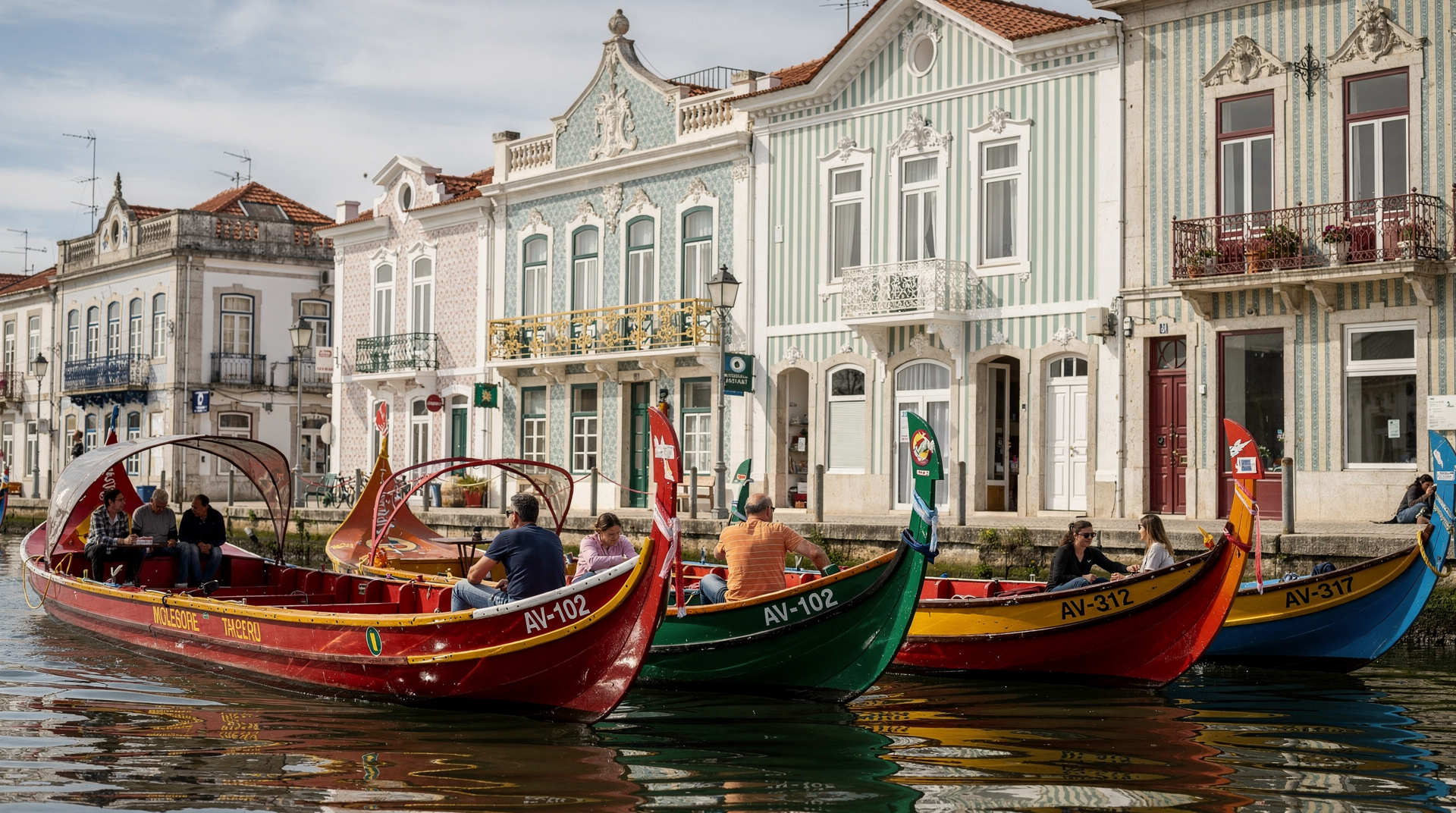
Pairing with Aveiro is the most common combination, since both sit on the same rail corridor south of Porto and the canal town’s relaxed pace balances Coimbra’s denser sightseeing. Pairing with Fátima suits visitors with a specific interest in the pilgrimage site, though the combined day runs long (around 10 hours) and gives limited time at either location. Visitors with a full week in the region sometimes build both Coimbra and Costa Nova into a broader central Portugal loop, treating Coimbra as an overnight stop rather than a rushed day trip — see the northern Portugal 7-day itinerary for how the timing works across a longer stay.
Getting to Coimbra from Porto
By train (recommended): Alfa Pendular services from Porto Campanhã to Coimbra-B take approximately 55–70 minutes. Fare: €15–22 one way (book at least a day ahead for the best fares). Note: the main Coimbra train station is Coimbra-B, which is 2 km from the town centre. A short regional train connection runs from Coimbra-B to Coimbra-A (the central station) and takes 5 minutes — this connection is included in through tickets from Porto.
Alternatively, some Intercidades services stop at Coimbra directly with a longer journey time (approximately 1h 15m) at a lower fare.
Organised day trip from Porto: The full-day trip to Coimbra and Aveiro with boat ride includes transport, guided time in both cities and the Aveiro canal boat experience in one itinerary. This is the best option for visitors who want to see both cities without managing train connections. Approximately €50–65 per person for a full day.
For a visit focused entirely on Coimbra, the private Coimbra and Aveiro day tour provides flexible timing and a private vehicle.
By car: 110 km on the A1, approximately 1 hour 10 minutes from central Porto. Parking in central Coimbra is limited; use the park-and-ride facilities and walk or take the free elevator to the Alta.
Where to stay in Coimbra
An overnight stay changes the character of a Coimbra visit — the evening fado, the evening light on the Mondego river, and the early morning at the market before the university opens are all inaccessible on a day trip.
Hotel Oslo: Mid-range option near Coimbra-A station, €70–100 per night. Practical location, reliable quality.
Hotel Sapientia: In the Alta, near the university, €90–130 per night. The position is unbeatable for the university atmosphere.
Pensão Santa Cruz: A budget-friendly guesthouse on Praça 8 de Maio, €45–65 per night, in the heart of the Baixa. Basic but well maintained.
For most visitors doing Coimbra from Porto, returning to Porto the same evening and spending one more night there makes financial sense — Coimbra hotels are not significantly cheaper than equivalent Porto hotels.
Where to eat in Coimbra
Zé Manel dos Ossos: Near the botanical garden, this is Coimbra’s most discussed traditional restaurant — walls covered in handwritten messages, a short daily menu, wine in earthenware cups, and a queue forming before noon. Lunch only, cash-only, mains €10–14. No reservations.
Restaurante Democrática: On Travessa da Rua Nova, this is the student-district lunch reference — honest daily specials at €8–12, a crowd of mixed ages and nationalities, and a candid local atmosphere. Open for lunch and dinner.
Café Santa Cruz: In the former Gothic portico of the Santa Cruz monastery (the choir of the original church), serving coffee and light meals in an extraordinary setting. A coffee here, in the vaulted stone interior, is one of the better €1.50 decisions available in Portugal.
Á Capella: The fado house-restaurant mentioned above — both for the music and for a reasonable dinner. Book ahead for fado evenings.
Best time to visit Coimbra
May and June, and September and October, are the best windows. The university is in session (which gives the city energy), the weather is mild, and visitor numbers are manageable. The annual queima das fitas (the ribbon-burning festival at the end of the academic year, late May) is a significant event — the city is extremely animated if you happen to be there, but accommodation books up months ahead.
July and August bring extreme heat (Coimbra is landlocked and regularly exceeds 35°C) and absent students. The city loses its primary energy source and becomes less compelling.
Frequently asked questions about Coimbra
Is the Joanina Library worth the entry fee?
Unambiguously yes. The €12.50 entry covers one of the most remarkable interior spaces in Europe — a library built not for the books but for the glory of their setting. The only caveat is that timed slots in summer fill weeks ahead; book as soon as your itinerary is fixed.
How much time do I need in Coimbra?
A full day comfortably covers the Joanina Library and university complex, the Santa Cruz monastery, a lunch in the student quarter and a walk through the Baixa. Four hours covers only the university essentials. Staying overnight adds the fado experience and a different atmosphere entirely.
How does Coimbra compare to Porto as a destination?
Completely different character. Porto is a working port city with Atlantic influence, industrial heritage and extraordinary food culture. Coimbra is a medieval university town with a more introverted, scholarly atmosphere. They complement rather than replicate each other, which is why the combination makes sense for visitors with five or more days in Portugal. See our best day trips from Porto guide for the comparative assessment.
Can I combine Coimbra and Fátima in a single day?
The organised day trip does this — the Fátima and Coimbra full-day tour from Porto combines both in approximately 10 hours. It is a long day with limited time at each location; the combination works best for visitors who want to see both without returning specifically.
Is Coimbra student fado open to non-Portuguese visitors?
Yes. The fado houses (casas de fado) that operate the evening performances in Coimbra are tourist-friendly while maintaining the performance integrity. The acoustic and ritual aspects of the tradition — silence during songs, no photography during performances, the quality of the guitar work — are genuine regardless of the mixed audience.
Should I combine Coimbra with Aveiro or visit them separately?
Combining them works well if you have a single full day and want both the university city and the canal town — the organised tour handles the logistics and the two cities complement each other in mood. Visiting them separately, each with a full day, gives more depth at both, particularly at the Joanina Library, where a rushed visit undersells the experience.
Top experiences
Bookable activities with verified prices and instant confirmation on GetYourGuide.