Fátima — Portugal's pilgrimage shrine
Fátima: one of Catholicism's most visited pilgrimage shrines, 120 km from Porto. What to see, how to visit respectfully and how to plan a day trip with
Porto: Fatima and Coimbra Tour Full Day from Porto Gaia
Quick facts
- Distance from Porto
- 120 km south; ~1h 30min by car, no direct train
- Sanctuary entry
- Free (donations welcome)
- Main pilgrimages
- May 12–13 and October 12–13
- Basilica of the Holy Trinity
- One of the world's largest churches by capacity
One of the most visited religious sites in the world
Fátima is not on most secular travel itineraries, and that underrepresentation is understandable — it is emphatically a religious pilgrimage site, not a cultural tourism destination in the conventional sense. But it is also one of the most significant sites in 20th-century Catholic history, visited by five to six million people annually, and the physical scale of the sanctuary complex is remarkable regardless of religious belief.
The apparitions claimed at Fátima in 1917 — in which three shepherd children reported visions of the Virgin Mary over six months — became one of the most investigated and debated religious events in modern Church history. The construction of the sanctuary that followed over the subsequent decades produced a vast complex at the centre of a small town, with a basilica seating thousands, a colonnaded esplanade designed explicitly as an outdoor gathering space for the major pilgrimages, and more recently a second basilica (the Basilica of the Holy Trinity, consecrated in 2007) that is one of the largest churches in the world by capacity.
For visitors from Porto, Fátima is best approached as a half-day combined with Coimbra — the two are 55 km apart and complement each other in the way that a religious site and a university town can, offering very different registers within the same day trip. See the Coimbra day trip guide for what the university city adds to the pairing.
| Where | 120 km south of Porto, Centro region |
| Cost | Free entry to the sanctuary; museum around €3 |
| Time needed | Half day at Fátima alone; full day combined with Coimbra |
| Getting there | Organised tour (easiest), car, or bus via Rede Expressos |
| Best time | Any day except 12–13 May or 12–13 October, unless the pilgrimage itself is the goal |
What to see in Fátima
The Sanctuary of Fátima and the Cova da Iria
The central sanctuary occupies the site of the original apparitions in the Cova da Iria — a shallow basin where the three children (Lúcia, Francisco and Jacinta) reported seeing the Lady. The Chapel of the Apparitions marks the exact spot, now an open-air structure with an image of Our Lady of Fátima above a marble column. Pilgrims approach on their knees along the central esplanade during major events; between major pilgrimages, the esplanade is quiet and the chapel accessible throughout the day.
The Basilica of Our Lady of the Rosary (1928–1953) closes the north end of the esplanade — a neo-Baroque structure in white stone with a central tower and interior that houses the tombs of Francisco and Jacinta Marto, two of the three child seers who died in the 1918–1919 influenza pandemic (Lúcia lived until 2005 and is interred here separately). The interior is not architecturally overwhelming but has the atmosphere of an active pilgrimage church rather than a museum.
Basilica of the Holy Trinity
Consecrated in 2007 to a design by Greek architect Alexandros Tombazis, the Basilica of the Holy Trinity closes the southern end of the esplanade with a structure intended to accommodate 9,000 people. The exterior — a low, horizontal mass in travertine and reinforced concrete — is deliberately restrained after the maximalism of its surroundings. The interior is more impressive: a vast single-nave space under a low coffered ceiling, lit from a clerestory of small round windows, with a mosaic of the Last Supper behind the altar. The scale produces a specific kind of silence.
The Museu de Fátima
A small museum adjacent to the sanctuary documents the history of the apparitions, the investigations by Church authorities, and the pilgrimage tradition through photographs, documents and objects from the twentieth century. Entry is approximately €3. Useful for context if you want to understand what you’re looking at; not compelling if you’re only there for the architecture.
The pilgrimage experience on 12–13 May and 12–13 October
The two major pilgrimage days draw hundreds of thousands of people to Fátima — the May anniversary is the larger, the October one drawing the crowds who commemorate the “miracle of the sun,” the most widely reported alleged phenomenon. If you happen to be in Portugal on these dates and are curious about the pilgrimage tradition at scale, attending is a genuine experience. If crowds are a concern, avoid these dates entirely.
Getting to Fátima from Porto
Fátima has no train station and is not served by metro or tram. The practical options are a guided day trip or a car.
Organised day trip (strongly recommended for this destination): The Fátima and Coimbra full-day tour from Porto is the most practical option for most visitors — it includes transport from Porto, guided time at the Fátima sanctuary and in Coimbra, and returns to Porto in the evening. The combination covers approximately 230 km and takes a full day (departure around 8:00, return around 19:00–20:00). Cost approximately €40–55 per person.
For a more flexible private version, the private Fátima and Coimbra day trip allows you to set the pace and spend more or less time at either location.
By car: 120 km south on the A1/A23, approximately 1 hour 30 minutes. The most flexible option for independent travellers who want to control timing. Parking at the sanctuary is available and signposted.
By bus: Rede Expressos operates services from Porto to Fátima (bus terminal at Fátima, Rua Jacinta Marto) with approximately 1 hour 45 minutes journey time and fares around €15–20. Schedules are limited; check rede-expressos.pt for current timetables. This is the cheapest independent option but requires planning around the bus schedule.
By train to Coimbra then bus: Train to Coimbra (55–70 minutes) then Rede Expressos or local bus to Fátima (approximately 45 minutes). Logistically complex but allows independent combination of both sites.
Comparing the options
| Option | Time from Porto | Cost | Best for |
|---|---|---|---|
| Organised day tour | ~8–9 hours round trip incl. Coimbra | ~€40–55/person | First-time visitors, no car |
| Rental car | ~1h 30min each way | Fuel + parking + rental | Flexible timing, combining extra stops |
| Bus (Rede Expressos) | ~1h 45min each way | ~€15–20 each way | Budget independent travel |
| Train + bus via Coimbra | ~2h+ each way | Train + bus fare | Independent visitors prioritising Coimbra |
The porto travel tips guide has broader advice on choosing between organised tours and independent transport for day trips like this one.
Where to stay in Fátima
Fátima has a substantial hotel infrastructure built to accommodate the pilgrimage trade, with many hotels catering specifically to religious groups. For secular travellers, staying in Fátima overnight is rarely necessary — the day trip combination with Coimbra or Porto is more efficient.
Hotel Dom Gonçalo: Adjacent to the sanctuary, consistently rated for cleanliness and position. Rates €70–100 per night; lower outside major pilgrimage periods.
Hotel Regina Fátima: A larger pilgrimage hotel with standard rooms and a package approach — functional for the purpose. €60–85 per night.
For most visitors, returning to Porto (or continuing south to Lisbon) makes more sense than an overnight in Fátima itself. The town’s restaurant and nightlife infrastructure is built around pilgrimage groups and closes early.
Where to eat in Fátima
The eating options in Fátima are oriented toward pilgrimage volumes — the restaurants near the sanctuary are large-format and efficient rather than gastronomically interesting. The local dish of the region (Ribatejo meets Estremadura) is arroz de cabidela (rice cooked in chicken blood, a Portuguese country staple) and various pork preparations.
Restaurante Tia Alice: On the road approaching Fátima from Leiria — a well-regarded regional restaurant away from the tourist concentration. Mains €14–22. Requires a car or taxi from the sanctuary.
Restaurants on Avenida D. José Alves Correia da Silva: The main road into the sanctuary has a strip of acceptable restaurants. Quality is inconsistent; look for chalk-board daily specials and a Portuguese-speaking clientele as quality indicators.
If combining Fátima with Coimbra on a day trip, lunch in Coimbra is the better eating decision — the student quarter restaurants (see Coimbra) are significantly better than the Fátima options.
Fitting Fátima into a longer trip
Because there is no train station and the round trip is long, Fátima works best either as a dedicated day within a stay of four days or more, or as a stop on a longer south-bound route (toward Lisbon, for instance). A 4-day Porto itinerary has room for a Fátima–Coimbra day without crowding out the city centre; a shorter two- or three-day trip generally does not. Visitors building a wider northern Portugal loop can also treat Fátima as an optional detour from the northern Portugal 7-day itinerary, though it sits well south of the Minho and Douro stops that itinerary otherwise covers.
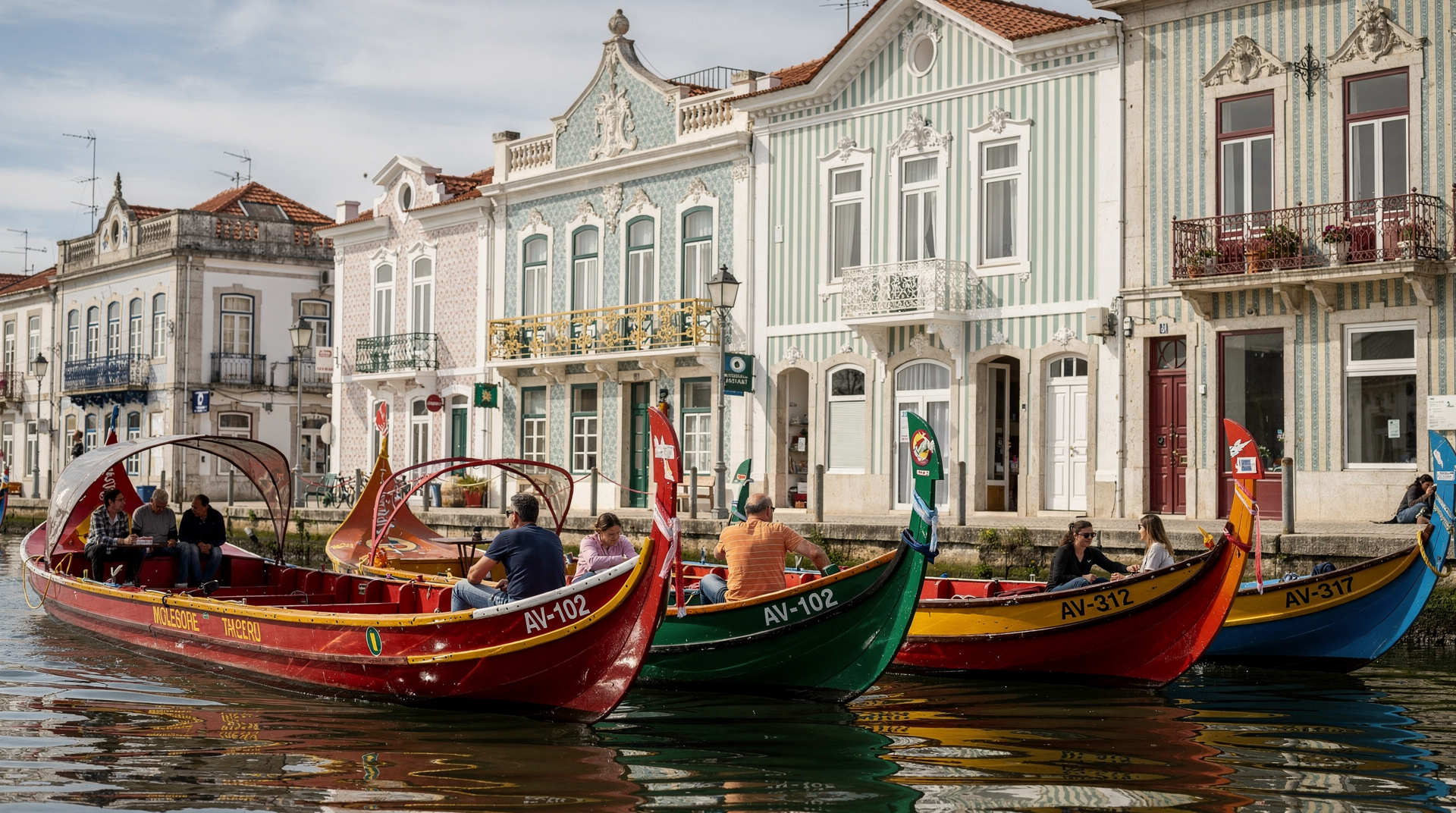
For visitors who want a full day trip without a religious focus, Aveiro is a comparable distance north of Porto and offers a completely different register — canals and Art Nouveau rather than pilgrimage architecture — worth weighing against Fátima if only one full day trip fits the schedule.
Best time to visit Fátima
From a practical visitor perspective, the best visit to Fátima is any day that is not May 12–13 or October 12–13. The sanctuary is spacious and calm on normal days; on pilgrimage days it accommodates hundreds of thousands of people and the road approach is extremely congested.
May through September offers mild to warm weather (Fátima is inland and warmer than Porto). The sanctuary is accessible year-round; the outdoor spaces are more pleasant in dry weather.
Frequently asked questions about Fátima
Is Fátima appropriate for non-religious visitors?
Yes, with the right expectations. The scale of the sanctuary complex is impressive regardless of belief — the Basilica of the Holy Trinity in particular is an interesting piece of contemporary religious architecture. The historical story of the apparitions and the subsequent growth of the pilgrimage site is an important part of 20th-century Portuguese history and culture. Visitors who approach the site with respect for its religious function are welcome.
Do I need to book the sanctuary visit in advance?
The sanctuary is free and open to all without reservation. Timed entry is not required. The only situation requiring advance planning is the major pilgrimage dates (May 12–13 and October 12–13), when accommodation and transport book up weeks ahead.
How does Fátima combine with Coimbra for a day trip?
The organised day trip covers both comfortably — typically spending 2–3 hours at Fátima (including the chapel, both basilicas and the museum) before proceeding to Coimbra for the afternoon (the university and Joanina Library). The distance between them is approximately 55 km. This is a long day from Porto (departure around 8:00, return around 19:30–20:00) but covers considerable ground.
What should I wear when visiting the sanctuary?
The sanctuary requests modest dress as in any active religious site — shoulders and knees covered, no shorts in the basilicas. This is standard across all Catholic churches in Portugal. The outdoor esplanade has no dress restrictions.
Is there a difference between the three apparition sites in Fátima?
The main sanctuary at Cova da Iria (the town centre) is where six apparitions occurred. Nearby, about 2 km away, is Valinhos, where a separate apparition was reported in August 1917 when the children were briefly detained. The village of Aljustrel, where the three children lived, is 1.5 km from the sanctuary and contains their houses (open to visitors). A full visit that includes all three sites requires either a car or a full day.
Top experiences
Bookable activities with verified prices and instant confirmation on GetYourGuide.