Ponte Dom Luís I — the complete guide to Porto's famous bridge
Porto: Porto 6 Bridge S Cruise
Can you walk across Ponte Dom Luís I?
Yes — the upper deck is a free pedestrian walkway (and carries metro line D). The lower deck is also open to pedestrians. Crossing the upper deck takes about 10 minutes and gives a 45-metre-high view of the Douro. The best sunset photography position is from the Gaia side, facing northwest toward Porto.
The bridge that defines Porto’s image
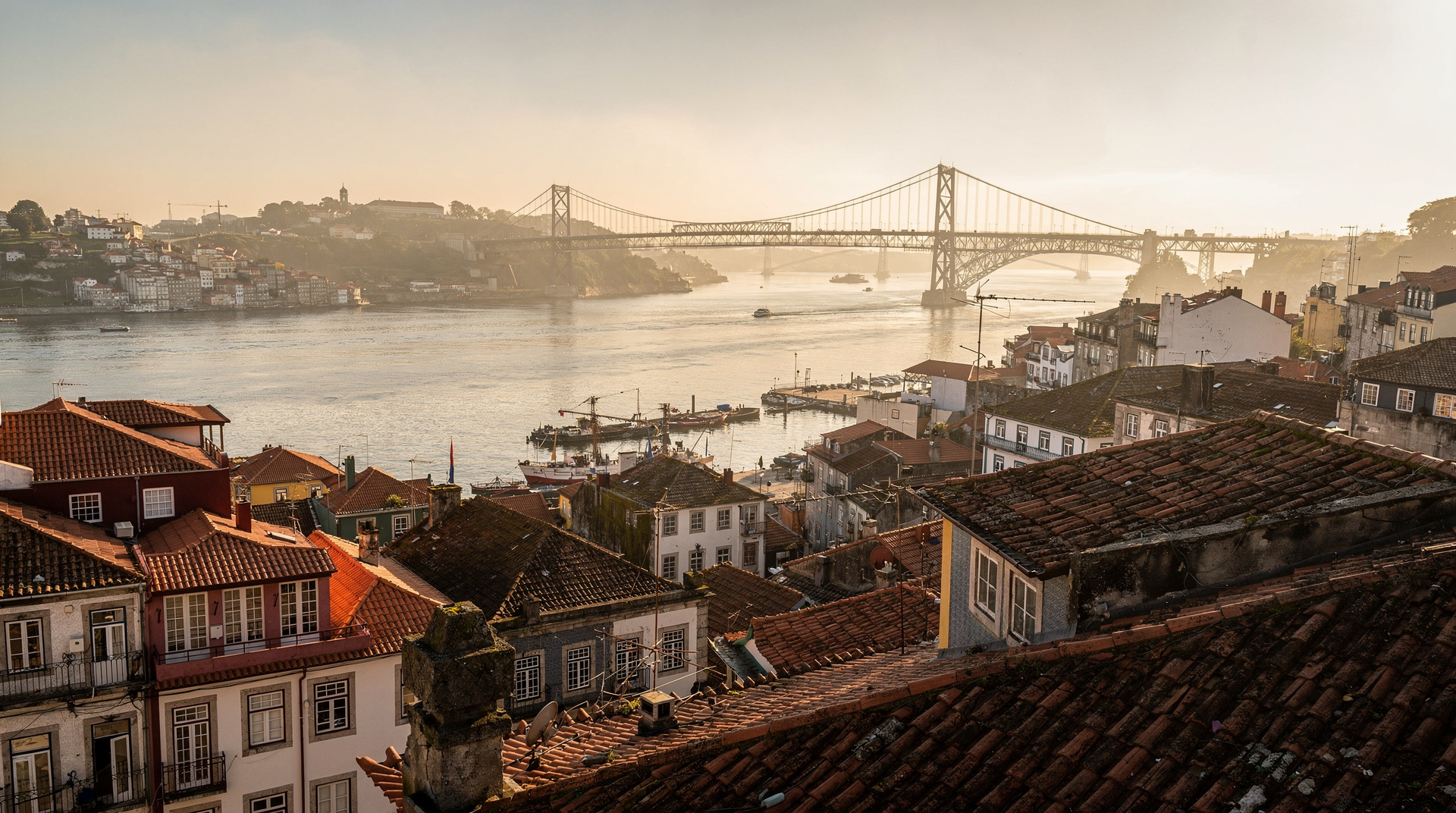
More than any single building in Porto, Ponte Dom Luís I defines the visual identity of the city. The iron double-arch bridge spans 395 metres across the Douro between Porto’s Ribeira waterfront and Vila Nova de Gaia, its two decks and parabolic arches creating a silhouette that is visible from almost every elevated point in either city.
Photographs of Porto without Ponte Dom Luís I are technically possible but feel incomplete, in the way that photographs of Paris without the Seine, or of Sydney without the Harbour, feel like they are missing the thing that makes the place itself.
This guide tells you the real history of the bridge, how to cross it, the best positions for photography, and how it connects to the wider fabric of the city.
| Where | Ribeira (Porto) to Vila Nova de Gaia, spanning the Douro |
| Cost to cross | Free, both decks, no ticket needed |
| Time needed | Around 10-12 minutes to cross the upper deck |
| Getting there | Walk from Praça da Ribeira, or metro line D to Jardim do Morro/São Bento |
| Best time | Golden hour from the Gaia side, roughly 45 minutes before sunset |
The engineering and the man behind it
The bridge was built between 1881 and 1886 by the Belgian company Société de Willebroeck, to a design by Théophile Seyrig (1844–1923), a Belgian engineer who had spent his formative years working at Gustave Eiffel’s firm in Paris. The connection to Eiffel is real but indirect: Seyrig worked on the Ponte Maria Pia (Porto’s railway bridge, completed 1877, still visible upriver) with Eiffel, but the Dom Luís I bridge was Seyrig’s independent commission, executed after he left Eiffel’s firm.
The Dom Luís I bridge replaced a fragile suspension bridge that had served the Douro crossing since 1843. Porto’s rapid industrial expansion in the second half of the 19th century — the port wine trade, the textile industry, the growth of commercial shipping — created pressure for a more robust and permanent connection between the two cities. The commission went to tender; Seyrig’s proposal, combining two decks with a single large parabolic arch as the structural element, was selected in 1879.
The arch — 172 metres wide and 45 metres above the river at its peak — was the largest iron arch in the world when the bridge opened in 1886. The construction required building the arch outward from both banks simultaneously, working in sections that were connected at the crown without intermediate scaffolding from the river — a logistical challenge resolved through precision engineering and careful temporary cable systems.
The bridge opened on 31 October 1886, named for King Dom Luís I, who had ascended to the Portuguese throne in 1861 and reigned until his death in 1889. The king was known as an oceanographer and a patron of culture rather than a particularly assertive monarch, but the naming conventions of the era attached royal names to major infrastructure regardless of individual merit.
The two decks: what each offers
The bridge has two pedestrian decks at very different elevations, each offering a distinct experience.
The upper deck is at the 45-metre elevation level, carrying metro line D (running between the Jardim do Morro station in Gaia and the Campanhã and São Bento connections on the Porto side) and a pedestrian walkway along both sides of the rail tracks. The walkway is wide, solidly railed, and physically comfortable to cross. The views in both directions are extraordinary: 45 metres directly above the Douro, looking west to the Arrábida bridge in the distance, east to the Ponte Maria Pia and the Douro Valley horizon, north to Porto’s entire historic hillside, and south to Gaia’s port wine lodge district.
The crossing takes approximately 10 to 12 minutes at a walking pace. Stop at the centre for the best views: directly below is the river, visible between the latticed metalwork of the bridge; on both sides the world falls away dramatically. Most people experience a slight reflexive awareness of height, though the solid railing makes the crossing genuinely safe.
The lower deck is at approximately 10 to 15 metres above the water — barely above the riverbank levels at the approaches, rising gently to the centre. This deck carries vehicle traffic and a pedestrian path on each side. The lower deck experience is entirely different: close to the water surface, with the Ribeira and Gaia buildings at eye level, the sounds of the river boats below, and the sense of the bridge not as a dramatic aerial structure but as a modest working crossing. Less dramatic but in its way more intimate.
For most visitors, the upper deck crossing is the priority — the views justify the crossing even if you immediately descend by cable car on the Gaia side.
Best positions for photography
Porto’s most photographed view of the bridge is from the north — from Porto’s Ribeira waterfront or the hillside above it — looking south. This is the postcard view: the full arch, the double-deck structure, the Gaia hillside rising behind.
For photographers, the more interesting positions are:
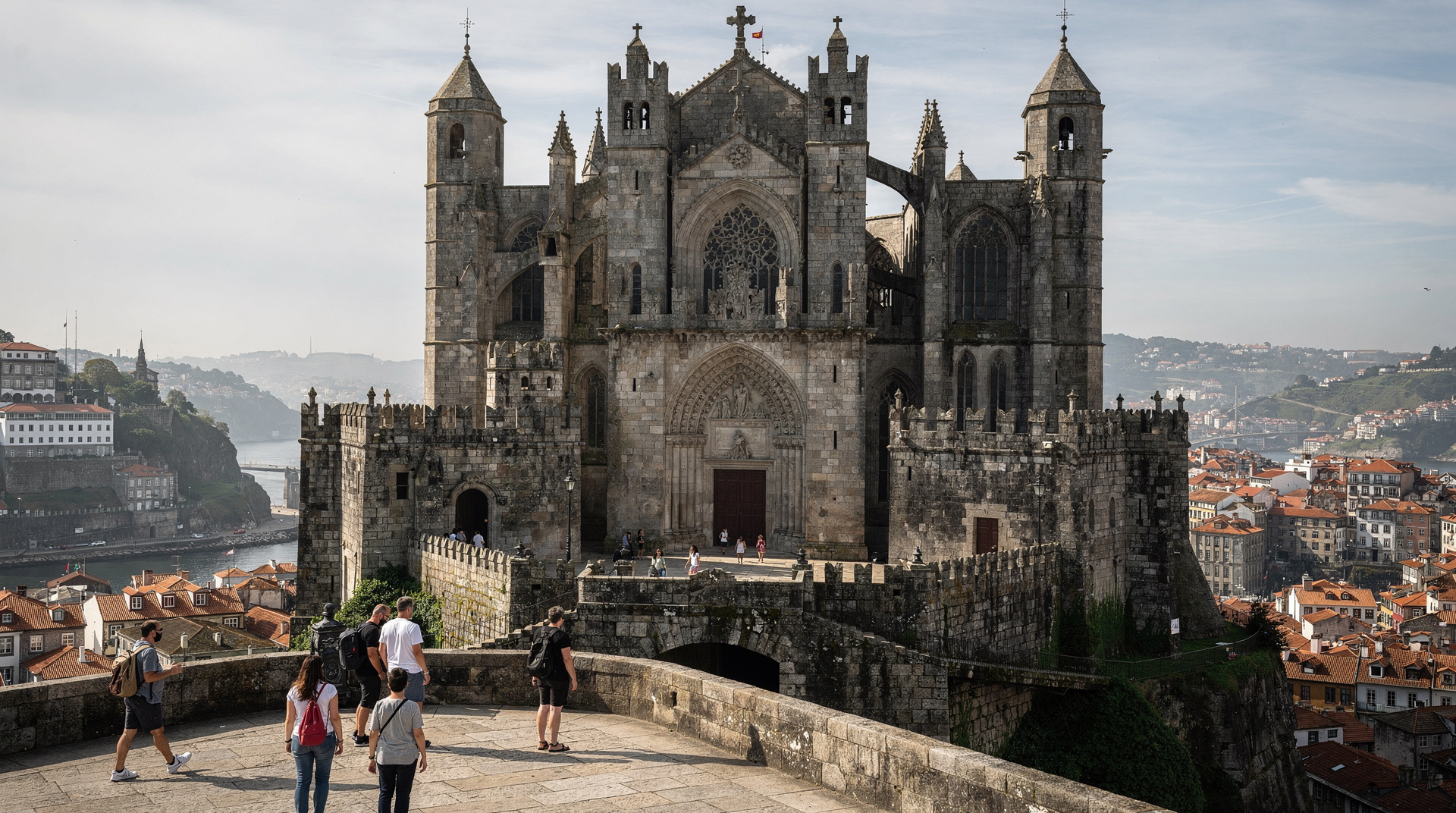
Jardim do Morro, Gaia side (upper deck arrival point): Looking northwest across the bridge to Porto, with the entire Porto historic hillside visible behind the arch. Late afternoon golden hour light falls directly on the Porto hillside from this position. The Sé Cathedral appears to the left, the city rooftops centre, Clérigos Tower prominent on the right. This is the most complete compositional view of Porto as a city.
Serra do Pilar, slightly elevated above Jardim do Morro: The higher position separates the two bridge decks visually and gives more sky behind the arch. A 150mm to 200mm equivalent focal length compresses the scene effectively, placing the arch more prominently against the Porto hillside.
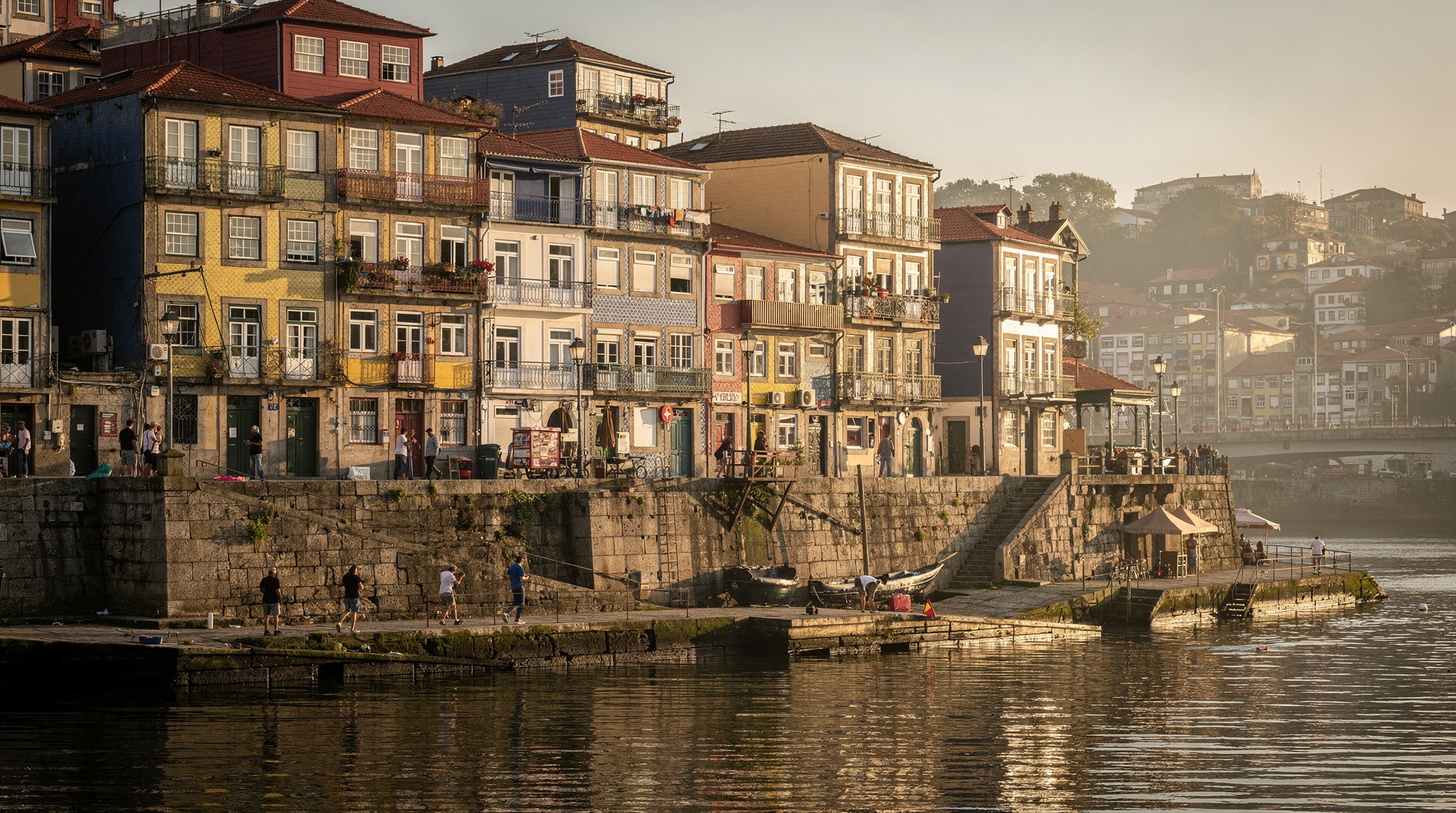
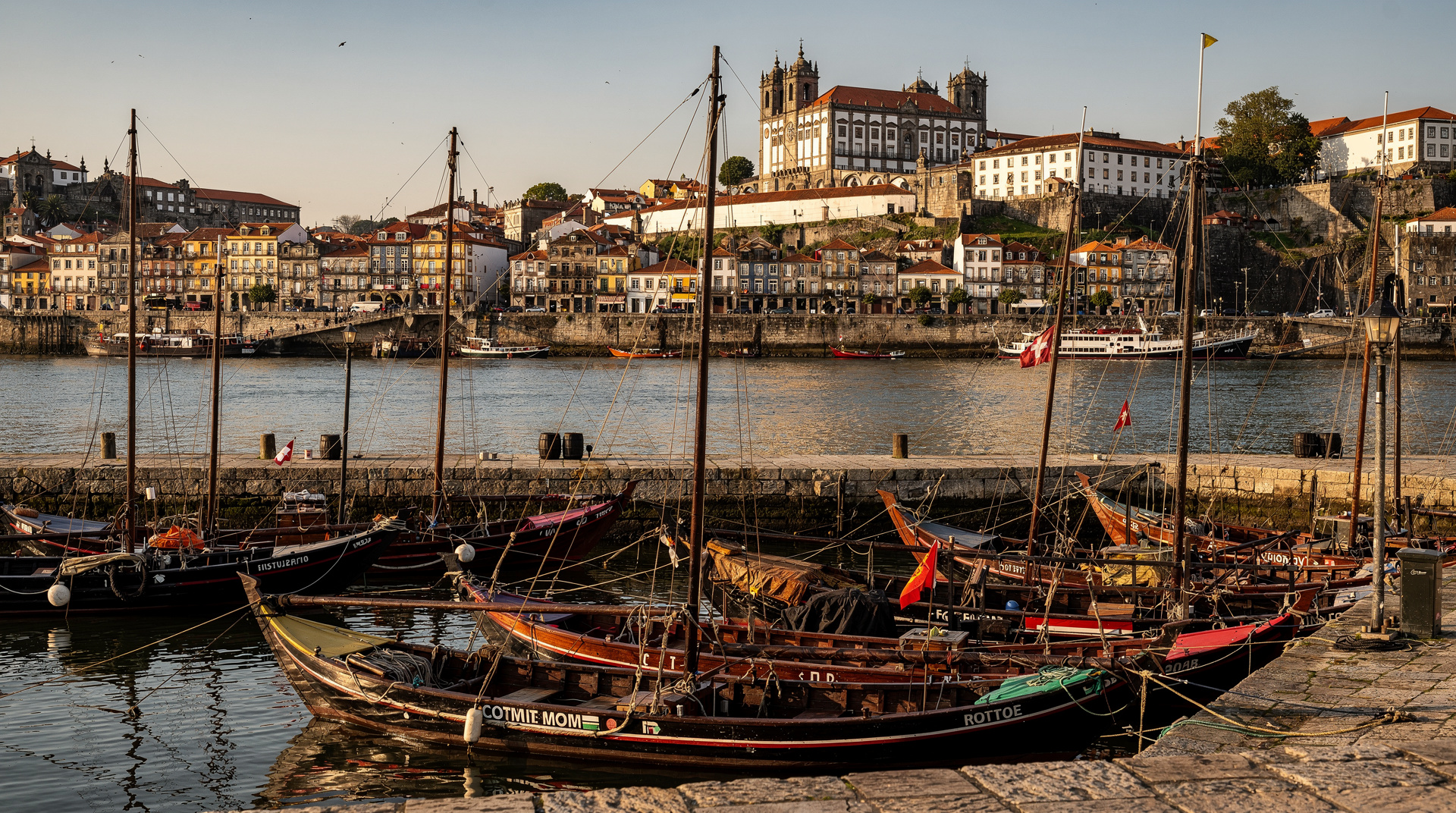
Ribeira waterfront, morning: Facing south toward the bridge and Gaia from the Porto side. Morning light from the east catches the Gaia hillside and the iron structure. The wooden rabelo boats moored on the Gaia waterfront add foreground interest. Wider focal lengths (24mm to 50mm equivalent) work better here than on the Gaia side.
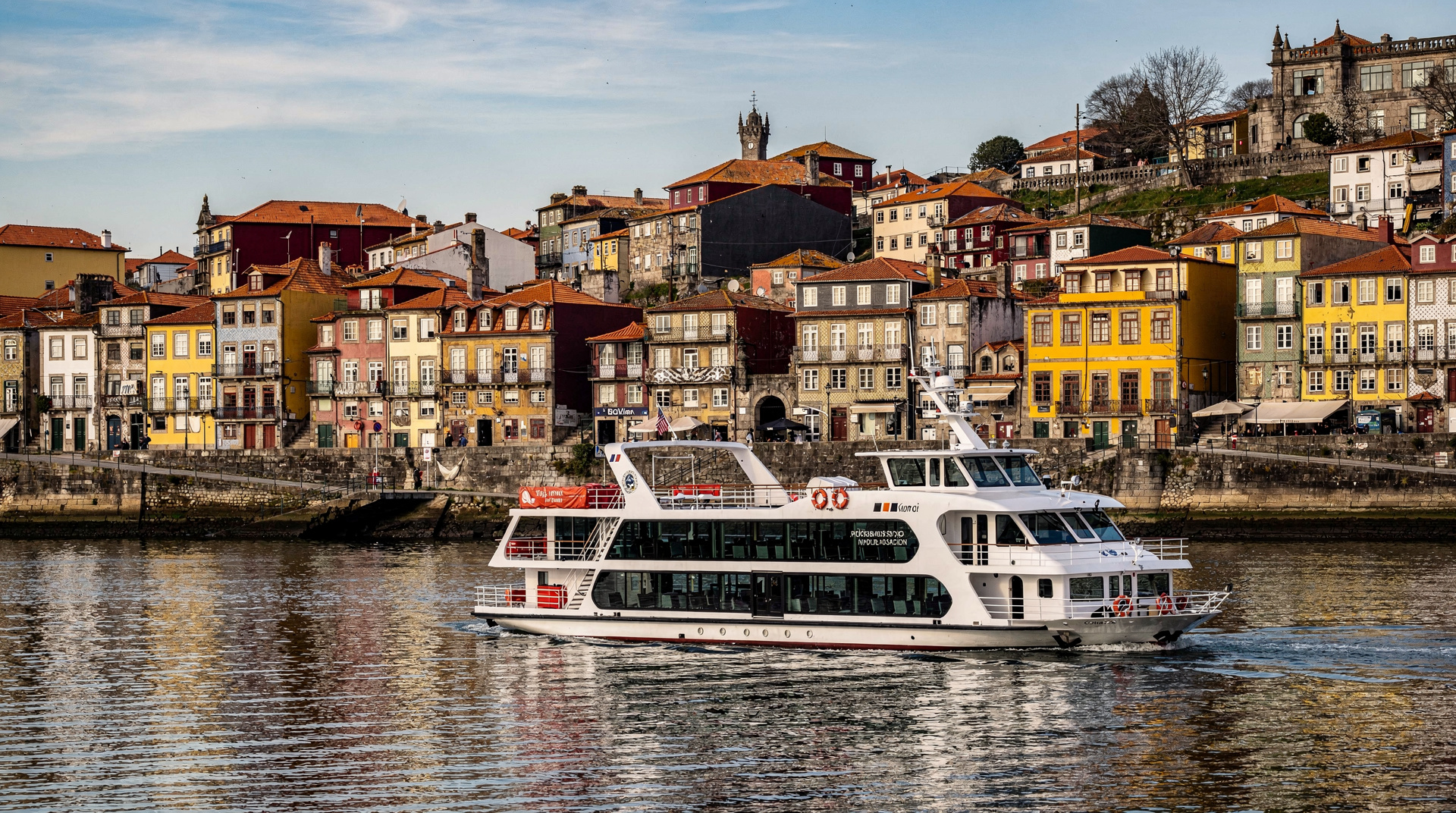
From the water itself: The six-bridges Douro cruise passes under the Dom Luís I bridge from below — the view upward through the arch structure, with both decks visible and the Ribeira and Gaia waterfronts on either side, is available only from the water level. The cruise also gives a perspective on the scale of the arch that is impossible from any land position.
Sunset timing and golden hour
The bridge points roughly east-west, which means the Porto hillside (on the north bank) faces roughly south and catches the setting sun’s light directly in the late afternoon. The Gaia side (south bank) is in shadow as the sun descends in the west.
This means:
The best sunset photography of Porto is from the Gaia side (Jardim do Morro, Serra do Pilar, or the Gaia waterfront), facing north toward Porto as the sun descends. The Porto hillside turns amber and terracotta; the bridge catches orange light on its ironwork.
The worst sunset photography is from the Porto side facing south toward the bridge — you are shooting into the light, which produces silhouette rather than detail unless that is your specific intention.
For the golden hour, aim to be on the Gaia side approximately 45 minutes before official sunset. The light changes rapidly and the best quality typically lasts 20 to 30 minutes around the moment of actual sunset.
Check the specific sunset time before visiting — in Porto, it ranges from approximately 5:15 pm in December to 9:20 pm in June.
The bridge in the wider Porto geography
Ponte Dom Luís I is not only a viewpoint — it is a practical connection between two significant halves of the Porto experience. Crossing the upper deck on foot from the Porto Ribeira side deposits you at the Jardim do Morro in Gaia, from which the port wine cellars — Taylor’s, Graham’s, Cálem, Burmester — are 10 to 15 minutes’ uphill walk. This is the standard route for a day that combines the Porto historic centre in the morning with Gaia cellar visits in the afternoon.
Alternatively, crossing the lower deck from the Ribeira brings you to the Gaia waterfront promenade (Avenida de Diogo Leite), where Cálem and Ramos Pinto are immediately accessible and the cable car to Jardim do Morro departs from a quayside station.
The six-bridges cruise uses the Dom Luís I bridge as its dramatic midpoint — passing under both decks from the water gives a perspective on the engineering that no land position provides. If you are taking a boat cruise during your Porto stay, the moment of passing under the Dom Luís I arch is typically the visual high point.
The classic six-bridges boat cruise passes under all six Porto bridges and is the recommended way to understand the Douro river geography that makes the Dom Luís I bridge so central to Porto’s identity. The small-group format version gives a more personal experience on the water than the larger vessel options.
The other five bridges
The Dom Luís I bridge is the most famous of Porto’s six Douro crossings, but the others are worth knowing.
Ponte Maria Pia (1877): The Eiffel-era railway bridge, upriver to the east, now disused but preserved as an industrial monument. Visible from the Dom Luís I upper deck looking east. For its time, the single-arch iron span was the longest in the world — a record briefly held before longer spans were built elsewhere.
Ponte da Arrábida (1963): The concrete arch bridge to the west, connecting Porto to Gaia via the Arrábida roundabout. Designed by Edgar Cardoso, it held the record for the world’s longest concrete arch span at the time of construction. Visible from the Dom Luís I upper deck looking west.
Ponte do Freixo, Ponte da Pedra, Ponte do Infante: Three additional crossings upriver and downstream, none as architecturally dramatic as the Dom Luís I but each serving practical transport functions. The boat cruise passes under all six.
Getting to and crossing the bridge
From the Porto Ribeira waterfront: The approach is direct — walk west along the waterfront quay from Praça da Ribeira and the entrance to the upper deck pedestrian walkway is on the left (north side) as you reach the bridge approaches. Signs are clear.
From the Gaia side: Metro line D to Jardim do Morro deposits you at the Gaia end of the upper deck. The cable car from the waterfront also arrives at the same garden.
The metro option: If you are taking metro line D between any stations west of Campanhã and the stations on the Gaia side, your metro train crosses the upper deck. The windows give a brief but extraordinary view of the river and both cities.
Crossing at night
The bridge is illuminated after dark, and a night crossing on the upper deck is a different experience from the daytime version: quieter, fewer photographers competing for position, and the lit ironwork throwing shadows across the walkway. The Ribeira waterfront and Vila Nova de Gaia’s port lodges are both lit at night, and the reflections on the Douro add a layer that daytime crossings don’t have. The upper deck is well-lit and safe for pedestrians at normal evening hours; as with any city bridge, avoid lingering alone in quieter stretches very late at night. For the best combination of light and atmosphere, cross shortly after sunset when the sky still holds some colour behind the lit arch, rather than waiting for full darkness.
Combining the bridge with a Gaia cellar visit
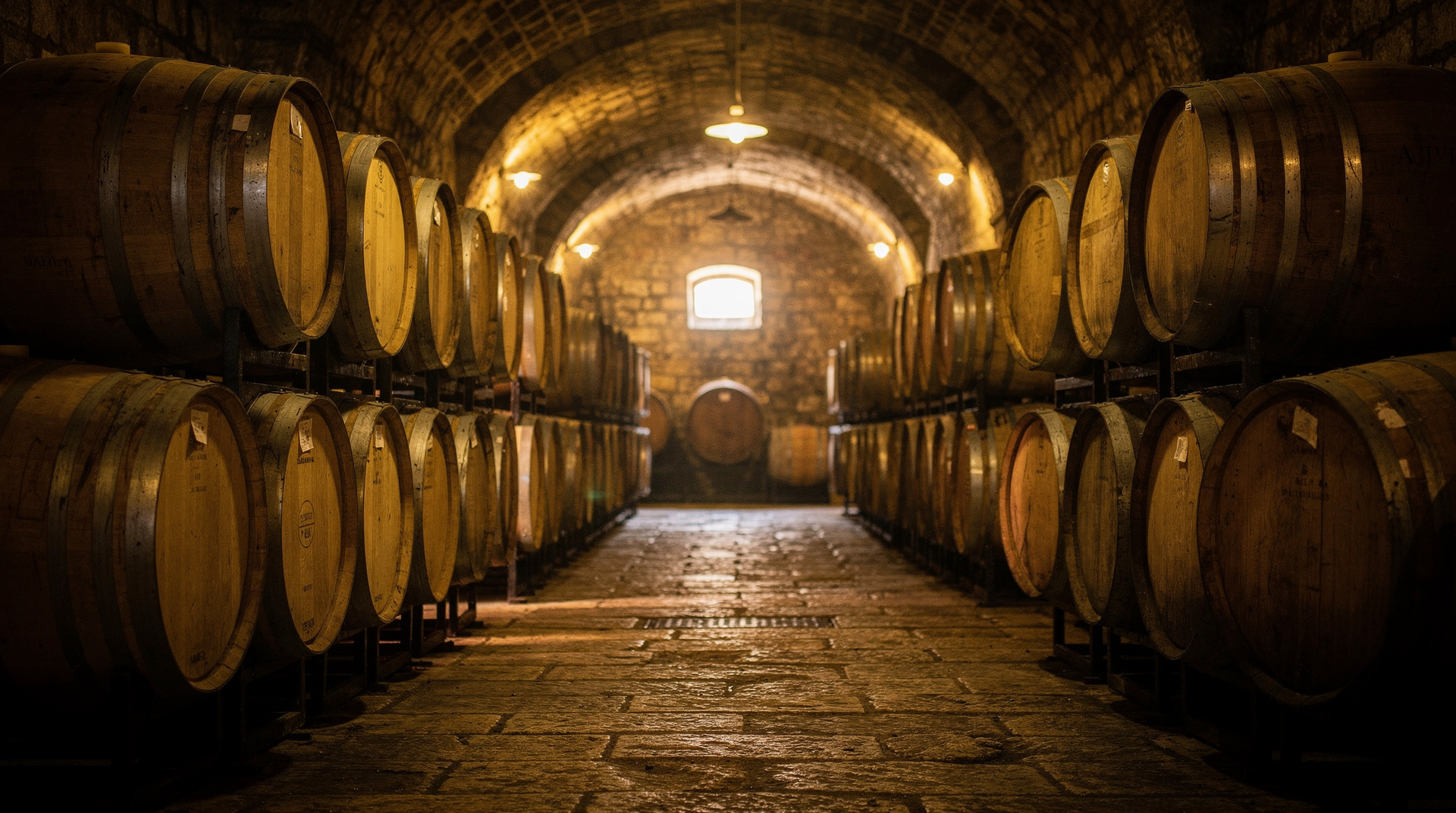
Because the upper deck lands you a short uphill walk from Gaia’s port wine lodges, the bridge crossing works naturally as the link between a Porto morning and a Gaia afternoon. A guided Gaia wine cellar walk starts from roughly this point and threads through several lodge terraces with Douro views, which suits visitors who want a structured introduction rather than picking a cellar at random. If you prefer to explore independently, the best port wine cellars in Gaia guide ranks the main options with honest pricing.
Accessibility and mobility considerations
The upper deck’s pedestrian walkway is flat and paved, with gentle ramp access at both the Ribeira and Jardim do Morro ends — manageable for wheelchair users and pushchairs, though the surface can be uneven where old stone paving meets the metal walkway sections near the middle of the span. The lower deck has a similar flat profile but shares space with vehicle traffic, which some visitors with mobility aids find less comfortable than the pedestrian-only upper deck. Metro line D, which uses the upper deck, has step-free access at both Jardim do Morro and São Bento stations, making the metro-and-walk combination a reasonable option for anyone who wants to see the bridge without a long approach walk from the Ribeira waterfront.
Frequently asked questions about Ponte Dom Luís I
Who built Ponte Dom Luís I?
Designed by Belgian engineer Théophile Seyrig, built by Société de Willebroeck between 1881 and 1886.
How high is the upper deck?
Approximately 45 metres above the Douro at the bridge centre. The total span is 395 metres.
Is crossing the upper deck scary?
The walkway is wide and solidly railed. Most non-acrophobes find it straightforward. If heights are a concern, use the lower deck instead.
What is the best time to photograph the bridge?
Golden hour from the Gaia side (Jardim do Morro), 45 minutes before sunset, facing northwest toward Porto.
Is the lower deck also open to pedestrians?
Yes. The lower deck is at a much lower elevation — roughly 10 to 15 metres above the water — and carries vehicle traffic plus a pedestrian path.
What is the connection between Ponte Dom Luís I and Gustave Eiffel?
Seyrig worked with Eiffel on the earlier Ponte Maria Pia. The Dom Luís I bridge was Seyrig’s independent design; Eiffel was not directly involved.
Can I see all six Porto bridges from this bridge?
The Arrábida bridge (west) and Ponte Maria Pia (east) are visible. The full sequence of six bridges is best experienced from the water on the Douro boat cruise.
Is there an entry fee to cross the bridge?
No. Both decks are free at any hour. The only cost is if you pair the crossing with a paid activity nearby, such as a Gaia cellar tour or a Douro cruise.
Frequently asked questions — Ponte Dom Luís I — the complete guide to Porto's famous bridge
Who built Ponte Dom Luís I?
The bridge was designed by Théophile Seyrig, a Belgian engineer who had previously worked with Gustave Eiffel on the Ponte Maria Pia (the railway bridge upriver, completed 1877). Seyrig designed the Ponte Dom Luís I independently after parting ways with Eiffel's firm. The bridge was constructed between 1881 and 1886 by the Belgian company Société de Willebroeck.How high is the upper deck of Ponte Dom Luís I?
The upper deck is approximately 45 metres above the river at the centre of the span. The total bridge span is 395 metres between the granite piers on each bank. The height makes it one of the taller iron road bridges of its era — comparable to the contemporary Garabit viaduct by Eiffel in France.Is crossing Ponte Dom Luís I scary?
The upper deck has a solid pedestrian walkway with railings on both sides, and the surface is wide enough for pedestrians and cyclists to pass comfortably. Most people who are not specifically afraid of heights find the crossing straightforward. If you are nervous about heights, the lower deck is an alternative — it crosses at a much lower elevation. The metro train runs on the upper deck but on separate tracks from the pedestrian zone.What is the best time to photograph Ponte Dom Luís I?
Golden hour — the hour before sunset — from the Gaia side (Jardim do Morro or Serra do Pilar). The Porto hillside behind the bridge catches the warm light directly as the sun sinks. Sunrise from the Porto side (Ribeira quay) gives good light on the Gaia hillside. Midday light from the south is flat and less photogenic.Is the lower deck of Ponte Dom Luís I also open to pedestrians?
Yes. The lower deck is open to pedestrians and was also used by tram traffic until relatively recently. It crosses at a much lower elevation than the upper deck — roughly 10 metres above the water at the banks, rising to around 15 metres at the centre. The lower deck walk gives a different perspective: you are close to the water level and can see the Ribeira and Gaia waterfront buildings at eye level.What is the connection between Ponte Dom Luís I and Gustave Eiffel?
The connection is often overstated. Théophile Seyrig did work with Eiffel on the Ponte Maria Pia (completed 1877, still visible upriver from the Dom Luís I bridge). The Dom Luís I bridge was Seyrig's independent work, after he had left Eiffel's firm. Eiffel himself is not credited as a designer of the Dom Luís I bridge. The aesthetic similarities — iron arch construction, riveted lattice structure — reflect a shared engineering vocabulary of the era rather than Eiffel's direct involvement.Can I see all six bridges of Porto from the Ponte Dom Luís I?
Not all six simultaneously, but from the Dom Luís I upper deck you can see the Ponte da Arrábida (a concrete arch bridge to the west) and the Ponte Maria Pia (the original Eiffel-era railway bridge, now disused, upriver to the east). The other three bridges are further away and not all visible from this position. The six-bridges boat cruise on the Douro passes under all six bridges sequentially.Is there an entry fee to walk across Ponte Dom Luís I?
No. Both decks are free to cross on foot at any hour, with no ticket or turnstile. The only cost involved is if you combine the crossing with a paid activity on either side, such as a port wine cellar tour in Gaia or a Douro boat cruise departing from the Ribeira quay.Can I cycle across Ponte Dom Luís I?
Yes, on the upper deck, where the pedestrian walkway is wide enough for cyclists to pass carefully alongside walkers. The lower deck also permits cycling on its pedestrian path, though the vehicle traffic on that deck means more caution is needed. Dismounting during the busiest midday hours on the upper deck is considerate, since the walkway gets crowded with photographers stopping mid-span.
Top experiences
Bookable activities with verified prices and instant confirmation on GetYourGuide.