Torre dos Clérigos — the complete honest guide (2026)
Porto: Torre Dos Clerigos Entrance Ticket
Is Torre dos Clérigos worth climbing?
Yes — the 360-degree view over Porto's terracotta rooftops and the Douro is the best panorama you can get from inside the city. Allow 20 minutes for the climb and 15 minutes at the top. Book tickets online (~€8) to avoid queues, especially in summer.
Porto’s landmark seen honestly
Torre dos Clérigos is the image of Porto that appears on postcards, travel magazine covers and the back of tourist brochures. It rises 75 metres above the Baroque church of the same name, its granite silhouette visible from almost every elevated point in the city. Unlike many landmarks that disappoint when encountered in person, the tower more than lives up to its reputation — though the experience of visiting it depends entirely on when you go and what you expect.
This guide tells you what the tower actually offers, what the 240-step climb involves, how to get tickets at a fair price, and how to fit it into a broader day in the historic centre.
| Where | Rua de São Filipe de Nery, Baixa |
| Cost | Around €8 combined tower and church/museum ticket |
| Time needed | 45–60 minutes including the climb |
| Getting there | 10–12 min walk from São Bento; Aliados metro (lines A, B, C, E, F) |
| Best time | Opening (9 am) or the last hour before closing |
Nicolau Nasoni and the making of a Porto icon
The story of Torre dos Clérigos begins with an Italian architect who came to Porto on a commission and never left. Nicolau Nasoni was born in San Giovanni d’Asso, Tuscany, in 1691, trained as a painter and decorator, and arrived in Porto around 1725 to work on the Cathedral. He stayed for the rest of his life, dying in 1773 at the age of 82, and in that time he reshaped the visual character of Porto’s religious architecture more than any other individual.
Nasoni’s signature style was a theatrical Italian Baroque filtered through Portuguese materials — local granite, the heavy mass of northern Portuguese church construction — and the result was something uniquely Porto. The Igreja dos Clérigos, commissioned by the Brotherhood of the Clergy (Irmandade dos Clérigos), was the most ambitious of his late-career projects. Work began on the church in the 1730s; the tower was added from 1754 and completed in 1763, eight years before Nasoni’s own death.
At 75 metres from base to the top of the lantern, the tower was the tallest structure in Portugal when it was completed, and it served as a genuine navigational landmark for sailors entering the Douro estuary. Ships coming upriver from the Atlantic used the tower as a bearing point long before modern navigational aids were installed. This was not accidental — the brotherhood that commissioned it understood that a tower visible from the sea also announced their importance to the city.
The exterior of the tower is worth studying before you climb. The lower register is relatively sober granite, transitioning through increasingly elaborate Baroque ornamentation as the eye moves upward. Pilasters, niches, carved cornices and decorative urns accumulate toward the lantern. The whole composition has a theatrical quality — designed to be seen from a distance, to draw the eye upward, to make height feel intentional rather than merely structural.
The church interior
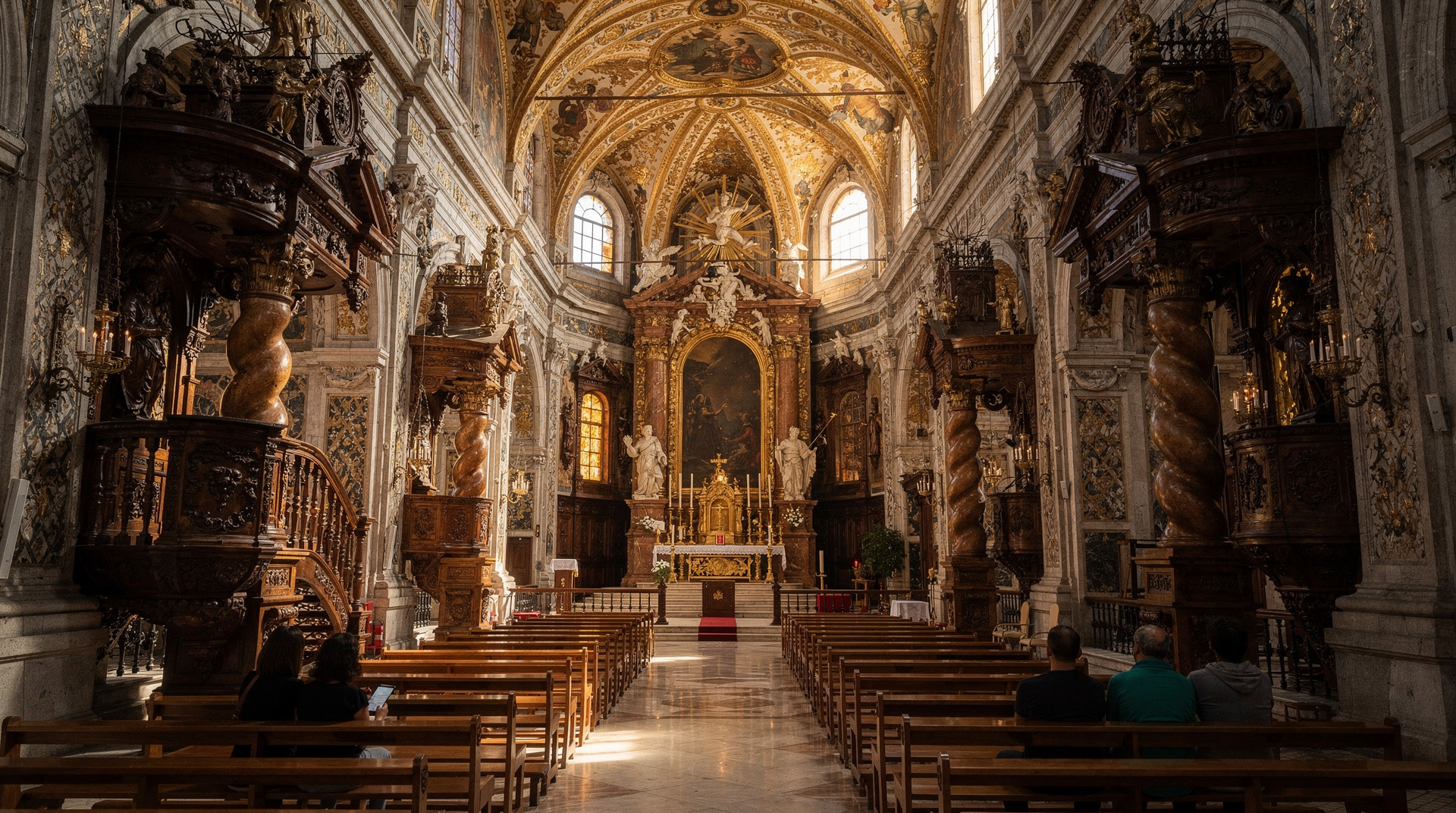
The Igreja dos Clérigos itself is less visited than the tower but deserves fifteen minutes of your attention. Entry is included in the combined ticket. The interior is a single elliptical nave — an unusual plan in Portuguese church architecture — flanked by lateral chapels and covered by an elaborate painted ceiling. Nasoni designed the interior as he did the exterior: with an eye for theatrical effect, using gilded woodwork, painted surfaces and carefully positioned windows to create a space that feels larger than its dimensions.
The church remains an active place of worship. Mass is celebrated regularly, and the interior is kept in liturgical use rather than functioning purely as a museum. This means the atmosphere is genuine rather than sanitised — you are in a working church that happens to be extraordinarily beautiful.
The lower floors of the complex house the Irmandade dos Clérigos museum, which traces the history of the brotherhood from its 17th-century founding to the present day. The museum is small and unhurried; the collection includes portraits, liturgical objects, archival documents and a modest display of silver. It adds context to the tower visit without demanding much time.
The climb: what to expect on the 240 steps
The spiral staircase inside the tower is one of the narrower ascents in any major European bell tower. The steps are worn granite, uneven in places, lit by natural light from small slit windows at intervals. The staircase is wide enough for one person moving confidently; passing a descending visitor requires one of you to step into an alcove while the other passes.
The climb takes approximately 10 to 15 minutes at a moderate pace. There are no resting platforms — it is a continuous spiral from base to top. People with a genuine fear of enclosed spaces, or with significant mobility limitations, should factor this in before buying a ticket. There is no lift and no alternative route.
At the top, a stone balcony encircles the lantern base. It is not vast — perhaps a metre and a half deep — and can feel crowded when a tour group is in residence. The views, however, are extraordinary in all directions.
What you see from the top
The 360-degree panorama from the tower is the reason to make the climb, and it is one of the most complete views of any city in southern Europe.
Looking northeast and east, the view encompasses the historic centre: the red-tiled rooftops of the Baixa, the azulejo-clad facades along the hillside, the twin towers of the Sé Catedral rising above its promontory, and the urban density of a medieval city that grew without a plan.
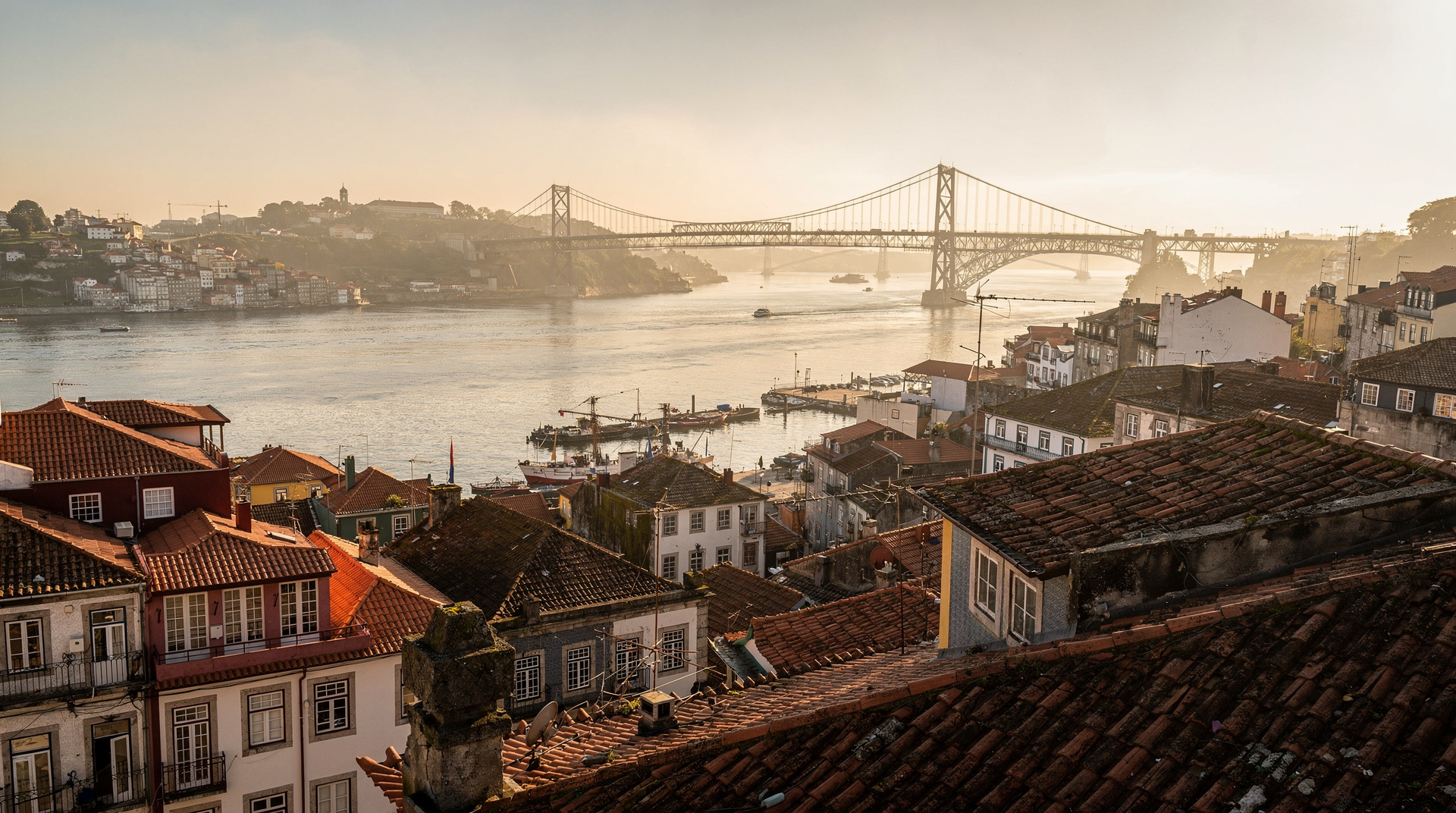
Looking south and southwest, the Douro comes fully into view — the river wide and silver, Ponte Dom Luís I spanning it at its most dramatic angle (visible from this height as a complete iron arc), and the Gaia hillside beyond, where the white letters of the port wine lodges spell out names familiar from tasting rooms: Taylor’s, Sandeman, Ramos Pinto.
Looking west, the city opens toward Foz do Douro and the Atlantic horizon. On clear days — which are common in Porto’s long summer dry season — you can see the coastline beyond Matosinhos and occasionally the pale line of the sea itself.
Looking north, the view is more domestic: the rooftops of Cedofeita, the Boavista roundabout in the mid-distance, the residential character of a city that is also, away from the tourist routes, ordinary and inhabited.
In low light — at dusk particularly — the city below takes on an amber quality as the late sun hits the terracotta and stone. The tower is at its most photogenic in the hour before closing in summer; if you can time your ascent to arrive at the top in the last 45 minutes before sunset, the light is exceptional.
Tickets and practical details
The combined ticket for the tower and church museum costs approximately €8 for adults in 2026. Reduced rates of around €4 apply for students with valid ID, seniors over 65, and children aged 10 to 17. Children under 10 enter free.
Tickets can be purchased at the ticket office in the church porch, but queues form in peak season. Buying online via the official GYG ticket listing costs the same and allows you to skip the ticket queue. Note: buying online does not give you a separate entry queue; it simply means you do not wait at the ticket desk.
For a guided tour that contextualises the tower within the broader historic centre, the Clérigos tower and museum walking experience combines the tower entry with a 90-minute guided walk through the surrounding neighbourhood.
Night visits are offered on selected evenings in summer (typically June through September), usually priced at €9–10 and including a late-evening ascent to the illuminated tower. These sessions are quieter than daytime visits and offer a completely different perspective on the city after dark. Check current availability via the night visit listing.
Opening hours: 9 am to 7 pm daily (extended to 11 pm on night-visit evenings). The last admission is typically 30 minutes before closing.
Address: Rua de São Filipe de Nery, Porto 4050-546.
When to go — the honest timing advice
The tower is busiest between 11 am and 3 pm on any day from March through October. This is when tour groups coincide with independent visitors and the wait at the top can become uncomfortable. Early morning (9 to 10 am) and late afternoon (5 pm onward) are consistently less crowded.
July and August bring the highest visitor volumes. If you are visiting in peak summer and have limited flexibility on timing, buy tickets in advance and aim for the opening slot. The morning light from the tower is also good for photography — looking east, the rising sun catches the rooftops cleanly.
November through February the tower is visited by a fraction of the summer numbers. The winter light on Porto is different — lower, more diffuse, the city looking silver-grey rather than terracotta-warm — but the experience of being nearly alone at the top on a quiet January morning has its own appeal.
Fitting the tower into a day in the historic centre
Torre dos Clérigos sits at the natural hub of Porto’s most tourist-dense neighbourhood. From the tower, you are within ten minutes’ walk of Livraria Lello, the Igreja do Carmo, and the azulejos walking route. Fifteen minutes downhill east brings you to São Bento station.
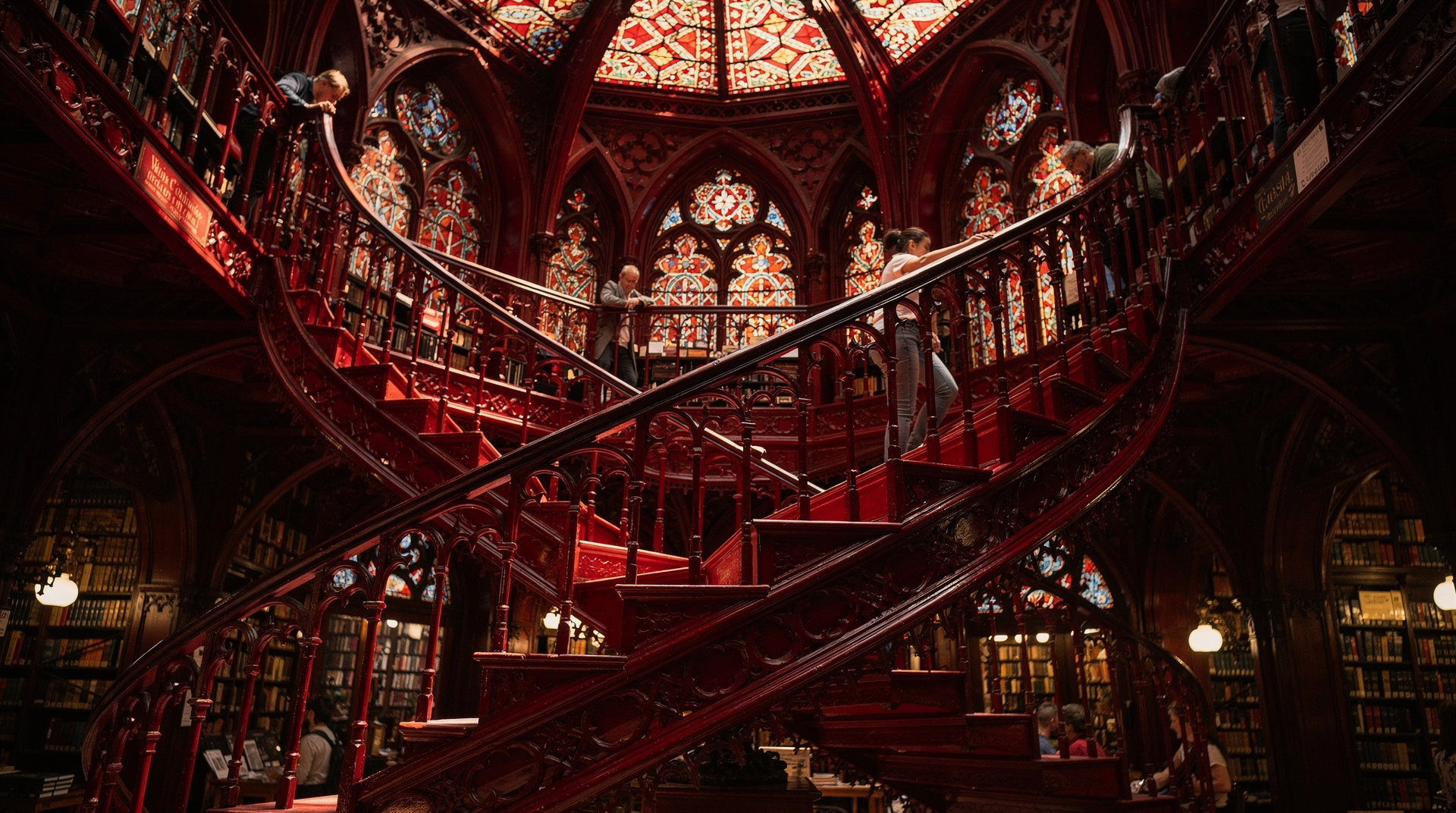
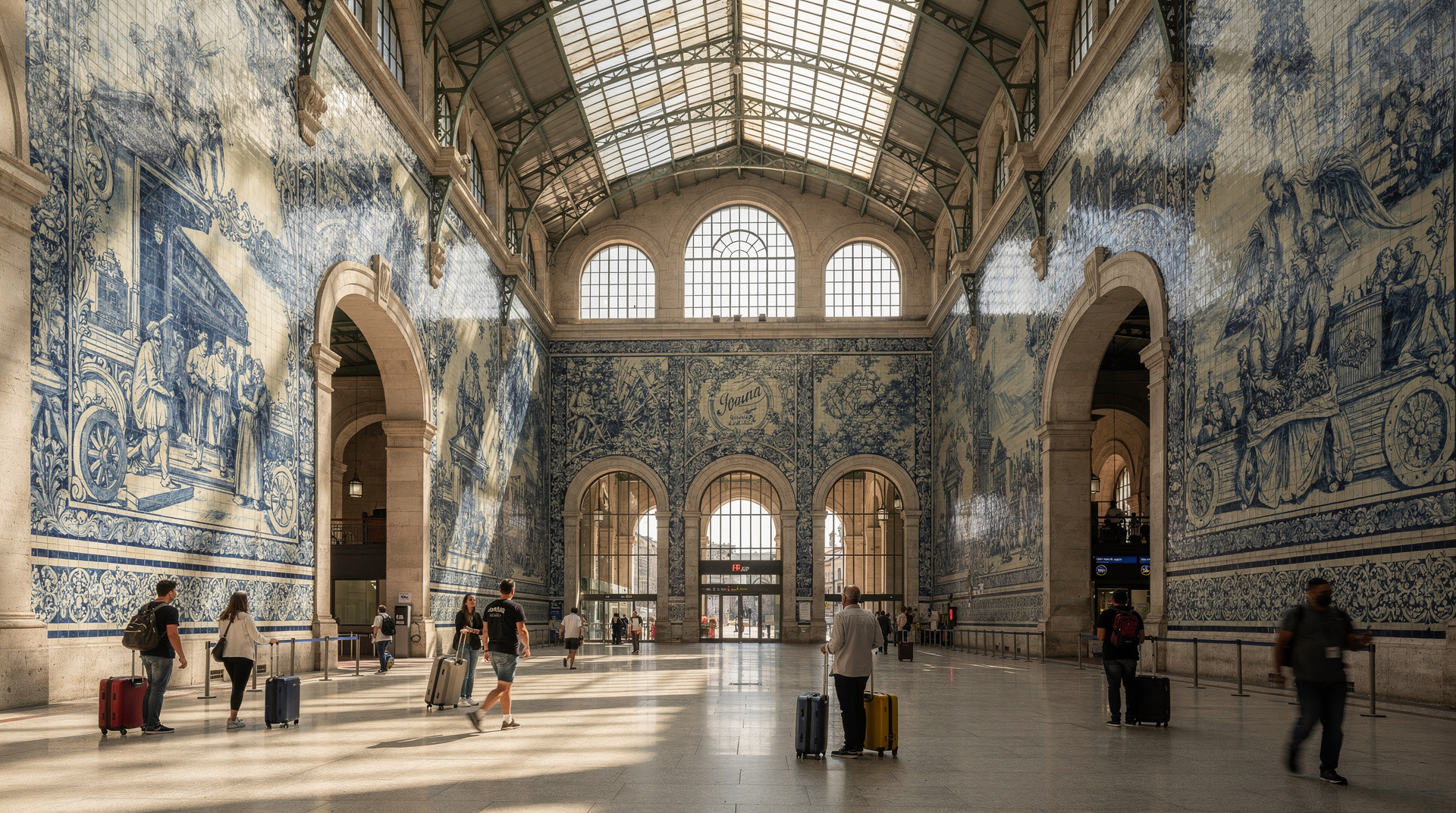
A practical half-day route: start at the tower at opening time (9 am), climb before the crowds build. From the top, orientate yourself on the city — you can see your entire day’s route from up there. Descend, walk west to Lello for a timed entry (10 am slot works well). After Lello, walk east along Rua dos Clérigos to the Igreja do Carmo azulejo façade. Continue downhill to São Bento for the azulejo hall. From São Bento the Ribeira waterfront is 10 minutes further southeast.
The Porto 3-days itinerary covers these same sights with a tight schedule if you prefer structure alongside the wandering, and the churches of Porto guide is worth reading before you go if the Nasoni Baroque interior of the church itself is of specific interest — it places Clérigos in context alongside São Francisco and the Sé.
The neighbourhood around Clérigos
The streets surrounding the tower are among the most photographed in Porto, but they are also genuinely good to explore on foot. Rua das Flores, running southeast from near the tower toward São Bento, is lined with converted 18th-century merchant houses — their wrought-iron balconies and azulejo-fronted lower floors make it one of the more photogenic streets in the city.
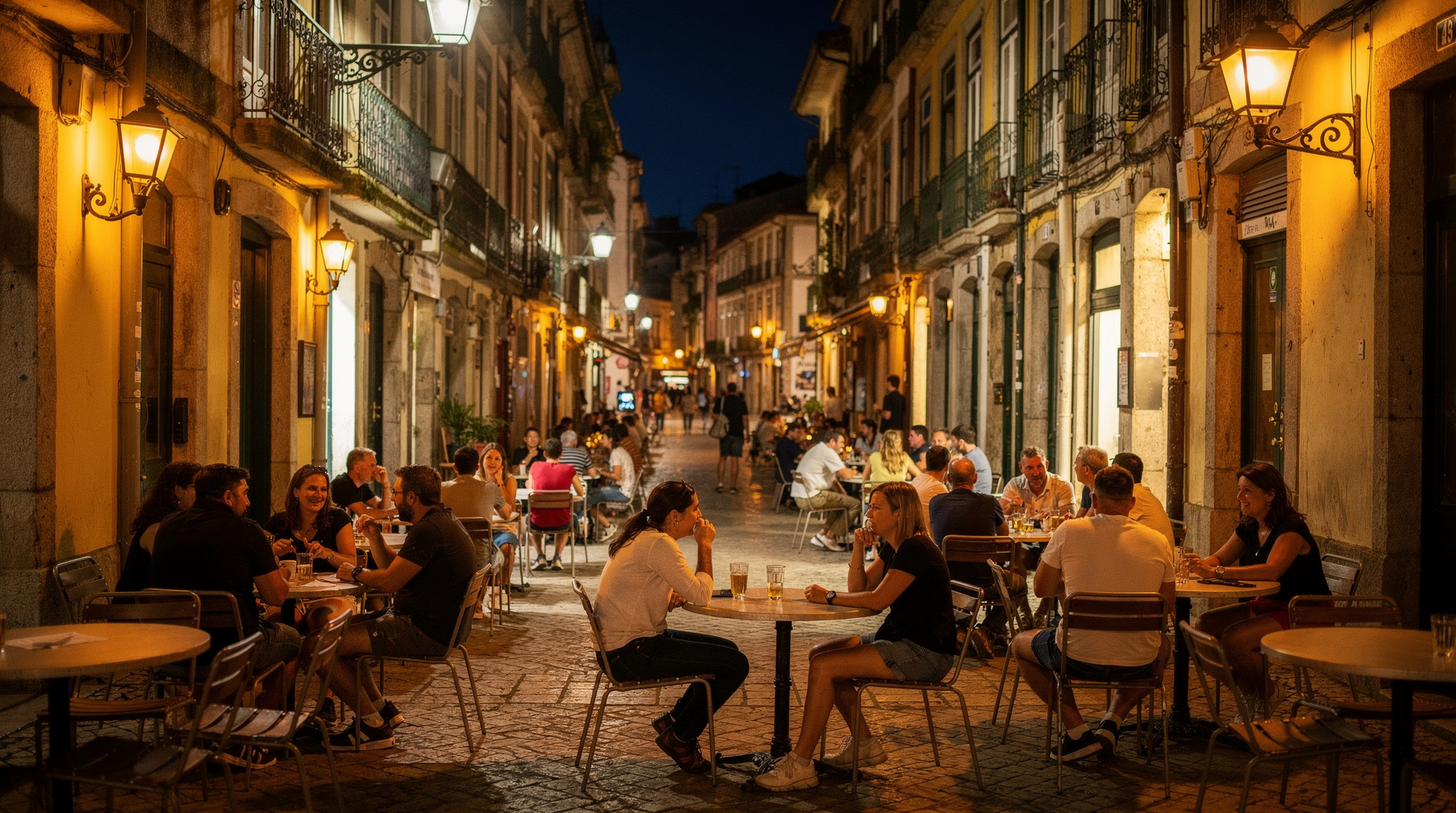
Rua do Almada, running north from the tower area, transitions quickly from tourist-facing to local commercial: pharmacies, haberdasheries, stationery shops, and the kind of lunch counter (prato do dia €8–10) that feeds office workers rather than tourists.
Praça de Lisboa, a recent pedestrianised square created partly below ground level in an excavated courtyard, sits a few minutes north of the tower and is worth a detour for the contrast of contemporary urban design set against the surrounding historical fabric.
Small independent cafés line the streets immediately south of the tower toward Rua das Flores — a reasonable place to sit with a coffee (around €1.20–1.80) and watch the constant flow of visitors climbing toward the tower entrance without joining the queue yourself.
Photographing the tower — from the ground and from the top
The tower rewards photography from several distinct positions, and knowing them in advance saves time on a day with a packed itinerary.
From Praça de Lisboa, a few minutes north, the tower rises above the pedestrianised square’s modern landscaping — a useful contrast shot between contemporary and Baroque Porto. From Rua dos Carmelitas, looking east toward the tower past the Igreja do Carmo and Carmelitas facades, you get the tower framed by two churches in a single composition — one of the more efficient single-shot summaries of Porto’s religious architecture. From the Douro riverside near Cais da Ribeira, the tower appears as a distant landmark above the terracotta rooftops — a good establishing shot for a photo essay of the day, though it requires a longer lens to isolate the tower itself.
From the top, the best photography window is the last 45 minutes before closing in summer, when the low sun turns the terracotta rooftops amber and the shadows lengthen across the Baixa. Midday photography from the balcony tends to look flat — strong overhead light with little texture on the rooftops.
Drones are not permitted over the historic centre without specific authorisation, which effectively rules them out for casual visitors; the tower balcony itself is the legal substitute for an aerial shot of the city.
Getting to Torre dos Clérigos
From São Bento station: walk northwest along Rua das Flores and then northwest up the hill — approximately 10 to 12 minutes, with a moderate uphill section in the final approach.
From the Ribeira waterfront: 15 to 20 minutes uphill northwest through the Baixa-Aliados neighbourhood.
From Livraria Lello: six minutes east along Rua dos Clérigos — flat and direct.
Nearest metro: Aliados (lines A, B, C, E, F), about 8 minutes’ walk. Alternatively, the funicular dos Guindais from the Ribeira saves the uphill walk if you are coming from the waterfront side.
There is no dedicated parking near the tower; the historic centre is largely pedestrianised and access by private car is not practical.
Clérigos versus Porto’s other viewpoints
Clérigos is the most central and most climbed viewpoint in Porto, but it isn’t the only option, and it isn’t automatically the best one for every visitor. The best viewpoints in Porto guide covers the full set; here is how Clérigos compares to the two most common alternatives.
| Viewpoint | Cost | Effort | What you get |
|---|---|---|---|
| Torre dos Clérigos | ~€8 | 240 steps, no lift | 360° panorama, highest point in the historic centre |
| Sé Catedral terrace | Free | Flat, wheelchair-accessible | River and Ribeira view, no rooftop panorama |
| Jardim do Morro (Gaia side) | Free | Flat, funicular or bridge walk | Best classic postcard view of Ribeira and Ponte Dom Luís I |
Clérigos is the only one of the three that puts the historic centre’s rooftops directly beneath you rather than across the river — it is the correct choice if the goal is a genuine bird’s-eye view rather than a postcard composition. If mobility is a concern, the Sé terrace and Jardim do Morro deliver strong views without any stairs.
Frequently asked questions about Torre dos Clérigos
How much does it cost to climb Torre dos Clérigos?
The combined tower and museum ticket costs approximately €8 for adults in 2026, with reduced rates of around €4 for students, seniors, and children aged 10 to 17. Children under 10 enter free. Tickets are available at the site or online.
How many steps are there in Torre dos Clérigos?
There are 240 steps in a narrow granite spiral staircase. The climb takes around 10 to 15 minutes. There is no lift. The staircase is narrow enough that passing descending visitors requires one person to step aside.
When is the best time to visit Torre dos Clérigos?
Early morning (9 to 10 am) or late afternoon from 5 pm onward. Avoid midday between 11 am and 3 pm during the busy season (March to October). November through February the tower is quiet at any time of day.
Who designed Torre dos Clérigos?
Italian-born architect Nicolau Nasoni, the defining figure of Porto’s Baroque period. The tower was completed in 1763 and served as a navigational landmark for ships entering the Douro.
Can I visit the church as well as the tower?
Yes. The combined ticket covers the Igreja dos Clérigos and the Irmandade dos Clérigos museum on the lower floors, as well as the tower ascent. Budget 45 to 60 minutes for the full visit.
Is Torre dos Clérigos open every day?
Yes, daily from 9 am to 7 pm, with extended hours on night-visit evenings in summer. Check current hours before visiting as they may vary on major holidays.
How far is Torre dos Clérigos from Livraria Lello?
Approximately six minutes on foot, westward along Rua dos Clérigos. Both are natural companions in a morning visit to the historic centre.
Frequently asked questions — Torre dos Clérigos — the complete honest guide (2026)
How much does it cost to climb Torre dos Clérigos?
The standard combined ticket for the tower and the Igreja dos Clérigos museum costs approximately €8 for adults in 2026. Discounted rates apply for students, seniors, and children. Tickets can be purchased at the site or online. Night visits are occasionally offered at a slight premium during summer months.How many steps are there in Torre dos Clérigos?
There are 240 steps arranged in a tight granite spiral staircase. The ascent takes around 10 to 15 minutes at a moderate pace. The staircase is narrow — passing descending visitors requires stepping into small alcoves. People with claustrophobia or limited mobility should note that there is no lift.When is the best time to visit Torre dos Clérigos?
Early morning (opening at 9 am) or late afternoon from around 5 pm onward produces the fewest visitors. July and August midday is the peak crowd period. The hour before closing is consistently uncrowded and gives excellent late-afternoon light for photography.Who designed Torre dos Clérigos?
The tower was designed by Italian-born architect Nicolau Nasoni, who spent most of his career in Porto and became the defining figure of Portuguese Baroque architecture. The tower was completed in 1763 and at 75 metres tall was the highest point in Porto for over a century.Can I visit the church as well as the tower?
Yes. The combined ticket covers both the Igreja dos Clérigos — a fully functioning church with an ornate Baroque interior — and access to the tower. The museum element on the lower floors covers the history of the Irmandade dos Clérigos, the brotherhood that commissioned the complex. Budget 45 to 60 minutes for the full visit including the church.Is Torre dos Clérigos open every day?
The tower is open daily year-round, typically from 9 am to 7 pm (extended to 11 pm on certain summer evenings for night visits). Hours can vary on major public holidays and during religious ceremonies. Check current hours on the official website before visiting.How far is Torre dos Clérigos from Livraria Lello?
Livraria Lello is approximately a six-minute walk west of Torre dos Clérigos, along Rua dos Clérigos toward Rua das Carmelitas. Both visits combine naturally in a single morning — many visitors do the tower climb first (before crowds build) and then walk to Lello for their timed entry.
Top experiences
Bookable activities with verified prices and instant confirmation on GetYourGuide.