Paiva Walkways hiking guide — Passadiços do Paiva, what to expect and how to plan
Porto: From Porto Arouca 516 Paiva Walkways Guided Day Trip
How difficult are the Paiva Walkways and how long do they take?
The Passadiços do Paiva cover 8 km of wooden boardwalk along the Paiva River gorge. The trail is rated moderate — significant elevation changes (around 600 metres total ascent and descent), uneven terrain, and exposed sections. Fit walkers complete it in 3–4 hours. Allow 4–5 hours including stops. Not suitable for pushchairs or visitors with limited mobility.
What the Paiva Walkways actually are
The Passadiços do Paiva are a system of elevated wooden boardwalks — roughly 8 km total — that trace the south bank of the Paiva River through a schist gorge in the Arouca Geopark, approximately 75 km south of Porto. The walkways were completed in 2016 and immediately became one of the most visited natural sites in Portugal.
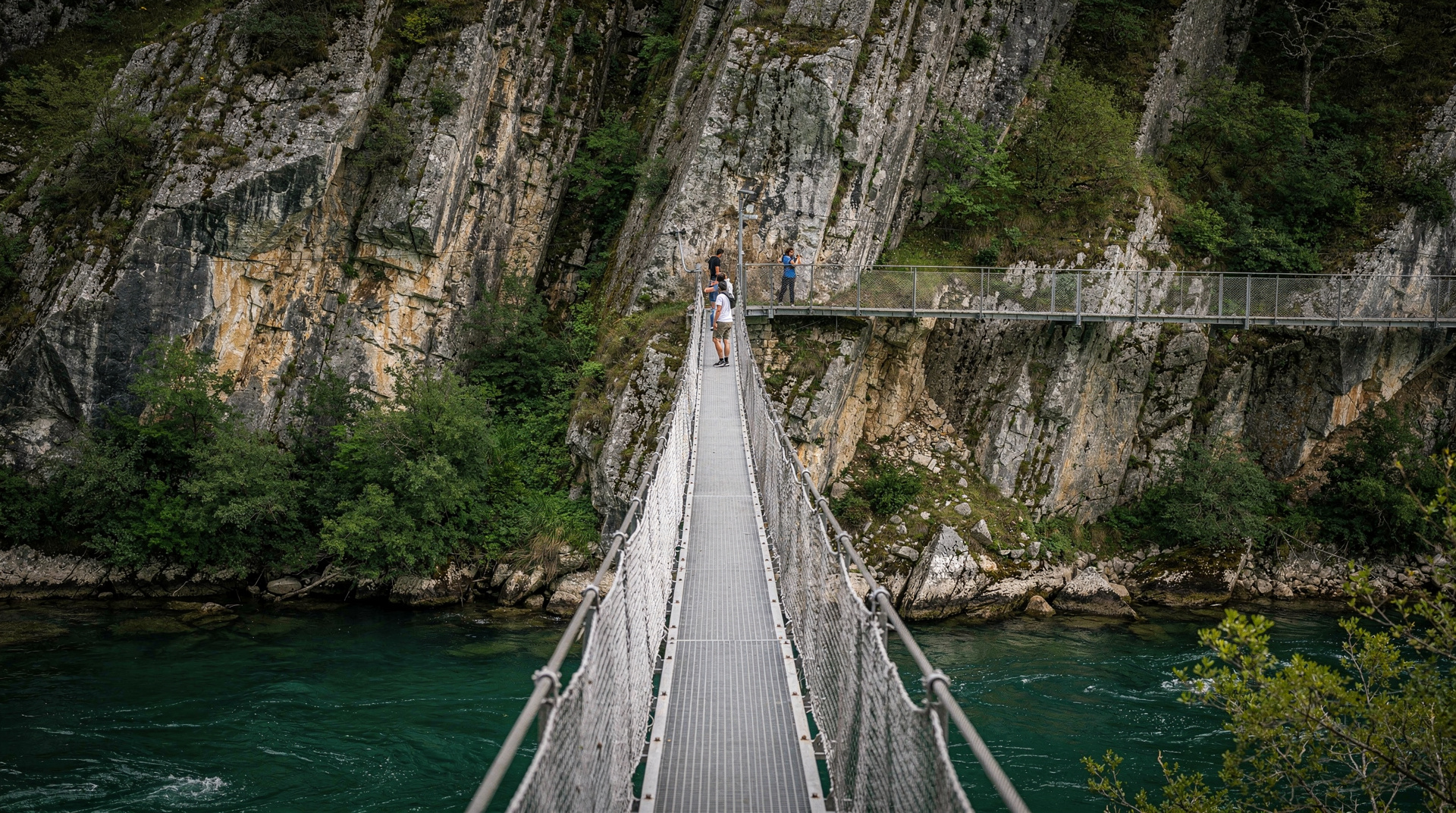
The appeal is easy to understand from photographs: emerald-green river water below, old-growth riverside forest on both banks, dramatic grey schist cliff faces, and the wooden boardwalk rising and falling with the gorge topography — sometimes directly above the river, sometimes climbing steep switchbacks through the forest. The winning combination of wild landscape and accessible infrastructure (you do not need to scramble or use ropes) made the Paiva Walkways the Best Tourism Project in Europe 2016 according to the European Tourism Awards.
This guide covers what the experience is actually like, how to get there, how to plan the logistics, and what not to confuse with the adjacent but distinct 516 Arouca suspended bridge.
| Where | Arouca Geopark, about 75 km south of Porto |
| Cost | Free to hike; parking around 2-4 €, shuttle around 3-5 € |
| Time needed | 3-5 hours for the 8 km trail |
| Getting there | Car (75-90 min) or an organised day trip; no practical public transport |
| Best time | Weekday mornings, spring or autumn |
The important distinction — Paiva Walkways vs 516 Arouca bridge
These two things are near each other and frequently marketed together, but they are completely different experiences:
Passadiços do Paiva: An 8 km hiking trail on wooden boardwalks along the Paiva River gorge. Duration: 3–5 hours. You walk alongside and above the river. The experience is about nature, hiking, and the gorge landscape.
516 Arouca bridge: A suspended pedestrian bridge 516 metres long, spanning a gorge at approximately 175 metres above the valley. Duration: 20–30 minutes to cross and return. The experience is about the engineering, the height, and the view from the bridge. When it opened in 2021 it was the world’s longest pedestrian suspension bridge.
Many day trips from Porto combine both — the walkways in the morning, the bridge in the afternoon. If you are booking a tour, check which elements are included. If you only want the bridge, you do not need to hike 8 km first.
The hike — a realistic description
Starting at Espiunca (recommended): Most visitors start at the Espiunca (upper) entry point. This is the more logical direction — you descend overall (about 140 metres net elevation), which makes the second half of the trail more comfortable than if you were ascending it.
From Espiunca, the trail quickly leaves the car park and enters the river gorge. The first section descends through mixed forest before reaching the Paiva River. Once on the boardwalk proper, you are suspended above the water for much of the trail, with occasional breaks where the walkway climbs away from the river to bypass steep cliff sections.
The character of the terrain: The Paiva Walkways are not a gentle riverside stroll. There are sustained climbs of 100–150 metres on wooden stairs (steep, with handrails), exposed sections where the boardwalk runs above the river with limited protection from the drop, and sections where the wooden boards are slippery when wet. “Moderate” is the correct description — fit adults of all ages can complete it, but it requires physical effort and appropriate footwear.
The total elevation change (including ups and downs, not just net) is approximately 600 metres — 300 metres of ascent and 300 metres of descent distributed along the 8 km. The most challenging section is approximately 4 km in, where the trail climbs away from the river on a long wooden staircase before descending back.
What you see: The landscape is consistently beautiful rather than dramatically varied — it is the gorge setting, the water quality, and the forest cover that make the trail exceptional rather than a series of discrete viewpoints. The Paiva River is remarkably clear (classified as one of the cleanest rivers in Portugal), turquoise-green in the pools, white-water over the rapids. Several swimming spots exist where the river widens, though entering the river from the boardwalk is not officially permitted.
Arriving at Areinho: The lower entry point (Areinho) has parking, a small café, and the shuttle pick-up point. Most visitors arriving here by shuttle were delivered to Espiunca at the start and have walked the 8 km down. From Areinho, the shuttle returns to Espiunca (3–5 €, 15 minutes).
Getting there — the car is almost essential
The Paiva Walkways are located near the village of Espiunca, municipality of Castelo de Paiva, approximately 75 km south of Porto. The entry points are not served by public transport.
By car from Porto: Take the A1 south toward Lisboa/Aveiro, then the A41 or A32 toward Arouca, and continue on local roads to Espiunca (follow signs to Passadiços do Paiva). Google Maps navigation works reliably. Journey time: 75–90 minutes from Porto. Parking at Espiunca: large car parks, typically 2–4 € for the day.
Without a car: Booking an organised day trip from Porto is the practical alternative. Several operators run daily departures, particularly from April through October.
Book the Paiva Walkways day trip from Porto — includes transport from Porto, entry coordination, and return transfer. The most straightforward option for visitors without a car.
Book the Arouca Paiva Walkways tour from Porto — another well-reviewed operator for the same route, with varying group sizes and inclusions.
Combining with the 516 Arouca bridge
If your day trip includes the 516 Arouca bridge, note that it is located approximately 12 km from the Espiunca entry point, near the town of Arouca itself. The logical sequence for a combined day is:
- Depart Porto at 7:30–8:00 am
- Arrive Espiunca by 9:30 am
- Walk the Paiva Walkways (Espiunca → Areinho): 3–5 hours, finishing 12:30–2:30 pm
- Drive or transfer to the 516 Arouca bridge: 20 minutes
- Cross the bridge (30 minutes round trip plus queuing)
- Lunch in Arouca town (local restaurants, 10–15 € set menu)
- Return to Porto by 7–8 pm
Book the combined Arouca 516 bridge and Paiva Walkways guided tour — the combined day tour from Porto that includes both the walkways and the bridge with guide and transport.
What to wear and bring
Footwear: This is not optional — trail shoes or hiking boots with grip are essential. The wooden boards become slippery when damp (morning dew, rain, spray near the rapids), and several sections require careful foot placement on steep stairs. Trainers with flat soles and no grip are dangerous on the descent sections. Sandals and flip-flops are genuinely unsuitable.
Clothing: In summer, light technical clothing and sun protection. The gorge provides shade, but exposed sections have direct sun. In spring and autumn, bring a waterproof layer — the gorge can be cool even when Porto is warm, and afternoon rain is possible.
Water: Bring 1.5–2 litres per person minimum. There are no water points on the trail. The spring/stream water in the gorge is not tested for safety and should not be drunk.
Sun protection: Even in the shade, UV reflected from the water is significant. Apply sunscreen before starting.
Poles: Trekking poles are useful on the descent sections and steeper stairways, particularly for anyone with knee issues. Not essential for fit walkers but helpful.
Managing crowds and timing
The Paiva Walkways are popular. In July and August, the Espiunca car park can fill by 9 am on weekends, and queues at bottleneck points on the boardwalk (particularly the narrow sections near the waterfalls) can mean significant waiting. The trail does not have a capacity control system — on peak summer weekends it can feel crowded.
Best timing for minimal crowds: Weekday mornings in spring or autumn (April–June, September–October). If visiting in summer, arrive before 8 am. Saturday afternoons in August are the worst time.
Entry: The trail is free to hike. The car park charges a small fee (2–4 €). The shuttle between entry points costs 3–5 €.
After the walk — Arouca and return
Arouca is a small town 12 km from the trailhead with a good market, a historic Benedictine monastery (Mosteiro de Arouca, with a collection of baroque art worth seeing), and several local restaurants serving unpretentious regional food at 8–12 € for a full set lunch. After 8 km of hiking, a plate of caldo verde soup, grilled pork, and a carafe of local vinho verde is a satisfying conclusion.
For visitors interested in connecting the Arouca Geopark visit with a coastal stop, the Aveiro and Costa Nova day trip covers the route from the Arouca area toward the coast — accessible with a car by adding the coastal detour on the return journey to Porto.
The Paiva Walkways are one of the more rewarding day trips from Porto for active visitors. The combination of wild river landscape, accessible infrastructure, and proximity to Porto makes them an excellent choice for a day outside the city. Book transport in advance for weekend visits from April through October.
The walkways run eight kilometres one way along the Paiva gorge, with a long stair section that is easier descended than climbed, so the direction you start from decides the difficulty: a full-day Paiva walkways tour from Porto handles the return transfer that makes a one-way walk possible.
The Arouca Geopark — context for the walk
The Paiva Walkways sit within the Arouca Geopark, a UNESCO Global Geopark covering 330 km² of the Serra da Freita and surrounding landscape. The designation recognises the area’s geological significance — the Arouca region contains some of the largest trilobite fossils ever found, an extraordinary 1-metre specimen on display in the Arouca Geopark interpretation centre.
The schist rock that characterises the Paiva gorge is not just visually beautiful — it is also geologically ancient, part of a basement rock formation that predates the formation of Europe’s major mountain ranges. The smooth, layered faces of the gorge walls visible from the boardwalk are hundreds of millions of years old. The interpretation panels at the Espiunca entry point provide some context, though most visitors are more interested in the scenery than the geology.
The Arouca Geopark also contains megalithic monuments — dolmens and menhirs from the Neolithic period — scattered across the high plateau above the gorge. These are not directly on the Paiva Walkways route but are worth seeking out if you are spending more than one day in the area.
Photography on the Paiva Walkways
The Paiva gorge is intensely photogenic, but getting the best shots requires some planning:
Morning light (8–10 am): The gorge runs roughly north-south in the main section. Morning sun enters from the east and illuminates the western schist wall first. The water colour is deepest emerald in morning light with low sun angle.
Midday: Direct overhead sun reduces the drama of the gorge walls and washes out the water colour. Not the best light for landscape photography. Many casual visitors who arrive at 11 am for the popular time slot miss the best conditions.
Waterfalls: There are several small cascades visible from the boardwalk, particularly after rain. In dry summer conditions some of these are reduced to trickles — autumn and spring visits show the falls at their most impressive.
The wooden boardwalk itself: The geometric perspective of the boardwalk receding into the gorge is one of the most photographed images of the trail. The best version of this shot requires being on the trail early and waiting for a period without other hikers in the frame — difficult in peak season, possible early on weekday mornings.
Water: The Paiva River in the pool sections (the calmer water between rapids) has extraordinary colour in good light — a combination of the clean water, the reflected forest canopy, and the light-coloured sand and schist on the riverbed. The best pools are in the middle section of the trail, accessible via a small side path that branches off the main boardwalk at several points.
The 516 Arouca bridge — practical facts for those combining visits
For visitors doing both the walkways and the suspension bridge on the same day, the bridge logistics are worth understanding separately:
Location: The 516 Arouca bridge spans the Aguieira gorge, a different valley from the Paiva gorge where the walkways are. It is approximately 12 km from the Espiunca start point, near the town of Arouca.
Access: The bridge is accessed from a purpose-built visitor facility with parking, ticketing, and café. Entry is ticketed — prices were approximately 10–15 € per adult when last reviewed (prices may have changed for 2026; check the Arouca Geopark website).
Queue times: In peak season (July–August), queue times for the bridge can reach 60–90 minutes on weekends. Arriving at opening time (typically 9 am) reduces waiting significantly. Booking entry tickets online in advance is available and strongly recommended for summer visits.
The crossing itself: The bridge sways noticeably — it is designed to do so. For people with vertigo or fear of heights, the experience is genuinely challenging. The floor of the bridge has gaps visible to the gorge floor 175 metres below. Walking to the centre takes approximately 8 minutes at a comfortable pace. The view down the gorge from the midpoint is extraordinary.
Book the combined Aveiro, Arouca Paiva Walkways tour from Porto — a longer day tour that adds the Aveiro moliceiro canal cruise to the Paiva Walkways and potentially the 516 bridge, making a full day of the Arouca Geopark region.
Honest comparison — Paiva Walkways vs other Porto day trips
Porto is well-positioned for excellent day trips. How do the Paiva Walkways compare to the other main options?
vs Douro Valley day trip: The Douro Valley is scenically similar in some respects — dramatic hillsides, river gorge, water — but organised around wine culture, quinta visits, and boat travel. The Paiva Walkways are a walking experience in nature, without wine. Different activities; different appeal.
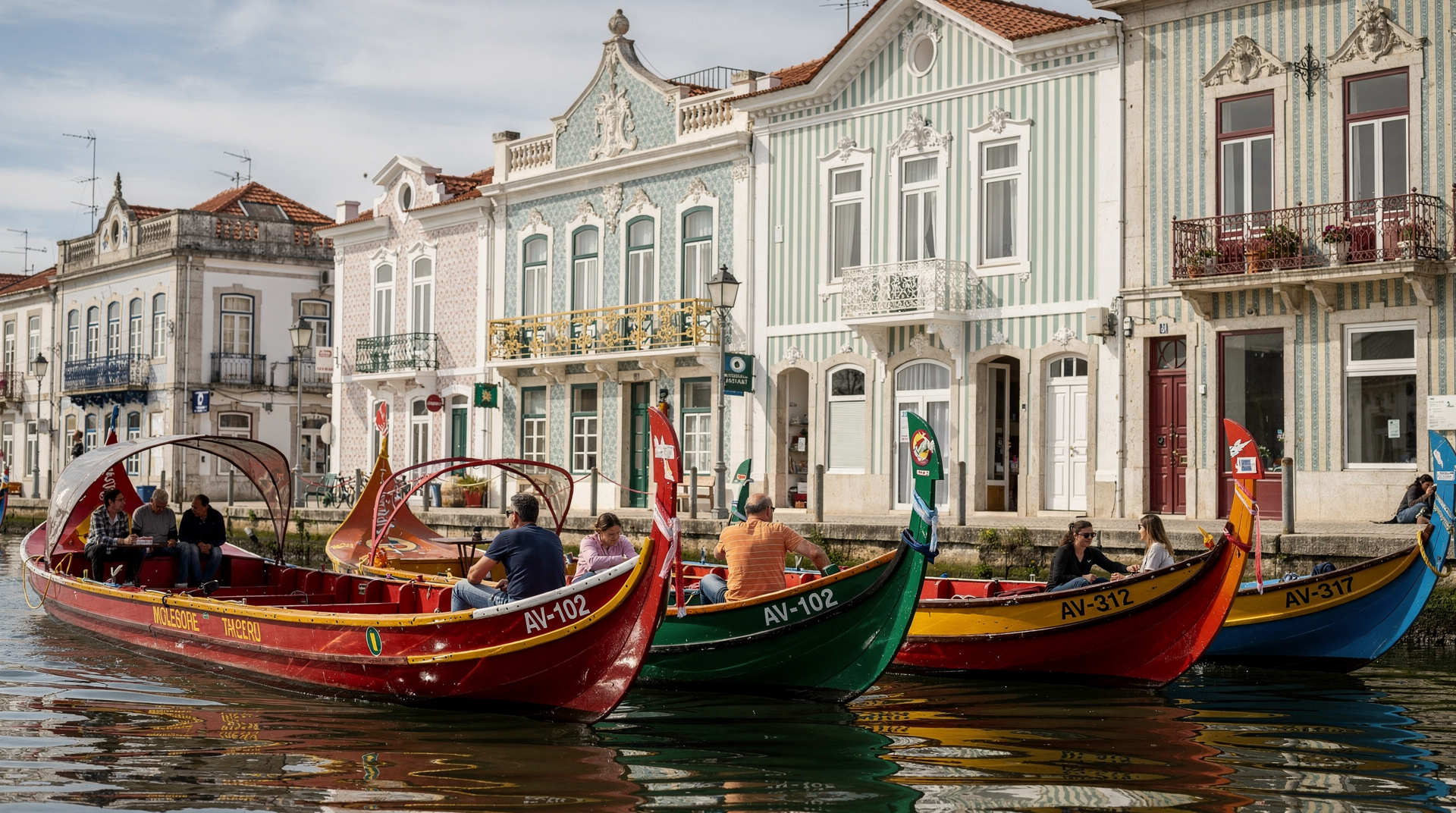
vs Aveiro (the “Portuguese Venice”): Aveiro is flatter, more urban, based around the moliceiro canal boat rides and the pastel de ovos sweets. The two are sometimes combined in a single day. Aveiro suits visitors who prefer gentler, more social tourism; the Paiva Walkways suit those who want physical activity in a natural setting.
vs Guimarães and Braga: Entirely different category — historic towns, medieval architecture, religious sites. The Paiva Walkways are nature, not culture. The choice depends on whether you have more time for outdoor activity or more interest in history.
The Paiva Walkways are the best answer to “I want to go hiking and see spectacular nature within reach of Porto.” There is nothing else within 100 km of the city that offers the same combination of accessible boardwalk infrastructure and genuinely wild gorge landscape.
Seasonality at a glance
| Season | Conditions | Crowds |
|---|---|---|
| Spring (Apr-Jun) | Lush vegetation, good river level, mild temperatures | Low to moderate |
| Summer (Jul-Aug) | Hot in exposed sections, water levels lower | Highest — arrive by 8 am |
| Autumn (Sep-Nov) | Comfortable temperatures, waterfalls more active after rain | Low to moderate |
| Winter (Dec-Mar) | Cool, occasional rain makes boards slippery, waterproof gear needed | Lowest |
The table above is a starting point rather than a guarantee — Portuguese weather in the gorge microclimate can shift quickly, and checking a short-range forecast the day before is worth the two minutes it takes, particularly if rain is possible.
Hiking with children and less-confident walkers
The Paiva Walkways are not a stroller-friendly path, but they are manageable for older children and less experienced hikers with the right expectations. The exposed sections above the river and the steep wooden staircases mean children need close supervision the entire way — this is not a trail where you can let a child range ahead. Some families treat the first 2-3 km from Espiunca as a standalone out-and-back, giving a genuine taste of the gorge scenery without the full 8 km commitment. For visitors with limited hiking experience, budgeting the full 5 hours (rather than the 3-4 hour fit-walker estimate) and taking the shuttle back from Areinho rather than attempting the return walk is the more comfortable plan.
Extending the trip — Arouca and Aveiro
Arouca itself, 12 km from the trailhead, is worth more than a lunch stop if you have the time — the Mosteiro de Arouca and the town’s low-key, unhurried character make a good counterpoint to the physical exertion of the hike. Visitors combining the geopark with the coast often add Aveiro, roughly 45 minutes further, for the moliceiro canal boats and the “Portuguese Venice” atmosphere — a workable two-stop day for anyone driving rather than relying on an organised tour.
For visitors who want more outdoor activity in the same general direction, the kayak and SUP on the Douro guide and the best beaches near Porto guide cover water-based alternatives that pair naturally with an active, nature-focused Porto trip, even though they are separate outings from the Paiva Walkways themselves.
A realistic two-stop itinerary with a car: leave Porto by 7:30 am, hike Espiunca to Areinho by early afternoon, lunch in Arouca, then continue on to Aveiro for a late-afternoon canal walk before returning to Porto by early evening. This is an ambitious but doable day for visitors comfortable with a full schedule; a more relaxed alternative is to split the geopark and the coast across two separate day trips rather than compressing both into one long day after an already demanding hike.
Booking the day trip from Porto
The guided Arouca 516 and Paiva Walkways day trip from Porto is a well-reviewed option that bundles transport, the walkways and the suspension bridge into a single organised day, useful if you’d rather not navigate the logistics of a linear trail and a shuttle independently.
Frequently asked questions — Paiva Walkways hiking guide — Passadiços do Paiva, what to expect and how to plan
What are the Paiva Walkways and why are they famous?
The Passadiços do Paiva are 8 km of wooden boardwalk suspended along the steep schist walls of the Paiva River gorge in the Arouca Geopark, about 75 km south of Porto. The walkways won the Best Tourism Project in Europe award in 2016, which brought international attention. The trail offers a genuinely spectacular riverside gorge environment — emerald green water, old-growth forest, dramatic rock formations — that is unusual in mainland Portugal.What is the difference between the Paiva Walkways and the 516 Arouca bridge?
They are two separate, nearby attractions. The Passadiços do Paiva are the 8 km riverside hiking trail. The 516 Arouca is a suspended pedestrian bridge (516 metres long, the world's longest pedestrian suspension bridge when it opened in 2021) located about 12 km from the walkways start. Many tours now combine both on the same day. They are not the same thing — the bridge is a crossing, the walkways are a hike. Do not book one expecting the other.How do I get to the Paiva Walkways from Porto?
By car: take the A1 south toward Aveiro, exit toward Arouca, then follow signs to Espiunca (the upper start point) or Areinho (the lower start point). Journey time is about 75–90 minutes. There is no practical public transport to the trailhead — buses serve Arouca town, not the walkways access points. Most visitors either rent a car or book an organised day trip from Porto.Can I do the walkways as a day trip from Porto?
Yes, comfortably. With a car, you can leave Porto at 8 am, park at the trailhead by 9:30 am, complete the hike by 1:30 pm, have lunch in Arouca, and return to Porto by 5 pm. Organised day trips from Porto typically depart at 7–8 am and return by 7–8 pm, allowing 5–6 hours at the trailhead area including the walk.Is the trail circular, or do I start and finish at the same point?
The trail is linear, not circular. It runs from Espiunca (upper entry, elevation approximately 200 m) to Areinho (lower entry, near the Paiva River confluence, elevation approximately 60 m). Most visitors prefer to start at Espiunca (upper) and walk down toward Areinho, taking advantage of the overall descent. A shuttle service operates between the two entry points — you can take the shuttle up to Espiunca and walk down, or walk up to Espiunca and shuttle back. The shuttle costs approximately 3–5 € per person. Walking the full distance in both directions is approximately 16 km and is for fit hikers only.Are there toilets and facilities on the trail?
There are toilet facilities at both the Espiunca and Areinho entry points. Along the 8 km of trail there are no toilet facilities — plan accordingly. A small café operates at the Areinho end (lower entry). No food or drinks are sold on the trail itself. Bring 1–2 litres of water per person, energy snacks, and sun protection.What time of year is best for the Paiva Walkways?
Spring (April through June) and autumn (September through November) are ideal. The vegetation is lush in spring, the river level is good, and temperatures in the gorge are manageable. Summer (July–August) can be very hot in the exposed sections and the trail is at its most crowded — arrive at 8 am to beat the queues. Winter is generally fine if you have waterproof gear — rain makes the wooden boards slippery, so wear trail shoes with good grip. The trail is closed for maintenance on rare occasions — check the Arouca Geopark website before visiting.Is the trail suitable for children?
Yes for older, confident children, with caution. The exposed sections above the river gorge and the steep wooden staircases mean young children need close supervision throughout, and the full 8 km is a long distance for younger legs. Families sometimes start at Espiunca and walk only the first 2-3 km before returning or arranging a shuttle pick-up, which gives a taste of the gorge without committing to the full distance.Do I need to book tickets for the Paiva Walkways in advance?
The trail itself does not require a ticket — entry is free and walk-up. What benefits from advance booking is parking at Espiunca in peak summer weekends (arrive by 8 am if you haven't reserved) and organised transport if you're not driving, since the better-reviewed day-trip departures from Porto can sell out in July and August.
Top experiences
Bookable activities with verified prices and instant confirmation on GetYourGuide.