Renting a car in Porto — when you need one and when you don't
Porto: From Porto Geres Park Tour Adventure with Lunch
Should I rent a car in Porto?
You do not need a car for Porto city itself — the metro, funicular and walking cover all visitor needs. A rental car becomes essential for the Douro Valley with maximum flexibility, exploring the Minho region and Gerês National Park, and reaching smaller towns off the rail network. Never drive a rental car into the ZER zone of Porto's historic centre — access restrictions and parking costs make it pointless.
When you need a car in Porto — and when you absolutely don’t
The most common mistake international visitors make with Porto and car rental is the inverse of most European cities: renting a car for the city itself and not thinking about it until they need day trip flexibility. Porto’s city centre is not served well by private cars. The historic centre ZER zone, the near-total absence of affordable parking, and the genuine quality of the metro system mean that a car in Porto’s city is an expensive nuisance, not an asset.
However, northern Portugal beyond Porto’s metro network — the Douro Valley interior, the Minho region, the Verde hills, Gerês National Park — is poorly served by public transport and benefits enormously from a rental car. The decision framework is simple: for Porto city, use the metro. For northern Portugal beyond the city, a car opens the region.
| Where a car helps | Douro Valley, Gerês, Minho interior, Ponte de Lima |
| Where to skip it | Porto historic centre (ZER zone, no parking) |
| Typical cost | 25–55 €/day compact car, plus 8–14 € tolls Porto–Pinhão return |
| Pickup | Porto airport (OPO) arrivals hall — widest choice, pre-book online |
| Non-negotiable | A non-drinking driver for any Douro winery day |
The honest case against a car in Porto’s centre
Porto’s historic centre is covered by a ZER (Zona de Emissões Reduzidas) — a low emission zone where access is restricted for vehicles not meeting emissions standards and where parking is severely limited and expensive. Most modern rental cars (Euro 6 engines, which cover virtually all vehicles from 2015 onward) are technically compliant with ZER access restrictions. The problem is not legal access; it is practical access.
Parking near São Bento, Ribeira, Aliados or Cedofeita costs 15 to 25 € per day in the few underground car parks that exist. Street parking in the historic centre is extremely limited (mostly residents’ permits) and metered zones fill quickly. Driving in Porto’s narrow historic lanes — many of which have no traffic flow plan visible to a visitor and are single-track — is stressful and time-consuming. The tram tracks, the pedestrian zones, and the frequent delivery vehicle blockages make a car slower than walking through much of the historic centre.
The metro reaches every major visitor destination in Porto directly or within a short walk. The airport connection (line E, 30 minutes, 2.50 €) eliminates the need for a car arrival. The Gaia cellars, Matosinhos beach, Foz do Douro and the coastal areas are all metro-accessible.
The verdict on a Porto city car: If your trip is entirely Porto-based, do not rent a car. You will spend money on parking, time on road logistics, and energy on a situation that the metro handles better for less.
When a car makes sense: northern Portugal beyond Porto
The Douro Valley
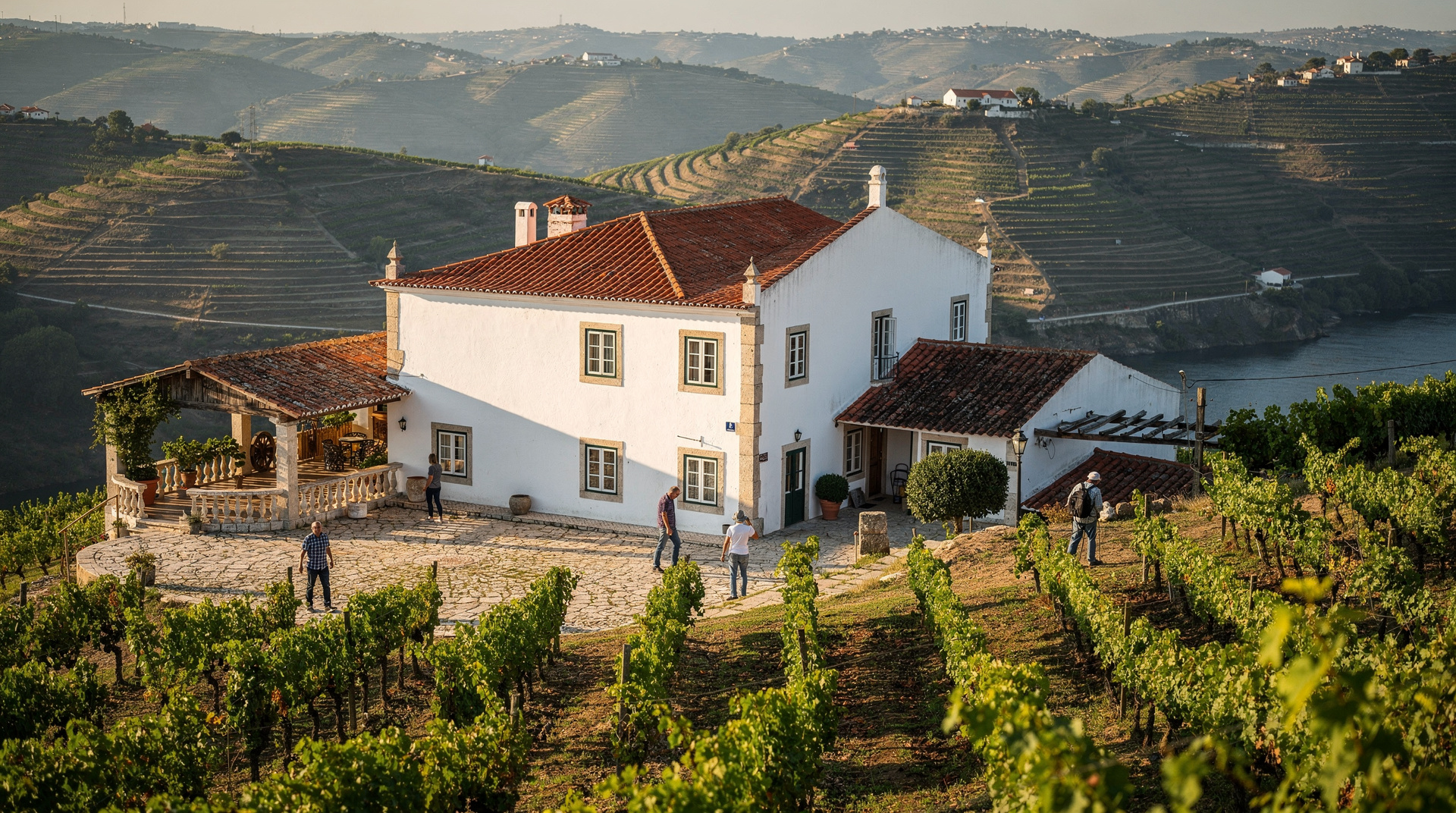
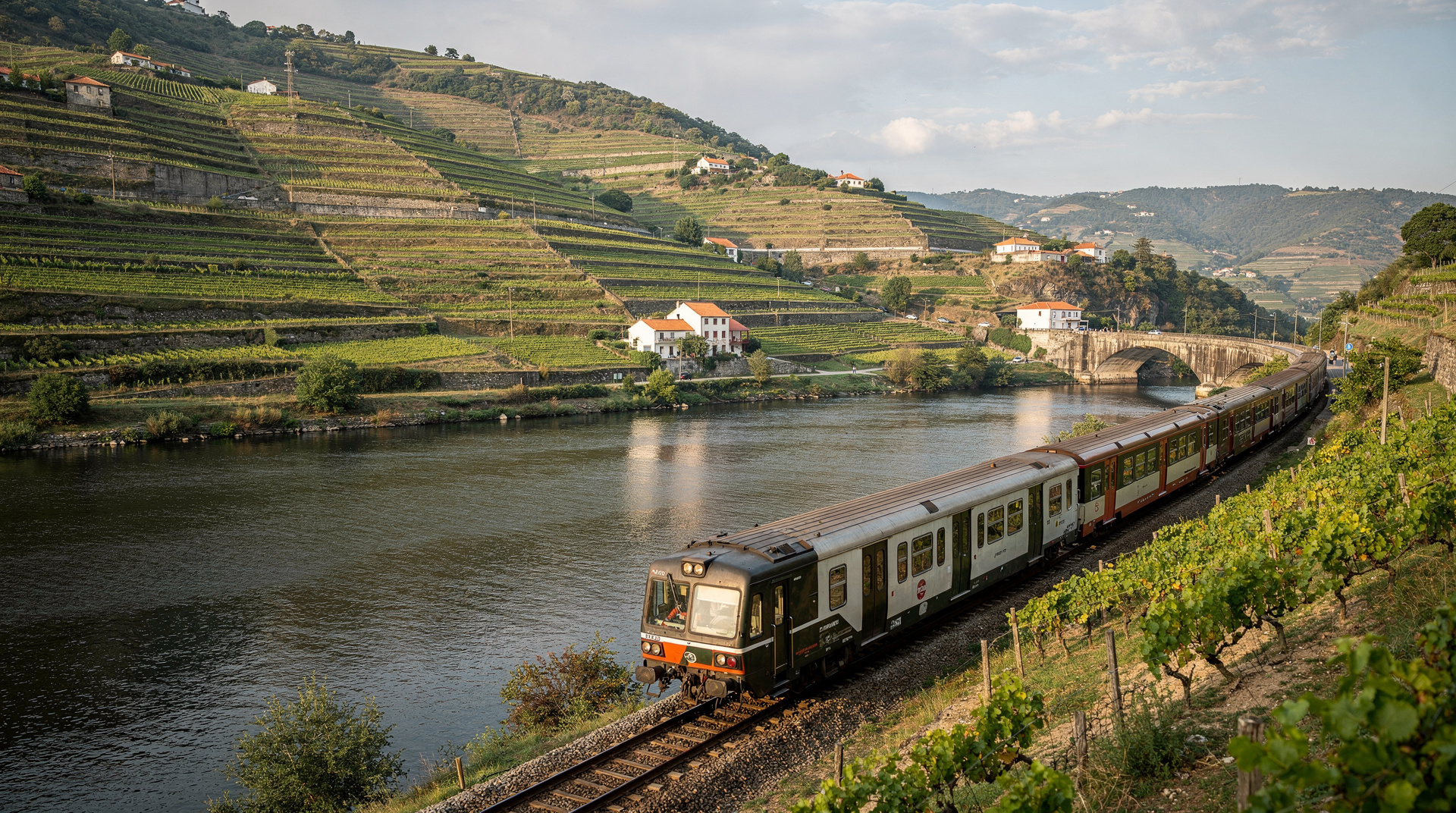
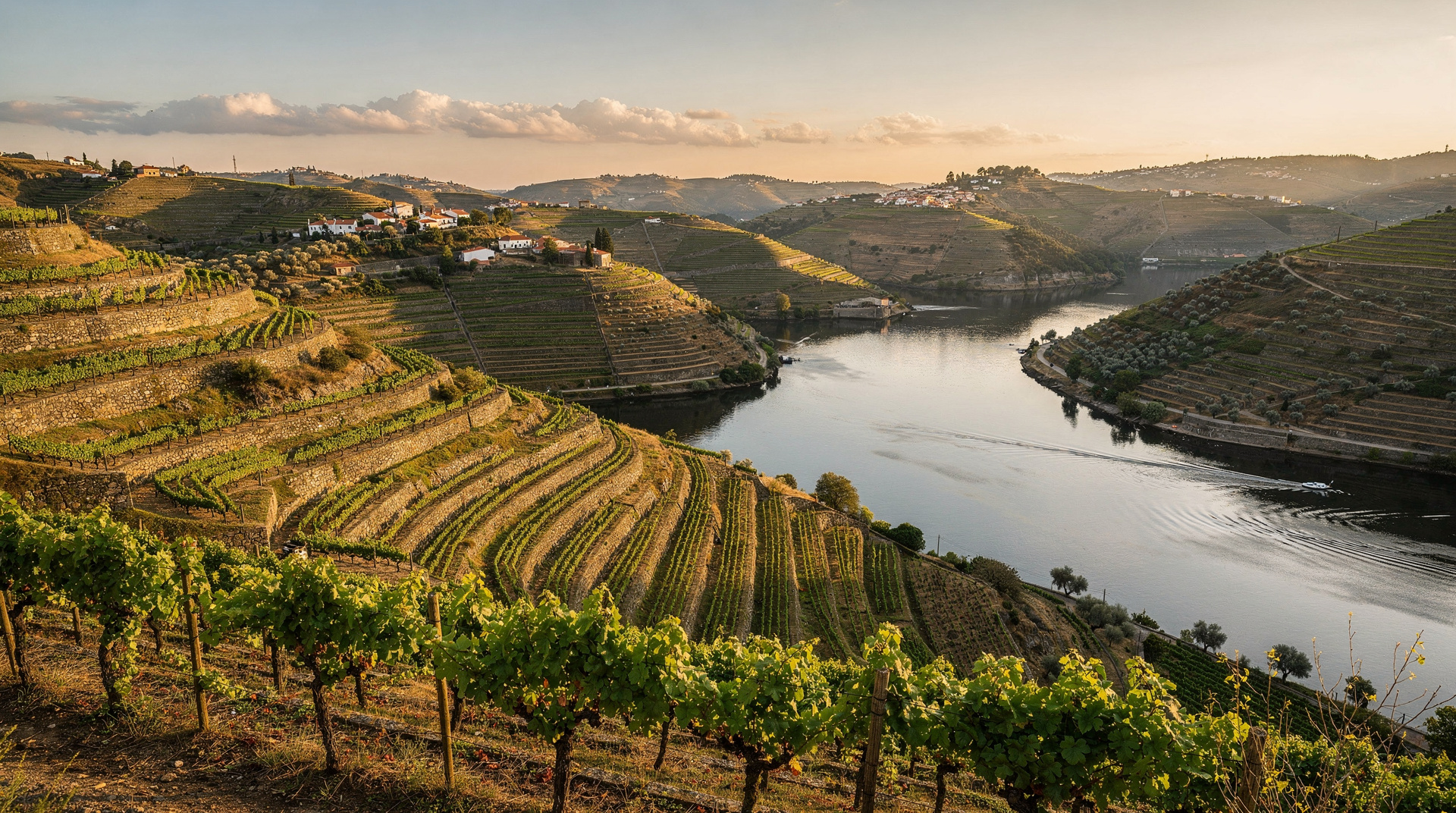
A rental car gives you the most complete access to the Douro Valley — not just the main tourist towns of Peso da Régua and Pinhão, but the smaller quintas, the viewpoints above the river, the village of São João da Pesqueira, and the secondary roads through the Côa valley and upper Douro. The EN222 river road between Régua and Pinhão is one of the most beautiful drives in Portugal, following the Douro closely through UNESCO-listed terraces.
The non-negotiable requirement for a Douro day with a car is a non-drinking driver. Quinta tastings involve 4 to 8 wines per stop, and the Portuguese drink-drive limit (0.5 g/L blood alcohol) is enforced. If your group has a designated non-drinker, the rental car is the best value way to do the Douro; if everyone drinks, take a tour.
A Douro day by car typically involves: Porto → Amarante on the A4 → Régua on the N101 → Pinhão on the EN222 → two or three quinta visits → return via the IP3 highway. Fuel cost: approximately 15 to 25 €. Toll cost: approximately 8 to 14 € return on the A4 and connecting roads. See the Via Verde section below for toll logistics.
For visitors who want the Douro but don’t have a non-drinking driver, organised tours remain the best option. Book the Douro private full-day tour — a private format that accommodates group flexibility without requiring anyone to abstain.
Gerês National Park
Peneda-Gerês is Portugal’s only national park, approximately 90 km northeast of Porto. The park has no meaningful public transport — the few bus services reach the main village of Caldas do Gerês but do not serve the hiking trailheads or the interior roads. A car is effectively essential for visiting Gerês properly.
The drive from Porto to Caldas do Gerês takes approximately 1 hour 30 minutes via the A7 motorway. The interior roads are narrow mountain lanes — a compact car is far more practical than a large vehicle. Parking at main trailheads is free or very cheap (1 to 3 € per day). Book the Gerês day trip with lunch from Porto as an alternative to driving — guided format covering the major park areas with transport included.
The Minho region (Braga, Guimarães, Viana do Castelo, Ponte de Lima)
Braga and Guimarães are accessible by train from Porto (both about 1 hour), making a car non-essential for these specific cities. However, the Minho’s smaller towns and the Lima Valley (Ponte de Lima, Arcos de Valdevez, the vinho verde country roads) are much better served by car.
The A28 motorway runs the length of the Minho coast from Porto toward Viana do Castelo (approximately 70 km, about 1 hour). The interior Lima Valley roads are scenic and narrow. If your trip involves specific Minho destinations beyond the main train-served cities, a car adds significant value.
Aveiro and the coast south of Porto
Aveiro is accessible by train (50 minutes from Campanhã, 4 to 6 €), making a car non-essential for the city itself. The Costa Nova painted houses south of Aveiro are 10 km from the city centre by bus or taxi. The beaches and lagoon area south of Aveiro (Praia da Tocha, Figueira da Foz) are more practical with a car.
Renting a car at Porto airport: the logistics
Where to pick up
All major international rental companies (Europcar, Hertz, Avis, Budget, Sixt, Enterprise, Goldcar) have desks in the arrivals hall at Porto airport (OPO). Pickup is efficient during standard arrival hours; weekend afternoons in summer can have queues. Pre-booking online with a confirmed reservation is strongly recommended — availability for walk-up bookings can be limited, and prices are higher.
Pre-booking tips:
- Compare prices across multiple aggregators (AutoEurope, Rentalcars, company websites directly)
- Read the insurance inclusions carefully — basic CDW (Collision Damage Waiver) is often included in the headline price but leaves you with a significant excess; TP (Theft Protection) and excess waiver may be additional
- Check whether Via Verde is included or whether you will be charged a “toll administration fee” per toll transaction (some companies charge 3 to 8 € per toll for manual processing, which on an A4 motorway round trip can add 30 to 50 € to your total)
- Check the fuel policy — full-to-full is the most transparent option
Prices
For a compact car (VW Golf class or similar): 25 to 40 € per day in low season, 35 to 55 € per day in peak summer (July and August). Budget and economy car classes run 20 to 30 € per day in off-peak periods.
A week’s car hire in October or November can be found for 150 to 220 € all-in with a pre-booking. The same week in August runs 250 to 380 € for the same vehicle. Book early for summer months.
Via Verde and Portuguese tolls
Portugal uses an all-electronic toll system on most of its motorways. The two methods for rental car drivers:
Via Verde transponder: The standard method for Portuguese drivers. A transponder in the car communicates with the toll gateway and deducts the charge automatically. If your rental car comes with a Via Verde device (not all do — confirm at pickup), you use the dedicated Via Verde lanes (marked with a green V). The toll is charged to the card you used to book the rental.
Toll administration via rental company: If the car has no Via Verde device, the rental company registers your plate and you drive through the electronic toll lanes. The company later charges you the toll amount plus an administration fee per transaction — these fees vary between 2 and 8 € per toll, and on a route with multiple tolls (Porto to Pinhão and back involves 4 to 6 toll points) this can add 20 to 40 € on top of the actual toll costs.
EasyToll for foreign credit cards: Portugal also operates the EasyToll system for foreign visitors. You register your non-Portuguese credit card at EasyToll.pt and your vehicle plate. When you pass through a toll, the charge is applied to your card without the transponder. This works, but must be set up before you begin driving.
Toll costs for common routes from Porto:
- Porto to Pinhão (via A4): approximately 10 to 14 € one way in tolls
- Porto to Braga (via A3): approximately 3 to 5 € one way
- Porto to Guimarães (via A3/A11): approximately 4 to 6 € one way
Parking near Porto’s historic centre
If you are arriving in Porto with a rental car and need to park before visiting the city, the best strategy is park-and-ride:
Campanhã park-and-ride: The Campanhã station (Porto’s national rail station, also on metro lines A, B, C, E) has a large parking area near the station. Parking is inexpensive (approximately 2 to 4 € per day) and the metro connection to Aliados (central Porto) takes about 8 minutes. This is the most practical option for day visits to Porto with a car.
Freixo park-and-ride: Near the A1 motorway junction south of Porto, with bus connections to the centre. Useful for arrivals from the Lisbon direction.
Underground city car parks: Parque do Bolhão, Parque Riviera and Parque das Cardosas are central underground car parks within walking distance of main attractions. These cost 15 to 25 € per day — functional but expensive for daily use.
For multi-day stays, a hotel with included parking (some Boavista and Foz hotels offer this) is more economical than daily car park fees. Ask specifically about parking inclusion before booking — many Porto central hotels do not have parking.
Day trip alternative: guided tour to Braga and Guimarães
If Braga and Guimarães are on your list but you don’t want to manage the driving and parking, organised day trips from Porto handle all transport — and the price (typically 35 to 55 € per person) is often competitive with the rental car cost for one person.
Car vs train vs tour — the honest comparison
| Destination | Best by car | Best by train | Best by tour |
|---|---|---|---|
| Porto city centre | Never — ZER zone, no parking | N/A (walk/metro) | N/A |
| Douro Valley | Yes, with a non-drinking driver | Scenic but limited quinta access | Best if everyone drinks wine |
| Gerês | Essential — no useful public transport | Not practical | Good alternative to driving |
| Braga / Guimarães | Optional — trains are easy | Yes, ~1 hour, frequent | Good for a packaged day |
| Ponte de Lima and the Lima Valley | Best option | Poor connections | Limited availability |
A car earns its cost the moment your plan includes more than one of the Douro, Gerês or Minho interior destinations in the same trip — the northern Portugal 7-day itinerary is a good example of a route where a rental car saves real time versus stitching together trains and tours.
The getting around Porto guide covers the complete city transport network, and the Douro Valley transport guide provides the full comparison of all Douro options — tour, train and rental car — in detail. For general trip logistics beyond transport, see the Porto travel tips guide.
Frequently asked questions — Renting a car in Porto — when you need one and when you don't
Do I need a car to visit Porto?
No. Porto's historic centre, port cellars in Gaia, the coastal areas, and most day trips (Braga, Guimarães, Aveiro by train) are accessible without a car. The metro, buses, funicular and walking cover all visitor needs within Porto. A car becomes useful or necessary for the Douro Valley (if you want more flexibility than a tour provides), for Gerês National Park, for the Minho interior, and for exploring smaller villages not on the rail network.What is the ZER zone in Porto?
The ZER (Zona de Emissões Reduzidas — Low Emission Zone) covers Porto's historic centre and surrounding areas. It restricts access for vehicles that do not meet certain emissions standards. Most older diesel vehicles (Euro 4 and below) face restrictions. Modern rental cars (typically Euro 6) are generally compliant, but if you drive into the ZER zone, you face very limited parking options and expensive parking rates. The practical advice is to park outside the ZER zone and use the metro or walk.How much does parking cost in Porto?
Underground parking near the historic centre costs 2 to 4 € per hour, or 15 to 25 € per day maximum. Street parking in the limited metered zones near the centre runs 1.50 to 2 € per hour. If you drive into Porto with a rental car, plan to park at a park-and-ride facility (Campanhã is one of the most accessible) and use the metro for the final journey into the historic centre.What is Via Verde in Portugal?
Via Verde is Portugal's electronic motorway toll system. Most Portuguese drivers use a transponder (the Via Verde device) that automatically deducts tolls as they pass through gateways. Rental cars in Portugal may or may not come with a Via Verde transponder included — this must be checked at pickup. Without a transponder, you must use the manual payment lanes at toll booths (where they still exist) or use the Easytoll system for foreign credit cards. Ask at the rental desk about toll arrangements before leaving the lot.Where is the cheapest place to rent a car in Porto?
Car rental at Porto airport (OPO) has the widest selection of rental companies and competitive pricing due to direct competition. Major international operators (Europcar, Hertz, Avis, Budget, Sixt) have desks in the arrivals hall at OPO. Prices for a compact car range from 25 to 50 € per day depending on season, company and what is included. Pre-booking online typically saves 20 to 30 percent versus walk-up rates. Check whether basic Collision Damage Waiver (CDW) insurance is included.Can I drive to the Douro Valley with a rental car?
Yes, and a rental car is one of the best ways to explore the Douro Valley with full flexibility. The standard route from Porto takes the A4 motorway east to Amarante, then the N101 road down to Peso da Régua and the EN222 river road to Pinhão. The A4 and some sections use the Via Verde toll system. A non-drinking driver is essential for a Douro winery visit day. Total drive from Porto to Pinhão is approximately 2 hours.Is an automatic or manual car easier to rent in Porto?
Manual transmission is still the default fleet in Portugal, so automatics are available but cost more (typically 10 to 20 € extra per day) and sell out faster in peak season. If you specifically need an automatic, book several weeks ahead and confirm the transmission in writing — some aggregators show automatic availability that isn't guaranteed until pickup.
Top experiences
Bookable activities with verified prices and instant confirmation on GetYourGuide.