Cálem cellar experience — what to expect from the fado tasting visit
Porto: Fado in Porto Calem Wine Porto Cellars Visit
Is the Cálem cellar and fado experience worth it?
Yes, especially for first-time visitors to Porto. Combining a cellar tour, port tasting and fado show at around €20 is genuine value — no other major Gaia lodge includes live music in the standard package. The fado is professionally performed and the barrel cellar backdrop adds atmosphere. For wine depth, visit Taylor's or Graham's additionally; Cálem alone is an excellent introduction.
Why Cálem is Gaia’s most-visited cellar
Cálem sits at Avenida de Diogo Leite 344 on the Vila Nova de Gaia waterfront, directly facing the Douro and Porto’s Ribeira district across the river. It is the most accessible of Gaia’s major lodges — at waterfront level, close to the lower deck of Ponte Dom Luís I, and easy to reach from both sides of the river without any uphill walking. This location, combined with the all-in-one fado, cellar tour and tasting package, explains why Cálem processes more visitors per year than any other lodge in Gaia.
The accessibility and the format are not marketing accidents. Cálem was founded in 1859 by António Alves de Cálem as a family-run port house. It was acquired by the Sogevinus group in 2006 (which also owns Kopke, Burmester and Barros), and the current visitor experience reflects a deliberate strategy to offer the most accessible introduction to port wine culture in Gaia.
For a first-time visitor who has not previously tasted port wine and does not know what to expect from a cellar visit, Cálem’s formula works well: the cellar tour explains the basics, the fado show provides cultural context, and the tasting introduces the wines in an approachable way.
| Where | Avenida de Diogo Leite 344, Vila Nova de Gaia (waterfront) |
| Cost | Around €10-15 (museum only) to €25-30 (chocolate and cheese) |
| Time needed | 90 minutes for the standard fado and tasting package |
| Getting there | 3-5 minutes on foot from Ribeira across the lower bridge deck |
| Best time | Weekday late morning or early afternoon for smaller groups |
Cálem’s visit formats compared
| Format | Includes | Approx. price | Best for |
|---|---|---|---|
| Fado and tasting (standard) | Cellar tour, 30-min fado show, 2 wines | ~€19-22 | First-time visitors wanting music and wine together |
| Mundo Cálem interactive museum | Cellar tour, digital displays, 2 wines, no fado | ~€10-15 | Visitors who’ve already seen fado elsewhere |
| Chocolate and cheese pairing | Cellar tour, 3-4 wines paired with cheese/chocolate | ~€25-30 | A more wine-focused visit than the fado package |
What the experience includes
The standard Cálem visit with fado covers three elements:
1. The cellar tour (approximately 30 minutes)
The tour walks through Cálem’s barrel warehouse — the Mundo Cálem experience — explaining port wine production from Douro Valley grape to Gaia aging. The tour is structured for visitors with no prior port wine knowledge: the guide covers fortification, the difference between ruby and tawny, and how the Gaia microclimate (cooler and more humid than the Douro Valley) benefits the aging process.
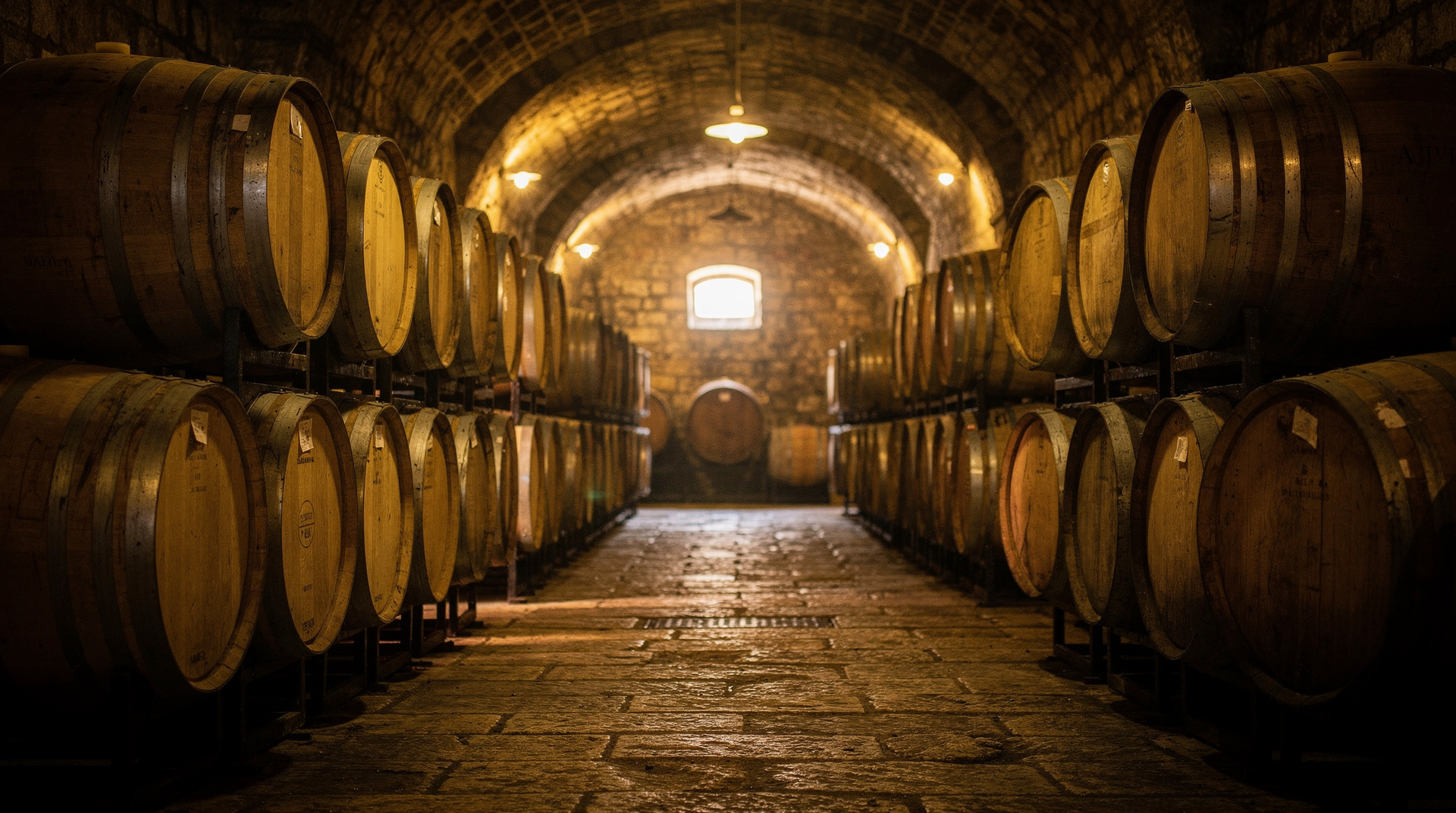
The cellar itself is one of the larger barrel warehouses in Gaia — long rows of lodging pipes, the characteristic smell of oak and port, the low light of a working cellar. The production scale helps visitors understand why port aging in Gaia has persisted as the industry standard since the 17th century.
2. The fado show (approximately 30 minutes)
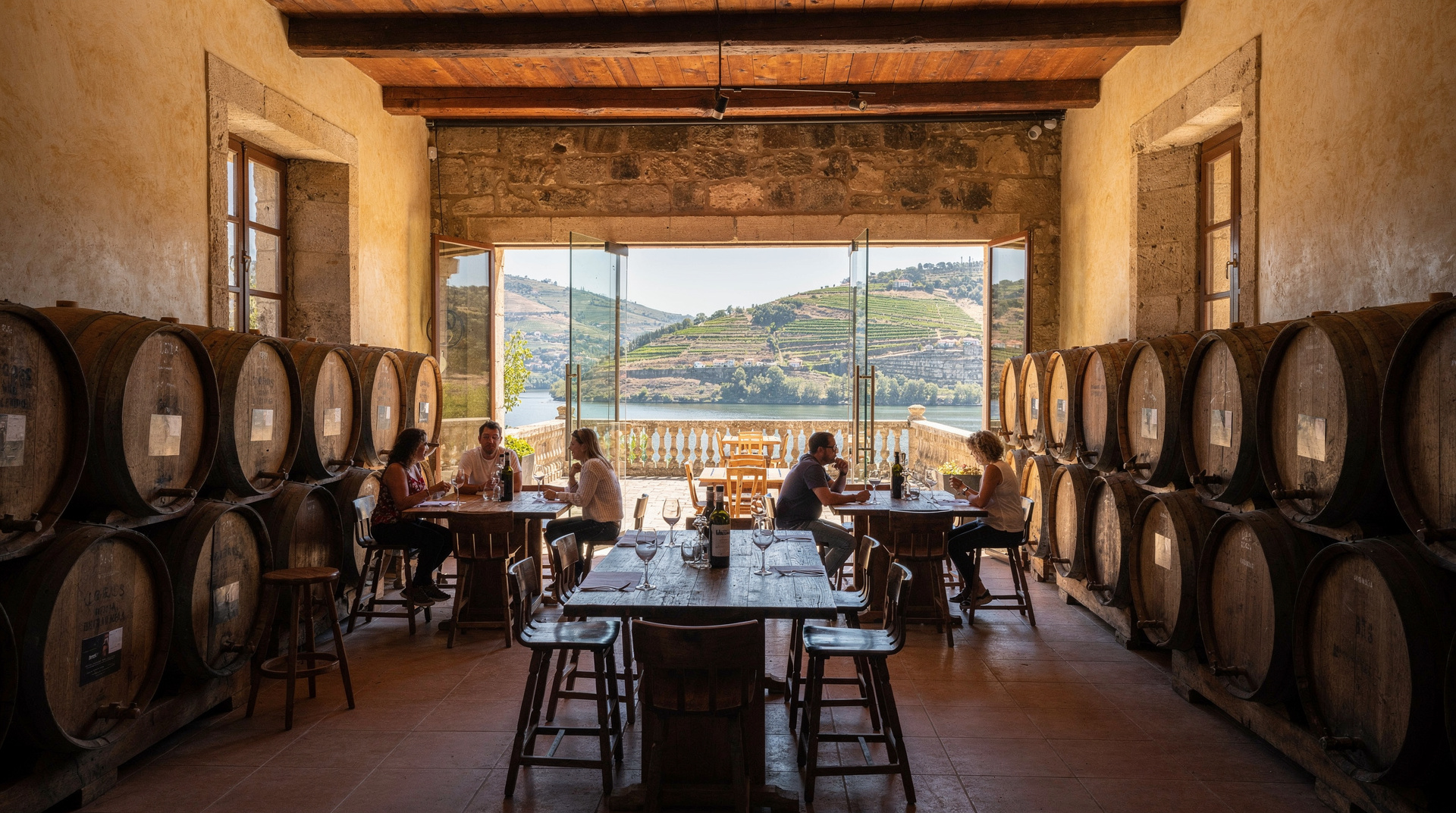
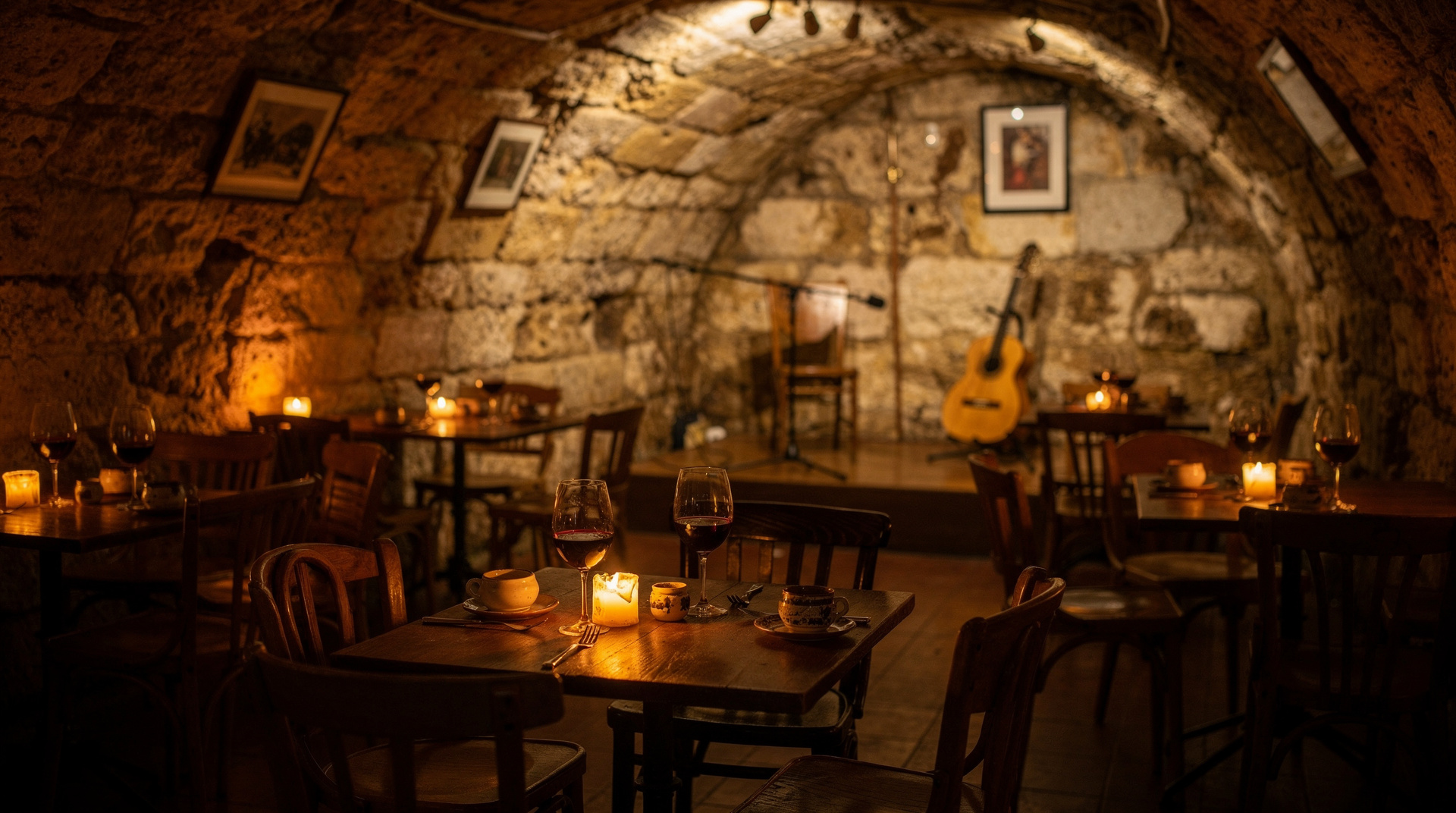
The fado performance takes place in the main barrel hall, with the rows of oak casks as backdrop. This is an unconventional concert setting that works better than it sounds: the acoustic qualities of the barrel hall — stone walls, high ceiling, the absorbent mass of the casks — produce decent natural reverberation without echo.
A typical show includes two or three fados performed by a singer (fadista) accompanied by a guitarra portuguesa (the twelve-string Portuguese guitar with its distinctive pear shape and metallic timbre) and a viola baixo (standard acoustic bass guitar). The musicians are professionally trained; the performances are reliable and emotionally engaging, though the format is structured for tourists rather than the spontaneous late-night quality of a Lisbon Alfama casa de fado.
The repertoire draws on classic fado standards — Amália Rodrigues’s repertoire features prominently — and sometimes newer compositions. If you have no prior exposure to fado music, this is a good introduction to the form. If you have heard fado in a more traditional setting, the Cálem performance will feel appropriately professional but not revelatory.
3. The port wine tasting (approximately 15–20 minutes)
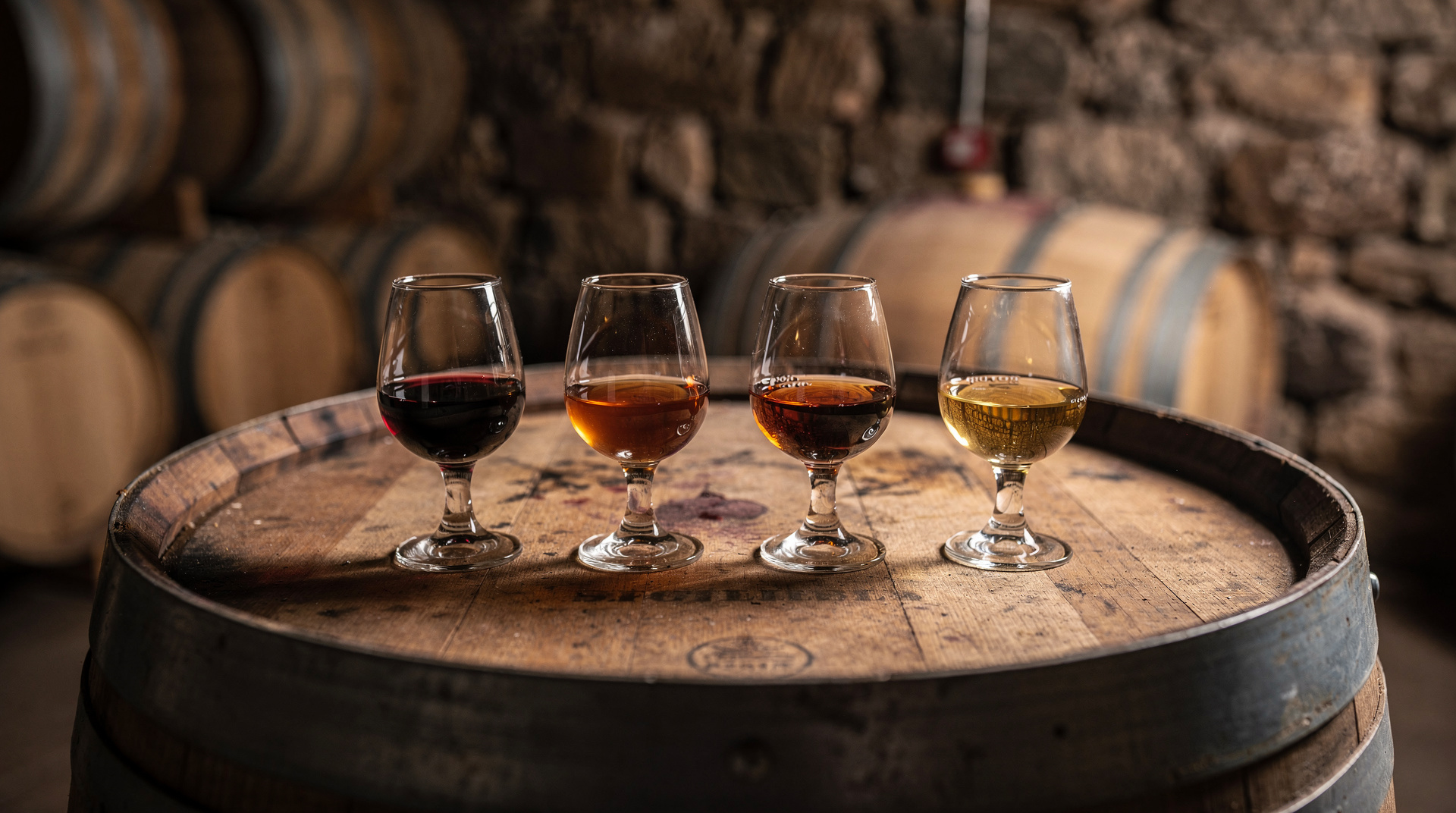
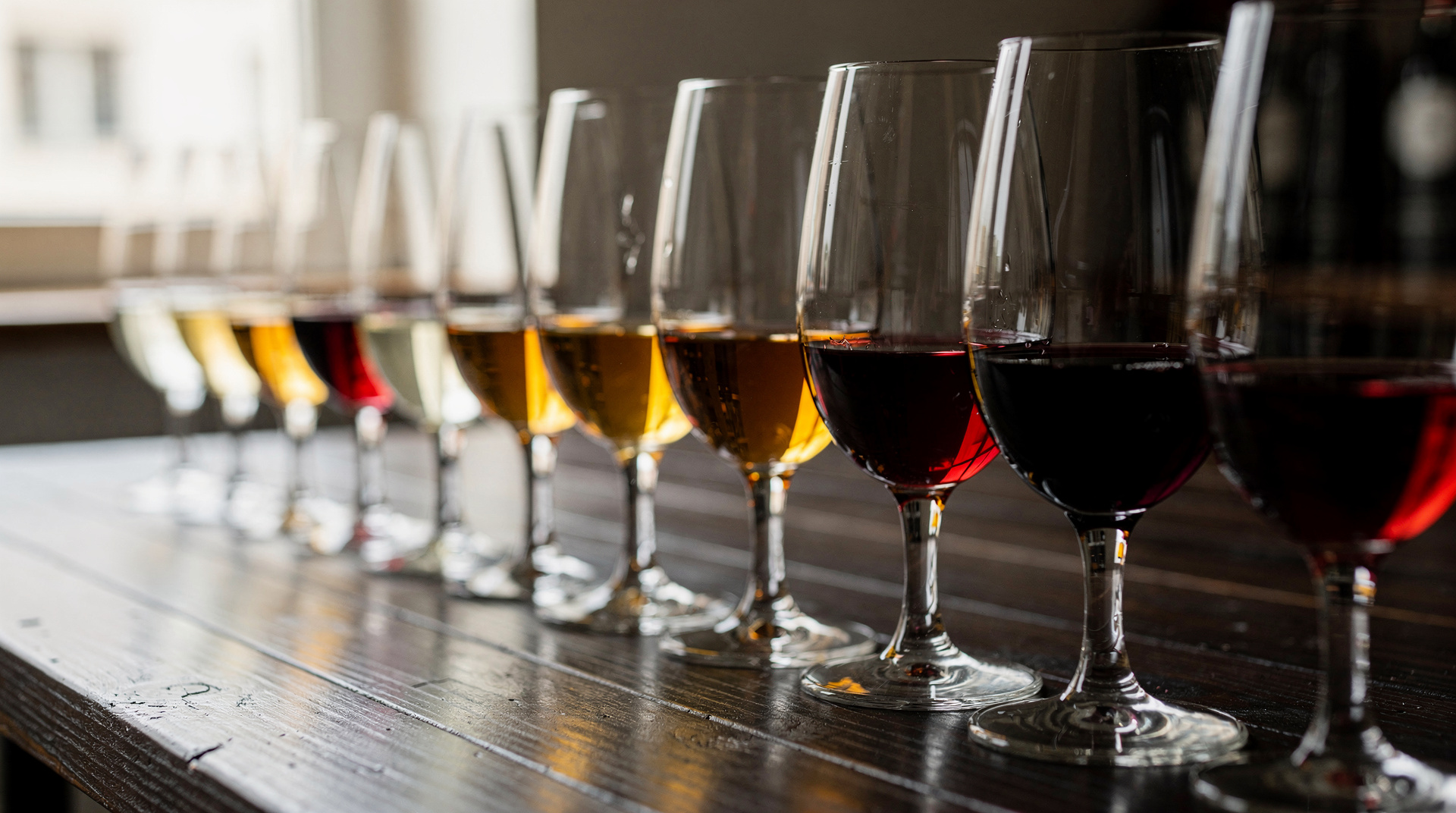
Following the show, guests move to the tasting room for two wines. The standard pour typically includes a ruby or tawny and sometimes a white port. Cálem’s tawnies — particularly the 10-year and 20-year — are well-made expressions of the style, consistent with the Sogevinus group’s investment in quality at the Cálem brand.
The tasting itself is efficient rather than in-depth: guides cover the basic flavour notes, the difference between the styles, and the aging process. This is not the place to ask detailed technical questions about wine production — the format is structured for a general audience moving through at pace.
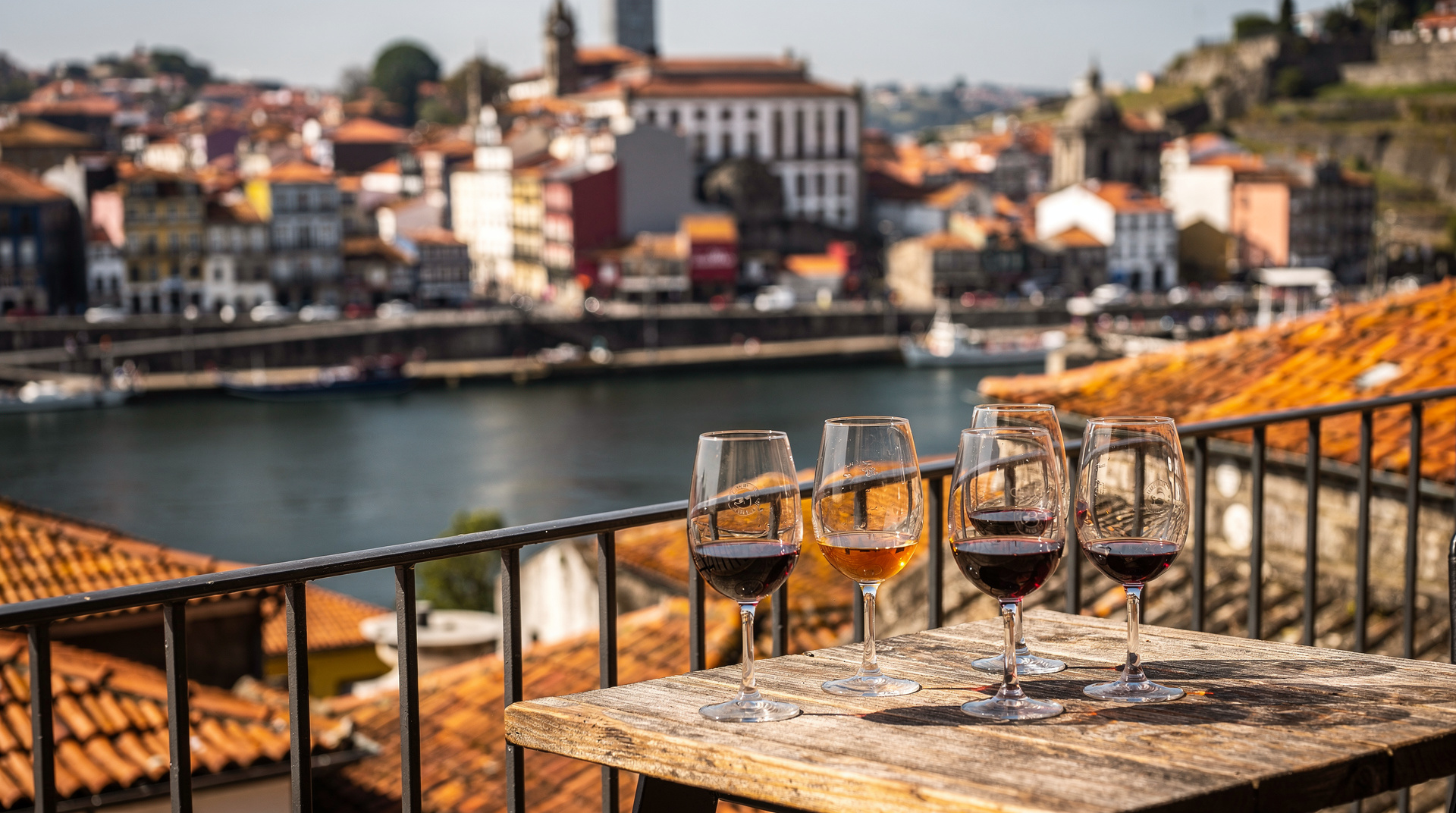
Additional wines are available for purchase at the tasting bar after the structured session ends. The bar also serves porto tónico (white port with tonic, ice and lemon) which is worth trying here if you haven’t encountered it — it’s a distinctly Portuguese aperitif that rarely appears on menus outside the country, and the version at Cálem’s riverside bar, with a view across to Ribeira, is a pleasant way to close out the visit before moving on.
Book the Cálem fado and port tasting on GetYourGuideAlternative formats at Cálem
Beyond the standard fado and tasting package, Cálem offers several other formats:
Interactive museum visit (Mundo Cálem without fado) — approximately €10–15
The cellar tour with tasting minus the fado show. This is the option to choose if you have already seen fado elsewhere and want a focused cellar-and-wine experience at a lower price. The interactive museum elements — digital displays explaining port production, the history of the Douro trade — are above average for Gaia in terms of production quality.
Book the Cálem interactive museum visit on GetYourGuideChocolate and cheese pairing — approximately €25–30
Cálem’s response to the Graham’s chocolate pairing format: a structured tasting with artisanal Portuguese cheese and chocolate matched to three or four wines. This format is less well-known than the fado package but actually gives a more wine-focused experience. Worth considering if you have already visited Graham’s and want to compare the pairing format.
Book the Cálem chocolate and cheese tasting on GetYourGuideEvening visit with fado
Some Cálem visit slots are in the early evening, which provides a different atmosphere from the daytime visits. The barrel hall in lower light with the fado performance has a more evocative quality. Check slot availability when booking — evening slots are popular and fill faster than afternoon visits.
The waterfront location — advantages and limitations
Cálem’s position on the Gaia waterfront is its primary practical advantage over Taylor’s and Graham’s on the hillside. There is no uphill walking, no cable car needed, and the lodge is accessible from multiple directions:
- Direct from Porto via the lower deck of Ponte Dom Luís I: 3–5 minutes on foot
- From the Gaia cable car lower station: 5 minutes on foot along the waterfront
- From Praça da Liberdade by Uber or taxi: €8–12, drop-off directly at the lodge
- On foot from the Ribeira riverside after crossing at street level: 10 minutes
The limitation of the waterfront position is the view. Cálem looks out at the Douro and the Porto Ribeira district from river level — a pleasant enough outlook but not the dramatic panorama available from Taylor’s elevated terrace. If the view is a significant part of what you want from a Gaia visit, Cálem’s location is a limitation rather than an advantage.
Honest comparison with other fado options in Gaia
Cálem is not the only Gaia lodge offering fado as part of the cellar experience. The best cellar with fado show guide covers all the options in detail, but here is the short version:
Fonseca fado and dinner: More intimate than Cálem, with a proper dinner included rather than a tasting only. Fewer performances per day, requires advance booking. Better for visitors who want fado as the centrepiece of the evening rather than one component of an afternoon activity.
Porto walking tour with fado: Some walking tour formats include a fado performance at a Gaia lodge as part of the itinerary without requiring a separate cellar visit booking. The walking tour with fado show combines city history with the music and wine component.
Cálem’s advantage over these alternatives is simple: it is the most accessible format at the most accessible price point. If you want fado and port wine in Gaia in a 90-minute package with no additional planning, Cálem is the right choice.
How Cálem fits into a fuller Gaia visit
Cálem works best as one stop in a Gaia day rather than the entire visit, particularly if port wine is a genuine interest and not just an afternoon’s entertainment. The best port wine cellars in Gaia guide ranks all the major lodges honestly, and pairing Cálem’s accessible waterfront format with an uphill visit to a wine-serious lodge like Sandeman or Cockburn’s — see the Sandeman and Cockburn’s cellars guide — gives you both the cultural introduction and the deeper tasting in a single day. If the styles and terminology are unfamiliar going in, the port wine tasting guide for beginners and the types of port wine explained guide are worth a few minutes before you go — you’ll get noticeably more out of the guided tasting with that context already in place.
What’s around Cálem on the Gaia waterfront
The Gaia waterfront (Cais de Gaia) stretches for several hundred metres along the river. After a Cálem visit, several options within walking distance:
The cable car (Teleférico de Gaia): The lower station is 8 minutes on foot west along the waterfront. A return ticket costs approximately €6. This takes you up to Jardim do Morro for views over the river and access to the upper Gaia hillside lodges if you are continuing to Taylor’s or Graham’s.
Waterfront restaurants: The Cais de Gaia has numerous restaurants with river terraces. Most are in the €20–35 per person range and quality varies. Restaurants one or two streets back from the waterfront — on Rua do Agro or Rua de Serpa Pinto — tend to offer better value and less tourist markup.
Ponte Dom Luís I upper and lower decks: Both are walking distance. The lower deck returns you directly to the Ribeira district; the upper deck connects to Jardim do Morro and the metro (line D) on the Gaia side.
Ramos Pinto lodge: About 100 metres east along the waterfront from Cálem. The Art Nouveau tiled exterior is one of the more architecturally interesting in Gaia. Worth walking past even if you don’t visit.
Cálem for solo travellers and couples
Cálem’s group-format tour suits solo travellers well — there’s no awkwardness in joining a scheduled slot alone, and the fado show is a shared, seated experience rather than something that highlights whether you’re travelling with company. Couples tend to appreciate the porto tónico at the tasting bar afterward as a relaxed way to extend the visit beyond the structured 90 minutes, sitting with a drink and watching the river traffic rather than moving straight on to the next stop. Groups larger than four or five should check whether their booking guarantees seats together for the fado performance, since the barrel hall seating is arranged in rows rather than at individual tables.
For the visitor short on time
If you have only one afternoon in Gaia and it is your first visit to Porto, Cálem is the most efficient single-stop option. The 90-minute package covers the essential elements of port wine culture (production, aging, tasting) alongside an introduction to fado within a single comfortable visit.
The honest caveat: Cálem is not the deepest or most wine-serious experience in Gaia. Taylor’s and Graham’s offer better wine quality at their premium tiers. If port wine is a genuine interest rather than a cultural checkbox, visit Cálem for the fado and then continue to Taylor’s or Graham’s for the serious tasting. The comparison guide works through the decision framework in more detail.
Practical booking and timing advice
Busiest times: Weekend mid-morning and early afternoon, July and August. At these times, book at least 48 hours ahead.
Best timing: Weekday visits in the late morning (around 11 am) or early afternoon (2–3 pm) tend to have more attentive guides and slightly smaller groups. Evening slots have the best atmosphere for the fado component.
Photography inside the cellar: Flash photography is generally discouraged during the fado performance out of respect for the musicians and other guests, but photos of the barrel hall and cellar itself are welcome before and after the show. The rows of oak casks under low lighting photograph well with a wider aperture; a phone camera in night or low-light mode handles the setting reasonably well without a flash.
Combination with WOW: If you are visiting the WOW district (World of Wine) on the Gaia hillside, plan it before Cálem rather than after — WOW’s museums take 2–3 hours and it is easier to descend from the hillside to the waterfront for Cálem than to reverse the direction. The WOW district guide covers the museum complex in detail.
Frequently asked questions about the Cálem cellar experience
Is the Cálem fado show accessible to visitors who have never heard fado?
It is probably the best introduction to fado for someone with no prior exposure. The pre-show context (the barrel cellar, the setting, the guide’s brief introduction to the music) gives enough framing that the performance makes immediate sense emotionally even without understanding Portuguese lyrics. Many visitors who had not encountered fado before report that the Cálem show was the most unexpected cultural experience of their Porto trip.
How does Cálem’s tawny compare to Taylor’s or Graham’s?
Cálem’s tawny range is competently made and represents good value for money. The 10-year and 20-year tawnies are pleasant and approachable. They do not match the complexity or depth of Taylor’s 20-year or Graham’s equivalent — the Sogevinus group produces at higher volume and with a different house style than the Fladgate or Symington estates. For a first tasting, the difference is not significant. For a wine enthusiast comparing the top expressions in Gaia, the gap is noticeable.
What is the Mundo Cálem interactive museum?
Mundo Cálem is Cálem’s name for the experiential cellar visit component — a combination of physical tour, digital displays, and interpretive installations that explain port wine production in engaging, non-technical terms. It is more developed than a simple walk-through barrel cellar and is well-suited for visitors with no prior wine knowledge. The museum element is included in all Cálem visit formats.
Can I buy Cálem wines outside Portugal?
Yes — Cálem’s wines are distributed internationally through the Sogevinus group’s distribution network. The lodge shop stocks the full range including the 10-year and 20-year tawnies, colheitas (Kopke colheitas in particular are excellent), and the standard ruby and LBV expressions. Prices at the lodge are slightly lower than at international wine retailers.
Frequently asked questions — Cálem cellar experience — what to expect from the fado tasting visit
What time does the fado show at Cálem take place?
Fado shows at Cálem run several times daily — typically every 60–90 minutes from mid-morning through to the late afternoon. Each performance lasts approximately 30 minutes. The schedule is posted on the Cálem website and on the GYG booking page. Book a specific time slot that suits your itinerary rather than arriving and waiting, especially in peak season.Is the Cálem fado show suitable for children?
Yes — fado music is appropriate for all ages and the barrel cellar setting is interesting for older children. The visit runs 60–90 minutes total and is manageable for children over 6. The wine tasting element is adults only, but children can participate in the cellar tour and watch the fado performance. Cálem is one of the more family-accessible major cellar visits in Gaia.How does the Cálem fado compare to a dedicated fado house?
They are different experiences and should be judged by different standards. A dedicated fado house — a casa de fado with a late-night intimate performance — is a more artistically serious experience. Cálem's ticketed cellar show is a professional tourist performance in an unusual setting. The performers are trained musicians; the atmosphere in the barrel hall is genuinely evocative. It is an authentic introduction to fado, not a substitute for the full casa de fado experience.Is it necessary to book Cálem in advance?
In July and August, yes — popular time slots (particularly late morning and mid-afternoon) sell out a day or two ahead on weekends. From October through March you can typically walk in on weekdays. Booking online is always faster than queueing at the entrance, and GYG shows real-time slot availability so you can check before committing.What port wine does Cálem serve in the tasting?
The standard package includes two wines, typically a ruby or LBV and a tawny. Cálem is known primarily for its tawny range — the 10-year and 20-year tawnies are reliable and well-priced. Some formats include a white port as well. Additional wines can be purchased at the tasting bar after the guided portion ends.Can I visit Cálem without the fado show?
Yes — Cálem offers cellar visit and tasting formats without the fado show at a lower price. However, the fado inclusion is what distinguishes Cálem from other Gaia lodges at a similar price point. Visiting without the fado means you are paying a similar price for a less distinctive experience than at Taylor's or Cockburn's.
Top experiences
Bookable activities with verified prices and instant confirmation on GetYourGuide.