Churches of Porto — the essential guide to the finest religious buildings
Porto: Porto Historical Center Walking Tour
Which churches in Porto are worth paying to enter?
Igreja de São Francisco (€6) for the most extravagant gilded Baroque interior in Portugal — unmissable. Sé Catedral cloister (€3) for the finest azulejo panels in Porto. Igreja dos Clérigos (included in tower ticket, ~€8) for Nasoni's Baroque masterpiece. The others — Carmo, Almas, Santa Clara — are rewarding from the exterior and free inside.
Porto’s churches: more than decoration
Religious architecture in Porto is not a specialist interest. The churches of the historic centre function as navigation landmarks, as containers of the finest decorative art in the city, and as the main spatial punctuation points in streets otherwise given to commerce and residential buildings. You do not need to have an interest in theology or ecclesiastical history to find them worth visiting.
What follows is an honest ranking of the main churches in Porto, with specific advice on what each offers, what it costs, how long to spend, and whether the interior or exterior is the main draw.
| Where | Historic centre — Ribeira, Baixa and Cedofeita, all within walking distance |
| Cost | Free to around €6 per church; €3 for the Sé cloister |
| Time needed | Half a day for the top three; a full day for all seven covered here |
| Best time | Weekday mornings, before 10:30 am, avoid Sunday mass hours at the Sé |
| Getting there | On foot from São Bento station or the Ribeira waterfront |
Igreja de São Francisco — the essential one
Location: Rua do Infante Dom Henrique, Ribeira (adjacent to Palácio da Bolsa) Entry: approximately €6 (includes ossuary) Time needed: 45 minutes
If you visit one church interior in Porto, make it São Francisco. The exterior is Gothic from the 14th century — solid, undemonstrative grey granite, with a good portal and rose window — and gives no indication of what is inside.
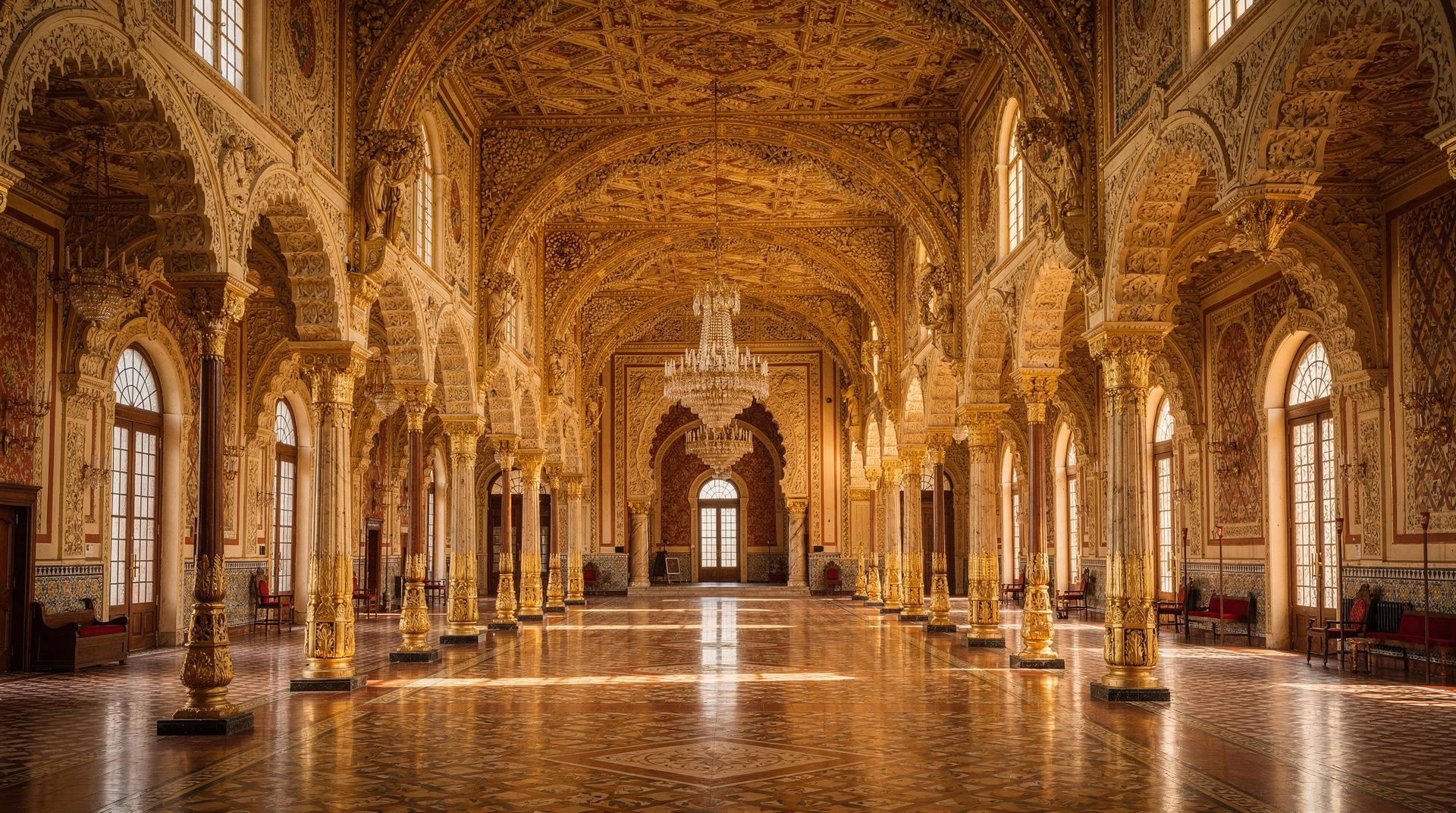
The interior is the most extravagantly decorated in Portugal. Roughly 400 kilograms of gold leaf were applied to the carved Baroque woodwork that covers every internal surface: the retablo behind the main altar, the side chapel altarpieces, the pillar capitals, the nave cornice, the ceiling. The carving itself — executed in Brazilian jacaranda wood by local craftsmen during the 17th and early 18th centuries — is extraordinarily detailed: birds, flowers, cherubs, saints, scrollwork and architectural elements interlocking across thousands of square centimetres.
The result is total: there is no surface in the nave that is not carved, gilded, or painted. The effect is overwhelming in the literal sense — the brain simply cannot process all the visual information simultaneously. Most visitors stop at the nave entrance for a moment of genuine shock before moving further in.
The ossuary beneath the church (included in the entry ticket) is worth the descent: a Gothic chamber where the bones of some 1,800 Franciscan friars are interred in the floor, visible through glass panels. It is atmospheric rather than macabre and provides a powerful contrast with the gold-drenched world above.
The adjacent Palácio da Bolsa shares a ticket desk and can be combined in the same visit. Many visitors find São Francisco and Bolsa the right combination for a Ribeira-area cultural half-day.
Igreja dos Clérigos — the one with the tower
Location: Rua de São Filipe de Nery, Baixa Entry: approximately €8 combined with tower climb Time needed: 45 to 60 minutes (church plus tower)
The Torre dos Clérigos guide covers the tower itself in detail; the church deserves mention as more than just the base of the tower.
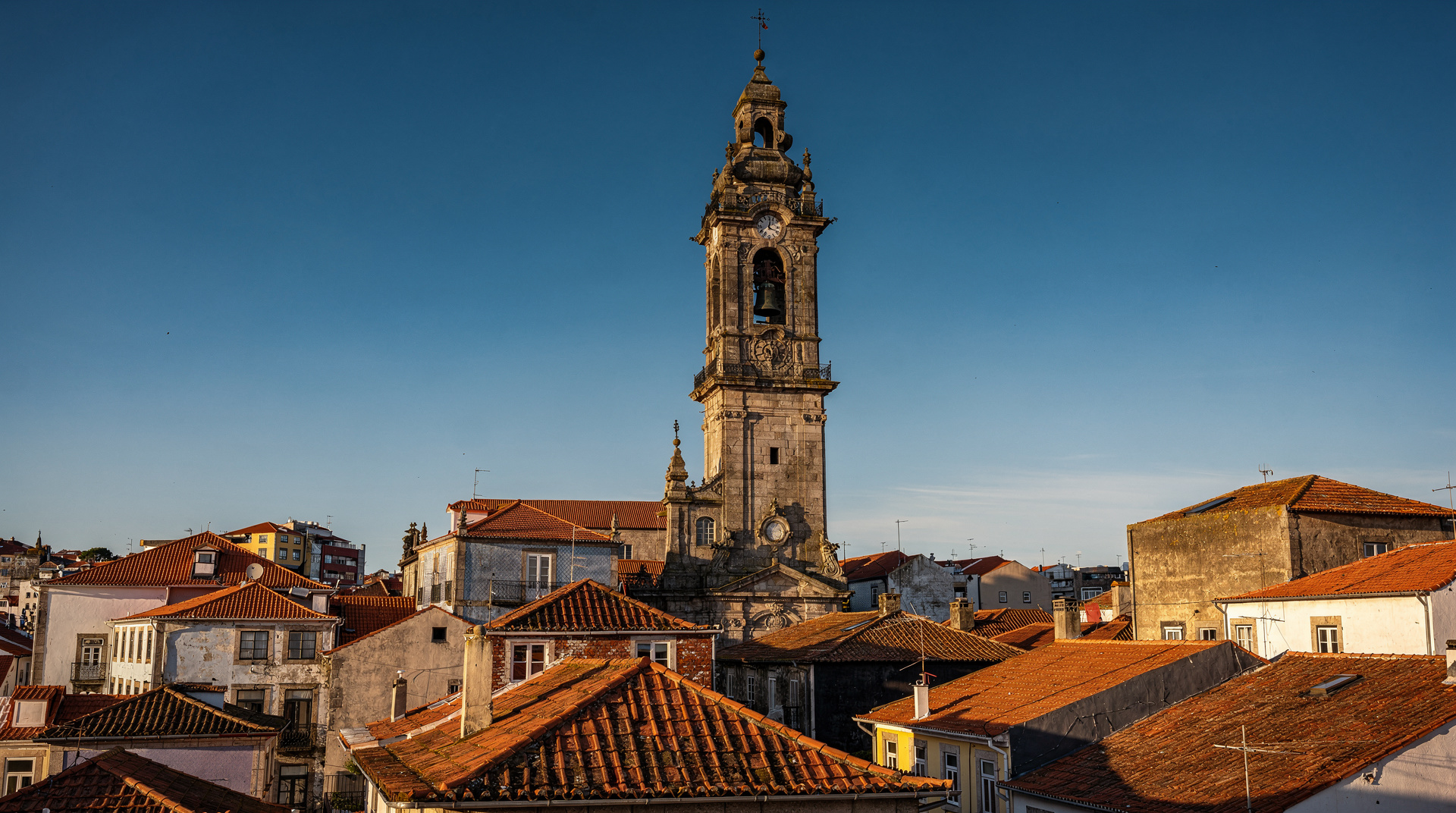
Designed entirely by Nicolau Nasoni and completed in the 1750s, the Igreja dos Clérigos is built on an elliptical plan — unusual in Portuguese religious architecture, imported from Italian Baroque design principles. The interior is a single flowing space without the conventional nave-aisle division, with side chapels opening off the elliptical perimeter. The painted ceiling and decorative detail are refined without reaching the excess of São Francisco.
The church remains in active liturgical use by the Brotherhood of the Clergy (Irmandade dos Clérigos). Masses are held regularly; visiting during or just before a mass adds atmospheric quality but restricts free movement.
Sé Catedral — the oldest and most austere
Location: Largo da Sé Entry: nave free; cloister approximately €3 Time needed: 45 to 60 minutes (including cloister)
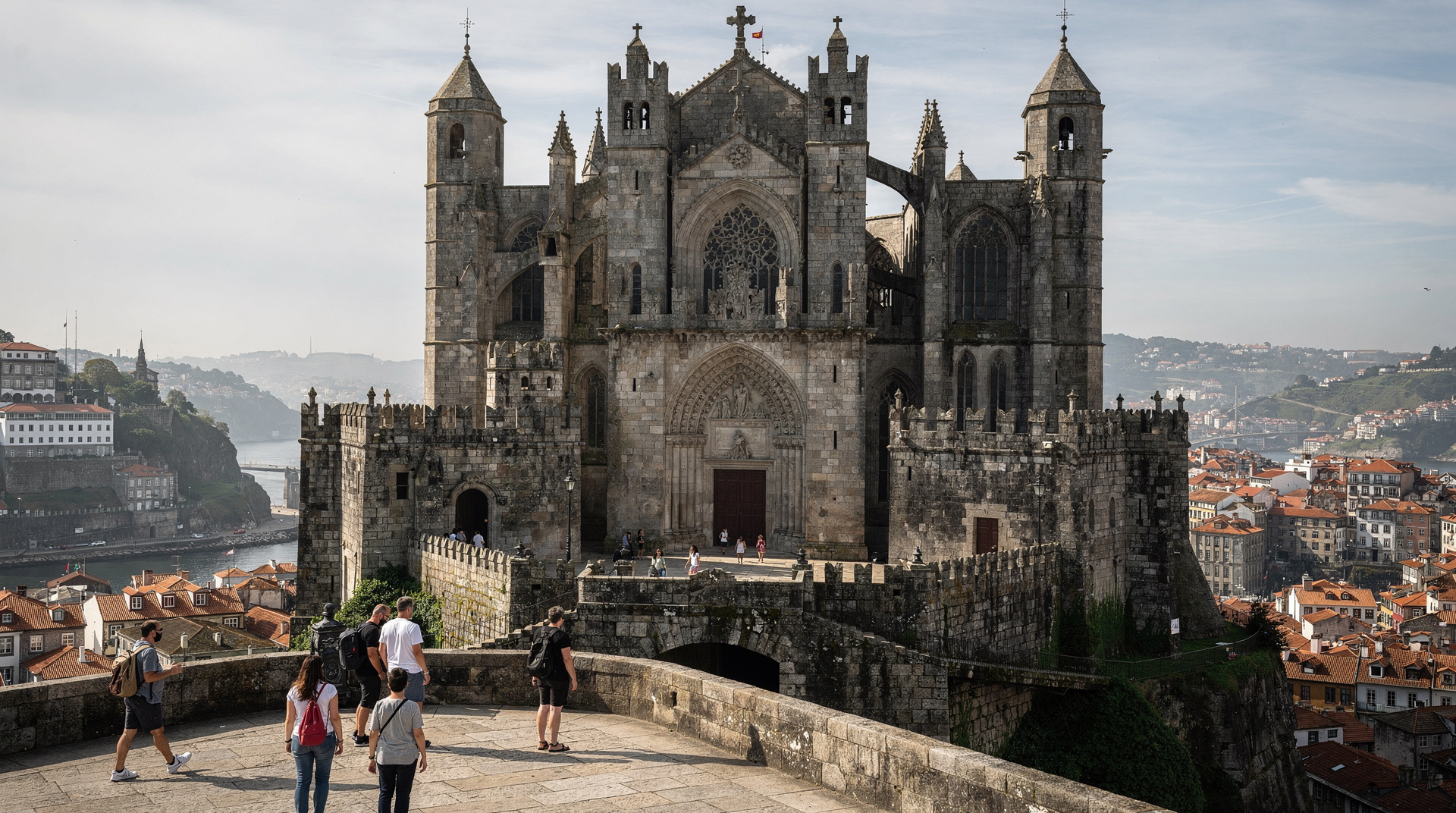
The Porto Cathedral guide covers this in full. The essential points for a church-focused visit: the Romanesque nave is the most historically significant interior in Porto; the Gothic cloister (€3) has the finest azulejo panels in the city (by Valentim de Almeida, early 18th century); and the exterior terrace provides the best Douro view in the historic centre.
Do not miss the Gothic silver altarpiece in the Chapel of the Blessed Sacrament — it survived the Napoleonic occupation by being hidden under plaster and is one of the finest examples of medieval Portuguese silversmithing.
Igreja do Carmo — the best azulejo exterior
Location: Rua das Carmelitas, Cedofeita Entry: free Time needed: 15 minutes exterior; 15 minutes interior
The Igreja do Carmo (1768, Baroque) was built by the Carmelite Order and is famously located directly adjacent to the Igreja das Carmelitas — two near-identical churches separated by what is claimed to be Porto’s narrowest inhabited building, a structure barely wide enough for a single room.
The main reason to visit is the exterior north wall: a large panel of blue-and-white azulejos, designed by Silvestri Silvestre and executed in 1912, covering the entire exterior surface and depicting the founding of the Carmelite Order in the Holy Land. The scale (approximately 15 metres wide, 8 metres tall) and the compositional quality make this the finest exterior azulejo commission in Porto. Stand across the street to see the composition whole, then approach for the tile detail.
The interior of the Carmo church is Baroque in character, with gilded carved woodwork in the chancel area, though less dramatically ornate than São Francisco. Entry is free and generally unrestricted during visiting hours.
The proximity to Livraria Lello (5 minutes walk) makes this a natural pairing.
Igreja das Almas — the tiled chapel on Santa Catarina
Location: Rua de Santa Catarina 428, Bonfim Entry: free Time needed: 15 minutes exterior; 10 minutes interior
The Igreja de Santa Catarina (commonly called the Igreja das Almas — Chapel of Souls) is on Porto’s main pedestrian shopping street, which makes it accessible but ensures it is visited primarily as a shopping-walk detour rather than a destination.
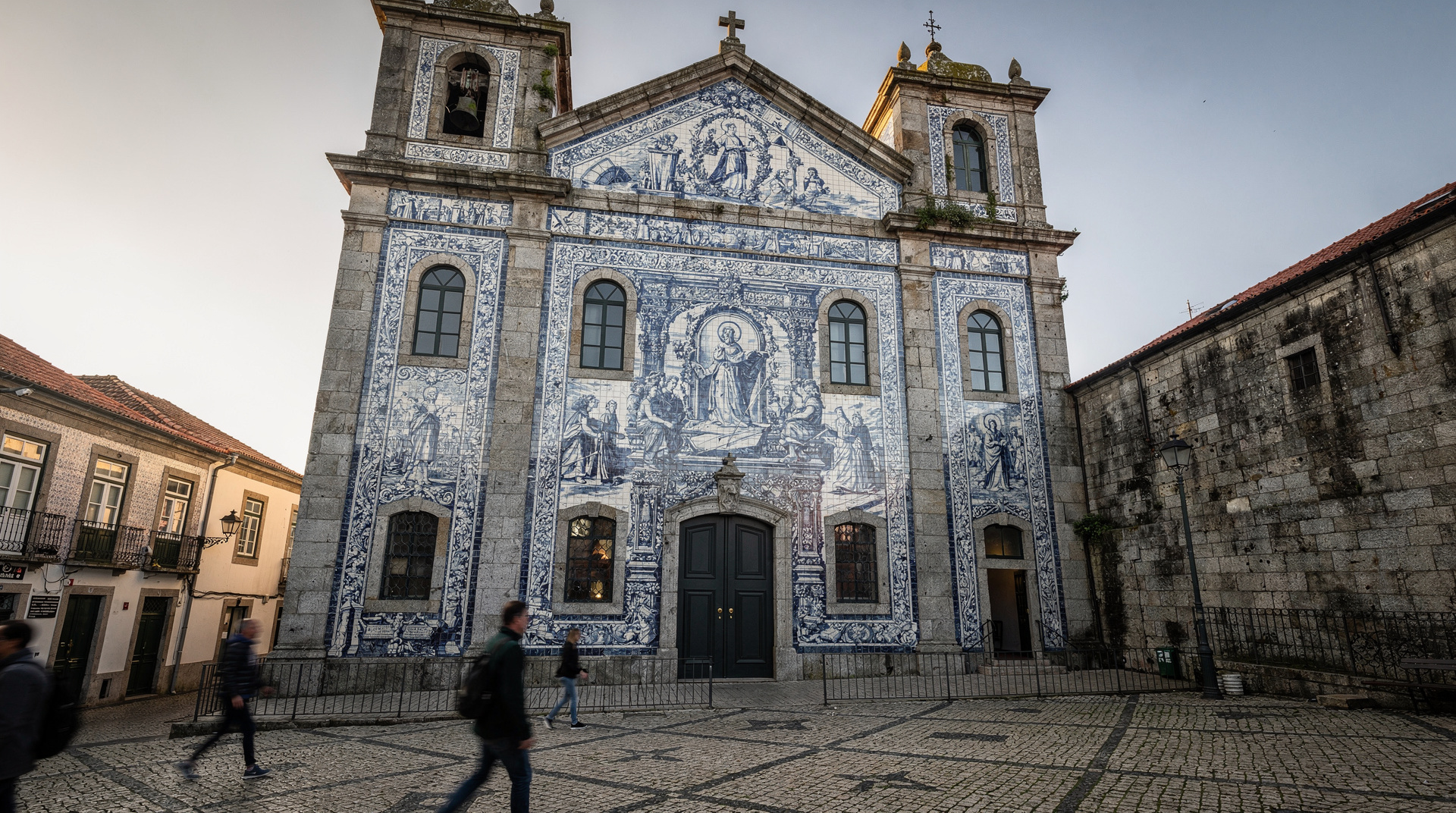
The exterior is the main attraction: the north and west walls are covered in a continuous azulejo panel (approximately 15,000 tiles, 1929, by Eduardo Leite) depicting scenes from the life of Saint Francis and the martyrdom of Saint Catherine. The entire building exterior is a tile surface — dramatic in scale and in good condition. The imagery is straightforwardly narrative in the tradition of early 20th-century azulejo production.
The interior is modest — a single nave with Baroque elements and tile panels on the lower walls. Worth a brief visit but not a destination in its own right.
Igreja de Santa Clara — Gothic under Baroque
Location: Largo de Santa Clara (east of the Sé) Entry: free Time needed: 20 minutes
The Igreja de Santa Clara is one of Porto’s least-visited significant churches and one of the more interesting for architectural layering. The original Gothic structure (15th century) was built for the Poor Clare convent; subsequent generations applied Baroque overlay to the interior while the exterior retained its Gothic character.
The interior combines Gothic stone arches, Baroque carved and gilded woodwork in the chancel area, and 17th-century tile panels on the lower walls in a mixture that is historically confused but visually rich. Some of the wooden carvings are of high quality; the overall effect is less curated than São Francisco but more authentic to the building’s multi-period history.
The church is in a less-visited part of the historic centre east of the Sé, making it a good choice for visitors who have covered the main tourist circuit and want to explore further.
Chapel of the Congregados — the tiled oratory
Location: Praça de Almeida Garrett (adjacent to São Bento station) Entry: free Time needed: 10 minutes
The small Congregados chapel on the corner of Praça de Almeida Garrett, directly beside São Bento station, has an exterior tile panel worth pausing for. The facade is covered in azulejo tiles depicting scenes from the life of Saint Anthony. Easy to miss in the visual context of the busy square, but a good free example of 20th-century azulejo work in a central location.
Igreja da Misericórdia — the lesser-known Nasoni
Location: Rua das Flores, Baixa Entry: small museum admission (approximately €4) Time needed: 30 minutes
On Rua das Flores, the Igreja da Misericórdia houses the Viso — one of the most important Renaissance paintings in Portugal, a large altarpiece attributed to the workshop of Jan van Scorel, depicting Dona Filipa de Bragança kneeling before the dead Christ surrounded by court figures. The church itself is Baroque, designed in part by Nicolau Nasoni, and the museum attached to it has good collections of silver and other liturgical objects.
Less visited than the major churches but worth including if you are on Rua das Flores (which you will be, as it is the main pedestrian artery between São Bento and Clérigos).
Comparing Porto’s churches at a glance
| Church | Priority | Cost | Time needed | Best for |
|---|---|---|---|---|
| São Francisco | Essential | ~€6 | 45 min | Gilded Baroque interior, ossuary |
| Sé Catedral | Essential | Free nave / €3 cloister | 45–60 min | Oldest building, azulejo cloister, Douro terrace view |
| Clérigos | High | ~€8 with tower | 45–60 min | Nasoni interior plus the tower climb |
| Carmo | High | Free | 15–30 min | Best exterior azulejo panel, near Livraria Lello |
| Almas | Medium | Free | 15–25 min | Full tile-covered facade on a shopping street |
| Santa Clara | Low | Free | 20 min | Gothic-under-Baroque, quiet, off the main circuit |
| Congregados | Low | Free | 10 min | Small tile panel beside São Bento station |
If you have to cut the list to three, keep São Francisco, the Sé cloister and Clérigos — everything else is a bonus rather than a gap.
Azulejo churches beyond the big five
Porto’s church exteriors are, collectively, the best free introduction to azulejo tilework in the city, and the churches-of-porto circuit connects naturally to the wider azulejos of Porto walking route if the blue-and-white tradition interests you beyond religious buildings. Two smaller sites reward the detour.
Capela das Almas de Santa Catarina (the same building referenced above as the Igreja das Almas) sits on a street corner busy enough that most visitors photograph it in passing without stopping. Cross to the opposite pavement for the full composition — the scale only reads correctly from about 20 metres back.
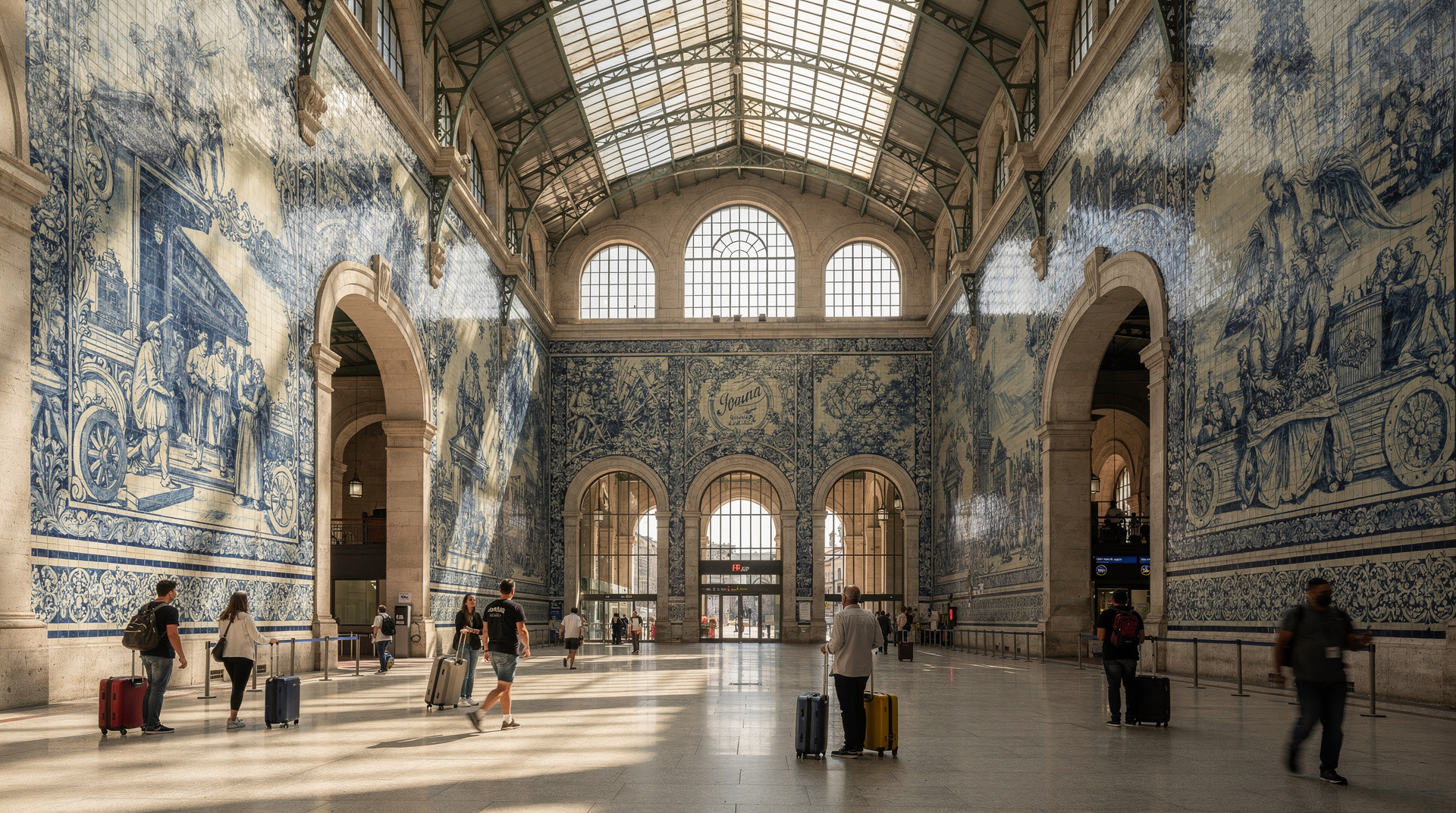
The Congregados chapel facade, beside São Bento, is easy to miss because the square itself competes for attention with the station’s own tile hall. Pause on the church steps rather than the square’s centre; the panel is designed to be read at a slight upward angle, not straight on.
Neither site needs more than ten minutes, but both are free, and both sit directly on the walking line between Clérigos and São Bento that most visitors already cover — there is no detour cost to including them.
Planning a churches day
A practical church-focused day in the historic centre of Porto:
Morning:
- 9 am: Sé Catedral — exterior and cloister before the crowds build
- 10 am: Walk east to Santa Clara — 5 minutes
- 10:30 am: Walk back through the Baixa to São Bento — azulejo hall on the way
- 11 am: Igreja dos Clérigos — tower and church
Lunch: Rua das Flores area — tasca lunch for €10 to 14
Afternoon:
- 2 pm: Igreja do Carmo — azulejo exterior, then Livraria Lello nearby
- 3 pm: Bus or tuk-tuk to Ribeira area
- 3:30 pm: Igreja de São Francisco — the essential gilded interior
- 4:15 pm: Palácio da Bolsa — if there is an English tour slot available
This route covers the major religious sites without unnecessary backtracking. Total walking distance is approximately 4 kilometres with the afternoon transport shortcut.
If a full day feels like too much, compress the morning block into a half-day: Sé Catedral, Clérigos and São Francisco alone cover the essential interiors in around three hours, leaving the afternoon free for the Ribeira waterfront or a Porto 2-day itinerary stop elsewhere.
For a guided version of this route, the Porto historic centre walking tour covers most of these sites with a local guide who can add context on the religious history, the azulejo tradition, and the architectural periods involved.
If you prefer a smaller group for the church and monument content specifically, the small-group cathedral and monuments tour focuses on the Sé district and nearby religious sites with a guide who specialises in the medieval and Baroque periods.
Frequently asked questions about Porto churches
What is the most impressive church interior in Porto?
Igreja de São Francisco — approximately 400 kilograms of gold leaf on carved Baroque woodwork. Entry approximately €6, includes ossuary. Unmissable.
Which Porto church has the best azulejo exterior?
Igreja do Carmo, on Rua das Carmelitas. The 1912 blue-and-white panel covering the entire north exterior wall is the finest outdoor azulejo composition in Porto.
Is the Igreja dos Clérigos worth visiting inside?
Yes — the Nasoni Baroque interior on an elliptical plan is genuinely beautiful. The combined church-plus-tower ticket (approximately €8) covers both.
Are Porto’s churches open during services?
Generally yes, with respectful behaviour expected. Flash photography is typically discouraged during mass.
What is the oldest church in Porto?
The Sé Catedral, founded around 1110 in the Romanesque style.
How much time should I allow for Porto’s churches?
São Francisco: 45 minutes. Sé cloister: 45 to 60 minutes. Clérigos: 45 to 60 minutes. Carmo and Almas exteriors: 10 to 15 minutes each. A full church-focused day covers all major sites in 6 to 7 hours.
Frequently asked questions — Churches of Porto — the essential guide to the finest religious buildings
What is the most impressive church interior in Porto?
Igreja de São Francisco, near the Ribeira, has the most dramatically decorated interior in Porto — roughly 400 kilograms of gold leaf applied to carved Baroque woodwork over every surface of the nave and chapels. No photograph prepares you for the scale and density of the decoration. Entry costs approximately €6 and includes access to the Gothic ossuary beneath the church.Which Porto church has the best azulejo exterior?
Igreja do Carmo (1768), on Rua das Carmelitas near Livraria Lello, has the finest exterior azulejo panel in Porto. The large blue-and-white tile tableau on its north wall, executed in 1912, depicts the founding of the Carmelite Order and covers the entire exterior wall. The Igreja das Almas on Rua de Santa Catarina is the close runner-up.Is the Igreja dos Clérigos worth visiting inside?
Yes. The combined ticket (approximately €8) covers both the church interior and the tower climb. The church itself is designed by Nicolau Nasoni in an elliptical Baroque plan and is genuinely beautiful — worth the 15 minutes it takes to appreciate alongside the tower visit. Do not limit your Clérigos visit to the tower alone.Are Porto's churches open to tourists during religious services?
Generally yes, though you should be respectful — stay to the side aisles during mass and avoid talking loudly or using flash photography. In the churches that charge entry fees, access during services may be restricted; check local hours. Sunday morning is the most likely time for masses at the major churches.What is the oldest church in Porto?
The Sé Catedral (Cathedral) is generally considered the oldest surviving church building in Porto, with its foundation dated to around 1110. The Igreja de São Francisco (Gothic, 14th century) and the original core of the Igreja de Santa Clara (15th century) are also among the oldest surviving religious buildings. Many churches visible today are largely 17th and 18th-century structures built on older foundations.How much time should I allow for Porto's churches?
São Francisco requires 45 minutes for the interior and ossuary. The Sé Catedral nave plus cloister is 45 to 60 minutes. Clérigos church (plus tower) is 45 to 60 minutes. The exterior of Carmo and Almas can be seen in 10 minutes each. A full church-focused day in Porto's historic centre would comfortably fill 6 to 7 hours.Is there a free walking tour of Porto's churches?
Several walking tour operators include church exteriors as part of their historic centre routes. For guided interior visits with historical context, a small-group tour that specifically covers religious heritage is more useful than a general free tour. Self-guided walking is entirely practical with this guide, given that most exterior viewing costs nothing.
Top experiences
Bookable activities with verified prices and instant confirmation on GetYourGuide.