Peso da Régua guide — the Douro Valley's working wine capital
Porto: From Porto Douro River Cruise to Regua with Lunch
Is Peso da Régua worth visiting in the Douro Valley?
Yes — Régua is the best operational base for a Douro Valley visit: the Museu do Douro is the best wine museum in the region, river cruises to Pinhão depart from here, and the town has proper restaurants and accommodation options that Pinhão lacks. It is not as picturesque as Pinhão but significantly more functional for multi-day visits.
What Régua actually is
Peso da Régua — usually called just Régua — is a working town of approximately 17,000 people on the south bank of the Douro at the western boundary of the Port Wine Demarcated Region. It is the administrative, commercial, and logistical centre of the Douro Valley: this is where the regional wine institute (IVDP) is based, where the principal river cruise operations run, and where the valley’s best wine museum sits.
Régua is not photogenic in the way that Pinhão is — there is no horseshoe river bend, no azulejo station panels, no single extraordinary viewpoint. What Régua offers is functionality: proper restaurants, accommodation at various price levels, a train station with good connections to Porto (2 hours) and to Pinhão (30–40 minutes further east), and the Museu do Douro, which is the best educational resource about the valley in the region.
For a day trip from Porto, Pinhão offers more concentrated atmosphere. For a multi-day visit to the Douro Valley, Régua is the more practical base.
| Where | South bank of the Douro, ~100 km east of Porto |
| Cost | Museu do Douro ~€5-8; cruises from ~€20-40 |
| Time needed | A full day, or 2-3 nights as a Douro base |
| Getting there | Train from Porto Campanhã (~2 hrs) or car via IP4 (~1.5 hrs) |
| Best time | September-October for vindima; spring for quieter, greener conditions |
The Museu do Douro — start here
The Douro Museum is housed in a converted and expanded former train station building on the Régua riverside, opened in 2009. It traces the history of the Douro Valley from its designation as the world’s first demarcated wine region (the Marquis of Pombal’s 1756 demarcation — the model for all subsequent wine appellations in France, Italy and elsewhere) through the evolution of port wine production, the rabelo boat trade, the phylloxera crisis, and the 20th-century social history of the valley.
The permanent collection is well-curated. A large model of the Douro valley at 1:25,000 scale allows visitors to understand the geography before visiting; azulejo tile panels from various periods illustrate the visual culture of the region; and an extensive ethnographic section covers the seasonal rhythms of a Douro farming community — from pruning in winter through harvest in September.
The temporary exhibition programme brings in touring shows on relevant topics: wine history, Portuguese photography, Douro landscape art.
Practical information: Entry approximately €5–8. Open Tuesday to Sunday. The museum café has a terrace overlooking the river — a pleasant lunch option without going further into town.
Why to visit before quinta visits: The Douro Museum provides the historical context that makes quinta visits significantly more rewarding. Understanding why Régua marks the boundary of the demarcated region, why rabelo boats were the primary transport method for three centuries, and why the Douro’s steep schist slopes produce grapes of exceptional concentration — all of this enhances the experience of standing in a quinta vineyard.
River cruises from Régua
The Régua waterfront dock (Cais de Régua) is the departure point for several river cruise formats covering the most scenic section of the Douro.
Régua to Pinhão cruise
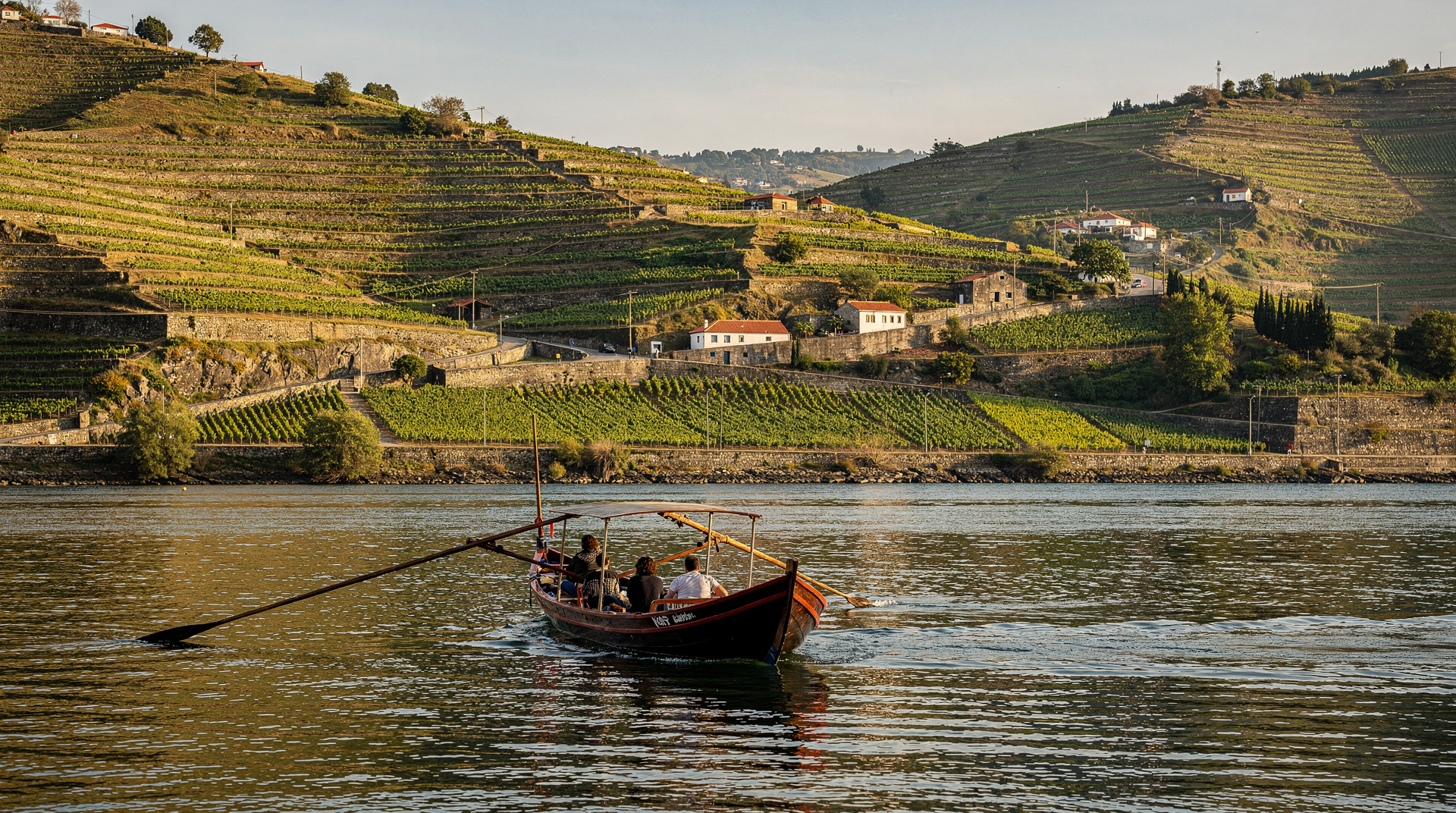
The most popular and most scenic cruise available at Régua. The journey covers approximately 30 km upstream, passing the densest concentration of terraced vineyards in the valley, several major quinta estates visible from the river, and the distinctive S-shaped curves of the Douro where it bends around the hillside spurs.
Duration: 1.5–2 hours one way.
Available as: One-way cruise (connect by train in the reverse direction), return cruise (3–4 hours total), or lunch cruise (river journey with meal served on board).
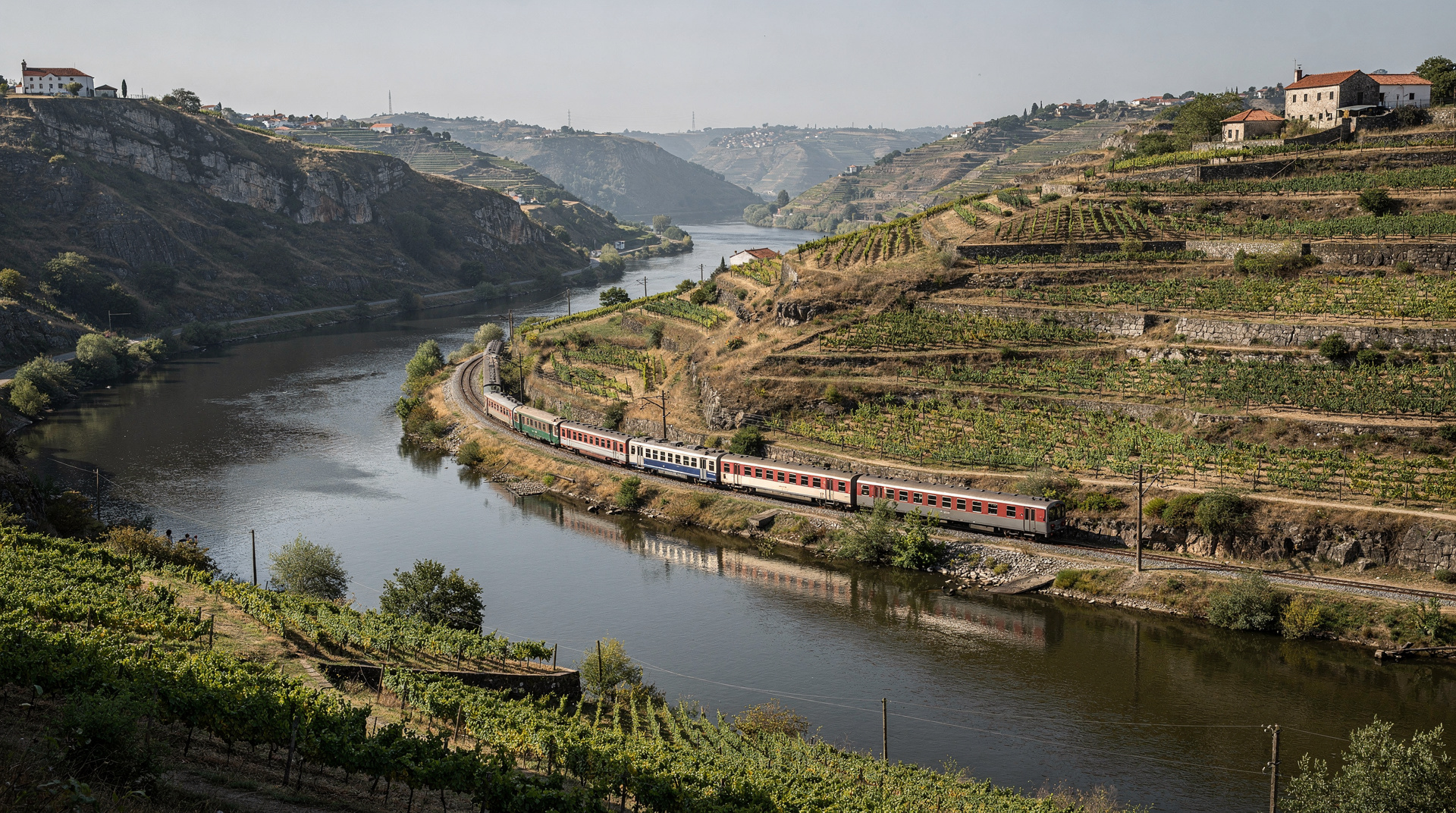
Book the scenic Régua to Pinhão cruise on GetYourGuideThe train-and-boat combination: One of the best formats for the Douro Valley is to take the train from Porto Campanhã to Pinhão in the morning (the scenic section from Régua to Pinhão is best experienced on the train — the views from the cliff-hugging track are different from the river surface level), visit a quinta in Pinhão, then take a cruise back from Pinhão to Régua in the afternoon, and return to Porto by train from Régua station. This covers both perspectives on the same river valley.
The Porto Régua rail and sail combination tour packages this exactly: train outward, cruise return, with stops built in.
Porto to Régua cruise with lunch
Longer cruise formats from Porto along the full river to Régua are also available, taking 5–6 hours one way. These cover the lower Douro section (less intensely terraced, more industrial in places) as well as the upper valley. The lunch service on board is typically a simple set menu with Douro wines.
Book the Porto to Régua cruise with lunch on GetYourGuideQuintas near Régua
Several significant quintas are accessible from Régua within 15–30 minutes by car.
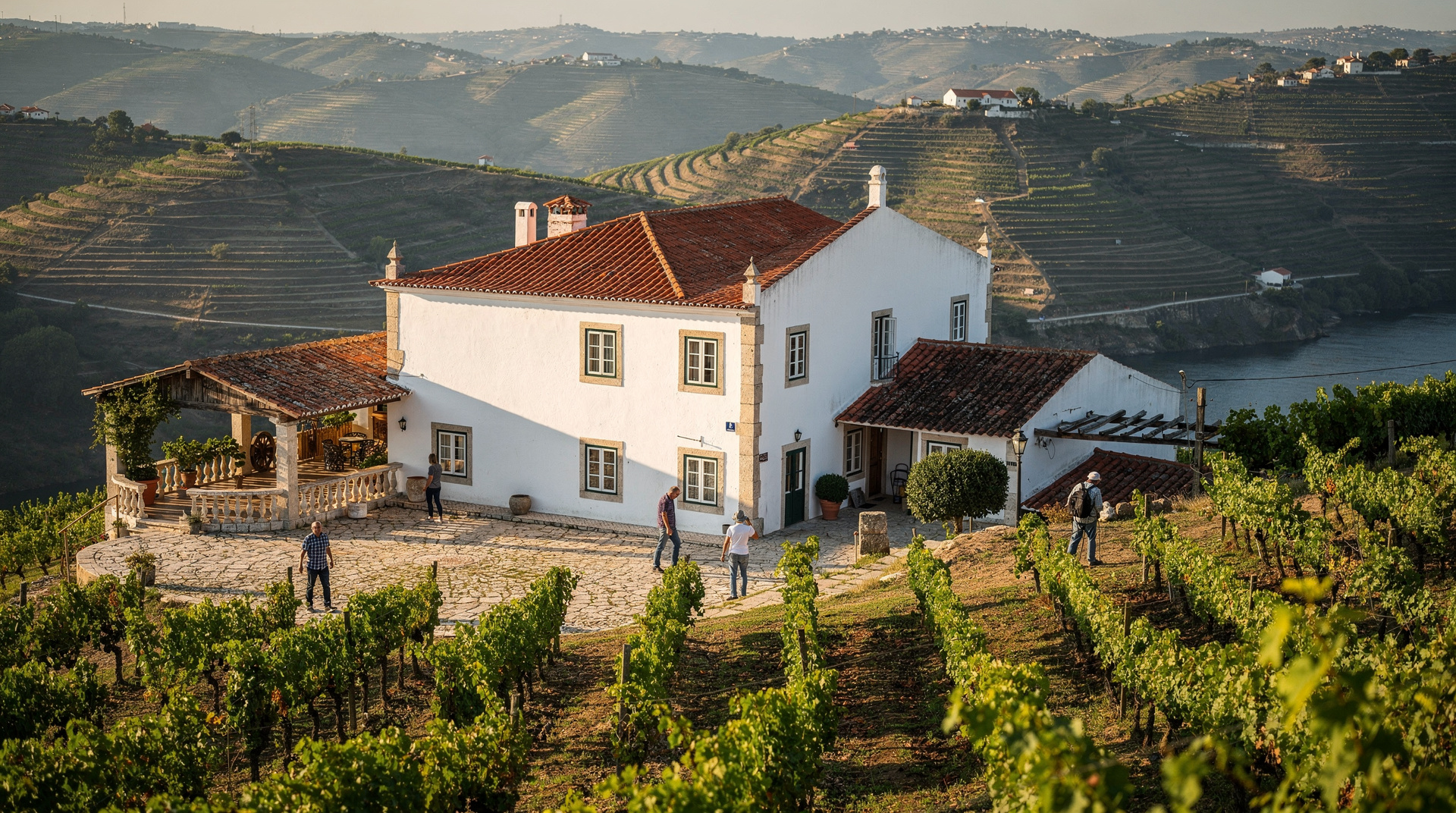
Quinta de La Rosa: One of the most visitor-friendly quintas in the western Douro, on the river’s north bank between Pinhão and Régua. The British Taylor family has run the quinta since 1906 producing port and Douro table wines. The visitor programme includes vineyard walks, winery tours, and tastings. The quinta also operates a guesthouse — a good accommodation option for visitors wanting to sleep in the vineyard.
Quinta da Pacheca: One of the valley’s most commercially developed quintas for wine tourism, known for its programme of accommodation in converted wine barrels. The vineyard visit and tasting are well-run; the barrel accommodation is a genuinely unique experience. Located between Régua and Pinhão on the south bank.
Quinta do Crasto: One of the most respected Douro wine producers, specialising in premium single-vineyard Douro reds and old-vine vintage ports. The visit programme is more wine-serious than Bomfim or Pacheca — shorter on theatrical tourism, longer on actual winemaking context. Requires a car (approximately 20–25 km east of Régua on the north bank).
For a comprehensive assessment of which quintas to prioritise based on your wine interests and access method, the best quintas in the Douro Valley guide covers the full range.
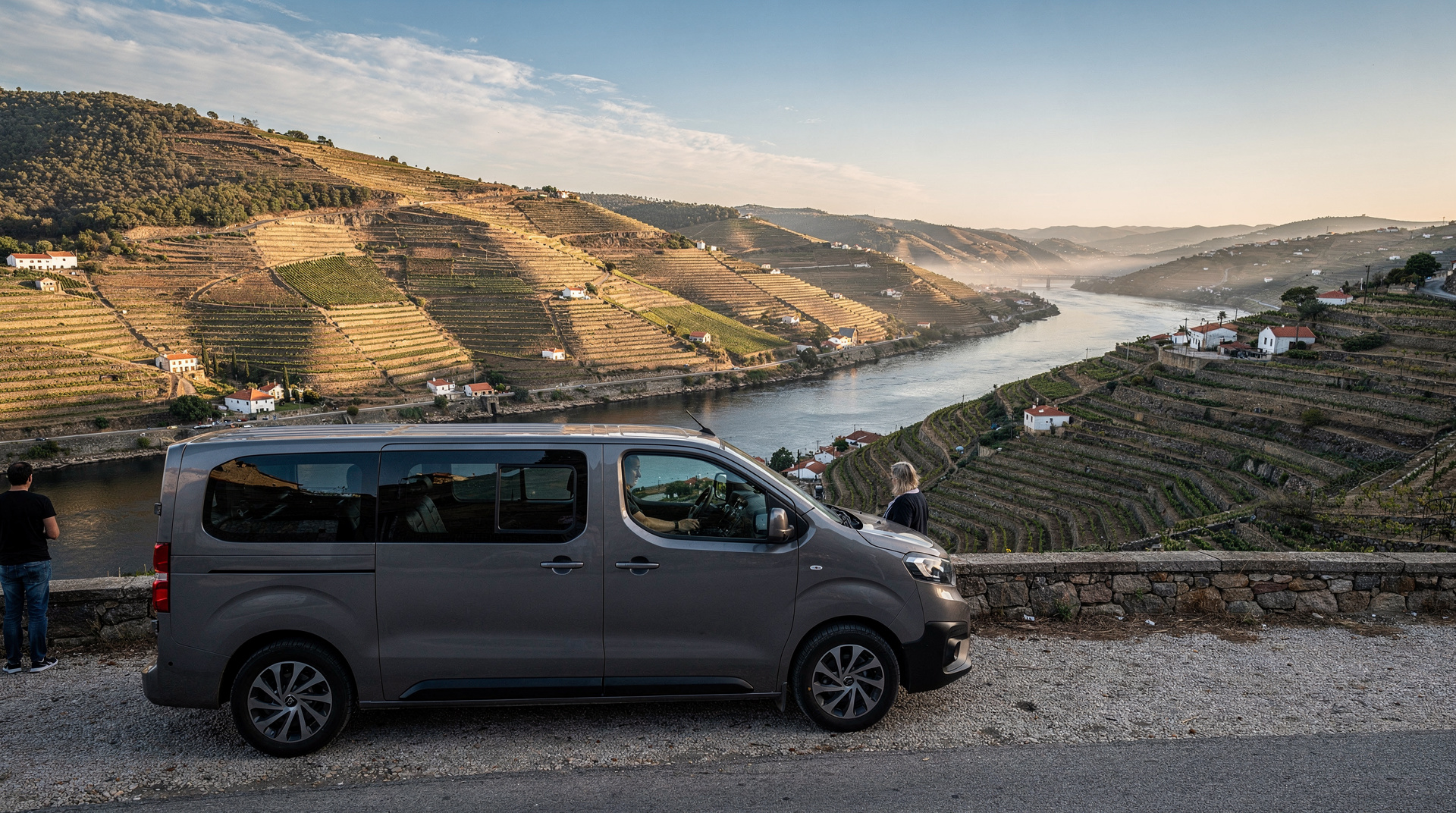
Getting between quintas without your own car: Pre-booked taxis from Régua are the standard solution — ask your hotel or the tourist office to arrange a driver for a half-day if you’re visiting two or three estates in one outing. Some quintas also offer their own pickup service from Régua station for guests with a confirmed tasting reservation; check when booking, since this can save the taxi cost entirely for a single-estate visit.
Where to eat in Régua
Régua’s restaurant scene is modest but adequate — better than Pinhão’s single reliable option, not comparable to Porto.
Castas e Pratos: The most consistently praised restaurant in Régua, with a Douro wine focus and menu built around local ingredients. The dish: bacalhau à Braga (salt cod with onions, potatoes, and olives) and grilled Barrosã beef with good Douro red pairings. Expect €20–30 per person for a full meal.
Museu do Douro café: The museum café serves soups, sandwiches, and simple lunch dishes on a river terrace. Good for a lighter midday meal between the museum and a cruise departure. €8–15 per person.
Waterfront restaurants: Several restaurants on the Régua quay offer river views with standard Portuguese menus. Quality is variable; prices are honest (€15–25 for a full lunch) compared to the tourist markup of comparable waterfront dining in Porto’s Ribeira.
Practical note: Most Régua restaurants close between lunch and dinner (roughly 3–7 pm). If you are arriving in late afternoon, confirm opening times before planning dinner. This siesta-style closure is common across smaller Portuguese towns and catches visitors used to continuous restaurant service in Porto off guard.
Where to stay in Régua
Régua has a broader range of accommodation than Pinhão, from budget guesthouses to boutique hotels.
Hotel Régua Douro: The most prominent hotel in Régua, positioned directly on the river with good views from the upper floors. Rooms: €80–140 per night. The in-house restaurant and bar are convenient for late arrivals.
Casa da Eira: A small guesthouse in the old town, more character than the hotel options, with good breakfast included. Approximately €60–90 per night. Walk to the river in 10 minutes.
Quinta guesthouses: Several quintas near Régua offer room accommodation within the vineyard. Quinta de la Rosa and Quinta da Pacheca are the most established. Prices start at approximately €100 per night and include breakfast and access to the quinta grounds.
For the full range of Douro Valley accommodation options with honest pricing, the where to stay in the Douro Valley guide covers Pinhão, Régua, and the quinta hotel options across the region.
Day trip from Porto vs staying overnight in Régua
Both are workable, and the right choice depends on how much of the Douro you want to see. A day trip from Porto — train or organised tour out, museum and one cruise or quinta visit, train or tour back — covers the essentials in a long but manageable day. Staying overnight in Régua opens up a second day for Lamego or an additional quinta, removes the pressure of catching a specific return train, and lets you experience the valley in the evening and early morning, when the light and the pace are noticeably different from the midday tour-bus rhythm. For a valley this scenically dense, most visitors who can spare the extra night find it worthwhile; for a tightly packed Porto itinerary, a well-planned single day still delivers the highlights.
Régua is where the demarcated region was first mapped in 1756, and the tastings there tend to be technical rather than scenic: a Douro Valley sensory experience with wines and olive oil takes that approach seriously, which suits a second visit better than a first.
Régua as the gateway to Lamego
Lamego lies 15 km south of Régua on the N2 road through the hills. The drive takes approximately 20–25 minutes and is easily done as a half-day extension from a Régua base.
Lamego is the home of Raposeira — Portugal’s most respected sparkling wine (vinho espumante), produced in the cool microclimate of the Lamego basin by the traditional method. The Raposeira caves near Lamego are open to visitors with pre-booking, offering a contrast with the still-wine production of the valley floor.
The major attraction in Lamego is the Santuário de Nossa Senhora dos Remédios — a Baroque pilgrimage church at the top of a spectacular staircase of 686 steps decorated with azulejo panels and Baroque fountains. The climb is physical but rewarding; the pilgrimage atmosphere and the views over Lamego from the top are worth the effort.
The Lamego guide covers both the sanctuary and the sparkling wine in detail.
Seasonal Régua — what changes through the year
Spring (March–May): The valley is green and relatively cool. Quinta visitor programmes are fully operational from April. Good for photography (wildflowers in the terraces, clear river light). Low crowds in March–April, building through May.
Summer (June–August): Hot — the valley interior regularly exceeds 35°C in July and August. River cruises are popular and should be booked ahead. Quinta visits are at full capacity; restaurants are busy. The Régua waterfront is pleasant in the evenings when temperatures drop.
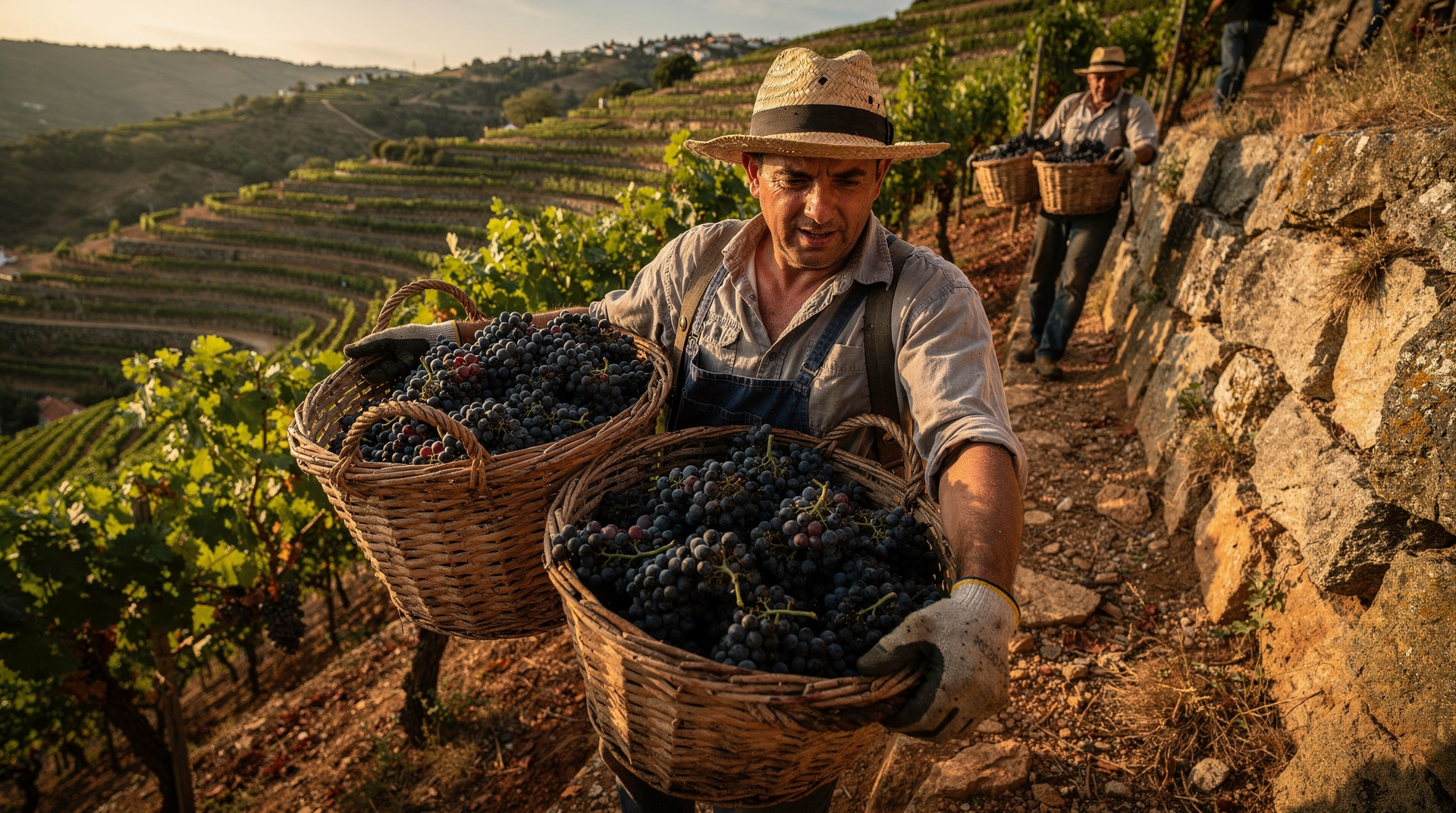
Autumn (September–October) — vindima: The most vibrant season. The harvest transforms the valley: pickers on the steep slopes, tractors on the roads, the distinctive smell of fermenting must. Book accommodation and quinta visits 3–4 months ahead for September. The Douro harvest guide covers how to participate in the harvest.
Winter (November–February): Quiet and cool. Some quintas reduce visitor hours; restaurants and shops have reduced schedules. The train journey is beautiful in any weather. For visitors comfortable with quieter conditions, winter offers the valley without crowds and with genuine off-season pricing.
Frequently asked questions about Régua
Is Régua on the Douro train line from Porto?
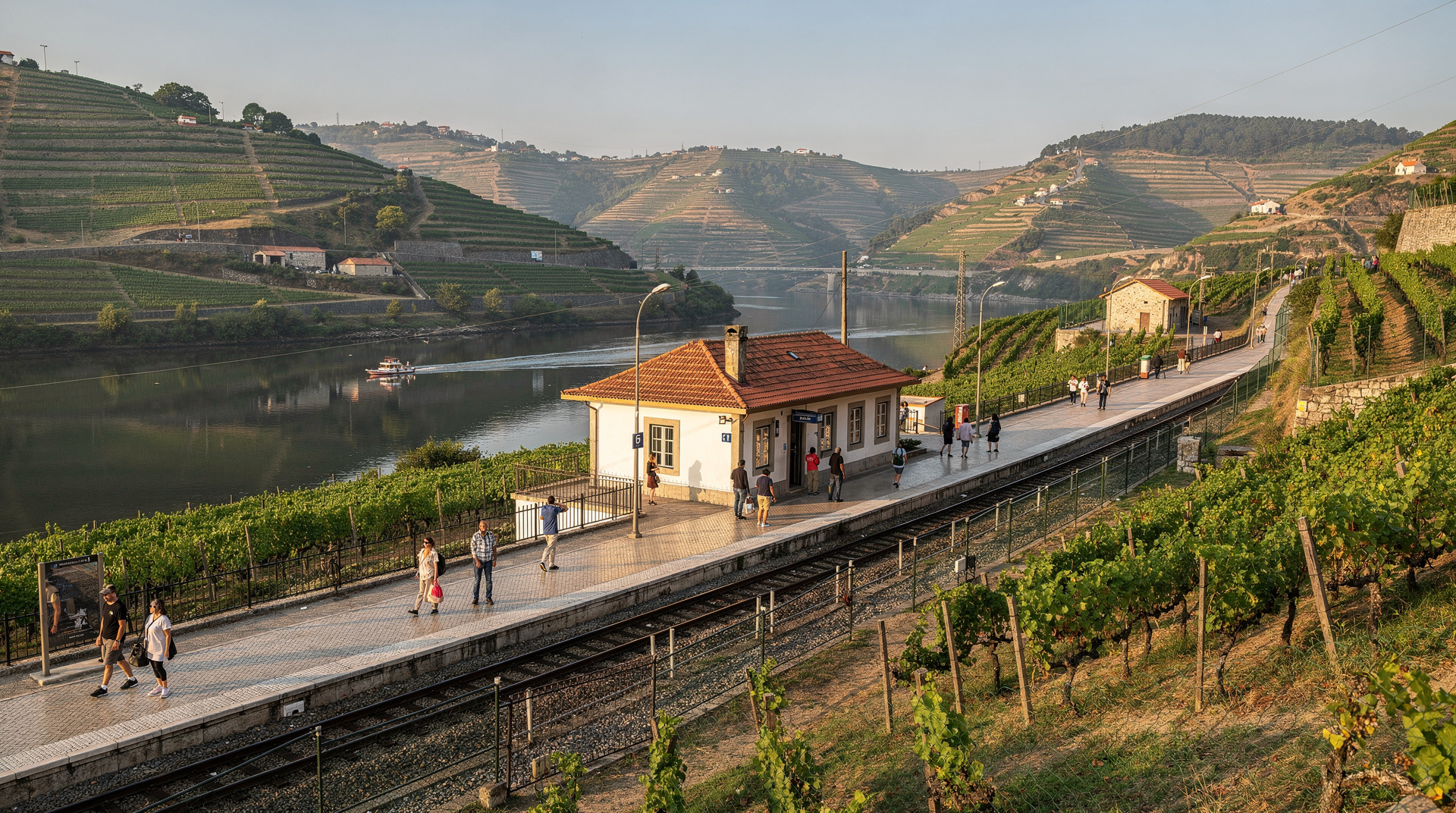
Yes — Régua is a major stop on the Douro line from Porto Campanhã, approximately 2 hours by train. The scenic section of the line from Régua eastward to Pinhão (the last 30–40 minutes) is the most spectacular; the Porto to Régua section is attractive but less dramatic. From Régua station, the Museu do Douro and the river dock are within 10 minutes on foot.
Are there vineyard viewpoints near Régua that can be visited without a car?
The miradouro at São Leonardo de Galafura is the best viewpoint near Régua — an elevated position above the north bank of the river with views over the terraced vineyards and the Douro below. It requires a car or pre-booked taxi from Régua (approximately 10 km on winding roads). There is no public transport to this viewpoint. From Régua itself, the waterfront and the Museu do Douro terraces provide river-level views without transport.
Can I buy wines directly from quintas near Régua?
Yes — most quintas in the Douro sell wines directly from their estate shops, often at prices below Porto wine merchants. Quinta de la Rosa, Quinta da Pacheca, and Quinta do Crasto all have estate shops open to visitors. Buying at the source is particularly worthwhile for limited-production wines and single-quinta ports that are not widely distributed.
How does Régua compare to Pinhão for a first Douro visit?
For a single day trip from Porto focused on one place: Pinhão has the stronger atmosphere, the azulejo station, and the most concentrated quinta access. For a first visit with limited time, Pinhão is slightly better. For anyone spending two or more nights in the valley or wanting the best museum context, Régua is superior. The Douro Valley day trip guide covers how to structure a day starting from Porto toward either destination.
How many days should I spend in Régua?
One full day covers the Museu do Douro, a river cruise and lunch comfortably. Two or three nights allow for a Lamego half-day, one or two quinta visits by car, and a more relaxed pace — the better option if Régua is your Douro base rather than a single stop.
Régua as a two-cruise base
One underused advantage of basing in Régua rather than doing a single day trip is the ability to take two different river perspectives without repeating yourself. A two-estates cruise with lunch covers quinta visits by boat, while a boat, wine and lunch cruise focuses more on the river journey itself with tastings on board. Spread across two mornings rather than compressed into a single rushed day, both give a genuinely different sense of the valley — one closer to the estates, one closer to the water and the terraced hillsides passing by.
Frequently asked questions — Peso da Régua guide — the Douro Valley's working wine capital
What is the Museu do Douro in Régua?
The Museu do Douro (Douro Museum) is housed in a converted 20th-century train station building and traces the human and natural history of the Douro Valley — the demarcation of the wine region in 1756 (the world's first wine appellation), the rabelo boat trade, the evolution of viticulture, and the social history of wine production in the region. It is the best single point of educational context for understanding the Douro Valley before doing quinta visits. Entry: approximately €5–8.How far is Régua from Porto?
Approximately 100 km by road (1.5 hours on the IP4 motorway). By train from Porto Campanhã: approximately 2 hours to Régua station. Organised tours from Porto reach Régua in 1.5–2 hours. Régua is the administrative capital of the Douro wine region, more easily reached than Pinhão (30 km further upstream).Can I do a Douro Valley day trip using Régua as the base rather than Pinhão?
Yes — and for many visitors this is a better choice than focusing on Pinhão. Régua has more services, better restaurants, the Museu do Douro, a river cruise dock, and several quintas nearby. The scenic train section is Régua to Pinhão (not Régua to Porto), so you can take the train from Porto to Régua, do your activities there, then take the train or cruise to Pinhão for the scenic section.What river cruises depart from Régua?
The most popular cruise from Régua is the Régua–Pinhão section (or vice versa) — the most scenic stretch of the Douro with the densest concentration of terraced vineyards. Cruises depart from the Régua dock (Cais de Régua) and run approximately 1.5–2 hours to Pinhão. Several operators offer lunch cruises, wine tastings on board, and combined train-boat combinations.Is Régua or Pinhão better for wine tasting?
Pinhão is in the heart of the most intensely planted section of the valley and has quicker access to the iconic quintas (Bomfim, Crasto, Vesúvio). Régua has more quintas nearby and better logistics for multi-quinta days with a car. For a day trip focused on one or two quintas, Pinhão is better positioned. For a multi-day trip with flexible quinta access, Régua's superior services make it a better base.How many days should I spend in Régua?
One full day covers the Museu do Douro, a river cruise and lunch comfortably. Two or three nights allow for a Lamego half-day, one or two quinta visits by car, and a more relaxed pace overall, which suits Régua's role as a base better than a rushed single-day stop.
Top experiences
Bookable activities with verified prices and instant confirmation on GetYourGuide.