Douro Valley day trip from Porto — the honest guide
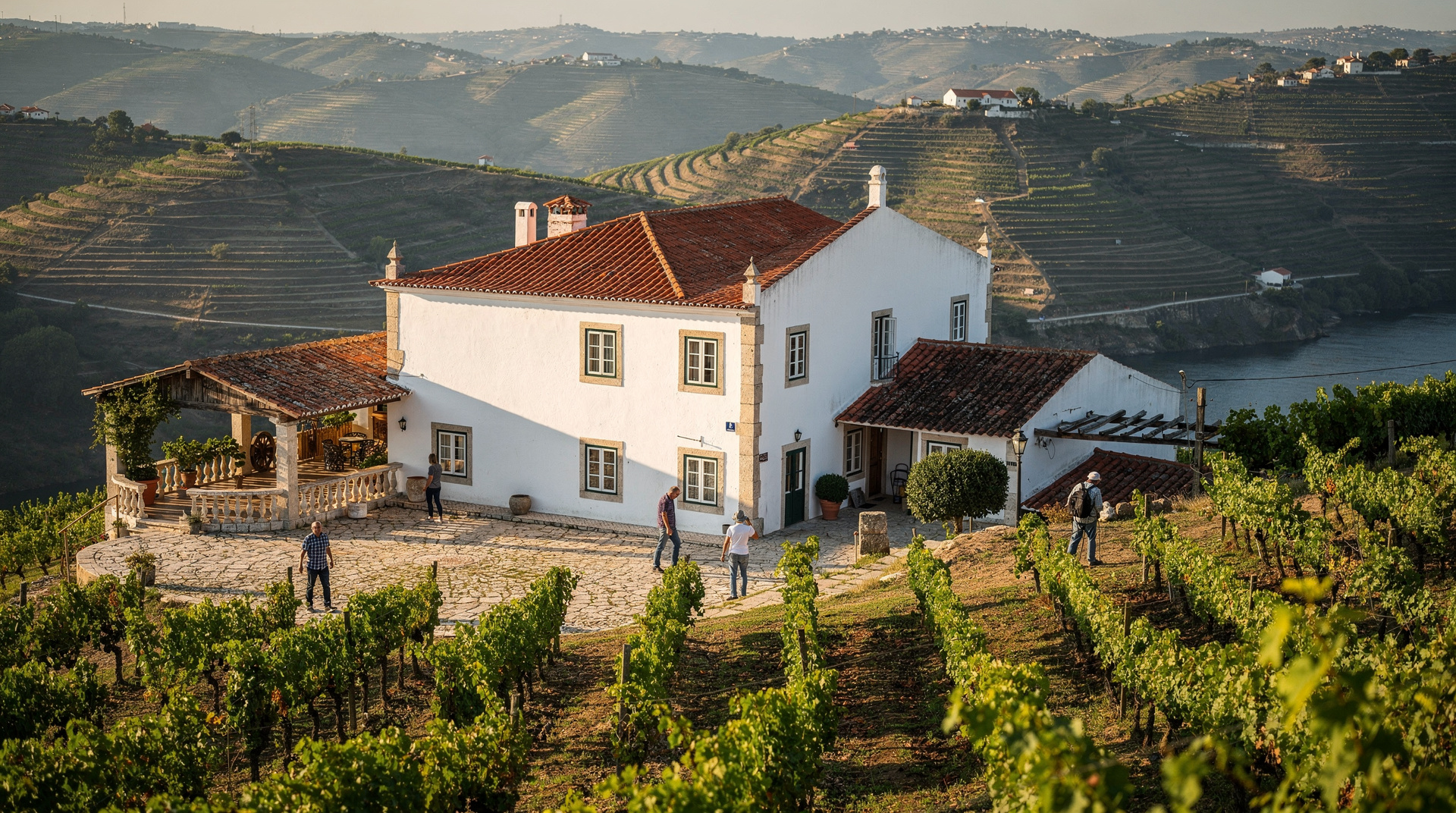
Porto: Douro Wine Day Tour from Porto Visit of 2 Wine Estates
Is a Douro Valley day trip from Porto worth it?
Yes — the landscape, wine estates and river cruise deliver an experience you cannot replicate in Porto. The day is long (roughly 8 am to 7 pm) but well structured on an organised tour. Going by train is cheaper but limits what you can visit. A rental car gives the most flexibility if you can avoid driving after tastings.
What a Douro Valley day trip actually looks like
The alarm goes off at 7 am. You meet your tour bus at Praça da Liberdade at 8:30 am, or you’re at Porto Campanhã station for the 8:42 train. Either way, you’re back in Porto between 7 and 8 pm, tired and wine-warm. That is the honest shape of a Douro Valley day trip from Porto — a long, rewarding, logistically demanding day that most people rate as a trip highlight.
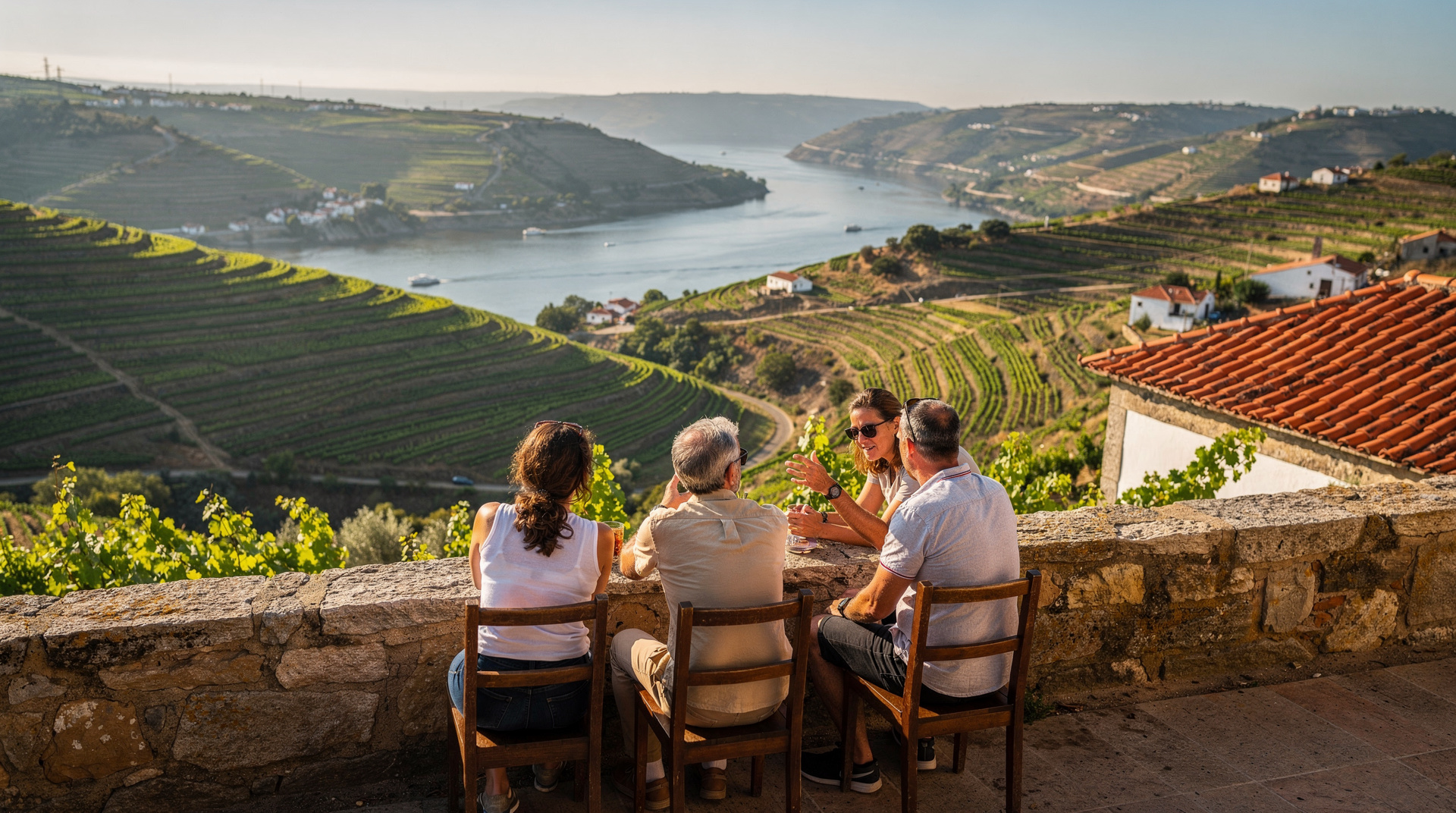
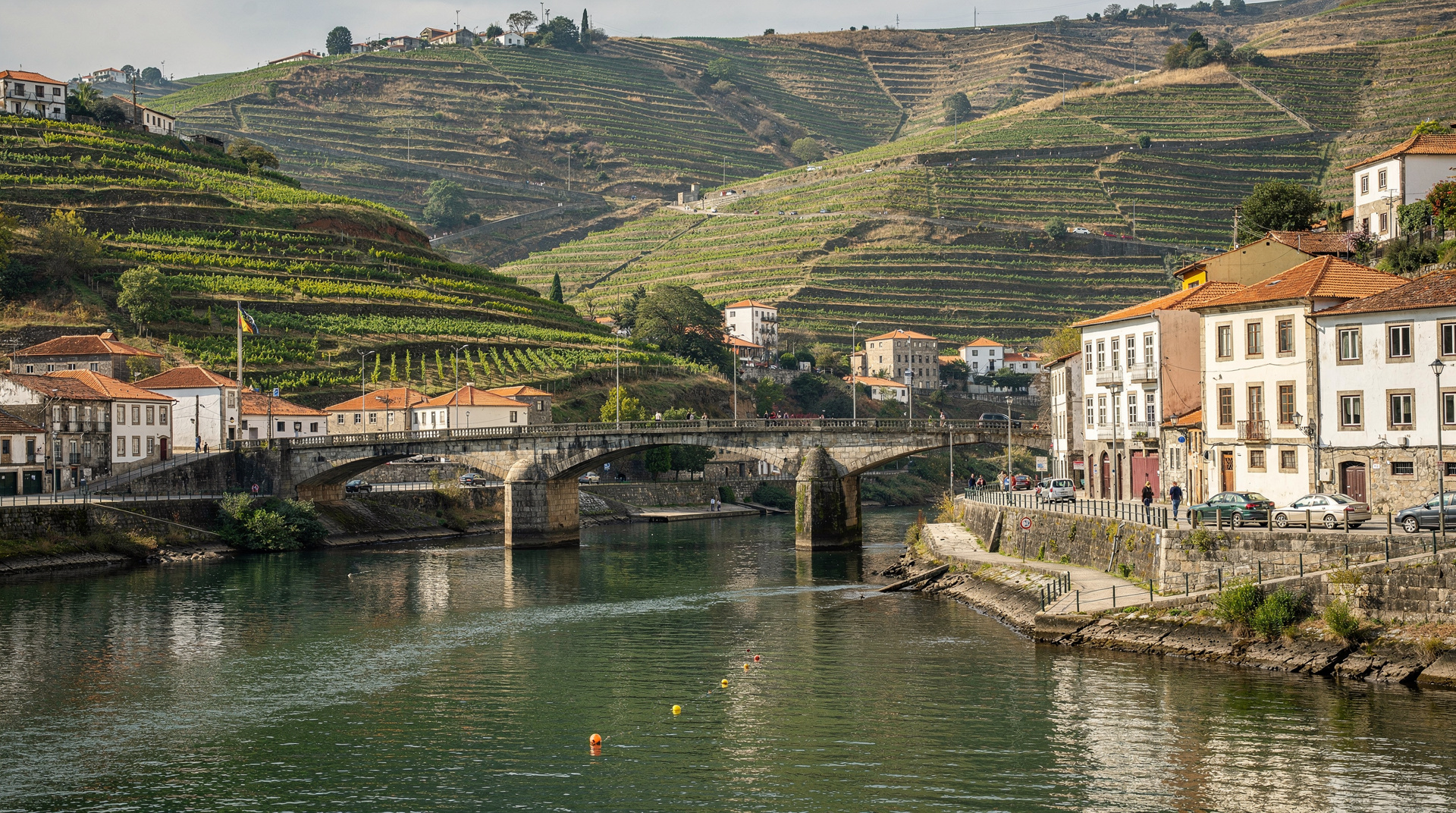
The Douro Valley is roughly 120 km east of Porto by road. The landscape changes dramatically as you leave the coastal zone: the flat Atlantic hinterland gives way to granite hills, then to the steep schist terraces of the protected wine region. The terraces themselves are the visual centrepiece — hundreds of narrow vine-covered ledges carved into near-vertical hillsides, rising from the river to the ridge. UNESCO inscribed the Alto Douro Wine Region in 2001, and you understand why within the first ten minutes of driving into the valley.
What you do in the valley falls into three categories: quinta (wine estate) visits and tastings, a river cruise, and the occasional town stop at Pinhão or Peso da Régua. The balance depends on how you get there and which tour or transport option you choose.
| Where | Douro Valley, roughly 120km / 1.5–2hrs east of Porto |
| Cost | around €60–85 standard tour, €100–140 premium, €20–25 train DIY |
| Time needed | full day, roughly 8am–7pm |
| Getting there | organised tour, Douro line train to Pinhão, or rental car |
| Best time | May–June or September–October (book ahead for vindima) |
Organised tours: the practical majority
About 90% of visitors to the Douro Valley arrive on an organised day tour from Porto. The reason is practical: transport is handled, a guide explains what you’re seeing, and the combination of quinta visit, lunch and river cruise is packaged into a single purchase. You don’t need to navigate Portuguese roads after tastings, pre-book taxis in a region with no on-demand transport, or figure out quinta opening hours independently.
Standard group tours (€60–85 per person)
The standard Douro day tour format visits one or two wine estates, includes a guided tasting of three to five wines, provides lunch (usually at a quinta restaurant or local tasca), and includes a one to two-hour river cruise. Groups are typically 25–40 people. The experience is structured but efficient — you see the valley, understand the wine, and get the river perspective in a single long day.
The Douro Wine Day Tour visiting two wine estates is the most-reviewed option in this category. It visits two quintas, includes a river cruise between Régua and Pinhão, and has lunch at a quinta restaurant. The two-estate format is worth the small premium over single-estate tours: you see different production methods and different wines, and the day feels less rushed.
For something slightly more narrative-driven, the full-day Douro tour with lunch from Porto covers both the wine culture and the agricultural history of the valley, which is useful context if you’re visiting without any wine background.
Premium small-group tours (€100–140 per person)
The difference between a 35-person coach tour and a small-group tour of 8–12 people is material in the Douro Valley context. Smaller groups gain access to quintas that don’t receive large buses; the winemaker or estate owner is more likely to be present; tastings are more in-depth; and questions actually get answered.
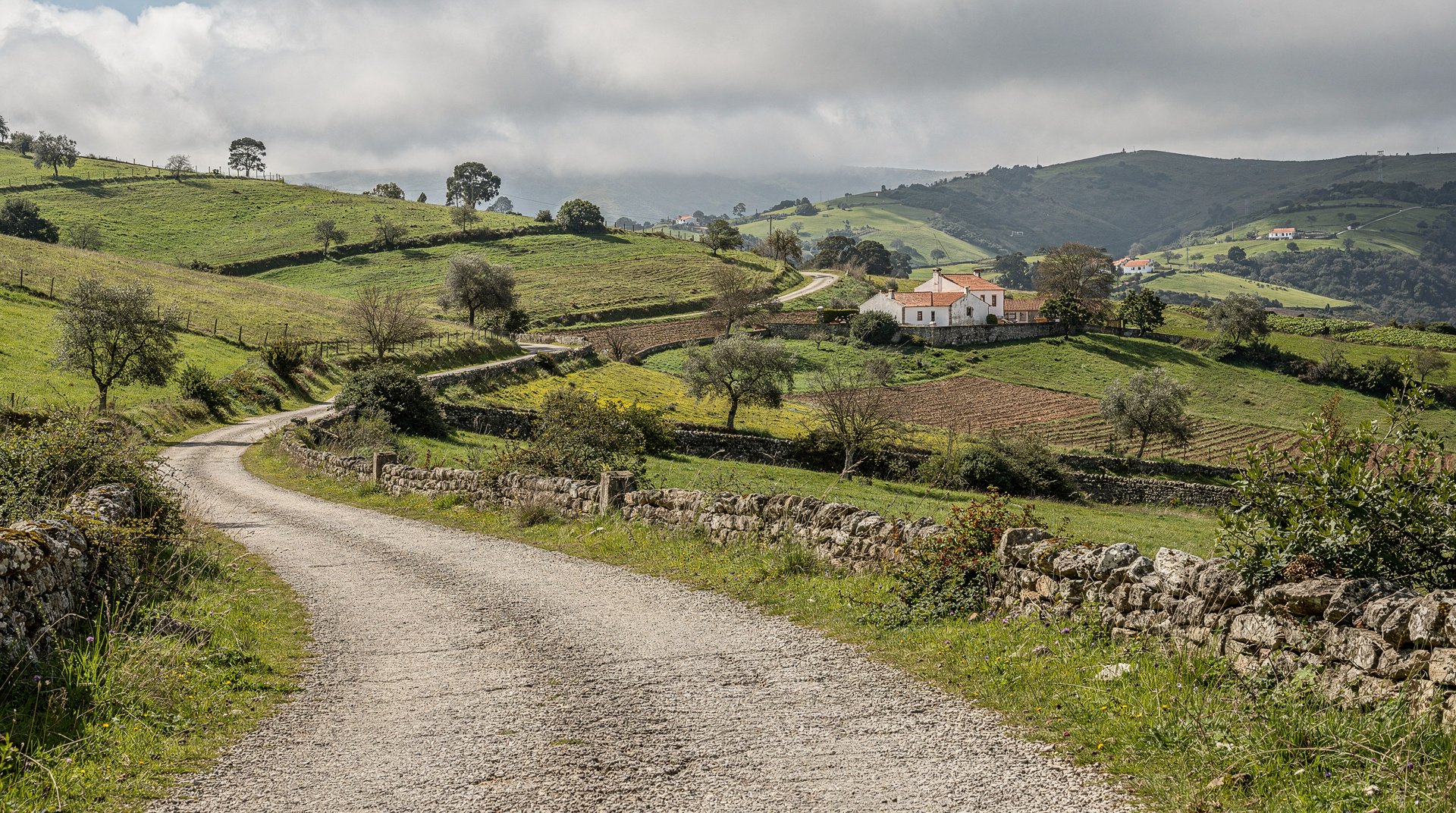
The Premium Douro Valley small group tour with lunch and private cruise keeps groups to 8 people maximum, includes a private cruise on the Douro, and visits two quintas with a tasting menu that goes beyond the entry-level wines. If wine is your primary reason for visiting the valley, the extra €40–60 is a reasonable investment. If you mainly want the landscape and a general introduction, the standard tour is adequate.
The full breakdown of tour formats and honest assessment of which to choose is in the dedicated guide. The short version: standard tours are fair value; premium tours are worth it for wine enthusiasts; private tours (€180–280/vehicle) make sense for couples or small groups.
The train option
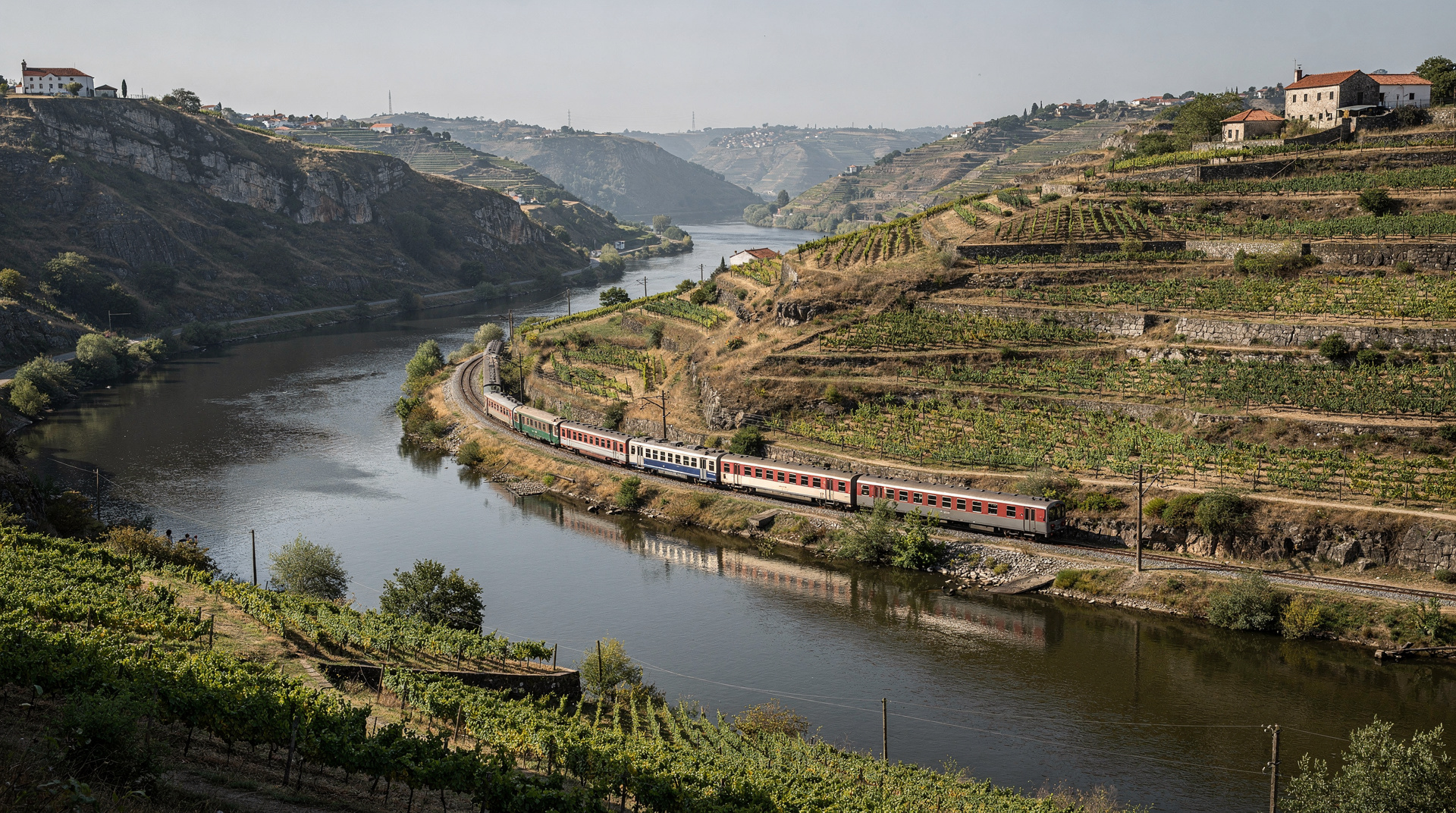
The Douro line from Porto Campanhã to Pinhão is one of the most scenic rail journeys in Portugal. From Régua eastward, the track clings to the valley walls above the river, passing through tunnels and along exposed cliff edges with views that rival anything in the Douro itself. Sit on the right-hand side of the train when travelling east.
A return ticket from Porto Campanhã to Pinhão costs approximately €20–24. Journey time is 2.5 to 3 hours each way. You depart from Campanhã — not from São Bento, which only has urban and suburban lines. The Campanhã platform for Douro trains is clear, but give yourself 15 minutes to get there from São Bento by metro.
The limitation is post-arrival logistics. Pinhão is a small village. Quinta do Bomfim is walkable (15 minutes from the station uphill). Quinta da Foz has a boat shuttle from Pinhão. Most other major quintas require a taxi or private transfer — and taxis in Pinhão must be pre-booked, since there are no ride-hailing services in the valley. The full transport comparison is in Douro: train vs car vs tour.
If you’re planning a self-organised train trip, the most efficient approach is: train to Pinhão, visit Quinta do Bomfim (walkable), take the scenic Régua–Pinhão river cruise in one direction, and pre-book a taxi to one further quinta. Total quinta cost: €15–25 per tasting per estate. This is cheaper than a tour but more logistically demanding.
By rental car
Driving to the Douro Valley from Porto takes 1.5–2 hours on the IP4 motorway. The road is well-maintained; the valley roads are narrow but manageable. The practical difficulty is driving back after visiting three or four quintas across the day. This is a real consideration, not a rhetorical one: a full tasting at each estate is five or six glasses of wine. Designate a non-drinking driver explicitly before you leave Porto, or choose a route that allows you to take the train back.
Car hire in Porto runs €40–65/day for a standard vehicle (plus motorway tolls, roughly €8–12 return). The advantage is flexibility: you can visit the best quintas in the Douro Valley on your own schedule, stay longer at places you like, and reach viewpoints and villages that tours don’t stop at.
What to do during the day
Whether you arrive by tour or independently, the day typically includes:
Quinta visits (2–4 hours total): A working quinta tour covers the vineyard, the winery or adega, and the ageing process. Tastings include three to five wines — typically one white, one or two reds, and a port or late harvest wine. Plan 1.5–2 hours per estate if you’re doing it properly.
River cruise (1–2 hours): The most popular section is Régua to Pinhão or the reverse. This stretch has the densest concentration of terraced vineyards and the most dramatic river bends. The Douro cruise from Pinhão guide covers the local boat options if you’re organising independently.
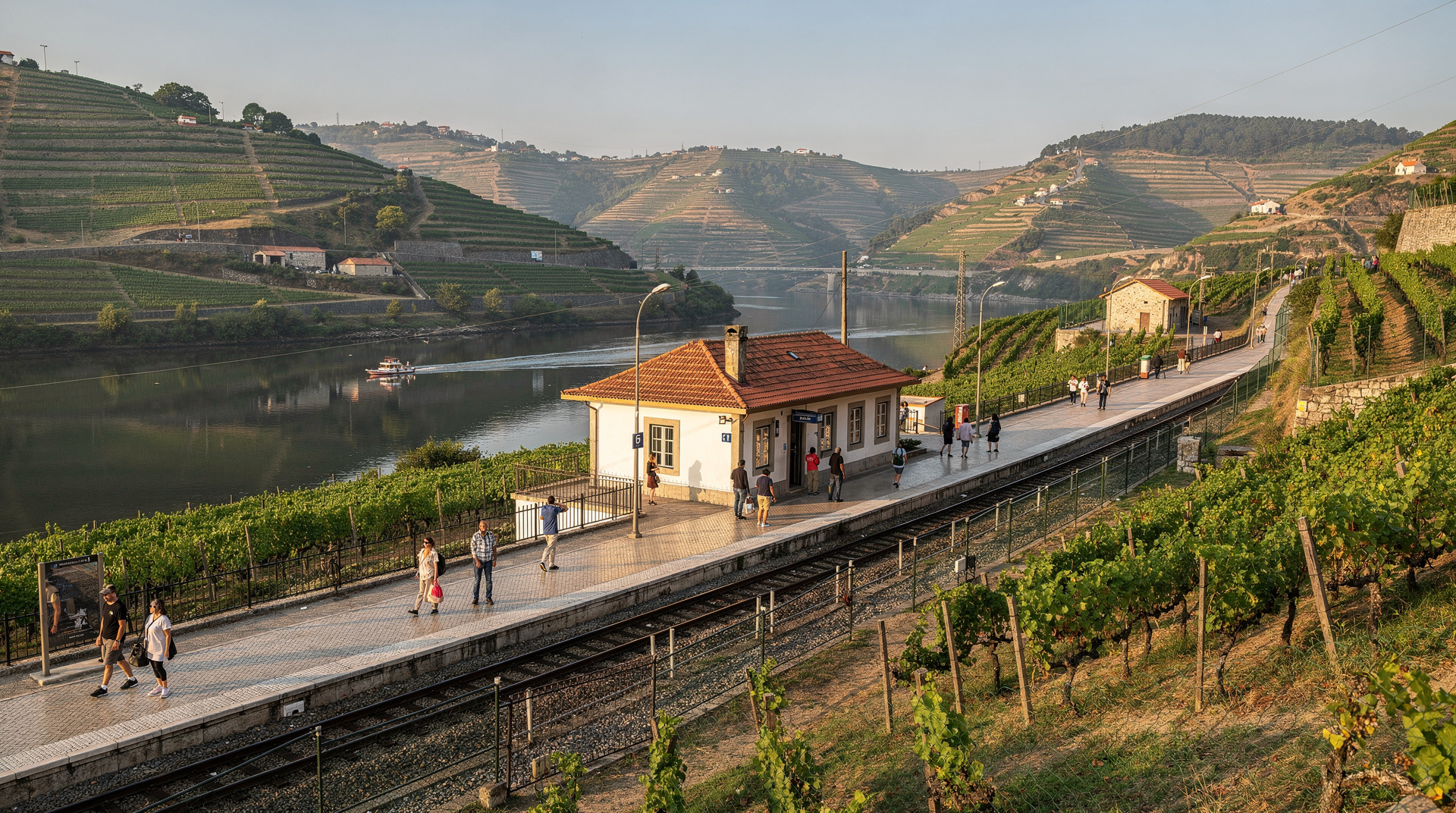
Town stops: Pinhão deserves 30–45 minutes minimum: the azulejo-tiled railway station (depicting harvest scenes), the village square, and the view over the Douro horseshoe from the hills above. Peso da Régua has the Douro Museum and a more functional dining scene. Lamego — 15 km south of Régua — adds the sanctuary of Nossa Senhora dos Remédios with its baroque staircase, though reaching it requires a car or taxi.
Which option suits you
| Option | Cost | Flexibility | Best for |
|---|---|---|---|
| Standard group tour | €60–85 | Low — fixed itinerary | First visit, wanting everything handled |
| Premium small-group tour | €100–140 | Medium — set route, smaller group | Wine enthusiasts, unhurried pace |
| Train to Pinhão | €20–25 | Medium — one base, pre-booked taxis for more | Budget travellers, scenery-focused |
| Rental car | €40–65/day + tolls | High — your own route and pace | Couples/groups with a non-drinking driver |
If you’re weighing these options against each other in more depth, the Douro: train vs car vs tour comparison breaks down the trade-offs further, and is a Douro Valley tour worth it covers the value case for paying more.
Staying longer instead of a day trip
A single day in the Douro is rewarding but rushed — most visitors who’ve done it once say they’d have liked another day. If your schedule allows it, the Douro and Porto 5-day itinerary builds in an overnight in the valley, which opens up sunset at a quinta terrace and a slower morning before the crowds arrive. The Peso da Régua guide and the Pinhão guide cover the two most practical bases if you want to split your trip that way, and travellers who tried a multi-day version instead of the classic day trip share their reasoning in best day trip from Porto, ranked.
Timing and booking
The best windows for a Douro day trip are May–June (green vines, mild temperatures) and September–October (vindima harvest, vivid colours, but pre-book everything). July–August is hot — the valley interior regularly reaches 35–38°C — but tours operate normally. November–April is quieter; some quintas reduce hours, but the train journey is still excellent and tour prices drop.
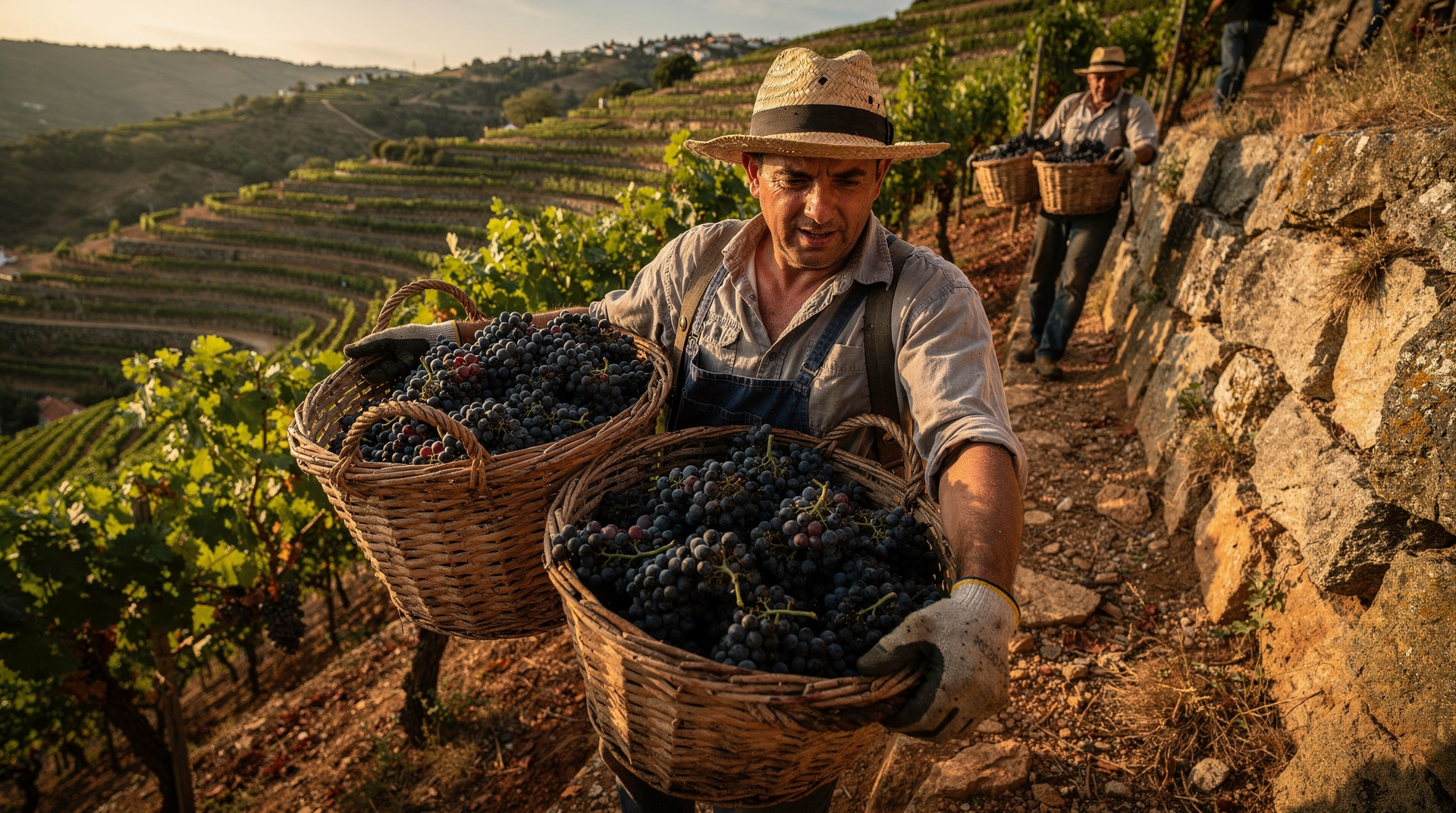
For harvest season (approximately 15 September–10 October), small-group tour slots fill up by August. If vindima is your goal, book three to four months in advance. The Douro harvest and vindima guide has the full timing breakdown.
Solo travellers, couples and groups
Solo travellers do the Douro comfortably on an organised tour — you’re grouped with other visitors for lunch and the cruise, and guides are used to mixed-size groups. Couples get the most out of a premium small-group tour or a private car with a driver, since it removes the designated-driver problem entirely and slows the pace at each quinta. Groups of four or more often find a private tour (€180–280 per vehicle, not per person) works out close to standard-tour pricing per head while giving a custom itinerary — worth pricing out if you’re travelling as a family or with friends.
What if the weather turns
Rain in the Douro doesn’t cancel a day trip, but it changes it. Quinta visits and tastings happen indoors regardless, so the wine side of the day is unaffected. River cruises typically still run, though open upper decks are less pleasant — bring a light waterproof layer rather than relying on the boat to provide one. The main loss is the viewpoint stops and the walk around Pinhão, which are genuinely better in clear weather. Checking the forecast the evening before and packing accordingly matters more than picking a different date, since weather in the valley can differ from Porto’s coastal forecast by several degrees and a shower or two.
Practical logistics checklist
- Depart Porto by 8–9 am regardless of method; earlier gives you more time in the valley.
- Campanhã station (not São Bento) for the Douro train. Metro line B, C, E or F to Campanhã, 5–7 minutes from São Bento.
- Pre-book taxis in Pinhão if you’re travelling by train and want to visit quintas beyond Bomfim. Local taxi contacts are posted at Pinhão station.
- Bring sunscreen and a hat, especially in summer. Quinta vineyard visits involve exposed outdoor walking.
- Comfortable shoes for uneven terrain — quinta paths are flagstone or compressed earth, rarely flat.
- Book quinta visits in advance during September–October. Some smaller estates cap groups at 12–15 people and fill up days ahead.
Frequently asked questions about Douro Valley day trips
Is a Douro Valley day trip worth it for non-wine drinkers?
The valley is worth visiting for the landscape alone — the UNESCO terraced hillsides and the river scenery are exceptional. Non-drinkers can participate in quinta tours (most are interesting beyond the tasting) and enjoy the scenery during river cruises. Some quinta tours offer olive oil and food pairings alongside wine. The main consideration is that you’re paying roughly €65–85 for a tour where a significant portion of the value is in the wine component.
What is included in a typical Douro day tour lunch?
Standard tours include a set lunch, usually two courses plus bread, dessert and sometimes a glass of wine. Lunch is served either at a quinta restaurant or a local restaurant near Régua or Pinhão. Premium tours typically offer a proper quinta lunch — three courses, with wines matched to each. The quality gap between standard and premium lunches is noticeable.
Is the Douro Valley day trip suitable for children?
The day is long and involves significant time sitting on a bus. Children over 8 tend to manage better than younger ones. River cruises and vineyard walks are enjoyable for kids; wine tastings are obviously adult-focused. Check specific tour age restrictions — some premium wine-focused tours prefer adults only.
Should I tip on a Douro Valley guided tour?
Tipping is not mandatory in Portugal but is appreciated for attentive service. €3–5 per person for a full-day guide is a reasonable benchmark if the experience was good. On independent quinta visits, tips are not expected but leaving something at a family-run estate is a nice gesture.
How far in advance should I book a Douro Valley day trip?
For the period May–October, book at least a week ahead for standard tours and 2–3 weeks for premium small-group tours. For September harvest season, book 4–6 weeks ahead at minimum — premium tours can be sold out months in advance.
What should I wear for a Douro Valley day trip?
Layers work best: mornings in the valley can be cool (15–18°C) even when midday hits 30°C+. Comfortable walking shoes are essential — quinta vineyard paths are uneven. A light jacket for river cruise decks, where wind can cut through even on hot days. Sunscreen regardless of season.
Frequently asked questions — Douro Valley day trip from Porto — the honest guide
How long does a Douro Valley day trip take?
Expect a full day: departures from Porto at 8–9 am, returns at 7–8 pm. Travel each way is 1.5–2 hours by car or 2–2.5 hours by train to Pinhão. On a standard tour you get roughly 5–6 hours in the valley itself.What is included in a Douro Valley day tour from Porto?
Standard tours (€60–85) include coach transport, a guide, visits to one or two wine estates with tastings, a river cruise (usually 1–2 hours), and lunch. Premium small-group tours (€100–140) add smaller groups, more quinta time and better wine selections.Can I do the Douro Valley day trip by train?
Yes. Porto Campanhã to Pinhão costs around €10–12 each way and takes 2.5 hours. The scenery is excellent. The limitation is that almost no quintas are reachable from Pinhão station on foot except Quinta do Bomfim (15 minutes' walk). For anything else, you need a pre-booked taxi — there is no Uber or Bolt in the valley.What is the best month for a Douro Valley day trip?
May–June for lush green terraces and moderate temperatures. September–October for the vindima harvest, but book 3–4 months ahead. July–August is hot (35°C+) and busy. November–March is quieter; some quintas reduce hours or close.How much does a Douro Valley day trip from Porto cost?
Tour: €60–85 (standard group), €100–140 (premium small group). Train DIY: €20–25 return transport, plus €10–20 per quinta tasting. Rental car: €40–60/day car hire plus fuel, which is practical only if you have a non-drinking driver.Should I book a Douro Valley tour in advance?
Yes, especially for September and October harvest season — premium small-group tours sell out weeks ahead. Standard tours have more availability but still fill up in peak summer. Booking at least a week ahead is sensible from May through October.
Top experiences
Bookable activities with verified prices and instant confirmation on GetYourGuide.
Porto: Douro Wine Day Tour from Porto Visit of 2 Wine Estates
Porto: Premium Douro Valley Small Group Tour Lunch Private Cruise
Porto: Porto Douro Valley Full Day Boat Train and Lunch Tour
Douro Valley: Douro Tour Full Day Tour from Porto with Lunch