Where to stay in the Douro Valley — Pinhão vs Régua vs quinta hotels
Viseu District: Douro Luxury Tour with Lunch at Quinta da Pacheca
Where should I stay in the Douro Valley — Pinhão or Régua?
For wine tourism with direct quinta access, Pinhão is better — it is more atmospheric and centrally placed for the most interesting estates. For practicality (more restaurants, services, easier transport back to Porto), Régua wins. Quinta hotels between the two give the best experience of all but cost significantly more. Budget €80–150 for a Pinhão guesthouse, €100–200 for a quinta guesthouse, €200–400 for a quinta hotel.
The accommodation decision in the Douro Valley
Deciding where to base yourself in the Douro Valley is more consequential than in most destinations because the valley has limited public transport, scattered attractions over a 60 km stretch of river, and accommodation options that vary enormously in character and price.
The decision has three layers: which town to use as a base (Pinhão vs Régua), what type of accommodation (quinta hotel vs guesthouse vs standard hotel), and what budget you are working with. This guide addresses all three honestly.
| Where | Pinhão or Peso da Régua, or a quinta between them |
| Cost | around €40–120 guesthouse, €80–150 quinta guesthouse, €180–400 quinta hotel |
| Time needed | at least 1 night to get real value from staying over a day trip |
| Getting there | train from Porto (~2 hrs to Régua, ~2h30 to Pinhão) or car |
| Best time to book | 4–6 months ahead for September harvest season |
Layer 1 — Pinhão or Régua as a base?
Staying in Pinhão
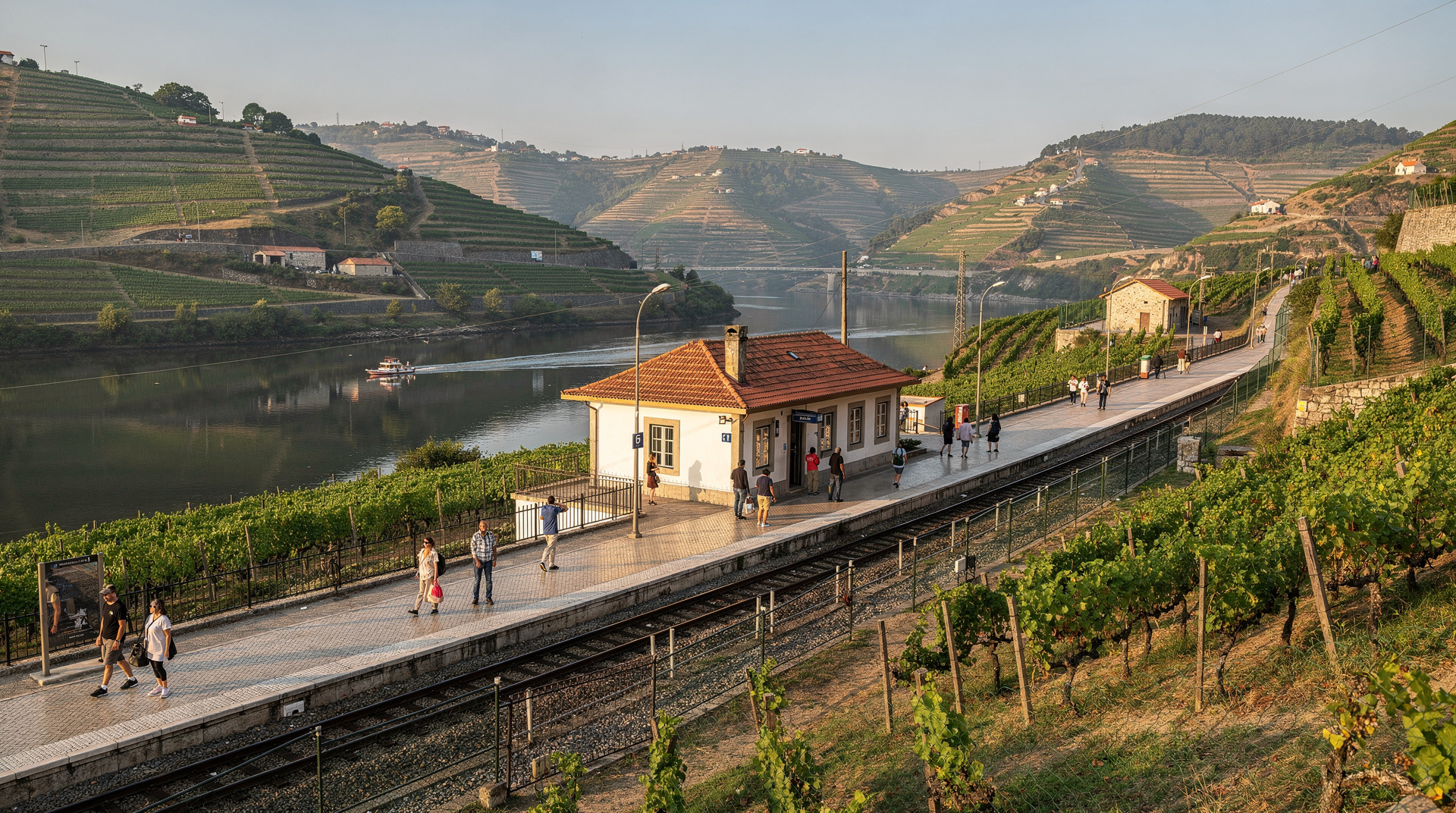
Pinhão is the more atmospheric choice. It sits in the heart of the most wine-interesting section of the valley, within walking distance of Quinta do Bomfim, with a dock for river cruises, and with the azulejo railway station as a constant reminder of where you are. A morning in the Pinhão vineyards before the day-trip coaches arrive, or an evening watching the light change on the terraced hillsides with a glass of local wine — these are the experiences that make staying in Pinhão worthwhile.
Pinhão’s limitations: Very few restaurants (one or two reliable options), no ATM reliability (carry cash), limited shops, no pharmacy nearby. If you want convenience, Pinhão requires accepting that you will eat at the same few restaurants for multiple evenings.
When to base in Pinhão: If wine tourism is your primary reason for the Douro visit and you have a car for day excursions to other quintas and viewpoints.
Staying in Régua
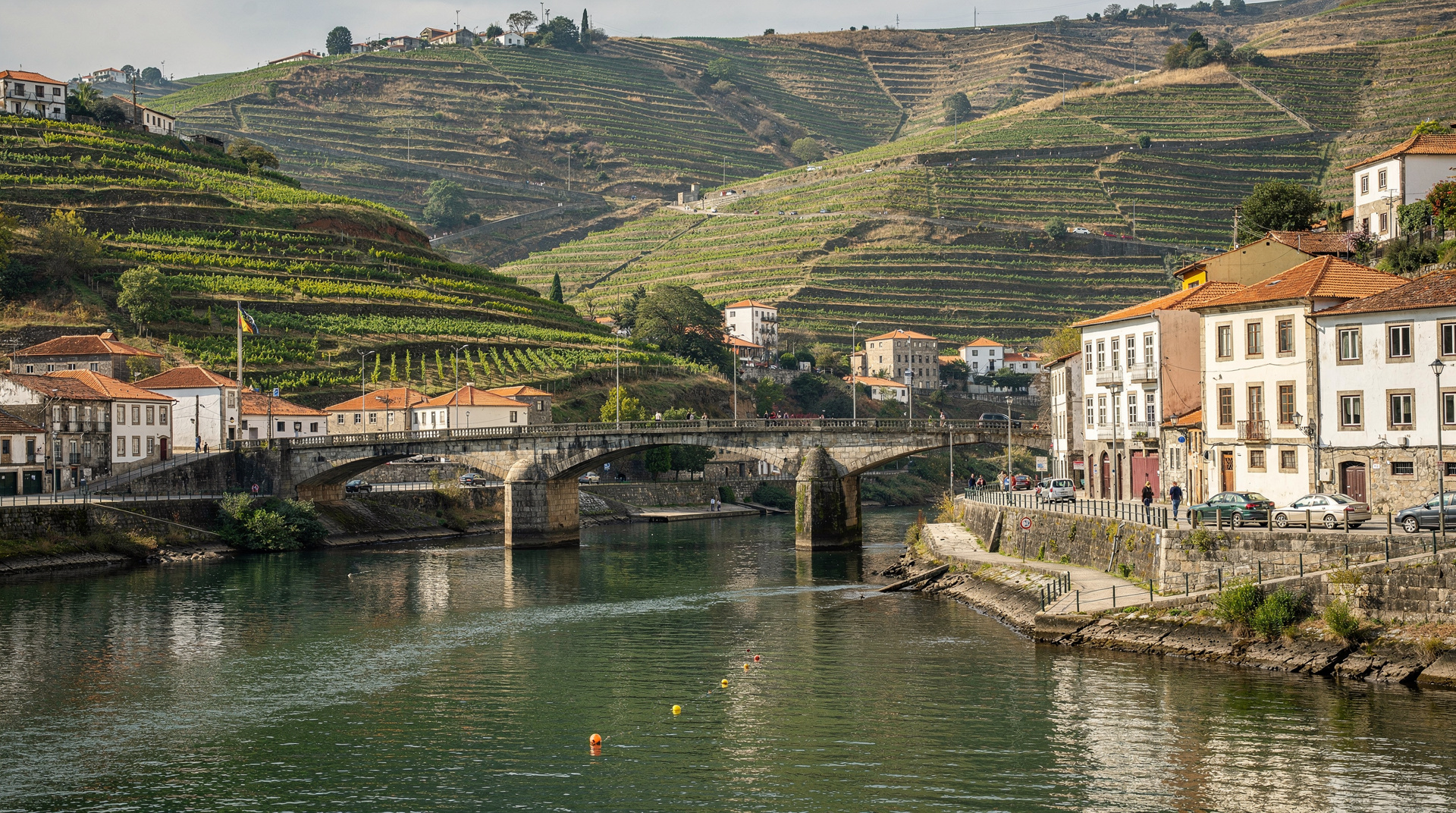
Peso da Régua has all the services Pinhão lacks: multiple restaurants, a supermarket, a pharmacy, reliable ATMs, the Museu do Douro, and a river cruise dock with good connectivity to Pinhão. The train connection to Porto is also direct and takes about 2 hours.
Régua is less atmospheric than Pinhão — it is a working town, not a picturesque wine village. But for a multi-day Douro visit with practical needs, Régua’s infrastructure is significantly more useful.
When to base in Régua: If your group has mixed interests (not everyone is purely wine-focused), if you want more restaurant variety, or if ease of returning to Porto matters.
Layer 2 — accommodation types and what to expect
Quinta hotels (€180–400 per night)
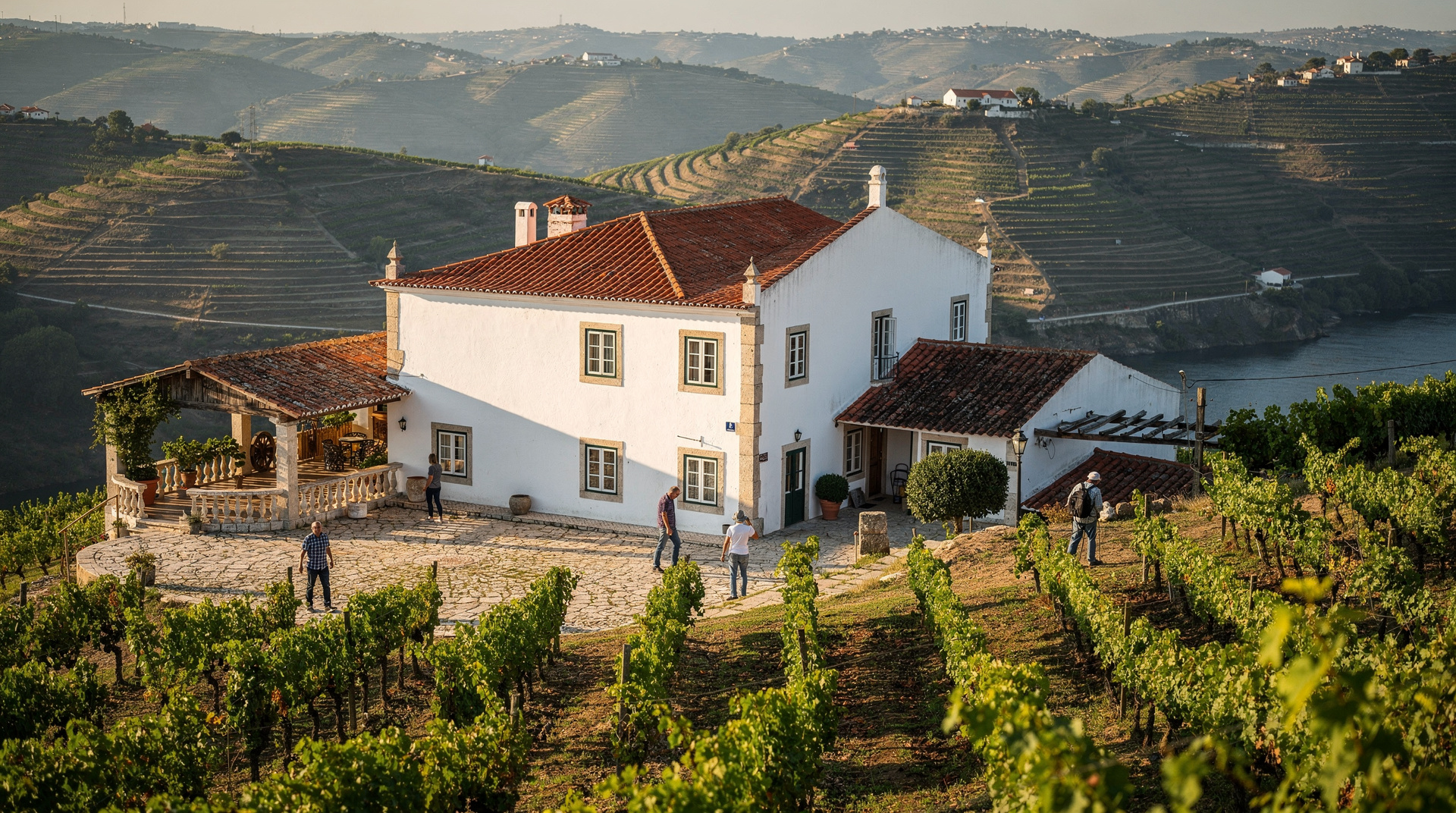
The top of the Douro accommodation range. Quinta hotels are the main reason to stay in the valley rather than day-tripping from Porto — they offer an immersive wine estate experience that no town guesthouse can replicate.
Quinta Nova de Nossa Senhora do Carmo: One of the valley’s most complete quinta hotel experiences. The Baroque manor house dates from the 18th century; the renovation is contemporary and well-done. 12 rooms, a restaurant serving regional cuisine with estate wines, a spa, pool, and full vineyard and winery visitor programme. Located between Régua and Pinhão on the north bank. Rates: approximately €200–350 per night.
Quinta da Pacheca: The valley’s most visually distinctive quinta hotel offers conventional room accommodation in the historic manor house alongside accommodation in converted wine barrels — barrel-shaped rooms positioned in the vineyard with sleeping space inside a repurposed wine barrel. The barrel rooms are a genuine novelty and not uncomfortable; they are also one of the most discussed accommodation experiences in Portugal. The quinta harvest experience at Pacheca is the best-known harvest participation programme in the valley. Rates: €120–200 (standard rooms), €250–350 (barrel rooms).
Check availability for the Quinta da Pacheca wine experience and accommodationQuinta de la Rosa: A long-established family quinta (British-owned since 1906) with simple but characterful rooms in the quinta buildings above the Douro. The setting is good — vineyards on three sides, river views from the terrace. Less formally hotel-like than Quinta Nova; more like staying in a working wine estate. Rates: approximately €100–180 per night.
Casa de Casal de Loivos: Not a quinta hotel in the traditional sense, but a boutique guesthouse at the extraordinary Casal de Loivos miradouro above Pinhão, with the most spectacular views in the valley. 8 rooms, pool, breakfast included. The position on the viewpoint gives you the Douro horseshoe bend visible from the terrace at all hours. Rates: €110–160 per night. One of the best-value luxury experiences in the valley.
The Yeatman (Vila Nova de Gaia): The Taylor’s Fladgate hotel on the Gaia hillside above Porto is technically in the greater Porto area rather than the valley, but worth mentioning for visitors who want the wine hotel experience with easy Porto access. Michelin-starred restaurant, pool with panoramic river views. Rates: €300–600 per night.
Quinta guesthouses (€80–150 per night)
A middle tier between town guesthouses and full quinta hotels — accommodation within a quinta property but without the complete hotel services. Rooms in converted quinta buildings or farm cottages, breakfast included, access to the quinta grounds.
Several estates in the Pinhão area offer this format. Quinta da Foz has rooms available with vineyard access; several unnamed smaller quintas advertise through booking platforms with this type of arrangement. Quality varies; checking recent reviews is essential before booking.
Town guesthouses and hotels (€40–120 per night)
Régua options:
Hotel Régua Douro is the main hotel option in town, positioned on the river with adequate but unexciting rooms. Standard rates €80–140 per night. Practical for late arrivals or early departures.
Casa da Eira is a small guesthouse in the old town with more character than the hotel; excellent breakfast; approximately €60–90 per night.
Several self-catering apartments are available through standard booking platforms at €40–70 per night — practical for longer stays.
Pinhão options:
Casa de Hóspedes Douro is the most recommended guesthouse in the village itself — simple rooms, local owners, basic breakfast. Approximately €55–80 per night.
Casa do Visconde de Chanceleiros (above Pinhão): A manor house guesthouse with views; slightly more expensive at €90–130 per night but offers more character than the village guesthouses.
Layer 3 — what prices look like by season
| Season | Budget guesthouse | Quinta guesthouse | Quinta hotel |
|---|---|---|---|
| Low (Nov–Mar) | €35–60 | €70–100 | €150–220 |
| Shoulder (Apr–Jun, Oct) | €55–90 | €100–150 | €200–300 |
| Peak (Jul–Aug) | €75–120 | €130–200 | €280–400 |
| Harvest (Sept) | €80–130 | €150–220 | €300–450 |
Harvest season (September) commands a premium of 20–30% above standard peak rates at quinta hotels and popular guesthouses, reflecting the surge in demand for the vindima experience.
The quinta hotel stay — practical reality check
A genuine quinta hotel experience involves things that sound good on paper and are actually good in practice:
Wine at breakfast: Most quinta hotels serve their own table wines at breakfast alongside the standard components. Starting the morning with a taste of the estate’s new vintage is one of those experiences that seems indulgent until you actually do it.
Vineyard access at dawn and dusk: Being in the vineyard before the day-trip groups arrive — at 7 am in May when the light is horizontal and the vines are dewy — is qualitatively different from visiting as part of an afternoon tour. This is the most convincing argument for overnight quinta stays.
Dinner at the quinta restaurant: The Douro is not gastronomically sophisticated in the Michelin sense, but quinta dining rooms serve honest regional food with appropriate wines at fair prices. Expecting fine dining will disappoint; expecting well-cooked Portuguese food with excellent local wine will satisfy.
The silence: After the day-trip coaches have left for Porto, the valley becomes very quiet. Walking the quinta terraces in the evening with no other visitors around is the experience that day-trippers cannot access.
Accommodation during vindima — book immediately
The harvest season is the most desirable time to stay in the valley and the hardest to book. For September dates:
- Quinta Nova: September often fully booked by January
- Quinta da Pacheca barrel rooms: Often sold out by February
- Casa de Casal de Loivos: September bookings typically open 6 months ahead
If you are planning a September Douro Valley stay, begin booking as soon as you have fixed your travel dates — not 4–8 weeks before departure but 4–6 months before.
For harvest participation programmes specifically, some quintas require confirmation of participation dates when booking accommodation — you are not just booking a room but a place in the harvest programme. The Douro harvest guide covers the participation logistics.
Check availability for Quinta Santa Julia accommodation and wine experiencesGetting there and moving around once you’ve picked a base
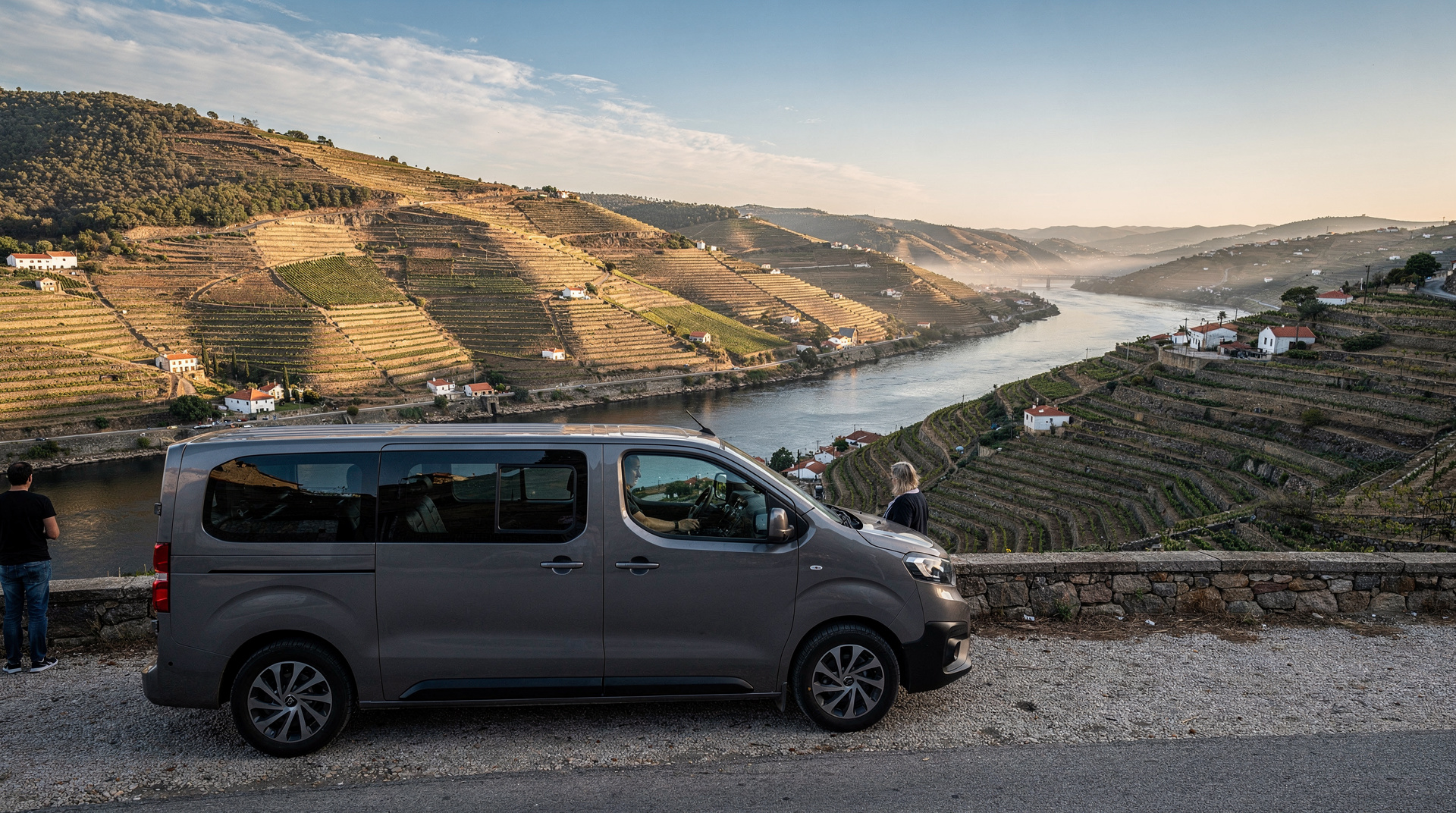
Trains from Porto run along the Douro line to Régua (about 2 hours) and continue to Pinhão (about 2 hours 30 minutes), with some of the most scenic river-hugging track in Portugal in the final stretch. A car gives more flexibility for reaching individual quintas and viewpoints not served by the train or river cruises, and is genuinely useful if you plan to visit several estates outside the main towns rather than staying put. Without a car, choose a base with a quinta hotel that runs its own shuttle or one within walking distance of a cruise dock — Pinhão’s guide covers exactly which properties fall into that category.
If you are unsure whether to commit to an overnight stay at all, the Douro Valley day trip guide and the best quintas guide are useful companions — read them alongside this one before booking, since which quintas you want to prioritise can influence which town makes the more sensible base.
Day trip vs overnight stay — the honest comparison
Day trip from Porto (10–12 hours total):
- Cost: €60–140 per person for a tour, or €25–40 for train + tasting
- Valley time: 5–7 hours
- What you miss: Dawn in the vineyard, the valley after the day-trippers leave, evening light on the terraces, a proper dinner with local wines
One night in the valley (first to second morning):
- Extra cost over day trip: €55–150 per person accommodation
- Extra valley time: 18+ hours
- What you gain: Everything listed above plus the ability to visit more quintas at a natural pace
For a genuine Douro Valley experience rather than a sampled one, one night minimum is the right recommendation. The financial case is also reasonably clear: the quality premium per euro is higher for an extra night than for most other travel upgrades.
Book a Douro river cruise with wine tastings and lunch — a good way to fill a free afternoon between quinta visits if you are staying overnight in Pinhão or Régua.
Frequently asked questions about Douro Valley accommodation
Can I find accommodation in Pinhão last-minute?
Occasionally — a small number of guesthouses and self-catering apartments appear on short-notice booking platforms. But Pinhão has very limited overall accommodation capacity, and anything with good river views or quinta access books out fast. For July–September especially, short-notice options will be the least desirable rooms at higher prices. Plan ahead.
Is there accommodation within a quinta that I can book without the hotel overhead?
Some quintas rent self-catering cottages (casas) within their estate at prices below the hotel rooms. These are not always listed on main booking platforms — searching specifically for “quinta cottage” or “casa de campo Douro Valley” on local Portuguese booking sites (Airbnb, local agencies) can find these options. The experience of staying in a self-catering quinta cottage is quieter and more independent than a hotel room; the trade-off is no breakfast or restaurant service.
How does Douro Valley accommodation compare in price to Porto?
A mid-range hotel room in central Porto costs €100–180 per night in peak season. A comparable-quality quinta hotel room in the Douro Valley costs €200–350 — a meaningful premium but including the breakfast, the vineyard access, and the qualitatively different experience. Town guesthouses in Régua or Pinhão are typically slightly cheaper than equivalent Porto guesthouses (€55–90 vs €70–120), though the service level is often more basic.
Do Douro Valley quinta hotels have swimming pools?
Several do — Quinta Nova, Quinta da Pacheca, and Quinta de la Rosa all have pools. The pool season is roughly May through September. A pool at a Douro valley quinta in summer is genuinely useful: the valley interior regularly reaches 35°C in July and August, and having a pool on the estate means you can retreat during the hottest hours rather than spending the entire day in the sun.
How many nights should I actually plan?
One night is the minimum for a genuine change from a day trip. Two nights is where the Douro Valley opens up properly: enough time to visit two or three quintas at a relaxed pace, take a river cruise from Pinhão, and have a full free morning without a checkout deadline hanging over it. Three or more nights suits visitors building a slower, wine-focused trip — at that point, alternating a quinta hotel with one night in Régua or Pinhão town gives both the immersive estate experience and easier access to varied restaurants.
For itinerary planning, the 4-day Douro wine lovers itinerary and the 5-day Porto and Douro itinerary both sequence accommodation choices against a realistic daily pace, which is a useful sanity check before booking multiple nights at a single quinta versus splitting the stay.
Frequently asked questions — Where to stay in the Douro Valley — Pinhão vs Régua vs quinta hotels
What is a quinta hotel in the Douro Valley?
A quinta hotel is accommodation within a working wine estate — typically in a renovated manor house or historic quinta buildings, surrounded by vineyards. Guests have direct access to the estate, its gardens, wine cellar, and often a pool or spa. Breakfast typically includes estate-produced wines or juices. Quinta hotels range from small guesthouses with 5–10 rooms to larger properties with restaurants and full hotel services.Is it worth paying more for a quinta hotel over a regular guesthouse?
For a genuine Douro Valley wine experience, yes. Waking up in a vineyard, having wine from the estate at breakfast, walking the vines before breakfast, and eating dinner with Douro wines in a quinta dining room is categorically different from staying in a town guesthouse. The premium is real (€100–200 more per night typically), but the experience gap is proportionate.What is the cheapest way to stay overnight in the Douro Valley?
The cheapest reliable options are guesthouses in Peso da Régua — simple rooms with breakfast at €40–70 per night. Pinhão has a small number of guesthouses at similar prices but more limited availability. Budget quinta guesthouses (simpler rooms within a quinta property without the full hotel services) start at approximately €80 per night.Should I stay in the Douro Valley or do a day trip from Porto?
A day trip from Porto is fine if you have one day for the Douro. An overnight stay transforms the experience — you get the valley in the evening light, at dawn, and without the day-trip time constraint. Two nights allows a proper exploration of multiple quintas and the river. If wine tourism is a genuine priority, stay at least one night.Are quinta hotels open in winter?
Most quinta hotels reduce operations between December and February — some close entirely, others operate with reduced services (no restaurant, no pool, limited quinta tour options). Always check current opening status before booking winter dates. Guesthouses in Régua and Pinhão generally remain open year-round.How far in advance should I book Douro Valley accommodation?
For September harvest season (vindima): 3–6 months ahead. The best quinta hotel rooms for the September harvest sell out in January or February. For May–June peak spring: 4–6 weeks ahead for quinta hotels, 2–3 weeks for guesthouses. July–August: 6–8 weeks for quinta hotels. October–April: 1–2 weeks is usually sufficient except for bank holiday weekends.
Top experiences
Bookable activities with verified prices and instant confirmation on GetYourGuide.