Douro harvest guide — how to experience the vindima in 2026
Porto: Premium Douro Valley Small Group Tour Lunch Private Cruise
When is the Douro Valley harvest and how do I participate?
The vindima runs from approximately 15 September to 5 October, varying by year and altitude. To participate in harvest activities (picking, foot-treading), book 3–4 months in advance — September dates at quality quintas fill by June. Even without participating, visiting during harvest gives an extraordinary atmosphere that passive visitors can enjoy. Most visitor quinta programmes include observation without full participation.
| Where | Douro Valley, particularly around Pinhão and Régua |
| Cost | Around 100–150 € per person for a genuine harvest-participation day |
| Time needed | Full day, or 2–3 nights for full lagar participation |
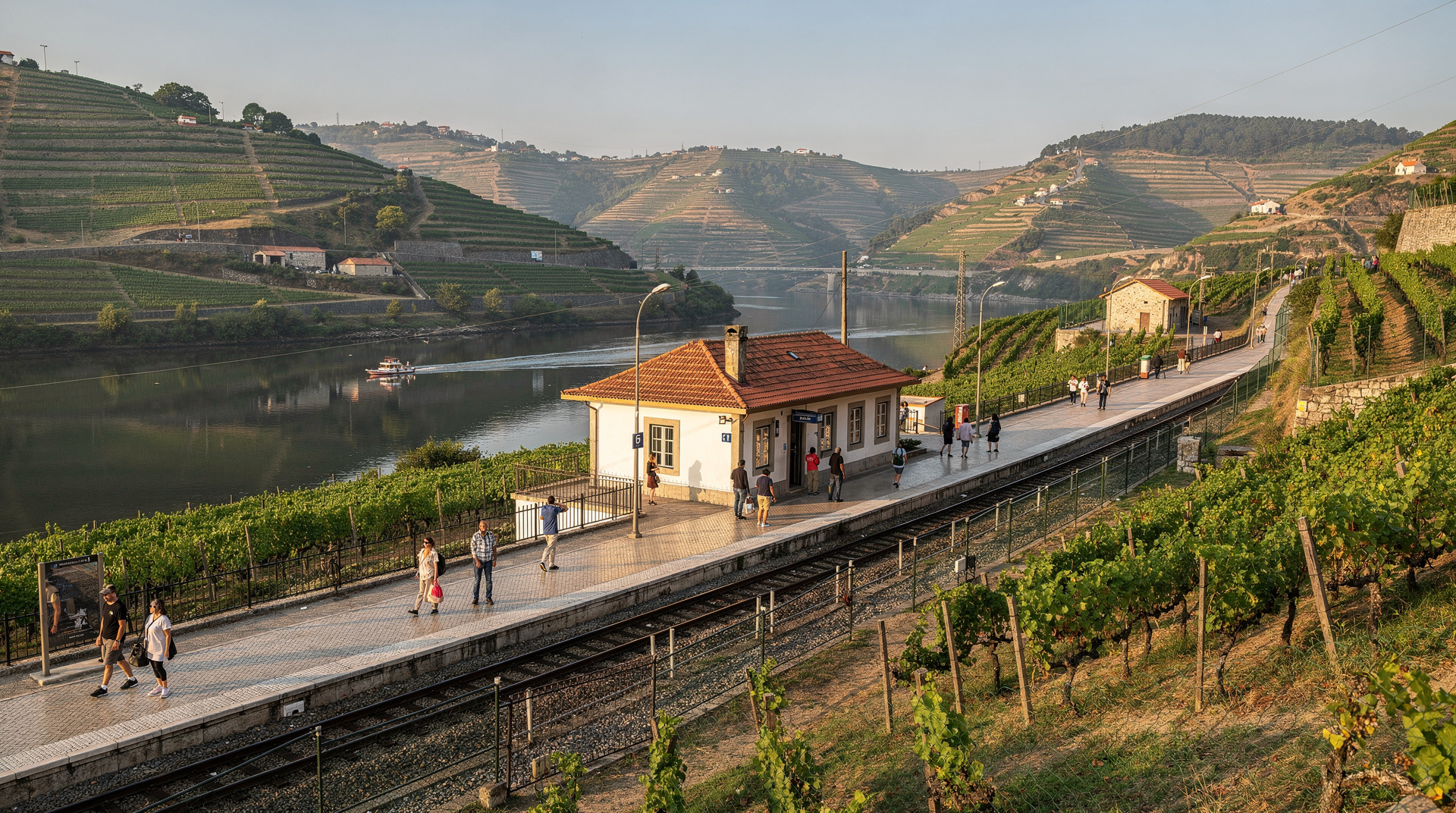
| Getting there | Train to Pinhão, car, or organised harvest tour from Porto |
| Best time | 15 September to 5 October (varies by year and altitude) |
Why the vindima matters
The Douro Valley has one defining season, and it is not summer. The vindima — the annual grape harvest — transforms the valley from a beautiful agricultural landscape into a working production zone that is also one of the most extraordinary sensory experiences in European wine culture.
From approximately 15 September to early October (the precise timing varies by year, altitude, and grape variety), every quinta in the valley is operating at full capacity. Workers pick grapes by hand on slopes steep enough that machinery cannot operate — a process largely unchanged from what the 1937 azulejo panels at Pinhão station depict. At traditional quintas that still use the pisa a pé method, teams of workers tread the grapes with their feet in stone lagares through the night, singing and moving in coordinated rhythm to ensure even extraction. The entire valley smells of fermenting grape must.
Visiting the Douro during vindima is one of those travel experiences that is difficult to prepare for and almost impossible to forget.
The timing — when does the harvest happen?
The Douro vindima is not a fixed-date event. It is controlled by the ripeness of the grapes, which varies by vintage year, altitude, sub-region, and variety.
General window: 15 September to 5–10 October for most years and most grape varieties.
Lower valley (Baixo Corgo): Typically begins earlier, often in the first week of September, because lower altitudes and warmer temperatures advance ripeness.
Upper valley (Cima Corgo and Douro Superior): The Pinhão and Vesúvio areas typically harvest in the final two weeks of September and into October. The Douro Superior (Portugal’s most remote sub-region, near the Spanish border) can harvest into early October.
2026 specific: As of early 2026, vintage predictions suggest a September harvest in the 15–30 September window. Confirm with your quinta or tour operator closer to the date — harvest timing can shift by up to two weeks depending on the spring and summer weather.
White grapes first: At most quintas, white grape varieties are harvested before reds. If you want to see the harvest of the varieties that go into port wine (predominantly red varieties including Touriga Nacional, Touriga Franca, Tinta Roriz), target the last two weeks of September.
What the harvest day looks like
A typical harvest day at a working quinta begins at dawn. Work crews (cuadrillas) arrive by truck from surrounding villages and towns — the harvest workforce in the Douro is partially seasonal, with workers coming from across northern Portugal and, in some years, from Galicia in Spain.
The picking is done by hand, row by row, with workers moving down the steep terraces with baskets that they fill and carry up to the collection points at the top of each terrace. At the collection point, the baskets are emptied into larger containers that are taken by tractor to the winery.
In the adega, the grapes are processed — sorted, crushed (at some quintas by machine; at others still by foot), and directed either to steel fermentation tanks or to stone lagares for the traditional pisa a pé foot-treading.
By midday, the adega is in full production, processing the morning’s picked grapes. The workers break for lunch — traditionally a substantial communal meal prepared for the harvest crew, one of the most convivial moments of the harvest calendar.
In the afternoon, picking resumes. At quintas with lagares, the evening brings the start of the foot-treading session — typically two or three hours of treading beginning after dinner, when temperatures have dropped.
How visitors can participate
Participation options fall into three categories:
Full harvest participation programmes
A small number of quintas offer visitor programmes specifically designed for harvest participation — typically a two or three night stay at the quinta hotel combined with daily harvest activities: joining the picking crew in the vineyards, participating in the lagar treading session, sharing the harvest lunch with the workers.
Quinta da Pacheca (near Régua): One of the most developed harvest participation programmes, specifically offering lagar treading for visitor groups. The quinta hotel accommodation allows overnight stays during the harvest. The Quinta da Pacheca harvest experience with accommodation is the most accessible formal participation programme available.
Quinta do Bomfim (near Pinhão): During harvest, visitor programmes include the opportunity to observe and briefly participate in the adega operations. The lagar treading at Bomfim is one of the valley’s more visually dramatic experiences. Book the Quinta do Bomfim harvest-season visit
Booking lead time: Three to four months minimum for September. For Quinta da Pacheca’s harvest accommodation programme, bookings open in January and the most desirable dates can sell out by March.
Harvest observation visits
Many quintas that do not offer full participation programmes include harvest observation as part of their September visitor experience: the vineyard walk includes observation of the picking process, the winery visit includes watching the adega in active operation.
This is the format most readily available through standard quinta visit bookings during harvest season. You see the harvest but do not pick grapes. It is still extraordinary — particularly the adega, where the smell and sound of active fermentation is overwhelming in the most positive sense.
Harvest tour from Porto
Several tour operators run dedicated harvest-season day tours and multi-day tours from Porto. A good harvest tour from Porto visits one or two quintas during active harvest operations, includes a harvest lunch, and often combines a river cruise with the quinta visit.
The premium small-group Douro tour during harvest season keeps groups to eight or fewer and is designed to access quintas that don’t receive large coaches — the format that gives the most genuine harvest engagement for day-trippers from Porto.
Red flag: Tours that mention “harvest season” or “vindima” in their description but don’t specifically include quinta access during harvest operations are simply regular Douro tours running in September. The harvest content needs to be explicit in the itinerary.
What to ask before booking a harvest tour: Will there be active picking or treading happening on the day of my visit (harvest timing varies by grape and altitude, so even a September date isn’t guaranteed to coincide with peak activity)? Is participation offered, or only observation? Is the harvest lunch included, and is it the communal worker-and-visitor meal or a separate tourist-only setting? A tour operator who answers these clearly and specifically is more likely to deliver a genuine harvest experience than one who responds only in general terms about “the beautiful Douro in autumn.”
The two-winery and chef cruise harvest tour includes harvest-season quinta visits with a lunch cruise — a good mid-range option.
The foot-treading experience — what to expect
If you participate in pisa a pé (foot-treading in a lagar), here is what actually happens:
The lagar is a shallow rectangular stone tank, typically 1–2 metres deep and 3–5 metres wide. It holds between 1 and 5 tonnes of grapes. The treading team (typically 10–20 people at a traditional quinta) stands in the grapes and moves in a coordinated line, lifting and placing feet in a rhythmic pattern to achieve even extraction without crushing seeds.
The first phase (an hour or more of continuous walking) is physically demanding — the grapes are cold and the must rises as extraction progresses. The traditional Douro villages have historically used the harvest as a social occasion; the singing that accompanies the treading is a genuine tradition, not a tourist performance.
For visitor participation: You typically join a short session (30–45 minutes) of the foot-treading rather than the full multi-hour programme. The experience is memorable regardless of duration. Wear clothes and shoes you don’t mind getting stained — grape must is extremely effective at permanently dyeing fabric.
Most quintas provide a rinse-off area and towels afterward, but the purple staining on skin and light-coloured shoes can persist for a day or two — worth knowing if you have another activity planned for the following morning.
Accommodation during vindima — book now
The accommodation situation during harvest is the same as everything else: book early.
Quinta hotels: Quinta Nova, Quinta da Pacheca, Quinta de la Rosa, and Casa de Casal de Loivos all offer accommodation in the vicinity of active harvest operations during September. These properties typically run waiting lists for September accommodation from July onward. Late-booking alternatives include guesthouses in Régua and Pinhão, but these also fill rapidly.
Transport: If you are based in Porto, early-morning departures are necessary to reach the valley before active harvest operations begin. The first train from Campanhã to Pinhão typically departs around 6–7 am. Pre-booked tours with pickup from central Porto should be confirmed for their specific harvest-season timing.
The where to stay in the Douro Valley guide covers the full accommodation landscape including harvest-season pricing, which typically runs 20–30% above standard rates.
A practical booking sequence for a harvest trip: confirm your travel dates first, then book quinta hotel accommodation (if staying overnight) within the same week, then book any lagar participation or premium small-group tour, and only then finalise flights or the rest of your Portugal itinerary around those fixed points. Reversing this order — booking flights first and hoping harvest activities have availability — is the single most common planning mistake for a vindima trip, since the accommodation and participation slots are the genuinely scarce resource, not the transport.
The harvest lunch — a non-negotiable cultural experience
The harvest lunch (almoço da vindima) at a working quinta is one of the great communal meals of Portuguese wine culture. The tradition dates from when estates depended on large seasonal workforces and fed them from the quinta’s own kitchen.
A genuine harvest lunch involves: soup (caldo verde or sopa de legumes), substantial main courses (typically bacalhau, grilled chicken, or beef with potatoes and vegetables), bread, cheese, and a dessert. House wine (usually the quinta’s table wine from previous vintages) flows freely. The meal is eaten by workers and visitors together in the quinta’s main dining room or courtyard.
Not every quinta includes the harvest lunch in their visitor programme — some only provide observation and tasting. The best quintas guide specifies which estates include lunch in their harvest visits.
What you cannot book last-minute in September
To avoid disappointment, understand what will not be available on short notice:
- Quinta lagar treading participation (books out months ahead)
- Quinta hotel accommodation (books out months ahead)
- Premium small-group tours with genuine harvest access (books out in July)
- Taylor’s and Graham’s Gaia cellar premium tastings (books out in August)
What remains available last-minute:
- Standard group day tours from Porto to the Douro (larger operators have rolling availability)
- Train to Pinhão (seats available unless booking a weekend in peak harvest)
- Restaurant tables in Régua and Pinhão (call ahead, most can accommodate same-day bookings)
- Quinta do Bomfim walk-in visits (some walk-in capacity maintained even in peak season)
Getting to the harvest — transport during the busiest season
Reaching the valley during vindima uses the same options covered in the train vs car vs tour comparison, but with tighter constraints. Trains to Pinhão run on the normal schedule, though early departures fill faster in harvest season since day-trippers want to arrive before active picking winds down for the midday heat. If you’re driving, factor in that some quinta access roads carry harvest traffic — tractors and trucks moving grapes — that isn’t present the rest of the year, adding a small but real amount of time to any route through Peso da Régua or the villages beyond it.
Organised harvest tours solve most of this, and during September–October specifically, the value case for a tour over DIY is stronger than at any other time of year: operators with existing quinta relationships get participation slots that simply aren’t available to independent visitors booking direct. The is the Douro Valley tour worth it guide covers how to evaluate a specific harvest tour’s inclusions against its price.
For visitors extending beyond a single day, the Porto and Douro 5-day itinerary shows how a harvest-season Douro stay fits into a longer Portugal trip without the day feeling rushed.
Frequently asked questions about vindima
Can I go to the Douro for the harvest without booking anything?
You can take the train to Pinhão and observe the harvest activity from the village and roadsides without any bookings. The visible activity — tractors, workers, the general atmosphere of an agricultural region in full production — is accessible without entering any quinta. However, the most rewarding harvest experiences (lagar treading, quinta observation, harvest lunch) all require advance booking. Arriving without planning gives you the atmosphere but not the content.
Is the harvest good for children?
Yes — vineyard walks and the general harvest atmosphere are interesting for older children. The lagar treading is enjoyable for children who are comfortable in a hands-on, wet environment. The harvest lunch is appropriate for all ages. Very young children (under 5) would find the long quinta walks and the pace of the day challenging; a shorter harvest observation visit works better for families with small children.
Does every year have a good harvest?
No — vintage quality varies significantly. Excellent years (2017, 2016, 2011) produce concentrated, age-worthy wines; difficult years (with excessive rain during harvest or summer heat stress) produce lighter wines. As a visitor, the quality of the harvest you observe does not significantly affect the experience of being there — the activity and atmosphere are similar regardless of vintage quality. The winemakers’ discussions of vintage challenges are often the most interesting conversations of a harvest visit.
What is the effect of climate change on the Douro harvest?
The Douro Valley is among the European wine regions most affected by climate change. Average temperatures have risen measurably over the past three decades, advancing harvest dates by approximately two weeks. The most extreme recent vintages have seen harvest beginning in late August in the lower valley. Quintas are responding with experimental varieties, elevation shifts, and vineyard management changes. These conversations are increasingly part of the quinta visit narrative, particularly at wine-serious estates.
Frequently asked questions — Douro harvest guide — how to experience the vindima in 2026
What exactly is the vindima?
Vindima is the Portuguese word for the grape harvest. In the Douro Valley, it refers to the annual harvest period during which the grapes are picked from the steep terraced vineyards and delivered to the quintas for fermentation. The vindima in the Douro is physically demanding and visually extraordinary: workers pick by hand on slopes of up to 60° gradient, and at many traditional quintas the grapes are still crushed by foot treading in stone lagares. It is one of the most atmospheric annual agricultural events in Europe.What is foot-treading (pisa a pé) and can visitors participate?
Pisa a pé is the traditional Douro method of fermenting port wine grapes — workers tread the grapes with their feet in shallow stone tanks called lagares, combining controlled foot pressure with the body warmth that encourages gentle fermentation. Several major quintas still use this method alongside modern stainless steel alternatives. Some quintas (Quinta da Pacheca, Quinta do Crasto, Quinta do Bomfim) offer visitors the opportunity to tread grapes in the lagar during harvest season. Booking is essential and spaces are limited.Do I need to book harvest activities months in advance?
Yes — 3 to 4 months ahead for September harvest dates at quality quintas. Quinta lagar treading spaces and small-group harvest tours sell out by June or earlier. The most desirable formats (overnight stays with harvest participation at quinta hotels like Quinta Nova or Quinta da Pacheca) can sell out in January for September dates. Tour operators and GYG often have broader availability than booking directly with quintas.Is visiting during harvest better than other times?
For the specific atmospheric experience of harvest, September–October is unambiguously the best time. The valley is at its most active and visually distinctive — the workers, the equipment, the smell of fermenting grapes. However, visiting during harvest requires more planning, costs more, and means more crowds at popular quintas. May–June (green vines, comfortable temperatures) and October–November (autumn colours, quieter) are also excellent and require far less advance planning.What weather should I expect during the Douro harvest?
The Douro harvest happens in warm to hot conditions — daytime temperatures during September are typically 25–32°C. Rain during harvest is the winemakers' nightmare; years with rain in September can see lighter, less concentrated wines. For visitors, September weather in the Douro Valley is generally reliable — dry and clear, with warm days and cool nights. Bring sunscreen and a light layer for evenings and boat cruises.Are there harvest tours departing from Porto?
Yes — several tour operators run dedicated harvest tours from Porto during September–October. These typically include transport, a quinta visit with harvest observation or participation, a harvest lunch, and sometimes a river cruise. Premium small-group formats with genuine harvest engagement run approximately €100–150 per person. The key is checking that the tour includes actual harvest activities rather than just a quinta visit that happens to be in September.
Top experiences
Bookable activities with verified prices and instant confirmation on GetYourGuide.