Douro Valley by train vs car vs tour — which is best for you?
Porto: Porto Douro Valley Full Day Boat Train and Lunch Tour
What is the best way to get to the Douro Valley from Porto?
The train to Pinhão (~2.5 hours, ~€10 each way) is the most scenic and cheapest option but limits quinta access. A rental car gives full flexibility but creates a post-tasting driving problem. An organised tour handles logistics but quality varies enormously. Most first-time visitors do best with a small-group guided tour; train is ideal for budget travellers comfortable with limited quinta access.
The decision you need to make before booking anything
The Douro Valley is 120 km from Porto. It has no Uber or Bolt, almost no local bus service between attractions, and a train that reaches only a few points along the valley. For the overwhelming majority of visitors, the choice of transport method is not a preference but a practical decision that determines what the day looks like.
This guide sets out the three main options — train, rental car, and organised tour — with honest assessments of what each delivers and who it suits. There is no universally correct answer; the right choice depends on your budget, your wine interest, your group composition, and your tolerance for logistical complexity.
| Where | Douro Valley, ~120 km east of Porto |
| Cost | ~€24–30 train, ~€65–100 car, ~€60–140 tour per person |
| Time needed | Full day for any of the three options |
| Getting there | Porto Campanhã station, IP4 motorway, or organised pickup |
| Best time | May–June or September–October |
Option 1 — the train to Pinhão
Cost: ~€9–12 single, ~€18–24 return Journey time: 2.5–3 hours from Porto Campanhã to Pinhão What you gain: Spectacular scenery, low cost, independence What you sacrifice: Quinta access, flexibility, guided context
The scenic case for the train
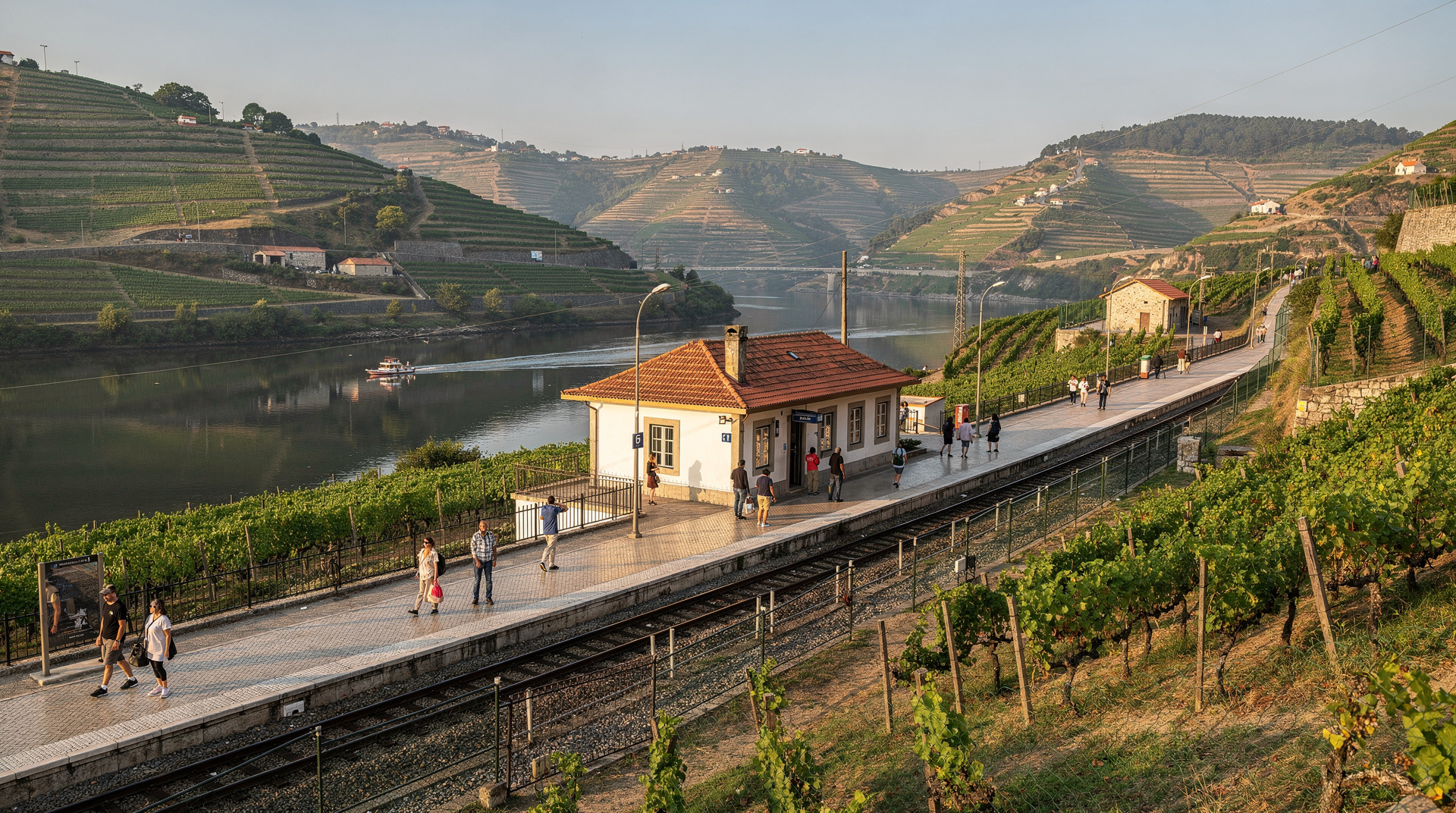
The Douro railway line between Porto and Pinhão is one of the most beautiful rail journeys in Europe, and the section from Régua to Pinhão specifically belongs in a category of its own. The track was built in the 1880s by engineers who cut into the valley walls to keep the gradient manageable — the result is a route that hugs the cliff faces above the river, passes through tunnels blasted through schist hillsides, and repeatedly reveals views of terraced vineyards descending to the river far below.
Sit on the right-hand side of the train when travelling east (away from Porto). The views over the Douro and toward the terraced hillsides on the south bank appear on this side. Window seats are worth securing — in peak summer, trains can be crowded.
The journey from Campanhã to Régua takes approximately 2 hours; Régua to Pinhão is a further 30–40 minutes. The final section is the most spectacular and should not be missed.
The practical limitations of the train
From Pinhão station, very little is walkable. Quinta do Bomfim — the Symington family estate producing Dow’s port — is about 15 minutes uphill from the station. The Quinta do Bomfim visit and tasting is a solid standalone experience: guided tour, views from the upper terrace, and a good range of Dow’s ports and Douro table wines. If you are content with one quinta, the train-plus-Bomfim combination is completely valid.
For anything else — Quinta do Crasto, Quinta do Vesúvio, Quinta de la Rosa, Quinta Nova — you need a pre-booked taxi. Pinhão’s taxi service is not on-demand. The taxi numbers are posted at the station; call ahead and arrange pickup times before you board the train in Porto.
The Pinhão guide covers how to make the most of a train visit, including which other quintas are accessible via boat from Pinhão’s dock.
Best for: Budget travellers, solo travellers comfortable with independent logistics, couples prioritising the scenic rail experience, anyone who wants one good quinta visit rather than multiple.
Budget estimate for a train day: Campanhã–Pinhão return (€24) + Quinta do Bomfim tasting (€12–18) + lunch in Pinhão (€12–18) = approximately €48–60 per person.
The Douro boat-and-train day combines a scenic rail journey with a cruise return — the best of both transport optionsOption 2 — rental car
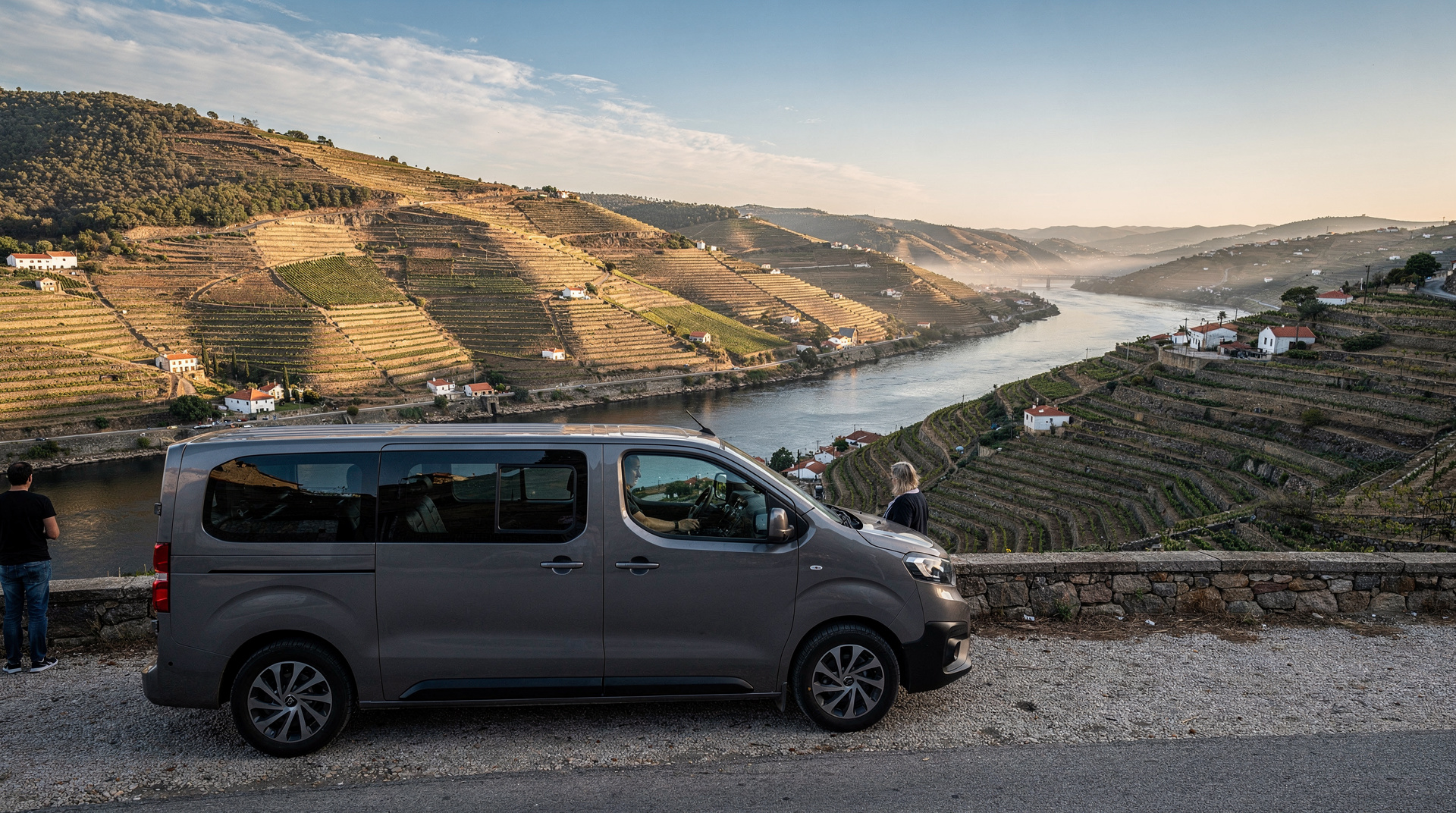
Cost: €40–65/day car hire + €8–12 motorway tolls + €15–20 fuel Total per day: ~€65–100 (for the vehicle, shared across the group) What you gain: Complete flexibility, multiple quinta access, viewpoints, villages What you sacrifice: The ability to drink at tastings (for the driver)
Why the car is the most flexible option
A rental car solves all the access problems that the train creates. With a car, you can visit three or four quintas in a single day, stop at the major viewpoints (Casal de Loivos above Pinhão, São Leonardo de Galafura above Régua — both genuinely extraordinary), explore Pinhão and Peso da Régua at your own pace, and reach Lamego (15 km south of Régua) for the Santuário de Nossa Senhora dos Remédios if time allows.
The IP4 motorway from Porto to Régua is well-maintained and the drive takes about 1.5 hours. From Régua, valley roads are narrow but manageable for standard vehicles. No special driving skills are required, though the hairpin roads above Pinhão toward the upper viewpoints require care.
The drinking problem
This is not a rhetorical concern. A full tasting at three quintas across the day means eight to twelve glasses of wine — a mix of Douro table wines (13–15% alcohol) and port (19–22%). Portugal’s drink-drive limit is 0.5 g/L blood alcohol, similar to most European countries. Even with generous estimates about body weight and metabolism, a designated driver who has tasted at three quintas is likely over the limit.
The workable solutions:
- Designate a non-drinking driver explicitly and agree to it before leaving Porto
- Plan the route so you can take a train back from Pinhão or Régua, leaving the car at a quinta or village (this requires accommodation in the valley)
- Have the driver taste one sip per wine maximum — not a genuine tasting but enough for a sensory impression
If your group does not have a reliable non-drinking driver option, the car is the wrong choice for a wine-focused day trip.
Best for: Groups of four or more sharing costs, families, travellers with a designated driver, visitors who want viewpoints and villages that tours don’t reach.
Budget per person in a group of 4: (€80 total car cost / 4) + tolls/fuel shared + quinta tastings = approximately €50–75 per person.
Option 3 — organised tour
Cost: €60–85 (standard group tour) or €100–140 (premium small group) What you gain: Logistics handled, guide provides context, quinta access, lunch included What you sacrifice: Flexibility, spontaneity, some premium quinta access
Standard group tours (€60–85)
A standard Douro day tour from Porto visits one or two wine estates, includes a guided tasting, provides lunch, and includes a one to two-hour river cruise. Groups are typically 25–40 people. The experience is structured — you see the valley, taste the wine, and get a river perspective in a single long day without navigating unfamiliar roads after drinking.
The Douro two-estate and cruise day tour is the most-booked option in this category — two quinta visits, a river cruise between Régua and Pinhão, and lunch at a quinta restaurant. The two-estate format is worth the small premium over single-estate tours; you see different production methods and wines.
Standard tour weaknesses: Group sizes of 35–40 mean the quinta tastings are efficient rather than in-depth. The choice of quintas is fixed. If the selected quinta doesn’t interest you, your flexibility is zero.
Premium small-group tours (€100–140)
Premium tours cap at 8–12 people, access quintas unreachable by large coaches, and typically include winemakers or estate managers in the tasting. The river cruise is private or semi-private rather than shared with other groups.
The Douro premium small-group tour with private cruise is the benchmark at this level: maximum 8 passengers, two quinta visits with winemaker access at one of them, private Douro cruise, and a proper quinta lunch. At approximately €130–140, it is worth the premium for wine enthusiasts.
The full assessment of whether tours justify their prices — and which red flags to watch for — is covered in the is the Douro Valley tour worth it guide.
Private transfer + self-organised
A hybrid option: book a private transfer to take you to the valley (private Régua to Pinhão transfer) and arrange your own quinta visits independently. This gives transport-without-driving while maintaining flexibility on which estates to visit and how long to spend. The private transfer cost of approximately €60–100 per vehicle makes this practical for groups of four or more.
Best for: Groups who want flexibility but can’t manage the driving-after-tasting problem; couples willing to pay more for private transport.
Direct comparison table
| Train | Rental car | Standard tour | Premium tour | |
|---|---|---|---|---|
| Cost per person | €24–30 | €50–75 | €60–85 | €100–140 |
| Scenic quality | Excellent | Good | Variable | Good |
| Quinta access | 1 (max 2) | 3–4 | 1–2 | 2–3 |
| Wine tasting | Self-paid | Can’t drink | Included | Included |
| Lunch | Self-arranged | Self-arranged | Included | Included |
| River cruise | No (extra) | No | Often included | Included |
| Flexibility | Low | High | None | Low |
| Good for | Budget/solo | Families/groups | First-timers | Wine enthusiasts |
Where you actually end up, by option
The choice of transport also determines which parts of the valley you realistically see. The train limits you to what’s walkable from Pinhão; a car or tour opens up Peso da Régua and beyond.
Train-only day: Pinhão and Quinta do Bomfim, occasionally a short taxi to a second nearby estate. You will not reach Régua’s town centre or Lamego without a change of plan.
Car: The full valley is accessible — Régua, Pinhão, Lamego, and the viewpoints above both towns. This is the only option that realistically lets you choose from the best quintas in the Douro Valley rather than the one or two an operator selects for you.
Standard or premium tour: You see whatever quintas the operator has partnered with — usually well-regarded but fixed. The Douro Valley tour worth it guide explains how to judge whether a specific tour’s quinta selection and inclusions justify its price before booking.
If you’re considering staying overnight in the valley rather than a single day trip, the calculus changes substantially — see the where to stay in the Douro Valley guide for how an overnight removes the driving-after-tasting problem entirely.
What about combining train and boat?
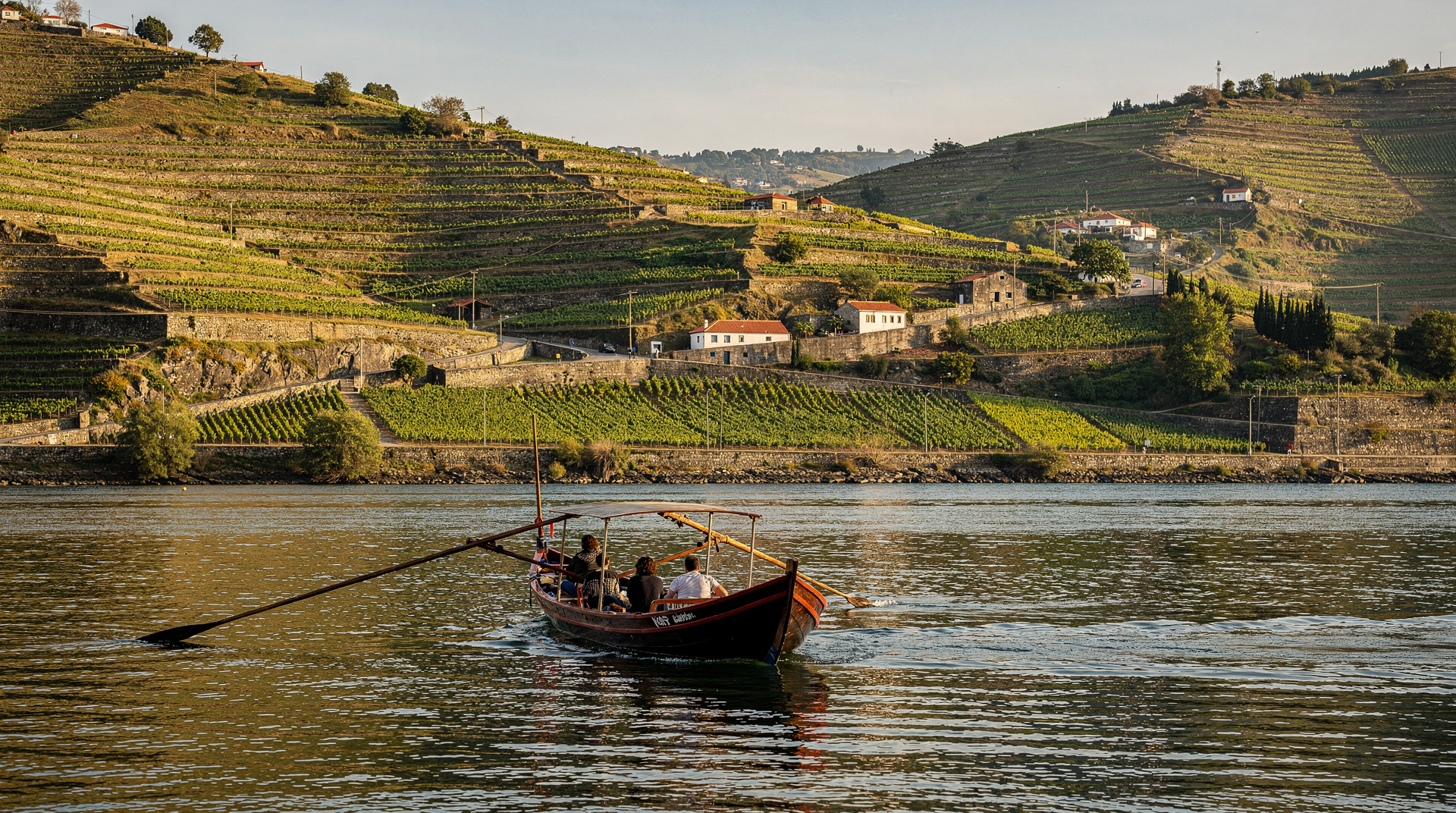
One of the most recommended combinations for independent travellers is the train one way and boat the other. The Pinhão–Régua or Régua–Pinhão cruise covers the most scenic section of the Douro river; the train covers the same terrain from the valley walls above. Doing both gives you the complete visual experience — the view from the water and the view from the cliff.
Practically: take the train from Porto Campanhã to Pinhão in the morning, visit Quinta do Bomfim on foot, take an afternoon cruise back toward Régua, and return to Porto from Régua by train in the evening. Total journey time: 5–6 hours of travel including the cruise. The Douro cruise from Pinhão guide covers the boat options from Pinhão in detail.
Getting to the starting point matters too
Whichever option you choose, the first logistical step is the same for two of the three: reaching Porto Campanhã station. From the historic centre or most central accommodation, the metro connection from São Bento (5–7 minutes on lines B, C, E or F, around €1.50 with an Andante card) is faster and cheaper than a taxi in most traffic conditions. Arrive at Campanhã at least 20 minutes before departure in peak season, since ticket machines can have queues and platform signage for the Douro line is not always obvious to first-time users.
For the car and standard/premium tour options, pickup is typically arranged directly from central Porto accommodation or a designated meeting point — confirm the exact pickup location and time the day before, since some operators use a central square rather than door-to-door collection. The transport from Porto to the Douro Valley guide covers this first-leg logistics question in more detail if you’re combining the valley with other transport needs during your stay, such as an airport transfer or a multi-stop northern Portugal route.
Seasonal considerations
May–June: The best window for all three transport options — comfortable temperatures, lush green vineyards, tourist-season services fully operational.
July–August: Hot (35°C+ in the valley interior) and crowded. All three options work but train air conditioning is essential; car air conditioning should be confirmed when booking. Book tours far in advance.
September–October (vindima): The most atmospheric time to visit — harvest season transforms the valley with workers, tractors, and the smell of fermenting must. Book premium small-group tours 3–4 months ahead; train access is unaffected. The Douro harvest and vindima guide has full timing information.
November–April: Quieter, cheaper, cooler. Some quintas reduce hours or close for part of this period. The train journey is beautiful in any season; tours and car hire are cheaper.
Frequently asked questions about transport to the Douro Valley
Do I need to buy train tickets in advance?
For weekend travel between May and October, yes — particularly the scenic Régua–Pinhão section which sells out on busy Saturdays. Weekday trains are less crowded and can be booked closer to departure. CP (Comboios de Portugal) tickets can be purchased online, at Porto Campanhã ticket machines, or at the staffed ticket office.
Can I bring a bicycle on the Douro Valley train?
Bicycles can be transported on CP regional trains subject to space availability. There is no guaranteed bicycle space on the Douro line trains during busy periods. If cycling in the valley is part of your plan, check current CP bicycle policies before assuming transport is guaranteed.
Is the drive along the N222 overrated?
The N222 (Régua to Pinhão along the south bank of the Douro) has been called “the world’s best road” by various travel publications. The drive in clear weather through the terraced vineyards is genuinely impressive. However, the road is narrow, has sections of poor surface, and requires concentration that limits the amount of time you can spend looking at the scenery. It is better as a destination than as a scenic drive — stop at the viewpoints (there are several signed miradouros) rather than trying to photograph while driving.
Do I need travel insurance that covers a rental car in the Douro Valley?
Standard rental car insurance from Porto agencies typically covers the Douro Valley roads without any special extension, since it remains mainland Portugal. The narrower valley roads and hairpin sections above Pinhão do increase the practical risk of minor scrapes, so it is worth confirming your excess/deductible amount and considering the agency’s supplementary collision waiver if the standard excess feels high relative to your comfort level.
Can I combine the Douro Valley with Amarante on the same day?
Yes if you are driving. Amarante is on the route between Porto and the Douro valley on the IP4 — a 30-minute detour from the main road. The Amarante guide covers what to see, including the São Gonçalo monastery and bridge. Adding Amarante makes the day long but feasible by car; it is not practical on a standard tour unless the tour specifically includes Amarante as a stop.
Frequently asked questions — Douro Valley by train vs car vs tour — which is best for you?
Which Porto station do I use for the Douro Valley train?
Porto Campanhã, not São Bento. São Bento serves suburban and regional lines but does not connect to the Douro line. To reach Campanhã from the city center, take the metro (lines B, C, E or F) from São Bento station — it takes 5–7 minutes and costs around €1.50 with an Andante card. The Douro line train departs from Campanhã platform.How much does the train to Pinhão cost from Porto?
A single ticket from Porto Campanhã to Pinhão costs approximately €9–12 depending on train type (regional or Alfa Pendular connection). Return: €18–24. The train has standard and first class options; for the Douro journey the difference in comfort is marginal. Buy tickets in advance on the CP (Comboios de Portugal) website, especially for weekend travel.Can I take an Uber or Bolt from Pinhão to quintas?
No — there are no ride-hailing services in the Douro Valley. Pinhão has a limited taxi service that must be pre-booked, typically by calling a local taxi driver whose number is posted at Pinhão station. Expect to pay €15–25 for a nearby quinta transfer. This constraint is the main limitation of the train option for quinta-focused visits.Is it safe to drive in the Douro Valley after wine tastings?
No — a full tasting at each of two or three quintas means five to eight glasses of wine at 13–15% alcohol (for table wines) or 19–22% (for port wines). Portugal's drink-drive limit is 0.5 g/L blood alcohol. The practical advice: designate a non-drinking driver explicitly before leaving Porto, or choose accommodation in the valley and return by train the next day.What is the train journey actually like from Porto to Pinhão?
The first hour from Campanhã to Régua is attractive but not exceptional — granite hills and suburban landscapes. The section from Régua to Pinhão (the final 30 minutes) is the journey's centrepiece: the track clings to the valley walls above the river, passing through tunnels, along exposed cliff ledges, and beside terraced vineyards descending to the water. Sit on the right-hand side when travelling east for the best views.How much does a rental car cost for a Douro Valley day trip?
Car hire in Porto runs €40–65 per day for a standard vehicle. Add motorway tolls (approximately €8–12 return on the IP4), fuel (€15–20), and any quinta tasting fees. Total transport cost: €63–97 for the day — similar to a standard organised tour, without the guide, logistics management, or lunch included.
Top experiences
Bookable activities with verified prices and instant confirmation on GetYourGuide.