Porto on a rainy day: the honest guide
November is Porto’s honest month
Nobody sells Porto in November. The tourism boards post golden hour photos of Ribeira and São João fireworks, not umbrellas on Rua das Flores. But November — properly wet, genuinely grey — is when the city becomes a different kind of pleasure: slower, cheaper, more local, and remarkable for what remains good even when it’s raining.
We arrived on a Thursday in mid-November to find the kind of steady Atlantic drizzle that doesn’t commit to full rain but doesn’t relent either. We had one day. We made it work.
| Best structure | Churches morning, cellars early afternoon, museum mid-afternoon, café late afternoon |
| Rain-proof activities | Port wine cellars, museums, São Bento station, Livraria Lello |
| What to bring | Umbrella (3-5 €), waterproof shoes |
| November weather | 15-18°C, rain on 10-12 days |
| Cost for the day | Around 50-60 € per person, cellars included |
The Porto rainy day structure
The key is sequencing. A Porto rainy day works best as: indoor culture in the morning, port wine cave in the early afternoon (underground, so irrelevant to weather), museum or gallery mid-afternoon, covered market or covered café culture in the late afternoon. Everything flows naturally.
Morning: churches are underrated
Porto’s churches are not afterthoughts — they’re the reason the city looks the way it does. The São Francisco church, down near Ribeira, is one of the most extraordinary interiors in Portugal: an entirely gilded baroque interior that somehow keeps its dignity despite the quantity of gold leaf involved. Entry is around 5 €. We arrived at 10am when the doors opened and had the nave to ourselves for twenty minutes.
São Francisco is also connected to the Church’s ossuary — a small crypt visible through a window where bones are arranged in wall panels. It sounds macabre and is, mildly, but in a medieval-honesty-about-mortality way rather than a shock-tourist way.
From São Francisco we walked uphill — rain requiring focused step selection on wet cobblestones — to the Sé Cathedral. The Sé’s exterior is austere Romanesque, its interior darker and more complex than most visitors expect. The cloisters, covered by azulejo panels depicting the life of John the Baptist, are genuinely beautiful and cost around 4 € to enter. The azulejo work here is 18th century and rivals anything you’ll see at São Bento station.
Mid-morning: São Bento station
São Bento train station is not a museum — it’s an active train station — but it functions as one. The entrance hall is lined with 20,000 azulejo tiles painted by Jorge Colaço between 1905 and 1916 depicting scenes from Portuguese history. You can stand in the hall for thirty minutes studying the panels and nobody will bother you. Entry is free. In November, with rain on the windows and the station less crowded than in summer, the scale of the project becomes clearer.
We took the opportunity to buy a Andante card (top up 5 €) for the afternoon transport.
Early afternoon: into the caves
Crossing to Vila Nova de Gaia in the rain works better than you’d expect. The metro goes over the upper deck of Ponte Dom Luís I, and by the time you reach the Gaia side, you’re looking for a cellar to enter, which means you immediately descend underground.
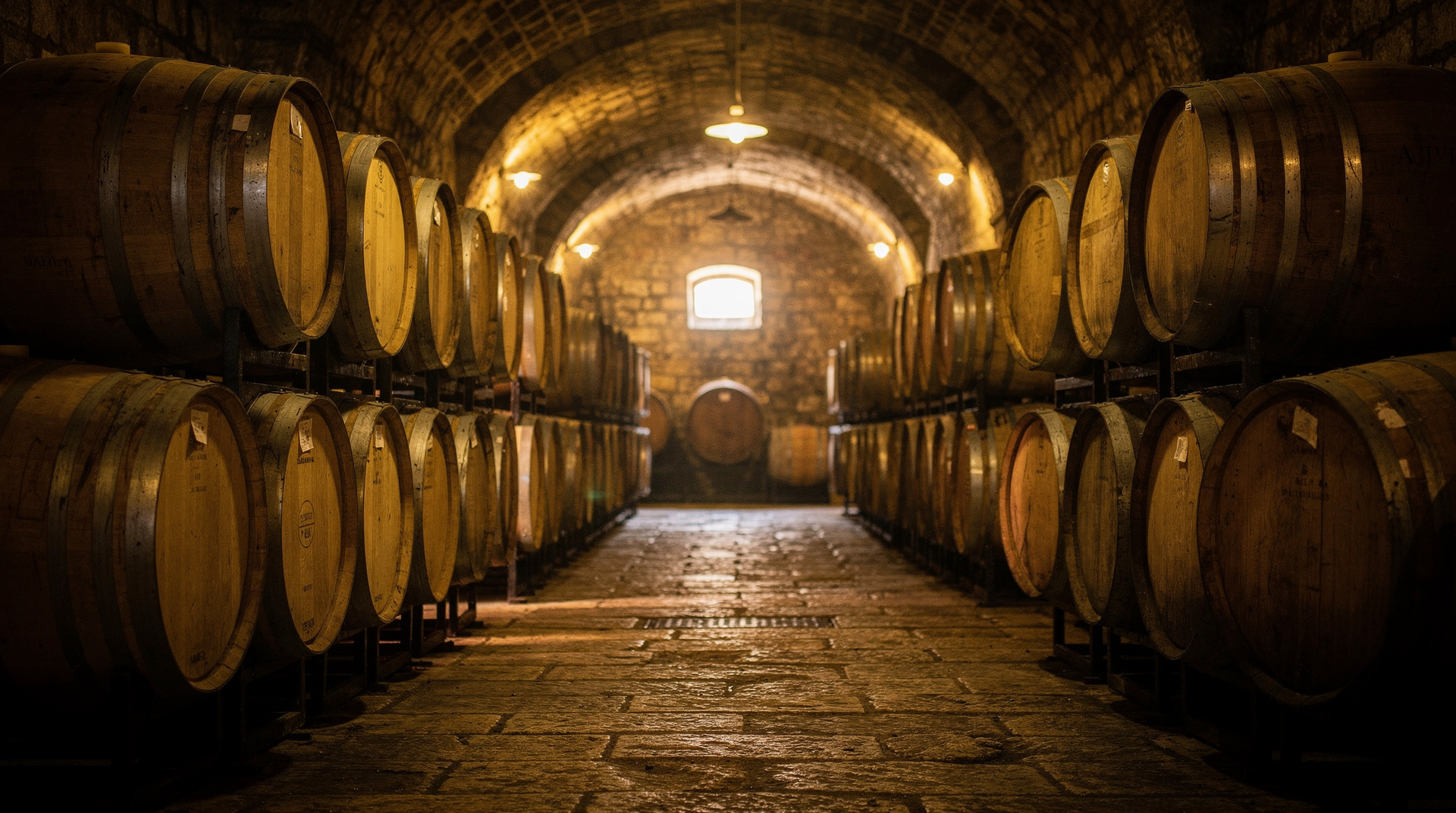
We chose Graham’s for the rainy afternoon visit. The tasting room and barrel hall are below the hillside, cool, aromatic, and entirely unaffected by weather. The guided tour takes about fifty minutes and the premium tasting experience — four wines with tasting notes — runs around 25-30 €.
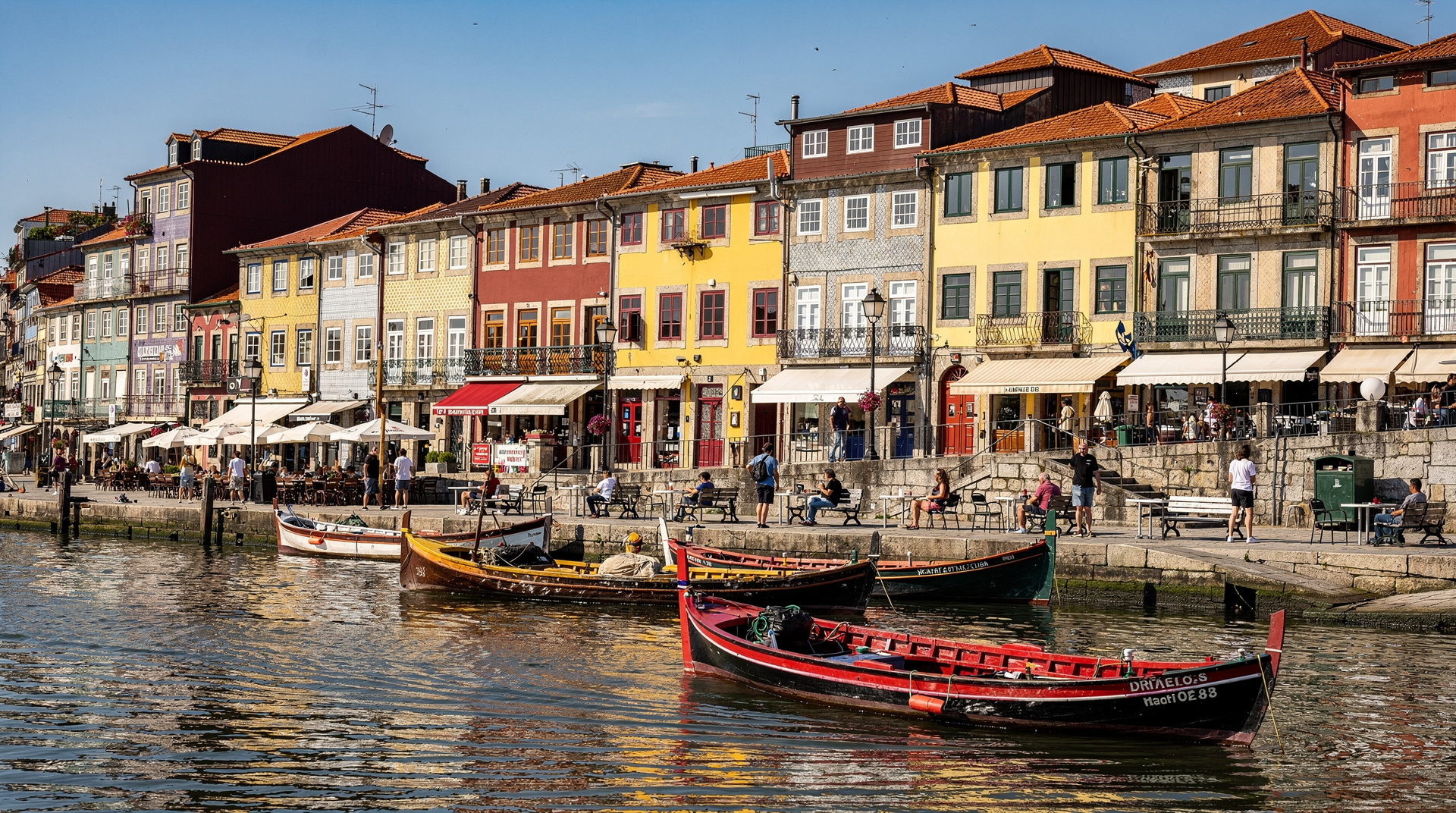
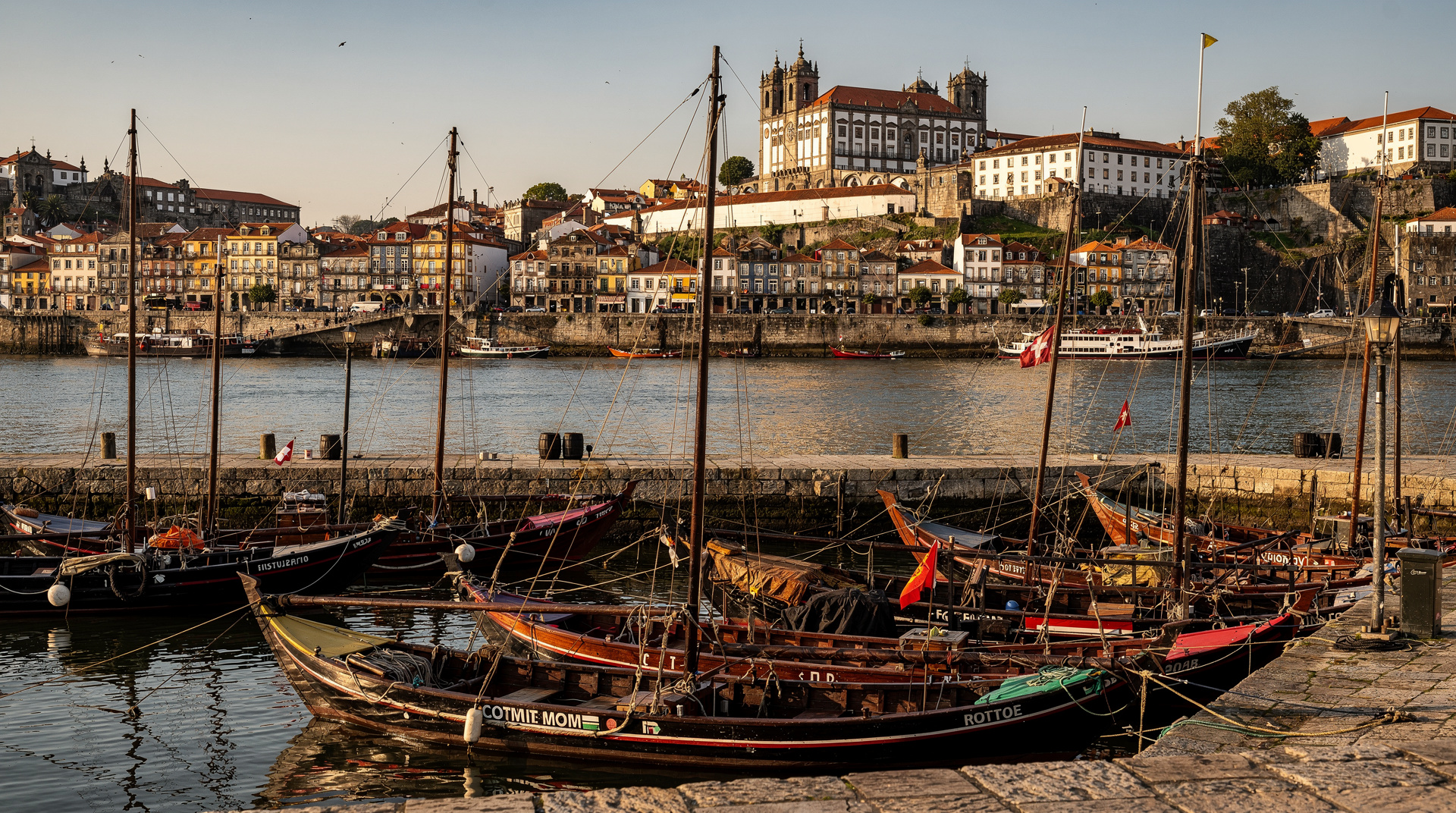
Graham’s premium tasting — one of the best cellars in Gaia regardless of weatherAfter Graham’s we walked along the Gaia quay in the rain, which is actually a pleasant thing: the waterfront is emptier, the rabelo boats look better in grey light, and the views across to Porto have a quality they don’t have in the bleached sunshine of July. We had coffee in one of the quayside cafés watching the rain stipple the Douro.
If you have energy for another cellar — and you may, because the port wine and the underground warmth is oddly restorative on a grey day — Cálem is nearby and includes a fado performance in the price.
Cálem: port wine tasting plus live fado — genuinely good valueMid-afternoon: Serralves or the WOW district
If you’re staying in Gaia, the WOW cultural district on the hillside above the cellars offers several museums under one ticket: the Museum of Wine and Humanity, the Pink Palace exhibitions, and more. A day ticket runs around 13 €.
If you head back to Porto proper, Fundação de Serralves in Boavista-Serralves is the strongest museum option in the city: a contemporary art museum in a 1990s Álvaro Siza Vieira building, set in extensive parkland. On a rainy afternoon the parkland is obviously less appealing, but the museum building itself — white concrete geometry, the light managing to be extraordinary even in grey conditions — is worth the trip. Entry around 15 €.
The alternative is the World of Discoveries museum near Ribeira, an interactive history of Portuguese exploration. More family-oriented but genuinely informative.
Late afternoon: the covered alternatives
Porto has a café culture that exists specifically for days like these. The old cafés — Majestic on Rua de Santa Catarina (touristy but magnificent), Guarany on Aliados, Progresso near Cordoaria — are built for sitting in with something warm. We chose a smaller place near Clérigos, ordered coffee and pastel de nata, and spent an hour reading while the rain moved past the windows.
Livraria Lello, incidentally, is excellent in rain — the stained glass reads differently in diffuse grey light, the interior feels more like a proper bookshop and less like a theme park attraction. Buy your ticket online in advance regardless of season.
Evening: where to eat when it’s miserable outside
Porto restaurants in November — the non-tourist ones — are full of Portuenses eating dinner because this is where they eat dinner, not because TripAdvisor told them to. We found a tasca near Rua do Almada with handwritten menus, rough wine, caldo verde, bacalhau, and a proprietor who regarded tourists neutrally. The francesinha at the table next to us arrived in a cloud of steam. We ordered the same.
Dinner for two including wine: 34 €.
What the rainy day actually teaches you
Porto in rain is Porto at its most architecturally honest. The azulejos — the blue-and-white tile facades — exist partly because they’re waterproof cladding, a practical solution to an Atlantic climate. The tiled facades of Bonfim and Cedofeita were not installed for Instagram. They were installed because tiles shed water and require no maintenance. In rain, this heritage makes sudden, practical sense.
Practical rainy day notes
- Umbrella: buy one at any supermarket (3-5 €) or bring a compact fold-up. The city is entirely walkable in rain with one.
- Shoes: waterproof footwear or trainers you don’t mind getting wet. Porto’s cobblestones are slippery.
- Timing: morning church visits + afternoon cellars is the natural rhythm. Most museums run 10am-6pm.
- Transport: metro and buses run normally in any weather. Andante card covers everything.
- November average: 15-18°C, rain on 10-12 days. Rarely cold enough for heavy layers.
If it rains for more than one day
A single rainy day is easy to structure around cellars and museums, but multi-day rain in Porto needs a broader plan. The Palácio da Bolsa — the 19th-century stock exchange palace with its extraordinary Arabian Hall — is a strong second-day indoor option we didn’t have time for on this trip, and it’s entirely undercover. Rotating between the best port wine cellars in Gaia across consecutive days also works better than it sounds: each cellar has a different character, and Taylor’s, Graham’s, and Cálem are genuinely distinct experiences rather than repeats of the same tour. For a second wet afternoon, the azulejos of Porto guide maps out the tile panels worth seeking indoors and under porticoes, which keeps you dry while still seeing the city’s signature craft.
Rainy day versus dry day: what you actually lose
Rain doesn’t cancel much in Porto, but it does change the value of certain experiences:
| Activity | In the rain | On a dry day |
|---|---|---|
| Port wine cellar tour | Unaffected — underground | Same |
| São Bento station | Unaffected — indoors | Same |
| Ribeira waterfront walk | Emptier, moodier light | Warmer, more crowded |
| Gaia cable car | Reduced visibility at the top | Full panoramic views |
| Miradouro sunset spots | Often not worth the trip | The main reason to go |
| Douro river cruise | Cold, sometimes cancelled in heavy rain | The best version of this activity |
The honest takeaway: cellars, museums, and station azulejos lose nothing to rain. Miradouros and river cruises lose almost everything. Sequence your trip so the weather-dependent activities land on the forecast’s better days if you have any flexibility.
FAQ
Does it rain the whole day in Porto in November, or does it clear up? Rain in Porto is rarely constant all day — it tends to come in bands, with drier spells between. Checking an hourly forecast rather than the daily summary helps time outdoor stretches (like the Gaia quay walk) between showers.
Is a rainy day in Porto still worth the trip if I only have one day in the city? Yes. A single rainy day covering São Bento, a church, a port wine cellar, and a café stop still delivers Porto’s core experiences — none of them depend on sunshine. The things you’d miss (miradouro views, riverside golden hour) are worth returning for, not reasons to skip the city.
See our best month to visit Porto comparison for how November stacks up against the rest of the year.