Francesinha in Porto — best spots, honest prices, what it actually is
Porto: Porto Guided 4 Hour Food Culture Tour
Where should I eat francesinha in Porto?
Café Santiago is the most respected address for a reason — the sauce is outstanding. Lado B (Bonfim) offers a more local atmosphere at similar quality. Brasão Aliados is the easiest to reach and consistently good. Budget around 12-16 € with fries and a beer.
The dish that defines Porto’s food identity
No single dish is more associated with Porto than the francesinha. It appears on menus across the city in dozens of variations, it is routinely claimed as the best thing they’ve ever eaten by visitors who expected a simple sandwich, and it is the subject of intense local loyalty — Porto residents will argue about which restaurant makes the best sauce with the passion that Neapolitans bring to pizza.
Understanding what a francesinha actually is, and where to eat a good one, requires cutting through the tourist-facing mythology around it. This guide does that.
| Where | Best versions outside Ribeira — Bonfim, Aliados, Boavista |
| Cost | around 11–16 € with fries and a beer |
| Time needed | 45–60 minutes, lunch is the traditional slot |
| Booking | walk-in mostly; Brasão Aliados takes weekend reservations |
| Best time | 12:00 or after 2:00pm to dodge Café Santiago queues |
If you want the dish as part of a wider food day rather than a single destination lunch, the best food tours in Porto guide and the porto foodie weekend itinerary both build francesinha into a broader eating plan.
Porto food culture tour with 10 tastingsWhat goes into a francesinha
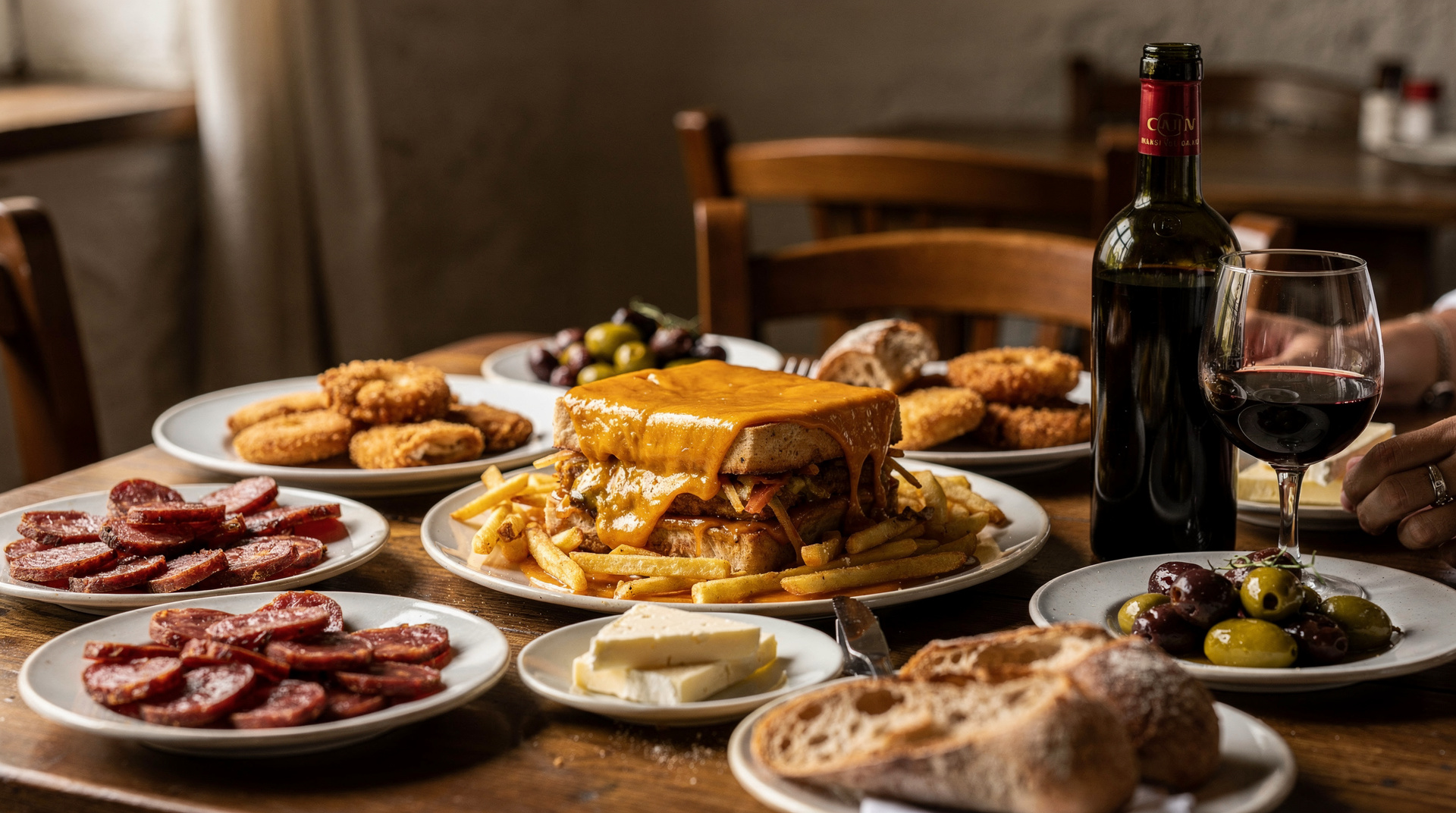
The basic architecture of the dish is a triple-decker: two slices of sandwich bread enclosing a combination of cured ham (fiambre), linguiça (smoked pork sausage), and a thin steak or pork loin, typically grilled before assembly. The sandwich is then blanketed in slices of cheese and placed under a grill until the cheese melts and browns at the edges.
The final and most critical element is the sauce. Molho de francesinha — the proprietary gravy-like sauce that each restaurant guards fiercely — is poured over the assembled sandwich until the bread begins to absorb it. The sauce is built on a base of tomato, beer (typically a lager), port wine or brandy, fresh chilli, and meat stock, cooked down to a consistency somewhere between thick soup and gravy. The heat level varies; most versions have mild warmth rather than genuine spice.
The sandwich arrives floating in a shallow pool of this sauce in a metal or ceramic tray, with a small mountain of thick-cut fries alongside. You eat it with a knife and fork. Do not expect anything about this meal to be light.
The history behind the name
The francesinha was reportedly created in Porto in the late 1950s by Daniel da Silva, a Portuguese emigrant who returned from France and Belgium with an enthusiasm for the croque monsieur. His innovation — replacing the French ham-and-cheese format with Portuguese cured meats and adding the beer-tomato sauce — produced something so far removed from the original that calling it a Porto dish rather than a Franco-Portuguese adaptation seems accurate.
The name translates literally as “little Frenchwoman.” Whether this was a reference to the French inspiration or an affectionate nickname for the delicate appearance of the cheese-covered sandwich (which is deceptive — it is not delicate) is lost to restaurant mythology.
What is clearer is why the dish took hold specifically in Porto rather than spreading evenly across Portugal: the city’s working-class food culture prized substantial, calorie-dense lunches for manual and dock workers, and the francesinha’s combination of bread, three meats, cheese and a filling sauce fit that need precisely. It became less a novelty import and more a practical solution that happened to taste extraordinary, which is a large part of why locals still treat it as serious food rather than a tourist curiosity.
The five addresses that matter
Café Santiago
Address: Rua de Passos Manuel 226, Porto Price: 12-14 € for francesinha with fries | When to go: Arrive at noon or after 2 pm to avoid queues
Café Santiago is the most consistently cited address in Porto for a reason that comes down to sauce quality. The restaurant has been serving francesinha since 1959 and has refined its recipe over six decades into something that other establishments genuinely struggle to replicate. The sauce is darker, richer and more complex than most competitors — longer-cooked, with more beer and port wine proportion, and a subtle heat that builds rather than arriving immediately.
The room is unpretentious: formica tables, a television, regulars who have been coming since the 1970s. The menu beyond the francesinha is limited. Service is fast and functional. This is not a destination for atmosphere; it is a destination for the specific reason that you want to eat the most regarded francesinha in Porto.
The fries are excellent — thick-cut and cooked in oil that is changed regularly. The accompanying imperial arrives cold. Cash is accepted; card too, but the till processes slowly at peak times.
Queues at the door are normal from 12:30 to 2:00 pm on weekdays and throughout the lunch service on weekends. The best strategy is to arrive early or time it for 2:30-3:00 pm when the first lunch wave has cleared.
Lado B
Address: Rua de Costa Cabral 1026, Bonfim district Price: 11-13 € for francesinha with fries | Atmosphere: neighbourhood local, no tourist element
Lado B is the address to recommend to anyone who wants to eat francesinha in a context where the restaurant’s other customers are Porto residents rather than visitors. The Bonfim location puts it off the tourist circuit almost entirely, which means you arrive, eat, and leave without anyone performing local authenticity for an audience.
The sauce recipe is different from Café Santiago — slightly thinner, with a stronger tomato character and less port wine depth — but this is a preference distinction rather than a quality verdict. Many local regulars prefer Lado B’s version precisely because it is lighter and less overwhelming for people who eat francesinha weekly rather than once per visit.
The room is small. Lunchtime fills quickly; go at noon or after 2:00 pm. They serve a full lunch menu beyond francesinha if you arrive with a group and not everyone wants the sandwich. Metro to Campo 24 de Agosto puts you a 10-minute walk away.
Bufete Fase
Address: Rua de Salgueiros 36, Porto Price: 10-12 € | Atmosphere: workingman’s lunch spot, weekday lunch only
Bufete Fase is the most local of the well-regarded francesinha addresses — a small lunch counter that serves the dish to office workers and neighbourhood regulars. The room is plain, the service is no-frills, and the francesinha is outstanding. The sauce here has a strong beer note and a generous heat level compared to the cleaner versions at Café Santiago.
The practical limitation: Bufete Fase operates as a lunch-only establishment, closing after the midday service. It is not open for dinner and does not take reservations. You arrive, take whatever table or counter space is available, order, eat, pay in cash. This is the format; it is not negotiable and it is part of what makes the experience what it is.
For the porto-foodie-weekend visitor who wants the least tourist-facing francesinha experience available, Bufete Fase is the answer.
Brasão Aliados
Address: Rua do Bonjardim 525, Porto (Aliados area) Price: 12-15 € | Atmosphere: mid-range café-restaurant, more comfortable setting
Brasão Aliados is the most accessible of the recommended addresses for visitors staying in the Baixa-Aliados area — a 10-minute walk from São Bento station and easily combined with a morning in the historic centre. The room is considerably more comfortable than Café Santiago or Bufete Fase: proper tables, a longer menu, and service that is accustomed to dealing with non-Portuguese speakers.
The francesinha quality is consistently good. The sauce is well-made and the portions generous. Brasão also has a craft beer list that pairs well with the dish if you want something beyond the standard imperial. The slight trade-off is that the dining room atmosphere is more café than tasca — functional and reliable rather than character-driven.
Book ahead for weekend lunch. They take online reservations and fill quickly from noon on Saturdays.
Capa Negra II
Address: Rua do Campo Alegre 181, Porto (Boavista area) Price: 11-13 € | Atmosphere: traditional local restaurant
Capa Negra II is well-regarded among Porto residents and less known among visitors than the Aliados-area options, primarily because of its location in the Boavista neighbourhood rather than the historic centre. The francesinha here uses a recipe that emphasises the pork component — the meat filling is more generous than most competitors — and the sauce has a cleaner, less complex character than Café Santiago but is well-executed.
Worth seeking out if you are staying in the Boavista or Serralves area and don’t want to travel to the historic centre specifically for francesinha. From the Serralves Museum area, it’s a 15-minute walk.
The five addresses compared
| Address | Price | Sauce style | Best for |
|---|---|---|---|
| Café Santiago | 12–14 € | dark, complex, port-heavy | the benchmark version, worth the queue |
| Lado B | 11–13 € | thinner, more tomato-forward | a local Bonfim atmosphere, less rich |
| Bufete Fase | 10–12 € | strong beer note, generous heat | weekday lunch, cheapest of the five |
| Brasão Aliados | 12–15 € | well-made, reliable | comfort and easy booking near Aliados |
| Capa Negra II | 11–13 € | cleaner, pork-forward | Boavista/Serralves visitors |
None of these five is a wrong choice — the differences are real but all five clear the bar for a genuinely good francesinha. Where you eat is more a question of neighbourhood and atmosphere than a quality gamble.
What to drink and eat around it
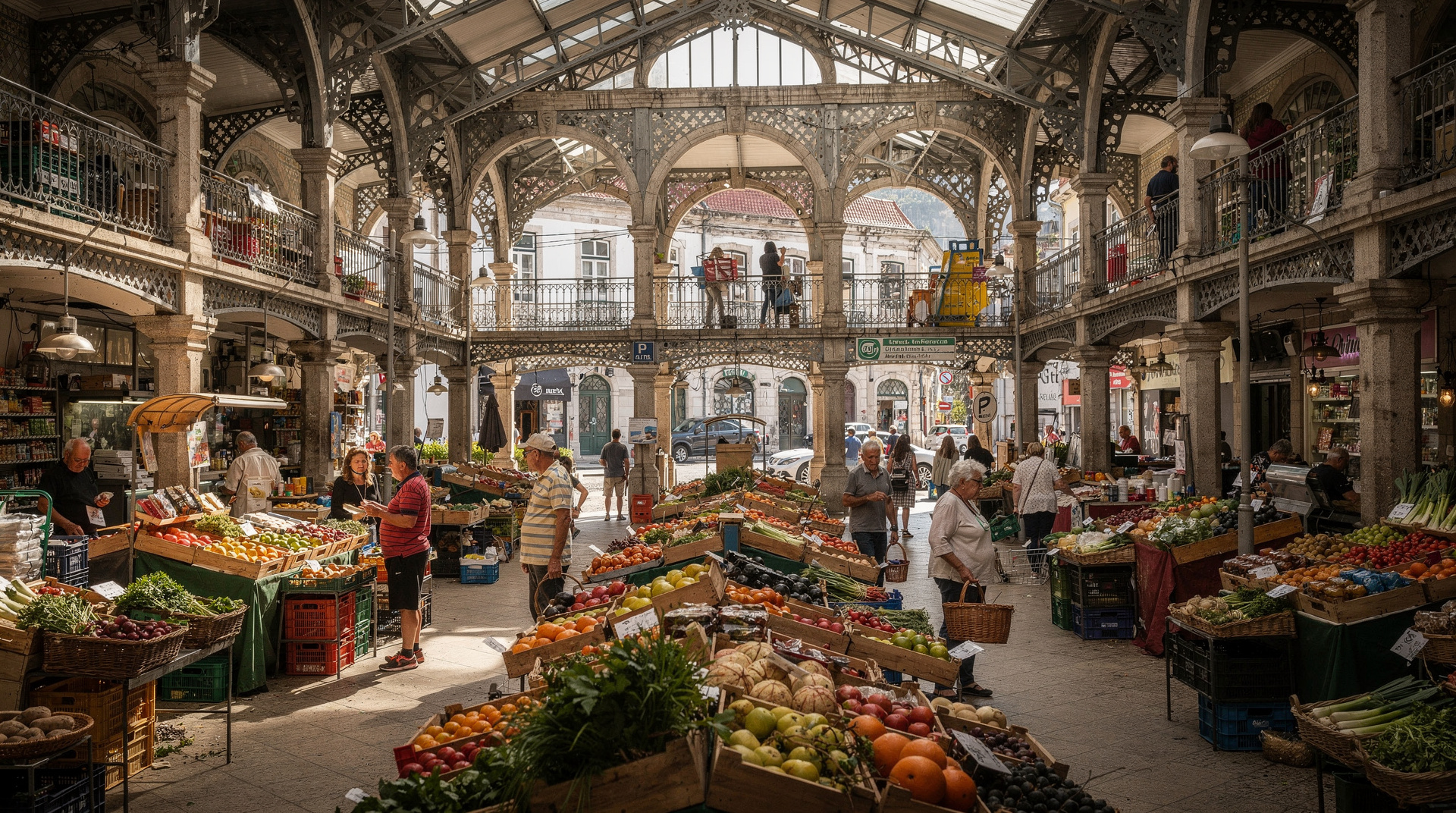
Beyond the standard imperial, Mercado do Bolhão is worth a stop either before or after a francesinha lunch if you want to see where some of the ingredients — the linguiça, the cured hams — are sold outside restaurant kitchens. If a francesinha feels like too much food for one sitting, pastel de nata makes a lighter bookend earlier or later in the day rather than immediately after, since the two dishes don’t pair well back to back.
How to eat francesinha properly
The bread should be eaten sauce-saturated, not dry. Cut through the layers with a fork and knife, dragging each piece through the pooled sauce before eating. The fries can go into the sauce or stay dry — a matter of preference that Porto residents argue about with enthusiasm.
Do not attempt to share a francesinha. This is not a dish designed for splitting. Each person orders their own, or accepts that the sauce-to-bread ratio will be wrong for both diners.
One beer per francesinha is the local norm. Two is acceptable if the first was small. A third is optimistic.
Modern and regional variations
While the classic recipe is the reference point, several Porto kitchens experiment around the edges. A “francesinha especial” sometimes adds a fried egg on top — a genuine improvement in the view of many regulars, since the yolk adds richness rather than competing with the sauce. Seafood versions (with shrimp folded into the sauce) appear occasionally, most often at restaurants near the coast in Foz or Matosinhos, and are a different but legitimate dish rather than a corruption of the original. Some newer cafés in Cedofeita serve a smaller “francesinha de tabuleiro” format aimed at solo diners who want the flavour without the full-size portion — worth asking about if the standard size feels like too much for one person.
Outside Porto, versions of the dish appear on menus across northern Portugal, but the concentration of genuinely excellent versions stays firmly in the city itself; a francesinha ordered in Lisbon or the Algarve is rarely comparable, which is part of why Porto residents treat the dish as a point of civic identity rather than a generic Portuguese sandwich.
The tourist trap version to avoid
Ribeira waterfront restaurants serve francesinha. Nearly all of them charge 15-18 € for a version that uses a pre-made or simplified sauce — visibly thinner, with less depth and often more salt to compensate. The bread arrives less sauce-soaked than it should. The price premium over Café Santiago is approximately 25-30% for an inferior sandwich.
This is not a universal rule — there may be exceptions — but the concentration of tourist-facing restaurants along the quay means the incentive to maintain quality is lower than in residential neighbourhoods where regulars will notice. The honest advice is to walk two streets back from the Ribeira waterfront for any food beyond a coffee.
Cooking a francesinha yourself
If the porto-cooking-class-guide option interests you, some cooking classes in Porto include francesinha as a session option. The dish is more accessible to make at home than most visitors expect — the bread and meat assembly is straightforward; the sauce is the technique. A good class teaches you the sauce sequence and the proportions, which gives you something genuinely replicable at home. The ingredients are available in most European supermarkets, though you may need to substitute linguiça with a smoked Spanish chorizo.
Related eating in Porto
The francesinha is one dimension of Porto eating. The petiscos guide covers the smaller-dish culture that fills the other meals of the day. For a guided introduction to the full range of Porto food in one morning, the best food tours guide has recommendations that include francesinha tastings alongside the rest of the culinary picture.
The best restaurants in Porto guide covers more dinner-oriented options beyond the specific francesinha circuit.
Frequently asked questions about francesinha in Porto
What is a francesinha?
A francesinha is a Porto sandwich made with bread, cured ham, linguiça sausage, and steak or pork, covered with melted cheese and drenched in a rich tomato-and-beer sauce. It is typically served with French fries. The name means “little Frenchwoman” in Portuguese — the dish was reportedly invented in Porto in the 1950s by Daniel da Silva.
How much does a francesinha cost in Porto?
A francesinha with fries costs 11-16 € at most well-regarded spots. Café Santiago charges around 12-14 €. Tourist-facing restaurants near Ribeira may charge 15-18 €. Add an imperial beer for 1.50-2.50 €.
What makes a good francesinha sauce?
The sauce is everything. A good francesinha sauce has depth — built on tomato, beer, port wine, chilli and meat stock, simmered long enough to concentrate. It should be thick enough to coat the bread without pooling into a soup bowl.
Can I find a vegetarian francesinha?
A few Porto restaurants offer vegetarian versions using grilled vegetables or mushrooms. These are worth seeking if you have dietary restrictions, though purists consider them a different dish entirely.
What do locals drink with a francesinha?
An imperial (25cl draught beer) is the standard pairing. The beer cuts through the richness of the sauce.
When is the best time to eat francesinha in Porto?
Lunch (12:30-2:30 pm) is the traditional time. A francesinha is heavy enough that most locals eat it as the main meal of the day. On weekends, expect queues at Café Santiago from noon — arrive at 12:00 or after 2:00 pm to avoid the worst of it.
Frequently asked questions — Francesinha in Porto — best spots, honest prices, what it actually is
What is a francesinha?
A francesinha is a Porto sandwich made with bread, cured ham, linguiça sausage, and steak or pork, covered with melted cheese and drenched in a rich tomato-and-beer sauce (sometimes called molho de francesinha). It is typically served with French fries. The name means 'little Frenchwoman' in Portuguese — the dish was reportedly invented in Porto in the 1950s by Daniel da Silva, who adapted the French croque monsieur into something more substantial.How much does a francesinha cost in Porto?
A francesinha with fries costs 11-16 € at most well-regarded spots. Café Santiago charges around 12-14 € for the classic version with fries. Tourist-facing restaurants near Ribeira may charge 15-18 €. Add a small beer (imperial, 25cl) for 1.50-2.50 €. Avoid places where the francesinha is suspiciously cheap (under 9 €) — the sauce is often the giveaway.What makes a good francesinha sauce?
The sauce is everything. A good francesinha sauce has depth — built on tomato, beer, port wine, chilli and meat stock, simmered long enough to concentrate. It should be thick enough to coat the bread without pooling into a soup bowl. Every establishment keeps its recipe private; the sauce is genuinely where the quality differences between restaurants show up most.Can I find a vegetarian or lighter francesinha?
A few Porto restaurants offer vegetarian versions using grilled vegetables or mushrooms instead of meat, with a vegetable-based sauce. These are worth seeking if you have dietary restrictions, though purists consider them a different dish entirely. Meatless versions appear occasionally at more modern cafés in Cedofeita and Bonfim.What do locals drink with a francesinha?
An imperial (25cl draught beer) is the standard pairing. The beer cuts through the richness of the sauce. Some restaurants still offer a small glass of vinho verde as an alternative. Port wine is not typically served alongside — it is an ingredient in the sauce, not a companion drink.When is the best time to eat francesinha in Porto?
Lunch (12:30-2:30 pm) is the traditional time. A francesinha is heavy enough that most locals eat it as the main meal of the day. Ordering one as a late dinner after a full day of eating is ambitious. On weekends, expect queues at Café Santiago from noon onward — arrive at 12:00 or after 2:00 pm to avoid the worst of it.
Top experiences
Bookable activities with verified prices and instant confirmation on GetYourGuide.