Porto or Lisbon first? An honest answer for first-timers
The question we get asked most
Every week someone messages us some version of: “We have 10 days in Portugal — should we start in Porto or Lisbon?”
The honest answer is: it depends on exactly one thing — which city you care about experiencing more completely. But since that’s not useful, here is our actual recommendation.
For most first-time visitors to Portugal: start in Porto.
Here’s why, and here’s when we’d say the opposite.
| Recommendation | Porto first, for most first-timers |
| Best reason to flip it | Flight lands in Lisbon, departs from Porto |
| Price gap | Porto ~20-30% cheaper across hotels/food |
| Time needed | 2 days Porto vs 4 days Lisbon minimum |
| If doing both | 3-4 days Porto, train 3h15, 4 days Lisbon |
Why Porto first for most people
Porto is more manageable
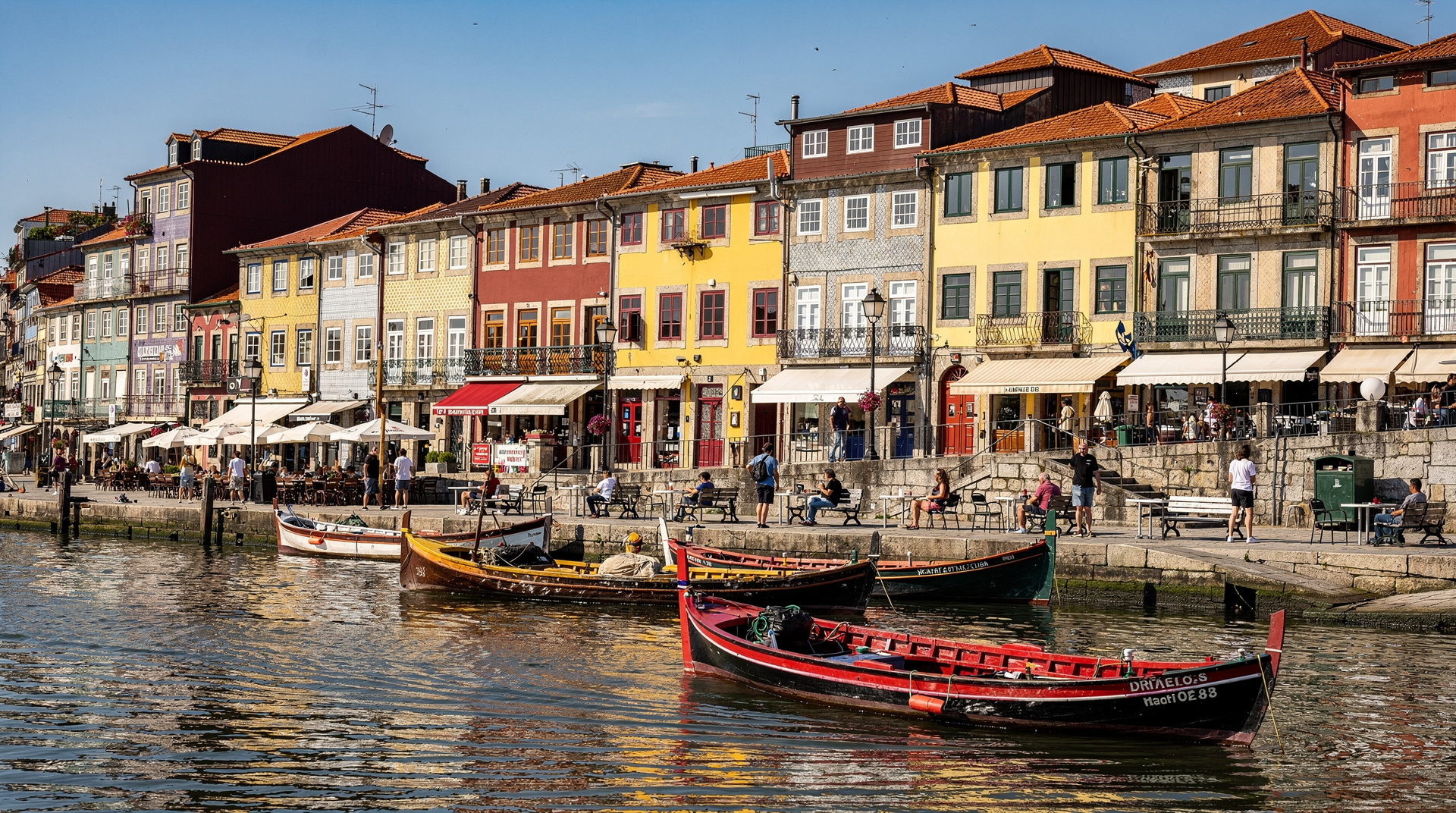
Porto is not small — around 240,000 people in the city proper, over a million in the metro area — but its tourist district is compact. From Ribeira to Cedofeita-Bombarda to Vila Nova de Gaia is walkable. The major highlights — Clérigos, São Bento, Livraria Lello, the Douro waterfront, the port wine cellars across the river — can be covered in two solid days without feeling like you’ve sprinted through them.
Lisbon is more spread out. Alfama, Belém, Bairro Alto, Parque das Nações — these are distinct areas requiring transport between them. A first-time visitor to Lisbon needs at least four days to scratch the surface. In Porto, two days gives you genuine depth.
Porto is better for the first port wine experience
Port wine is a Portuguese product that originates in the Douro Valley but matures and ages in the cellars of Vila Nova de Gaia. If you visit Lisbon first, you can buy port wine in shops and drink it in bars, but you can’t stand in a 19th-century barrel hall and understand what it is. In Porto, the Gaia cellars are twenty minutes from wherever you’re staying and the guided tasting experience — Taylor’s, Graham’s, Cálem — provides context that makes every subsequent glass of port more meaningful.
Taylor’s cellar — a good introduction to port wine for first-timersPorto is cheaper
At time of writing, Porto runs roughly 20-30% cheaper than Lisbon across hotels, restaurants, and taxis. This gap has narrowed since 2015 (when Porto was dramatically underpriced), but it persists. If budget matters, Porto is the better choice.
The Douro is a unique day trip
From Lisbon, day trips go to Sintra, Cascais, Setúbal. All fine. From Porto, you have the Douro Valley — one of the most beautiful river landscapes in Europe, with working wine estates, the UNESCO World Heritage terraced vineyards, and towns like Pinhão and Peso da Régua that are genuinely unlike anything in the south of Portugal. If you go to Lisbon first and then Porto, the Douro becomes a point of comparison. If you go to Porto first, the Douro becomes a revelation.
The counterargument: when Lisbon first makes sense
You have flight connections
If your flight into Portugal lands at LIS (Lisbon) and out of OPO (Porto), start in Lisbon and end in Porto. This is not a profound insight but it eliminates the pointless backtracking that many itineraries impose.
You’re focused on history and empire
Lisbon has the larger and older historical footprint — the Age of Discoveries, the 1755 earthquake and rebuilt Pombaline city, the Moorish Alfama district, Belém’s Jerónimos Monastery. If your primary interest is Portugal’s imperial history and medieval heritage, Lisbon has more of it and more accessibly presented.
You need more nightlife options
Lisbon’s nightlife is broader and runs later than Porto’s. Bairro Alto, Pink Street, Cais do Sodré — Lisbon’s party infrastructure is larger. Porto has good nightlife (especially around Cedofeita-Bombarda and Galerias de Paris), but if this is a priority, Lisbon first means you start with more options.
The two-city question
Most itineraries that ask “Porto or Lisbon first?” actually mean “Porto AND Lisbon — which order?”
If you have ten days total and want to do both properly:
- Three days in Porto (or four with a Douro day)
- Intercity travel (train is 3h15, around 25-35 €; flying is slightly faster but adds airport overhead)
- Four days in Lisbon
Doing this Porto-first lets you appreciate the contrast: Porto is smaller, denser, hillier, wine-focused, more industrial in character. Lisbon is more metropolitan, hotter, more dispersed, more historically layered. Experiencing them in this order means Porto doesn’t feel like a smaller version of Lisbon but rather a completely separate Portuguese register.
What Porto does better than Lisbon
- Port wine (obviously)
- Francesinha (it exists in Lisbon but is not the same)
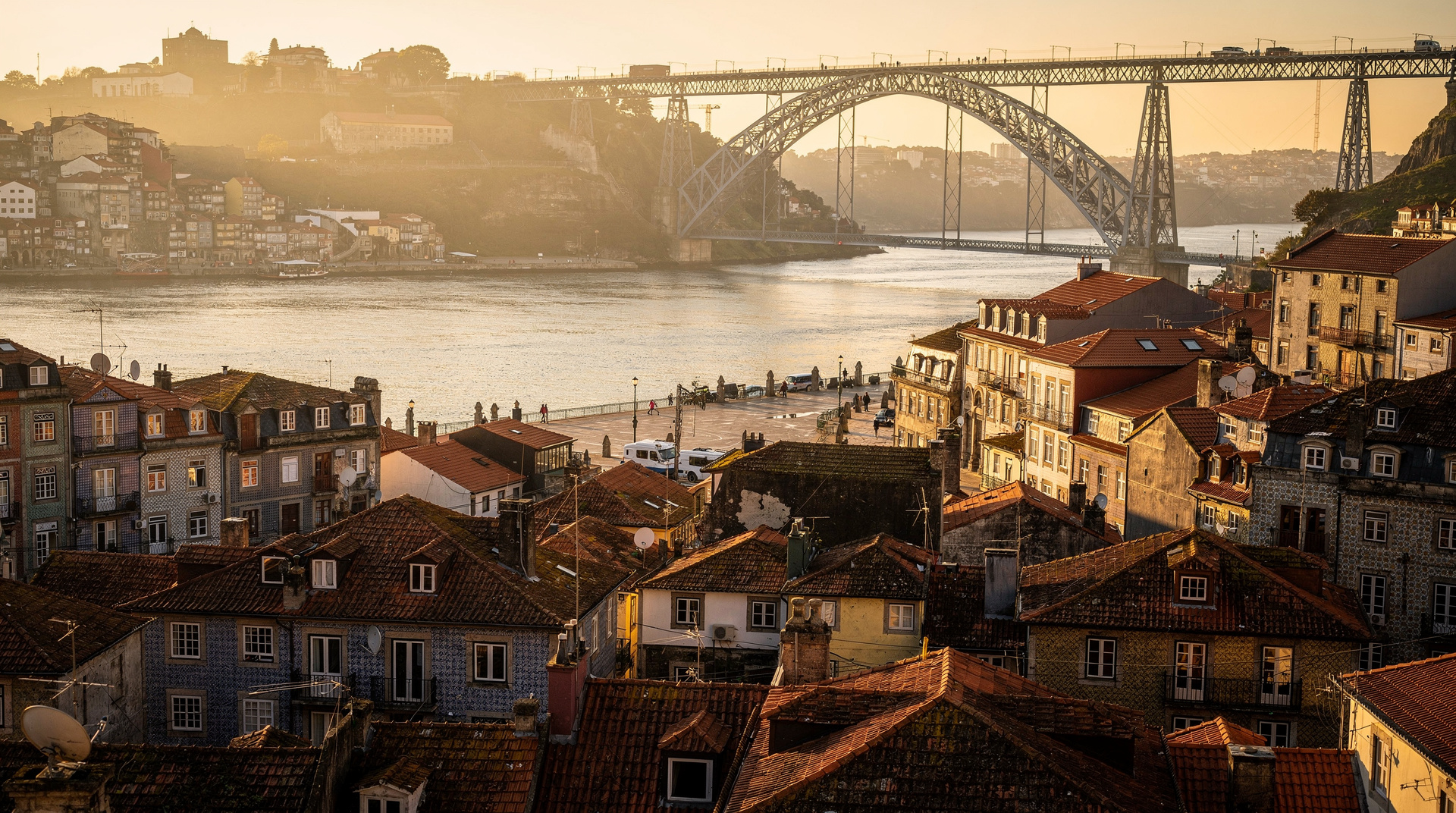
- River infrastructure (the Douro is more dramatic and accessible than the Tagus at Lisbon’s centre)
- Azulejo facades on lived-in buildings (Lisbon has them too, but Porto’s streetscapes are more consistently tiled)
- Price-to-quality ratio at restaurants
What Lisbon does better than Porto
- Museums (Museu Nacional de Arte Antiga, Calouste Gulbenkian)
- Tram 28 through Alfama (yes it’s touristy; still worth doing)
- Proximity to beach (Cascais and Estoril are 40 minutes from central Lisbon by train)
- Fado as a cultural industry (the Alfama fado houses are the tradition’s heartland)
- Scale of the foodie scene
The verdict
For a first-time visitor to Portugal with 5-10 days and the freedom to choose either city first: start in Porto. It’s more instantly navigable, the port wine experience is genuinely not replicable elsewhere, and the Douro day trip is one of the best day trips in Europe.
If you’re returning to Portugal, have already done the Gaia cellars, or your primary interest is history and art at scale: start in Lisbon.
Either way: see both. The contrast between them is part of what makes Portugal as a travel destination coherent.
How the decision changes by season
The order matters more in some months than others. In peak summer (July-August), starting in Porto and moving south to Lisbon means arriving at the hotter, more crowded city second, which some travellers find easier to tolerate once they’ve settled into a Portugal rhythm. In winter, the order matters less — both cities are quieter and milder than their summer selves, and Porto in winter is arguably the more atmospheric of the two, with fewer crowds at Clérigos and Lello. If your trip falls around São João in June, Porto absolutely has to come first — the festival is worth building the whole itinerary around, and Lisbon has no equivalent at that scale.
What a Porto-first itinerary actually looks like
For a 10-day Portugal trip starting in Porto: two to three days in the city itself, ideally with a Douro Valley day trip built in as a fourth day, then the train south. The Porto to Douro transport guide covers the logistics of that add-on day, which is the single addition we’d recommend most strongly to anyone doing Porto first — it’s the experience Lisbon can’t offer at all.
Budget and comfort trade-offs
Porto first also front-loads the cheaper half of the trip, which matters for budget planning: our Porto on 50 euros a day breakdown shows how far a modest daily budget stretches in Porto specifically, and that same daily rate buys noticeably less in Lisbon. Travellers managing a tight overall budget sometimes weight more nights toward Porto for exactly this reason, then treat Lisbon as the shorter, pricier finale.
FAQ
Is it better to fly into Porto or Lisbon for a first Portugal trip? Either works, but if you have a choice, flying into Porto (OPO) and out of Lisbon (LIS) matches the Porto-first recommendation in this guide and avoids backtracking. Both airports have good connections from major European and North American hubs, though Lisbon has more direct long-haul options.
Can you do Porto and Lisbon as a single trip without a car? Yes — the train between them takes about 3h15 and costs 25-35 €, with several daily departures. No car is needed for the intercity leg or within either city; a car only becomes useful for detours like the Douro Valley or Sintra.
See our 2-day Porto itinerary for exactly how to structure a short Porto visit, and our comparison of 2 versus 3 days in Porto if you’re still deciding how much time to allocate.