Porto food bucket list: 12 things to eat before you leave
| Must-eat | Francesinha, pastel de nata, tripas à moda do Porto |
| Cost range | 0.85 € (coffee) to 30 € (Matosinhos seafood dinner) |
| Best area | One street back from the tourist spine, anywhere |
| Seasonal item | Sardinhas assadas, June–October |
| Structured option | A guided food tour if you want several items in one sitting |
Why Porto specifically
Porto has a food culture that’s distinct from the rest of Portugal. The city’s history as a working port and industrial centre left behind a tradition of hearty, practical food — dishes built for labour, not delicacy — that has been elevated over time by a generation of cooks who grew up eating these things and decided to do them properly.
This is not a list of Michelin restaurants. It’s the twelve things you should eat while you’re in Porto, ordered roughly by how often we eat them ourselves.
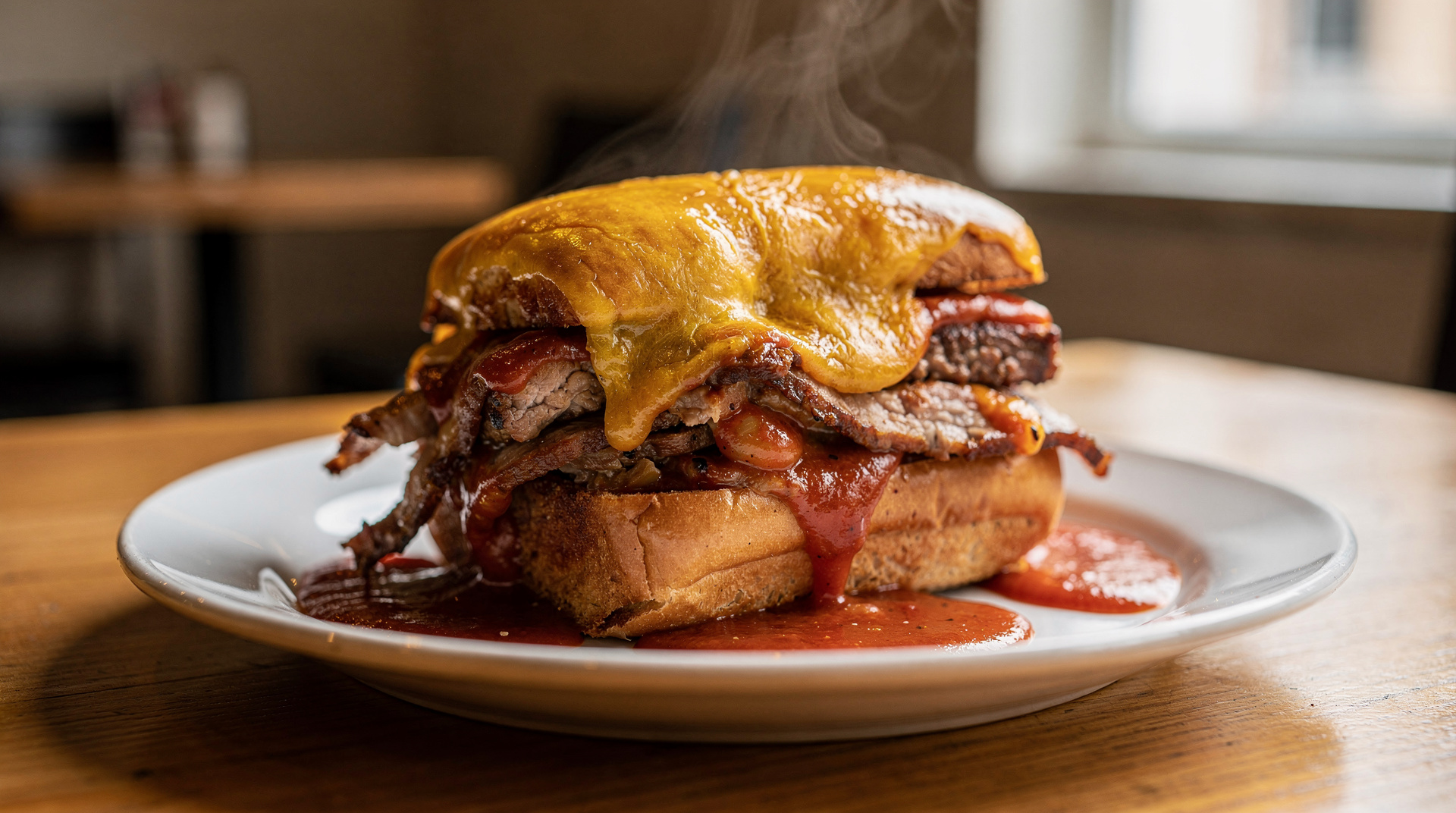
1. Francesinha
The francesinha needs its own article — and it has one. See our francesinha ranking for the specifics. The short version: a sandwich of cured pork, steak, and sausage, enclosed in bread, covered with melted cheese, submerged in a tomato-beer-brandy sauce, served with a fried egg and chips. Eat it at lunch. Don’t eat it in Ribeira tourist restaurants.
Cost: 12-17 € depending on where you go
Essential: yes, this is the one
2. Pastel de nata
The custard tart is Portuguese national territory but Porto has its own version (slightly different pastry thickness, slightly less burnt finish than the Belém original). Eat it warm, with the coffee you ordered at a counter for 0.85 €. Every morning. Non-negotiable.
Cost: 1.30-1.60 €
Where: any padaria or café that isn’t in a hotel
3. Bacalhau in any of its forms
Portugal claims 365 ways to cook salt cod — one for every day of the year. The number is probably exaggerated but the variety is real. In Porto the versions most likely to appear are bacalhau à Gomes de Sá (shredded salt cod with potatoes, onions, and hard-boiled egg), bacalhau à brás (the same ingredients scrambled together), and bacalhau com natas (with cream and potato gratin, rich and slightly dangerous).
Cost: 12-18 € as a main course
Note: the bacalhau arrives desalted and cooked — the salt-curing process is part of preservation, not how it tastes at the table
4. Tripas à moda do Porto
This is the defining Porto dish and the reason Portuenses are called tripeiros (tripe eaters). It’s a slow-cooked stew of tripe, white beans, chouriço, morcela (blood sausage), cumin, and various other things that make it rich, intensely flavoured, and divisive for people unfamiliar with the ingredient.
The origin story: during the 1415 siege of Ceuta, Porto’s citizens donated their meat supplies to the fleet and survived on tripe. Whether true or not, the dish has been the city’s signature for centuries.
Cost: 10-14 € as a main
Caveat: not for the squeamish and not on every menu — look for tascas with handwritten menus, which are more likely to have it
5. Caldo verde
The national soup: kale, potato, chouriço, and olive oil. Simple, satisfying, ubiquitous. It appears on almost every tasca menu. Order it as a starter before the main event.
Cost: 2-4 €
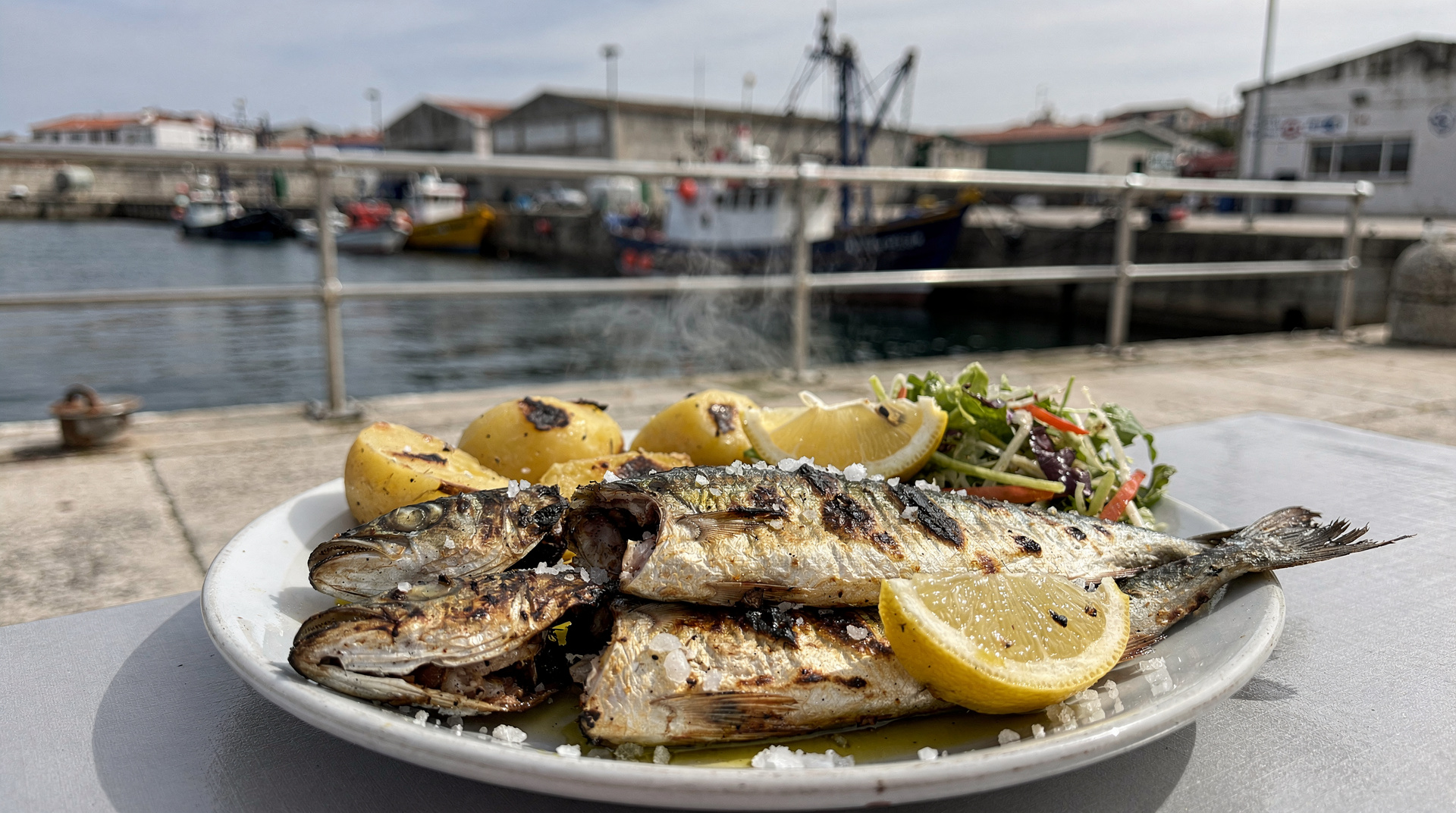
6. Sardinhas assadas (grilled sardines)
Available from mid-June through October, when Portuguese sardines are at their seasonal best. Fresh sardines grilled over charcoal, served with bread, onions, roasted pepper, and olive oil. Eat with your hands. At São João (23 June) the sardines appear on every street corner; the rest of the season you’ll find them at seafood restaurants and tascas.
Cost: 2-3 € per sardine at street grills, 10-15 € for a plate at a restaurant
Season: June-October is optimal; sardines outside this period are often imported or frozen
7. Seafood at Matosinhos
Not a single dish but an experience: the seafood restaurants on Rua Heróis de França in Matosinhos serve fish and shellfish landed at the adjacent commercial harbour, often within hours. Gambas (prawns), camarão (smaller prawns), amêijoas (clams), lulas (squid), dourada (sea bream), robalo (sea bass). All grilled, all genuinely fresh.
Cost: 18-30 € per person at a Matosinhos restaurant with wine
How to get there: metro Line A, direction Matosinhos-Sul (20 minutes from Bolhão)
8. Bifanas
The Portuguese pork sandwich: thin marinated pork cutlet, served in a roll with mustard. Every café near a railway station or market serves them. They’re the working lunch, the quick breakfast alternative, the thing you eat standing at a counter when you’ve had enough of restaurants.
Cost: 2-4 €
9. Rabanadas
The Porto version of French toast: thick bread soaked in milk and egg, fried, then soaked in port wine and dusted with cinnamon and sugar. Available year-round at some cafés and bakeries, ubiquitous in December as the Christmas version. Rich, sweet, and entirely correct.
Cost: 1.50-3 €
10. Alheira de Mirandela
This smoked sausage — originally developed by Jewish communities as a pork-free alternative during the Inquisition, now made with pork as well — has the texture of a sausage and the flavour of something smoky, slightly gamey, and entirely unlike anything you’d find elsewhere. Often served fried with an egg and salad. Find it at tascas and most traditional restaurants.
Cost: 6-10 € as a main
11. Cozido à portuguesa
The Portuguese version of pot-au-feu: slow-cooked beef, pork, chouriço, morcela, presunto (cured ham), and vegetables — specifically turnip, potato, carrot, and cabbage — in a broth. A mountain of food for a table of two. It appears most consistently in restaurants in November-March when slow-cooked warmth is the point.
Cost: 12-16 € per person
Note: usually made in large quantities and available only on specific days — check before expecting it
12. Local wine, specifically Vinho Verde
Porto is within the Vinho Verde wine region, which produces light, slightly sparkling whites (and some reds) that are the natural accompaniment to the seafood-heavy cuisine. A glass of Vinho Verde with sardines or clams, in summer, with the right view — this is Portugal in a sentence.
Cost: 2-4 € for a glass at a restaurant, 5-8 € for a bottle at a supermarket
Porto food culture tasting tour — structured way to try multiple items on this list in one morningWhen to eat what: the seasonal picture
Most of this list is available year-round, but a handful of items are genuinely better — or only available — at specific times.
| Dish | Best season | Why |
|---|---|---|
| Sardinhas assadas | June–October | Fresh sardines are at their best; outside this window they’re often frozen |
| Cozido à portuguesa | November–March | A slow-cooked winter dish; rare on summer menus |
| Rabanadas | December (available year-round) | The Christmas version is everywhere; a smaller treat any time of year |
| Francesinha, tripas, bacalhau, pastel de nata | Year-round | No real seasonality — eat these whenever you’re in Porto |
What we’d skip
Not everything marketed to visitors as a Porto specialty earns its place. Anything labelled “traditional Portuguese” with photographs of every dish on a laminated menu, in Ribeira, tends to be a generic tourist-restaurant version of these dishes rather than the real thing — the francesinha will be there, but it won’t be a good one. We’d also flag pre-made pastéis de nata sold in supermarket-adjacent kiosks near major sights: fine in a pinch, but a genuine padaria a few streets away is usually cheaper and better.
Where to eat
The general rule we’ve mentioned in every Porto food piece: one street back from the tourist spine, always. Ribeira restaurants that have photographs outside and no Portuguese guests inside are priced 20-30% above equivalent quality elsewhere and cook to tourist expectations rather than their own.
Bonfim, the streets around Bolhão market, Rua do Almada, and any street where the specials board is handwritten and the tablecloths are paper — these are where the best versions of this list exist. Our petiscos and tascas guide covers exactly this kind of neighbourhood spot in more depth, and if francesinha specifically is the priority, where to eat francesinha has our specific address recommendations. For pastel de nata, our dedicated pastel de nata guide covers the best padarias by neighbourhood, and our broader best restaurants in Porto guide rounds out the sit-down options beyond this list.
Porto secret food tour — for the local neighbourhood version of this bucket listOur food tour guide covers the structured option for tasting multiple things in one go, and if seafood is more your focus than this general list, our Matosinhos seafood pilgrimage is a deeper dive into item 7 alone.