Accessible Porto — practical guide for visitors with mobility needs
Porto: 2 Hour Private Electric Tuk Tuk Discover Porto Highlights
Is Porto accessible for visitors with limited mobility?
Porto presents real accessibility challenges — steep hills, irregular cobblestones and many centuries-old buildings without lifts. The metro system is largely accessible with lifts at most stations. Some areas of the historic centre can be navigated by wheelchair with planning, but Ribeira and the hillside zones are genuinely difficult. The city has improved significantly but remains one of the more challenging historic European centres for accessibility.
Porto’s accessibility: the honest starting point
Porto is one of the more challenging European city break destinations for visitors with mobility limitations. This is not a failure of political will or infrastructure investment — it is primarily a function of geography and history. The city is built on steep hillside terrain, the historic centre is a UNESCO site where significant changes to public realm are constrained, and a large proportion of Porto’s building stock dates from eras when accessibility was not a design consideration.
This guide does not minimise these challenges, but it also does not conclude that Porto is inaccessible. With planning, specific route choices, the right accommodation, and knowledge of which transport alternatives replace walking-intensive sections, many visitors with mobility limitations do experience Porto meaningfully and successfully. The goal here is to give you the honest information to make that planning work.
| Terrain | Steep hills, gradients up to around 20–25%, calçada cobblestones |
| Most reliable transport | Metro — lifts at most stations, level boarding |
| Easiest base neighbourhood | Baixa/Aliados or Boavista |
| Toughest zone | Ribeira and the hillside lanes behind it |
| Key workarounds | Funicular dos Guindais, electric tuk-tuk, Douro river cruise |
The terrain: what you are actually dealing with
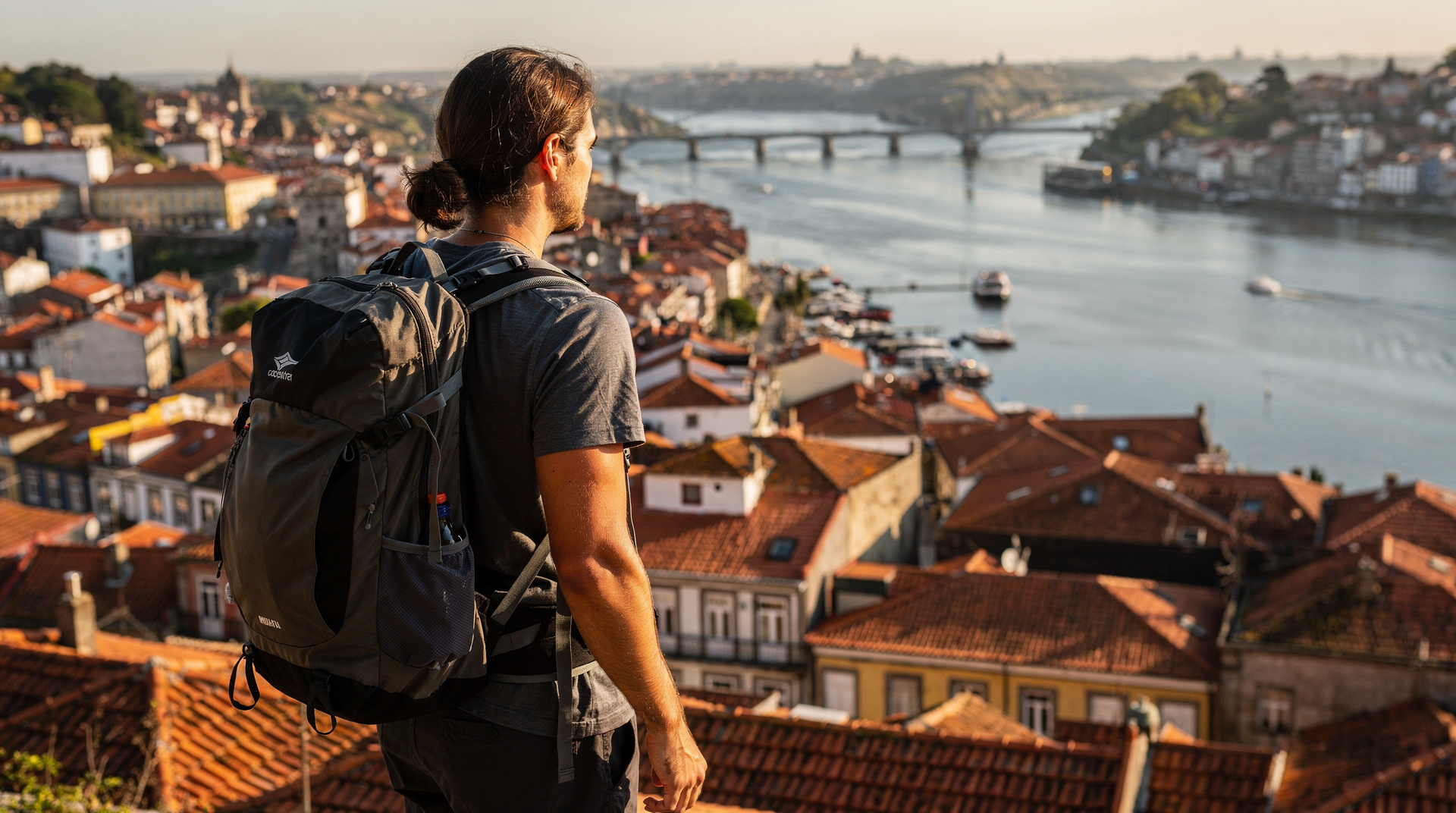
Porto’s historic centre involves a gradient change of 60 to 80 metres between the Douro waterfront at Ribeira and the upper city around São Bento station, Livraria Lello and the Aliados boulevard. This elevation change happens over a horizontal distance of 400 to 600 metres, which means average gradients of 12 to 20 percent on the steepest streets. Some lanes in the Ribeira and Bairro da Sé areas have gradients exceeding 25 percent.
The surface material throughout most of the historic centre is calçada portuguesa — traditional hand-laid stone setts that create an irregular, undulating surface. Even in dry conditions, calçada is more challenging to wheel across than smooth pavement; in wet conditions (and Porto is wet for large parts of the year), the stone setts become significantly more slippery.
Outside the historic centre, the accessibility picture improves. The Aliados boulevard and its surrounding streets have flatter terrain and smoother pavement. The Cedofeita plateau is flatter than the historic centre. Matosinhos and Foz do Douro are coastal areas on more level ground.
Understanding this geography before you arrive is more useful than attempting to understand it from the waterfront after the fact.
The metro: the most consistently accessible transport option
Porto’s metro is the most reliably accessible component of the city’s transport infrastructure. Most stations have lift access between street level and platform level, and the trains are level-boarding (step-free from platform to train) at most metro network stations.
Key accessible stations:
- Aliados, Trindade, Bolhão, Campanhã: all central stations with lift access
- Aeroporto (airport): lift access throughout the airport metro connection
- Casa da Música, Boavista: lift access, flatter neighbourhood terrain
Where to verify before relying: Some historic centre stations have lifts with dimensions that may not accommodate larger electric wheelchairs. The Metro do Porto accessibility page (available in Portuguese and English) lists lift dimensions and current operational status. If a specific lift is out of service for maintenance, the metro control room can advise on accessible alternative routes.
The Andante card (Porto’s transport card) can be used with lift access at all ticket machines. There are accessible machine formats at most stations.
Accessible routes through the historic centre
The historic centre’s accessibility depends heavily on which route you take. Several areas that appear on a map to be short distances apart involve either very steep gradients, poor cobblestone, or both.
The Aliados to São Bento route: Avenida dos Aliados runs level to Praça da Liberdade (the square at the bottom), and from there a short descent (steep but paved in smooth stone) leads to São Bento station. The station interior is accessible via lift from street level to the main hall where the azulejo panels are. This route is manageable for most mobility aids.
São Bento to Ribeira: This descent (approximately 1 km, losing 50 metres of elevation) passes through Rua dos Mércadores and similar streets. The gradient is significant and the paving is irregular. An electric wheelchair handles it in dry conditions with care; a manual wheelchair requires assistance and is difficult. This route is the primary challenge for many visitors wanting to reach the Ribeira waterfront.
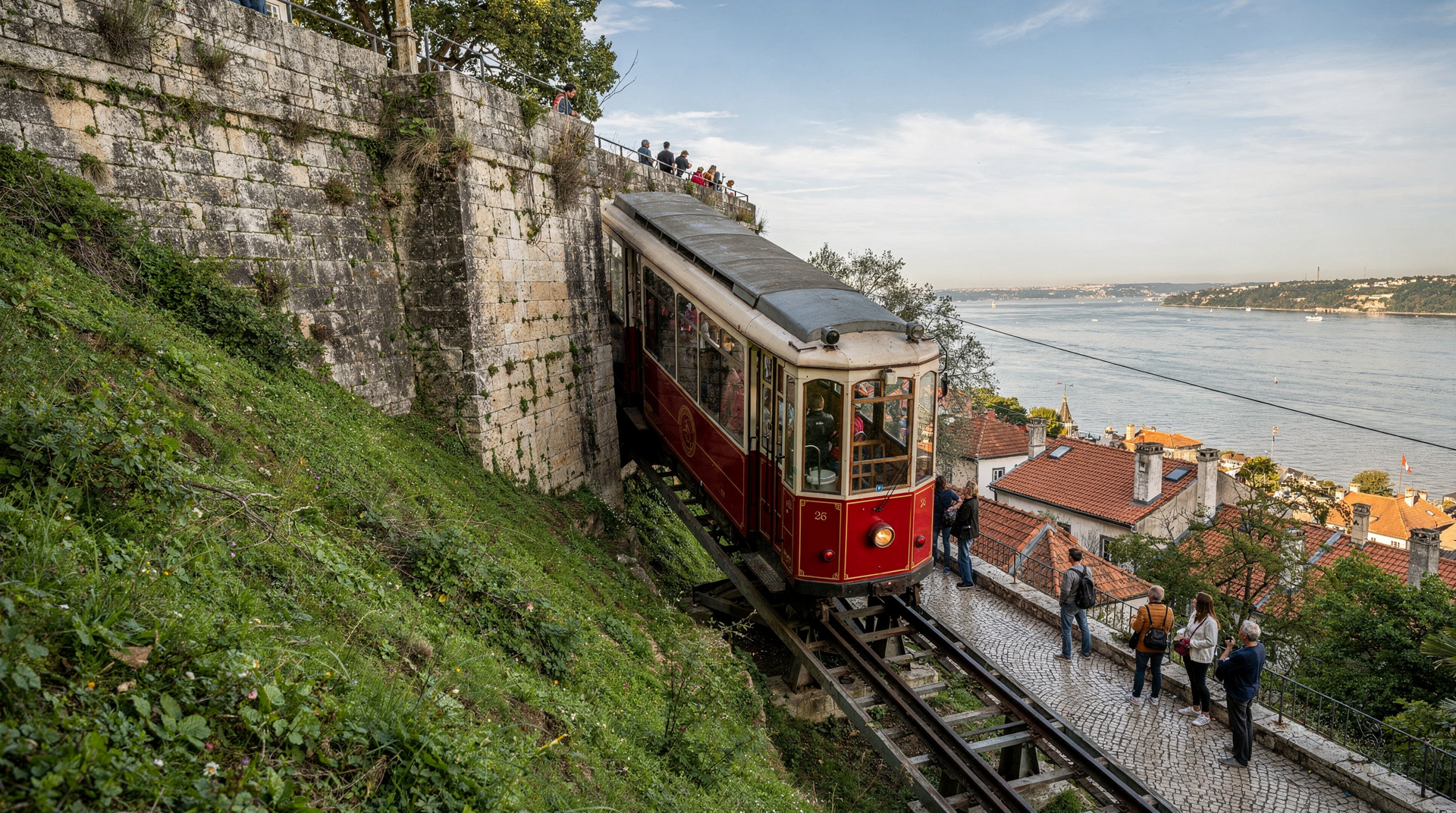
The funicular alternative for Ribeira: The Funicular dos Guindais (Batalha to Ribeira, 2.50 € single) provides a non-walking alternative for the descent to Ribeira from the upper city level. The funicular car itself has step access — it is not wheelchair accessible in the full sense, but it significantly reduces the gradient walking required for visitors who can manage a step onto a moving car. The porto funicular guide covers the funicular in detail.
Ribeira waterfront itself: The quayside along the Douro at Ribeira is reasonably flat and paved with smoother material than the surrounding historic lanes. If you can reach the waterfront, moving along it is manageable. The challenge is arrival and departure via the steep uphill lanes behind it.
Electric tuk-tuk from Ribeira: A practical solution for visitors who want to reach Ribeira but cannot walk the hill in both directions. Book an electric tuk-tuk private tour — the small vehicles can navigate many of Porto’s historic lanes and the driver handles routing around the steepest sections. This substitutes for walking while still covering the visual experience of the area.
Transport alternatives for mobility-limited visitors
Electric tuk-tuks: Small electric three-wheelers that navigate the historic streets. Private bookings can customise the route. Not all tuk-tuks have lift or ramp access for wheelchairs — confirm before booking. They accommodate most pushchairs, walker frames and visitors who can step in without a ramp.
Accessible taxis: Standard taxis in Porto are not required to be wheelchair accessible, and most are not. Accessible taxis exist but must be pre-booked through the taxi associations or through accessible transport booking services. The Giro Acessível service and similar providers operate wheelchair-accessible vehicles in Porto — book these in advance for guaranteed availability.
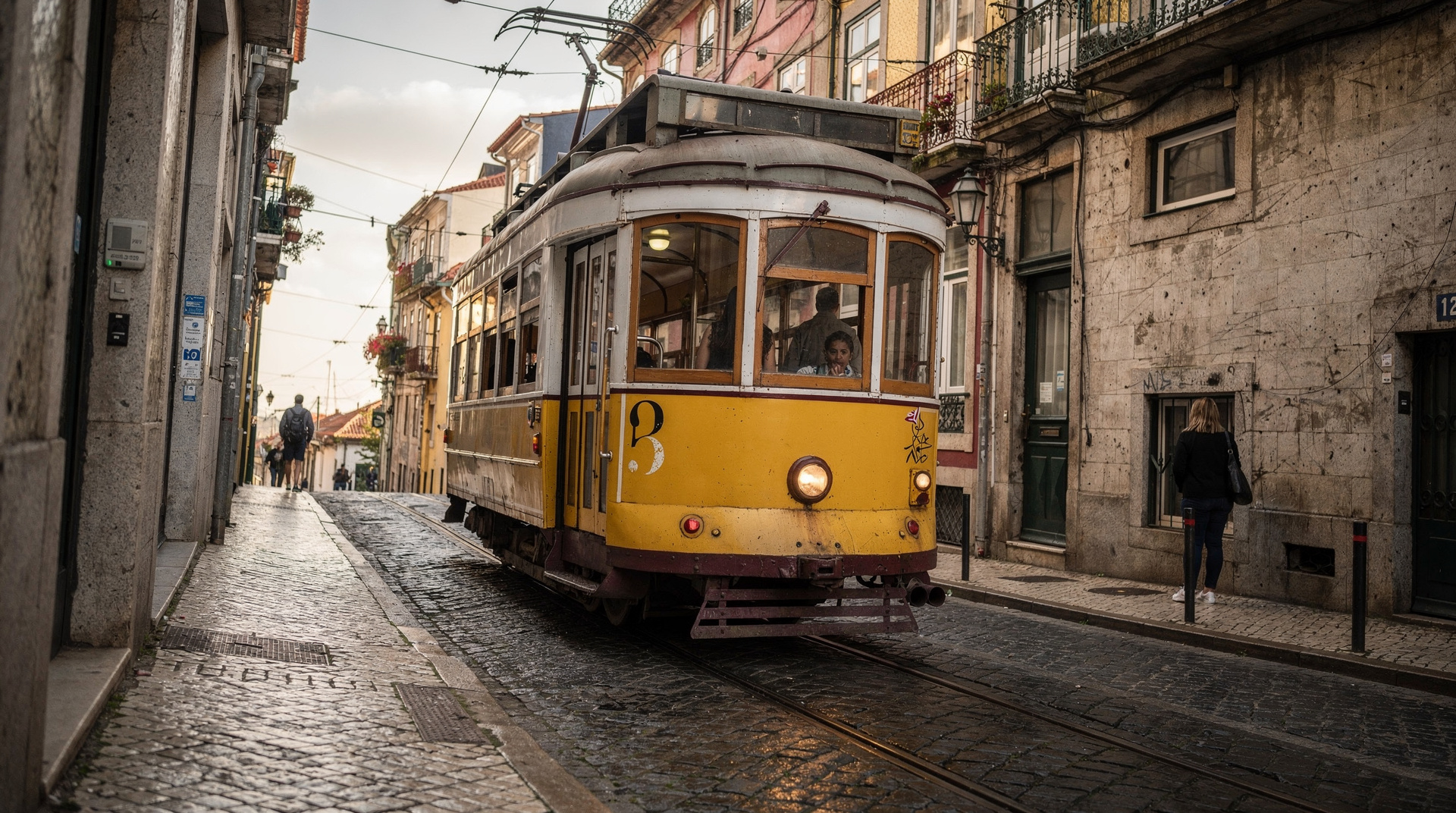
Hop-on hop-off options: Book the hop-on hop-off tram and funicular combo — the tour format covers the city’s visual highlights via the historic tram network, which is easier than walking the hills. Tram accessibility is partial — the historic line 1 tram has a step onto the car; modern bus-style vehicles on the hop-on hop-off circuit are more accessible. Check the specific vehicle before booking.
River cruises: The six bridges cruise on the Douro River is one of the most accessible Porto experiences for visitors with significant mobility limitations. Modern cruise boats have accessible boarding facilities (check with the operator for the boarding arrangement at the specific departure point) and level decks. The six bridges cruise guide covers the experience. Being on the water at river level means seeing Porto’s famous waterfront skyline without navigating any hills.
Accessible accommodation in Porto
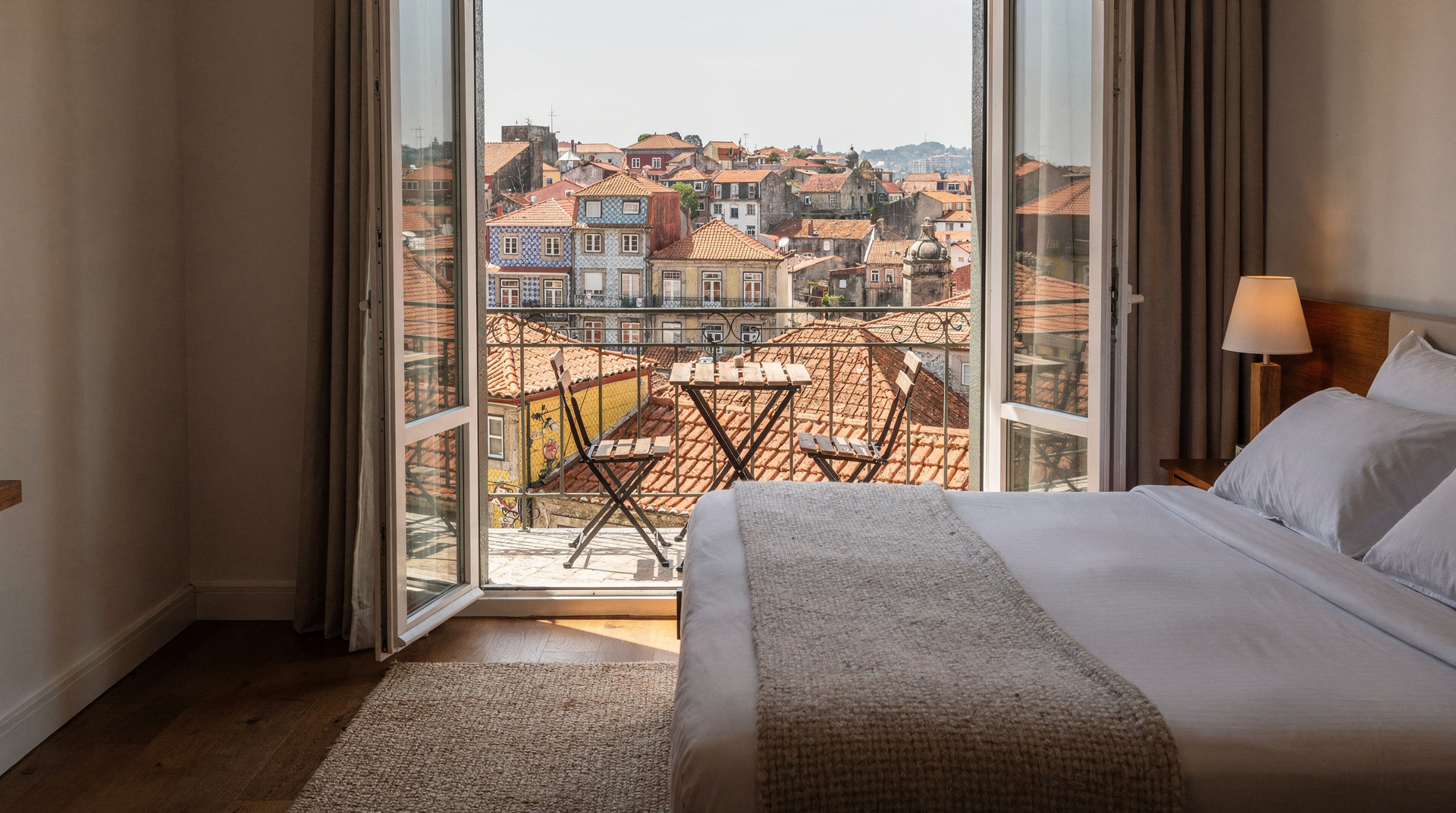
The Baixa and Aliados area has the highest concentration of hotels with accessible rooms in Porto. Larger modern hotels (four-star and above) that have undergone recent renovation are the most reliable.
What to verify when booking:
- Confirm a roll-in shower (not just a grab bar) if a shower chair is needed
- Ask for the exact width of the accessible room door and bathroom door in centimetres
- Confirm the hotel entrance has no steps (or has an alternative accessible entrance)
- Ask whether the lift serves all floors or only some
- Confirm distance from nearest accessible metro station or taxi rank
Hotels with known accessible facilities in Porto:
The Crowne Plaza Porto, InterContinental Porto and Sheraton Porto have standard international-chain accessible room specifications and are generally reliable for confirmed accessibility. The DoubleTree in Boavista is another option in a flatter neighbourhood. Smaller boutique guesthouses and historic properties are individually variable — always call and ask specific questions rather than relying on booking platform checkboxes.
Ribeira accommodation and accessibility: Historic properties in Ribeira are among the most challenging for accessibility — stone stairways, narrow doorways, no lifts in many buildings, and the surrounding street terrain. If accessibility is a requirement, the Baixa/Aliados area or Boavista are more practical neighbourhood choices.
Accessible neighbourhoods compared:
| Neighbourhood | Gradient | Metro access | Best for |
|---|---|---|---|
| Baixa/Aliados | Low, mostly level | Direct, lift access | Most visitors needing accessible facilities |
| Boavista | Low, flat | Lift access, quieter station | Longer stays, calmer setting |
| Cedofeita | Moderate, flatter plateau | Nearby, some walking | Visitors who can manage short inclines |
| Ribeira | Steep, uneven calçada | None direct — funicular or taxi needed | Not recommended for significant mobility limitations |
Accessible port cellar visits
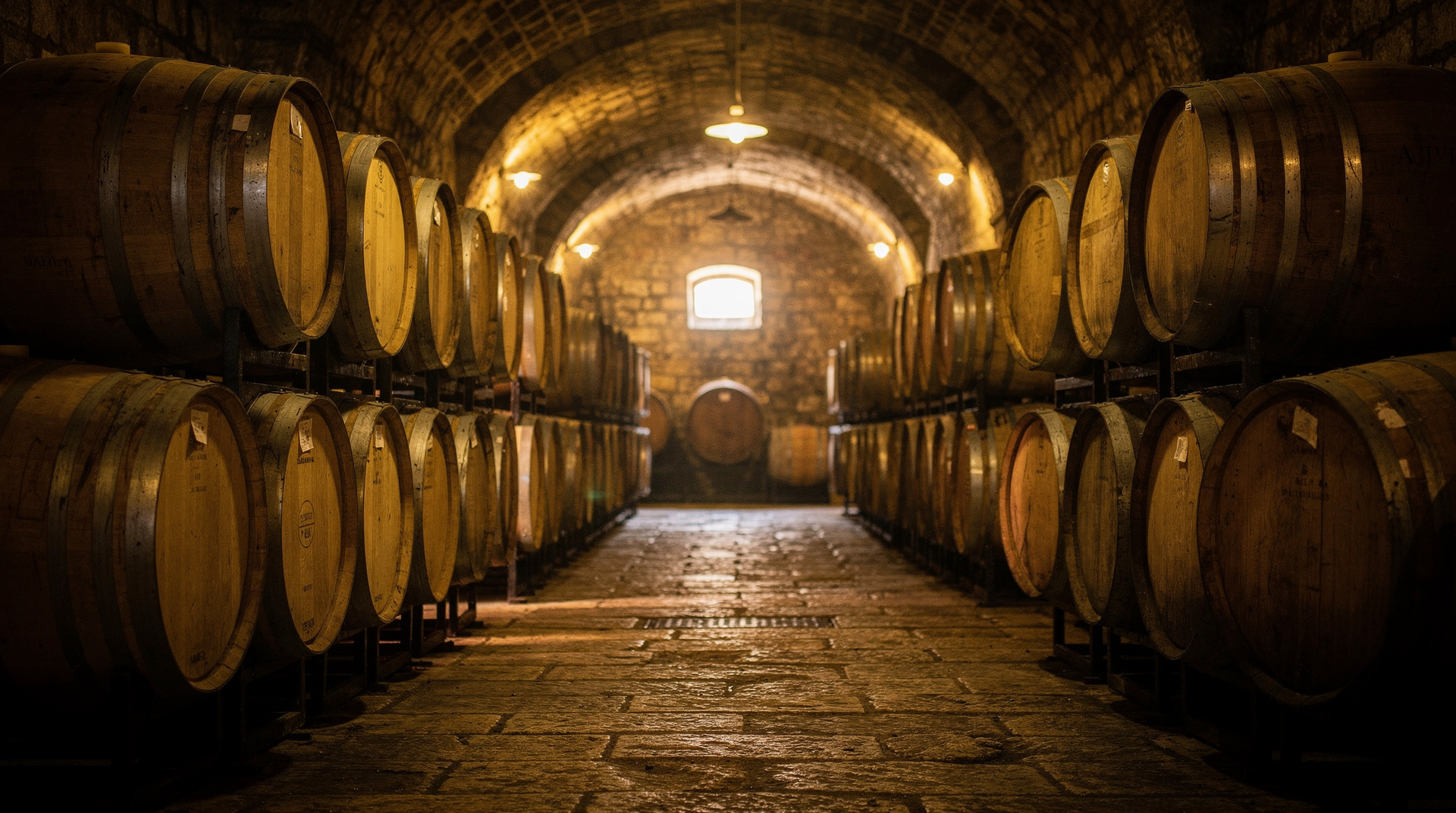
Port wine cellar visits in Vila Nova de Gaia are worth investigating for accessibility even if you have limitations. The terrain challenge is the approach from the Gaia waterfront to the hillside lodges — most lodges sit above the waterfront and involve uphill walking.
The Gaia cable car (teleférico from the waterfront to Jardim do Morro) provides a non-walking alternative for gaining altitude in Gaia. The cable car has step access but reduces walking significantly. See the porto funicular and cable car guide for access details.
Cellar-specific accessibility:
- Ramos Pinto: has made partial accessibility improvements — contact them directly
- Ferreira: some ground-floor accessible areas
- Cálem: the waterfront location is the most accessible approach; the interior involves some steps
- Taylor’s and Graham’s: on the upper hillside, requiring significant uphill approach — partial accessibility possible by taxi to the entrance
Always contact individual cellars before visiting to ask specifically about current accessibility arrangements. The situation changes as lodges make improvements, and personal enquiry yields better information than published guides. The best port wine cellars in Gaia guide has more on choosing between the lodges, including which formats involve the least walking.
Accessible day trips from Porto
Douro Valley: River cruise departures from Porto’s quay offer the most accessible Douro experience — the boat journey itself traverses the river and passes through wine country landscape without vineyard terrain. The Douro transport guide covers boat services. Quinta visits on the valley floor (rather than hillside) are more accessible; ask tour operators specifically about accessibility when booking.
Braga: Braga’s historic centre is flatter than Porto’s and has a good proportion of smooth paving. The main visitor areas around the cathedral and central square are accessible by wheelchair. The Bom Jesus sanctuary involves a steep staircase (the pilgrim route) — the cable car to the top is an accessible alternative.
Aveiro: Aveiro is relatively flat terrain. The moliceiro canal boat rides are accessible for most visitors (a small step onto the boat). The city centre streets are flatter than Porto.
Sensory and cognitive accessibility considerations
Accessibility in Porto is not only about mobility. Visitors with sensory sensitivities or cognitive disabilities face a different set of challenges, and the city’s information on this front is less developed than its physical infrastructure.
Noise and crowding: The historic centre — particularly Rua de Santa Catarina, the streets around São Bento and the Ribeira waterfront in peak season — gets loud and dense with foot traffic from late morning through early evening. If sensory overload is a concern, plan visits to the major sights for early morning (before 9:30 am) or later afternoon (after 6 pm), when the same streets are markedly calmer. São Bento station itself is quietest in the first hour after opening.
Quieter alternatives to the busiest sights: If Livraria Lello’s queues and crowding are unmanageable, the Clérigos Tower and several of Porto’s other churches offer comparable architectural interest with a fraction of the visitor density. The Boavista and Cedofeita neighbourhoods generally offer a calmer pace than the Ribeira and Aliados core.
Predictability and planning: For visitors who benefit from structured, predictable itineraries, pre-booking timed-entry tickets (where available) removes the uncertainty of queuing. Many of Porto’s attractions do not publish detailed sensory-accessibility information online, so a direct phone call or email ahead of the visit — asking about crowd levels, lighting, and noise inside a specific venue — tends to produce more useful answers than a website FAQ.
Service animals: Guide dogs and other assistance animals are permitted in public spaces, on public transport, and in most restaurants and shops in Portugal by law. Some smaller or informal establishments may be unfamiliar with the regulations — carrying documentation for the animal is a sensible precaution, though rarely strictly required.
Practical tips before you arrive
Call your hotel and the specific attractions you plan to visit before you book. English-speaking staff at Porto’s main tourist sites are generally helpful in giving specific, honest answers to accessibility questions. Do not rely solely on website accessibility statements, which are often generic.
Request accessible taxi transfers from the airport in advance — if a wheelchair-accessible vehicle is needed, same-day booking is unreliable. The getting from Porto airport guide covers airport transfer options, and pre-booking a specific accessible transfer is covered in the private transfer section.
Plan your daily routes using the metro as the base transport and substitute walking-intensive sections with taxi, tuk-tuk or metro alternatives. A day visiting the historic centre from the Aliados metro stop, walking the accessible flat sections, using the funicular for the Ribeira descent, and a river cruise for the afternoon is a full day that touches all of Porto’s major visual elements without requiring any steep cobblestone climbing. Pairing the metro with the funicular and cable car guide makes it easier to plan which inclines to skip entirely.
Porto is challenging but workable with the right information. The key is detailed planning and direct communication with hotels, transport operators and attraction venues before arrival.
Frequently asked questions — Accessible Porto — practical guide for visitors with mobility needs
Is Porto wheelchair accessible?
Porto has significant accessibility challenges due to its hilly terrain, cobblestone streets and historic building stock. The metro system has lifts at most stations and is generally wheelchair accessible. A number of modern and recently renovated hotels are fully accessible. The historic centre has areas that can be navigated in a wheelchair via accessible routes, but Ribeira and the hillside zones require careful route planning. Electric tuk-tuks and accessible taxis can substitute for walking difficult sections.Are Porto's metro stations accessible?
The majority of Porto metro stations have lift access between street level and platform level. Some older stations in the historic centre have lifts with limited dimensions — check before relying on a specific station. The metro system publishes an accessibility guide on its website. Line E from the airport includes lift access at all stations on this route.Are there accessible hotel rooms in Porto?
A number of Porto's four and five-star hotels have adapted rooms with roll-in showers, wider door frames and lowered bed heights. Many smaller boutique guesthouses and historic buildings cannot accommodate these requirements due to listed building restrictions. Always call ahead and ask specifically about wheelchair access, door widths, lift availability, and bathroom configuration — the standard accessibility checkboxes on booking platforms are not always accurately completed.Which port cellars in Gaia are accessible?
Most Gaia port cellars are built into historic hillside terrain with stone stairs and uneven floors — accessibility is partial at best. Ramos Pinto has worked on partially accessible routes. Ferreira has some ground-floor areas accessible by wheelchair. Taylor's and Graham's involve significant uphill terrain from the waterfront. Always contact the cellar directly before visiting to check current accessibility arrangements for specific tour formats.Is the Douro Valley accessible for visitors with mobility needs?
Douro Valley quinta visits are generally difficult for visitors with significant mobility limitations — most quintas involve gravel or stone paths, uneven vineyard terrain and stairs in older buildings. River cruises on the Douro are generally more accessible, as modern cruise vessels have accessible boarding facilities and level deck areas. Check with tour operators directly regarding boarding arrangements and onboard accessibility.What is the most accessible neighbourhood to stay in Porto?
The Baixa and Aliados area is the most accessible neighbourhood for visitors with mobility limitations — the streets are wider, the gradient is lower than Ribeira, and the metro (with lift access) is directly on Avenida dos Aliados. The Boavista neighbourhood is similarly accessible and somewhat quieter. Both areas have modern hotels with adapted facilities. Ribeira is the most challenging neighbourhood for mobility.Can I rent a wheelchair or mobility scooter in Porto?
A small number of medical equipment rental companies in Porto rent manual wheelchairs and, less commonly, mobility scooters, generally for around 10–20 € per day depending on the equipment and rental length. Some accessible-tourism agencies bundle equipment rental with guided tours. Availability is limited compared to larger European capitals, so arrange rental at least a few days ahead rather than expecting to find equipment on arrival.
Top experiences
Bookable activities with verified prices and instant confirmation on GetYourGuide.