Where to stay in Porto — honest neighbourhood guide
Porto: Porto Historical Center Walking Tour
Where should I stay in Porto?
Baixa/Aliados is the best all-around choice — central, flat, good transport links. Ribeira has the most atmosphere but is noisy and steep. Cedofeita suits independent travellers wanting local life. Foz do Douro is quieter and cooler but 20 minutes from the centre by tram or metro.
Why neighbourhood choice matters more in Porto than in most cities
Porto’s topography is the first thing that surprises visitors who have only seen it in photographs. The city is built on a series of steep hillsides dropping to the Douro River, and the difference in gradient between neighbourhoods is significant. Ribeira sits at river level; the historic upper city rises 60 to 80 metres above it in 500 metres of horizontal distance. Cedofeita is plateau-flat. Foz faces the Atlantic on terrain that is, by Porto standards, almost level.
This matters for accommodation because where you sleep determines whether you arrive back to your room via a pleasant stroll or a 15-minute uphill grunt at the end of every evening. It also affects noise levels, restaurant options, transport access, and the experience of the city you actually live in for a few days rather than the one you photograph.
This guide describes the four main areas where visitors stay, honestly — including the things that accommodation comparison sites tend not to mention.
| Best all-round base | Baixa/Aliados — central, flat, well connected |
| Cost | around 50–130 € mid-range, 130–350 € for four/five-star |
| Most atmospheric | Ribeira, at a 15–25% price premium |
| Getting around | metro covers most needs; Ribeira and old-town streets are steep |
| Best time to book | 4–8 weeks ahead for summer; watch São João (23–24 June) dates specifically |
Porto’s neighbourhoods compared
| Area | Character | Price range | Best for |
|---|---|---|---|
| Ribeira | Postcard, riverside, steep | 70–200 € | Short romantic breaks |
| Baixa/Aliados | Central, flat, practical | 50–380 € | First-time visitors, families |
| Cedofeita | Local, creative, independent | 65–140 € | Independent travellers, longer stays |
| Foz do Douro | Quiet, ocean-facing | 70–280 € | Beach-oriented, families wanting calm |
| Boavista | Residential, business-oriented | 100–220 € | Business travellers, quiet + metro |
Ribeira: the atmospheric choice (with caveats)
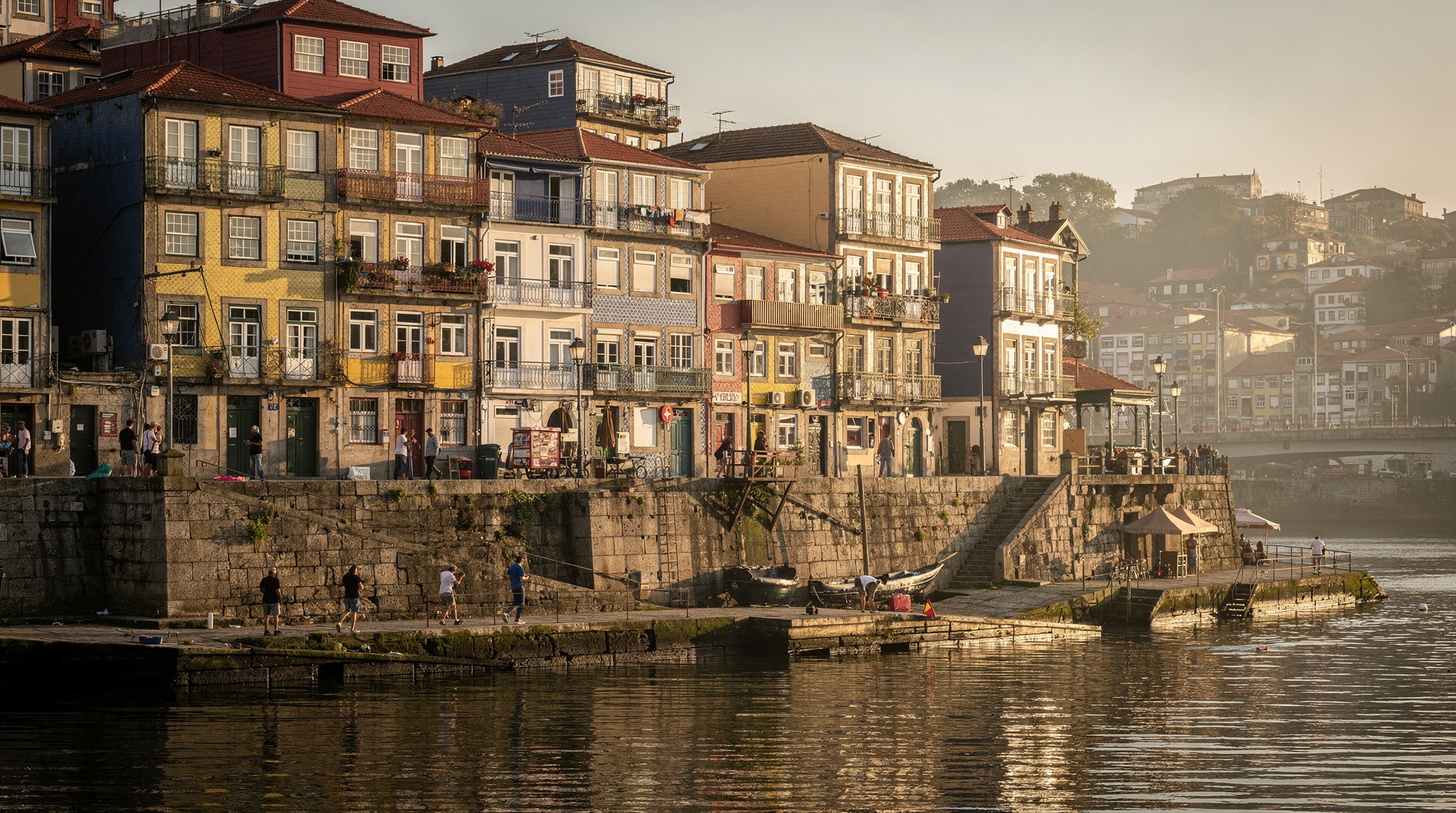
Ribeira is the historic waterfront district of Porto, a UNESCO World Heritage Site since 1996, and the neighbourhood that appears in virtually every photograph of the city. The coloured buildings stacked along the Douro, Ponte Dom Luís I in the background, the rabelo boats moored at the quay — this is Ribeira.
Staying here puts you at the centre of Porto’s visual identity. You wake up to the sound of the river, walk five minutes to the bridge, and can reach the port cellars in Vila Nova de Gaia without taking any transport. The Ribeira district is genuinely as beautiful as it looks, particularly at night when the buildings are lit and the bridge reflects off the water.
The honest caveats, however, are substantial. Ribeira is not designed for wheeled luggage — the streets are narrow, paved with irregular stone setts, and many of the narrower lanes have no vehicle access at all. Getting to your hotel often means carrying bags for several hundred metres uphill. This is manageable once; arriving and departing it repeatedly throughout a longer stay becomes genuinely tiring. Anyone with mobility limitations should think carefully before booking a Ribeira address — the accessible Porto guide covers this in detail.
Noise is the second honest issue. The Ribeira waterfront and the streets immediately behind it have bars, restaurants, and street musicians active until midnight or later in summer. A room facing the Douro is a stunning visual experience and a difficult sleep environment from June through September unless the hotel has double-glazed windows. Ask before booking.
Prices in Ribeira run 15 to 25 percent above equivalent properties in Baixa. You are paying for postcode, not necessarily for quality. Breakfast options are primarily the restaurant row along the waterfront, where prices are tourist-facing — a coffee and pastry will cost 4 to 6 € in a Ribeira café versus 1.50 to 2.50 € three streets away.
Who Ribeira suits: Couples on short breaks who want total immersion in Porto’s most cinematic streets. Anyone who does not need to carry luggage up and down repeatedly. Visitors for whom the view from the window is worth the price premium.
Who should look elsewhere: Families with children, anyone with mobility concerns, light sleepers in summer, budget travellers.
Real hotel options in Ribeira: The Belas Artes Hotel (four-star, river views, 140 to 200 €), Flores Village Hotel (boutique, 120 to 175 €), and The Artist Porto (lifestyle design, 130 to 190 € in summer). Smaller guesthouses on the uphill streets above Ribeira drop to 70 to 110 €.
Baixa and Aliados: the practical centre
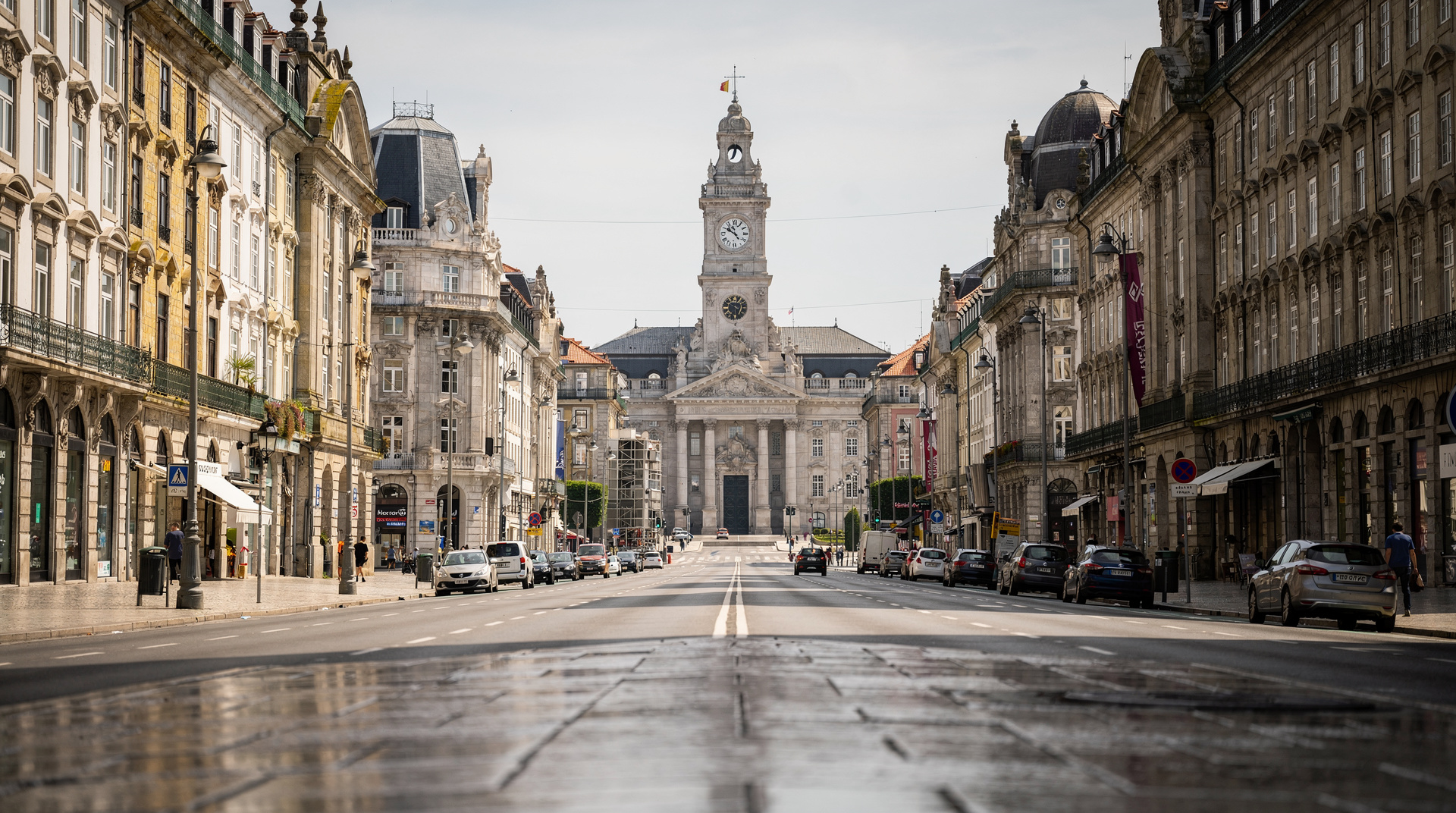
The area around Avenida dos Aliados — Porto’s grand central boulevard — and the Baixa district stretching south toward the Ribeira is the most consistently recommended base for first-time visitors, and the recommendation is justified.
You are within 15 minutes’ walking distance of every major sight in the historic centre: São Bento station is a 10-minute walk, Livraria Lello is 15 minutes, the Ribeira waterfront is 15 to 20 minutes downhill. The Aliados metro stop (served by five of Porto’s six lines) is directly on the boulevard, meaning airport transfers, Gaia day visits, Matosinhos beach access and most day-trip departure points are efficiently connected. The area is also significantly flatter than Ribeira, making it dramatically easier for luggage arrival and departure.
The hotel landscape here covers every price point. Luxury options include the InterContinental Porto Palácio das Cardosas on Praça da Liberdade (five-star, 200 to 350 €) and the Sheraton Porto (250 to 380 €). Mid-range properties like the Hotel Teatro (four-star boutique, 100 to 150 €) and several locally owned three-star options cluster in the streets off Aliados at 70 to 120 €. Budget travellers find the best-value guesthouses and small hotels in the streets between Aliados and Cedofeita — look in the area around Rua de Ceuta and Rua da Firmeza for independently owned rooms at 50 to 80 € per night.
The only honest limitation of Baixa/Aliados: it lacks neighbourhood character in the way that Ribeira or Cedofeita have it. The central boulevard is impressive but formal, the streets near the main hotels have the generic fabric of any European city centre — chain cafés, mobile phone shops, tourist agencies. Character is a 10-minute walk in any direction, but it is not on your doorstep.
Who Baixa/Aliados suits: First-time visitors, anyone prioritising transport access, business travellers, families, anyone arriving with heavy luggage.
Real hotel options: Crowne Plaza Porto (four-star, 130 to 180 €), Hotel da Música (boutique, 100 to 160 €), and numerous smaller three-star options at 65 to 100 € per night.
Cedofeita and Bombarda: the local neighbourhood
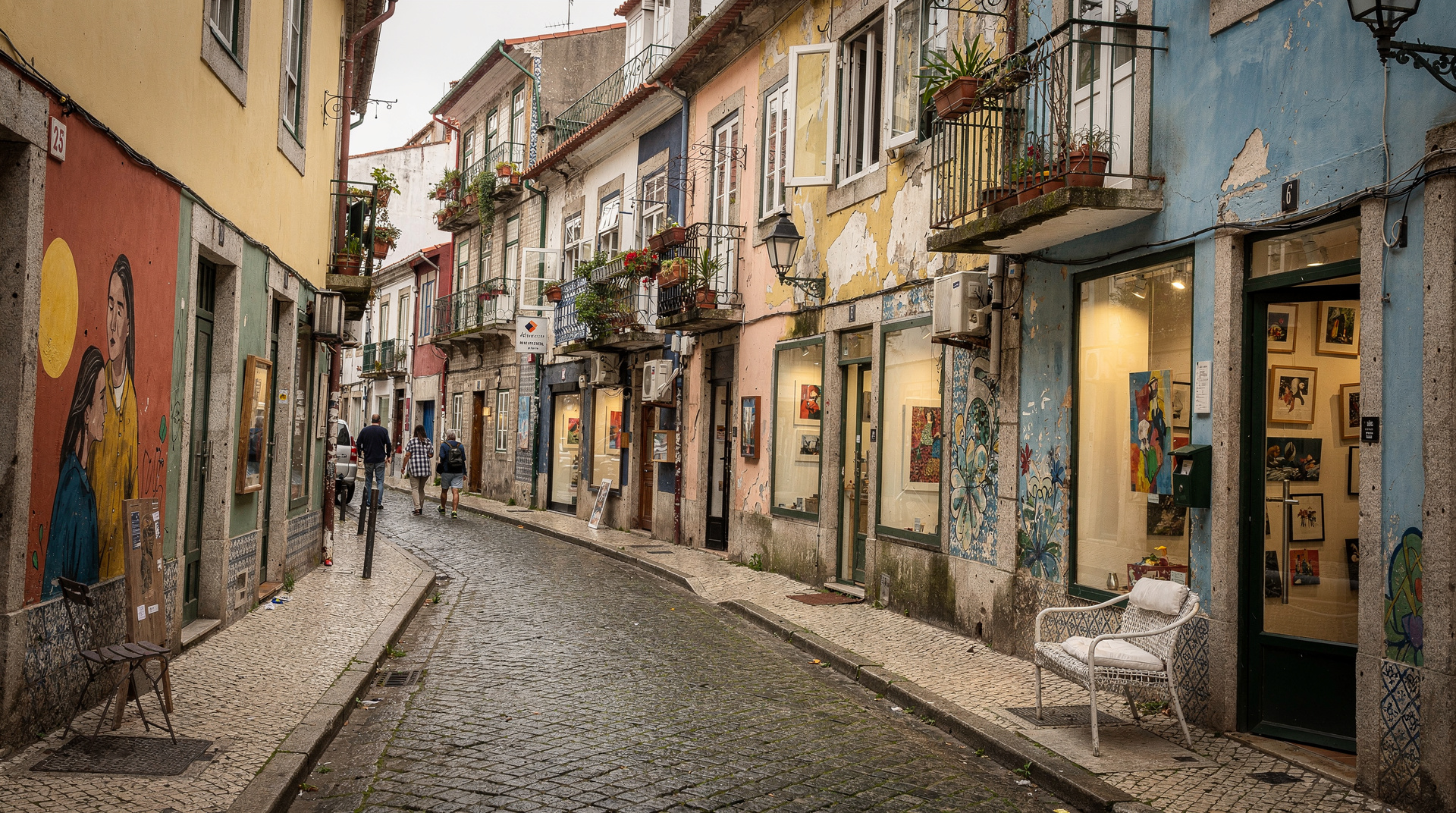
Cedofeita is Porto’s most genuinely neighbourhood-feeling area for visitors. Located northwest of the Baixa, uphill from Aliados, it is far enough from the tourist core to have kept its independent shops, family-run cafés, and non-tourist-facing restaurants — but close enough that walking to São Bento station or Livraria Lello takes 15 to 20 minutes.
The Rua Miguel Bombarda area within Cedofeita is Porto’s gallery and design district — small contemporary art spaces, independent bookshops, vintage clothing stores, and coffee shops that compete on quality rather than location. This is where a significant proportion of Porto’s younger creative class spends its weekends. Staying in Cedofeita gives you access to this rhythm as part of daily life rather than as a tourist destination.
Accommodation in Cedofeita leans toward smaller boutique guesthouses and apartments rather than large hotels. This means fewer front desks and 24-hour services, but better prices and more space. Expect to pay 65 to 110 € for a good guesthouse, and 80 to 140 € for a well-positioned boutique hotel. The neighbourhood is not immune to Airbnb-style apartment rentals; for anyone staying four or more days, an apartment in Cedofeita represents strong value.
Transport: Cedofeita does not have its own metro stop, but it is a 10-minute walk from Aliados and 8 minutes from Lapa (line A). The 3E bus runs through the area. For the hop-on hop-off tour, the routes pass through Cedofeita on the upper city circuit.
Who Cedofeita suits: Independent travellers, anyone interested in Porto’s creative scene, repeat visitors, longer stays, couples who want to cook occasionally (the Cedofeita market has fresh produce at non-tourist prices).
Who should look elsewhere: Anyone who wants a large hotel with full services, families with very young children (the streets are lively in the evenings), visitors making Porto a one or two night stop.
Foz do Douro: the quiet retreat
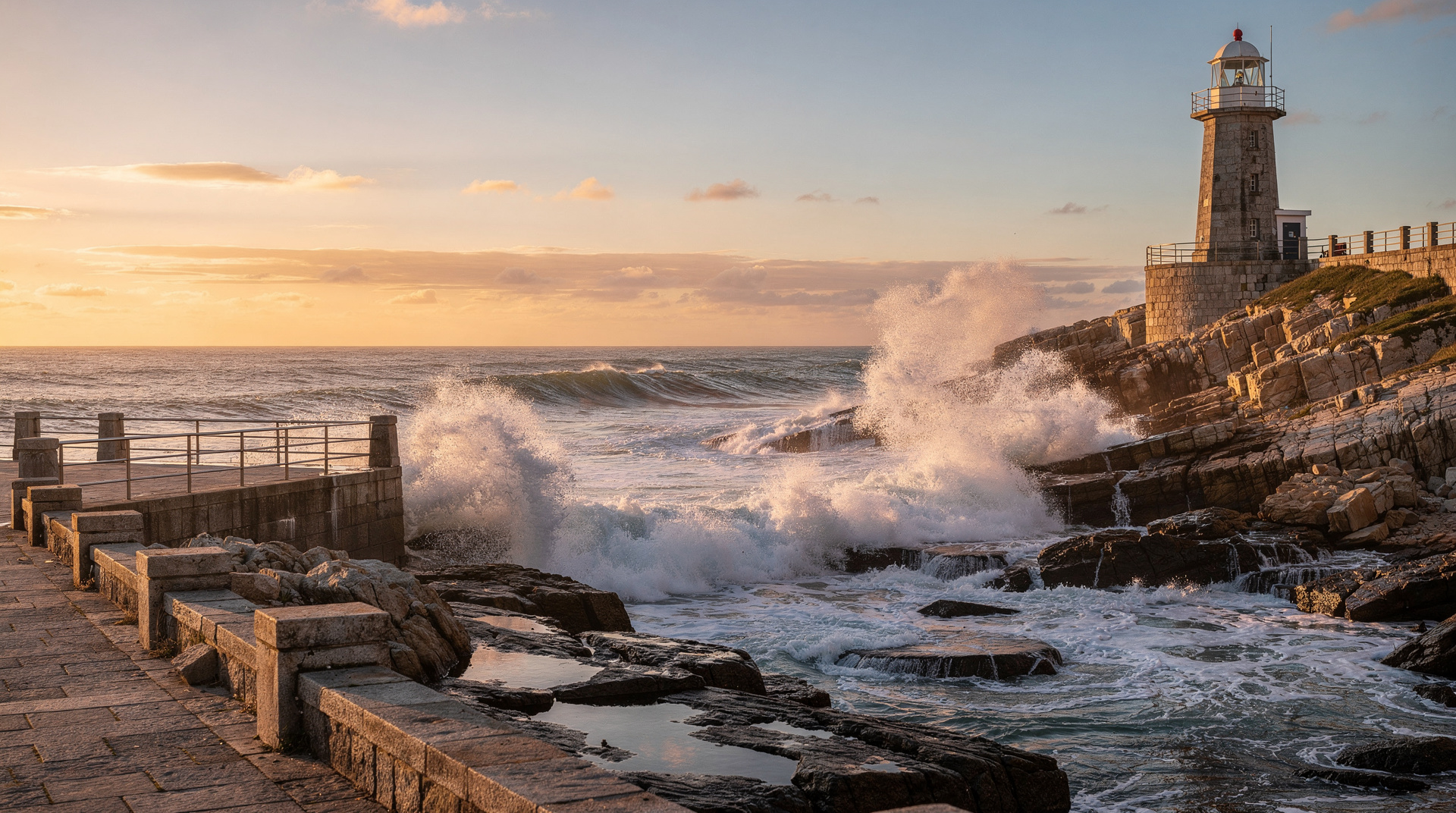
Foz do Douro is Porto’s ocean-facing residential district, at the point where the Douro meets the Atlantic. It has wide promenades, ocean swimming pools carved from coastal rock, seafood restaurants aimed primarily at Porto residents rather than tourists, and an atmosphere that is genuinely calm compared to the historic centre.
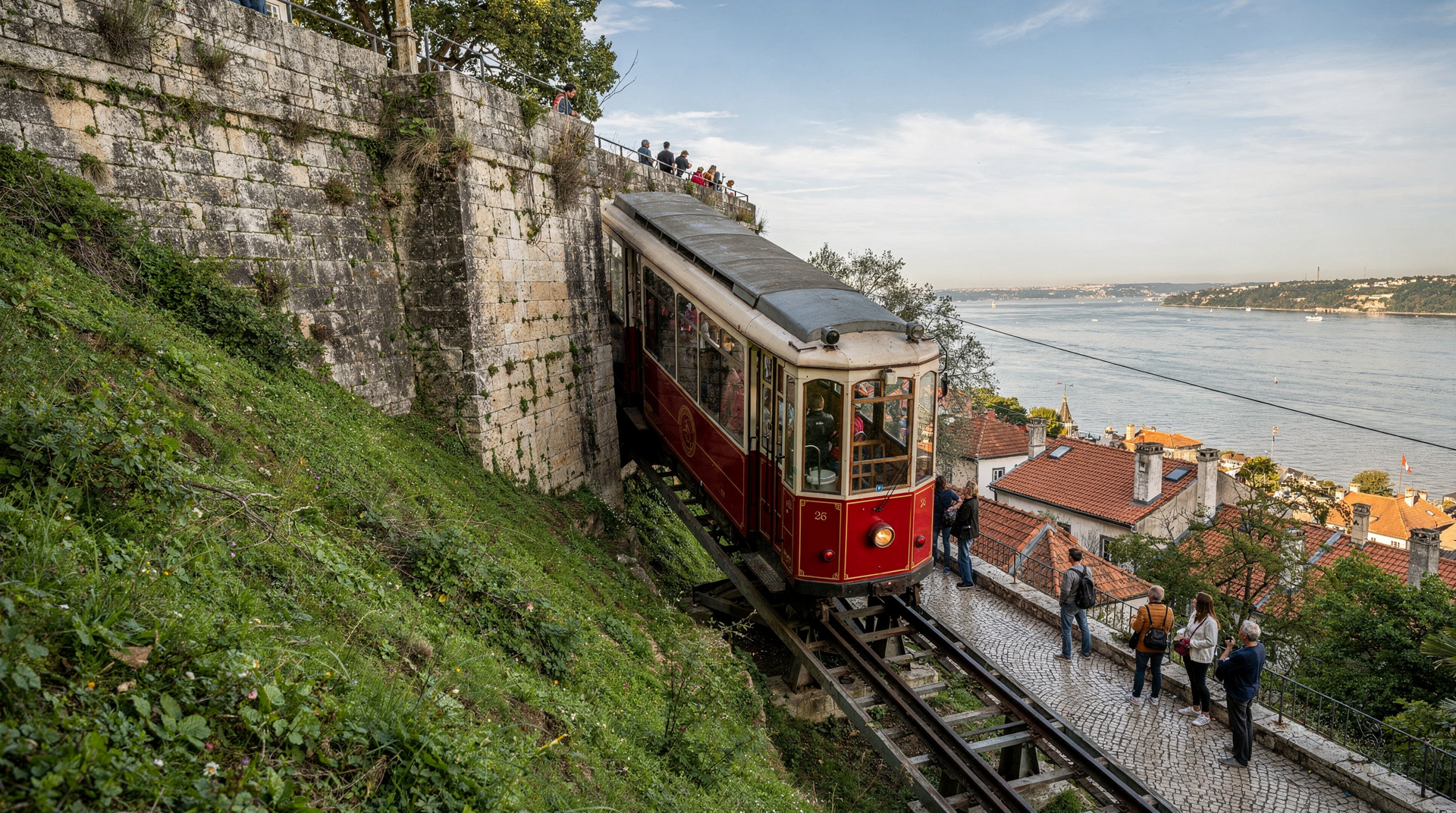
The tradeoff is real: Foz is 6 to 7 km from the historic centre by road, which translates to 20 to 25 minutes on tram line 1 (the historic single-car yellow tram that runs along the riverside), 25 minutes on bus, or 10 to 12 minutes by Uber or taxi (typically 7 to 10 €). The getting around Porto guide covers the tram route, which is a scenic journey but a slow one and crowded in summer. The Matosinhos Sul metro stop (line A) is a 20-minute walk from central Foz, or a short bus ride.
Accommodation in Foz is primarily four and five-star hotels and a handful of boutique guesthouses. The Sheraton Porto Hotel and Spa in nearby Boavista is frequently cited. In Foz itself, options include the Porto Palácio (five-star, 160 to 280 €) and smaller local guesthouses at 70 to 120 €. The area has fewer budget options than the centre.
Foz is at its best in summer — ocean breezes make it noticeably cooler than the heat-trapping historic centre on July and August afternoons. The Jardim do Passeio Alegre is one of Porto’s best green spaces. The restaurant scene on and around Avenida do Brasil is serious — Foz has more Michelin-recommended and quality local restaurants per square kilometre than any other Porto neighbourhood.
Who Foz suits: Couples and families wanting peace over convenience, beach-oriented visitors, anyone who prioritises a sleep environment over proximity to monuments, those combining Porto with a beach holiday.
Who should look elsewhere: Anyone on a short trip who needs efficient access to the historic centre, backpackers and budget travellers, anyone without a good sense of Porto’s transport options.
Boavista and Serralves: the residential alternative
The area around Boavista, roughly between the centre and Foz, merits a brief mention as a quieter residential alternative. The Casa da Música (Porto’s concert hall, designed by Rem Koolhaas) anchors this part of the city, and the Serralves Contemporary Art Museum is a 20-minute walk southwest. The Boavista metro stop serves line A.
Hotels here are primarily international chains — DoubleTree, Sheraton — aimed at business travellers. The neighbourhood is pleasant without being characterful. It suits corporate visitors well and leisure travellers who prioritise quiet and metro access over neighbourhood life.
Matching neighbourhood to trip type
Solo travellers and short city breaks (1–2 nights): Baixa/Aliados or Ribeira, depending on budget — both put every major sight within a short walk, which matters more when time is limited than it does on a longer stay. The Porto 3-day itinerary assumes a central base for exactly this reason.
Couples wanting atmosphere over convenience: Ribeira, accepting the noise and the price premium, or a quieter alternative on the streets just above the waterfront that still offer a short walk down to the water without the full Ribeira rate.
Families with children: Baixa/Aliados or Foz do Douro. Avoid Ribeira’s steps and cobblestones with a stroller, and avoid Cedofeita’s livelier evening streets with very young children. The Porto with kids itinerary leans on Baixa as its default base.
Repeat visitors and stays of five or more nights: Cedofeita, for the apartment stock, the local rhythm, and genuine value once the exchange rate of convenience for character starts to matter less.
Business travellers: Boavista or Baixa/Aliados, both close to the Casa da Música conference district and well served by metro.
Practical considerations for all areas
Check-in logistics: Most Porto boutique hotels have a single entry door with a code or intercom — do not expect a 24-hour manned desk in smaller properties. Clarify check-in arrangements before arrival, particularly if you are arriving late on an evening flight.
Noise from São João: On 23 to 24 June (Porto’s São João festival), the entire city is operational until 4 or 5 am. The historic centre and Ribeira are epicentres. If you are staying during this period, accept the noise or book very thick-walled accommodation. Even Cedofeita and parts of Boavista have street festivities.
Parking: If you are arriving by rental car, factor in that Porto’s historic centre is a Zona de Emissões Reduzidas (ZER — reduced emissions zone) with restrictions for non-compliant vehicles. Most central hotels have no parking; the closest car parks to Ribeira and Aliados run 15 to 25 € per day. See the renting a car in Porto guide for parking logistics in detail.
Apartments vs hotels: For stays of four or more days, a well-located apartment typically offers better value than a hotel of equivalent price — more space, a kitchen for breakfast and light meals, and access to neighbourhood shopping. The Cedofeita and Bonfim areas have good apartment stock on standard booking platforms.
Use the Porto historic centre walking tour on your first day regardless of where you are staying — it gives you the best possible orientation to the city’s geography and helps you understand how the neighbourhoods relate to each other.
The getting around Porto guide covers the transport logistics from each area in detail, and the porto travel tips page addresses the practical aspects of navigating the city day to day.
Booking timing and price patterns
Porto’s accommodation prices swing considerably by season, and the swing is sharper than many first-time visitors expect. Peak summer (June–September) rates in Ribeira and Baixa can run 40% or more above the November–February low season for an equivalent room, and the same property that costs 90 € on a February Tuesday can reach 160 € on an August Saturday. São João weekend (23–24 June) and the days around it are effectively their own pricing category — book at least two months ahead if your dates fall then, since much of the centre sells out regardless of price.
For most other summer dates, 4–8 weeks ahead is a reasonable booking window for a specific property; popular boutique guesthouses in Cedofeita and small Ribeira hotels with river views tend to sell out earliest, since inventory is genuinely limited. Shoulder season (April–May, October) offers close to peak-season weather with meaningfully lower prices and is worth prioritising if your travel dates are flexible — see the best time to visit Porto guide for a fuller seasonal breakdown beyond accommodation pricing alone.
Frequently asked questions — Where to stay in Porto — honest neighbourhood guide
Is Ribeira a good place to stay in Porto?
Ribeira is the most atmospheric neighbourhood in Porto, with direct views of the Douro, the most photographed streets, and immediate access to Ponte Dom Luís I. The downsides are real: cobblestones and steep steps make it difficult with heavy luggage, noise from bars and restaurants runs until midnight or later in summer, and hotel prices are 15 to 25 percent higher than equivalent properties in Baixa or Cedofeita. For couples on a short trip who want immersion in the postcard Porto — yes. For families with children or anyone with mobility concerns — look elsewhere.Is Porto easy to get around without a car?
Porto's centre is very walkable but the hills are steep in some areas, particularly between the Douro waterfront and the upper city. The metro covers most visitor needs, with 6 lines serving the airport, city centre, beaches, and Matosinhos. The Andante card makes public transport simple and cheap. A car is not needed for Porto itself but becomes useful for Douro Valley day trips or exploring the Minho region.What is the best area of Porto for first-time visitors?
Baixa and Aliados, specifically the area around Avenida dos Aliados and north toward the Cedofeita boundary. You are within a 15-minute walk of every major sight in the historic centre, the metro is on your doorstep, and the accommodation options range from budget to premium without the Ribeira premium or the neighbourhood noise. The streets are also flatter here than in most of central Porto.How much does a hotel in Porto cost per night?
Budget accommodation (hostels, guesthouses) runs 25 to 50 € per night per person. Mid-range hotels cost 70 to 130 € per room depending on season. Four-star hotels in Ribeira or Baixa average 130 to 220 € in summer. Boutique guesthouses in Cedofeita and Bonfim offer mid-range quality at 60 to 110 €, which represents the best value in the city. Prices across all categories drop 30 to 40 percent in November to February.Is Foz do Douro worth staying in?
Foz is Porto's quietest residential area facing the Atlantic — pleasant, airy, and genuinely local-feeling. The tradeoff is distance from the historic centre. The tram (line 1) connects Foz to Ribeira but is slow and crowded in summer. Metro connections are better from nearby Matosinhos. Foz suits visitors who prioritise peace and ocean proximity over convenience to monuments.Are there good options for families with children in Porto?
Families do best in the Baixa area or the Boavista neighbourhood. Both are flatter, have wider streets, and are within easy reach of the metro. Foz is another good option in summer — the ocean is accessible and the area has green spaces. Avoid steep Ribeira with young children or strollers.
Top experiences
Bookable activities with verified prices and instant confirmation on GetYourGuide.