Is the Douro Valley tour worth it? An honest assessment
Porto: Premium Douro Valley Small Group Tour Lunch Private Cruise
Is a Douro Valley organised tour worth the money?
For most visitors, yes — but the value depends heavily on which tour you choose. Standard group tours (€60–85) are fair value if you pick one visiting two quintas with lunch and a river cruise. Premium small-group tours (€100–140) are worth the extra cost for wine enthusiasts. Several tours in the €90–120 range are overpriced for what they deliver. The <a href="/guides/douro-tours-what-to-avoid/">what to avoid guide</a> covers the specific red flags.
Here is the practical snapshot before the full breakdown of which tour format actually delivers value.
| Standard tour | €60–85, two quintas, shared cruise, group 25–40 |
| Premium tour | €100–140, small group 8–12, private cruise |
| Train DIY | €25–30 total, one quinta, full flexibility on timing |
| Car DIY | €63–97 transport, 3–4 quintas, driving trade-off |
| Best time | Book 3–4 months ahead for September–October harvest |
The actual question
The Douro Valley is 120 km from Porto. It has almost no public transport within the valley itself, no Uber or Bolt, limited taxis that must be pre-booked, and some of the most compelling wine estates in Europe reachable only with a car or guide. For most visitors, the choice of whether to book an organised tour is less about value and more about logistics: the tour is the mechanism that gets you there and back.
The real question is which tour to choose — and more specifically, which to avoid.
What a standard tour looks like
A standard Douro Valley day tour from Porto costs €60–85 per person and follows a broadly consistent format: pickup at a central Porto location at 8–9 am, drive east on the IP4 motorway, arrival at the Douro Valley by 10:30–11 am, visit to one or two wine estates, lunch, a river cruise, and return to Porto by 7–8 pm. Total valley time: roughly 5–6 hours.
The guide on a standard tour is usually a generalist with solid basic wine knowledge. Group size is typically 25–40 people. Wine tastings at the quintas are standardised for mass tourism: three wines, 3-minute pour, move on. Lunch is set menu.
This is a legitimate experience. The landscape delivers regardless of group size; the river cruise is enjoyable; you learn something about port wine and Douro wines. If this is your first encounter with the valley and wine is not your primary interest, a standard tour is adequate.
When standard tours work
- You want the essential Douro day experience without logistical complexity.
- Wine is one element among several, not the primary driver.
- You’re travelling solo or as a pair and don’t want to manage a rental car.
- You’ve booked a tour visiting two quintas with lunch and a full river cruise for under €85.
When standard tours fail
- You visit one quinta with a 30-minute boat ride and pay €85 for the privilege.
- The guide can’t answer follow-up questions about wine production.
- Lunch is at a restaurant clearly chosen for coach-group logistics rather than food quality.
- The group is 40+ people and the quinta visit feels like a factory tour.
Premium small-group tours: who they’re for
The premium tier — typically €100–140 per person, groups of 8–12 — represents a genuine qualitative difference rather than just a price premium. The material distinctions:
Quinta access: Small coaches can reach properties that are inaccessible to standard 50-seat buses. Several of the valley’s most interesting smaller estates — particularly family-owned quintas away from the main road — only accept small-group bookings.
Tasting quality: Standard tour tastings are designed for 35 people to pass through in 20 minutes. Small-group tastings are interactive: questions are answered, wines are poured more generously, and the winemaker or estate manager is often present.
Guide knowledge: Premium tour guides are typically wine-specialist guides rather than generalist guides who cover wine as part of their repertoire.
The river cruise: Standard tours usually share a river cruise boat with other tour groups. Premium tours run private or semi-private cruises where you can move freely, ask questions, and stop for photographs without a schedule.
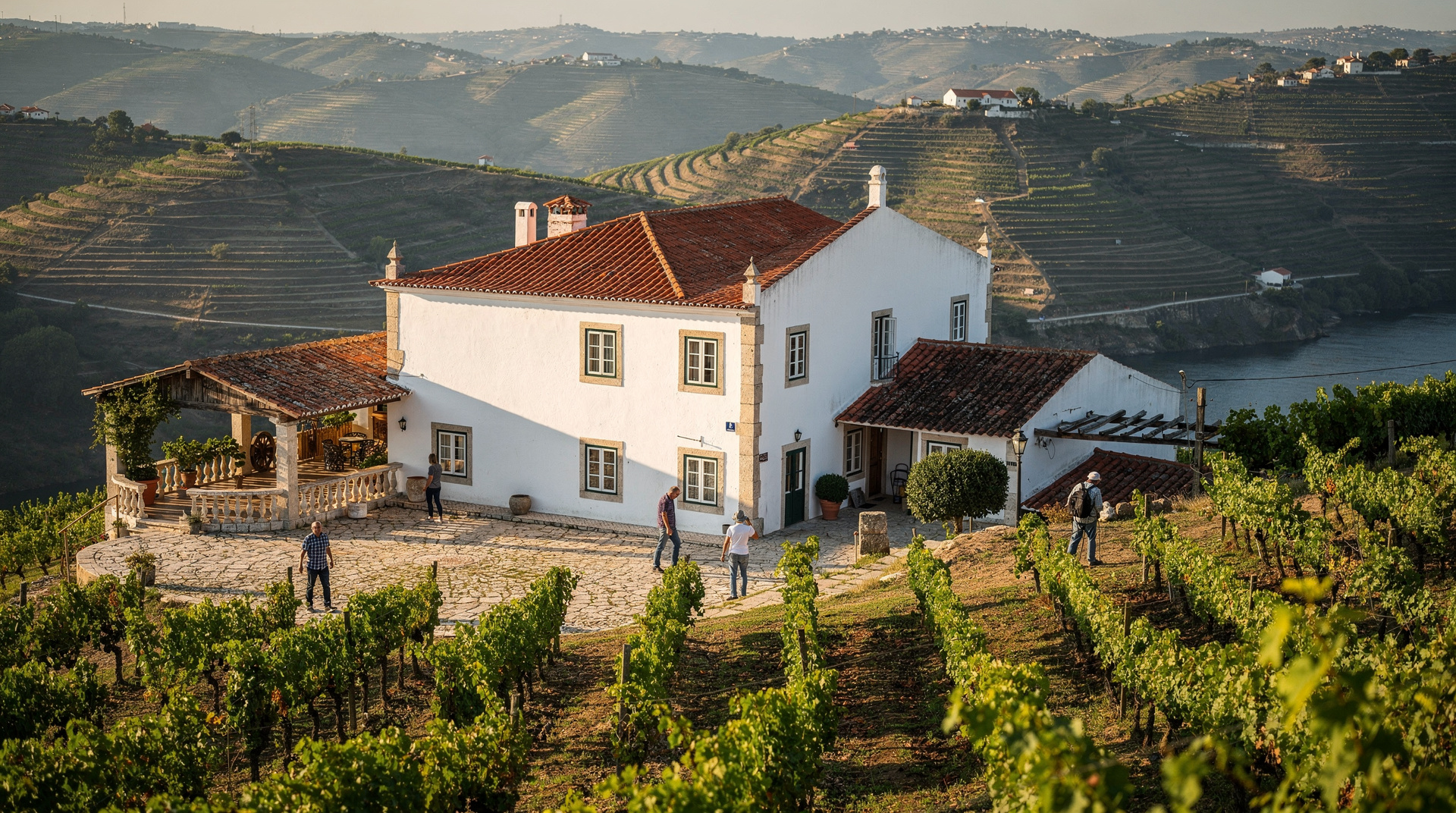
The Premium Douro Valley small group tour with private cruise exemplifies the format: maximum 8 passengers, two quinta visits with a winemaker present at one of them, private Douro cruise, and a lunch that’s actually at a quinta and reflects the regional cuisine. The price (currently around €130–140) is justified if wine engagement is your goal.
For wine enthusiasts visiting the valley specifically for the wine — and there are many — the premium format is the right choice. For general visitors who want the landscape, the river and a glass or two of port, the standard format is fine.
The train alternative: honest assessment
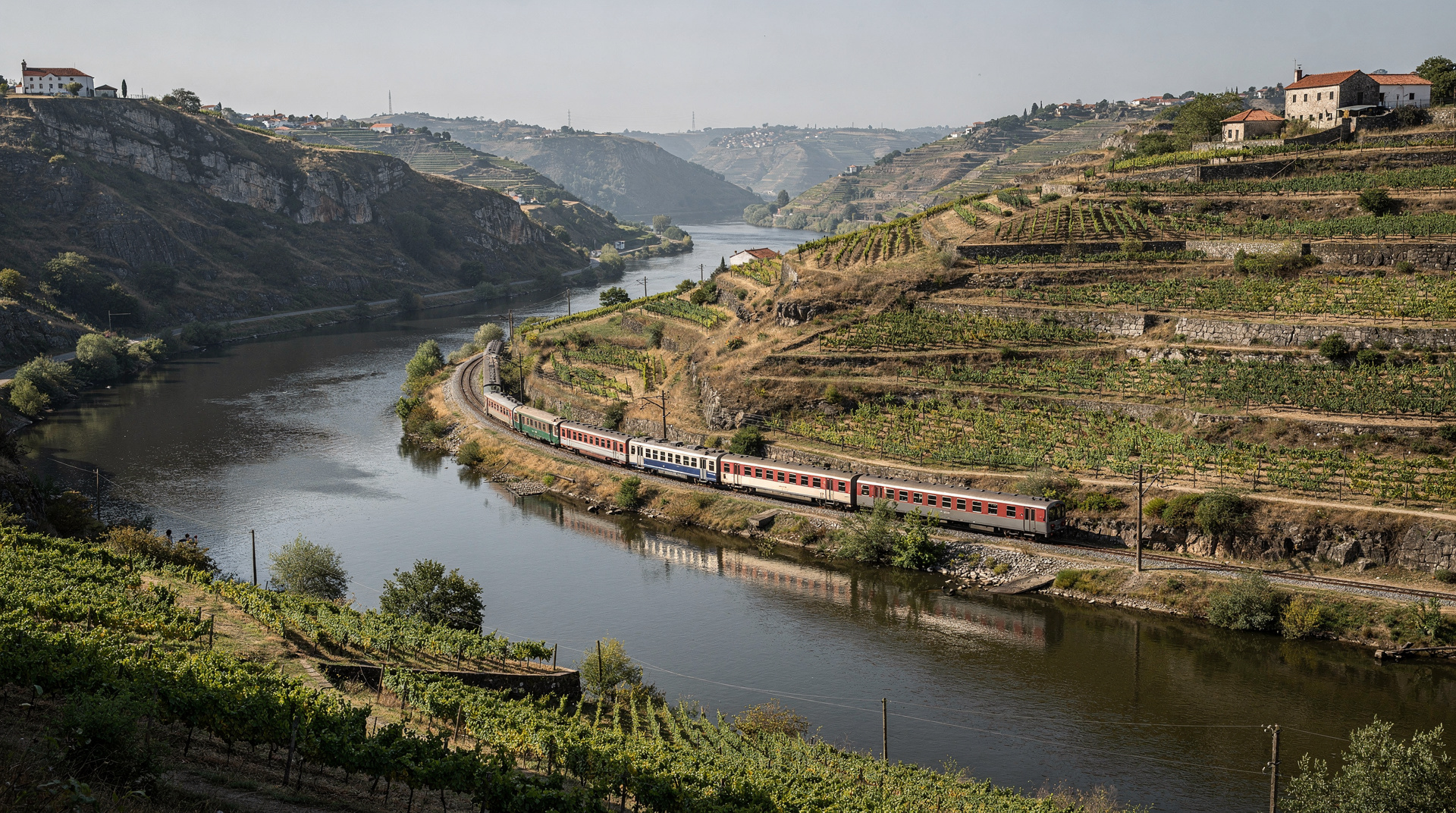
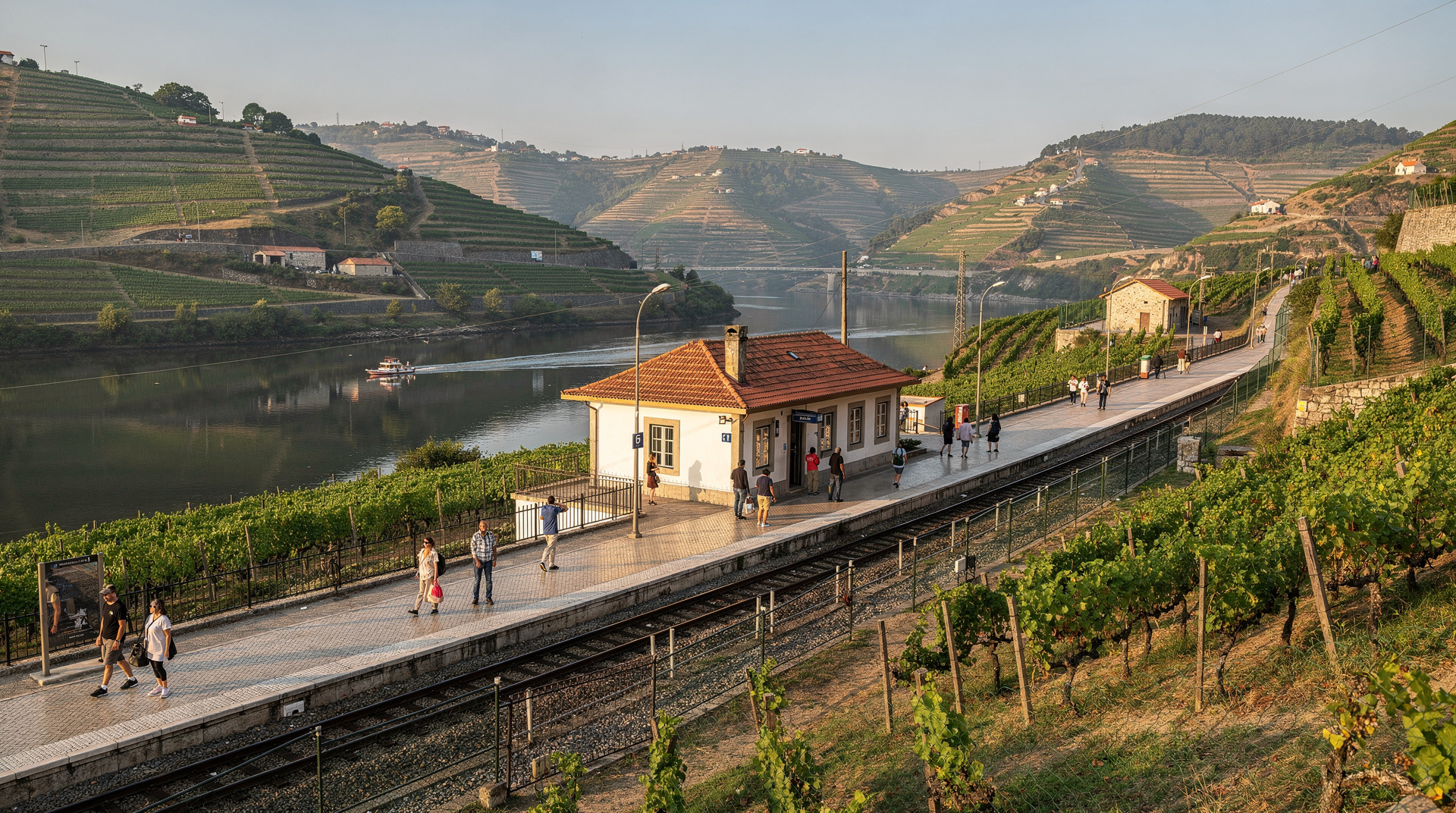
The Porto Campanhã to Pinhão train costs €10–12 each way and is one of the most scenic rail journeys in Portugal. The riverside section from Régua to Pinhão — the last 30 minutes of the journey — is genuinely spectacular.
What you sacrifice by going by train is quinta diversity. From Pinhão station, Quinta do Bomfim is 15 minutes on foot. The Quinta do Bomfim visit and tasting is a solid experience: Symington family ownership, good Dow’s port range, and views from the upper terrace that justify the uphill walk. But that’s one quinta. Getting to anything else requires a pre-booked taxi (Pinhão taxis: contact at the station, €15–25 for nearby quintas) or accepting a very limited day.
The train makes sense if: you want the landscape experience (the train delivers this), you’re comfortable with a one-quinta day, and you want to save money (total day cost: €25–30 vs €65–85 for a tour). The train vs car vs tour comparison has the full breakdown.
The rental car option
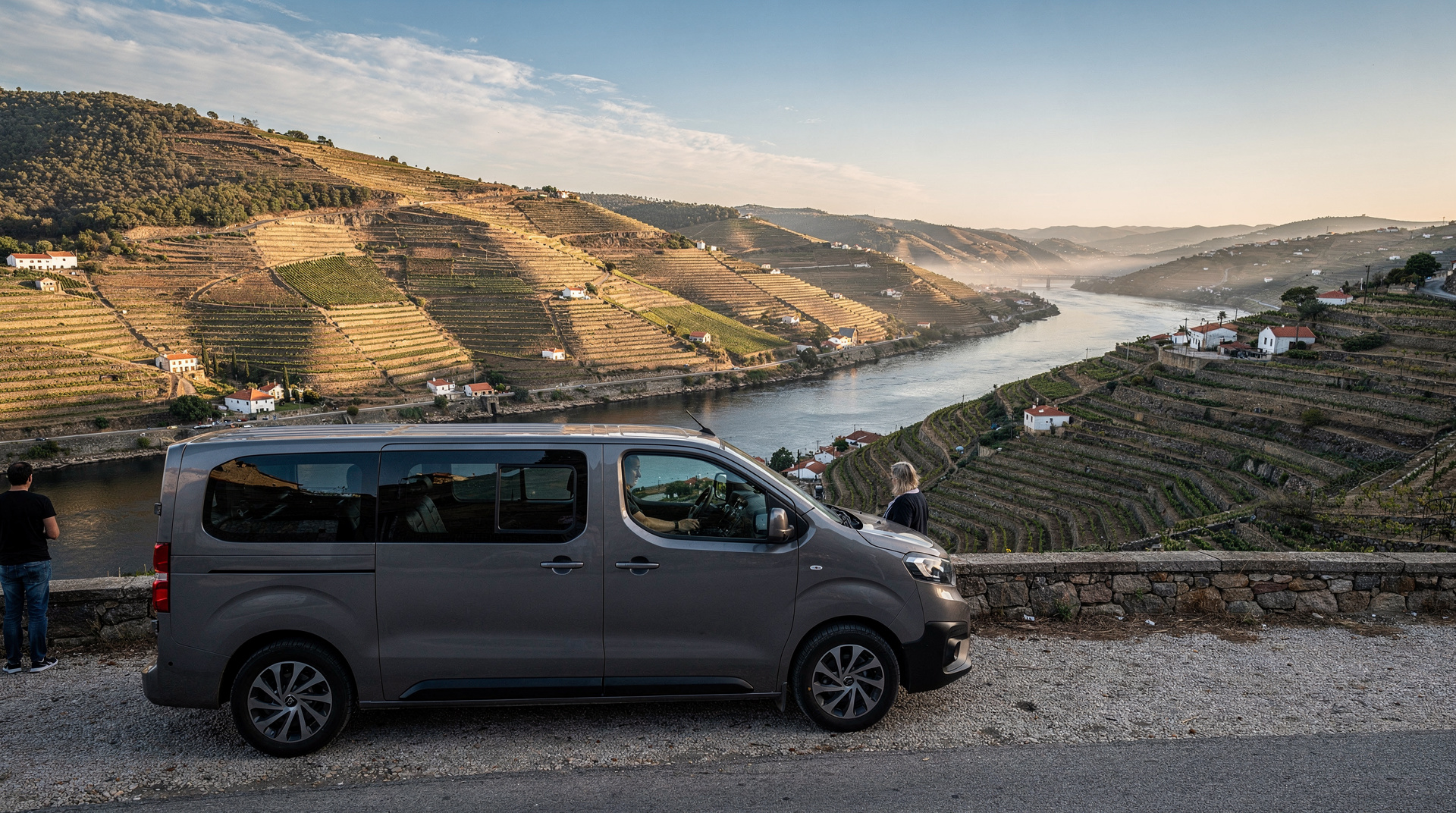
A rental car gives you the most flexibility in the Douro Valley. You can visit three or four quintas, stop at viewpoints like São Leonardo de Galafura above Régua or Casal de Loivos above Pinhão, explore Pinhão village at your own pace, and return whenever you want.
The practical constraint is driving after tastings. A full tasting at each of three quintas involves five to seven glasses of wine across the day. Either designate a non-drinking driver explicitly and stick to it, or choose a route that ends with a return train from Pinhão (leaving the car there overnight, which requires accommodation).
Car hire in Porto: €40–65/day. Motorway tolls: approximately €8–12 return. Fuel: roughly €15–20. Total transport cost: €63–97 — similar to a standard tour, without the guide, logistics management or lunch included.
What does the valley actually look like?
There is a gap between the promotional photography of the Douro Valley and the real experience that is worth being honest about.
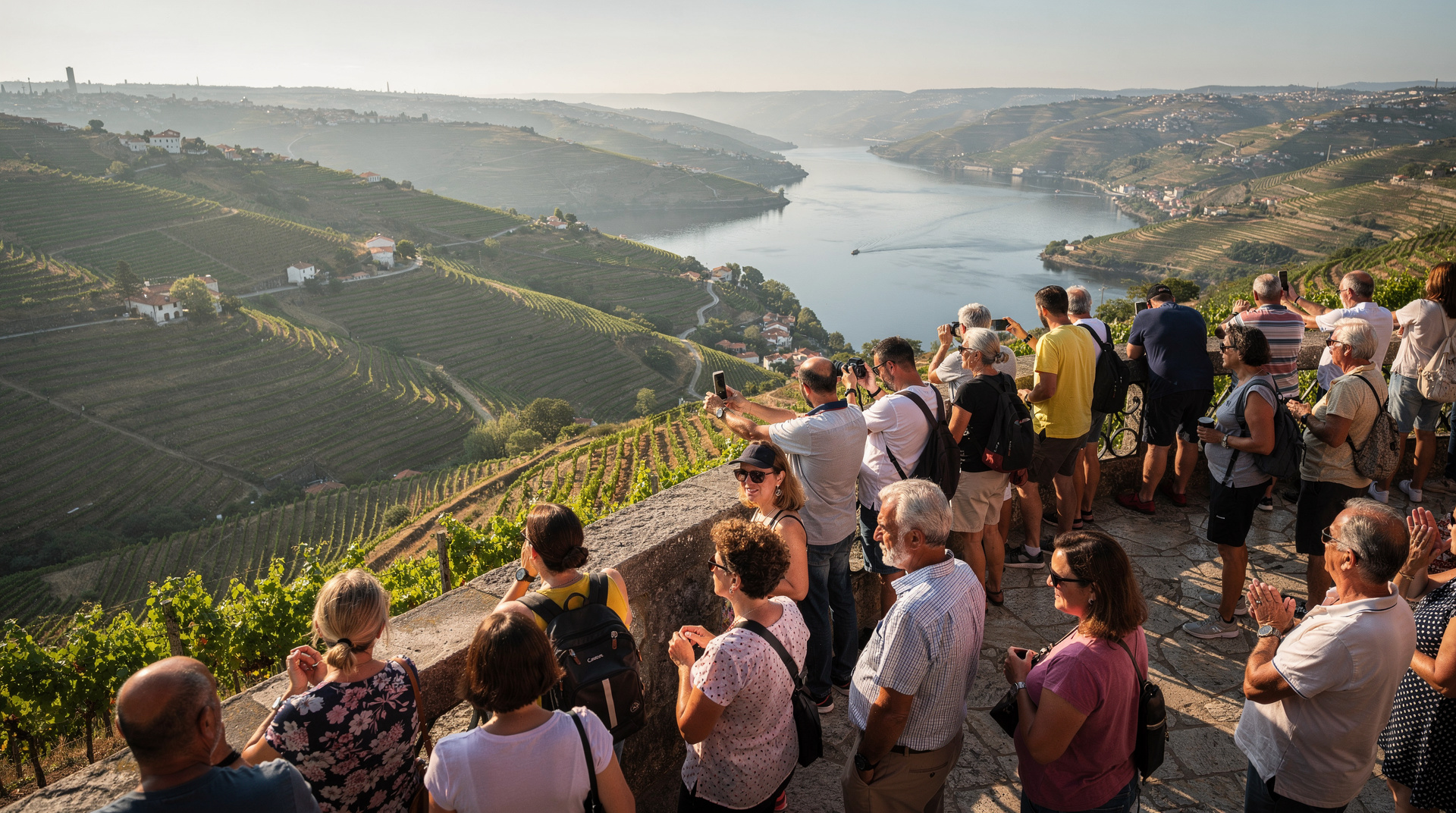
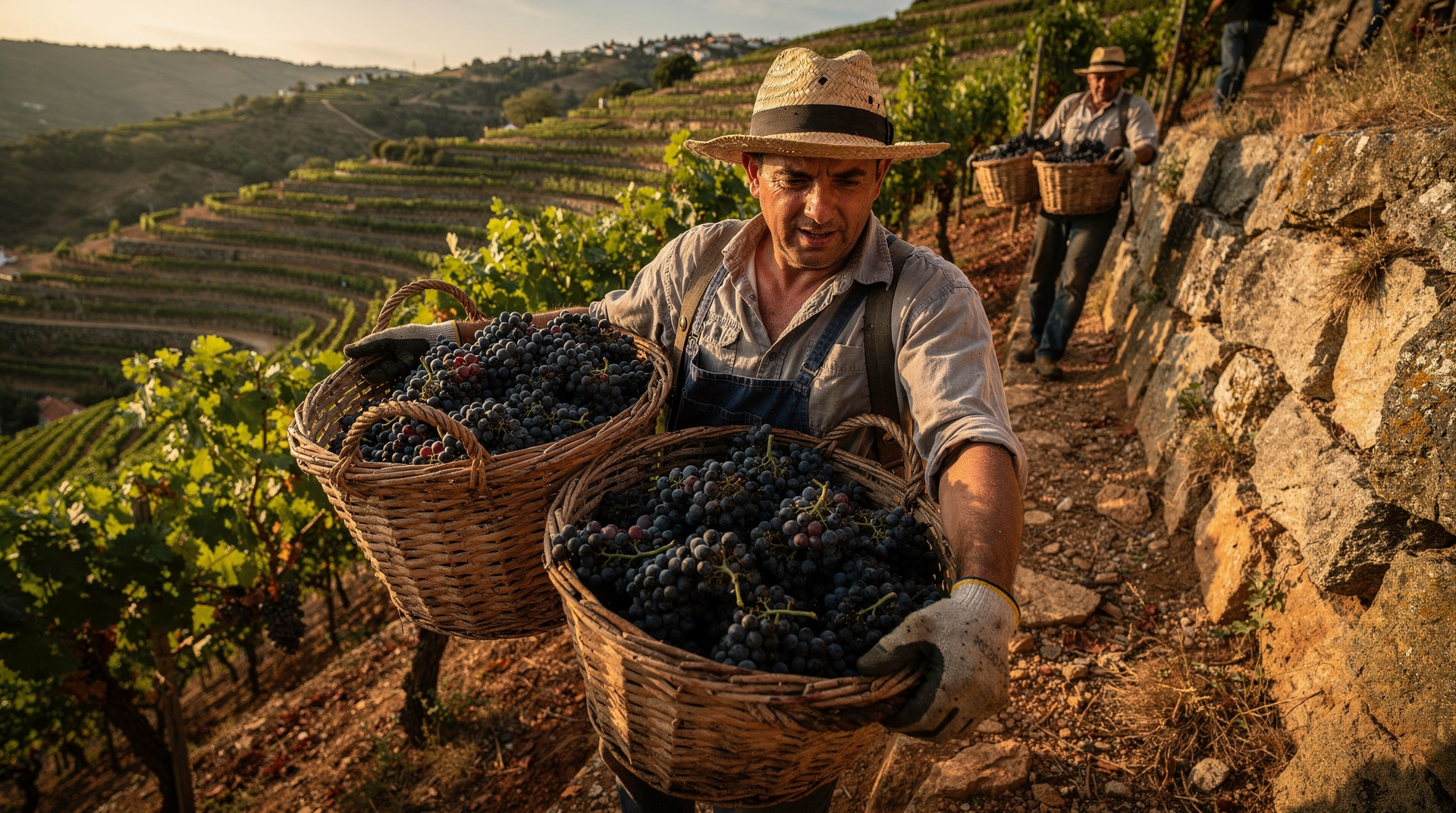
What looks exactly as advertised: The terraced hillsides when viewed from above, particularly from Casal de Loivos or Miradouro São Leonardo de Galafura. These viewpoints are genuinely extraordinary — the scale and engineering of the terraces, the geometry of the vines, the river below. The vindima harvest in September is vivid and atmospheric: workers in the steep rows, tractors on the lanes, the smell of fermenting grape must in the air.
What is more ordinary than expected: The main road through the valley — the IP4 and the N222 — passes through working agricultural terrain, not scenic landscape. You are driving through a farming region, not a curated park. The river itself, between the dams, looks more like a lake than a wild river. Pinhão village has one main street and limited restaurant options; it is picturesque but very small.
The vineyard-to-water perspective: The best view of the Douro Valley is from above or from the river, not from the road. This is why a river cruise matters: the view from a boat looking up at the terraces from water level is the image that matches the photographs. Without a cruise, you’re missing the visual centrepiece.
Verdict by visitor type
First-time visitor, wine interest moderate: Standard two-quinta tour with river cruise, €65–80. Fair value.
Wine enthusiast, wine is the point: Premium small-group tour, €100–140. Worth the premium.
Budget traveller, landscape priority: Train to Pinhão, Quinta do Bomfim visit, Régua–Pinhão cruise. Total ~€40–50. Excellent value.
Couple wanting full flexibility: Rental car, 3–4 quintas planned in advance with designated driver. Total ~€130–150 for two including tastings and lunch. Best flexibility at moderate cost.
Harvest season visitor: Book 3–4 months ahead regardless of format. Premium small-group tours at harvest (September–October) sell out in August.
For the specific red flags to watch for when booking — single-quinta tours, cattle-class buses, vindima upcharge games — the Douro tours to avoid guide has the details.
Staying overnight instead of a day trip
A day tour is the default because most Porto visitors are on a tight schedule, but it is worth honestly weighing against an overnight stay in the valley. Spending one or two nights in Pinhão or Peso da Régua removes the two hours of driving fatigue that bookend every day-trip format, and it opens the valley’s best light — early morning and last-light hours — that day tours simply never reach, since they arrive mid-morning and leave before sunset. The Porto and Douro 5-day itinerary builds this in as two of the five days, and it is consistently the highest-satisfaction version of a Douro visit among travellers who have the extra time. If you are already leaning toward a premium small-group tour at €130–140, the maths often works out similarly for one valley night plus a slower, self-paced day — worth comparing before you commit to a single-day format.
Group tours vs a private driver-guide
Between the standard group format and a fully private tour sits a middle option some visitors overlook: hiring a private driver-guide for a solo or small group, which typically runs €180–280 per vehicle rather than per person. For a family of four or a group of friends, this often lands close to premium small-group pricing per head while giving full control over which quintas you visit and how long you linger at each. For a couple, the premium is harder to justify unless a specific itinerary — visiting a particular estate not on standard tour routes, for instance — makes it worthwhile.
How the Douro compares to doing nothing organised at all
Some travellers ask whether the Douro Valley is worth the logistics at all, given it eats a full day out of a short Porto trip. The honest answer, covered in the Douro Valley day trip guide, is that skipping it is the single biggest regret reported by returning visitors — nothing else near Porto matches the terraced landscape, and the best quintas in the Douro Valley guide makes clear how much variation exists between estates even within the same tour tier. If you are debating whether to spend your one flexible day on the Douro or on Guimarães, the Douro wins for most first-time visitors; Guimarães is the better second-day-trip choice if you have more than one day to spend.
Frequently asked questions about Douro Valley tour value
Is a €100+ Douro tour genuinely different from a €65 tour?
For wine enthusiasts, yes. Smaller groups, better quinta access, more knowledgeable guides, and higher-quality wine selections make a material difference. For visitors whose primary interest is landscape and general culture, the difference is less significant — a standard tour at €65–80 delivers the visual experience adequately.
What should I look for in a tour description to spot good value?
Indicators of quality: two or more quinta visits, “small group” with a specific cap (8–16 people), private river cruise, lunch at a quinta. Red flags: “visit to a typical quinta” (one quinta), “panoramic river views” with no mention of an actual boat, group sizes above 30, lunch at a “typical Portuguese restaurant.”
Are private Douro tours worth it?
Private tours (€180–280 per vehicle) make financial sense for groups of four or more, where the per-person cost approaches premium small-group tour pricing. For couples, the premium over small-group tours is harder to justify unless you have a very specific itinerary. Private tours allow customised quinta selection, which is valuable if you have particular estates on your list.
Can I combine a Douro Valley day trip with Lamego?
Yes, but it’s a long day. Lamego is 15 km south of Régua and adds about 1.5–2 hours to the itinerary. The Lamego guide covers what’s worth seeing: primarily the Santuário de Nossa Senhora dos Remédios and the old town. Some tours include Lamego; check itinerary descriptions before booking. Doing Lamego independently from Régua requires a taxi or rental car.
What’s the refund policy if the weather is terrible?
Most operators follow a policy of operating regardless of weather — rain in the Douro Valley is possible year-round, and they won’t cancel. Check the specific tour’s cancellation policy before booking. Weather in the valley is typically better than on the Porto coast: even on overcast Porto days, the valley interior is often clear.
Frequently asked questions — Is the Douro Valley tour worth it? An honest assessment
What makes a Douro Valley tour good value?
Two or more quinta visits, a proper river cruise (not just a 30-minute float), lunch at a quinta rather than a generic restaurant, a guide with wine knowledge, and a group size under 20. Single-quinta tours with a brief boat trip rarely justify their price.Are premium Douro tours worth the extra cost?
For wine-focused visitors, yes. Premium tours (€100–140) cap groups at 8–12 people, access smaller quintas that don't receive large coaches, include better wine selections, and often have winemakers or estate owners present. If wine is peripheral to your visit, the standard format is adequate.Can I do the Douro Valley without a tour?
Yes, by train or rental car. The train to Pinhão is scenic and affordable (~€12 each way) but limits quinta access. A rental car gives full flexibility but creates a post-tasting driving problem unless you designate a non-drinking driver. The train vs car vs tour comparison works through the trade-offs.Which Douro Valley tours are overpriced?
Any tour visiting a single quinta with a 30-minute boat ride and charging over €80. Tours that describe their lunch as 'at a typical Portuguese restaurant' (translation: a generic roadside place). Tours with group sizes above 40. See the Douro tours to avoid guide for specifics.Is the Douro Valley worth visiting at all?
Unambiguously yes. The UNESCO-inscribed terraced vineyards, the river, and the wine culture make it one of the best day trips available from any European city. The question is not whether to go but how to structure the day to get the most out of it.
Top experiences
Bookable activities with verified prices and instant confirmation on GetYourGuide.