Pastel de nata in Porto — where to find the best custard tarts
Norte Region: Porto Pastel de Nata Cooking Class with Grandma S Recipe
Where is the best pastel de nata in Porto?
Manteigaria produces the most consistently excellent custard tarts in Porto — the pastry case is properly laminated, the custard is barely set and trembles when moved. Fábrica da Nata is a reliable second with more locations. For a local bakery experience without the brand, Confeitaria do Bolhão has been making them since 1896.
The tart that Porto does better than almost anywhere
Every café in Portugal serves pastéis de nata. Most of them are adequate. A small number are genuinely excellent — the kind where you eat the first one quickly and order a second more slowly to pay attention to what you’re eating.
Porto is one of the best cities in Portugal to find the second category. The city has several serious pastry establishments that treat the custard tart as a craft, not a commodity, and the gap between their version and a generic café version is not subtle.
This guide tells you where to find the best in Porto, how to judge what you’re eating, and why the price of 1.20-1.40 € at the right bakery is one of the best-value food experiences in Europe.
| Where | Manteigaria (Rua dos Clérigos), Fábrica da Nata, Confeitaria do Bolhão |
| Cost | Around 1.20-1.40 € each at a proper bakery |
| Time needed | 10-15 minutes for a stop, best eaten within minutes of the oven |
| Getting there | All central, walkable from Baixa-Aliados or the Ribeira |
| Best time | Morning, or whenever a fresh batch is visible in the oven |
What makes a great pastel de nata
Before the specific recommendations, it helps to know what you’re evaluating.
The pastry case (massa folhada): Should be thin-walled and properly laminated — meaning it was made with many layers of butter folded into pastry dough, not a single sheet of commercial puff pastry. When you look at a cross-section, you should see distinct, flaky layers. The base of the case should be cooked through — not doughy or wet from the custard — and the rim should be slightly caramelised. If you tap the side of the case and it sounds hollow, the pastry is well-made.
The custard (creme): Should be barely set — trembling slightly when the tart is moved, custard-coloured rather than bright yellow (egg whites should not dominate), and smooth rather than grainy. The surface should have dark caramelised spots from very high-temperature baking; a uniformly pale or uniformly golden surface indicates a lower oven temperature. The flavour should be egg-rich and slightly sweet with a background of lemon zest and cinnamon.
Temperature: A good pastel de nata is best within 10-15 minutes of leaving the oven. The crisply warm pastry versus the softly set custard is the defining textural experience. As the tart cools, the pastry absorbs moisture from the custard and softens; the gap between the textures diminishes. This is still very good — just less precisely what the tart is designed to be.
Size: The correct size is approximately 7-8 cm in diameter — not the oversized versions that some tourist-facing cafés produce as a premium product. Larger tarts cool more slowly and become structurally harder to eat without a plate.
Where to find the best in Porto
Manteigaria
Locations: Rua dos Clérigos and at least two other Porto locations, including one in the Mercado do Bolhão Price: ~1.30-1.40 € each Best time: Morning or when a fresh batch exits the oven (visible through the glass and smell-detectable from outside)
Manteigaria is the most consistently praised address in Porto for custard tarts, and the evidence is straightforward: the pastry case is properly laminated and baked through, the custard is minimally set and trembles correctly, and the caramelised spots on the surface are properly dark. The operation is transparent — the ovens are visible from the counter at the Rua dos Clérigos location, and you can watch the bakers remove trays.
The Clérigos location is busier than the others and benefits from proximity to the tower and the tourist circuit, which is both a problem (queues at peak times) and irrelevant to the quality (the product is the same). The Bolhão market location is often slightly calmer and produces tarts from the same recipe.
One practical advantage of Manteigaria over a small independent bakery: they bake in continuous batches throughout the day, which means the probability of encountering a fresh tart is higher than at a bakery that bakes once in the morning.
The cinnamon dispensers at the counter are there for a reason. Use them.
Fábrica da Nata
Locations: Multiple across Porto, including Rua de Mouzinho da Silveira and other central streets Price: ~1.30-1.40 € Best time: Morning
Fábrica da Nata is a small chain (several Porto locations, also in Lisbon) that produces a reliably good product — not quite at Manteigaria’s level in terms of pastry refinement, but well above the average café version. The locations are well-positioned for visitors to encounter without specifically seeking them out.
The main distinction from Manteigaria: Fábrica’s pastry case tends to be slightly thicker, and the custard slightly more set. This makes for a structurally more robust tart that doesn’t disintegrate when you pick it up, but sacrifices some of the textural drama of a perfectly made version. Good by any standard other than direct comparison with the best.
Confeitaria do Bolhão
Address: Rua Formosa 339 (just outside the market entrance) Price: ~1.20-1.30 € Established: 1896
Confeitaria do Bolhão is Porto’s oldest surviving pastry shop in continuous operation and the most historically grounded address for pastéis de nata in the city. The recipe and the room have the patina of a place that has been doing the same thing for 130 years.
The tarts here are slightly different in character from Manteigaria — made with a recipe that reflects older tastes (the custard is slightly less sweet and has a stronger egg flavour) and baked in a way that produces a thinner, more delicate pastry case. The flavour is excellent; the presentation is less polished than the newer establishments.
This is the right choice for visitors who want to eat a pastel de nata in a room that predates the tourist economy around the dish by a century. The café also serves excellent travesseiros (almond-filled puff pastry), bola de Berlim (custard-filled doughnuts), and coffee.
Local neighbourhood bakeries
The correct search strategy for the true local version: walk through Cedofeita, Bonfim or Ramalde around 8:30-9:30 am and look for the smell of baking pastry. Porto’s neighbourhood padarias (bakeries) bake their natas first thing in the morning and sell them until they’re gone — which at a good bakery with a morning crowd is usually before 11 am.
These tarts cost 1.00-1.20 € each and are made for the neighbourhood, not for visitors. They are often as good as Manteigaria in absolute terms, and the experience of eating one standing at the counter alongside people on their way to work is more genuinely Porto than queuing at a tourist-facing address. Cedofeita, in particular, rewards this kind of aimless morning wandering — its mix of independent bakeries, coffee shops and design stores makes the search for a good local nata part of a pleasant hour rather than a chore.
The trade-off is that these bakeries don’t appear on maps or lists; you find them by following your nose.
Head-to-head: the four addresses compared
| Manteigaria | Fábrica da Nata | Confeitaria do Bolhão | Neighbourhood padaria | |
|---|---|---|---|---|
| Price | ~1.30-1.40 € | ~1.30-1.40 € | ~1.20-1.30 € | 1.00-1.20 € |
| Pastry | Thin, properly laminated | Slightly thicker, more robust | Thin, delicate, older-style recipe | Variable, often excellent |
| Consistency | Most reliable — continuous baking | Reliable, several locations | Good, single historic address | Depends entirely on timing |
| Best for | A guaranteed fresh tart | Convenience across the city | History and atmosphere | The genuinely local version |
None of these is a wrong choice — the differences are real but narrow. If you only try one, Manteigaria is the safest recommendation; if you have three days in Porto, trying all four is a reasonable and enjoyable use of a morning routine.
The port wine and nata pairing
Several Porto operators combine a pastel de nata with a port wine tasting — most commonly matching the tart’s caramelised sweetness with a 10-year tawny or a dry white port. The combination is a good one: the tawny’s dried fruit and nutty notes complement the egg custard, and the contrast between the crisp pastry and the smooth wine is satisfying.
The pastel de nata and port wine tasting covers this pairing in a guided format, useful for visitors who want to understand both sides of the combination rather than simply eating and drinking sequentially.
The Poças cellars and pastel de nata experience combines a port wine cellar visit in Vila Nova de Gaia with a nata tasting — a good option if you are combining the Gaia cellars day with a Porto food experience.
Making your own — the cooking class option
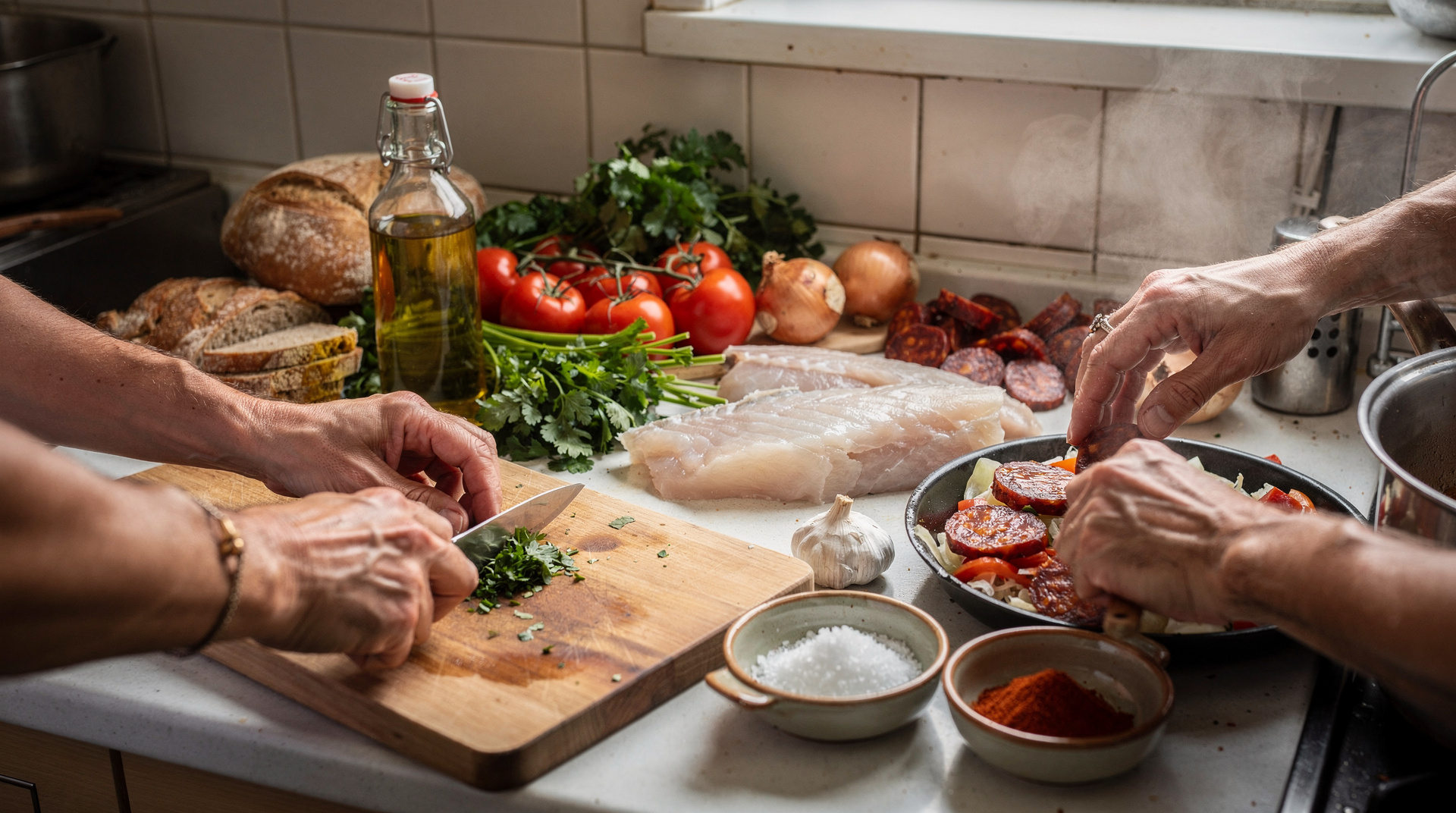
If the custard tart inspires you to want to reproduce it at home, a cooking class is the most effective route. The pastel de nata class teaches the laminated pastry case technique, the custard proportions, and — critically — the oven temperature and timing, which are the elements that most recipe books underspecify.
The pastel de nata grandma-style class takes a traditional home-cook approach to the recipe. The result is a version that is reproducible in a domestic oven, which is the most practical outcome of a cooking class.
Beyond nata: other Porto pastries worth knowing
The pastel de nata dominates the visitor conversation but Porto’s pastry landscape is broader.
Travesseiro: An almond and egg cream puff pastry in an elongated shape, dusted with sugar. Confeitaria do Bolhão makes a reliable version.
Bola de Berlim: A fried doughnut filled with egg cream custard, sold on beaches and in cafés. The beach version (from walk-around sellers) is the most traditional encounter.
Pão-de-ló: A sponge cake of varying textures depending on the region — the version from Ovar (between Porto and Aveiro) is intentionally underbaked in the centre, producing a custard-like interior within a set sponge exterior.
Queijada: Small tarts made with fresh cheese (queijo fresco), eggs and sugar — lighter than a pastel de nata and with a different textural character. Regional variants appear from Évora and Sintra; Porto versions are less standardised.
Broa de mel: A dark corn and rye bread flavoured with anise and molasses, from the Minho region north of Porto. Not a pastry but worth finding at a traditional bakery.
Practical information for the custard tart pilgrim
Budget: At the recommended addresses, eating two pastéis de nata and a coffee each morning for a three-day Porto visit costs approximately 9-12 €. This is the best-value food experience ratio in the city.
Quantity: Most visitors who take the pastel de nata seriously eat two at a sitting. The correct approach is to eat the first immediately, while it’s warm and you’re paying full attention, then eat the second more slowly to understand specific elements. Eating four in succession produces diminishing returns.
Tourist price markers: If you see a pastel de nata for more than 2 € at a café or restaurant, you are being charged a tourist premium. The product inside is not better than what Manteigaria or Confeitaria do Bolhão produces at 1.30-1.40 €.
The porto-1-day itinerary: If you have only a single day, a morning at Manteigaria before the main sights is the right priority sequence — the coffee, the tart, the counter, the smell of baking — before anything else in the city.
How pastel de nata fits a broader food itinerary
For visitors treating food as a central part of their Porto trip, a pastel de nata stop is rarely the whole story — it’s usually the first or last note in a day built around lunch at a tasca or a proper sit-down meal from the best restaurants in Porto guide. A guided food tour that includes a pastel de nata stop alongside savoury tastings gives useful context on how the tart fits into the wider Porto food identity — sweet, simple, and unpretentious in a city whose cuisine leans heavily toward offal, salt cod and cured meat rather than elaborate pastry.
Pairing pastel de nata with the rest of a Porto morning
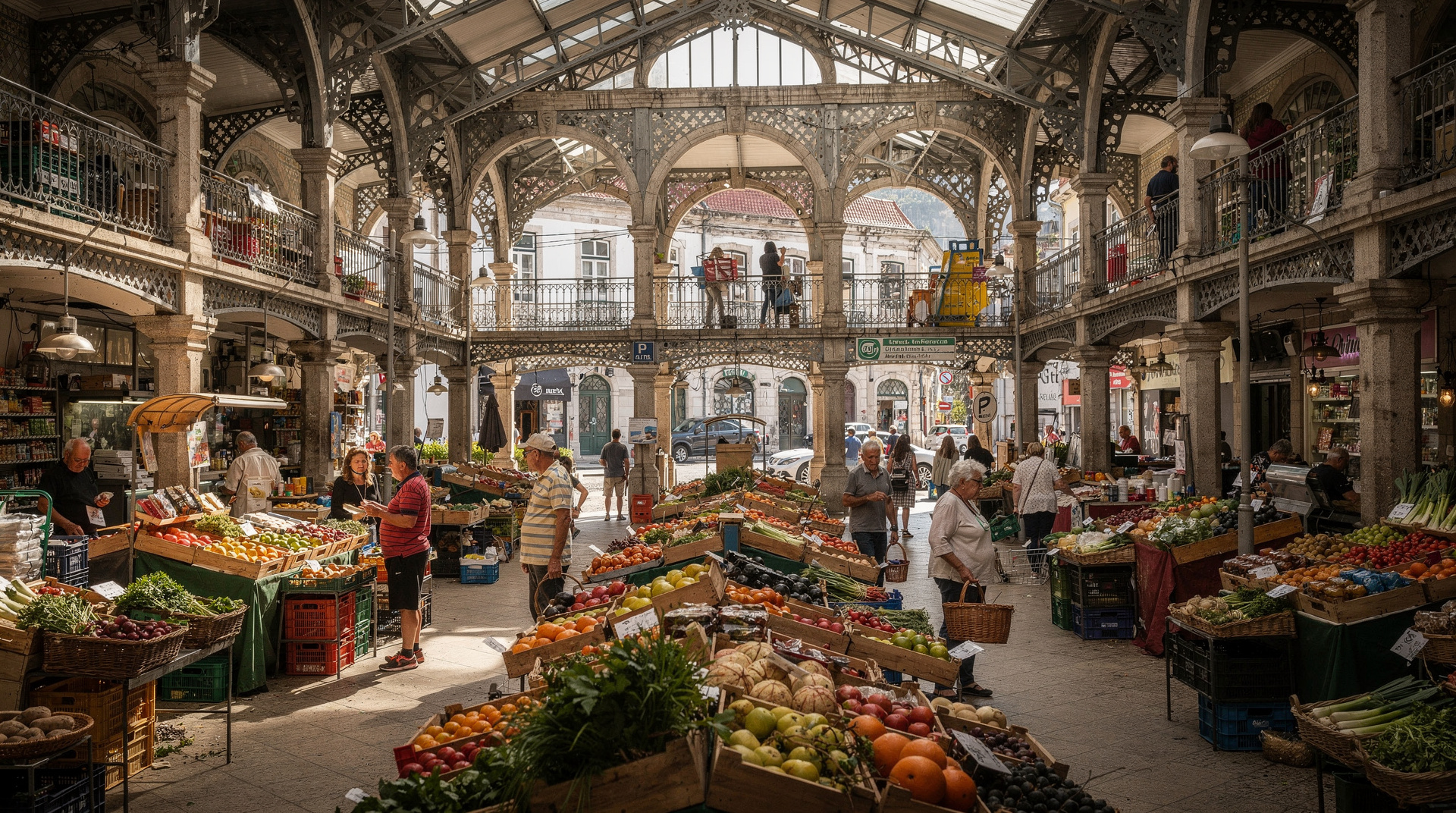
Mercado do Bolhão has a Manteigaria outlet inside it, which makes a natural combination: browse the market’s cheese and flower stalls, then eat a tart from the in-market location before or after. For visitors staying in Baixa-Aliados, the sequence works equally well in reverse — a tart on the way to the market rather than after. Either way, the two experiences reinforce each other: the market gives context for Porto’s food culture, and the tart is one of its most immediate, least effortful pleasures.
Frequently asked questions about pastel de nata in Porto
What is a pastel de nata?
A Portuguese custard tart with a laminated puff pastry case and a filling of egg yolks, sugar, cream and cinnamon, baked at very high temperature until the custard barely sets and the surface develops caramelised brown spots. Best eaten warm, within minutes of the oven.
Is there a difference between pastel de nata and pastel de Belém?
Pastel de Belém is a trademarked brand from the original Lisbon bakery, using a secret recipe since 1837. Pastel de nata is the generic term for all Portuguese custard tarts. In Porto, all versions are called pastéis de nata.
How much does a pastel de nata cost in Porto?
1.20-1.40 € at a proper bakery. Tourist-facing cafés may charge 1.80-2.50 €. A coffee alongside runs 0.70-1.00 € at a local café.
When is the best time to eat pastel de nata?
Within 5-15 minutes of leaving the oven. Manteigaria bakes in continuous batches throughout the day, increasing the probability of a fresh tart. Local neighbourhood bakeries bake in the morning and sell out by 11 am.
How are pastéis de nata eaten?
By hand, standing at the counter or seated. Dust with cinnamon and powdered sugar from the dispensers provided. A bica (espresso) alongside is the canonical pairing.
Can I take pastéis de nata home on a plane?
Yes — in boxes from good bakeries. They survive a few hours unrefrigerated but should be eaten within 24 hours. They soften significantly as the pastry absorbs moisture from the custard over time.
Is Manteigaria always better than a neighbourhood bakery?
Not necessarily. Manteigaria is the most consistent choice, but a neighbourhood padaria hitting a fresh batch can match or beat it, at a lower price and with more atmosphere.
Frequently asked questions — Pastel de nata in Porto — where to find the best custard tarts
What is a pastel de nata?
A pastel de nata (plural: pastéis de nata) is a Portuguese custard tart made with a laminated puff pastry case and a filling of egg yolks, sugar, cream and a touch of cinnamon, baked at very high temperature until the custard just sets and the surface develops caramelised brown spots. The word 'nata' means cream. The tart is best eaten warm, within minutes of coming out of the oven, dusted with cinnamon and powdered sugar.Is there a difference between pastel de nata and pastel de Belém?
Technically yes. Pastel de Belém (also called pastel de Belém or Pastéis de Belém, a brand name) refers specifically to the tarts made at the original Fábrica de Pastéis de Belém in Lisbon, using a recipe that has been kept secret since 1837. Pastel de nata is the generic term for custard tarts made anywhere in Portugal. In Porto, all versions are called pastéis de nata — there is no Belém connection or claim. The quality comparison between Porto and Lisbon versions is largely irrelevant; the best tarts in either city are excellent.How much does a pastel de nata cost in Porto?
A pastel de nata at a proper bakery costs 1.20-1.40 € each. At tourist-facing cafés on the Ribeira waterfront or main tourist streets, the price climbs to 1.80-2.50 €. At Manteigaria or Fábrica da Nata, a single tart costs around 1.30-1.40 €. A coffee (bica) alongside runs 0.70-1.00 € at a local café.When is the best time to eat pastel de nata?
The ideal moment is within 5 minutes of the tart coming out of the oven — the pastry case is crisp, the custard is still warm and barely set, and the contrast between the two textures is at its maximum. Manteigaria bakes in batches throughout the day; you can often see and smell a new batch being removed from the ovens. Cooled tarts are still good but the pastry softens as it absorbs moisture from the custard over time.How are pastéis de nata eaten?
Eaten by hand, standing at the bakery counter or seated. A sprinkle of cinnamon (canela) and powdered sugar from the small dispensers is traditional and recommended. Coffee alongside — specifically a bica (espresso) or an abatanado (slightly longer espresso) — is the canonical combination. Some people eat the tart like a sandwich, compressing it slightly; the Portuguese generally eat it with its shape intact.Can I take pastéis de nata home on a plane?
Yes — most good bakeries sell pastéis de nata in boxes of 6 or 12 for transport. They survive a flight without refrigeration for several hours (suitable for a same-day journey) but should be eaten within 24 hours of purchase. The pastry softens significantly over time. If you want a longer-lasting version, the best approach is to learn the recipe in a cooking class and make them at home.Is Manteigaria always better than a neighbourhood bakery?
Not necessarily — Manteigaria is the most consistent choice because of its continuous baking and transparent process, but a good neighbourhood padaria hitting a fresh batch can be just as good, sometimes better, at a lower price. The trade-off is reliability: Manteigaria removes the guesswork, while a neighbourhood bakery requires timing and a bit of luck to catch it fresh.
Top experiences
Bookable activities with verified prices and instant confirmation on GetYourGuide.