Is the Porto Card worth it? Honest breakdown (2026)
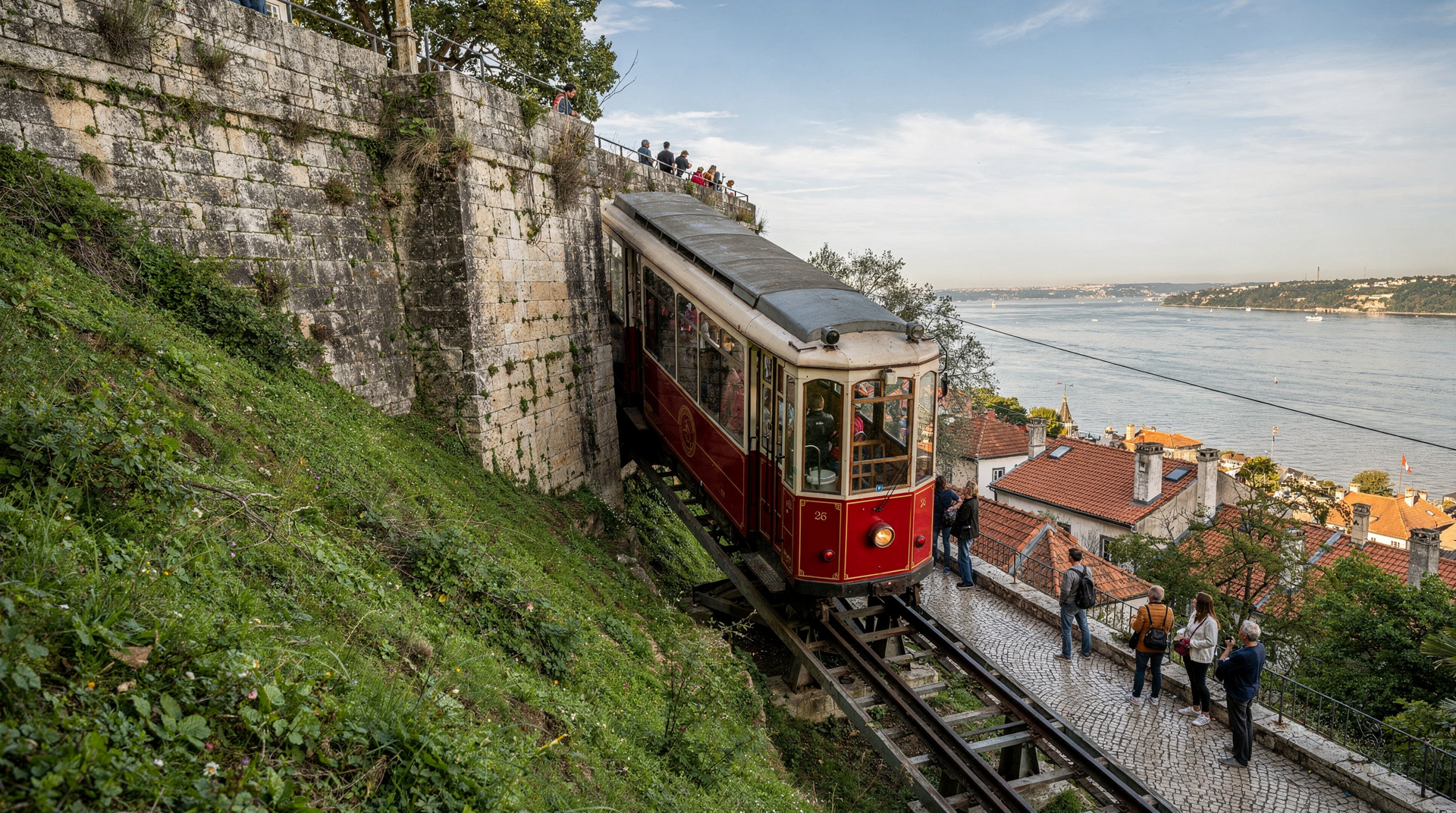
Porto: Porto Hop on Hop Off Bus Tram Tour Funicular
Is the Porto Card worth buying?
The Porto Card is worth it for two or more days if you plan to use public transport at least twice per day and visit two or more included attractions. For a one-day visit focused on walking and one attraction, the Andante card (0.60 € + fares) is cheaper. The 2-day and 3-day cards offer the best value.
Understanding what the Porto Card actually is
The Porto Card is the city’s official tourism pass — a flat-rate card covering unlimited public transport and free or discounted entry to attractions, restaurants, shops and partner services. It comes in four durations (1, 2, 3 and 4 days) at corresponding price tiers.
Before examining whether it saves money, it is worth clarifying what the Porto Card is not. It is not a hop-on hop-off bus ticket. It is not a priority entry pass. It does not skip queues at Livraria Lello or skip booking requirements at port cellars. It is a transport pass combined with an attraction discount card — useful for the right kind of itinerary, and not particularly useful for others.
| Covers | Metro, buses, tram line 1, funicular; ~6 free museums; 100+ partner discounts |
| Doesn’t cover | Livraria Lello, port cellar entry, GetYourGuide tours |
| Best value | 2–3 day durations for active, transport-using visitors |
| Where to buy | Visit Porto offices, airport arrivals, some metro stations |
| Activation | On first use, not at purchase |
Porto Card prices (2026)
Current pricing as of May 2026:
| Duration | Price |
|---|---|
| 1 day | 13 € |
| 2 days | 20 € |
| 3 days | 25 € |
| 4 days | 33 € |
A “day” for Porto Card purposes is a calendar day, not 24 hours — a card purchased at 4 pm on Monday is valid until midnight of that same Monday for day 1. This is important if you arrive in Porto late in the afternoon: a 1-day card bought at 5 pm gives you roughly 7 hours of validity.
Cards are available at Visit Porto offices, the airport arrivals desk, and selected metro stations and hotels.
What the Porto Card includes
Transport coverage:
- All Porto metro lines (including line E from the airport) — all zones
- STCP buses throughout Porto
- Historic tram line 1 (Ribeira to Foz do Douro)
- Funicular dos Guindais (Batalha to Ribeira)
Free entry: The specific list of included museums changes annually. The 2026 card includes free entry to around 6 museums and monuments. Confirmed inclusions have historically covered the Museu Nacional Soares dos Reis (Porto’s main fine arts museum), the Museu do Carro Eléctrico (tram museum), and several smaller municipal museums.
Discounts: The Porto Card provides discounts at over 100 partners including port cellars (typically 10 to 20 percent off tastings), boat cruise operators, restaurants, and shops. The discount list is available from Visit Porto and changes regularly.
The break-even calculation
To decide whether the Porto Card is worth buying, you need to calculate what you would spend without it and compare.
Without a Porto Card, transport costs per day:
- Andante card: 0.60 € (one-time, reusable)
- Metro journey, single zone 2: 1.45 €
- Metro journey, zone 3 (airport): 2.50 €
- Tram line 1 (single journey): 3.00 €
- Funicular dos Guindais (single journey): 4.00 €, return 5.00 €
A typical Porto day for a visitor using transport might include: metro to Gaia (zone 2, 1.45 €), return metro (1.45 €), tram to Foz (3 €), return tram (3 €). That is 8.90 € in transport alone, excluding the Andante card.
For a 2-day Porto Card at 20 €:
Two days of typical transport use (metro there and back once, tram to Foz once, metro from airport on arrival): approximately 10 to 15 € in transport without the card. Add free entry to one included museum (Soares dos Reis, for example, costs 5 to 8 € without the card). Total without card: 17 to 25 €.
The 2-day card at 20 € breaks even if you use public transport twice per day and visit at least one included museum. This is achievable for most active visitors.
For a 1-day Porto Card at 13 €:
A one-day visitor using the metro twice and walking the rest costs about 4 to 6 € in transport. Without visiting any included museums, the 1-day card does not break even. If you add the tram to Foz (3 €) and one museum entry (6 €), you are at 13 to 15 € — the card roughly breaks even. The 1-day card is only a clear win if you combine metro use from the airport, tram trips, the funicular, and at least one museum.
For a 3-day Porto Card at 25 €:
Three days of regular metro use (2 to 3 journeys per day) typically runs 8 to 12 € in transport. Add 2 to 3 museum entries (10 to 18 €) and you are well above 25 € without the card. The 3-day card offers the best relative value for most visitors.
The Porto Card vs the Andante card
The Andante card is Porto’s standard pay-as-you-go transport card. You buy it for 0.60 € (reusable and rechargeable) and pay per journey at the zone rate. For visitors who:
- Stay only one or two days
- Walk most places and use metro rarely
- Are not interested in the included museums
- Do not plan to use the tram to Foz
…the Andante card is simply cheaper. There is no reason to buy a Porto Card for a walking-heavy, attraction-light itinerary.
For visitors who:
- Plan to use public transport multiple times per day
- Want to visit 2 or more included museums
- Use the airport metro on arrival (saving 2.50 € on day one immediately)
- Plan to use the tram to Foz at least once (saving 3 € per journey)
- Will use the funicular
…the Porto Card offers clear value from the 2-day tier upward.
The honest downsides
The included museums are not all must-sees. The Porto Card’s museum list has historically included some excellent institutions (Soares dos Reis is genuinely worth visiting for its 19th-century Portuguese art collection) and some that are minor attractions worth perhaps 30 minutes of your time. If you would not visit these museums at full price, the free entry adds no real value to your calculation.
The discounts vary. Port cellar discounts at 10 to 20 percent can be meaningful — 20 percent off a 30 € Graham’s tasting saves 6 €. But not all partner discounts are significant, and some are limited to specific time slots or excluded from the most popular experiences. Always check whether the discount applies to the specific tour or tasting you want before assuming it contributes to your break-even calculation.
The card format. The Porto Card is a physical card, not a mobile ticket. You need to keep it with you at all times and tap it at metro validators on every journey. If you lose it, there is no recovery process.
How the Porto Card fits different trip lengths
| Trip length | Card duration | Likely to break even? |
|---|---|---|
| 1 day, mostly walking | 1-day | Rarely — only with airport arrival + tram + museum |
| 1 day, transport-heavy | 1-day | Often, if combined with the funicular and a museum |
| 2 days | 2-day | Usually, for active sightseeing itineraries |
| 3 days | 3-day | Yes, for most visitors using transport daily |
| 4+ days, mixed with Douro day trip | 3-day, topped up with Andante | Depends — the Douro day earns nothing on the card |
Seasonal timing and the Porto Card
The card’s value doesn’t change with the season, but your itinerary might. In summer, heat pushes many visitors toward more metro and tram use (to reach the coast at Foz or avoid walking in the midday sun), which increases the card’s transport savings. In winter, shorter days and rain often mean more museum time and less walking-heavy sightseeing, which can tip the calculation further in the card’s favour if your itinerary leans toward indoor attractions. Either way, run the specific numbers for your dates rather than assuming the season alone decides it — see the best time to visit Porto guide for how weather affects daily plans more broadly.
Practical scenarios: who should buy what
The two-day city visitor: Buy the 2-day Porto Card at 20 €. You arrive on the metro from the airport (saving 2.50 €), use the metro two or three times daily (saving 5 to 10 €), take the tram to Foz at least once (saving 3 €), and visit one included museum. You are at break-even or ahead by day one.
The three-day visitor including Douro Valley: The 3-day card works well here. The airport metro on arrival, daily metro use, one museum, and the tram add up to 30 to 40 € without the card. At 25 €, the 3-day Porto Card saves 5 to 15 €.
The one-day rushed visitor: Walk most of the historic centre, cross the bridge on foot, take the metro once. Spend 3 € on a single metro journey and save the Porto Card cost. The 1-day card at 13 € does not break even for a mostly walking itinerary.
Budget travellers doing the Douro by train: The Douro train day uses no Porto metro. Skip the Porto Card on that day and reload the Andante card instead. You are paying for a transport pass on a day you aren’t using Porto transport.
Families with children under 12: Children travel free on Porto metro when accompanied by a card-holding adult. This means the family calculation for the Porto Card is better than it appears — you are not paying child fares either way.
Where to use the Porto Card most effectively
The highest-value individual inclusions in the Porto Card:
- Airport metro arrival: 2.50 € saved immediately
- Tram line 1 to Foz, return: 6 € saved in one round trip
- Funicular dos Guindais: 2.50 to 5 € saved depending on single/return
- Museu Nacional Soares dos Reis: 5 to 8 € entry, free with card
The porto funicular and cable car guide covers both the funicular and the Gaia cable car (which operates separately and is not covered by the Porto Card — the Gaia teleférico is a different operator).
Book the Porto hop-on hop-off tram and funicular combo — a separate option that combines the heritage tram and funicular as a sightseeing experience independent of the Porto Card.
Buying the Porto Card
Visit Porto offices:
- Main office: Rua Clube dos Fenianos 25, Porto (near Aliados metro stop)
- Airport arrivals hall: open daily, all card durations available
The card is activated on first use, not at purchase — so you can buy it at the airport and start using it immediately on the metro, or buy it the evening before your full first day and avoid wasting the first calendar day on a late arrival.
The getting around Porto guide covers the complete Andante zone system and public transport network in detail, and the porto on a budget guide covers how to minimise costs across all categories — accommodation, food, transport and attractions — for a 55 to 70 € per day total spend.
The Porto Card is a straightforward value calculation, not a luxury purchase or a tourist trap. Run your own numbers against the itinerary you are planning, and you will get a clear answer within five minutes.
Frequently asked questions — Is the Porto Card worth it? Honest breakdown (2026)
What does the Porto Card include?
The Porto Card includes unlimited use of the Porto metro, buses, trams (including the historic line 1 to Foz), and the funicular dos Guindais. It also includes free entry to 6 museums and monuments including the Municipal Museum Abade de Baçal (Bragança) and significant discounts at over 100 partner attractions, restaurants, shops and cellars. The specific list changes year to year — verify the current inclusions at the Visit Porto office or website before purchase.Where can I buy the Porto Card?
Porto Cards are sold at the Visit Porto tourism offices — the main office is at Rua Clube dos Fenianos 25 (near the Aliados metro, open daily). Cards are also sold at the airport arrivals area, at some metro stations, and through authorised partners. They are not available at every metro ticket machine. Online pre-purchase is possible through the Visit Porto official website.Does the Porto Card work on the airport metro?
Yes. The Porto Card covers all zones of the metro network including line E from the airport. If you plan to use the metro from the airport on day one of your card, this is one of the clearest examples where the card saves money over individual tickets — a single zone 3 journey from the airport costs around 2.50 €, compared to zero with the Porto Card.Is the Porto Card valid on the tram to Foz?
Yes. The historic tram line 1 running along the riverfront from Ribeira to Foz do Douro is included in the Porto Card transport coverage. Without the card, a single tram ticket costs 3 € for tourists (the heritage tram uses a different pricing structure from the metro). Using the tram twice to and from Foz adds 6 € in savings, which is significant in a one-day card calculation.Can I buy the Porto Card at the airport?
Yes, there is a Visit Porto desk in the arrivals hall at Francisco Sá Carneiro Airport. Cards are available for all durations. If you plan to start using transport and attractions on your first day (including the airport metro), buying at the airport makes logistical sense.What is the difference between the Porto Card and the Andante card?
The Andante card is the standard reloadable transport card for Porto's public transport network — you pay for journeys as you use them. The Porto Card is a flat-rate all-inclusive pass covering transport plus attractions at a fixed price. The Andante card is cheaper if you use transport infrequently; the Porto Card is better value if you use public transport multiple times daily and visit paid attractions.Does the Porto Card give a discount at port wine cellars?
At some partner cellars, yes — typically 10 to 20 percent off standard tasting prices, though the specific cellars and discount levels change and not every cellar participates. It is a discount, not free entry, and it rarely applies to premium tasting tiers. Check the current partner list before counting a cellar discount into your break-even calculation, and don't assume every cellar visit is covered.Is the Porto Card worth it for a family with young children?
Often yes, and more so than the adult-only calculation suggests. Children under 12 typically travel free on the Porto metro when accompanied by a card-holding adult, so the family isn't paying separate child transport fares either way, and several included museums are engaging for kids (the Tram Museum in particular). Run the numbers on the adults' transport and museum use — the children's free travel is effectively a bonus on top.
Top experiences
Bookable activities with verified prices and instant confirmation on GetYourGuide.