Douro wine lovers in 4 days — Porto cellars and valley quintas
Vila Nova de Gaia: Taylor S Port Cellars Tasting in Porto
How to use this wine-lovers Douro itinerary
This itinerary is for travellers who book trips around wine. The Douro is the oldest demarcated wine region in the world (1756) — predating Bordeaux’s classification by almost a century — and its range covers everything from the oxidatively-aged fortified ports you’ll taste in Gaia to the table wines of the Pinhão valley that have made the Douro one of the most exciting red wine regions in Europe. This itinerary covers both.
Days 1–2 are based in Porto and Vila Nova de Gaia, covering the port wine storage and blending side. Days 3–4 move to the Douro Valley itself, with overnight stays near Pinhão and visits to four to five different quintas. A car is required for Days 3–4 — the quintas are not accessible by train for independent visitors.
Vindima timing: If harvest is a priority (and it should be for serious wine travellers), visit in mid-September to early October. Book accommodation and quinta visits six to eight weeks in advance for this period. See our Douro harvest vindima guide.
Budget estimate: €350–550 per person for four days including car hire, two nights in Porto (mid-range hotel) and two nights in Douro Valley (quinta accommodation or rural hotel), six to eight wine tastings, and meals.
| Where | Gaia port lodges (Days 1–2) + Pinhão/Régua quintas (Days 3–4) |
| Cost | around €350–550 per person over four days |
| Time needed | four days, car required for Days 3–4 |
| Getting there | metro in Porto/Gaia; rental car for the valley |
| Best time | mid-September to early October for vindima |
If you’d rather not drive, our Porto and Douro in 5 days itinerary covers a similar wine-focused route by train instead, with fewer quintas but no car needed. For the timing question specifically, see our best time for the Douro vindima guide.
Day 1: Gaia port lodges — understanding the ageing side
Morning (9:30–12:30)
9:30 — Start in Vila Nova de Gaia
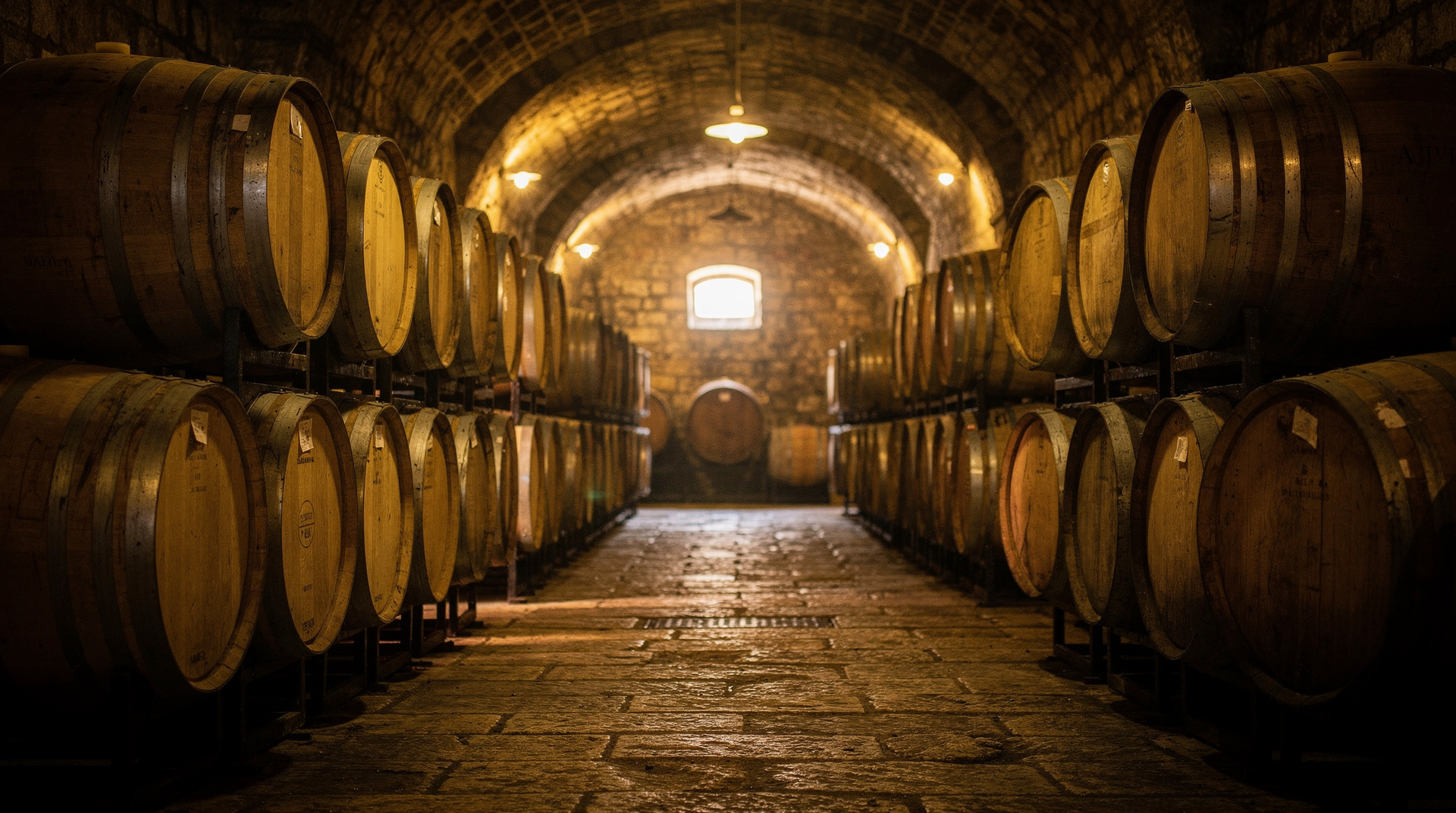
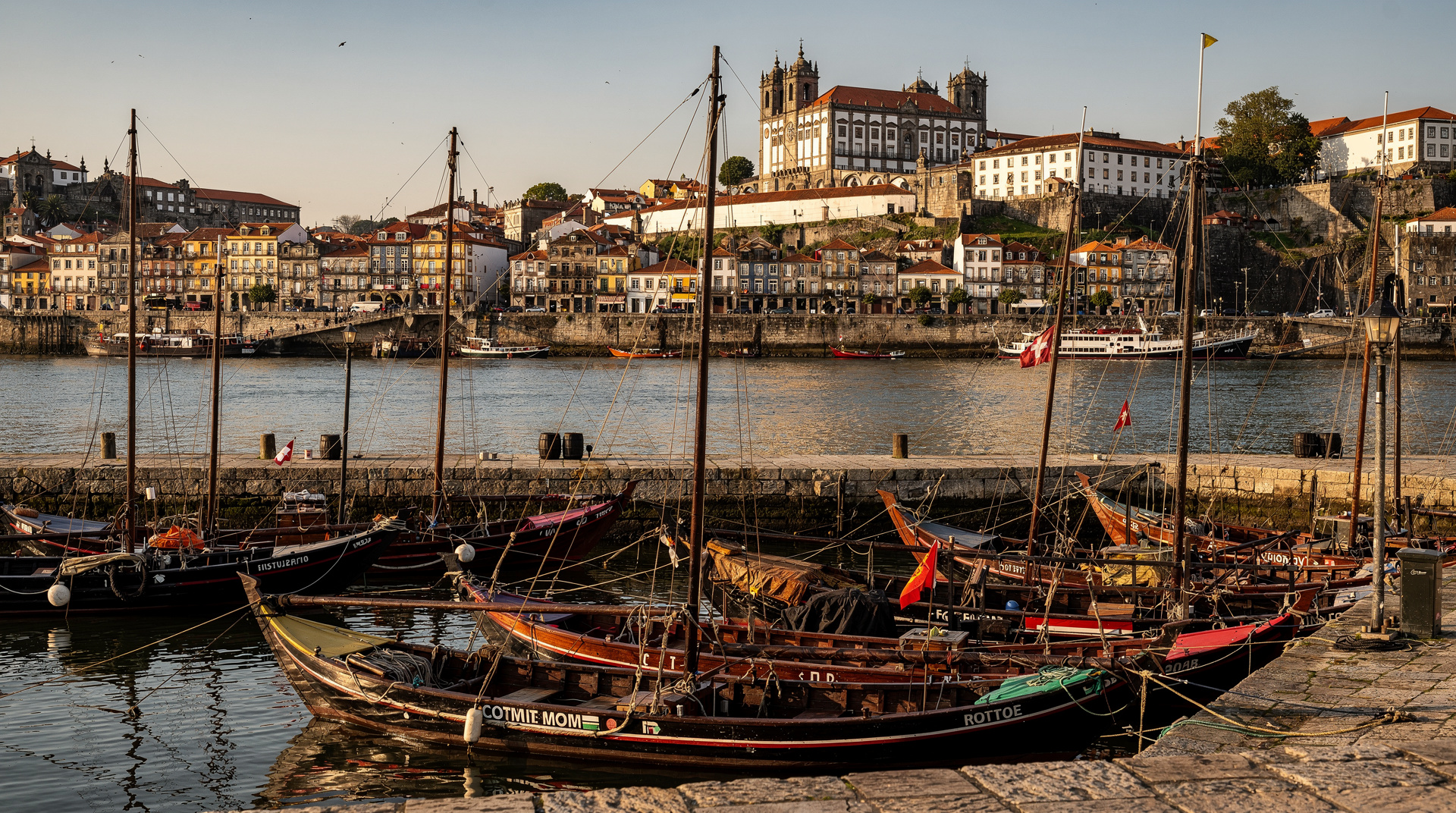
Take metro to D. João II station (line D from Trindade, 2 minutes, €1.85) and walk 10 minutes into the Gaia lodge district. Vila Nova de Gaia is where the port houses have stored their wine since the 18th century — the “lodges” (armazéns) maintain a microclimate that no inland quinta can replicate, with moderate humidity and temperature stabilising the ageing wine. Understanding why they built here, and not in the Douro itself, is the first lesson.
9:45 — Graham’s Port Lodge — premium experience
Graham’s (Rua Rei Ramiro 514) is the deepest single-cellar experience in Gaia. The premium tasting (~€35–40) goes through the lodge’s current range from basic ruby to the famous 20-year tawny and a vintage port from the lodge’s declared years. The guide explains the principal port styles, how blending works, and what makes a vintage year declared. This is wine education, not just tourism. Book Graham’s premium tasting in advance — the premium experience has limited availability. Allow 90 minutes. See our Graham’s port lodge guide.
Lunch (12:30–14:00)
Walk to Espaço Porto Cruz (Largo Miguel Bombarda 23, Gaia) — a wine bar with terrace views over the Douro. Lunch here is simple (petiscos and charcuterie boards, €12–18) but the setting and the wine selection (focused on Douro producers) make it the right place for a wine-focused mid-day break.
Afternoon (14:00–17:30)
14:00 — Taylor’s cellar
Taylor’s cellar tasting (Rua do Choupelo 250) is the afternoon counterpoint to Graham’s morning — a different ownership group (Fladgate Partnership vs Symington), a different tasting methodology, and crucially a different portfolio. Taylor’s Vargellas single quinta vintage is one of the most discussed single quinta ports; the standard tasting (~€20–30) includes a 20-year tawny that pairs well against Graham’s version in your notes. Allow 90 minutes.
15:45 — Cálem or Cockburn’s
A third tasting in Gaia is possible for serious wine travellers. Cálem (Avenida Diogo Leite 344, waterfront) is an interactive experience (€20) that focuses on the sensory aspects of port classification — the Calem tasting includes a fado performance. Cockburn’s premium tasting (€30) is more wine-focused and covers the history of one of port wine’s oldest British houses. See our best port wine cellars guide.
Evening (18:30–22:00)
Port wine class with pairings at Quinta Nova rooftop or at one of Gaia’s wine-focused bars. Or cross back to Porto and eat at Prova (Rua de Ferreira Borges 31) — a wine bar specialising in small Portuguese producers with a selection that extends well beyond port into Douro table wines, Alentejo and the Minho.
Day 2: Porto historic centre and wine culture
Morning (9:00–12:30)
9:00 — WOW Cultural District (World of Wine)
Return to Gaia for the WOW complex (Rua do Choupelo). The Wine Experience museum (~€15) gives an interactive map of Portuguese wine regions — useful orientation before you drive into the Douro tomorrow. The cork museum (Planet Cork, ~€8) is fascinating as context for the bottles you’ll see stacked in quintas. A combined ticket covering all WOW museums costs ~€25. Allow two hours. See our WOW Porto guide.
11:30 — São Bento and the historic centre
Cross back to Porto. For wine travellers, São Bento is more interesting than for general tourists — the azulejo panels depicting the Portuguese wine harvest (in the Douro section of the historical narrative) can be read now with more background knowledge. Walk the Rua das Flores and the area around the Palácio da Bolsa.
Lunch (12:30–14:00)
The wine-focused Porto lunch: Cantina 32 (Rua das Flores 32, creative Portuguese, €15–22) has a short wine list with strong Douro representation. Ask for whatever Douro red the sommelier would drink themselves.
Afternoon (14:00–18:30)
14:00 — Port wine walking tour with tastings
A guided port wine tour that covers multiple Gaia cellars in one walk is the most efficient afternoon use for a wine-focused traveller. Several operators offer “port wine tour with seven tastings” or similar — covering four or five small producers that you wouldn’t find independently. These tours run approximately three hours and cost €35–55 per person. See our port wine tasting guide for beginners.
17:30 — WOW wine shop
The WOW complex has a serious wine retail operation — the best place in greater Porto to buy bottles to take home. Prices are competitive and the range covers small-production quintas you won’t find elsewhere. Budget €20–60 per bottle for premium selections.
Evening
Dinner at a Porto restaurant with a strong Portuguese wine list. Antiqvvm (Michelin-starred, Palácio do Freixo hotel) has the most comprehensive Douro wine list in the city — if budget allows, this is the right dinner before driving into the valley. Tasting menu from €90; wine pairing from €50 additional.
Day 3: Drive to Pinhão — Quinta do Bomfim and Quinta da Foz
Pick up rental car: Day 3 morning from Porto airport (OPO) or a city-centre office. Drive time Porto to Pinhão: approximately 120 km, 2 hours (A4 motorway to Régua exit, then N108 river road or N222 scenic route).
Morning (9:00–13:30)
9:00 — Depart Porto
Take the A4 (toll, ~€5) eastbound from Porto, exit at the IP3/Régua direction. The landscape changes from coastal granite to the schist and clay soils of the Douro appellation around the 80 km mark.
10:30 — Stop at Peso da Régua
The Quinta do Tedo winery (10 km east of Régua, off the N222) offers a morning tasting at a highly regarded boutique estate. The quinta sits at the confluence of the Tedo and Douro rivers and produces some of the region’s most interesting table wines alongside its port. Pre-book the tasting (€20).
12:30 — Arrive in Pinhão
Park at the Pinhão village parking area near the train station. Spend 15 minutes at the station’s azulejo panels — 24 panels depicting the wine cycle from harvest to transport by rabelo boat. These panels are the most visually comprehensive overview of traditional Douro wine-making that exists.
Lunch (12:30–14:00)
Lunch in Pinhão. The village has very few restaurants; Veladouro (by the bridge) is the most reliable option for regional food at €15–20 per person. Ask about the daily bacalhau preparation.
Afternoon (14:00–18:00)
14:00 — Quinta do Bomfim (Symington)
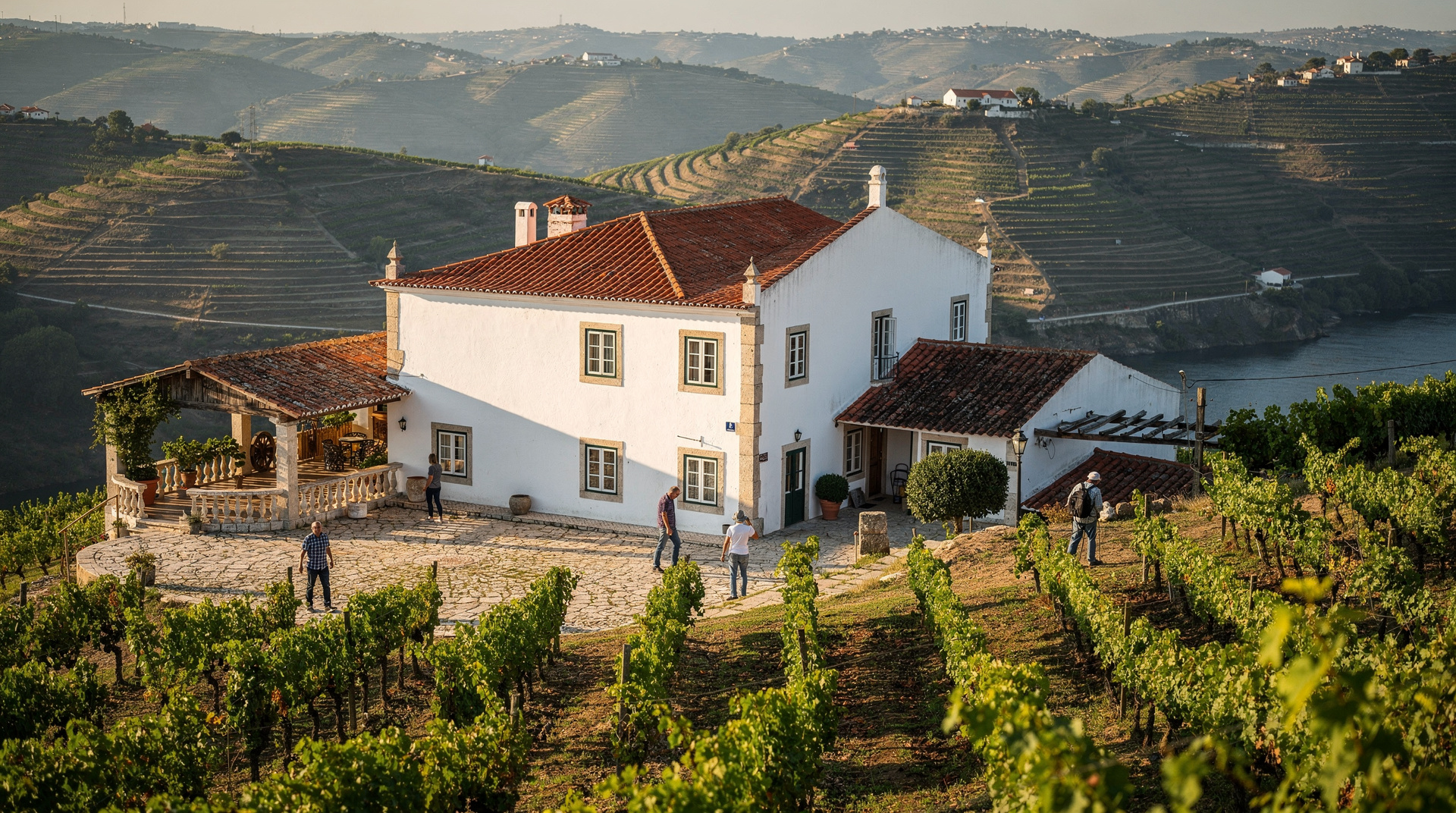
Book the Quinta do Bomfim visit in advance (the Symington group operates this as Dow’s Port quinta). The estate tour covers vineyards planted with the traditional mixed-variety Douro field blend, a cellar with pipes of ageing tawny, and a tasting of Dow’s Vintage, LBV and 10-year tawny. Allow 90 minutes. The quinta is 1.5 km from the Pinhão village centre. ~€15–25.
16:00 — Quinta da Foz (free independent visit)
Drive 3 km from Pinhão to Quinta da Foz at the junction of the Douro and Pinhão rivers. The five-wine tasting (~€20) is particularly strong on single-quinta ports and Douro DOC reds. The position above the river junction is the most photogenic in the Pinhão area.
18:00 — Check in near Pinhão
Quinta de la Rosa (a working Roseira Port estate with rooms on the Douro bank, ~€150/night including breakfast) is the wine-lover’s first choice. The property produces its own port and table wines — you can taste what you’ll drink at dinner in the vineyard you’ll walk before breakfast. Book months in advance for September.
Evening
Dinner at the quinta. Quinta de la Rosa’s meals are served communally — you’ll often eat with the winemaking team during vindima. Request the Roseira 30-year tawny if it’s available.
Day 4: Douro valley quintas and scenic cruise return
Morning (8:00–12:00)
8:00 — Early vineyard walk
Walk the quinta’s vineyard paths before 9:00. In September, harvest typically starts at first light — you’ll see pickers moving through the terraces. Ask whether you can help for an hour during vindima (some quintas allow it; it’s hard work but extraordinary context).
9:30 — Drive toward Quinta Nova de Nossa Senhora do Carmo
Drive 25 km east on the N222 to Quinta Nova (municipality of Sabrosa direction). This is one of the Douro’s most complete quinta experiences — a luxury hotel, working winery, and one of the valley’s best vineyard views. The Douro Reserve wine tour and tasting (~€20–30) covers the estate’s wine philosophy and its shift from fortified to table wine production. Book the Quinta Nova wine tour in advance.
11:30 — Drive back toward Régua
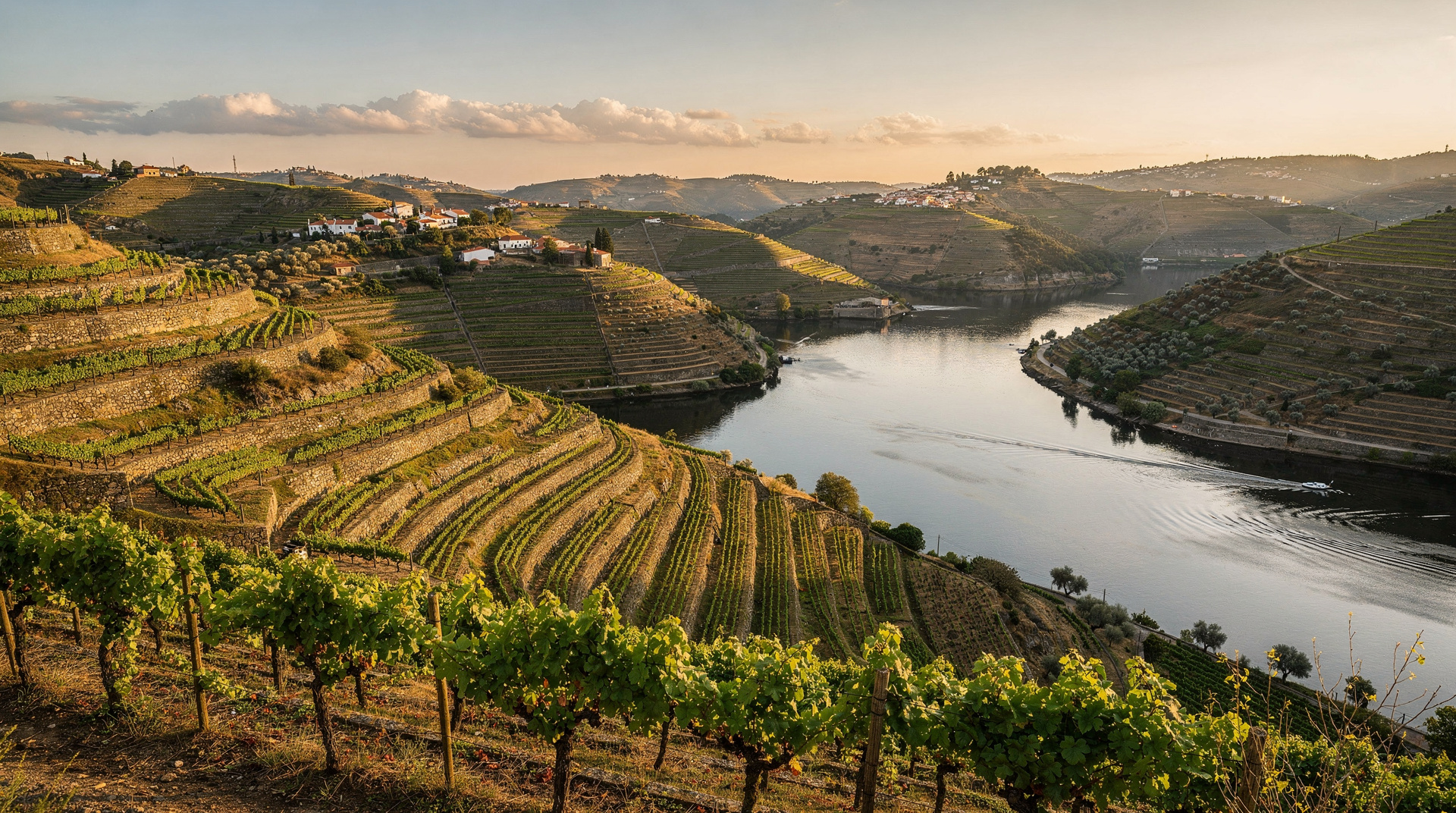
Return westward on the N222, stopping at the Miradouro de São Leonardo de Galafura (viewpoint, 8 km east of Régua) for the classic overview of the Douro terraces. This is the most photographed viewpoint in the valley.
Afternoon (12:30–17:00)
12:30 — Lunch in Peso da Régua
Return to Régua for lunch. Castas e Pratos or the Restaurante D. Antónia at the Hotel Régua Douro (~€25–35, rooftop terrace) gives a final Douro meal with river views.
14:30 — Scenic Douro cruise: Régua to Pinhão
The Régua to Pinhão scenic cruise runs the most beautiful 26 km of the Douro between the two towns. Approximately 2 hours on the water, passing through locks, under the terraced slopes and past quintas that are inaccessible from the road. This is the final wine-country experience before driving back to Porto. ~€25–35 per person.
16:30 — Drive back to Porto
A4 motorway from Régua to Porto: approximately 100 km, 1h15. Drop off rental car at OPO airport or city centre.
Day-by-day summary
| Day | Focus | Highlights | Pace |
|---|---|---|---|
| Day 1 | Gaia port lodges | Graham’s premium tasting, Taylor’s cellar, optional third tasting | Full, wine-heavy |
| Day 2 | Porto wine culture | WOW Wine Experience, port wine walking tour, wine shopping | Moderate |
| Day 3 | Drive to Pinhão | Quinta do Tedo, Quinta do Bomfim, Quinta da Foz, quinta overnight | Full, mostly driving + tastings |
| Day 4 | Valley quintas + cruise | Quinta Nova, Miradouro de São Leonardo, Régua–Pinhão cruise | Full, ends with drive back |
Port houses vs quintas: understanding what you’re comparing
Gaia and the Douro Valley tell two halves of the same story, and it’s worth being explicit about the difference so the itinerary makes more sense as you move through it. The Gaia lodges (Graham’s, Taylor’s, Cálem) are where port has traditionally been aged and blended — the humid riverside microclimate suits long barrel ageing, and a single lodge’s portfolio draws grapes from dozens of quintas across the Douro. A quinta visit, by contrast, shows you a single estate’s own vineyards, its own cellar, and increasingly its own table wines — the Douro’s shift from purely fortified wine toward serious DOC reds is a relatively recent and important development that Gaia tastings alone won’t show you. Doing both, as this itinerary does, gives you the full picture rather than half of it.
Building your own tasting notebook
Serious wine travellers get more out of this trip by keeping brief notes at each tasting — house, wine, style, one line on what stood out. With six to eight tastings across four days, memories blur fast, and a notebook (or phone notes) turns the trip into something you can act on later, whether that’s ordering the same producer at home or planning a return visit to a specific quinta. Ask each guide for the producer’s export availability if you’re hoping to find a bottle back home; many small Douro producers do reach international markets even if their shopfront presence is limited.
Practical notes about this itinerary
Quinta visits — advance booking is non-negotiable: In September (vindima), the premium quinta experiences at Quinta do Bomfim, Quinta de la Rosa and Quinta Nova fill six to eight weeks in advance. In May–June, two to three weeks ahead is sufficient. Walk-ins are possible at some smaller operations but not the ones on this itinerary.
Car essentials: Via Verde tolls are charged electronically on the A4. If your rental car doesn’t have a Via Verde tag, you’ll pay at manual toll booths. Budget €8–12 for tolls each Porto–Douro return trip. Fuel: petrol stations in Pinhão are limited — fill up in Régua.
Tasting strategy: For serious wine travellers, avoid tasting on an empty stomach. The port-tasting sequence (three to four in a day) is more informative than exhausting if you eat between sessions. Water between tastings is standard at every quinta.
Vindima context: The harvest in the Douro runs from approximately 10 September to 10 October, varying by estate, altitude and year. The Pinhão Cima Corgo sub-region typically harvests earlier than the higher-altitude properties. See our Douro harvest vindima guide.
Frequently asked questions about this itinerary
How many wine tastings per day is reasonable?
Three to four structured tastings per day, paced with food breaks, is sustainable for most wine travellers. Above five, palate fatigue makes the later tastings less informative. This itinerary is designed for 2–3 per day with meals between.
What’s the difference between port wine tasted in Gaia and at a Douro quinta?
In Gaia, you’re tasting blended and aged ports from lodges that receive wine from dozens of quintas across the Douro region — the product is consistent, refined, and the guide can explain classification and history. At a quinta, you’re tasting single-estate wine in the place it was grown — the wine may be less polished but the connection to terroir is direct. Both are valuable and different.
Is Quinta de la Rosa the best overnight in the Douro for wine lovers?
It’s one of the best — a working estate that runs one of the valley’s most visitor-friendly wine programmes. Quinta da Pacheca (near Régua) is also excellent and has the famous wine barrel accommodation. Casa de Casal de Loivos offers the best views from a guesthouse that isn’t itself a wine estate. See our where to stay in the Douro Valley guide.
Should I visit during vindima?
Yes, if you can manage the logistics. Watching the harvest at dawn, the baskets of grapes arriving at the lagares, the first crush — this is the most visceral wine experience in Europe. Book everything early. See the vindima guide.
Is the Douro wine region better than Bordeaux or Burgundy for a wine visit?
Different, not necessarily better. The Douro’s advantage is accessibility — you can visit working quintas, eat with the winemaking team, and see the full cycle of harvest to ageing at reasonable cost. The setting (terraced river valley) is arguably more dramatic than flat Bordeaux. The disadvantage is fewer restaurants, less wine tourism infrastructure, and some language barriers in small quintas. See our is the Douro tour worth it guide.
Do I really need a car for this itinerary?
For Days 3–4, yes. The quintas covered here — Quinta do Tedo, Quinta Nova, and the Miradouro de São Leonardo viewpoint — sit off the train line and aren’t practically reachable without a car or a private guided tour. If you’d rather not drive, our Porto and Douro in 5 days itinerary covers Pinhão and Régua-area quintas by train instead, trading some quinta variety for simpler logistics.
Can I do this itinerary without visiting Gaia at all, going straight to the valley?
Yes, but it’s a weaker itinerary for it. Understanding why port ages in Gaia’s microclimate and how blending works gives real context for what you’ll taste at the quintas — skipping straight to the valley means missing half the story. If time is tight, compress Days 1–2 into a single day with two Gaia tastings rather than dropping Gaia entirely.
Top experiences
Bookable activities with verified prices and instant confirmation on GetYourGuide.