Douro by train: Porto to Pinhão and what the railway actually shows you
The reputation vs the reality
The Porto-Pinhão train is described in almost every Douro Valley piece as “one of the most scenic railway journeys in Europe.” This claim is used so frequently across travel writing that it has become almost meaningless through repetition — and yet it’s true. We’ve taken the full journey four times on different seasons and what strikes me is not that the claim is inflated but that it undersells the specific quality of the experience.
It’s not scenery in the broad sense. It’s something more specific: the particular drama of watching a river valley reveal itself over two and a half hours as the train follows the water through gorges that become progressively more vertical, more schist-coloured, more intensely terraced, until Pinhão emerges in a wide curve of the river with vineyards rising immediately behind it.
Here’s the honest account.
| Departs from | Campanhã station, Porto — not São Bento |
| Journey time | Around 2h20–2h30 to Pinhão, 1h40 to Régua |
| Ticket cost | Around 10–12 € single, Porto to Pinhão |
| Best seat | Left side, eastbound, for the final stretch |
| What it doesn’t include | Quinta visits — those need a car or taxi from the station |
The journey: Porto to Campanhã to Pinhão
You board at Campanhã station in Porto, not São Bento. This catches people out: São Bento is the famous azulejo-tiled station in the historic centre, but it’s a terminus and the intercity trains use Campanhã. São Bento serves suburban routes only. From Bolhão metro station, Campanhã is about 10 minutes by metro.
The regional train (Alfa or the regional Douro line train) departs Campanhã and heads east. The first hour is unremarkable: Porto suburbs, the Douro estuary widening to the left, industrial waterfront infrastructure. Don’t arrive late expecting drama from the first minutes.
At Ermesinde, roughly 30 minutes out, the landscape begins to change: the valley narrows, the slopes steepen, the river tightens. By the time you reach Entre-os-Rios — where the Tâmega river joins the Douro, about an hour from Porto — the line is running along a ledge above the river.
The section between Entre-os-Rios and Peso da Régua is the transition. The slope gradient increases. The terraced vineyards begin. The schist geology — dark slate-grey rock that the Douro’s heat-accumulation and drainage properties make ideal for port wine grapes — starts to dominate. The track occasionally passes through cuts in the cliff face and emerges to views directly over the water.
Régua, at about 1h40, is the first major Douro valley town: a railway junction, a river port, and the administrative centre of the port wine trade. Many people stop here. See our Peso da Régua guide and Destination: Peso da Régua if you want to break the journey there. The train continues to Pinhão.
The Régua-Pinhão section is the journey.
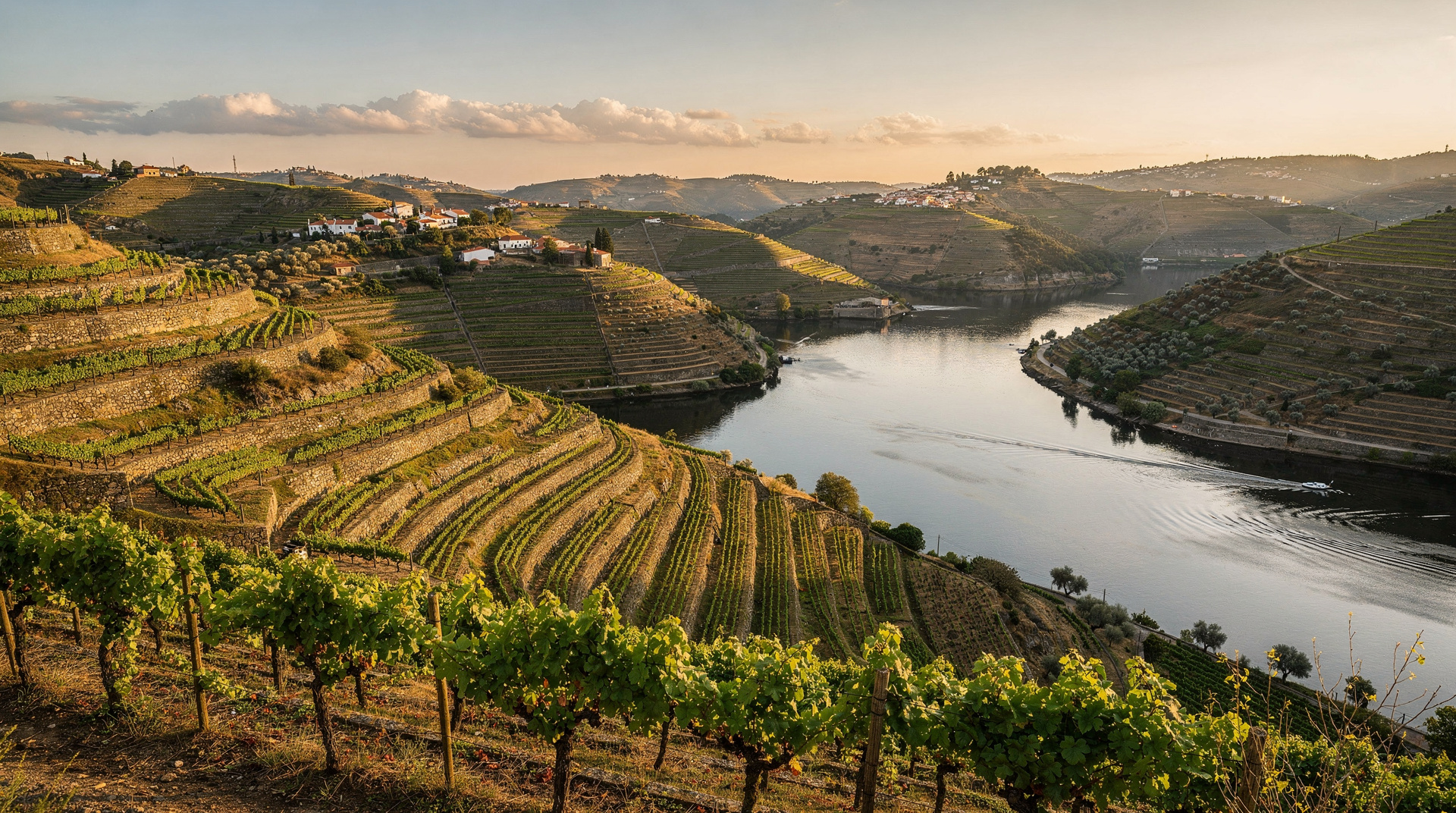
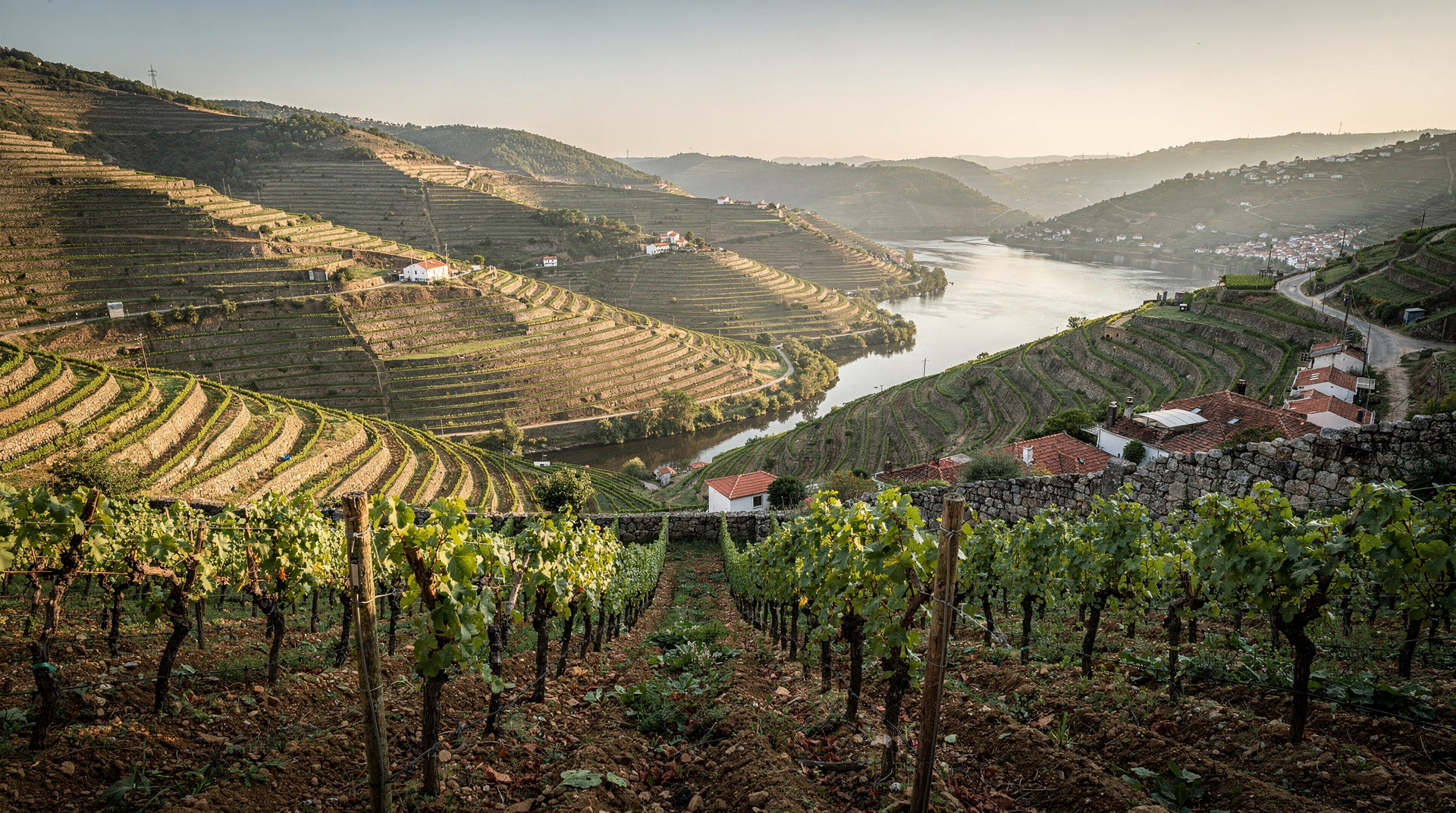
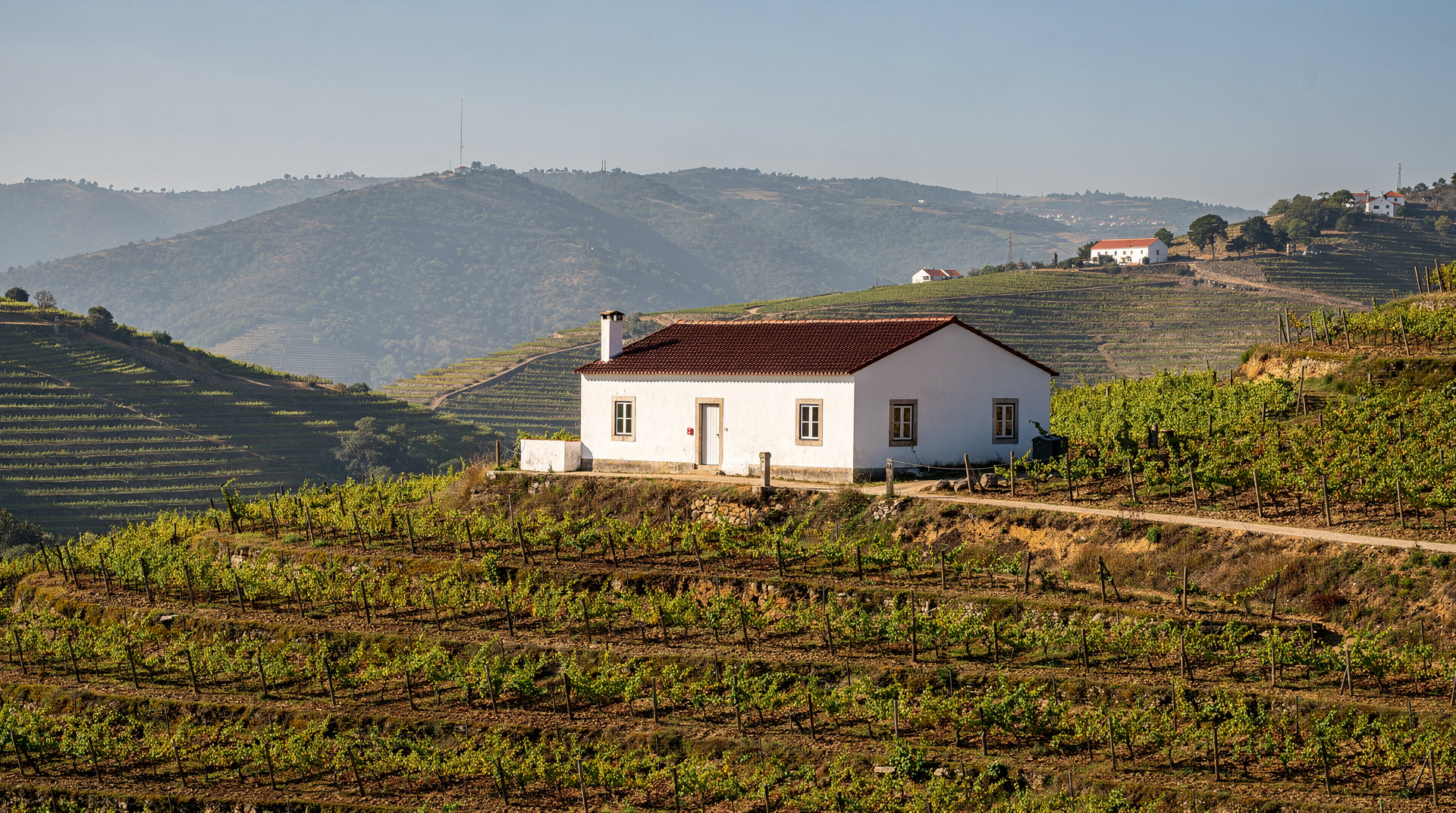
In approximately 40 minutes, the track follows the north bank of the Douro through a section of valley that’s narrower, steeper, and more dramatically terraced than anything before it. The schist cliffs rise hundreds of metres on both sides. The terraces — maintained by hand, some dating to the 18th century Pombaline regulation of the valley — go from water’s edge to heights that require binoculars to see properly. The train sometimes passes within metres of the water.
There are several moments where the track is carved into the cliff face and you’re looking down at the river surface while the rock wall is directly opposite your window. These are the moments that justify the journey.
Pinhão
The train arrives at Pinhão station, which is tiled — the famous azulejo panels depicting Douro harvest and transport scenes, painted in 1937, occupy the full length of the main platform wall. If you’ve timed it right (avoid the busiest summer train which arrives to a crowd of day-trippers simultaneously), you can spend twenty minutes at these panels without others competing for space.
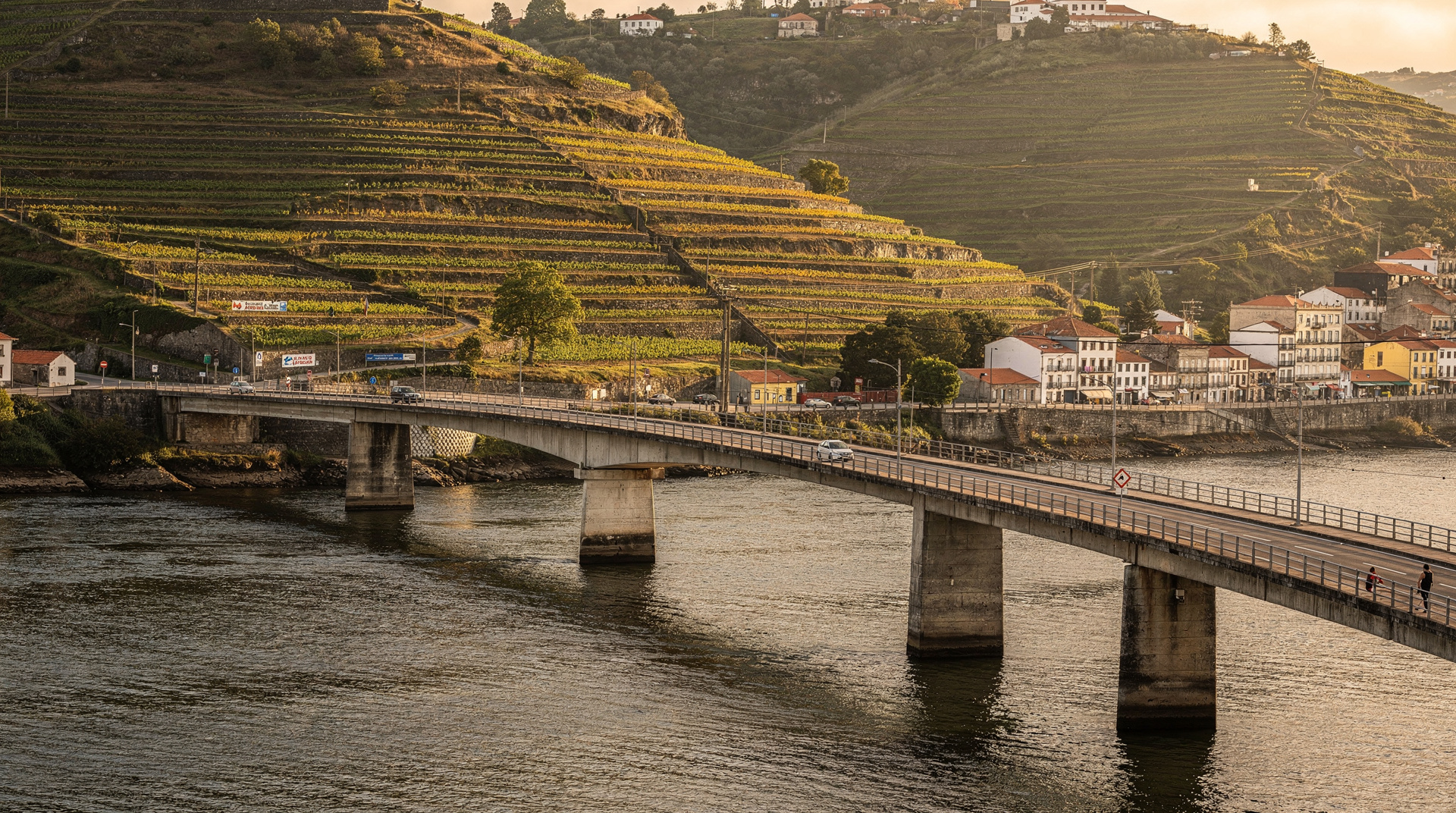
Pinhão is a small village: a handful of restaurants, a few accommodation options, a central square, the river directly behind the station, and vineyards immediately above. Its modest scale is part of the point — you’re in the middle of the valley, not in a tourist infrastructure. The restaurants on the main square are genuinely good (lunch for 12-16 € per person including wine) and not significantly touristic. Our Pinhão guide and Destination: Pinhão page cover the village in more depth, including which quintas are realistically walkable.
From Pinhão, the options:
- Take the train back to Porto (the return journey is equally good, different light angle)
- Walk or taxi to a nearby quinta for a tasting (Quinta da Foz is a 20-minute walk; others require a taxi)
- Continue by train to Tua or Pocinho (additional scenery, diminishing returns for first-time visitors)
What the train doesn’t give you
The railway gives you the Douro from water level, looking up. This is magnificent. What it doesn’t give you is the quinta access that makes the Douro experience complete.
The working wine estates — Quinta do Crasto, Quinta Nova, Quinta do Tedo, Quinta da Pacheca — are not reachable on foot from the railway stations. They require a car or a taxi (available from Régua and Pinhão, expensive for multiple stops). The train shows you the landscape; a car or guided tour shows you the wineries.
For a first visit to the Douro where you want both landscape and quinta visits: consider a guided tour by road for the outward journey and a train ticket back from Pinhão. Some guided tours offer this combination.
For a repeat Douro visitor who knows the quintas: the train is a pure landscape journey and a different pleasure from the road.
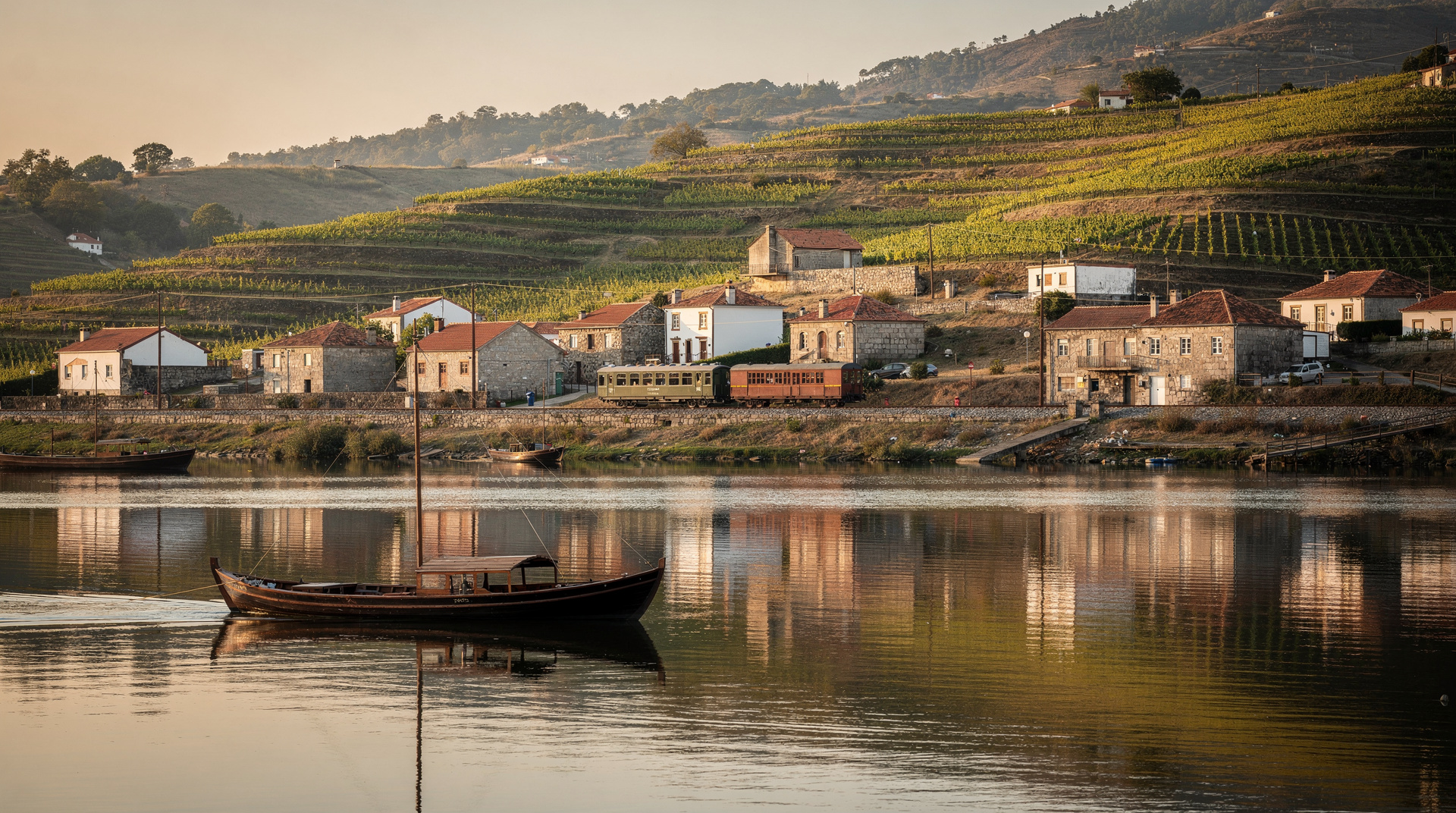
Douro river, train, and boat combined with lunch — uses both the railway and the river in a single dayPractical information
Tickets: CP (Comboios de Portugal) website or at Campanhã station. The regional Douro train (not the Alfa Pendular, which stops at Régua only) is the route to Pinhão. Cost from Porto to Pinhão: approximately 10-12 € single, check current prices.
Journey time: Porto-Régua approximately 1h40, Porto-Pinhão approximately 2h20-2h30.
Frequency: several services per day but not hourly. Check the CP timetable and plan your return — missing the last return train from Pinhão leaves limited options (taxi to Régua, which has later trains, or a taxi all the way back to Porto).
Best seats: for the Porto-Pinhão direction, sit on the left side for the final stretch approaching Pinhão — the river and best vineyard views are left-side as you travel east.
Photography: the train windows are not always clean and you can’t always open them. The views are best in morning light (eastbound) and late afternoon (westbound). Don’t use a tripod.
Porto-Régua rail and river sail — uses both modes for the return journeyOur 4-night Douro wine lovers itinerary shows how the train integrates with a multi-day valley visit including quinta accommodation. For the fuller comparison of train, car and guided tour, see our Douro by train vs. car vs. tour guide and is the Douro tour worth it? piece.
Train vs. car vs. guided tour
| Train | Self-drive | Guided tour | |
|---|---|---|---|
| Scenery | Best water-level views, Régua-Pinhão section | Good, from above the valley | Good, driver handles the roads |
| Quinta access | None without a taxi | Full flexibility | Included, usually 1–2 quintas |
| Cost | 10–12 € each way | Car rental + fuel + parking | 60–120 € per person, all-in |
| Effort | Lowest | Highest (mountain roads, N222 hairpins) | Low |
| Best for | Landscape purists, repeat visitors | Visitors with a specific quinta list | First-timers wanting both scenery and wine |
Combining the train with a quinta visit
If you don’t want to choose between the railway’s water-level views and an actual wine estate, the practical fix is to take the train one way and arrange a car or taxi for the other, timing it around a single quinta stop near Pinhão or Régua. Our best Douro quintas we visited piece flags which estates are realistically reachable this way — Quinta da Foz, walkable from Pinhão station, is the easiest option for train-only travellers who still want a proper tasting.
When to take this specific train
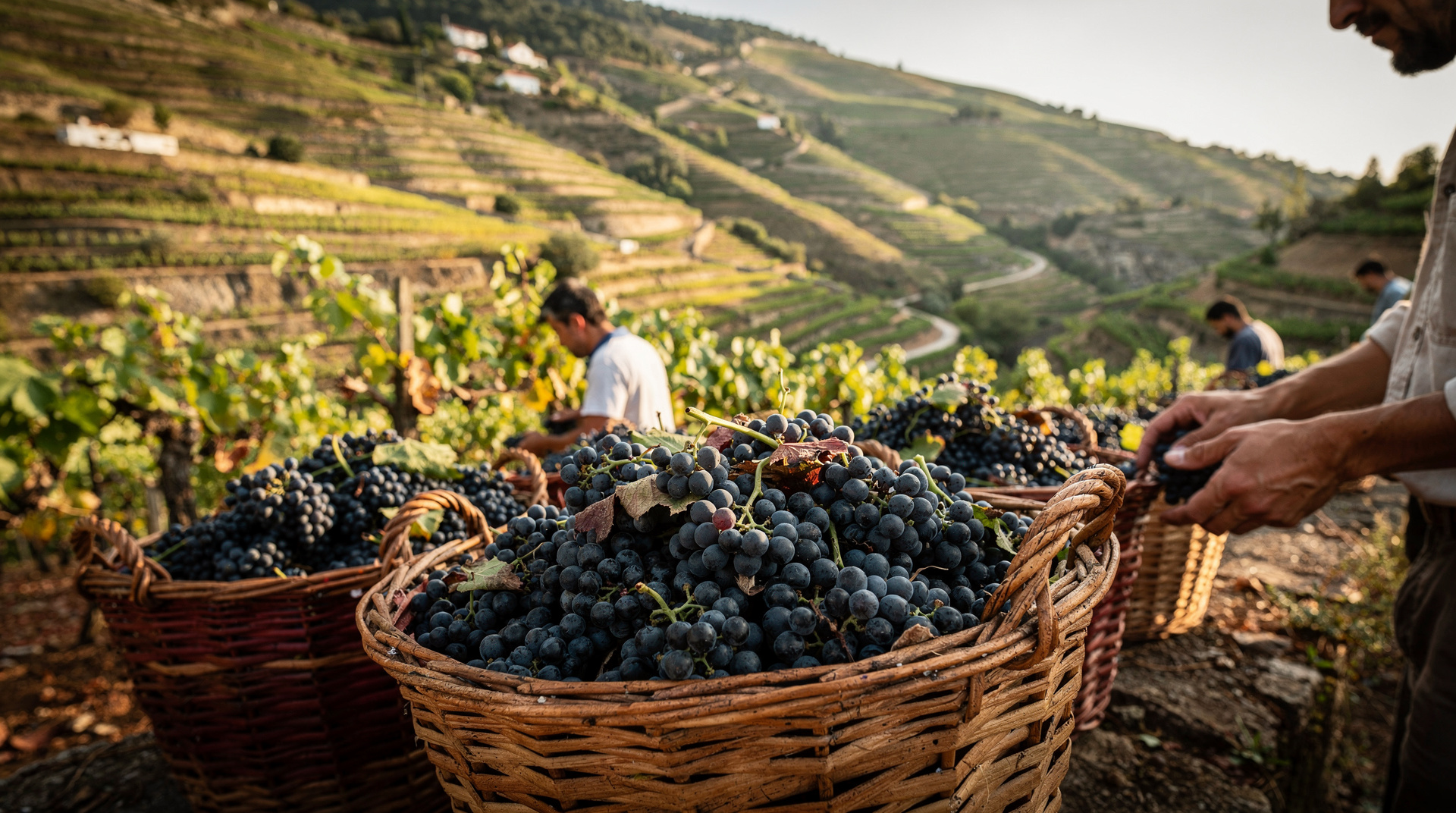
The Régua-Pinhão stretch looks different by season, and it’s worth timing the trip if you have flexibility. During vindima (mid-September to early October) the terraces are at their most active, with harvest work visible from the train itself — our vindima harvest diary covers that specific window. In spring, the vines are a fresh green rather than the late-summer brown-gold, which some photographers prefer.
Frequently asked questions
Which station do I leave from for the Douro train? Campanhã, not São Bento — this catches many first-time visitors out. São Bento is the famous tiled station in the historic centre, but it only handles suburban routes; the scenic Douro line departs from Campanhã, about 10 minutes by metro from the centre.
Can I visit a quinta directly from the train? Only a small number are walkable — Quinta da Foz near Pinhão is the main example, at about a 20-minute walk from the station. Most working estates require a car or taxi, which is the train’s main limitation compared to a guided tour or self-drive.