Pinhão — the Douro Valley's most rewarding base
Complete guide to Pinhão: best quintas, rabelo boat trips, the azulejo station, where to stay and eat, and how to get there from Porto by train.
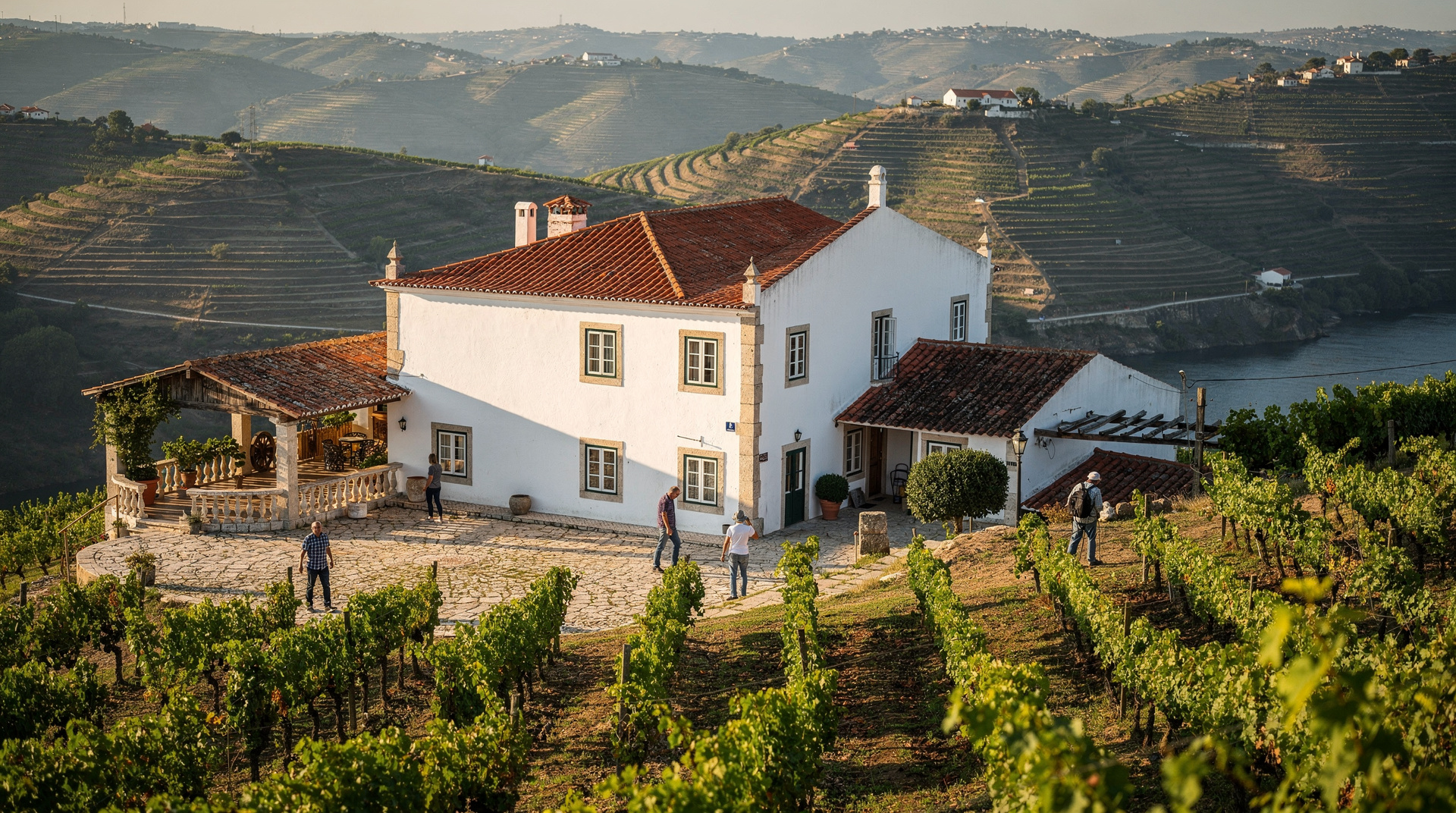
Pinhão: Pinhao Quinta do Bomfim Visit and Tasting
Quick facts
- From Porto
- ~2 h by train (Campanhã → Pinhão), ~1 h 45 min by car
- Best for
- Wine tourism, quinta visits, vindima season
- Vindima
- Mid-September to early October
- Currency
- Euro (€)
- Quinta visit cost
- 15–30 € with tasting
Where the Douro bends and the quintas begin
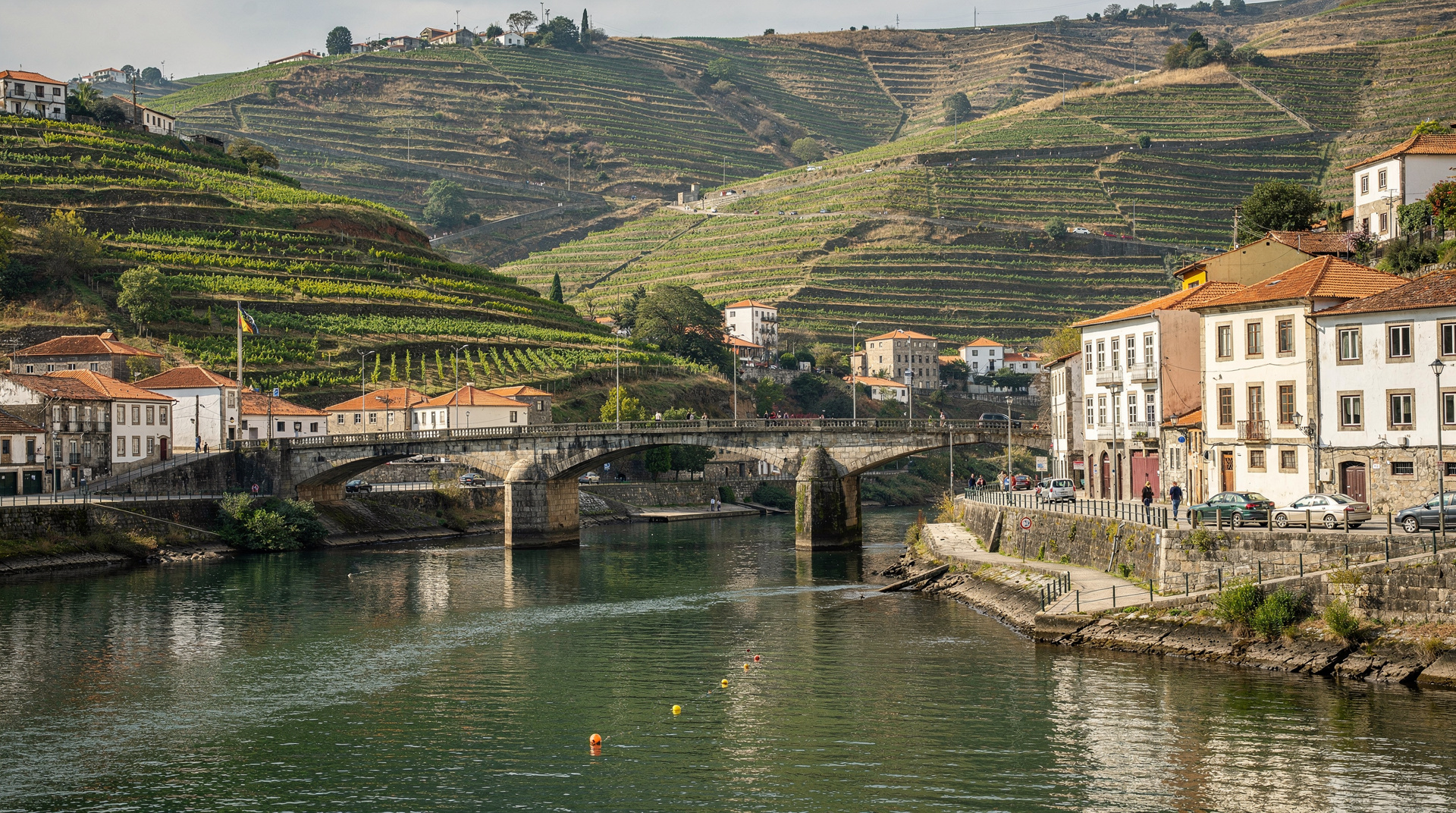
Pinhão sits at one of the most photographed bends in the Douro Valley, roughly 120 kilometres east of Porto at the point where the Rio Pinhão joins the main river. The schist terraces above the town hold some of the region’s most concentrated planting — port wine grapes covering every viable slope in a formation that earned the Upper Douro its UNESCO World Heritage status in 2001. Standing on the river bank in late afternoon, with the terraces catching the low sun and a laden rabelo moored nearby, the view earns its reputation.
The town itself is small — fewer than 1,000 residents — and does not try to be more than it is: a working wine village with a handful of quintas open to visitors, a beautiful 1930s railway station, a cluster of restaurants and a few hotels. What Pinhão lacks in scale it makes up for in density of interest — the whole centre is walkable in ten minutes, so the limited size is rarely a practical drawback. That restraint is part of its value. Unlike many wine destinations that have been smoothed into a tourist product, Pinhão still functions as a real agricultural community, and the autumn harvest (vindima) in mid-September to early October brings a focus and energy that no staged winery experience can replicate.
If you are based in Porto and want a single day in the Douro that goes beyond the standard tour-bus stop at Régua, Pinhão is where to aim. If you have two or three days, it is the most logical base for exploring the upper valley by car.
| Where | Upper Douro Valley, ~120 km east of Porto |
| Cost | Quinta visits 12–30 € with tasting |
| Time needed | Full day; 1–2 nights for a fuller upper-valley base |
| Getting there | Train from Porto Campanhã (~2h) or car (~1h45) |
| Best time | September–October (vindima) or April–June |
What to do in Pinhão
The azulejo panels at Pinhão station
The railway station at Pinhão (built 1937) contains one of Portugal’s finest small collections of blue-and-white azulejo panels. The 24 panels by artist João Pereira line the waiting hall and depict scenes from traditional Douro life: grape-treading, barrel-rolling, harvest celebrations and river transport. Entry is free during train station hours — simply walk in. The panels are at their best in the morning light, and the station itself is quiet enough outside arrival times to allow a genuine look. It takes perhaps 15 minutes; combine it with breakfast at the café attached to the station building.
Quinta do Bomfim
Symington Family Estates’ Quinta do Bomfim is one of the most visitor-friendly quintas in the upper Douro. Located a short walk from Pinhão’s riverside, it offers self-guided and guided tours of the lagares (stone wine-pressing tanks), the adega and the terraced vineyards, followed by tastings of its Dow’s and Cockburn’s ports. A guided visit and tasting at Quinta do Bomfim costs around 15–25 € per person and runs several times daily between April and October. The quinta’s wine shop stocks bottles not always found in Porto, including older vintages at producer prices. Reserve in advance during vindima.
Quinta de la Rosa
Quinta de la Rosa, a family-owned property a few kilometres from Pinhão, is one of the few quintas in the Douro that combines a full visitor experience — vineyard walk, traditional lagar, cellar tour — with accommodation. Day visitors can join a tasting for around 12–20 € without pre-booking outside high season, though calling ahead is wise. The property’s Douro DOC table wines are among the most interesting made in the region, and the quinta’s proximity to the river means the view from the tasting table is exceptional. The walk from the village follows a quiet stretch of riverside road with limited shade, so bring water in summer and allow 30–40 minutes each way at an unhurried pace.
Quinta da Foz
Quinta da Foz occupies the confluence (foz) of the Rio Pinhão with the Douro, making it one of the most scenically positioned estates in the upper valley. A five-wine tasting at Quinta da Foz offers an efficient introduction to both their port and DOC table wines; the guided format takes about 90 minutes and costs around 20–30 €. The quinta’s Alvaralhão and Touriga Nacional-based reds are particularly well regarded among Douro aficionados.
Rabelo boat trips from Pinhão
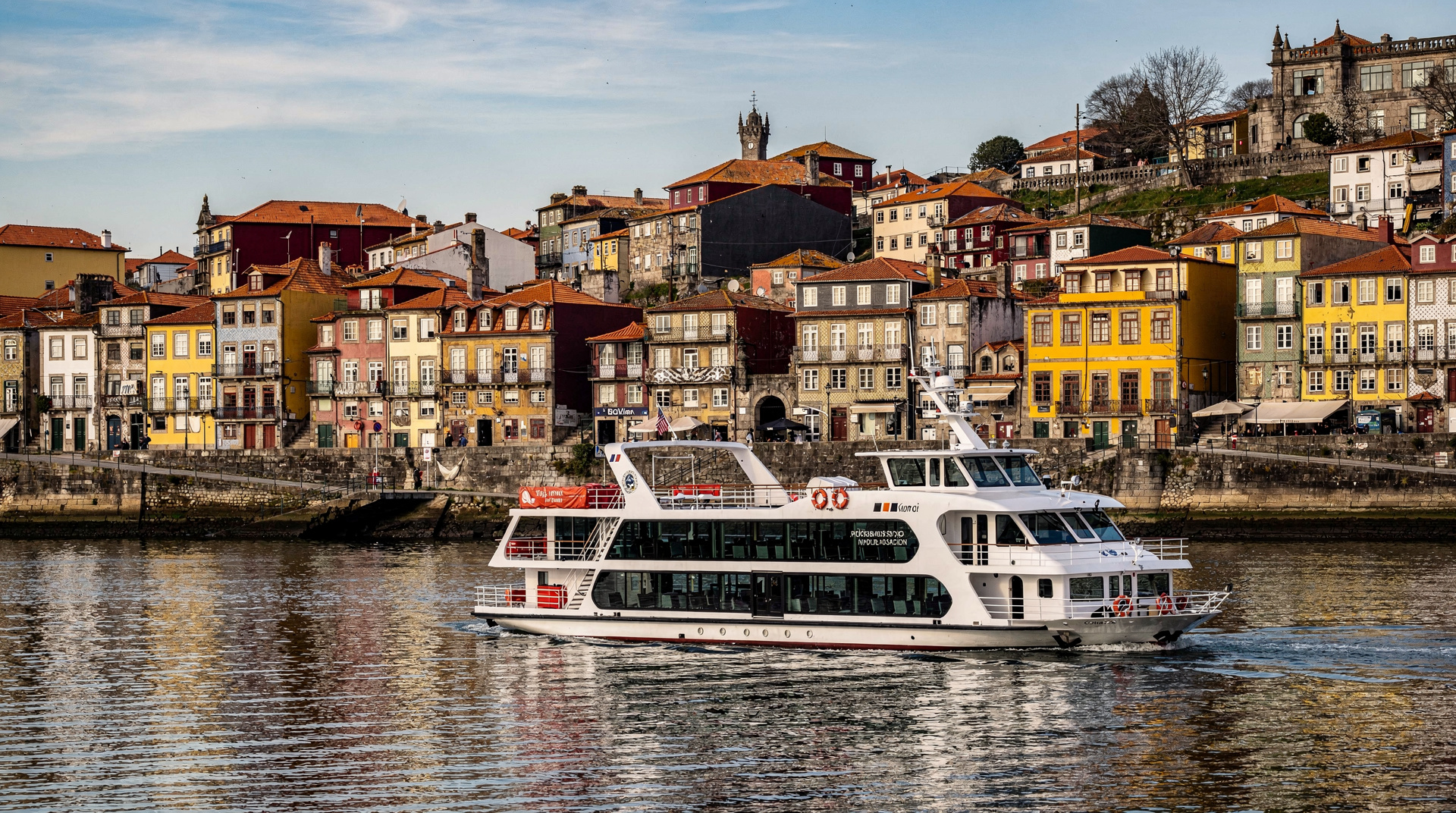
Taking a rabelo — the flat-bottomed wooden boat historically used to carry port wine barrels downriver — out on the Douro is the best way to see the terraced landscape from water level. A rabelo tour departing from Pinhão typically runs one to two hours and includes port wine tasting on board; expect to pay 18–30 € per person. The river is calm enough for a comfortable crossing year-round, but spring and autumn offer the best combination of mild temperatures and dramatic landscape colour. Kayak options are also available for visitors who prefer self-propelled exploration of the river — see our outdoor Douro guide for details. Longer boat trips from Pinhão, including the scenic run toward Régua, are compared in our Douro cruise from Pinhão guide, which is a useful companion piece if you want the river perspective without committing to a full-day cruise from Porto.
Vindima: the harvest season
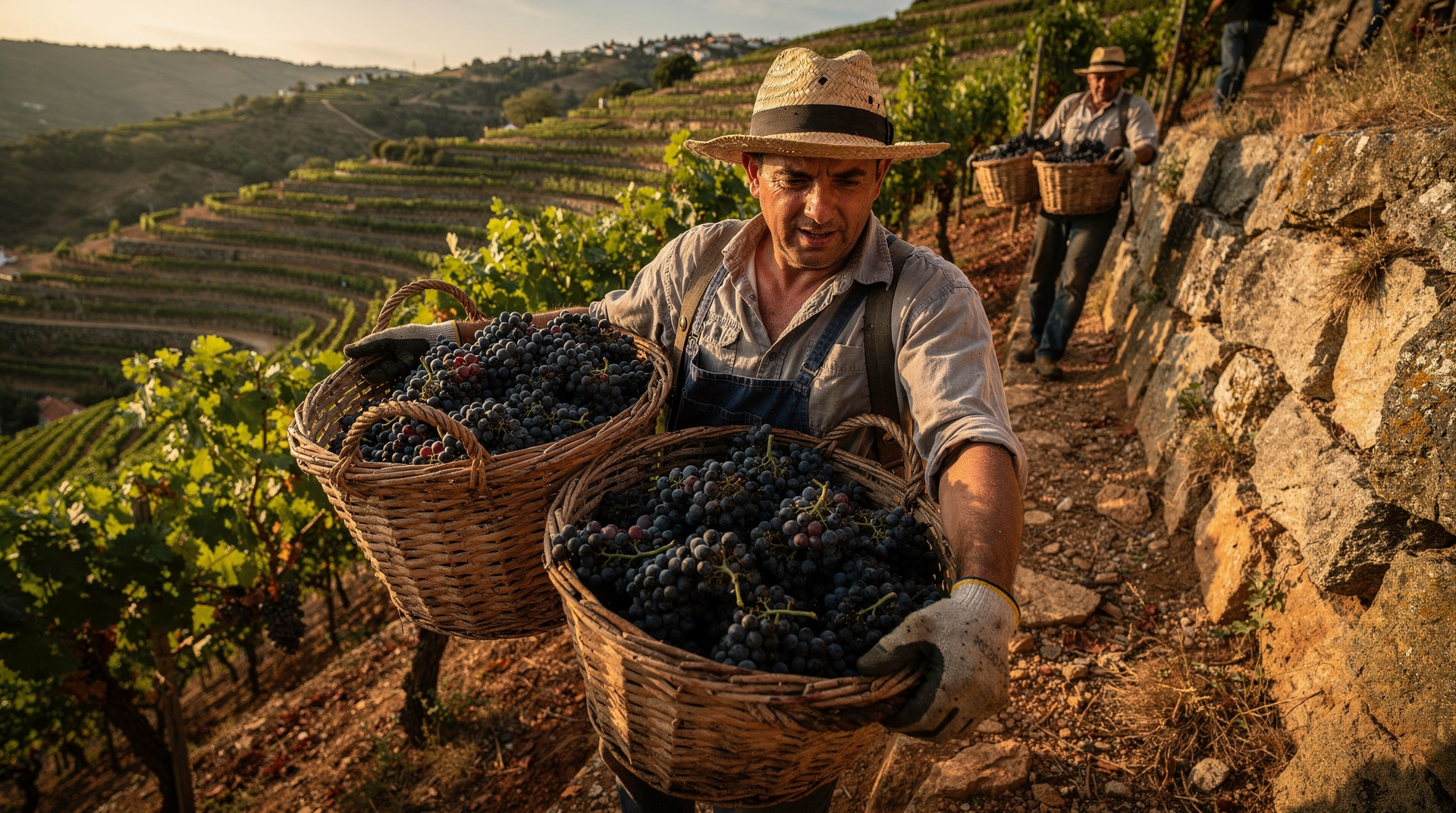
The vindima runs from approximately mid-September to early October, with timing varying by altitude and grape variety. During harvest, the quintas hire treaders (pisadores) for the traditional foot-treading of grapes in granite lagares — a practice that continues at heritage properties including Quinta do Bomfim and Quinta de la Rosa. Some quintas offer visitors the chance to participate in foot-treading for a few hours; this is a genuine physical activity, not a performance, and requires booking three to four months in advance. Our vindima guide covers which properties offer participation and what to expect.
Pinhão’s four main quintas compared
| Quinta | Distance from village | Tasting cost | Best for |
|---|---|---|---|
| Quinta do Bomfim | Walkable (~15 min) | 15–25 € | Car-free visitors, Dow’s and Cockburn’s ports |
| Quinta de la Rosa | ~2 km, walkable for fit visitors | 12–20 € | Table wines, riverside setting |
| Quinta da Foz | Short taxi ride | 20–30 € | Efficient 5-wine introduction |
| Quinta do Tedo (near Régua) | Requires a car | Varies with picnic option | Family-owned, riverside picnic |
For a wider ranking across the whole valley, not just Pinhão’s immediate surroundings, the best quintas in the Douro Valley guide covers properties near Peso da Régua and Lamego as well.
How to get to Pinhão from Porto
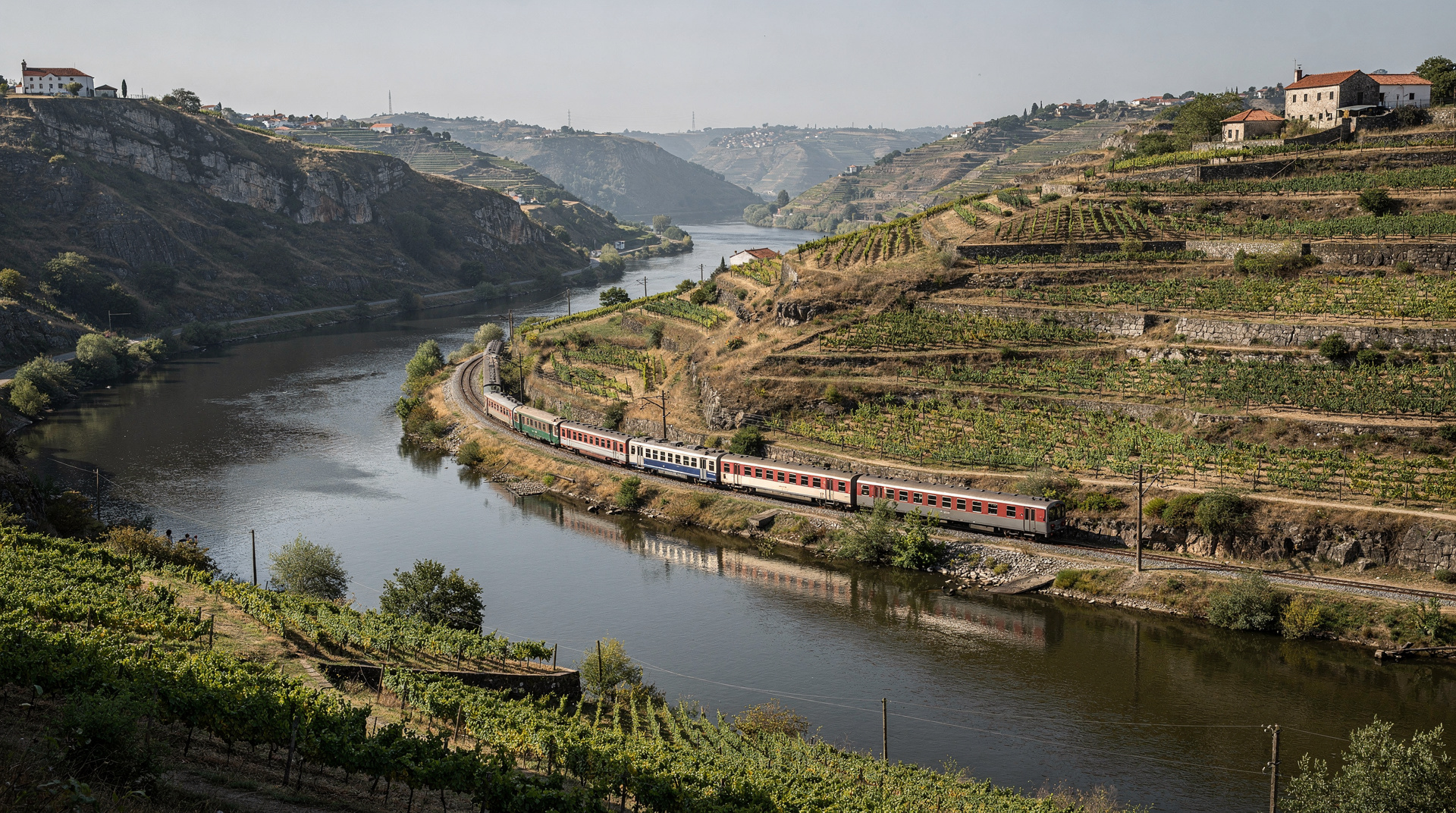
By train: The CP Douro line runs from Porto Campanhã (not São Bento — that station handles local services only) to Pinhão. Journey time is approximately 2 hours on the direct service; some trains require a change at Régua. The fare is around 10–12 € each way in second class. The scenery from Tua onwards is exceptional, particularly the stretch between Régua and Pinhão where the line hugs the river bank. Book at cp.pt — trains fill during vindima and summer weekends.
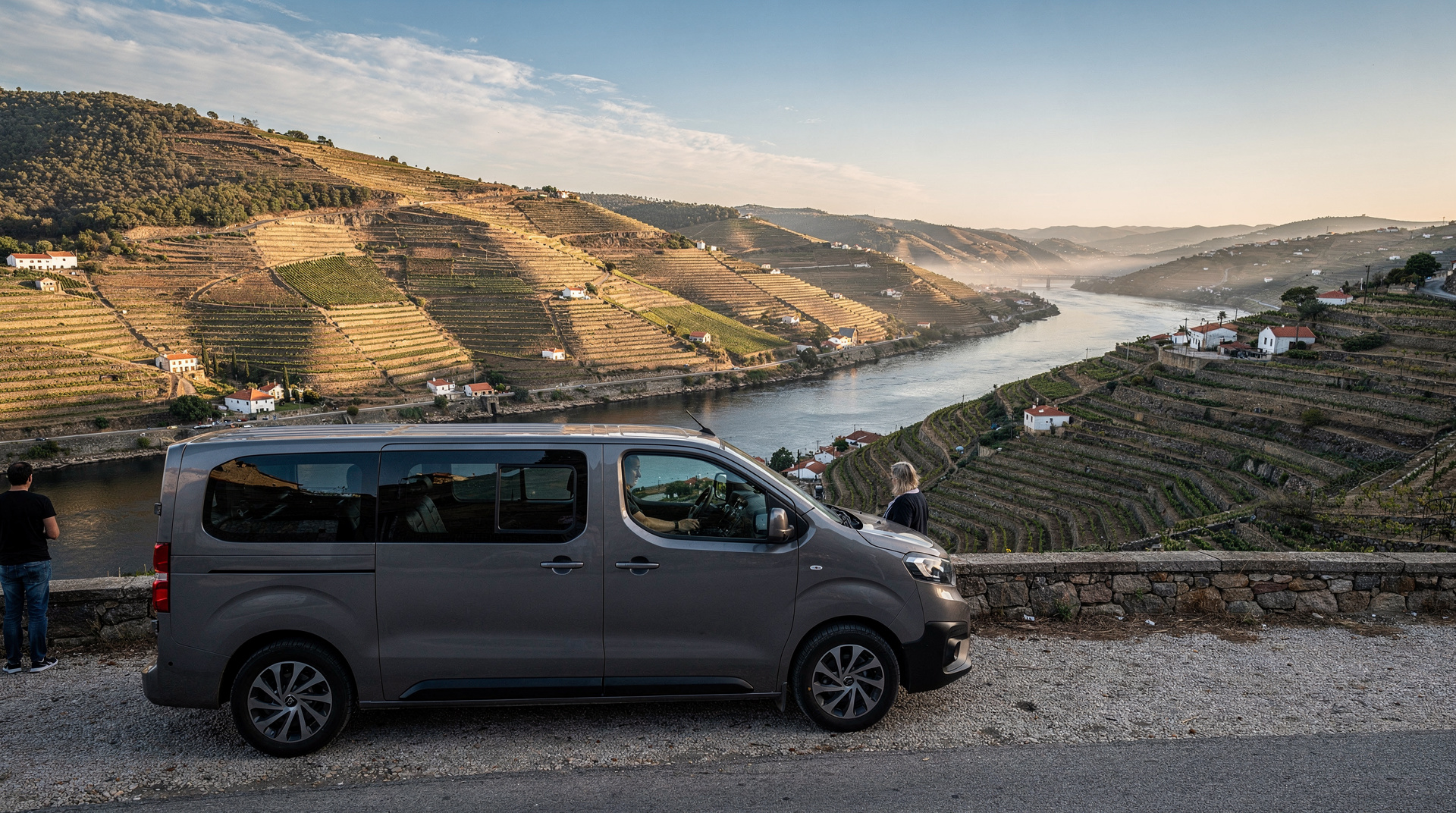
By car: The drive from Porto via the A4 motorway to Marco de Canaveses, then the N222 or N108 along the Douro, takes roughly 1 hour 45 minutes in light traffic. The N222 between Régua and Pinhão is one of Portugal’s most scenic roads and worth taking even if the motorway is faster. Note that parking in Pinhão village is limited; most quintas have their own parking. There is no Uber or Bolt service in Pinhão — if you arrive without a car, transport between quintas requires either a taxi (arrange in advance through your hotel) or a tour that includes transport.
By organised tour from Porto: Full-day tours departing Porto at 8–9 am typically include two quinta visits, lunch and either a boat trip or train segment, returning to Porto around 7–8 pm. These tours handle all logistics and are the right choice for visitors without a car who want a productive day. Our Douro day trip guide compares the main options with honest assessments of which tours are worth the price.
Where to stay in Pinhão
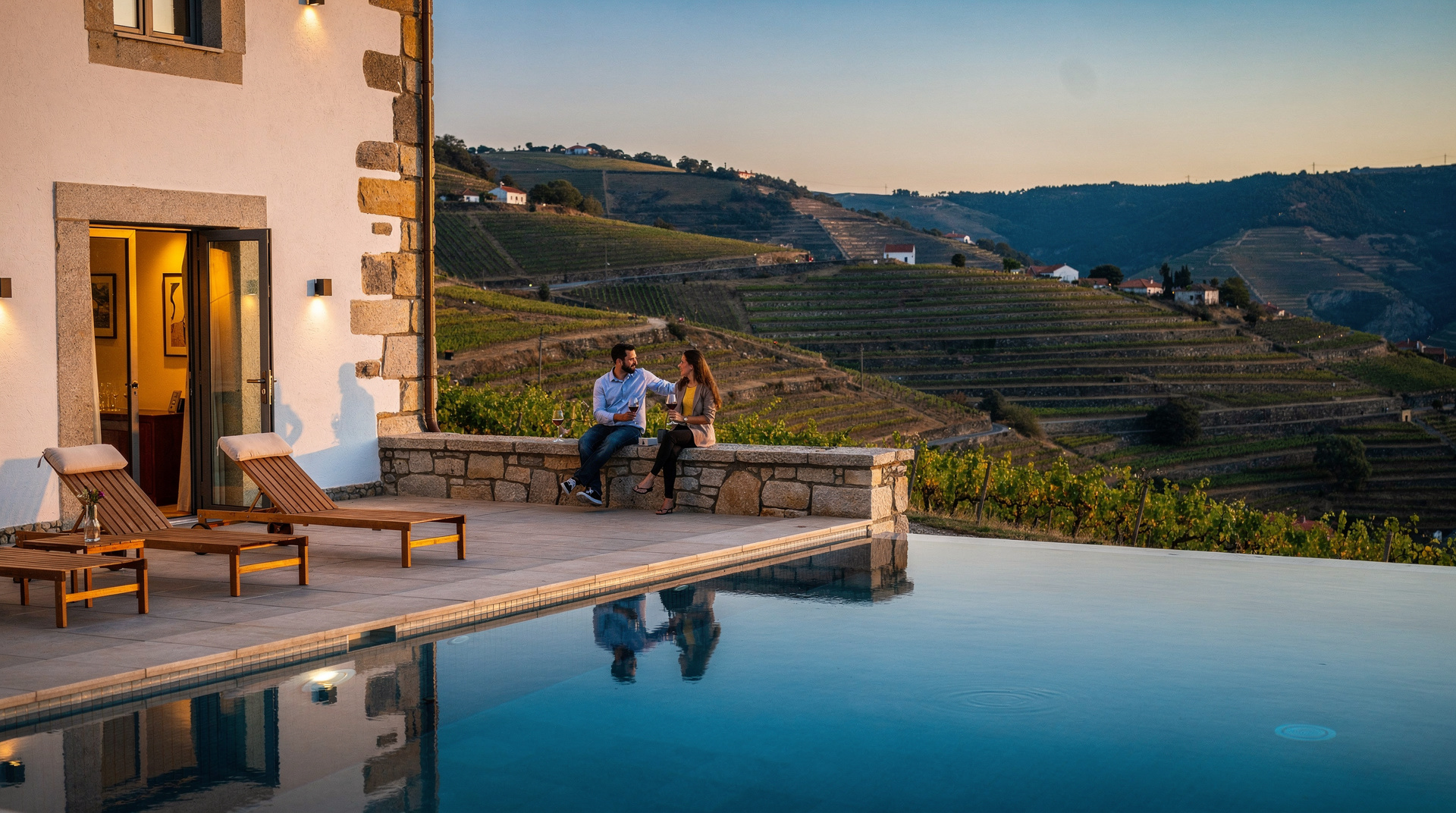
Vintage House Hotel (4-star, on the river at Pinhão) is the most established hotel in the village, with rooms facing the Douro and a kitchen that takes the local cuisine seriously. Rates run 130–250 € per night in season. It is the most comfortable base if you plan to spend two or more days in the upper valley. The pool terrace, overlooking the river bend, is one of the better places in the valley to end a day of quinta visits with a glass of wine rather than driving straight back to a hotel elsewhere.
Quinta de la Rosa offers rooms in a converted manor house within a working quinta, with direct access to vineyards and the river. Accommodation comes with a sense of real engagement with the estate — breakfast uses the quinta’s own olive oil and jams. Rates around 100–160 € per night.
Quinta do Bomfim has a small number of guest rooms overlooking the vineyard terraces. These book quickly in vindima season; reserve four to five months in advance if September or October is your target.
For a wider comparison of where to base yourself in the Douro, the where to stay in the Douro Valley guide covers everything from quintas to agri-tourism properties near Régua.
Combining Pinhão with Régua and Lamego
Visitors staying two or three nights in the upper valley often use Pinhão as a base and take the train or a short drive to Peso da Régua for the wine museum, or continue further to Lamego for its baroque sanctuary and sparkling wine house — a genuinely different register from Pinhão’s wine-village focus. This kind of multi-stop stay fits naturally into the northern Portugal 7-day itinerary, which sequences the Douro alongside the Minho cities and the coast.
Where to eat in Pinhão
Rabelo Restaurante (at Vintage House Hotel) is the most reliable kitchen in Pinhão, serving updated versions of regional dishes: bacalhau à Lagareiro (salt cod with olive oil and roasted potatoes), polvo assado (roasted octopus) and posta mirandesa (Douro beef) with local wines by the glass. Budget 30–45 € per person for a full meal. Reservations recommended in summer and vindima.
Café do Cais is a simpler option on the riverside, useful for lunch or a snack between quinta visits: bifanas (pork sandwiches), soup, and a daily special that changes with the market. Around 10–15 € for lunch. Outdoor tables face directly onto the Douro.
Most quintas that offer food do so through set lunch menus paired with their wines, which represent good value (typically 25–40 € including wine). Quinta do Bomfim and Quinta de la Rosa both serve lunch with advance booking, and pairing a quinta lunch with a morning tasting is often a more satisfying use of a day than treating the two as separate errands — the pace slows naturally once food and wine are combined at the same table.
Best time to visit Pinhão
September to early October is the peak for anyone interested in the harvest. The terraces are at their most active, the quintas are fully staffed and animated, and the landscape turns from green to copper as the season progresses. Book everything — hotel, quinta visits, tours — three to four months in advance.
April to June offers mild weather, uncrowded quintas, and the vines in new growth. Late May to mid-June is when the vines flower, giving the valley a faintly sweet scent in the evenings. This is the best window for visitors who want good conditions without the competition for quinta reservations.
July and August are hot (often above 35°C in the valley), and the Douro can feel sun-blasted by midday. Early morning visits and late afternoon river time work best. Tourist numbers are high and quinta bookings fill quickly.
November to March: The valley is quiet, green from winter rain, and the quintas scale back visitor operations. Many smaller quintas close to visitors entirely; Quinta do Bomfim and larger Symington estates remain open. The Vintage House Hotel closes for a period in January.
Practical tips
- Book quinta visits at least a week in advance from May to October; three to four months in advance for vindima.
- The village has a small supermarket, one ATM and a pharmacy. Stock up on supplies in Régua (25 km west) if you are self-catering.
- The CP train schedule has gaps — check the timetable before committing to a return time, as there may be only four to five trains per day in each direction.
- Quinta visits typically last 60–90 minutes plus travel time. Planning three quintas in a single day requires a car and realistic timing.
- The N222 between Régua and Pinhão is classified as one of the world’s best driving roads by publications including Top Gear; it is worth the extra 20 minutes over the motorway.
- Quinta shops often sell wine at lower prices than Porto retail; if you buy bottles, pack them with clothes in your luggage to protect them.
Frequently asked questions about Pinhão
Is Pinhão worth visiting without a car?
Yes, with realistic expectations. The train journey from Porto is genuinely scenic and delivers you to the village centre. From the station, Quinta do Bomfim is walkable (about 15 minutes along the riverside), and Quinta da Foz is a short taxi ride. Quinta de la Rosa is manageable on foot for fit walkers (~2 km). The limitation without a car is that you cannot combine multiple quintas efficiently, and transport back to the station in the evening requires either hotel arrangement or a pre-booked taxi. For a structured day with transport included, an organised tour from Porto solves the logistics.
How many quintas can I visit in a day in Pinhão?
Realistically, two to three quintas make for a full and satisfying day. Each visit with tasting runs 60–90 minutes; factor in travel time between properties (10–20 minutes by car), lunch (allow 1.5 hours at a quinta table), and the drive back to your base. Trying to fit in four or five quintas results in rushing through tastings that deserve attention.
When exactly does the vindima happen?
The harvest in the upper Douro typically begins around the second week of September for white grapes at lower altitudes, progressing to red varieties and higher terraces through to early October. The exact dates shift by ten to fourteen days depending on the vintage and weather conditions. Properties announce harvest dates in late August; if you have a specific quinta in mind for harvest participation, contact them directly in June or July to get on their list.
What is the difference between a port wine quinta and a regular winery visit?
Most Douro quintas produce both port wine and still DOC table wines (Douro DOC). A quinta visit typically covers both, with the tasting including a selection across both styles. Port wine production requires a declaration of the volume to be made each year, which is controlled by the Instituto dos Vinhos do Douro e do Porto — so the same grapes may produce port, or dry wine, depending on the year’s authorisation. Understanding this helps explain why a quinta like Quinta de la Rosa puts equal emphasis on its table wines as on its port.
Is the Pinhão train station worth visiting even if I’m not taking the train?
Yes. The azulejo panels are among the finest accessible examples of 20th-century Portuguese tile painting, and the station is small enough that the entire collection can be absorbed in 15–20 minutes. Visits are free. The station café (open during train station hours) serves decent coffee and pastries. If you are driving, there is parking near the riverside 200 metres from the station entrance.
Top experiences
Bookable activities with verified prices and instant confirmation on GetYourGuide.