Vindima diary: five days during the Douro harvest
What vindima actually means
The word vindima comes from the Latin vindemia — grape harvest — and it refers to the period, roughly mid-September through the first week of October, when the Douro Valley suspends its normal rhythms and focuses entirely on getting grapes off the slopes and into the lagares before the autumn rains come.
| When | Mid-September to first week of October |
| Where we stayed | Quinta near Pinhão, road to Foz do Côa |
| Getting there | Train Porto-Pinhão, ~2h30, ~10 € |
| Booking window | 4-6 months ahead for quinta accommodation |
| Cost | 150-400 €/night, quinta accommodation, meals often included |
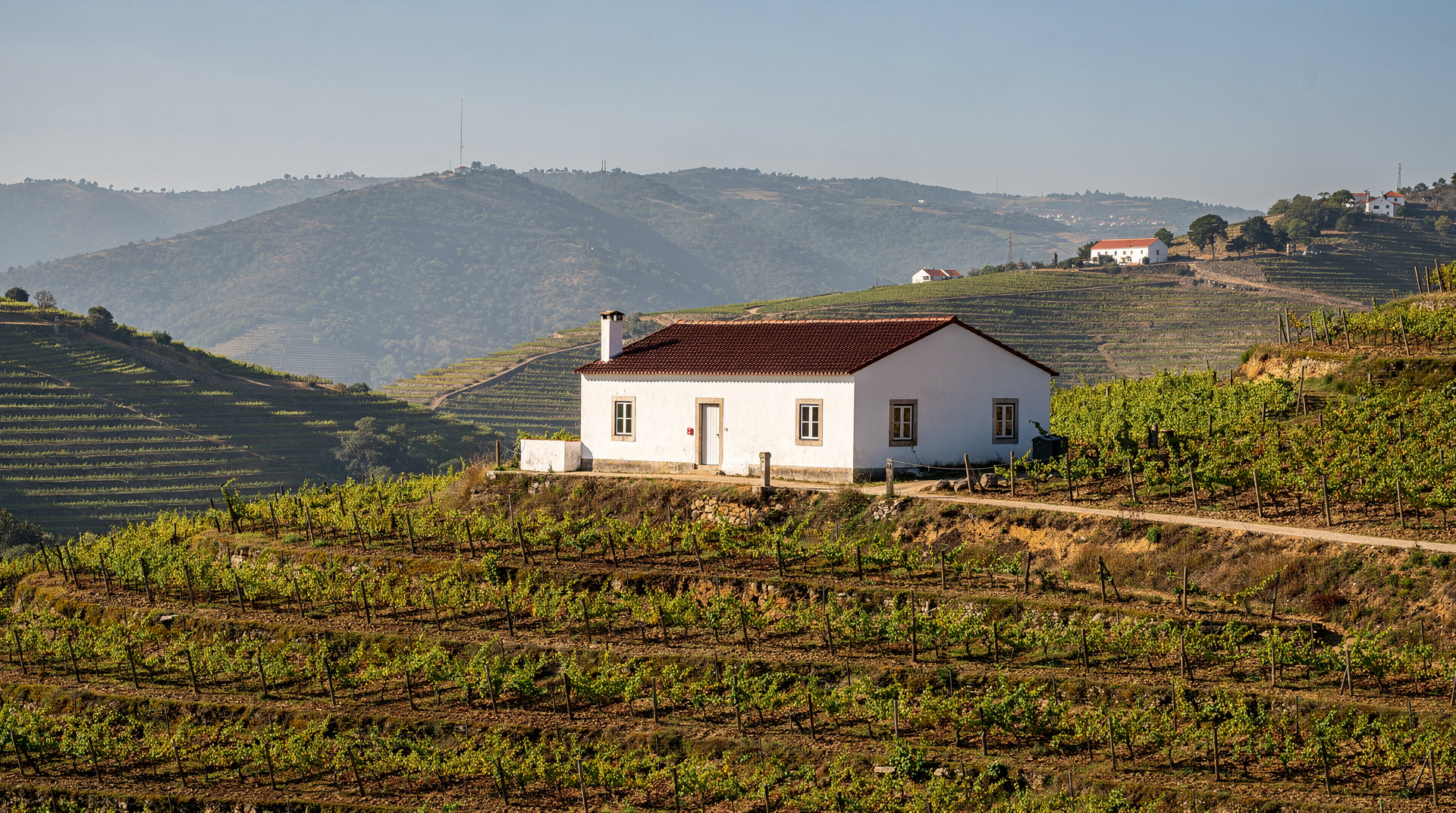
We arrived in Pinhão on the 14th of September having booked three nights at a small quinta on the road to Foz do Côa. The booking had been harder than expected: vindima is not secret, and the best quintas with visitor accommodation fill up months in advance. We’d secured our place in June.
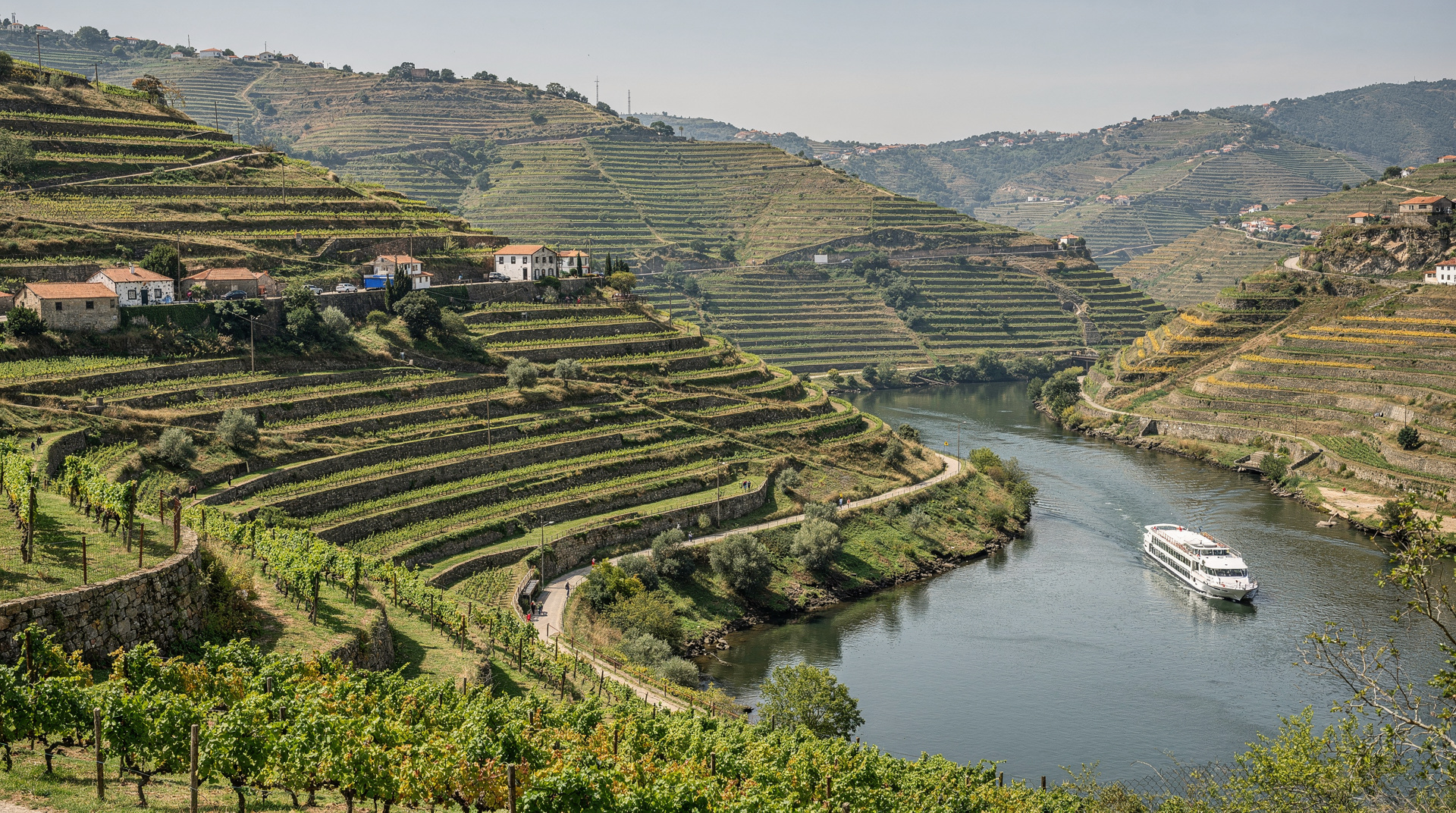
The train from Porto to Pinhão takes about two and a half hours and costs around 10 €. It’s one of the finest rail journeys in Europe: the line follows the Douro east from Porto, climbing through gorges and pine forest before emerging into the schist-and-vine landscape of the Douro DOC. By the time you reach Pinhão, the hillsides are terraced green on both sides of the river. In late September, those terraces are alive with pickers.
Day one: understanding the scale
Our quinta was a working estate, not a tourism operation that also happened to grow grapes. This distinction matters. The lagares — the granite tanks where grapes are crushed — were being hosed down when we arrived. Three tractors were moving up and down the access tracks. The smell of fermenting grape juice was already in the air.
The quinta manager, a compact, precise man in his fifties who had been working harvests here for thirty years, showed us around briefly and explained the rules: guests were welcome to watch operations, could join the lagar treading session on the second evening if they wanted, but should stay out of the way during picking hours.
Treading grapes — standing in a granite tank up to your knees in fruit, walking in time with a row of other people to the rhythm of an accordion — is one of those experiences that sounds like a tourist cliché until you’re actually doing it. The juice is cold and unexpectedly sticky. Your feet turn purple. You understand, in a physical way, why this method is still used for some premium ports: it’s gentle enough not to crack the pips, which would release bitter tannins.
Quinta Pacheca — one of the best vindima visitor experiences in the DouroDay two: the picking
We were up at 6am. Not because we had to be — guests don’t pick — but because the operation starts at first light when the grapes are still cool, and we wanted to see it. The picking teams — typically eight to twelve people per section, working downhill — move through the terraces with a speed that makes amateur grape-picking demonstrations look embarrassing. An experienced picker does in twenty minutes what we attempted in an hour.
The grapes come down the slopes in plastic crates on trailers pulled by small tractors that can navigate the steep narrow tracks. At the winery, they’re weighed, sorted, and either destemmed mechanically or pressed whole. The decisions about what goes where — which grapes become port, which become Douro DOC table wine, which are destined for high-end single-quinta productions — are made continuously through the day based on sugar levels, condition, and the cellar master’s instinct.
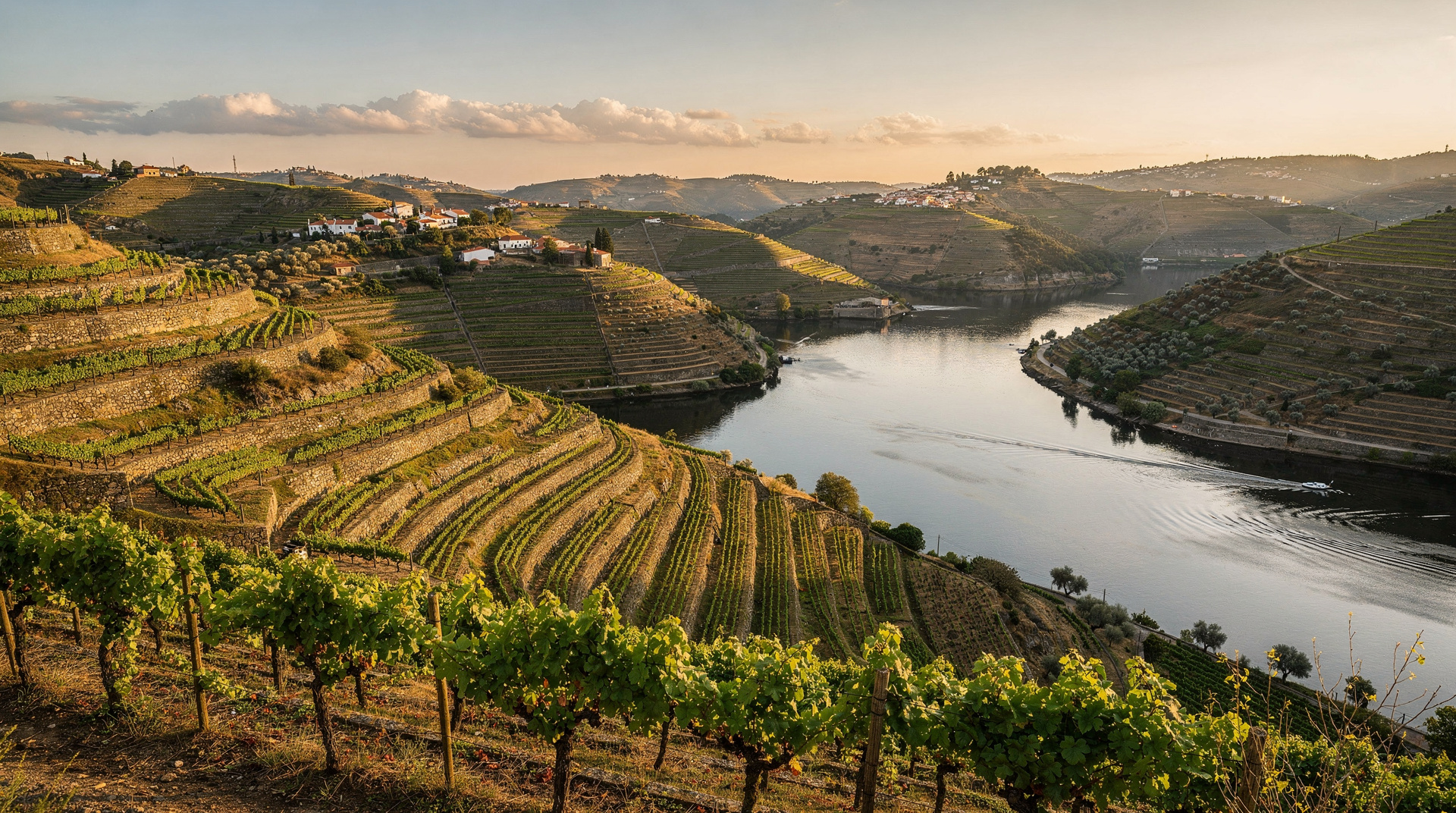
We drove along the river road to Peso da Régua for lunch — a small café near the train station, grilled fish, a carafe of local red, 16 € between two — then continued upstream to a viewpoint above the Tedo valley that we’d been tipped off about. In September, looking down at the terraced slopes from above, you understand why UNESCO gave this valley World Heritage status. There is no more geometrically dramatic cultivated landscape in Europe.
Day three: into the lagar
The second lagar session was scheduled for 9pm. We joined fourteen other people — the picking teams, a couple of other guests, the quinta’s visiting winemaker — in the cool granite tank. The grapes had been fermenting for two days and the juice was already warming from its own fermentation heat.
You stand in two rows facing each other, arms linked with the person next to you for stability, and you march in place. The grapes underfoot have the texture of very soft grapes, which is to say they collapse immediately and leave you walking through purple-stained juice and skin. After ninety minutes of this, the accordion player switches to something faster and the treading becomes less march, more dance. Someone produced a bottle of the previous year’s port. We drank it standing in the tank.
This is the vindima that the tourist brochures hint at but rarely describe honestly: it is physical, communal, slightly chaotic, and genuinely moving if you let it be.
Small-group Douro tour with winery visits — good alternative if quinta accommodation is unavailableDay four: downtime and Pinhão village
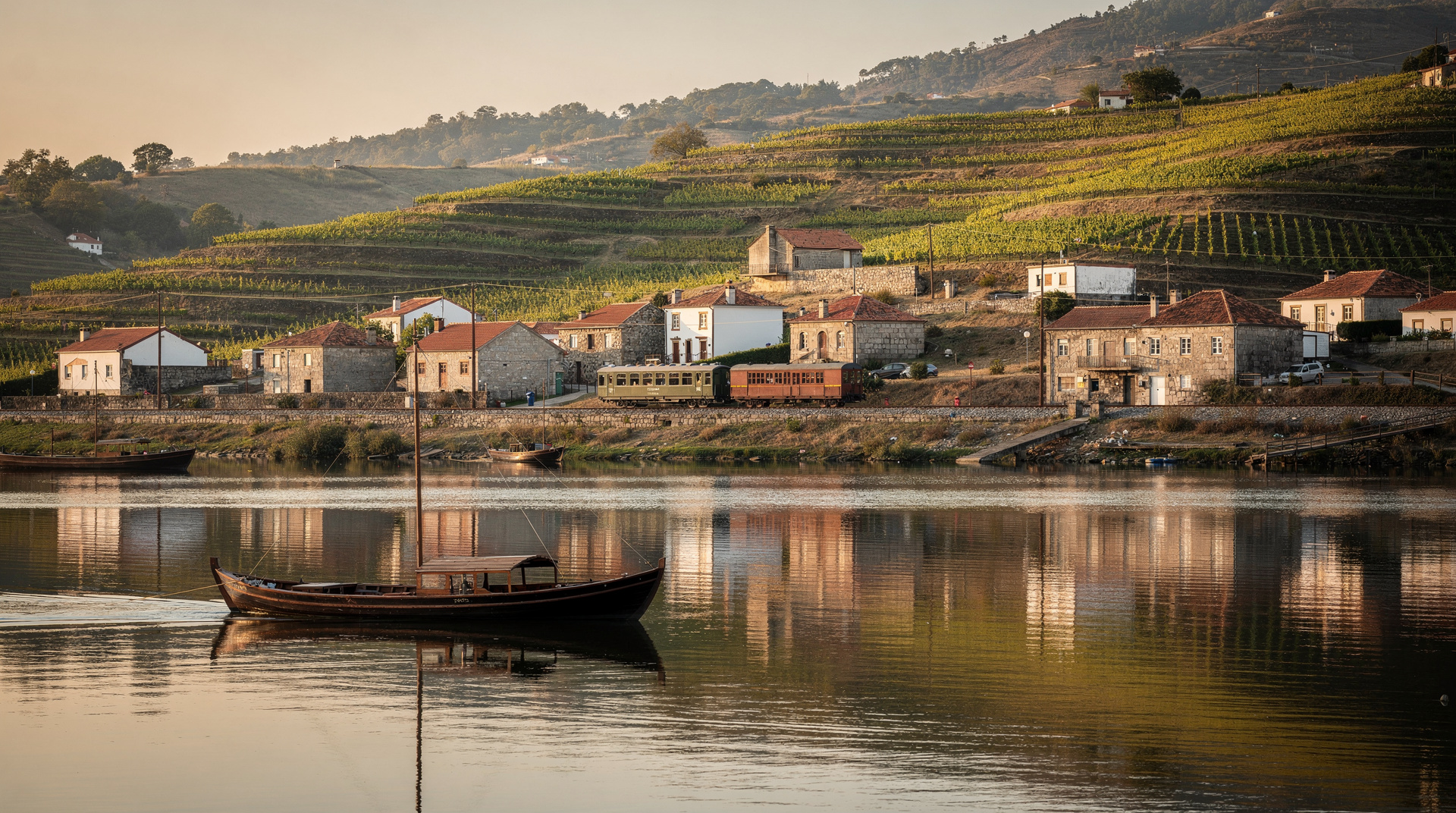
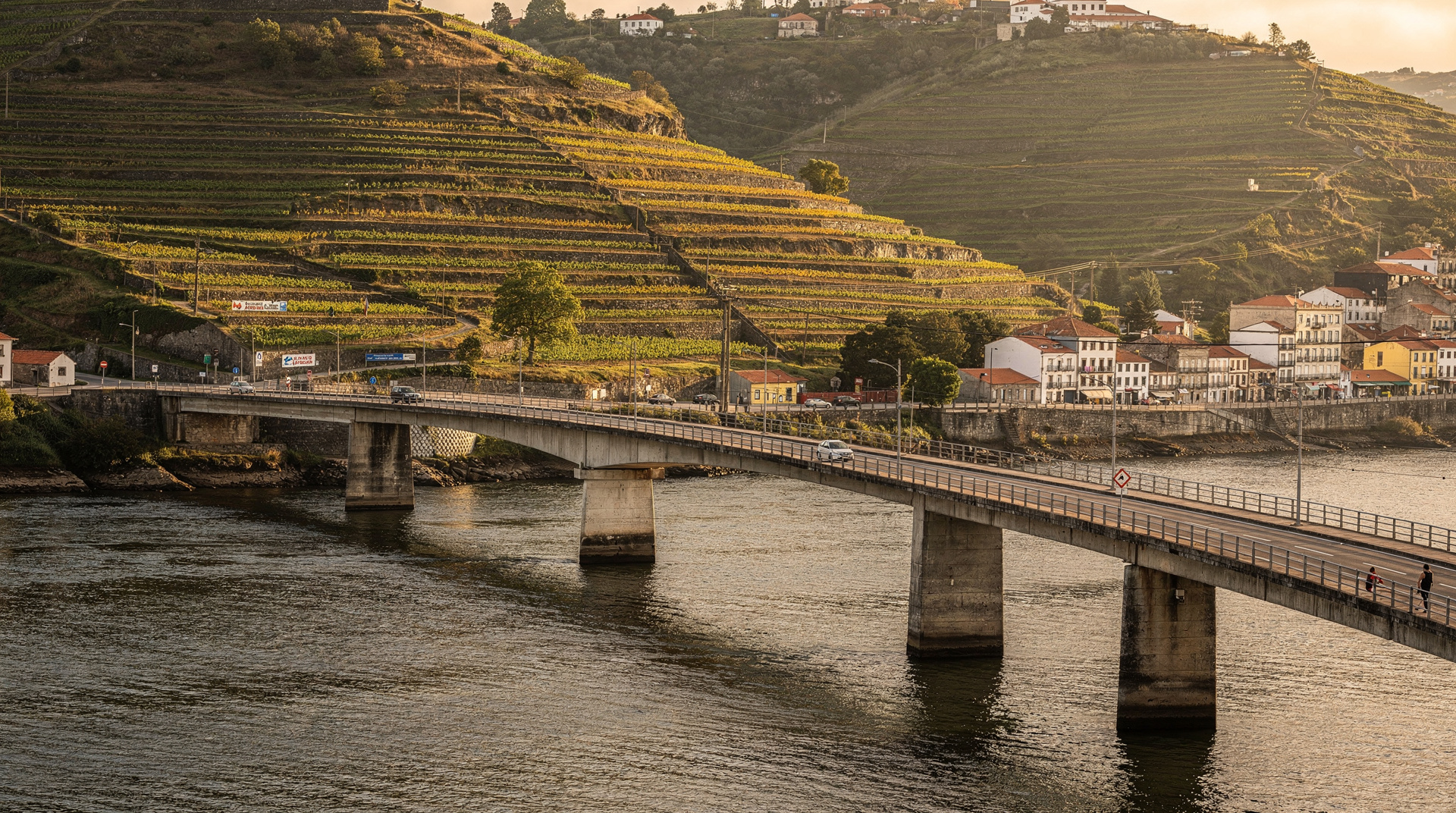
We took day four slowly. Walked from the quinta into Pinhão, a village whose train station is decorated with azulejo panels depicting the harvest and river transport of the Douro. The panels are from 1937 and show rabelo boats loaded with barrels of port, harvest scenes, vineyard workers. You can spend an hour at those panels without trying.
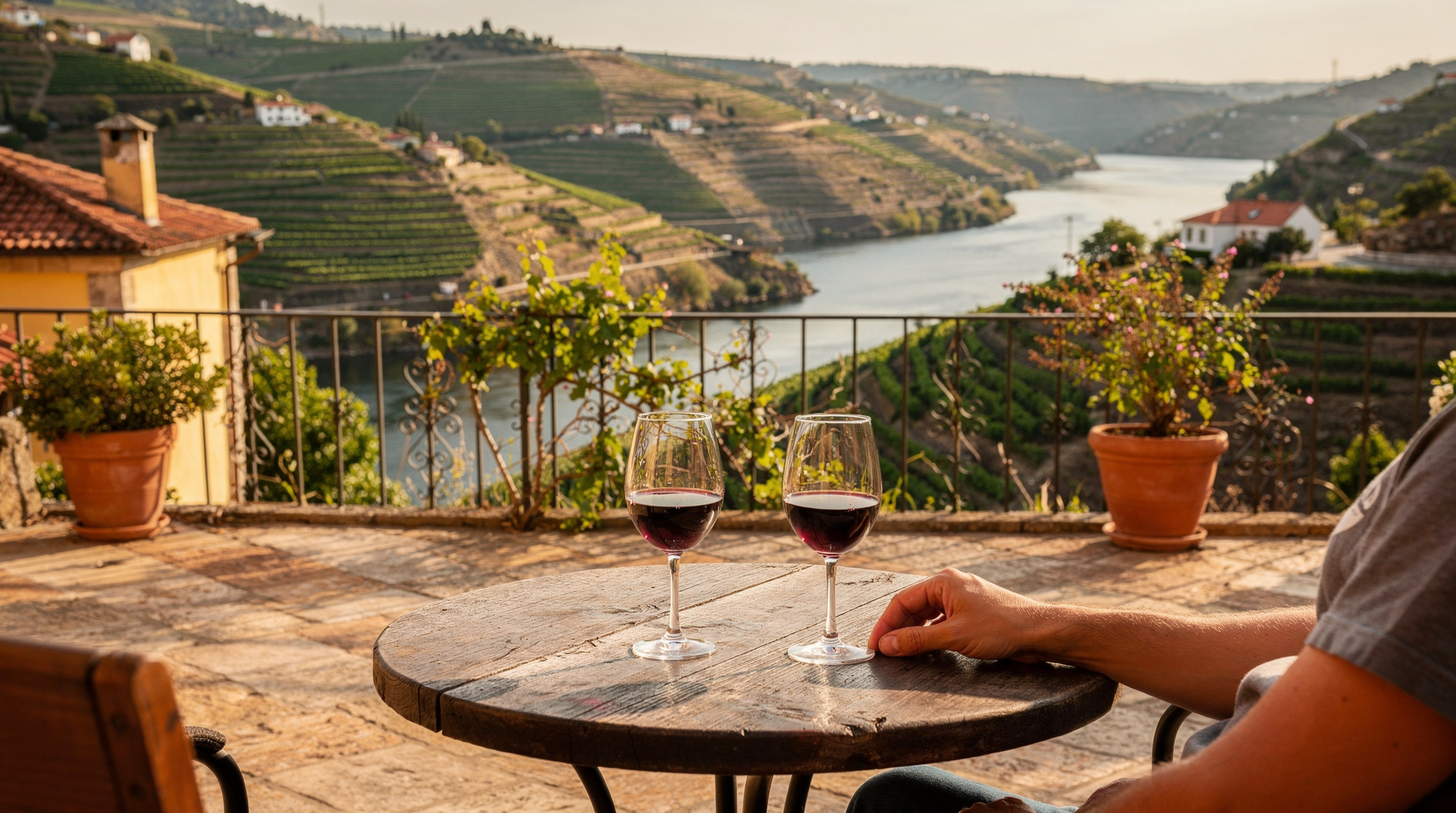
Lunch was at a small restaurant on Pinhão’s main square — bacalhau à brás, local wine, 18 € for two — then an afternoon on the quinta terrace watching the tractors move. By September’s end the light in the Douro turns amber in the late afternoon, the schist cliffs go gold, and the whole valley looks like a painting someone hasn’t finished yet.
We took a rabelo boat trip on the river, an hour upstream and back, watching the terraces from water level. From below, the Douro’s escarpment is vertiginous — vineyard terraces stacked hundreds of metres above the water, held in place by dry-stone walls built and maintained by hand over centuries.
Day five: leaving reluctantly
We took the train back from Pinhão on the last morning of September. The harvest wasn’t over — would run another week at least — and we left feeling like we’d seen a week of a months-long story. The picking teams were already out when we walked to the station at 7am, the sound of tractors carrying down through the cool air.
The Douro in vindima season is not a restful destination. It’s a working place doing its most important annual work, and the accommodation options are accordingly limited and expensive compared to the rest of the year. But if you want to understand port wine at source — not in a Gaia cellar with ambient lighting and a guided script, but in the valley where the grapes are grown and crushed by people who have been doing this for generations — then September is the only time to come.
Practical vindima planning
- When: mid-September to first week of October (varies by year and altitude)
- Where to stay: quintas with visitor accommodation (Quinta Nova, Quinta do Crasto, Quinta da Pacheca are the most established). Book 4-6 months in advance.
- Getting there: train from Porto to Pinhão (2h20, ~10 €) or Peso da Régua (1h40, ~7 €). Car essential for exploring multiple quintas.
- What to expect: a working estate during its busiest season. Not a wine holiday but a harvest experience.
- Cost: quinta accommodation runs 150-400 €/night depending on estate and room type. Meals often included.
If a working quinta stay isn’t available
Vindima accommodation at working estates is genuinely limited, and if you’re planning close to the season and everything is booked, you have two realistic alternatives. The first is a guided Douro day trip during harvest season from Porto, which can’t replicate the multi-day immersion but does let you see picking and pressing in action without the accommodation logistics. The second is to base yourself in Peso da Régua or Pinhão at a regular hotel rather than a working quinta, then arrange quinta visits as day excursions — several of the well-known estates run harvest-season tours and tastings for non-overnight guests.
Vindima versus a regular-season Douro visit
| Vindima (Sep-Oct) | Regular season (May-Aug, or spring) | |
|---|---|---|
| Atmosphere | Working estate, physical, communal | Relaxed, scenic, tasting-focused |
| Accommodation | Limited, book 4-6 months ahead | Widely available |
| Price | 150-400 €/night at quintas | Often 30-50% lower |
| Activities | Picking, treading, cellar work to watch | Tastings, cruises, terrace views |
| Best for | Understanding port wine at its source | A relaxed wine-country escape |
Both are legitimate ways to experience the Douro — vindima gives you the working valley, the rest of the year gives you the more conventional wine-tourism version, which is still excellent and considerably easier to book. Our best time to visit the Douro for vindima guide goes deeper on timing the harvest specifically, while the Douro Valley day trip from Porto guide covers the standard, non-harvest version.
FAQ
Can you visit the Douro during vindima without staying overnight at a quinta? Yes. Several Douro day trips and cruises operate during harvest season and include visits to working estates, letting you see picking and pressing without committing to overnight quinta accommodation. It’s a lighter-touch way to experience vindima if the working-estate stay isn’t available or doesn’t suit your trip.
Is vindima the same every year, or does the timing shift? The timing shifts by one to three weeks depending on the year’s weather — a hot, dry summer brings the harvest forward, a cooler one pushes it later. Mid-September to early October is the reliable window, but confirm specific dates with a quinta or tour operator closer to your travel dates rather than relying on a fixed calendar date.
Our 4-night Douro itinerary covers the valley beyond vindima season too.