Peso da Régua — the Douro's gateway town
Honest guide to Peso da Régua: wine museum, quinta visits near Régua, the scenic train to Pinhão, where to stay and eat, and how to get there from Porto.
Peso da Régua: Regua to Pinhao Scenic Douro Cruise
Quick facts
- From Porto
- ~1 h 30 min by train (Campanhã), ~1 h 15 min by car
- Best for
- Wine museum, scenic train, quinta visits
- Vindima
- Mid-September to early October
- Train to Pinhão
- ~35 min scenic river route
- Currency
- Euro (€)
The Douro’s working capital
Peso da Régua lacks the visual drama of Pinhão — its topography is flatter, its quay more industrial, its streets more functional than picturesque. That is precisely why it deserves a considered look rather than a pass-through stop. Régua (as it is universally known) has been the commercial heart of the Douro wine trade since the Marquis of Pombal demarcated the region in 1756, and that history sits visibly in the warehouses, the railway infrastructure and the Museu do Douro on the waterfront.
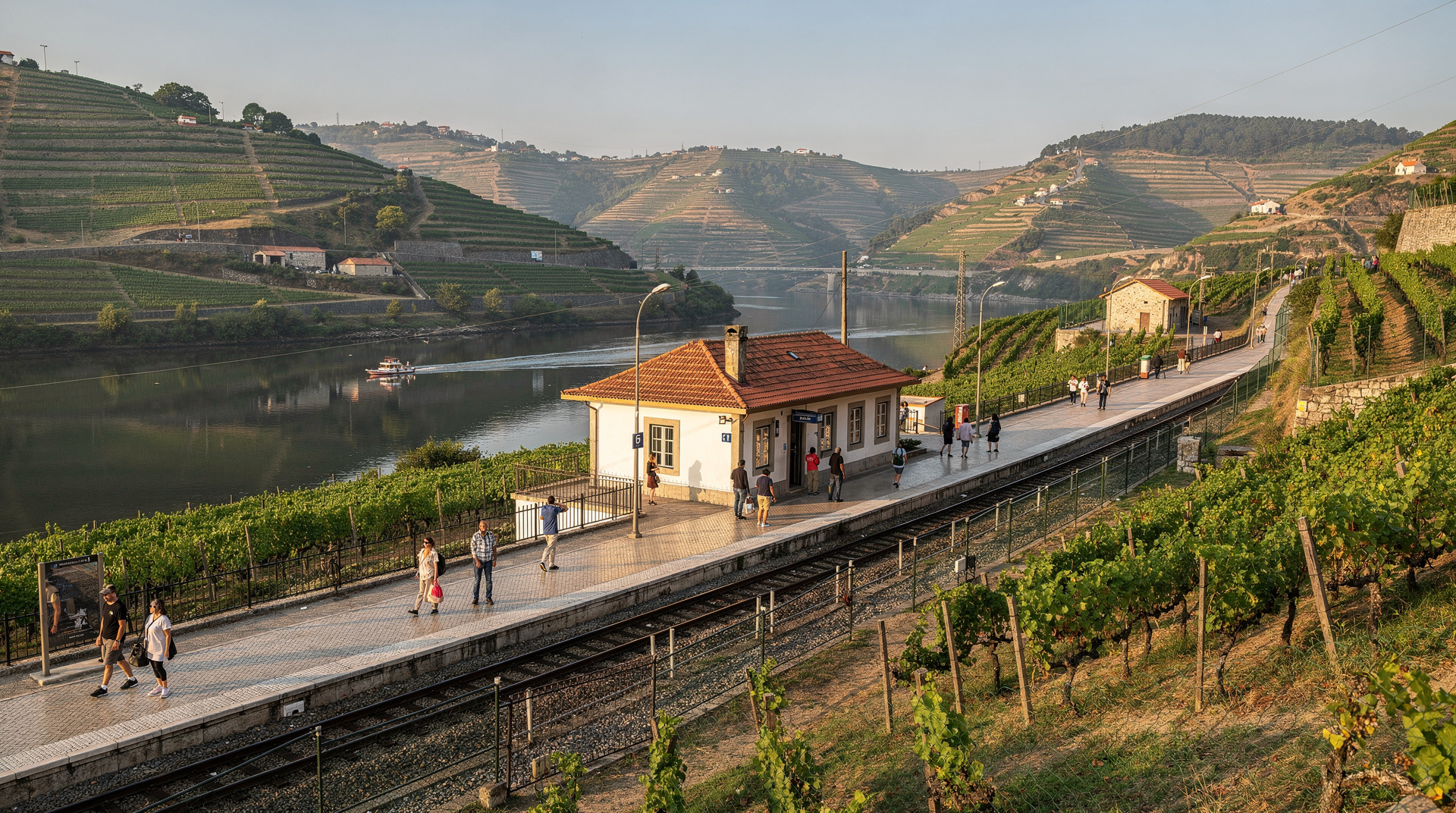
The town is also the practical hub of the Douro Valley for visitors using the train from Porto, and its flatter geography means the walk from the station to the museum and quay is level and easy — a genuine advantage over Pinhão’s steeper streets for visitors with mobility considerations or heavy luggage. The CP Douro line terminates at Régua for many services — trains to Pinhão continue on a branch line that runs northeast along the river. This makes Régua the logical base for a day trip that combines the train journey with wine tourism, particularly if you plan to take the spectacular 35-minute river-side rail segment on to Pinhão.
For visitors staying overnight in the valley, Régua offers a wider range of accommodation at lower prices than Pinhão, with better restaurant options and easier logistics for car-free travel.
| Where | Douro Valley, ~120 km east of Porto |
| Cost | Museu do Douro ~€6; lunch €15–40 per person |
| Time needed | Half day to a full day |
| Getting there | Train from Porto Campanhã, ~1h30; or car, ~1h15 |
| Best time | September–October (vindima) or April–June |
What to do in Régua
Museu do Douro
The Museu do Douro, housed in a converted warehouse on the river bank, is the best single introduction to the culture and economics of the Douro wine region. Permanent exhibits cover the demarcation history (with original documents from the Pombaline era), the social history of the harvest and the river trade, and the technical evolution of winemaking in the valley. Allow 90 minutes for a thorough visit. Entry costs around 6 €; there is an additional fee for temporary exhibitions. The museum shop has one of the best selections of Douro books and maps in the region.
The riverside and Cais de Régua
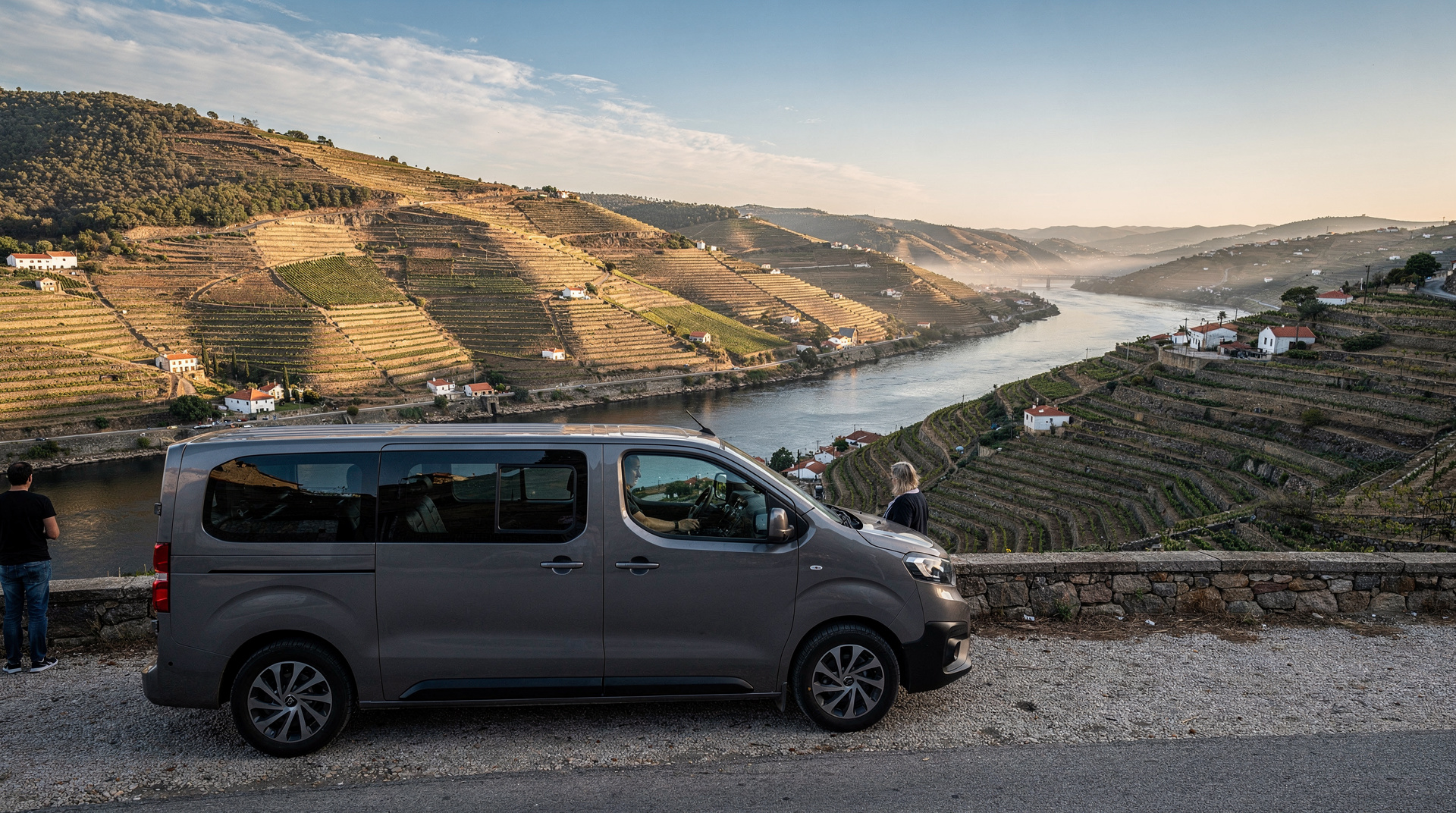
The Cais de Régua (Régua quay) is where the cruise boats dock and where the old warehouses that once held barrels awaiting transport downriver now house wine shops and cafés. The waterfront is more animated than Pinhão’s, with departures for river cruises operating in both directions, and enough café and shop density that a slow hour here doesn’t feel like waiting for a connection. Walking the length of the quay takes about 20 minutes and gives a useful sense of scale — the Douro here is wide and the terraced hillsides across the river are impressive even at this lower altitude.
The scenic train to Pinhão
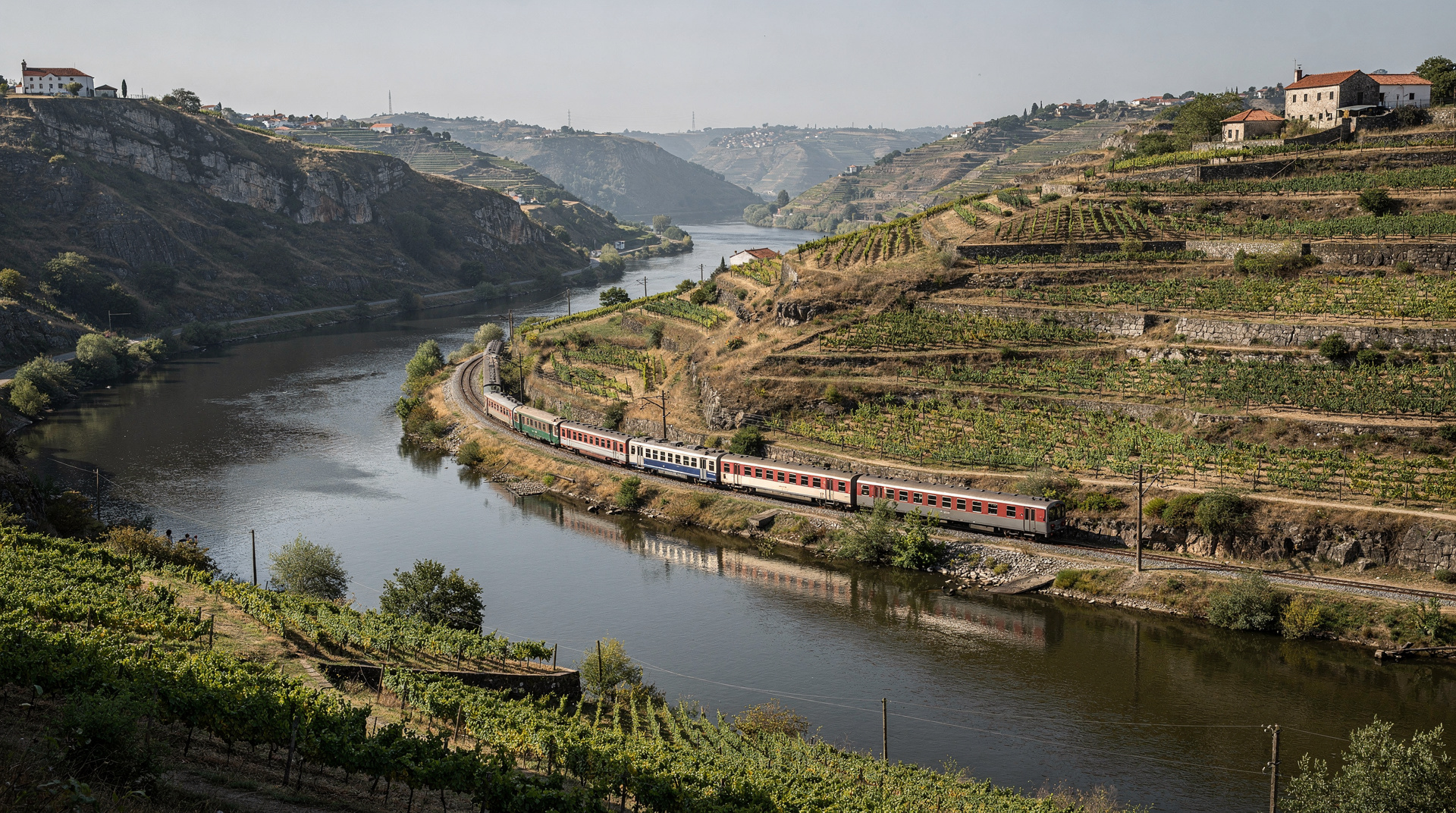
The CP rail segment from Régua to Pinhão takes approximately 35 minutes and runs along the north bank of the Douro through some of the valley’s most celebrated scenery. The line was built in stages between 1879 and 1887 and required enormous engineering effort to carve through the schist. From Régua, the train passes through the Cachão de Valeira gorge before the valley opens again at Pinhão. First-class carriages are worth the marginal extra cost on this route; the right-hand side (heading towards Pinhão) has slightly better river views. Tickets from Régua to Pinhão cost around 3–4 €; the schedule has limited departures per day.
The cruise from Régua to Pinhão by boat is an alternative to the train for the same stretch, taking approximately 2 hours on the river and offering a completely different perspective. Most visitors combine one direction by train and the other by boat for a full-day loop; our Douro cruise comparison guide covers the operators in detail.
Quinta do Tedo
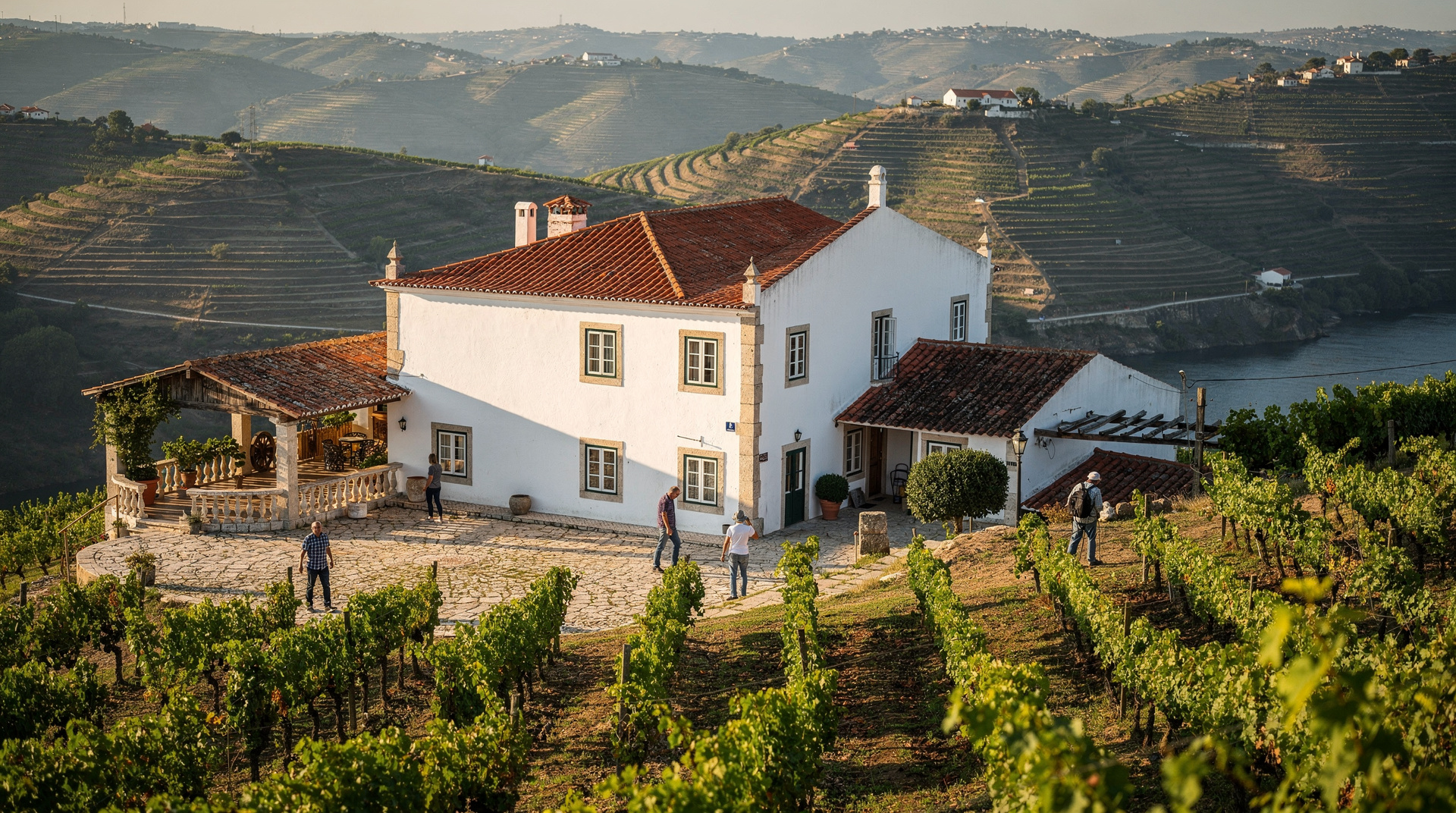
Quinta do Tedo, situated at the confluence of the Tedo and Douro rivers east of Régua, is one of the Douro’s most scenically positioned estates and a solid choice for visitors based at Régua. A wine experience with picnic at Quinta do Tedo includes a vineyard walk, cellar visit and outdoor picnic lunch with paired wines — a relaxed format that fits a half-day excursion from town. The quinta specialises in Touriga Nacional-led DOC wines and a small production of port wine. Book in advance; transport from Régua requires a car or pre-arranged taxi. For a wider survey of estates within reach of Régua, the best quintas in the Douro Valley guide ranks the options by accessibility and experience quality.
Quinta da Pacheca
Quinta da Pacheca, on the south bank of the Douro near Régua, is among the most architecturally distinctive estates in the valley — best known for its accommodation inside giant wine barrels, though day-visit tastings and lunch are available without staying overnight. The quinta’s winery, built in a converted 19th-century adega, produces reliable Douro DOC wines and a well-regarded LBV port. Lunch on the terrace with views over the vineyard is one of the better food experiences available in the lower valley; budget 30–50 € per person.
How to get to Régua from Porto
By train: CP runs regular services from Porto Campanhã to Régua throughout the day; journey time is approximately 1 hour 30 minutes and tickets cost around 8–10 € each way. This is the most convenient option for car-free visitors. The station is on the riverside, a short walk from the Museu do Douro and the quay. Trains fill on weekends in summer and during vindima — book at cp.pt.
By car: The drive from Porto via the A4 and N108 takes 1 hour 15 minutes in light traffic. Parking in Régua is available along the waterfront and in town; the riverside car parks closest to the museum and quay do fill at weekends.
By organised cruise: Several operators run full-day tours from Porto that include a train leg to Régua (or beyond to Pinhão) and a boat cruise back, with lunch and quinta visits built in. This format gives you the scenic rail experience without managing the connections yourself. See our Douro day trip from Porto guide for a comparative assessment.
Régua as a base for Pinhão and Lamego
Régua’s central position in the valley makes it a practical hub for day trips further in. Pinhão is a 35-minute train ride northeast; Lamego is 18 km south by car or taxi, with its baroque sanctuary and sparkling wine house covered in the Lamego guide. Visitors with two or three nights in the valley often base themselves in Régua precisely for this central access, rather than committing to either Pinhão’s more concentrated wine scene or Lamego’s quieter, inland character alone. The Douro transport comparison guide works through whether a car adds enough flexibility to justify the extra cost and hassle for this kind of multi-stop stay.
Where to stay in Régua
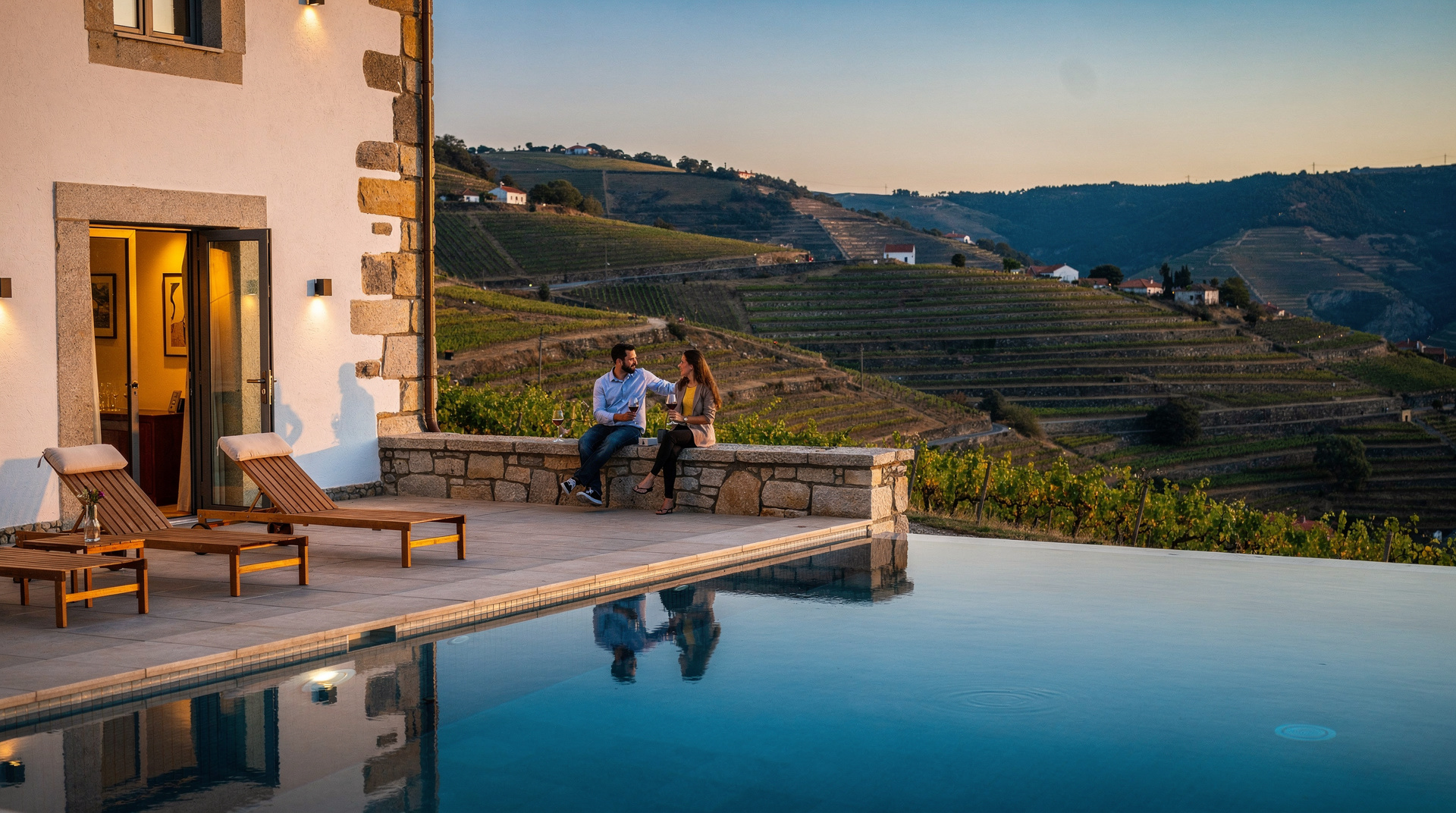
Quinta do Vallado (a 20-minute drive from Régua) is one of the Douro’s best-known family quintas with accommodation: a historic stone manor combined with a contemporary guest wing, vineyards on three sides and a serious wine programme. Rates from 120–200 €.
Hotel Régua Douro is a practical riverside hotel in the centre of town, with views over the Douro from upper-floor rooms. Rates 60–110 € per night — good value compared to Pinhão’s hotels for the same standard. Better placed for visitors using the train.
House of Mateus (near Vila Real, 30 minutes north) offers accommodation in converted outbuildings around the celebrated Baroque palace — worth considering if you want to combine a Régua stay with a visit to Casa de Mateus and the Mateus Rosé winery.
Where to eat in Régua
Castas e Pratos (on the Cais de Régua) is the most serious kitchen in town, serving Douro-focused cuisine with an extensive regional wine list. Braised kid (cabrito), cured meats from Trás-os-Montes and seasonal river fish feature on the menu. Budget 30–40 € per person with wine.
Mercearia de Régua is a wine shop-café hybrid on the main square, useful for cheese and charcuterie plates paired with glasses of local wine at lower cost than a full restaurant. Open lunch and early evening; board from 12–18 €.
Taberna dos Ferreiros is a simpler neighbourhood restaurant a block off the waterfront, popular with locals: daily specials, honest pricing (10–16 € for a main course), and a straightforward wine list dominated by Douro DOC.
Best time to visit Régua
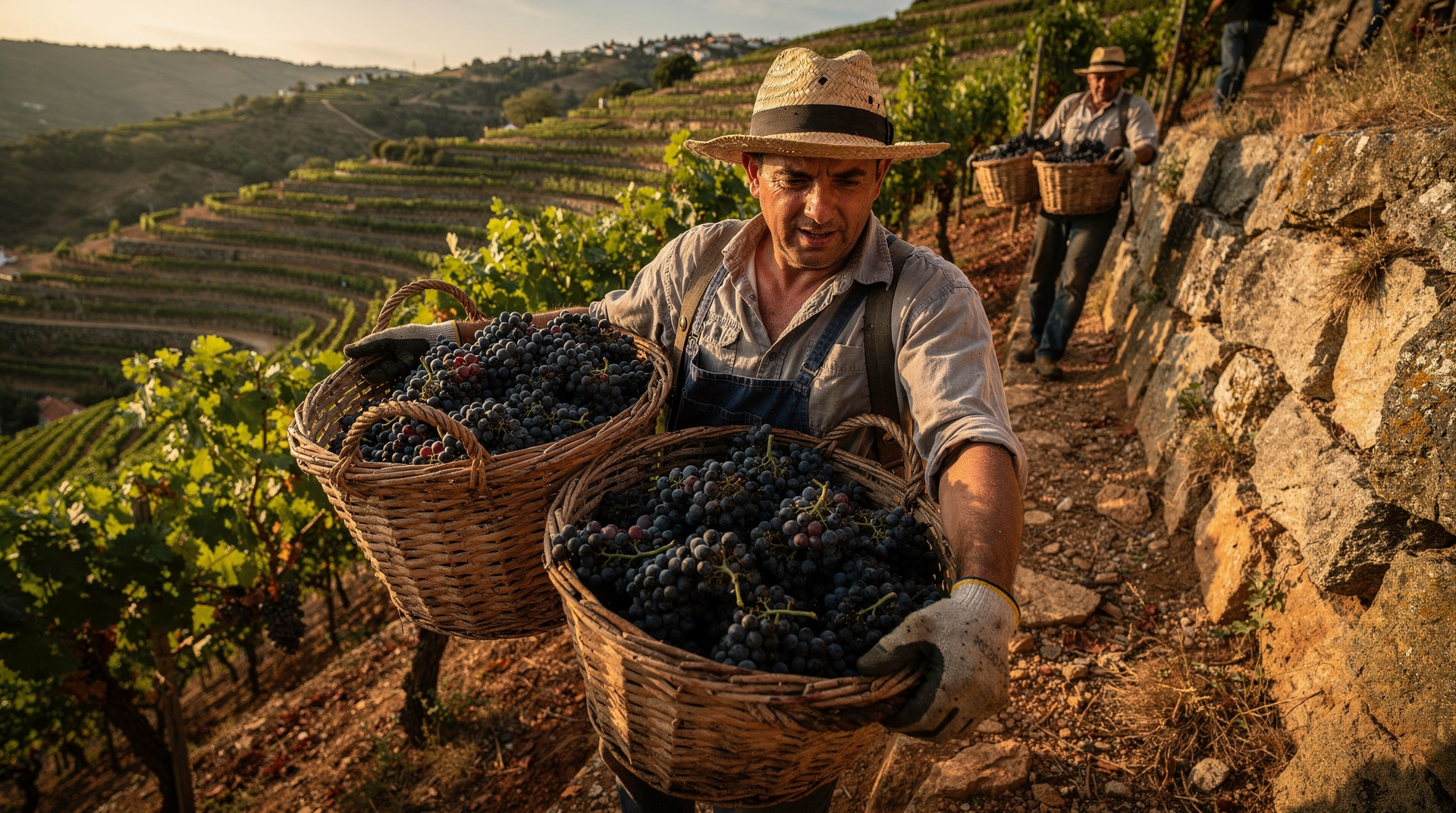
September to early October is the vindima season, when the valley is at its most active. The quay has additional boat traffic, the museum runs harvest-themed temporary exhibitions, and the energy of the town reflects the agricultural intensity of the surrounding countryside. Book hotels three to four months in advance.
April to June offers the best combination of mild weather and manageable crowds. The vines are in growth, the museum is accessible without queuing, and boat cruises operate at full frequency. A solid alternative to the autumn peak.
July and August: Régua gets very hot — temperatures over 35°C are common — and the town is busy with domestic tourism. Riverside cafés and the museum are the most comfortable options in the heat of midday.
November to March: Quiet, affordable and atmospheric in the way that low-season places tend to be. The museum remains open. Quinta visits operate on a reduced schedule; call ahead before making the journey specifically for a quinta.
| Season | Weather | Crowds | Notes |
|---|---|---|---|
| Sep–early Oct | Warm, harvest energy | Highest | Book 3–4 months ahead |
| Apr–Jun | Mild, green vineyards | Moderate | Best all-round window |
| Jul–Aug | Hot, over 35°C common | High (domestic tourism) | Riverside cafés for midday shade |
| Nov–Mar | Cool, quiet | Lowest | Reduced quinta schedules |
Practical tips
- The Régua train station has a small café and luggage lockers, useful if you want to day trip by train and explore without bags.
- Boat cruises from the Cais de Régua to Pinhão typically require advance booking in July, August and vindima; outside those periods, turn-up tickets are usually available.
- The Museu do Douro closes on Mondays.
- If you plan to combine Régua with a visit to Lamego (18 km south), a car or taxi is required — there is no direct public transport. Lamego’s baroque sanctuary and sparkling wine are covered in our Lamego guide.
- Currency exchange and ATMs are available on the main square; the tourist infrastructure is better developed here than in Pinhão.
- Several wine shops along the quay offer shipping services for bottles purchased in the region — useful if you are buying more than your luggage allowance.
- If your visit falls in vindima season, the Douro harvest and vindima guide explains what to expect in Régua specifically versus the upper valley towns.
- Régua fits well into a wider northern Portugal 7-day itinerary as the Douro anchor point, alongside Braga, Guimarães and the coast.
Frequently asked questions about Peso da Régua
Is Régua or Pinhão a better base for the Douro Valley?
It depends on your priorities. Régua has more accommodation options at lower prices, better restaurant variety, and easier train connections to Porto. Pinhão has more quintas within walking or short driving distance, more concentrated beauty in the surrounding landscape, and a more intimate atmosphere. For car-free visitors spending one night, Régua is more practical. For visitors with a car who want to be closer to the upper valley’s best quintas, Pinhão has the edge. Our where to stay in the Douro Valley guide compares both in more detail.
Can I do Régua as a day trip from Porto?
Yes, straightforwardly. The 1h30 train from Campanhã puts you in Régua mid-morning, giving enough time for the Museu do Douro, lunch on the quay, a boat trip or drive to a quinta, and the train back in the late afternoon. Adding the train leg to Pinhão and back extends the day but is manageable if you depart Porto early and return on the last afternoon service.
What is the wine museum like?
The Museu do Douro is genuinely good for the scale of the town that houses it. The permanent collection is well-curated and covers both the technical history of wine production and the social history of the valley. Labels are in Portuguese and English. The building itself — a converted 19th-century warehouse on the river bank — is architecturally interesting. Temporary exhibitions vary in quality. Allow 90 minutes; the museum café overlooks the Douro and is a good place to decompress afterward.
Are there river cruises from Régua to Porto?
Full-day cruises from Porto to Régua (upstream) and return operate from spring through autumn, departing Porto in the morning and returning in the evening by train or bus. These are popular and book up, particularly in summer. The upstream journey takes most of the day as boats navigate the locks; the scenery improves progressively as you enter the protected landscape zone. See our Douro cruise guide for a comparative assessment of the operators currently running this route.
Top experiences
Bookable activities with verified prices and instant confirmation on GetYourGuide.