Douro Valley tours — what to avoid and red flags to spot
Porto: Premium Douro Valley Small Group Tour Lunch Private Cruise
How do I avoid bad Douro Valley tours?
The main red flags: single quinta visit described as 'Douro experience', a river cruise of less than 1 hour described as a highlight, lunch at a 'typical restaurant' (generic and roadside), group sizes of 40+, and tours charging €90+ without specifying what the premium delivers. A good Douro tour visits two quintas, includes a proper river cruise of 1-2 hours, provides lunch at a quinta, and keeps groups under 25.
The Douro Valley tour problem
The Douro Valley day trip from Porto is one of the best day excursions available from any city in Europe. The landscape is UNESCO-inscribed for good reason, the wine is exceptional, and the quintas that open to visitors are genuinely interesting places. No honest guide would tell you not to go.
The problem is a tour market where quality varies enormously and the language used in tour descriptions is often designed to obscure rather than clarify what you’re actually buying. A €65 tour and a €110 tour can look identical in promotional materials. The actual experience can be completely different.
This guide is about developing the ability to read between the lines of tour descriptions so you end up on the right side of that difference.
| Where | Douro Valley, roughly 1–1.5hrs east of Porto |
| Standard tour cost | around €65–75/person, single quinta |
| Genuine premium cost | around €100–140/person, two quintas + real cruise |
| Group size to look for | under 20–25, ideally 8–12 for premium |
| Booking window | 1–2 weeks ahead; by July for vindima season |
If you’d rather see the full case for going at all before picking apart the tour market, the Douro Valley day trip from Porto guide and the Douro river cruise comparison cover that groundwork first.
Red flag 1: a single quinta visit
The most consistent predictor of a disappointing Douro day tour is a single quinta visit. One winery stop gives you 45-60 minutes at one estate — enough to hear the standard production explanation, taste three wines, buy a bottle from the shop, and return to the minibus. It is the minimum necessary content to justify calling a trip a “wine experience.”
A genuinely good Douro day tour visits two or three quintas. The first quinta and the second quinta give you a comparison that is instructive about the differences in the valley — different elevations, different grape varieties, different production approaches. A single quinta gives you no context, no comparison, and no sense of the valley’s range.
In tour descriptions, the single-quinta format is often disguised:
- “Visit to a traditional quinta” (one quinta, not specified)
- “Wine tasting at a Douro estate” (one estate)
- “Porto wine production experience” (combined cellar + one quinta, sometimes)
- “Douro wine country experience” (number of quintas unspecified)
The question to ask explicitly: how many quintas does this tour visit, and how long are we at each? A good tour gives you 45-60 minutes at each of two quintas.
Red flag 2: the fake river cruise
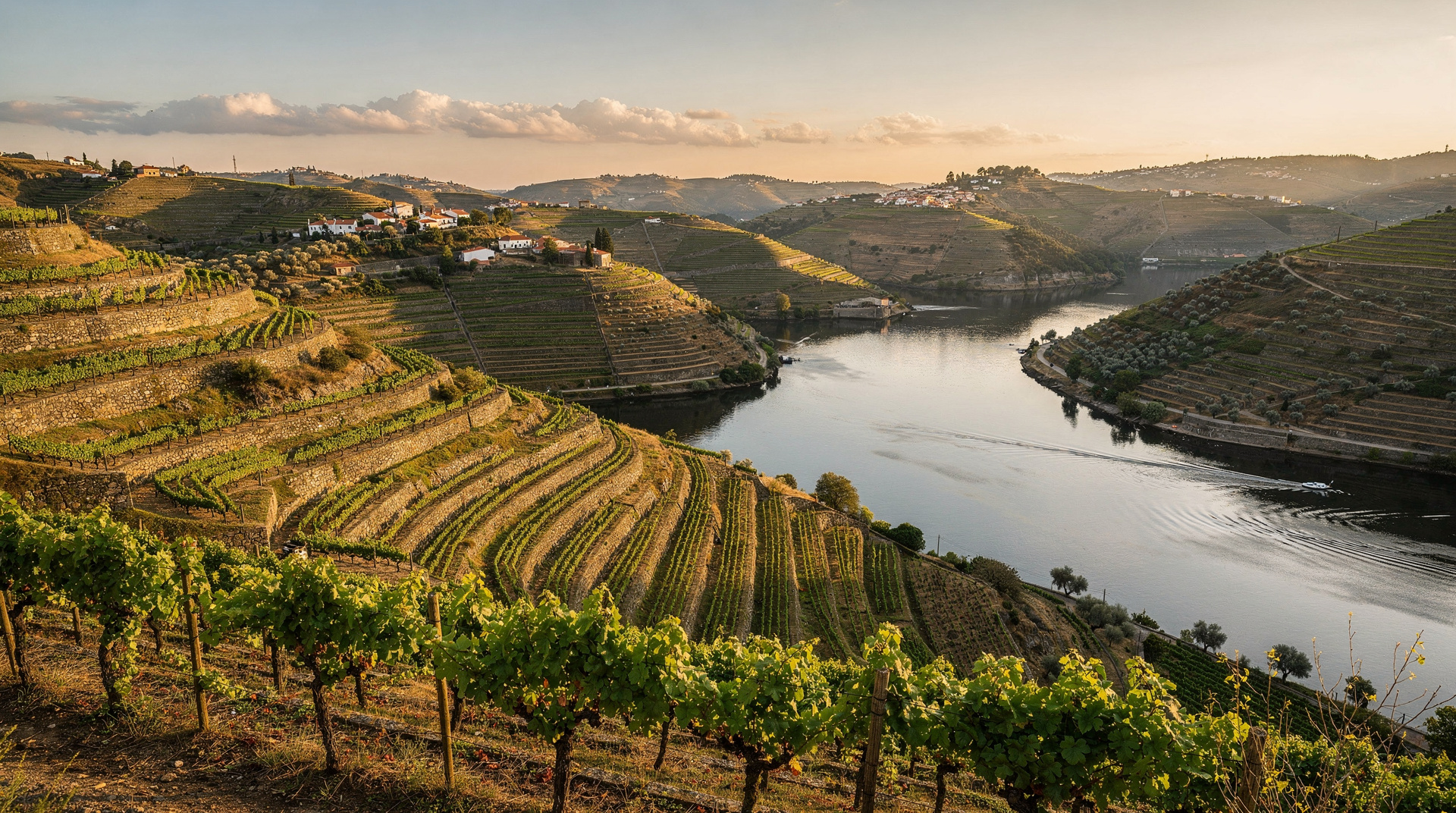
A river cruise on the Douro is one of the highlights of a valley day trip — the view of the terraced hillsides from water level, the scale of the terraces, the tranquility of the river between the dams. A short transfer boat from one dock to another is not this.
Tour descriptions that mislead on the cruise:
- “Boat ride on the Douro” (any duration, even 20 minutes)
- “Panoramic views of the Douro Valley” (from the road)
- “River experience” (standing near the river looking at it)
- “Douro cruise” without specifying duration or route
A genuine river cruise for a full-day tour runs 1-2 hours and covers a meaningful stretch of the river — typically Régua to Pinhão or similar (approximately 30 km of the most dramatic terraced valley). During this stretch you see: the terraced hillsides at their most dramatic, the quinta buildings visible from the river, the narrow gorge sections, the rabelo boats moored below the quintas.
The question to ask: how long is the river cruise and what is the route?
Red flag 3: “lunch at a typical restaurant”
In European tour language, “typical restaurant” almost always means a generic establishment used by tour operators for large group logistics. These restaurants specialize in set menus for coach groups: bread, soup, generic main course, dessert and coffee at a fixed group price. The food is adequate. It is not a Douro Valley cuisine experience.
“Lunch at the quinta” or “lunch at the estate” is meaningfully different. Quinta lunches are part of the wine hospitality tradition — the estate prepares a meal that reflects the region and is served with the estate’s own wines. The food is often genuinely good, the setting is a working wine estate rather than a roadside restaurant, and the experience connects logically to the wine you’ve been tasting.
This is one of the most reliable quality signals in a tour description. If the lunch is at a quinta, the tour operator has the quinta relationship necessary to deliver a genuine experience. If the lunch is at an unnamed “traditional restaurant,” it’s a logistics solution.
Red flag 4: group sizes of 40+
A 50-seat coach carrying 40+ passengers on a Douro Valley tour creates a specific set of problems:
- The coach cannot access many of the more interesting quintas (narrow access roads, limited parking)
- Quinta visits become production-line tastings (35 people through a tasting room in 20 minutes)
- The river cruise is shared with other coach groups on the same large vessel
- The guide is managing logistics rather than adding wine knowledge
Small-group tours (under 20 people) can access smaller quinta roads, take more time at each estate, and offer a guide who is actually a guide rather than a crowd manager.
In tour descriptions: group size is sometimes listed explicitly. If it isn’t, ask the operator before booking. “Small group” as a descriptor without a maximum is meaningless — some operators describe 25 people as small group. A genuine small-group tour specifies: “maximum 8 passengers,” “maximum 12 passengers.”
Red flag 5: the phantom “premium” upgrade
Several tour operators in Porto market a “premium” Douro tour at €90-120 that is essentially the same product as their standard €65-75 tour with minor additions — a slightly nicer vehicle, one additional wine at the tasting, or the label “VIP” applied without material change.
Genuine premium Douro tours (€100-140) differ from standard in specific ways:
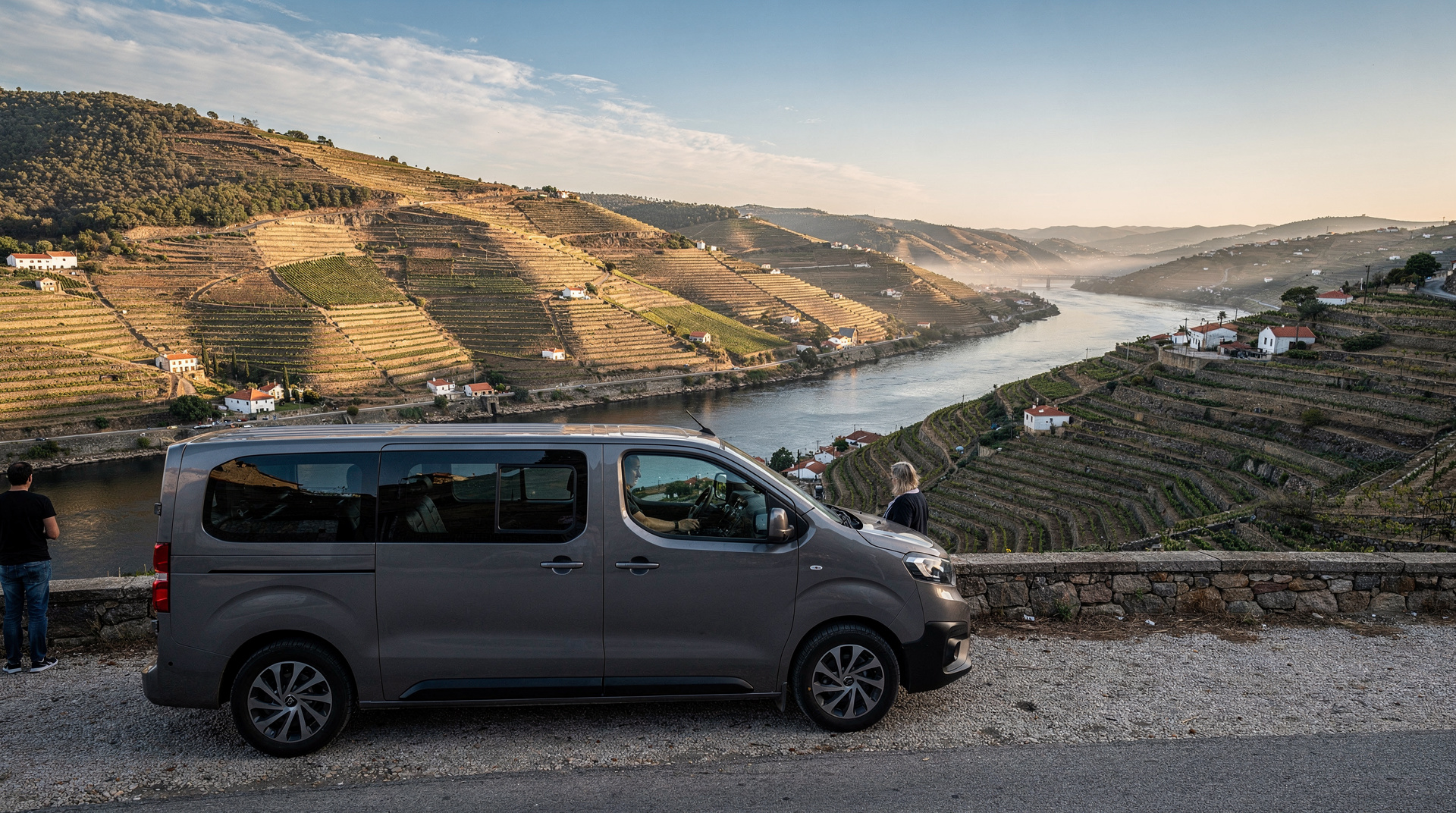
- Group maximum of 8-12 people (not 25-30 in a “premium” van)
- Access to quintas that don’t receive standard coaches
- Wine-specialist guide rather than a general guide who covers wine
- Lunch genuinely at a quinta with winemaker present
- Private river cruise rather than shared vessel
If you’re paying €110 for a tour and the group is 25 people visiting the same two quintas as the €70 tour in a slightly nicer vehicle — you’ve been sold the appearance of premium without the substance.
The genuine premium small-group Douro tour specifies the maximum passenger count and quinta access clearly. Compare any “premium” tour description against these specific criteria.
Red flag 6: vindima tours outside harvest season
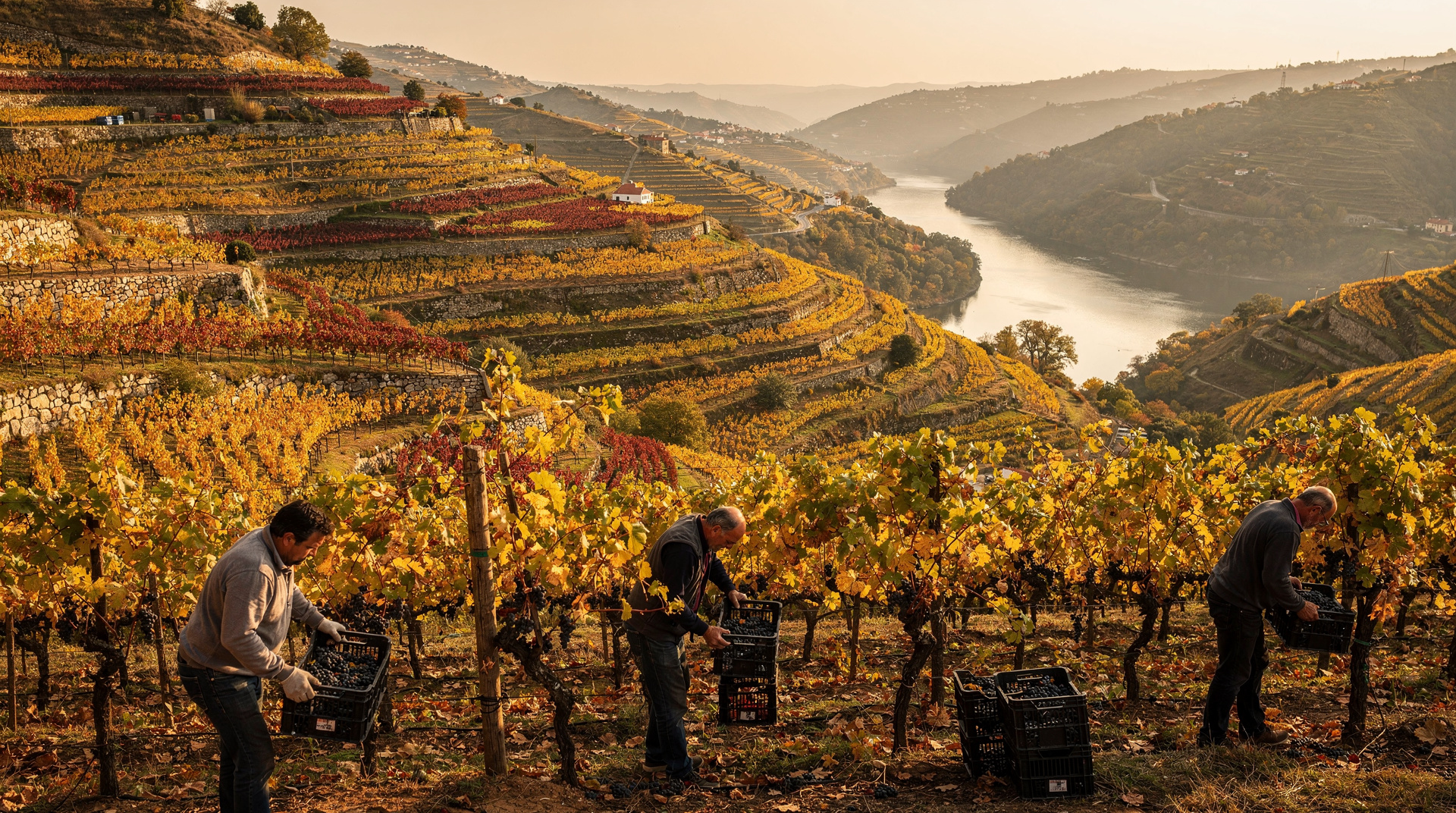
The vindima (grape harvest) in the Douro Valley happens in mid-September through early October. This is not a variable — it is a biological process that occurs at a fixed time of year when the grapes are physiologically ripe.
Any tour advertising a “harvest experience” or “vindima tour” in June, July, August, or November is selling you access to a vineyard in its off-harvest state. The grapes are either still on the vine (summer) or already picked and being fermented (late October onwards). There is no harvest to participate in. This is not a genuine vindima experience.
The legitimate vindima experiences — picking grapes alongside farm workers, watching the lagar foot-treading, eating a harvester’s lunch — are only possible in mid-September to early October. Check the specific tour dates against the genuine harvest window before booking anything described as a harvest tour.
The quintas to be skeptical about
Some quintas in the Douro Valley have oriented their visitor programs primarily around tourist throughput rather than genuine wine experience. Indicators of this orientation:
Scale: If the quinta is receiving 300+ visitors per day in summer, the tasting is necessarily standardized for volume. The wines poured are the entry-level range; the guide is running 8-10 groups per day; the “intimate quinta visit” description does not match the reality of a tourist-center operation.
The souvenir shop priority: A quinta where the tasting ends with a 10-minute guided pass through the souvenir shop is optimizing for retail. A quinta where the winemaker or estate manager joins your group for questions after the tasting is optimizing for wine education.
The lunch “buffet”: A “buffet lunch” at a quinta usually means: industrial catering trays, limited selection, shared with multiple tour groups simultaneously. A “lunch prepared by the quinta kitchen” is different. Read the description carefully.
The quintas worth visiting
The best quinta visits in the Douro — measured by genuine wine education, quality of the wines poured, and staff engagement — tend to have these characteristics:
- Maximum visitor capacity that allows personal attention
- Wine production that is the primary business, not the tourist program
- A guide who is part of the estate team, not a freelance guide hired for tour days
- A tasting room that serves the estate’s actual wine range rather than a specifically simplified tourist selection
The Douro boutique wineries tour is specifically structured around smaller quinta access — this format exists because the operator has identified that visitors to smaller estates get materially better wine experiences.
The Douro two estates and river cruise is a standard good-value format: two quintas, a proper cruise, and a lunch element that reflects regional cuisine.
For the vindima period specifically, the Douro history, wine and river cruise covers the valley context that makes harvest season visits more meaningful.
Weak tour vs strong tour, side by side
The same day, the same region, and often a similar price on paper can deliver very different days. This is roughly what separates the two ends of the market:
| Element | Weak tour | Strong tour |
|---|---|---|
| Quintas visited | One, 45–60 min | Two or three, time at each |
| River cruise | 20–30 min, or unspecified | 1–2 hours, route named |
| Lunch | ”Typical restaurant,” roadside | At the quinta, estate wines |
| Group size | 30–40+ | Under 20, ideally 8–12 |
| Guide | General guide, logistics-focused | Wine-specialist guide |
| Price | €65–75 | €100–140, and worth the gap |
Doing it yourself instead
Not every visitor wants a guided tour, and the Douro rewards independent travel too — by train along one of Europe’s most scenic rail lines, by rental car, or a mix of both. If a coach full of strangers and a fixed itinerary isn’t what you want, the Douro by train vs car vs tour comparison and the Douro tour vs DIY guide both walk through what independent planning actually involves, including which quintas take walk-ins and which require advance reservations. Travellers who’ve done both routes share specifics in the best Douro quintas we visited write-up and the is the Douro tour worth it field report.
For those staying in the valley rather than day-tripping from Porto, the where to stay in the Douro Valley guide and the Douro wine lovers 4-day itinerary lay out a slower alternative that sidesteps most of these red flags entirely, since you’re not compressing everything into one coach day. The Douro Valley destination page and the Pinhão guide are useful next stops for picking a base.
Reading a real listing: three examples
Applying the checklist directly helps more than the abstract version. Three real patterns you’ll see when comparing listings side by side:
“Full-day Douro Valley experience with wine tasting and lunch, from €69.” No quinta count, no cruise duration, no lunch location. This is almost always a single-quinta, roadside-restaurant tour. The vague language is the tell — a genuinely strong tour states its specifics because specifics sell.
“Two quintas, 90-minute Douro river cruise, lunch at the estate, maximum 16 guests, from €115.” Every red-flag category is answered directly in the listing itself. This is the pattern to look for regardless of which specific operator or price point you end up choosing.
“Premium Douro Valley tour, small group, from €95.” “Premium” and “small group” with no numbers attached. Message the operator and ask for the maximum group size and quinta count before booking — a listing unwilling to specify usually can’t, because the number isn’t flattering.
Weather, season and the cruise
The river cruise portion is the one element most affected by season. Summer (June–August) gives the longest daylight and the most reliable warm weather for an open-deck cruise, but also the highest visitor volume — book further ahead. Spring (April–May) and early autumn (late September–October) bring greener terraces or harvest activity and noticeably fewer coaches at the quintas. Winter (December–February) tours run, but some smaller boats reduce schedules in poor weather, and it’s worth confirming the cruise is still included rather than substituted with a longer road stop. None of this changes the red flags above — a vague “riverside experience” is still vague in January.
How to evaluate a tour before booking
Specific checklist for any Douro Valley tour description:
- How many quintas are visited and how long at each?
- What is the river cruise duration and route?
- Where is lunch — at a quinta or at a restaurant?
- What is the maximum group size?
- What wine knowledge does the guide have specifically?
- If it claims to be “premium,” what specifically makes it premium?
- If it mentions vindima, is the date actually in the harvest window?
If a tour operator cannot answer questions 1-4 clearly before you book, the uncertainty will reflect in the experience.
The is the Douro Valley tour worth it guide covers the broader value assessment. This guide covers the specific red flags within the tour market that indicate poor quality regardless of the marketing language.
Frequently asked questions about Douro Valley tours to avoid
What is the single biggest red flag in a Douro Valley tour description?
A single quinta visit described as a “Douro Valley wine experience.” One winery with a 30-minute tasting followed by a brief river float is not a genuine Douro day. A legitimate full-day tour visits two or more quintas with time at each, includes a proper lunch, and offers a river cruise of at least 1 hour.
How can I tell if the Douro river cruise is real or fake?
A genuine river cruise runs 1-2 hours on the Douro between meaningful points (typically Régua-Pinhão stretch). Red flags: “panoramic Douro views” without specifying a boat, “riverside experience” (which can mean the roadside), “30-minute cruise” (not enough to see the terraced hillsides).
What does “lunch at a typical restaurant” mean in a tour description?
A generic roadside restaurant near Régua or Lamego serving set tourist menus to coach groups — not a quinta with local produce. “Lunch at the quinta” is meaningfully better: part of the wine hospitality tradition, usually genuinely good, with the estate’s own wines.
Are vindima tours in Porto legitimate?
Only if they run in mid-September through early October. Any tour describing a “harvest experience” outside this window is selling theatrical simulation — the harvest is not happening. Check specific tour dates against the genuine harvest window.
What should a premium Douro tour (€100+) actually deliver?
Group of 12 or fewer, access to quintas that don’t receive large coaches, a wine-specialist guide, lunch genuinely at a quinta with winemaker present, a private or semi-private river cruise, and tastings beyond the standard three-wine tourist pour.
Is it better to book a Douro tour on arrival in Porto or in advance?
In advance, especially for June through October. Best small-group tours sell out weeks ahead in summer. For vindima season (mid-September to early October), book by July — the best harvest-element tours fill by August.
Frequently asked questions — Douro Valley tours — what to avoid and red flags to spot
What is the single biggest red flag in a Douro Valley tour description?
A single quinta visit described as a 'Douro Valley wine experience'. One winery with a 30-minute tasting followed by a brief river float is not a genuine Douro day — it is the minimum necessary to make the trip appear substantial. A legitimate full-day Douro tour visits two or more quintas with time at each, includes a proper lunch, and offers a river cruise of at least 1 hour on the Douro.How can I tell if the Douro river cruise is real or fake?
A genuine river cruise on the Douro for a full-day tour runs 1-2 hours, typically between Régua and Pinhão or a similar stretch. It is on a boat on the river, not a dock-to-dock transfer. Red flags: 'panoramic Douro views' without specifying a boat, 'riverside experience' (which can mean looking at the river from the roadside), '30-minute cruise' (not enough to see the terraced hillsides properly). A good tour description specifies the cruise duration and the approximate route.What does 'lunch at a typical restaurant' mean in a tour description?
'Typical restaurant' in a Douro Valley tour context almost invariably means a generic roadside restaurant near Régua or Lamego that serves set tourist menus to coach groups — not a quinta with local produce and a winemaker on hand. Lunch 'at the quinta' or 'at the estate' is meaningfully different. Quinta lunches are part of the wine hospitality tradition; restaurant lunches are logistical solutions for large groups.Are vindima (harvest) tours in Porto legitimate?
Some are and some are not. Legitimate vindima tours run only in mid-September through early October and include genuine quinta participation — visiting a quinta during active harvest, joining the picking or watching the lagar operation, eating a harvester's meal. Illegitimate vindima tours run year-round (the harvest is never happening) or in summer (the harvest has not started). Any tour describing a 'harvest experience' outside September-October is theatrical simulation. Check dates carefully.What should a premium Douro tour (€100+) actually deliver?
A tour charging €100-140 per person should deliver: group of 12 or fewer, access to quintas that don't receive large coaches, a guide with genuine wine expertise (ideally wine-focused rather than a general guide), a lunch that is genuinely at a quinta and reflects the region's cuisine, a private or semi-private river cruise, and tastings that go beyond the standard three-wine pour. If a tour at €110 is delivering the same as a standard €75 tour in a slightly smaller vehicle, it is overpriced.Is it better to book a Douro tour on arrival in Porto or in advance?
In advance, especially for June through October. The best small-group tours with genuine quinta access sell out weeks ahead in summer and harvest season. Booking on arrival in Porto limits you to whatever seats remain in standard group tours, which are rarely the best-value options. For vindima season (mid-September to early October), book by July — the best harvest-element tours fill by August.
Top experiences
Bookable activities with verified prices and instant confirmation on GetYourGuide.