Best time to visit the Douro Valley — and how to experience the vindima
Porto: Premium Douro Valley Small Group Tour Lunch Private Cruise
When is the best time to visit the Douro Valley?
Late September to early October during the vindima (harvest) is the most atmospheric time — the terraces are alive with grape-pickers, the quintas are fermenting, and the valley smells of grape must. Spring (April-May) offers lush green terraces and quieter quinta visits. Avoid August, which is extremely hot in the valley interior (35-40°C).
The Douro Valley and its seasons
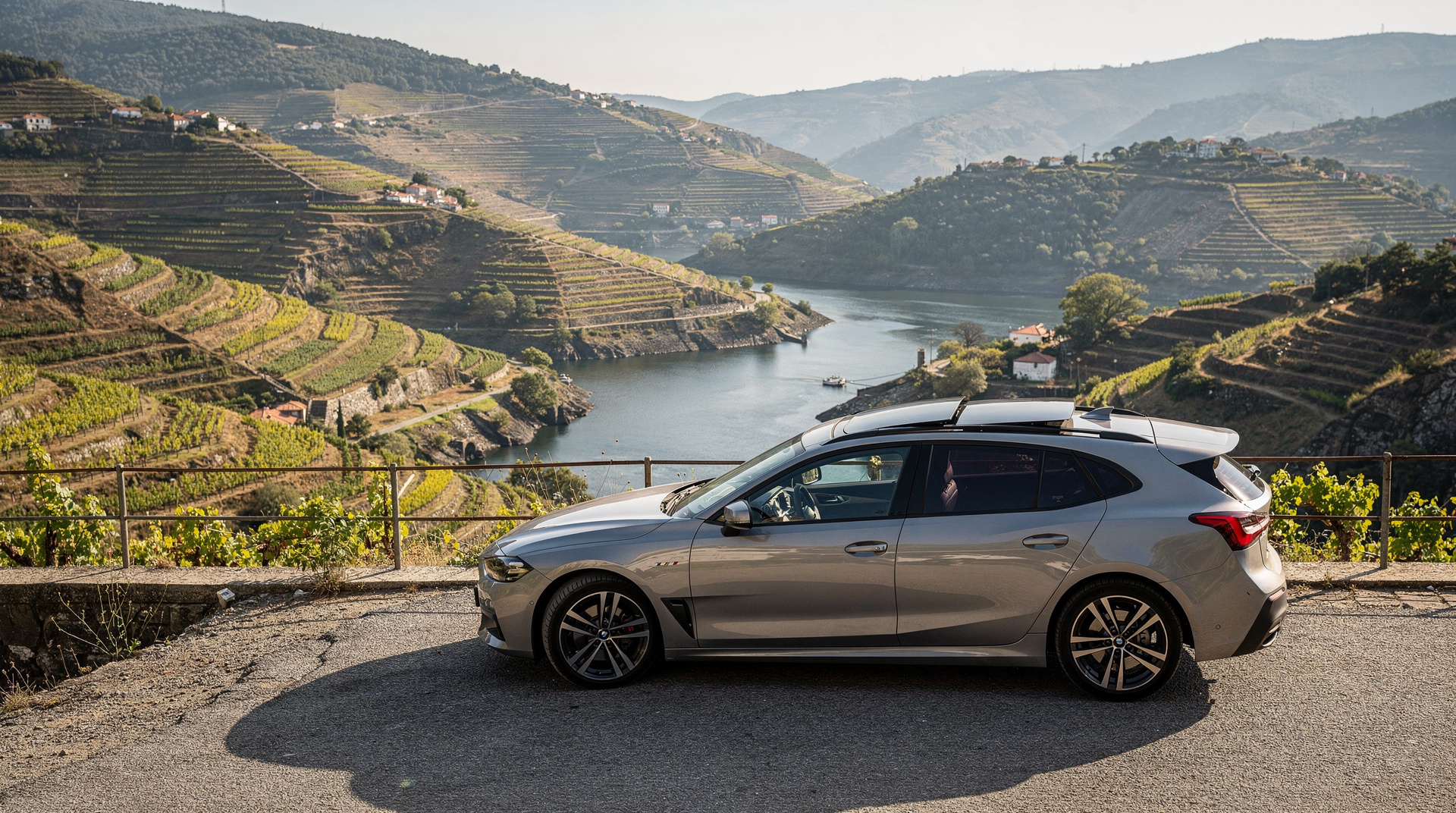
The Douro Valley operates differently from most wine regions because its terrain is extreme. The UNESCO-inscribed terraced vineyards cascade down schist slopes that are too steep for any mechanical harvesting — every grape in the Douro is picked by hand, in a sequence that begins in the lowest, hottest terraces in mid-September and works upward through October as the cooler altitudes ripen.
This creates the vindima: a period of intense, visible human activity across a landscape that spends most of the year in quiet. For visitors, the timing matters enormously. Understanding when to come — and how to actually participate rather than merely observe — is the difference between an interesting wine region day trip and an experience that stays with you.
This guide covers the seasonal calendar honestly and the vindima in practical detail.
| Where | Douro Valley, 90-120 km east of Porto |
| Cost | Around €60-140/person for a harvest-season day trip |
| Time needed | Half a day minimum, ideally a full day or overnight |
| Getting there | Train to Pinhão (~2h, ~€10-12), car (1.5-2h), or organised tour |
| Best time | Mid-September to early October for vindima; avoid August heat |
Douro Valley by season, at a glance
| Season | Temperature | Crowds | Highlight |
|---|---|---|---|
| Spring (Apr–May) | 15–22°C | Moderate | Green terraces, wildflowers, easy booking |
| Early summer (Jun) | 25–30°C | Moderate–high | Warm but manageable, full quinta programme |
| Peak summer (Jul–Aug) | 35–40°C | High | Hot; avoid outdoor vine walks 11am–4pm |
| Harvest (mid-Sep–early Oct) | 18–25°C | Very high, books out early | Vindima — the valley’s most atmospheric window |
| Winter (Nov–Feb) | 5–12°C | Lowest | Quiet, intimate, some visitor programmes reduced |
The Douro calendar: season by season
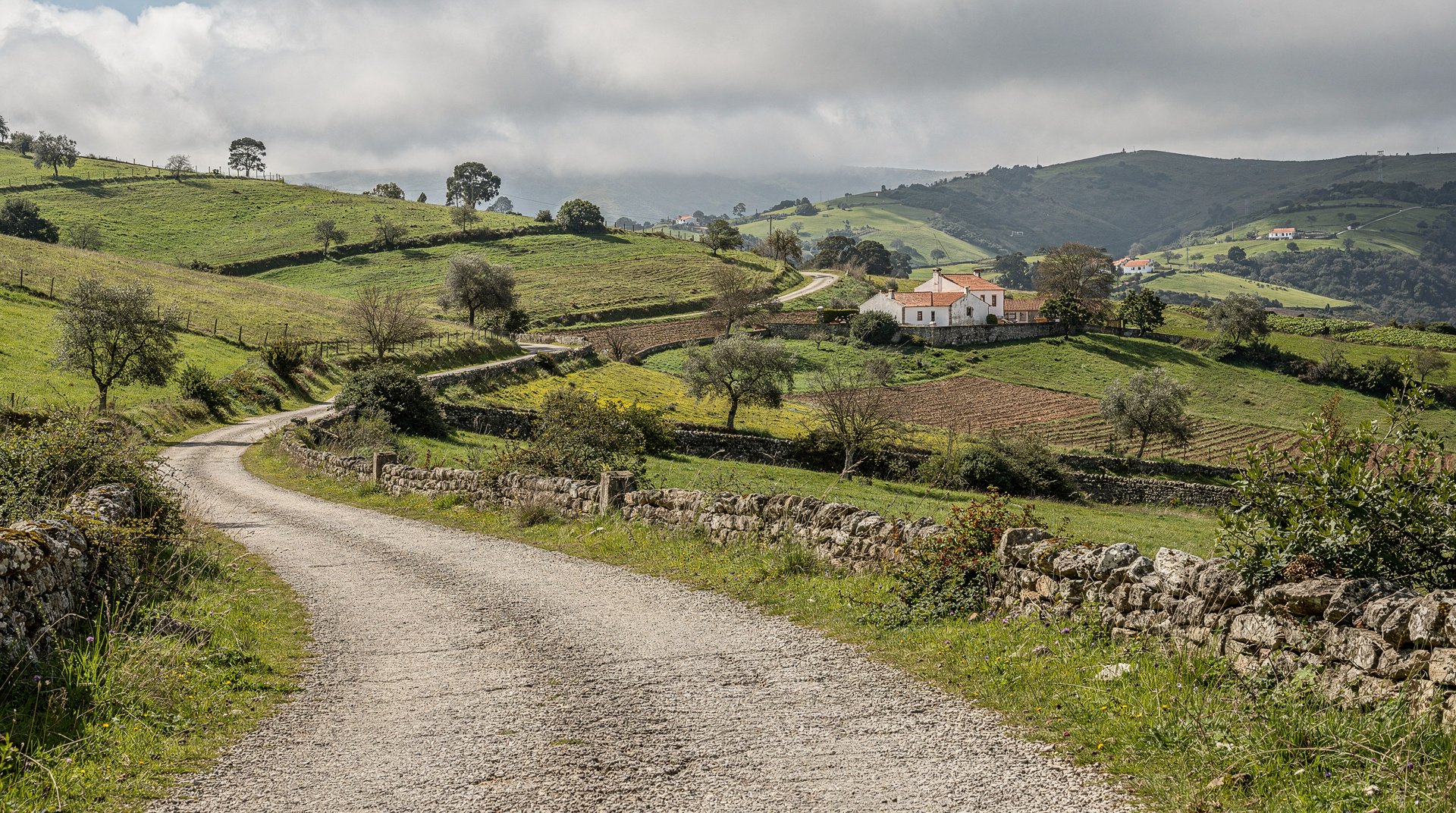
Spring (April-May): the green Douro
The Douro Valley in April and May looks nothing like its summer or harvest self. The terraces are vivid green — the vines are in leaf, the wildflowers run along the stone walls, and the valley floor shows its Mediterranean maquis. Almond trees (which bloom earlier, in February) are past, but the valley is alive with colour.
This is an excellent time to visit: quinta tours are running, the river cruises are operational, and the landscape rewards photography in ways that the dry summer doesn’t. Quinta visits require advance booking but not months in advance. A half-day trip from Porto by train or car in April is one of the best Douro day experiences outside of harvest.
Temperature: 15-22°C. Perfect for outdoor quinta visits and river cruises.
Summer (June-August): heat and busy quintas
June in the Douro Valley is manageable — warm (25-30°C in the valley), quinta visits fully operational, river cruises running daily. The six-bridges cruise format out of Porto operates throughout summer; for deeper Douro valley access, the premium small-group tours are the most comprehensive.
July and August are genuinely hot in the interior valley — 35-40°C on south-facing terraces is not unusual. This is a landscape of sun traps: the schist rock absorbs and radiates heat. Quinta visits are still worth doing but avoid outdoor vine walks between 11 am and 4 pm. The boat on the river is a relief. The quinta buildings are cool inside. Plan accordingly.
The harvest does not happen in summer. Any quinta advertising “harvest experiences” in July or August is selling a theatrical simulation, not the real thing. The grapes are still ripening.
Autumn (September-October): the vindima
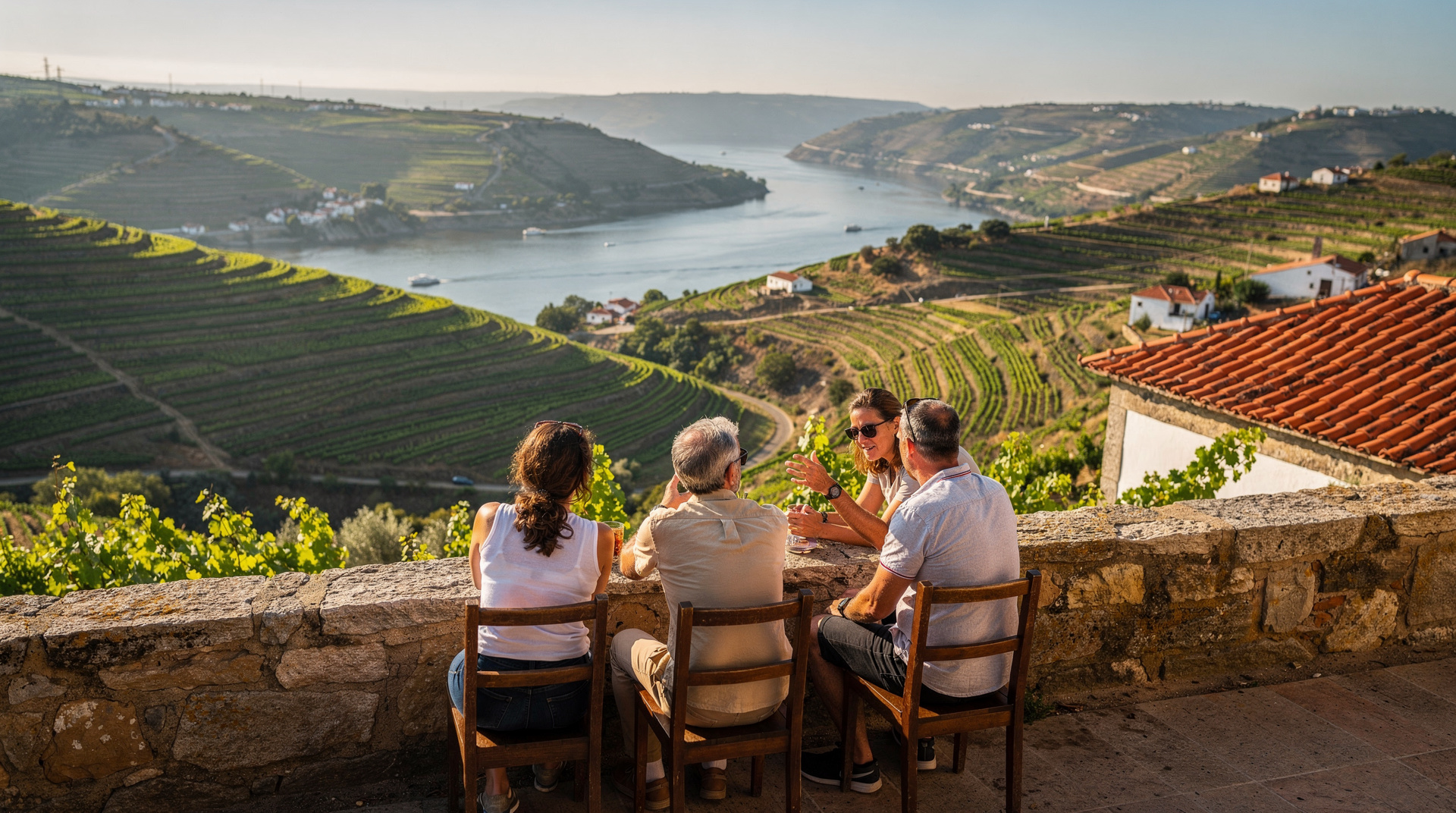
Mid-September through early October is the Douro’s peak season for visitors who care about wine and viticulture. The vindima (grape harvest) transforms the valley: teams of workers spread across the terraces at dawn, working the steep rows with baskets and secateurs. The smell of fermenting grape must drifts from quinta lagars. The autumn light (gold and amber, lower angle than summer) makes the landscape particularly photogenic.
This is the moment the Douro Valley is most itself — not a landscape preserved for tourism, but a working wine region at its annual peak. Even if you are simply passing through on a day tour during harvest, the atmosphere is vivid. If you participate in the picking, it is physically demanding and genuinely memorable.
Temperatures are excellent: 18-25°C, warm days and cool evenings. The vines turn amber and red through October.
Booking reality: Vindima-period Douro tours sell out. Premium small-group tours with harvest participation elements are typically sold out by the end of July for September dates. If vindima is your primary reason for visiting, plan 4-5 months ahead. See is the Douro Valley tour worth it for the tour selection logic.
Winter (November-February): quiet and underrated
The Douro in winter is brown and quiet. The vines are pruned back to bare canes, the quintas are in cellar mode (racking, blending, cooperage), and many visitor programs are reduced or suspended. But the valley has a different kind of beauty in winter: the geometry of the terraces is more visible without leaves, the river runs fuller, and the few visitors who are there tend to be serious about wine rather than passing through.
Some quintas maintain winter visitor programs by appointment — it’s worth enquiring directly. River cruises in the Douro are limited (check schedules; Porto’s six-bridges cruises often continue on weekends year-round). The train journey to Pinhão in winter is still scenic and can be combined with a pre-arranged quinta visit.
The vindima in detail: how it works
What actually happens during harvest
The Douro harvest is a logistical and physical undertaking on a scale that’s difficult to visualize before you see it. The valley’s terraces can accommodate at most one or two workers per row due to the gradient — mechanization is essentially impossible on the steepest sites. Teams of 20-50 pickers work each quinta’s parcels in sequence, starting with the earliest-ripening varieties (Touriga Franca, Tinta Roriz) and working to the latest (Touriga Nacional, Tinta Barroca).
Picking starts at first light — 6:30-7 am in September — and continues until mid-afternoon when the heat (still 25-28°C in the valley in September) becomes too intense. The cut grapes go into 20-30 kg baskets (cestos), carried to the lagares by porters. In the most traditional quintas, the grapes are foot-trodden in stone lagares — a labour-intensive method that preserves the skin integrity and produces particularly complex port wine.
The lagar foot-treading (pisa das uvas) is the most celebrated vindima ritual and a common element in visitor participation programs. Several hours of treading grape skins in a stone tank, initially in a locked-arm line and then, as the must softens, in freestyle motion — is one of the more unexpected activities available in European wine tourism.
Quinta dos Murças
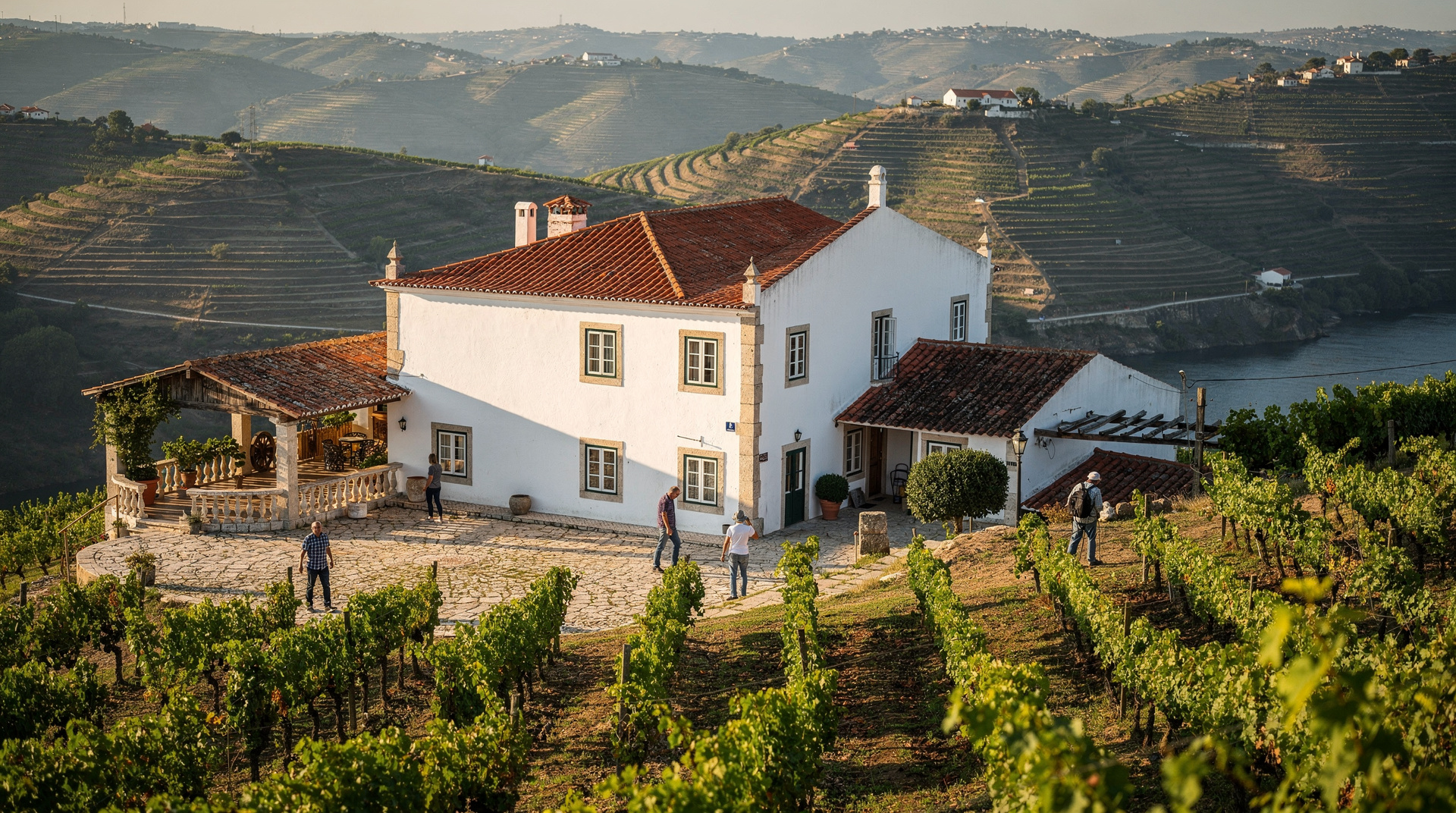
Quinta dos Murças, owned by the Alentejo wine producer Esporão since 2007, occupies a remarkable elevated position above the Douro near Casal de Loivos — one of the valley’s most photographed viewpoints. The quinta works around 80 hectares of biodynamically farmed vineyards on multiple terraces at different altitudes.
For harvest visitors, Quinta dos Murças offers structured programs that include joining the picking teams in the morning, lunch in the quinta (a traditional harvester’s meal — bread, olives, a rich stew, wine), a tour of the winery, and a tasting of the estate’s unfortified Douro wines and port. The experience costs approximately €80-100 per person and runs during the harvest period (mid-September to early October, exact dates announced in late August).
Advance booking through the quinta directly or via specialized wine tour operators is essential — these programs typically have limited capacity and sell out. Esporão’s website publishes harvest program dates and registration in July or August.
The quinta is reached by car (a winding road from Casal de Loivos; no public transport), which means the participation program involves your own transport or a private transfer from Pinhão station or Porto.
Quinta do Vesúvio
Quinta do Vesúvio, located in the remote Douro Superior (the easternmost, most dramatic section of the valley), is a different proposition entirely. It is one of Portugal’s most celebrated single-quinta estates — the Symington family’s showpiece — occupying an isolated position on the river with no other buildings in sight, accessible by a long drive on unpaved roads or by boat.
Vesúvio maintains one of the Douro’s last traditional lagar operations, where the entire port production is foot-trodden by workers during harvest. The quinta’s harvest visitor programs are premium and exclusive: accommodation in the quinta’s small number of guest rooms (a handful of bedrooms in the main house), meals with the estate team, multiple days of harvest participation, and evening tastings of Vesúvio’s remarkable vintage ports.
These programs are not cheap — expect €300-600 per person per night depending on format — and they are booked months in advance by wine enthusiasts who plan their harvest visits across a year or more. They represent a completely different experience from a day tour: you are staying in an active wine estate during its most intense period, participating in work that has continued in the same form for 200 years.
For serious wine travellers, the investment is entirely justified. For visitors whose interest in wine is more general, the organized tour with a harvest element is a better fit.
Organized harvest tours from Porto
For most visitors, the practical vindima experience comes through an organized tour from Porto that incorporates harvest elements rather than direct quinta participation. Several tour operators run harvest-period Douro days that include:
- A visit to a quinta during active picking (you see the harvest, observe the lagar, sometimes participate briefly in treading)
- A traditional harvester’s lunch at the quinta
- A river cruise segment
- Return to Porto
These tours typically cost €90-140 per person and run in the mid-September to early October window. The Douro two wineries with chef and river cruise format is one that runs during harvest season and provides genuine quinta access with culinary emphasis. The premium small-group Douro tour runs with winemaker access that is most valuable in September when the quinta teams are at work.
These are not full vindima participation programs — you aren’t picking grapes for five hours — but they deliver genuine harvest atmosphere that makes a September Douro day trip significantly more vivid than the same trip in July.
Choosing a base: Pinhão, Régua, or a day trip from Porto
Where you base yourself changes how much of the Douro you can realistically see, especially around harvest when quinta programmes run early in the morning. Pinhão sits at the heart of the valley and is the most atmospheric base for a multi-day visit — walkable to Quinta do Bomfim, close to several boat departures, and small enough to feel like part of the wine landscape rather than a transit hub. Peso da Régua, the valley’s largest town, is a more practical base with better transport connections and a wider choice of accommodation, at the cost of some atmosphere. A single day trip from Porto works for a first taste of the valley outside harvest, but during vindima, staying overnight in the valley lets you catch picking at first light rather than arriving mid-morning once the crews are already well into the day. The where to stay in the Douro Valley guide breaks down the trade-offs area by area, and the Douro Valley day trip guide covers the single-day logistics if that’s the plan.
Vindima vs. a standard quinta visit
It’s worth being clear about what separates a genuine vindima experience from an ordinary quinta visit that happens to fall in September. A standard visit — vineyard walk, winery tour, tasting — runs year-round with only minor seasonal variation, and the best quintas guide covers those experiences in detail. A dedicated vindima programme, by contrast, puts you into the actual harvest labour: picking, carrying baskets, treading grapes in the lagar. If a “harvest” tour doesn’t mention any of these activities specifically, it’s likely a standard quinta visit timed to coincide with the season rather than genuine participation — check the Douro harvest guide for which quintas offer the real thing.
How to book vindima experiences
4-5 months ahead: Identify which quintas are running harvest programs and register your interest. Quinta dos Murças, Quinta do Crasto (Ferradosa), and Quinta da Pacheca typically announce programs by July.
3-4 months ahead: Confirm booking for organized harvest tours from Porto — premium small-group tours with harvest elements sell out by August for September dates.
Consider logistics early: If you’re planning direct quinta participation (not just a day tour), sort accommodation in the valley: there are good-quality quintas with rooms in Pinhão, Régua and the surrounding area. The train from Porto to Pinhão takes approximately 2 hours and costs ~€10-12 each way. See the Douro Valley day trip guide for transport logistics.
Check the vintage forecast: The harvest date varies by year and grape variety. Following Portuguese wine press (Wine Searcher, JancisRobinson.com’s Douro coverage) in August gives early signals on harvest timing. Late vintages push everything back 1-2 weeks.
Douro Valley practical information for harvest season
Transport: Rental car is the most flexible option for harvest season, though drinking and driving is a real concern when you’ve just spent a morning tasting. The train to Pinhão is the responsible alternative — scenic and reliable — with pre-arranged quinta transfers from the station. Douro Valley has no Uber or Bolt service.
Accommodation in the valley: Quinta do Vallado (near Régua), Casa de Visconde de Chanceleiros (Pinhão area), and Quinta de la Rosa (Pinhão) offer accommodation with harvest-period atmosphere at different price points. Booking these in August for September is urgent.
What to wear: Harvest participation means outdoor work. Long trousers (grape juice stains heavily), closed-toe shoes (the lagar and terraces are messy), and layers for the early morning cold. A hat is essential for afternoon vineyard work.
Photography: The vindima is one of the most photogenic periods in the valley — pickers on the terraces at dawn, baskets of grapes catching the low autumn light, the amber and red vine colour against the schist. Early morning (7-9 am) has the best light before the day’s heat sets in; midday sun during harvest can be as harsh as summer even with cooler air temperatures.
Health considerations: Picking on steep terraces is physically demanding. If you have mobility limitations, the lagar treading (in flat stone tanks) is more accessible than the terrace picking. Confirm with your quinta what physical demands are involved.
Quinta da Pacheca luxury Douro experience includes harvest elements in season and is one of the easier programs to book through standard channels.
Getting there: train, car, or organised tour
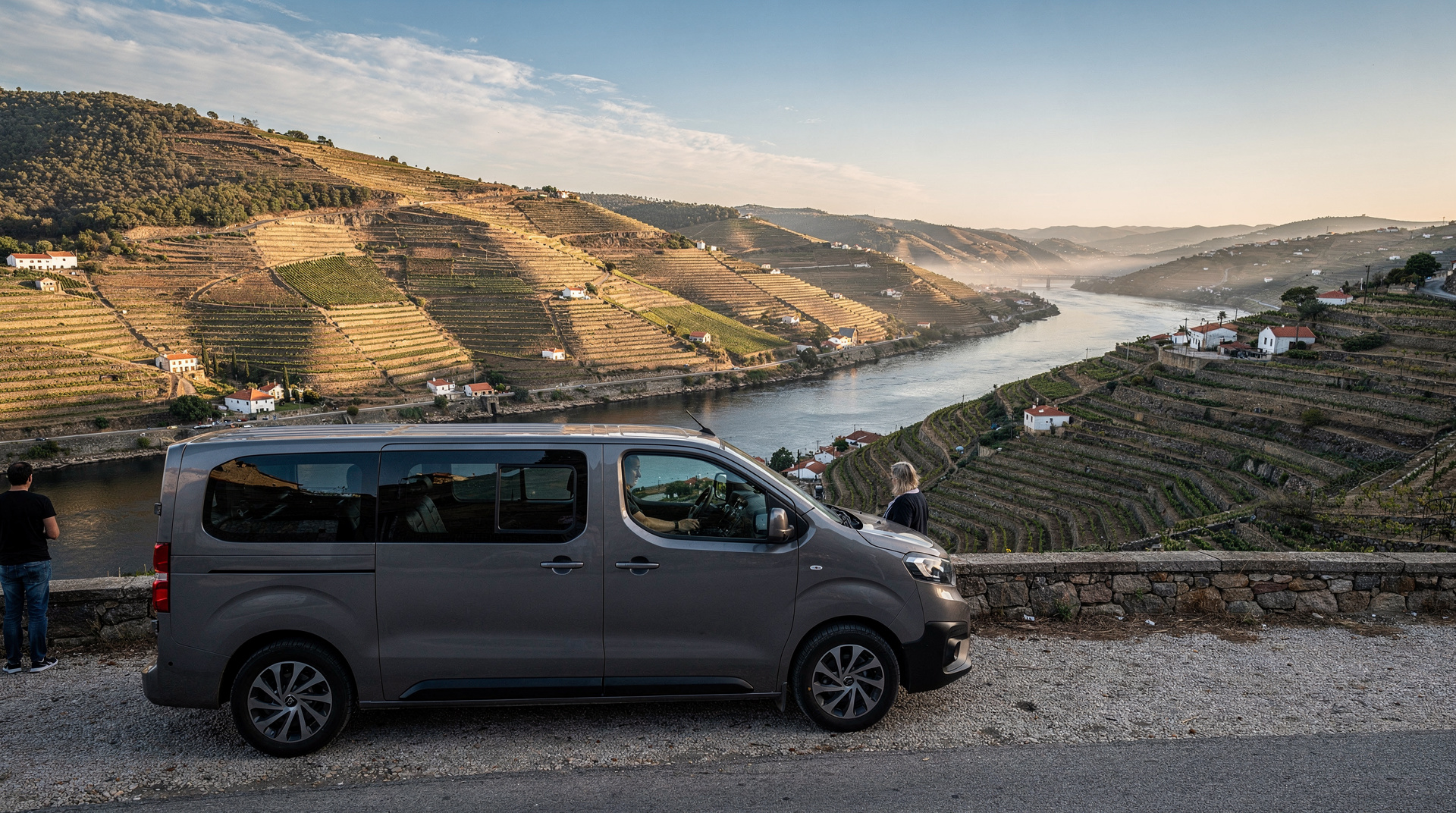
The choice of transport matters more during harvest than any other season, since a morning of tasting rules out driving yourself back. The train vs car vs tour guide covers the trade-offs in full — in short, the train is the responsible and scenic default for a day trip, a rental car gives the most flexibility for a multi-quinta, multi-day visit outside harvest, and an organised tour with a driver is the easiest way to combine a harvest-season visit with wine tasting without the logistics.
Frequently asked questions about Douro Valley timing and vindima
When exactly does the vindima start in the Douro Valley?
The vindima typically begins in the third or fourth week of September and runs through early October, varying by year, altitude and grape variety. The lower schist terraces (below 400m altitude) usually harvest first. Production teams finalize picking dates only 2-3 weeks before — which is why confirmed vindima participation must be arranged well in advance.
Can tourists participate in the Douro Valley grape harvest?
Yes — several quintas offer structured visitor participation programs. Quinta dos Murças and Quinta do Vesúvio are among the most established. Participation ranges from a few hours of picking with lunch (€60-100 per person) to multi-day harvest stays. Demand significantly exceeds availability — book by late June at the latest.
How much does a vindima experience cost?
A half-day participation including grape picking, a traditional harvester’s lunch, and a quinta tour costs €60-100 per person at mid-range quintas. Premium harvest experiences (overnight stays, winemaker dinners) run €200-500 per person per day. Organized tours from Porto with harvest elements cost €90-140 per person.
Is the Douro Valley worth visiting outside of harvest season?
Absolutely. Spring (April-May) brings lush green terraces and pleasant temperatures. Summer is hot but quintas are fully operational. Winter is quiet and intimate. Each season has its character. The harvest is the peak, but the valley is compelling year-round.
Which quintas offer the best harvest experiences for visitors?
Quinta dos Murças (owned by Esporão) near Casal de Loivos is one of the most visitor-friendly — well-organized programs, good English-language communication. Quinta do Vesúvio (Symington family) offers exclusive multi-day experiences in an extremely remote setting. Quinta do Crasto and Quinta da Pacheca are also worth investigating.
How do I get to the Douro Valley for the vindima?
A rental car is most flexible — designate a non-drinking driver. The Pinhão train from Porto Campanhã (~2h, ~€10-12 each way) serves the heart of the valley but you need pre-booked quinta transport from the station. Most organized harvest tours from Porto handle logistics. The valley is 90-120 km from Porto depending on destination.
Frequently asked questions — Best time to visit the Douro Valley — and how to experience the vindima
When exactly does the vindima start in the Douro Valley?
The vindima typically begins in the third or fourth week of September and runs through early October, though the exact dates vary by year, altitude and grape variety. The lower schist terraces (below 400m altitude) usually harvest first. Higher vineyards and late-ripening varieties like Touriga Nacional can extend into mid-October. The production teams at each quinta finalize picking dates only 2-3 weeks before — which is why confirmed vindima participation must be arranged well in advance through specific quinta programs.Can tourists participate in the Douro Valley grape harvest?
Yes — several quintas offer structured visitor participation programs. Quinta dos Murças (Casal de Loivos area) and Quinta do Vesúvio (remote Douro Superior) are among the most established for serious visitor engagement. Participation ranges from a few hours of picking with lunch (€60-100 per person) to multi-day harvest stays with accommodation at the quinta. Demand significantly exceeds availability — book by late June at the latest.How much does a vindima experience cost?
A half-day participation including grape picking, a traditional harvester's lunch (with wine), and a quinta tour costs €60-100 per person at mid-range quintas. Premium harvest experiences (overnight stays, multiple picking sessions, winemaker dinners) run €200-500 per person per day. Some tours based in Porto include a shorter vindima element for €90-130 per person total — these are a good introduction without the logistics of arranging directly with a quinta.Is the Douro Valley worth visiting outside of harvest season?
Absolutely. Each season has its character. Spring (April-May) brings wildflowers along the terraces and vivid green vines — the visual opposite of the harvest's gold and bronze palette. Summer is hot but the quinta visits are fully operational. Winter visits (November-February) are quiet and intimate; the lodges in Gaia are similarly excellent in this period, though some quintas reduce or suspend tours. The harvest is the peak, but the valley is compelling year-round.Which quintas offer the best harvest experiences for visitors?
Quinta dos Murças (owned by Esporão) near Casal de Loivos is one of the most visitor-friendly for harvest participation — well-organized programs, good English-language communication, a beautiful hillside setting above the Douro. Quinta do Vesúvio (Symington family, Douro Superior) offers exclusive multi-day experiences in an extremely remote and dramatic setting, but prices and logistics reflect the exclusivity. Quinta do Crasto and Quinta da Pacheca are also worth investigating for harvest programs.How do I get to the Douro Valley for the vindima?
A rental car is the most flexible option — though designate a non-drinking driver before the day. The Pinhão train from Porto Campanhã (~2h, ~€10-12 each way) serves the heart of the Douro but you need pre-booked quinta transport from the station. Most organized harvest tours from Porto handle logistics. The valley is 90-120 km from Porto depending on destination; allow 1.5-2 hours driving.
Top experiences
Bookable activities with verified prices and instant confirmation on GetYourGuide.